The math behind fertilizer rates
Every fertilizer rate comes down to one conversion: the bag's nitrogen percentage into pounds of actual nitrogen on the ground.
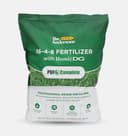
Lawn fertilizer recommendations are written in pounds of actual nitrogen per 1,000 sq ft, but bags are sold by product weight. The bridge is the first number in the N-P-K analysis: it's the percent nitrogen by weight. To hit 1 lb of nitrogen per 1,000 sq ft with a 16-4-8, divide 1 by 0.16 and you get 6.3 lbs of product per 1,000 sq ft.
That's why the same target rate needs wildly different amounts of product: 10 lbs of 10-10-10, 6.3 lbs of 16-4-8, but only 2.2 lbs of 46-0-0 urea. Higher-analysis bags cover more lawn per pound, which usually makes them cheaper per feeding even at a higher sticker price.
Which N-P-K ratio does your lawn actually need?
Balanced numbers look appealing on the shelf, but established lawns rarely need equal parts of everything.
- 16-4-8 (a 4-1-2 ratio): the classic turf ratio. Matches how grass actually consumes nutrients and suits most established lawns.
- 32-0-4 and other phosphorus-free blends: the default for lawns that don't have a soil-test-confirmed phosphorus deficiency. Several states restrict phosphorus on established turf.
- 10-10-10 / 13-13-13 / 19-19-19: balanced garden fertilizers. Fine in a pinch and good for new seedings where phosphorus helps root establishment.
- 46-0-0 urea: pure fast nitrogen. Cheap and effective but easy to burn with, so apply at low rates and water in promptly.
When in doubt, run a soil test. If phosphorus and potassium are already adequate, all you're really shopping for is nitrogen, and the cheapest source per pound of N wins.
Getting the rate onto the lawn accurately
The calculator gives you the amount. Spreader technique decides whether it lands evenly.
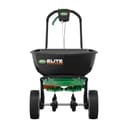
Spreader setting charts on the bag are starting points. Walking speed, spreader wear, and granule size all change the effective rate. The reliable method: weigh out the total product your lawn needs, set the spreader to half the bag's recommended setting, and make two full passes at right angles to each other. You'll run out of product right as you finish the second pass if the setting is right.
Water the lawn after granular feeding unless the bag says otherwise. A quarter inch of irrigation moves the granules off the leaf blades and starts releasing nutrients into the root zone, which is also your insurance against burn on hot days.