

Bermuda Grass Fungus & Diseases: Identification and Treatment
 Sarah MitchellLawn Diagnostics Specialist | 12 Years
As an Amazon Associate we earn from qualifying purchases.
Bermuda is one of the toughest lawn grasses out there, which is exactly why a sick patch of it catches people off guard. After about twelve years of diagnosing turf problems, I can tell you that most homeowners do not suspect disease until a stubborn brown spot refuses to green up while the rest of the lawn takes off. The good news is that bermuda gets a fairly short list of diseases, and almost all of them trace back to the same handful of fixable causes: too much water, the wrong watering time, and nitrogen at the wrong moment.
The diseases that actually hit bermuda are spring dead spot (the big one), dollar spot, brown patch and large patch, leaf spot and melting out, rust, and pythium. Spring dead spot is the signature bermuda disease: it infects the roots in fall but only shows up as round dead patches when the lawn greens up in spring, so you fight it with fall cultural practices, not spring sprays.
For everything else, the playbook is the same. Mow at the right height, water deeply in the early morning so blades dry by midday, time your nitrogen, and keep thatch in check. Fungicides are a backup for cases that keep coming back, not the first move. If you are not sure what you are looking at, get a confident ID before you spend a dime on product.
How to Identify Bermuda Diseases
Before you can treat anything, you need to read three things: the blade, the patch, and the timing. I look at all three on every diagnosis, because any one of them alone can fool you.
The blade. Get down on your knees and look at individual leaves. Are there lesions with colored borders? A water-soaked, greasy look? Orange dust on your fingers? Blade-level symptoms separate diseases that otherwise produce similar-looking patches from a standing height.
The patch. Step back and read the shape. Tight, round, sunken circles point one direction. Small silver-dollar dots point another. Large irregular sweeps point a third. Distinct patches surrounded by healthy green grass almost always mean disease, while uniform browning across the whole lawn usually does not.
The timing. This is the one people skip, and it is often the deciding clue. Bermuda diseases each have a season. Spring dead spot appears as the lawn greens up in spring. Dollar spot and rust run in late summer and early fall. Pythium explodes in the hottest, soggiest stretch of summer. Match the symptom to the calendar and you have usually narrowed it to one or two suspects.
When the picture is muddy, do not guess. You can snap a photo for a free AI diagnosis that weighs your region and the season against what is actually active right now, which is exactly how I think through a case in person.
The Diseases, One by One
Spring Dead Spot (the signature bermuda disease)
If bermuda has a nemesis, this is it. Spring dead spot is caused by soilborne fungi that attack the roots and stolons during cool, wet fall weather, while the grass is heading into dormancy. Here is the cruel part: you will not see a thing in fall. The damage hides underground all winter, and then as the lawn greens up in spring, you get round, sunken, straw-colored patches that simply refuse to wake up. They can range from a few inches to several feet across, and they often come back in the same spots year after year, sometimes expanding into rings.
How to confirm it: The patches are distinctly circular and depressed, and the dead grass pulls up easily because the roots and runners underneath are rotted and dark. Weeds frequently colonize the bare centers before the surrounding bermuda creeps back in. The fact that the spots show up during green-up, not during cold weather, is the tell that separates this from plain dormancy.
How to manage it: This is the most important point in the whole article, so I will be blunt. Spring dead spot is managed in fall, not spring. By the time you see the patches, the infection happened months ago and there is nothing to spray. Your levers are all cultural and all happen the previous autumn: stop high-nitrogen feeding by late summer, apply potassium in fall to boost cold hardiness, control thatch, and fix drainage and compaction in the low, wet spots where it loves to start. Where the disease is well established, a preventive fungicide applied in fall (typically as soil temperatures fall through the low 70s) can reduce next spring's outbreak, but it supports good culture rather than replacing it. To speed recovery of existing patches in spring, light nitrogen and consistent watering help the surrounding bermuda fill back in.
- Spring dead spot fungicide timing is highly regional and tied to local soil temperatures in fall. Confirm the window with your county extension office before buying product.
- Several different fungal species cause spring dead spot in different parts of the country, and they do not all respond to the same fungicide chemistry. Your extension can tell you which species dominates locally.
- Any rate, soil-temperature threshold, or product recommendation here is a commonly published range. Treat your local extension as the final word for your specific region and bermuda cultivar.
Dollar Spot
Dollar spot is the one I get the most photos of in late summer. It shows up as small, round, tan or bleached spots about the size of a silver dollar, hence the name. In a neglected or low-nitrogen lawn, those spots can run together into larger blighted areas. Look at the individual blades and you will usually find the giveaway: straw-colored lesions stretching across the leaf, often pinched in an hourglass shape with a darker reddish-brown border. Early in the morning you may even spot fine, web-like fungal growth across the dew.
What drives it: Warm days, cool nights, heavy dew, and low soil nitrogen. It loves a hungry lawn.
How to treat it: Dollar spot is one of the few diseases where the cultural fix often involves more nitrogen, not less. A modest feeding frequently grows the lawn right out of it. Pair that with early-morning watering so blades are not sitting wet overnight, and dethatch if your thatch layer has gotten thick. Fungicides are rarely necessary on a home bermuda lawn once the fertility and dew problems are addressed.
Brown Patch and Large Patch
These two are driven by the same fungal group (Rhizoctonia), and bermuda is honestly not their favorite host. St. Augustine, zoysia, and centipede get hit far harder. But in hot, humid, overwatered conditions, bermuda can still develop roughly circular patches of thinned, off-color turf, sometimes with a darker smoke-colored ring around the advancing edge. Large patch is the cool-season version that flares in spring and fall as warm-season grasses transition in and out of dormancy.
How to treat it: Water is almost always the culprit. Cut back on irrigation, eliminate evening watering, improve airflow and surface drainage, and ease off nitrogen until it clears. Because bermuda is fairly resistant, fixing the moisture problem usually does the job without spraying.
If you also manage zoysia or St. Augustine, where Rhizoctonia hits far harder, our dedicated guide to large patch in zoysia and St. Augustine covers the fall preventive window in detail.
Leaf Spot and Melting Out
Leaf spot starts as small dark brown to purplish lesions on the leaf blades, often with tan centers. On its own that looks cosmetic, but if it progresses into the crowns and roots, the second phase (melting out) thins the stand and leaves the lawn looking patchy and ragged. It tends to favor lawns that are mowed too low, overfed with nitrogen, or kept too wet.
How to treat it: Raise your mowing height a notch, back off the nitrogen, and water early in the day. Removing clippings during an active outbreak reduces the spore load. As with most bermuda diseases, correcting the mowing and watering habits is what turns it around.
Rust
Rust is the easiest disease to identify because it announces itself on your shoes. The lawn takes on an orange or yellowish cast from a distance, and when you walk through it or rub a blade between your fingers, orange-to-rusty powder (the spores) comes off on your skin. It usually appears in late summer and fall on bermuda that is growing slowly, often because it is underfed, shaded, or stressed by drought.
How to treat it: Rust is a sign the lawn has stalled. Get it growing again with a balanced feeding and adequate water, and mow regularly to physically remove infected tissue. Healthy, actively growing bermuda simply outgrows rust. Fungicides are almost never warranted for it on a home lawn.
Pythium (Cottony Blight)
Pythium is the one to take seriously because it moves fast. In hot, humid weather on a waterlogged lawn, it can blight large areas within a day or two. The classic early-morning sign is greasy, water-soaked, dark patches, sometimes with white cottony fungal threads visible in the dew before the sun burns them off. Damaged grass collapses and mats down. It frequently follows the path of water flow or poor drainage in long streaks rather than neat circles.
How to treat it: Stop overwatering immediately and never water in the evening when pythium pressure is high. Improve drainage in the soggy areas where it starts. This is the one bermuda disease where a targeted fungicide can genuinely be justified, because the damage outpaces cultural correction. If you suspect pythium, act quickly and consider confirming the ID before it spreads.
The Look-Alikes That Fool People
Half of the brown-bermuda panics I get are not disease at all. Here are the confusions worth knowing.
Winter dormancy vs spring dead spot. This is the big one. When bermuda goes dormant for winter, the entire lawn turns a uniform tan, and that is completely normal. Spring dead spot, by contrast, shows up as distinct round patches that stay dead while the rest of the lawn greens up around them in spring. The timing and the pattern are your two tells. If the whole lawn browned out together when it got cold, relax. If specific circles refuse to wake up in spring while everything else does, that is disease. Tug-test a few brown stolons: dormant bermuda is firm and tan with white living roots, while spring-dead-spot runners are dark, rotted, and pull free easily.
Drought stress vs disease. Drought shows up first on high spots, slopes, and along edges where soil dries fastest, and it produces a bluish-gray cast with footprints that linger before things go brown. Disease ignores that logic and follows its own pattern. If a thorough watering greens it back up within a few days, it was thirst, not fungus.
Fertilizer burn, pet urine, and grub damage. Stripes that match your spreader pattern are fertilizer burn. Small dead spots with a darker green ring around them in high-traffic dog areas are urine. Turf that lifts up like loose carpet because the roots are chewed away is grub damage, not disease. Each of these gets misfiled as a fungus constantly. When the pattern does not fit any disease, step back and ask what else touched that exact area.
Cultural Prevention (Where the Real Wins Are)
I will say it one more time because it is the throughline of everything above: the vast majority of bermuda disease is prevented in how you mow, water, and feed. Get these right and you may never need a fungicide.
Mowing height. Bermuda likes to be cut short, but going too low scalps the crowns and invites leaf spot and thinning. Keep it in bermuda's healthy range, mow frequently enough that you are never removing more than a third of the blade at once, and keep your mower blade sharp. A ragged, torn cut is an open door for fungi. Our mowing height calculator dials in the right setting for your situation.
Watering timing. Water deeply and early in the morning so blades dry by midday, and never in the evening. Grass that sits wet overnight is the single biggest controllable disease risk for nearly every fungus on this list. Deep, infrequent soaking also builds the deep roots that shrug off drought stress. Build it out with the watering schedule tool.
Nitrogen timing. This cuts both ways, which trips people up. Too much nitrogen, or nitrogen applied late in the season heading into fall, pushes lush growth that feeds brown patch and sets up spring dead spot. Too little starves the lawn and opens the door to dollar spot and rust. The fix is the right amount at the right time: feed during active summer growth and taper off well before the cool weather of fall. Get your rate right with the fertilizer calculator.
Thatch. A thick thatch layer holds moisture against the crowns and harbors fungal spores. If your thatch is more than about half an inch, dethatch or core aerate to break it up and get air moving to the soil.
Fall potassium for spring dead spot. This one earns its own line. A fall potassium application improves bermuda's cold hardiness, and a more cold-tolerant lawn is markedly more resistant to spring dead spot. If spring dead spot is your recurring nemesis, fall potassium and tapered fall nitrogen are the two highest-leverage moves you can make, full stop.
When a Fungicide Is Actually Warranted
I am genuinely conservative about fungicides on home bermuda lawns, and here is the honest reason: most disease is a watering or fertility problem wearing a costume, and spraying without fixing the cause just burns money while the problem returns. Reach for a fungicide only when:
- The same disease keeps coming back year after year despite solid cultural practices. Recurring spring dead spot in the same circles is the textbook case, and there the application is preventive in fall, never on the patches in spring.
- Pythium is moving fast in hot, soggy weather. This one can outrun cultural correction, so a quick targeted treatment can save the stand.
- The stakes are high on turf you cannot afford to lose and the diagnosis is confirmed.
Even then, identify the disease correctly first. The wrong fungicide on the wrong disease, or the right one at the wrong time, does nothing but cost you. When in doubt, get a photo diagnosis and confirm timing and product choice with your extension office before you spray.
Recommended products
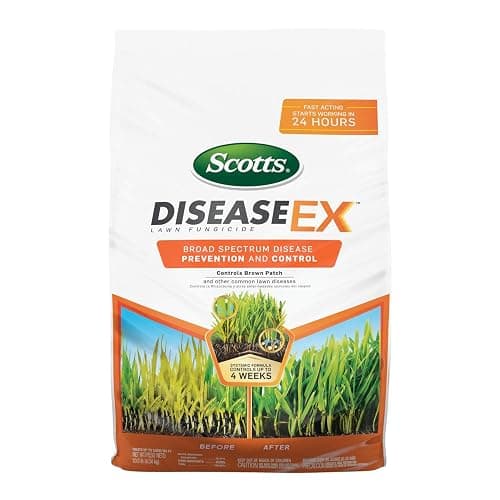
Scotts DiseaseEx Lawn Fungicide
A granular azoxystrobin fungicide that treats large patch, brown patch and dollar spot on bermuda.
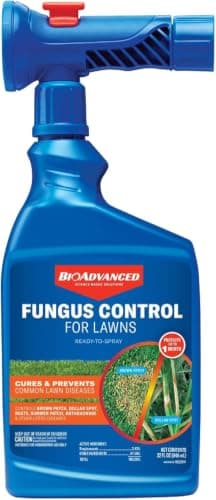
BioAdvanced Fungus Control for Lawns
A propiconazole concentrate for systemic disease control on home lawns.
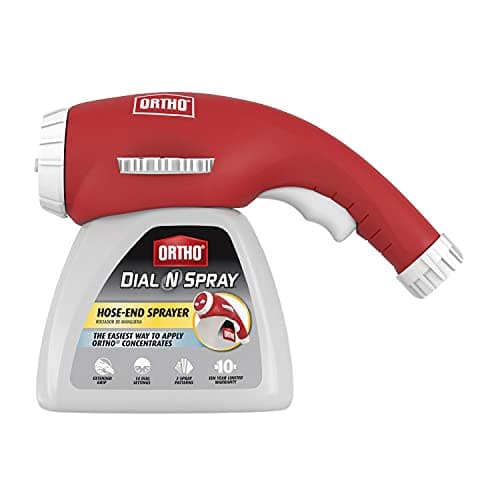
Ortho Dial N Spray Hose-End Sprayer
A hose end sprayer with fourteen dilution settings for liquid lawn products.
What Other Guides Miss
Most bermuda disease articles hand you a symptom list and immediately pivot to which fungicide to buy. That gets it backwards. After years of diagnosing these in person, three things stand out that the generic guides routinely skip.
First, timing is half the diagnosis. A round brown patch in February is almost certainly dormancy, while the exact same patch refusing to green up in April is spring dead spot. Same symptom, opposite cause, opposite response. Guides that show you a photo without anchoring it to a season set you up to misdiagnose.
Second, spring dead spot cannot be treated when you see it. This is the most expensive misconception in bermuda care. Homeowners discover the patches in spring, panic-buy fungicide, and spray dead grass for nothing. The only intervention that moves the needle happened, or should have happened, the previous fall. Knowing that saves you both money and a wasted season.
Third, more than half of suspected bermuda diseases are not diseases. Drought stress, fertilizer burn, dog urine, grub damage, and plain dormancy account for an enormous share of the brown spots people are convinced are fungal. The single most valuable skill is ruling those out before you treat anything, which is exactly why a region-aware and season-aware diagnosis beats a static symptom chart.
Your Bermuda Disease Prevention Plan
Here is the order I would actually work through it:
- Diagnose before you treat. Confirm it is disease and not a look-alike, and confirm which disease, using the blade, the patch, and the timing. When unsure, snap a photo for a free diagnosis.
- Fix the watering first. Deep, early-morning, infrequent soaking. No evening watering, ever. This alone prevents most of the list.
- Get the mowing right. Proper height for bermuda, sharp blade, never scalping. Dial it in with the mowing height tool.
- Time your nitrogen. Feed during active summer growth, taper off before fall, and never push lush growth into cool weather. Use the fertilizer calculator for the right rate.
- Manage thatch and drainage. Dethatch or aerate when thatch exceeds half an inch, and fix the chronically wet low spots.
- Apply fall potassium for spring dead spot. If spring dead spot recurs, fall potassium plus tapered fall nitrogen are your highest-leverage prevention.
- Reserve fungicides for the stubborn cases, applied at the correct (and for spring dead spot, fall) timing, after confirming the diagnosis with your local extension office.
Bermuda is forgiving by nature. Give it good water timing, the right cut, well-timed nutrition, and a fall plan for spring dead spot, and the disease list above mostly stays theoretical. When something does crop up, identify it correctly before you reach for a product, and you will solve it faster and cheaper than the spray-first crowd.
Free Lawn Care Tools
Spring dead spot is the signature disease of bermuda grass. It is caused by soilborne fungi that attack the roots and stolons during cool, wet fall weather, but you do not see the damage until the lawn greens up in spring. It shows up as round, sunken patches of dead, straw-colored grass that stay brown while everything around them turns green. Because the infection happens months before the symptoms, you manage it almost entirely through fall cultural practices.
If the brown is uniform across the whole lawn and arrived with cold weather, that is normal winter dormancy and the grass will green back up. Disease tends to show up as distinct round or irregular patches surrounded by healthy green grass, especially as the rest of the lawn wakes up in spring. Tug on a few brown stolons. Dormant bermuda is firm and tan with white, living roots, while spring dead spot leaves dark, rotted, easily pulled runners.
Prevention is a fall game, not a spring one. Stop high-nitrogen feeding by late summer so you are not pushing tender growth into cool weather, apply potassium in fall to improve cold hardiness, keep thatch under control, and improve drainage and compaction in low spots. Where the disease is established, a fall fungicide application timed to soil temperatures around the low 70s and falling can help, but cultural fixes do the heavy lifting. Check with your local extension office for the timing that fits your region.
Small, silver-dollar-sized tan spots are the classic signature of dollar spot, a fungus that thrives in warm days, cool nights, heavy dew, and low soil nitrogen. On individual blades you will often see straw-colored lesions with a darker reddish-brown border running across the leaf. The fastest cultural fix is to bump up nitrogen modestly and water early in the morning so the grass is not sitting wet through the night.
Bermuda is far less prone to the large-patch and brown-patch family than St. Augustine, zoysia, or centipede, but it can develop circular patches of thinned, discolored turf in hot, humid, overwatered conditions. The same pathogen group (Rhizoctonia) drives both. The fix is the same either way: cut back on water and evening irrigation, improve airflow and drainage, and ease off nitrogen until it clears.
Most bermuda disease problems are watering and fertility problems in disguise, so fix the culture first and reserve fungicides for cases that keep coming back or threaten a lawn you cannot afford to lose. Pythium is the exception, since it moves fast in hot, soggy weather and may warrant a quick targeted treatment. For spring dead spot, the only fungicide timing that works is preventively in fall, not on the patches in spring. Confirm the diagnosis and product timing with your local extension office before you spray.

Your lawn plan, in your pocket all season
Grass ID, a season plan, soil-timed reminders, and a lawn journal that remembers what you did. Free on iPhone.