

Grass Seed Germination Temperature Chart (by Grass Type)
 James ThorntonLawn Equipment & Maintenance Expert | 20 Years
As an Amazon Associate we earn from qualifying purchases.
You bought the seed, you raked the soil smooth, you watered it every single day, and three weeks later you are standing over a patch of bare dirt and an empty wallet. I have heard this story more times than I can count, and nine times out of ten the seed is not the problem. The soil temperature is. Grass seed germination temperature is the single number most people skip, and it is the one that decides whether your seed sprouts or just sits there rotting.
Grass seed germinates based on soil temperature, not the date on the calendar and not the air temperature. Cool-season grasses germinate across roughly the low 50s to mid 70s degrees F, with Kentucky bluegrass and perennial ryegrass happiest on the cooler end and tall fescue preferring slightly warmer soil, around 60 to 75 degrees F. Warm-season grasses like Bermuda, zoysia, and centipede need warmer ground, generally 65 to 80 degrees F or higher, before they reliably sprout.
To use this, push an inexpensive soil thermometer to seeding depth (the top inch or so), take the reading in the morning for several days, and average it. When that average lands inside your grass type's range, you seed. When it does not, you wait. That one habit will do more for your germination rate than any premium seed coating on the shelf.
Grass Seed Germination Temperature Chart by Type
Here is the reference you came for. These are the commonly cited soil-temperature ranges where each grass type germinates well, along with the rough number of days to expect sprouting under good moisture. Treat the ranges as the operating window, not a hard wall. Seed near the low end and germination drags out; seed near the high end of a cool-season grass and you start fighting summer heat.
| Grass Type | Season | Optimal Soil Temp (germination) | Typical Days to Germinate |
|---|---|---|---|
| Kentucky bluegrass | Cool-season | ~50 to 65 degrees F | 14 to 30 days (slow) |
| Perennial ryegrass | Cool-season | ~50 to 65 degrees F | 5 to 10 days (fast) |
| Tall fescue | Cool-season | ~60 to 75 degrees F | 7 to 12 days |
| Fine fescue | Cool-season | ~50 to 65 degrees F | 7 to 14 days |
| Bermuda grass | Warm-season | ~65 to 85 degrees F | 7 to 21 days |
| Zoysia grass | Warm-season | ~70 to 80 degrees F | 14 to 30 days (slow) |
| Centipede grass | Warm-season | ~70 to 80 degrees F | 14 to 28 days (slow) |
| Bahia grass | Warm-season | ~65 to 80 degrees F | 7 to 28 days |
| Buffalo grass | Warm-season | ~60 to 75 degrees F | 14 to 30 days |
A few patterns jump out once you stop reading this as a wall of numbers. Cool-season grasses cluster around the 50 to 65 degree band, which is exactly why fall and spring are their windows. Warm-season grasses need real heat in the ground, so their seeding window opens later, in late spring and early summer, once the soil has had time to warm up. And the slow germinators (bluegrass, zoysia, centipede) are the ones where people panic and reseed too early. They are not dead. They are just taking their time, and pulling the trigger again at day 12 wastes a second bag of seed.
How to Read the Ranges Without Overthinking It
The temperature range is a window, and where you land inside it changes the outcome. Seed tall fescue at a soil temp of 60 degrees F and it germinates, but on the slow side. Seed it at 70 and it comes up noticeably faster. The catch is that the same warmth that speeds germination also speeds up everything else, including weeds, disease pressure, and evaporation. So the goal is not to hit the warmest possible number. It is to land inside the range while the trend is moving in your favor.
For cool-season grass, that means seeding in early fall when soil is coming down from summer heat. The ground is warm enough for fast germination, the air is cooling, and weed pressure is dropping. That combination is why fall overseeding outperforms spring almost every time. If you want the deeper reasoning on which season wins for your situation, I walk through it in our guide on overseeding best practices.
For warm-season grass, you want soil temperature climbing into the range and staying there, which usually means late spring after the last frost risk is well behind you. Bermuda in particular rewards patience. Seed it into soil that is still cool from spring and you get spotty, weak germination. I cover the seed selection and prep side of that in the Bermuda grass seed selection and planting guide.
How to Measure Soil Temperature (the Right Way)
This is the part everyone skips, and it costs them. You cannot eyeball soil temperature, and you cannot trust the weather app, because that is air temperature. Here is the no-nonsense version of doing it correctly.
| Step | What to do | Why it matters |
|---|---|---|
| 1. Get a probe | Use an inexpensive soil or compost thermometer with a metal stem | Cheap and accurate enough; a meat thermometer works in a pinch |
| 2. Go to seeding depth | Push the probe into the top 1 to 2 inches of soil | That is where the seed actually sits and senses heat |
| 3. Read in the morning | Take the reading early, before the sun heats the surface | Gives you a conservative daily low, not a misleading afternoon spike |
| 4. Repeat and average | Check the same spot for 3 to 5 days and average the numbers | One reading is noise; a trend tells you if soil is warming or cooling |
| 5. Measure where you seed | Test the actual area, including shady or sloped spots | A north slope can run several degrees off an open sunny patch |
If you would rather not babysit a thermometer in your lawn for a week, you do not have to. Our soil temperature tool gives you a current and forecasted soil-temp read for your area so you can see whether the window is open before you ever buy seed. Pair that with the chart above and you have removed most of the guesswork.
Recommended products
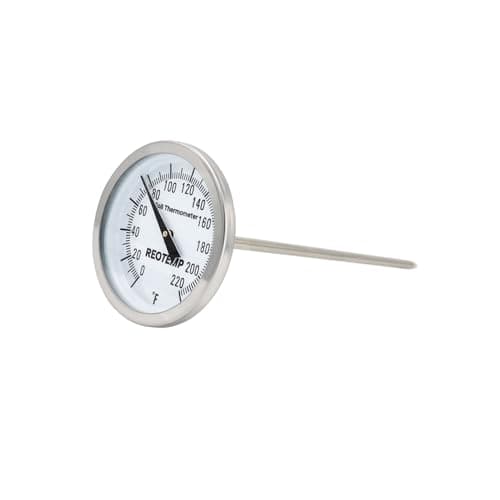
REOTEMP Waterproof Soil Thermometer (5 inch stem)
A waterproof probe thermometer that reads soil temperature at the 2 to 4 inch depth the seeding ranges are based on.
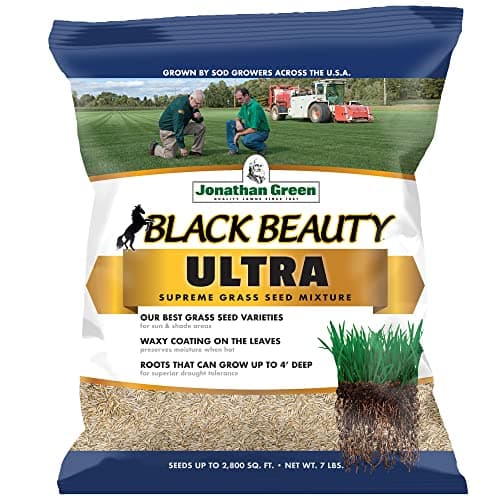
Jonathan Green Black Beauty Ultra Grass Seed (7 lb)
A cool-season blend that germinates well through the 50 to 65 degree soil window in the chart.
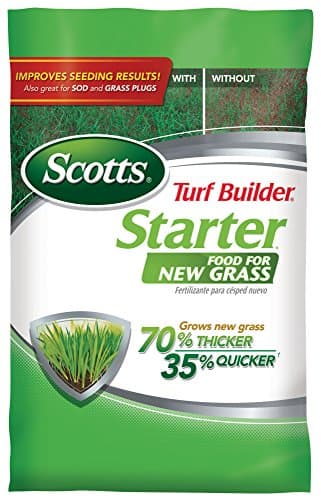
Scotts Turf Builder Starter Food for New Grass
A starter fertilizer that supports root development while the seed works through its germination window.
Air Temperature vs Soil Temperature
Here is the trap that wrecks more spring seeding jobs than anything else. The air warms up fast, the soil warms up slow. You get a stretch of 70 degree afternoons in early spring, you feel the sun, you assume the ground is ready, and you seed. Meanwhile the soil is still sitting at 48 degrees because it takes weeks of sustained warmth to heat up a few inches of earth. The seed goes in, the soil is too cold, and it just sits there absorbing water until it rots or feeds the birds.
Soil behaves like a thermal battery. It holds onto winter cold well into spring and holds onto summer heat well into fall. That lag is exactly why fall is so good for cool-season grass: the soil is still warm from summer even as the air cools, giving you fast germination with falling weed and heat pressure. It is also why you should never let a warm afternoon talk you into early spring seeding. The air is lying to you. The soil tells the truth. One deliberate exception is dormant seeding, where you sow seed onto cold late-fall soil on purpose so it waits until spring warmth triggers germination.
The reverse trap happens in fall with warm-season grass. The air cools, you think you missed your window, but if the soil is still holding heat you may have a little runway left. Either way, the lesson is the same: stop reading the thermometer on your porch and start reading the one in your dirt.
Why Timing to Soil Temperature Beats Calendar Dates
Every generic seeding chart hands you a date range, something like \"seed cool-season grass between mid-August and mid-September.\" Those dates are a national average smeared across a thousand different microclimates, and your yard is not the average. A late-arriving fall, a cold spring, a shaded backyard, a south-facing slope that bakes, even a heavy clay soil that warms slowly: all of these shift your real window by a week or three in either direction.
I have watched two neighbors seed the same grass on the same calendar date and get completely different results, because one yard sat in afternoon shade and ran five degrees cooler. The date was identical. The soil temperature was not, and the soil temperature is what the seed responds to. When you seed to a measured number instead of a date, you stop being a victim of whatever the weather did that particular year.
This is also where the calendar approach and the soil-temp approach should work together rather than compete. The calendar tells you roughly which month to start paying attention. The soil thermometer tells you the actual day to pull the trigger. For the full breakdown of how soil temperature drives both seeding and fertilizing windows across the year, our soil temperature guide for seeding and fertilizing timing is the companion piece to this chart.
- The germination ranges in this chart are commonly cited operating windows, not guarantees. Your exact target soil temperature and seeding date depend on your specific cultivar, soil type, and microclimate, and your local cooperative extension office can give you the dialed-in window for your county.
- Soil thermometers vary in calibration. If precision matters to you, verify your probe against a known reference or ask your extension office how they recommend measuring at seeding depth.
- Seeding rates, recommended cultivars for your region, and any soil amendments are best confirmed with your state turf extension service rather than a national average, since both seed performance and disease pressure are highly regional.
- If you are reseeding the same spot that failed before, have your extension office or a soil lab check the soil before you spend on more seed. A cold reading may not be the only thing that killed the last batch.
What Other Guides Miss
Most germination temperature articles stop at the chart and call it a day. They give you the number and leave you to figure out the rest. Here is what they leave out, and it is the part that actually decides your results.
First, the temperature range is a floor and a ceiling, not just a floor. Everyone obsesses over whether the soil is warm enough and ignores whether it is too warm. Seed cool-season grass into 80 degree soil in late spring and yes, it germinates fast, but those tender seedlings then walk straight into summer heat and drought with no root system to survive it. Plenty of spring seeding fails not because the seed never came up, but because it came up and then cooked. The ceiling matters as much as the floor.
Second, germination temperature and establishment temperature are two different things. The chart tells you when the seed sprouts. It does not tell you whether the seedling has enough warm runway left to build roots before conditions turn against it. A bermuda seed that germinates in late summer may not have enough warm weeks left to harden off before fall, which is why warm-season seeding leans toward late spring and early summer, not late season. Smart timing accounts for the whole establishment window, not just the day the green shows up.
Third, almost nobody connects the soil temperature to seed quantity. If you are seeding near the edge of a grass type's range, where germination percentage drops, bumping your seeding rate slightly can offset the lower success rate. Our seeding rate calculator gives you the right amount of seed for your square footage and grass type so you are not eyeballing a bag and hoping. Combine the right rate with the right soil temperature and you stop leaving germination to luck.
And if your last seeding already failed and you are not sure why, do not just assume it was temperature and reseed blind. Upload a photo of the bare or thin area and let the AI diagnosis narrow it down, whether it points to cold soil, washout, fungus, or compaction, before you spend money on round two. A personalized 12-month care plan goes a step further: it tells you the exact week to seed and fertilize for your zip code and grass type, so you are working from your yard's real timeline instead of a generic national chart.
Your Soil-Temperature Seeding Action Plan
Here is how to put the chart to work, start to finish, without overcomplicating it.
- Identify your grass type first. The whole chart is useless if you target the wrong range. If you are not certain whether you have a cool-season or warm-season lawn, confirm it before you buy seed so you are aiming at the correct window.
- Find your target range in the chart above. Note both the low end (slow germination) and the high end (heat risk for cool-season grass) so you know which direction you want the trend moving.
- Measure your soil temperature for several days. Probe the top inch or two in the morning, in the actual area you plan to seed, and average the readings. Or skip the babysitting and check our soil temperature tool for your area.
- Wait for the average to land inside your range. For cool-season grass, that usually means early fall with the trend cooling. For warm-season grass, late spring with the trend warming. Resist the warm-afternoon temptation to jump early.
- Calculate your seeding rate. Use the seeding calculator for your square footage and grass type, and lean slightly heavier if you are seeding near the edge of the range.
- Seed, keep the top inch consistently moist, and be patient. Match your expectation to the days-to-germinate column. A slow germinator at day 12 is not a failure, it is on schedule.
- If it still fails, diagnose before reseeding. Snap a photo for a free diagnosis so you fix the real cause instead of repeating the same mistake with a fresh bag of seed.
Seeding by soil temperature instead of the calendar is the closest thing to a guaranteed upgrade in your germination rate, and it costs you nothing but a cheap thermometer and a little patience. Get the timing right and average seed performs great. Get the timing wrong and the best seed money can buy still ends up as bird food. The dirt makes the call. All you have to do is listen to it.
Top Picks
- Scotts Turf Builder Grass Seed Bermudagrass (4 lb)Check price on Amazon
- Scotts Wizz Spreader for Grass SeedCheck price on Amazon
- Jonathan Green (10322) Black Beauty Ultra Grass Seed - Cool Season Lawn Seed (7 lb)Check price on Amazon
As an Amazon Associate we earn from qualifying purchases.
Free Lawn Care Tools
It depends on the grass type. Cool-season grasses like tall fescue, Kentucky bluegrass, and perennial ryegrass germinate well when soil temperatures sit in roughly the 50 to 65 degree F range. Warm-season grasses like Bermuda and zoysia need warmer soil, generally 65 to 80 degrees F or higher. Air temperature is not the number that matters here. Measure the soil itself at seeding depth.
Tall fescue germinates fastest when soil temperatures are commonly cited in the 60 to 75 degree F range, with sprouting usually showing in about 7 to 12 days under good moisture. It will still germinate slowly in cooler soil down near 50 degrees F, but the process stretches out and seedlings are more vulnerable. Check your local extension office for the exact target window in your county.
Calendar dates are an average that ignores your specific yard. A late cold snap, a shady north-facing slope, or an unusually warm fall can shift real soil temperature by weeks compared to the date on a generic seeding chart. Seeding to measured soil temperature lines up germination with the conditions the seed actually feels, which is why it consistently beats date-based guessing.
Use an inexpensive soil or probe thermometer pushed to seeding depth, which is roughly the top inch or two of soil. Take the reading in the morning for a conservative low, check the same spot for several days, and average the numbers. Measure in the area you plan to seed rather than a sunny patch, since shade and slope change the reading.
You can, but you usually should not. Soil holds and releases heat slower than air, so the ground often runs cooler than a warm sunny afternoon suggests, especially early in spring. Seeding into cold soil leads to slow, patchy germination and gives weeds and disease a head start. Wait for the soil reading to enter your grass type's range.
Cool-season grasses are built to sprout and grow in moderate soil, so they germinate in the roughly 50 to 65 degree F band and do their best work in spring and fall. Warm-season grasses evolved for heat and need soil generally above 65 to 70 degrees F before they reliably germinate, which pushes their seeding window into late spring and early summer. Matching the grass to the season is the whole game.

Your lawn plan, in your pocket all season
Grass ID, a season plan, soil-timed reminders, and a lawn journal that remembers what you did. Free on iPhone.
Related Articles
 Lawn Care Tips
When Does Bermuda Grass Turn Green? 2026 Timeline by Region
May 3, 2026•7 min read Lawn Care Tips
How Much Does It Cost to Install Sod in 2026? Real Prices Per Square Foot
Sep 16, 2026•6 min read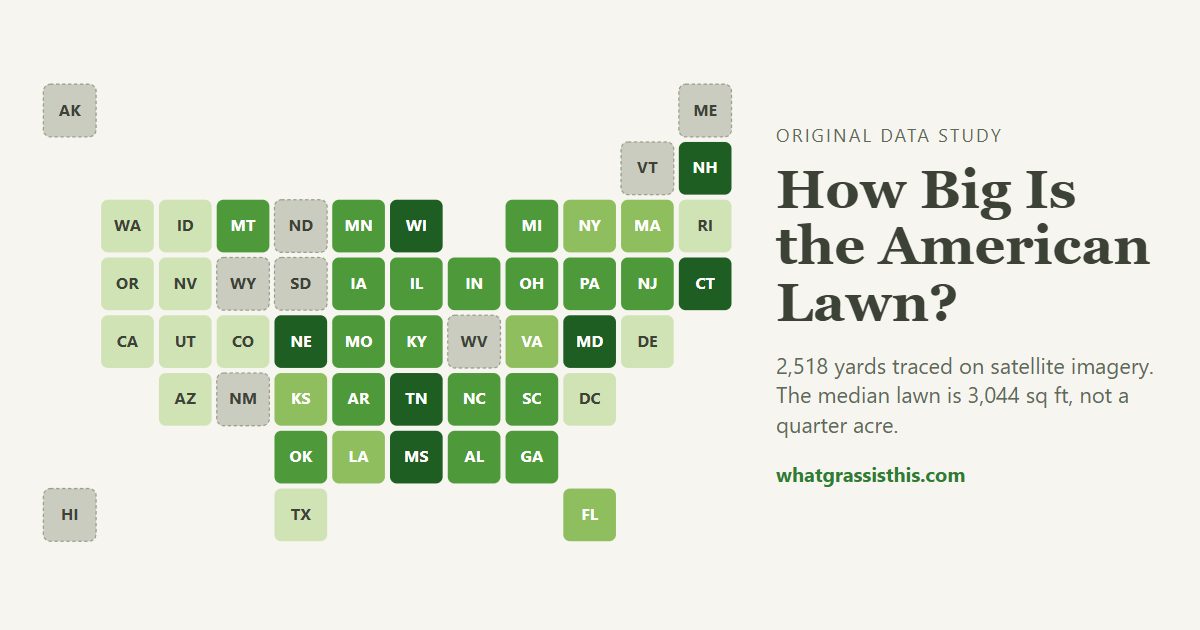 Lawn Care Tips
How Big Is the American Lawn? 3,034 Measured Yards Say 3,000 Square Feet, Not a Quarter Acre
Sep 15, 2026•6 min read

