

Lawn Care Products That Are Not Worth Your Money (2026)
 James ThorntonLawn Equipment & Maintenance Expert | 20 Years
As an Amazon Associate we earn from qualifying purchases.
Walk down the lawn care aisle at any big box store and you are not looking at a shelf of tools. You are looking at a shelf of promises. Thicker in one application. Repairs any bare spot. Feeds and kills weeds at the same time. After 20 years running a lawn care company, I can tell you which of those promises hold up, because I spent two decades getting called out to lawns where they did not.
I have watched customers throw away real money, year after year, garage after garage, on products that cannot work the way the packaging implies. Not because the homeowner did anything wrong, but because the product category itself is built around a compromise. This post walks through the categories I would skip, why they underperform, and what to do instead. If you want the flip side, the stuff that actually earns its shelf space, I keep a running list of the 35 products that ARE worth it (and the 12 to skip).
The principle underneath all of them: single-purpose products matched to your grass type and applied in the right timing window beat combination products almost every time. The combo format forces at least one ingredient to land at the wrong moment, and the generic format forces the product to ignore what is actually growing in your yard.
Weed and Feed Combos: Two Right Products at One Wrong Time
Weed and feed is the best-selling idea in the lawn aisle, and I understand why. One bag, one pass with the spreader, two problems handled. The trouble is chemistry does not care about convenience.
Weed and feed bags actually come in two different types, each with its own timing trap. Some combos pair fertilizer with a pre-emergent crabgrass preventer, and that herbicide needs to go down before weed seeds germinate, which for crabgrass means early spring when soil temperatures are still climbing through the low 50s. The fertilizer half wants grass that is ready to use it, and the right feeding window depends on your species and region: cool-season programs lean on late-summer and fall nitrogen with some flexibility on spring timing, while warm-season lawns should not be fed until they have fully greened up. Apply the combo early enough for the herbicide to work and the fertilizer often lands outside its best window. Apply it late enough for the fertilizer to make sense and the crabgrass already germinated weeks ago.
The other type, post-emergent broadleaf weed and feed, has its own problem: granular weed killer needs to stick to the moist leaves of actively growing weeds to work, so unless you apply over dewy weeds during the growing season, a good chunk of the herbicide never touches its target.
Do this instead: buy a separate pre-emergent and a separate fertilizer. It costs about the same, and you can put each one down in its own correct window. Use a soil temperature check rather than the calendar, our soil temperature tool tells you when your area is actually entering the pre-emergent window. And if you are set on a combo product anyway, at least time it properly; we cover that in our weed and feed application guide.
Spray-On Grass Seed and Repair Mixes
The all-in-one patch products, seed plus mulch plus fertilizer in a jug or shaker, promise to fix bare spots with zero thought. The demos look great. Here is what the demos do not show: the seed inside is a generic blend, and some patch kits contain a high percentage of fast-germinating annual or perennial ryegrass. Before one goes in the cart, read the seed-analysis label on the package and check that the species match your turf and your region.
Patch a Kentucky bluegrass lawn with a rye-heavy mix and you get a spot that is a different color, a different texture, and a different growth rate than everything around it. In a southern Bermuda or Zoysia lawn, a cool-season patch mix may green up fast and then cook in July. The bare spot was ugly for a month. How long the mismatch lasts depends on the species: annual ryegrass dies out on its own, while perennial ryegrass or fescue can persist for years, differing from the rest of the lawn in color, texture, growth rate, or seasonal survival.
Do this instead: figure out what grass you actually have, buy a small bag of matching seed (or plugs, for warm-season grasses that spread), scratch up the soil, and topdress lightly. It is cheaper per square foot and the repair disappears into the lawn instead of announcing itself. Not sure what you are growing? That is literally what our free lawn diagnosis is for.
Spike Aerator Shoes
I want these to work. Strap on some spikes, do your mowing, aerate for free. But physics is not on your side. Aeration relieves compaction by removing soil, which is why core aerators pull out plugs. Spikes do the opposite: they push soil aside and downward, compressing the walls of every hole they make. On a heavy clay lawn, the kind that actually needs aeration, spike shoes can leave the soil slightly worse off, and the shallow holes they make close up quickly.
There is also the practical problem that nobody walks evenly enough, densely enough, across an entire lawn to matter. A rental core aerator makes thousands of extraction points in an hour.
Do this instead: core aerate when compaction, heavy traffic, or thatch buildup actually warrants it, and do it while your grass is actively growing so it recovers fast. Split the rental with a neighbor or hire the job out. Heavily trafficked lawns may need it every year or two; ordinary lawns are fine every two to four. It is a fix for a specific problem, not an annual ritual.
Lawn Colorant Sold as a Health Fix
Let me be fair to lawn paint: it has legitimate uses. Golf courses overseed or paint dormant turf all the time, and coloring a dormant Bermuda lawn in January is a reasonable cosmetic choice. The product is not the problem.
The marketing is. When colorant is pitched as the answer to a browning lawn, it becomes a way to hide the check-engine light. Brown patches have causes: drought stress, fungal disease, grubs chewing roots, dog spots, dull mower blades tearing grass. Paint over them and the cause keeps working underneath the green. I have walked onto lawns where the grub damage was a season old because the surface looked fine from the street.
Do this instead: treat brown as information. Identify the cause first, then decide whether cosmetics matter. If the lawn is healthily dormant and you want it green for an event, fine, paint it, eyes open.
Generic One-Size Grass Seed Blends
The bags labeled for sun and shade, all climates, any lawn are engineering a contradiction. No single blend thrives in Minnesota shade and Georgia sun. What those bags actually contain is a hedge: several species mixed together in hopes that something survives wherever you dump it. Something usually does sprout, which is why the products keep selling. But sprouting is not the same as surviving August, or matching the grass you already have.
The most common failure I saw: a homeowner in the transition zone or the south overseeds with a big-box blend that is mostly fescue and rye, gets a gorgeous spring, and then watches half of it die in the summer heat, leaving a thinner lawn plus a new crop of weeds in the gaps.
Do this instead: buy seed by species and cultivar for your region and sun exposure, even if it costs more per pound. Seed is one place where the cheap bag is the expensive choice, because you pay for it again in reseeding and weed control. Our lawn products guide breaks down which seed lines are worth the premium and which combo bags to leave on the shelf.
Miracle Hose-End Soil Conditioners
These are the bottles promising to decompact soil, unlock nutrients, or replace aeration with a spray. Some list vague ingredients like soil conditioning agents or proprietary bio-stimulant blend. Here is my rule from 20 years of trying products on customer lawns: if the label will not tell you exactly what is in the bottle and at what concentration, the marketing budget is bigger than the ingredient budget.
To be fair, some ingredients in this category, humic acids, certain wetting agents, have real supporting research in specific situations, like true hydrophobic soil. The problem is the miracle framing: a diluted hose-end spray of anything is not going to transform compacted clay, and the products rarely disclose enough for you to know what you are even applying.
Do this instead: get a soil test before buying any soil amendment; our soil test kit comparison covers the mail-in labs, the county extension route, and which cheap kits to avoid. It costs less than one bottle of miracle spray and tells you where your soil actually stands. One caveat: a soil test cannot reliably measure how much nitrogen your turf needs, because soil nitrogen changes constantly. What it does well is guide pH and lime, phosphorus, and potassium, which is exactly what most amendment decisions should hinge on.
- Your county extension office offers low-cost soil testing with specific amendment recommendations for your soil, which beats guessing with any off-the-shelf conditioner.
- For herbicide and fertilizer application rates, timing windows, and product active ingredients, defer to your state extension service's turf program; rates vary by region and grass species and change as labels are updated.
- Extension turf pages also publish recommended seed cultivar lists for your state, which is the fastest way to avoid the generic-blend trap.
Cheap Plastic-Gear Spreaders
A $25 spreader seems like a smart save, since it is just a hopper on wheels. But the spreader is the one tool that touches every product you apply. Cheap models have flimsy flow gates that do not calibrate accurately, plastic gears that strip mid-season, and spread patterns so uneven you get striped lawns, fed here, striped, burned there. When your spreader over-applies, every bag you ever buy costs more than it should, and when it under-applies, the products you researched carefully just quietly fail.
Do this instead: spend once on a mid-range broadcast spreader with a metal frame and an adjustable, repeatable rate dial, and calibrate it: weigh out what the label says your test strip should take, spread it, and adjust the setting until the hopper empties where the math says it should. Every accurately applied bag after that is money the cheap spreader would have wasted. The same buy-once logic applies to liquid applications: a rebuildable backpack sprayer outlives a shelf of disposable pump bottles. If you are deciding between styles, our broadcast vs drop spreader comparison covers which suits which lawn size.
Recommended products
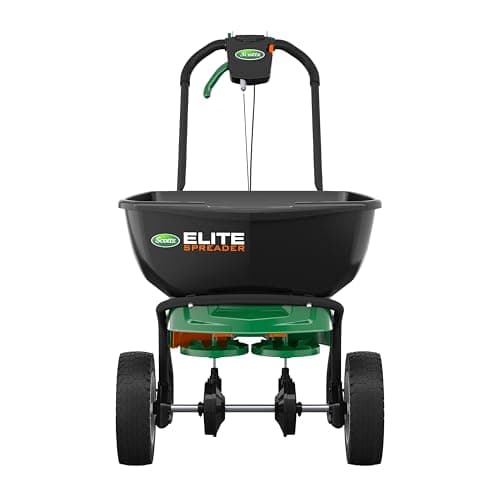
Scotts Elite Spreader
A dual-rotor broadcast spreader with pneumatic tires and repeatable rate settings.
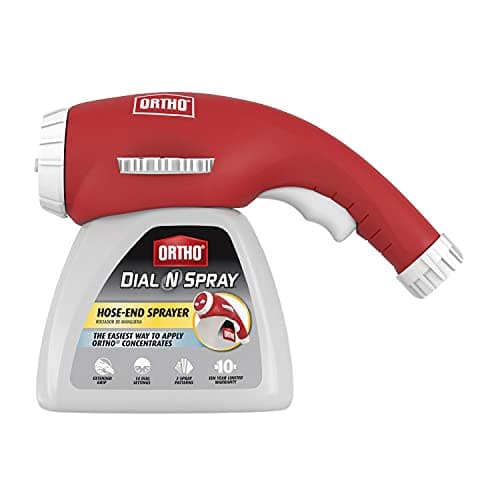
Ortho Dial N Spray Hose-End Sprayer
A refillable hose-end sprayer with fourteen dilution settings.
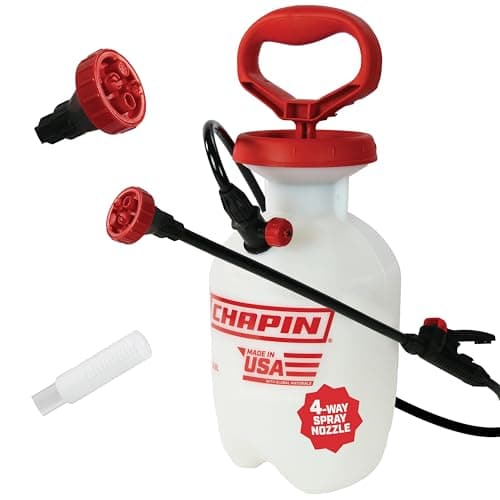
Chapin 20084 1-Gallon Pump Sprayer
A rebuildable one gallon pump sprayer with replaceable seals and a four-in-one nozzle.
Overpriced Starter Bundles
The complete lawn kits, four bags, four steps, one branded system, sell certainty. Follow the numbers and you cannot mess up. The problem is the schedule printed on the box was written for an average lawn in an average climate, and your lawn is not average. Step 1 may be a pre-emergent you do not need because your lawn has no crabgrass pressure. Step 3 may land in a summer window when your cool-season grass should not be pushed with nitrogen at all. You pay a bundle premium to apply products on someone else's calendar.
Bundles also lock you into one form factor. Sometimes granular is right, sometimes liquid is, and the answer depends on the job; our liquid vs granular fertilizer breakdown gets into when each wins.
Do this instead: build your own program from single-purpose products chosen for your grass and region. It is usually cheaper than the bundle and every application lands in its own correct window. This is exactly the gap a personalized plan closes: a personalized 12-month plan recommends the product categories and timing windows for your zip code and grass type. You still check each pick against its label, the weather, and any local restrictions, but you stop guessing in the aisle. Start with a free diagnosis of your lawn and it builds the calendar for you.
The Real Cost Is the Lost Season
Most avoid-these-products lists stop at the wasted money, and sure, $50 on spike shoes stings. But the real cost of the wrong product is time you cannot buy back. Lawn care runs on windows. Miss the pre-emergent window because your weed and feed went down three weeks late, and you cannot re-run it. You fight crabgrass all summer and wait until next spring for another shot. Overseed with the wrong blend in September and you do not find out it failed until the following July, at which point the next good seeding window is another two months out.
A bad product does not just waste its purchase price. It occupies the one slot in the calendar where the right product would have worked, and it charges you a full year of interest. That is why I care more about timing and matching than about price, and why the expensive-looking single-purpose product applied in the right week is almost always the cheap option.
How to Evaluate Any Lawn Product in 5 Steps
- Match it to your grass type. If the label does not name your species (or you do not know your species yet), stop. Identification comes before shopping, every time.
- Check the timing window. Is this the right week for this product in your region, not on the bag's printed schedule? Soil temperature governs crabgrass pre-emergent timing and some seeding windows; check yours with the soil temperature tool. Other windows hinge on growth stage, air temperature, moisture, the weather ahead, and what the label allows.
- Read the active ingredients. A trustworthy label names its actives and rates. Vague proprietary blend language on anything you spread across your whole yard is a pass.
- Run the per-1,000-sq-ft math. Measure your lawn with the lawn size calculator, then compare cost per 1,000 square feet at label rates, the fertilizer calculator does this math for you. Small bags with big promises usually lose this comparison badly.
- Prefer single-purpose over combo. If a product does two jobs, ask which job is getting done at the wrong time. Then check whether it made the cut in the 35 products that ARE worth it (and the 12 to skip) before it goes in the cart.
Bottom line: Skip the combos, the miracle sprays, the spike shoes, and the generic blends. Match single-purpose products to your grass type and apply them in the right window, and half the lawn aisle becomes irrelevant. If you do not know your grass type or what is actually wrong with your lawn, start with a free lawn diagnosis; it identifies your grass, flags the real problem, and a personalized plan then maps the exact products and weeks for your zip code so every dollar lands where it works.
Top Picks
- Scotts Turf Builder Weed and Feed 3 (5,000 sq. ft.)Check price on Amazon
- MySoil Soil Test KitCheck price on Amazon
- PetraTools Liquid Iron for LawnsCheck price on Amazon
As an Amazon Associate we earn from qualifying purchases.
Free Lawn Care Tools
Not always, but the combo format forces a compromise. Pre-emergent herbicide and fertilizer have different ideal timing windows for most grasses, so applying both at once usually means one of them lands at the wrong time. Buying a separate pre-emergent and a separate fertilizer costs about the same and lets you time each one correctly.
They can sprout something, but the seed inside is usually a generic blend that may not match your existing grass type or climate. A patch repaired with the wrong species often looks worse than the bare spot did. Buying seed that matches your lawn and topdressing it yourself is cheaper and blends in properly.
No. Spikes push soil sideways and can compact the walls of each hole rather than relieving compaction. Core aeration, which removes plugs of soil, is what actually opens up compacted ground. Renting a core aerator or hiring the job out once a year does more than a season of walking in spike shoes.
Quality lawn colorants are generally safe for grass and have legitimate uses, like overwintering dormant warm-season lawns or patching for an event. The problem is when colorant is marketed or used as a fix for a sick lawn. It hides symptoms of drought stress, disease, or grubs while the underlying problem keeps getting worse.
Most generic blends are built to germinate fast in a wide range of conditions, not to thrive in your specific one. A blend heavy in cool-season ryegrass will struggle in a hot southern summer, and a sun-loving mix will thin out under shade. Matching species to your region, sun exposure, and existing turf matters more than the brand on the bag.
Run it through five checks: does it match your grass type, does the timing window fit your calendar right now, does the label clearly state the active ingredients and rates, what does it cost per 1,000 square feet compared to single-purpose alternatives, and is it trying to do two jobs at once. Products that fail two or more of those checks usually disappoint.

Beat weeds and brown spots from your phone
Snap a photo, get the fix, and follow a plan timed to your soil and weather. Free on iPhone.
Related Articles
 Lawn Care Tips
Creeping Thyme Lawn: Where It Fits and How to Start Small
Oct 13, 2026•3 min read Lawn Care Tips
Powdery Mildew on Grass: Check the White Coating and Fix the Conditions
Oct 8, 2026•3 min read Lawn Care Tips
Florida Betony in Lawns: Identify the Tubers and Control Regrowth
Oct 7, 2026•3 min read

