

How to Keep Your Lawn Green in the Summer Heat
 Sarah MitchellLawn Diagnostics Specialist | 12 Years
As an Amazon Associate we earn from qualifying purchases.
Brown patches, crunchy blades, and spiking water bills usually trace back to the same issue: reacting to summer stress with more water and fertilizer instead of diagnosing what the grass actually needs. The symptom you are seeing usually points to one of a few things - heat stress, drought stress, dormancy, disease, insects, or poor soil - and each one has a different fix.
Understanding why this happens helps you prevent it next time. Grass biology, soil structure, local climate, and irrigation design matter more than any single product. This guide breaks down how to keep your lawn green in the summer heat step by step, with region-specific tips and clear decision points so you can match the strategy to your lawn, not someone else’s.
If your lawn turns bluish-green, feels limp, and shows footprints that stay visible for minutes, it is usually early drought or heat stress, not permanent damage. Confirm by pushing a screwdriver or soil probe 6 inches into the soil; if it is hard to push past 2-3 inches, the root zone is dry and needs a deep watering, not daily light sprinkles.
Give the lawn 0.5-0.75 inches of water in one irrigation (measured with a few tuna cans) in the early morning, then wait 2-3 days and recheck soil moisture before watering again. Raise your mowing height by 0.5-1 inch, sharpen the mower blade, and avoid fertilizing with high-nitrogen products during the heat wave. In 5-10 days, most heat-stressed but still-living lawns start to regain green color from the crown outward if moisture is adequate.
- Most lawns stay healthier in summer when they receive about 1.0-1.5 inches of water per week in 2 deep soakings instead of daily light watering.
- Raising mowing height by 0.5-1.0 inch in summer can reduce soil temperature at the surface by several degrees and noticeably slow browning.
- Cool-season grasses can survive 3-4 weeks of summer dormancy with little water if crowns stay alive, but warm-season grasses usually need at least 0.5 inches every 1-2 weeks to avoid damage.
- Dull mower blades can increase water loss and make tips look brown within 24 hours, even when watering and fertilizing are correct.
- Fertilizing heavily with nitrogen during a heat wave often triggers disease outbreaks and burnout within 7-10 days, especially on cool-season lawns.
Understand What Your Lawn Needs to Stay Green in Summer Heat
Understanding what your lawn needs to stay green in summer heat starts with knowing your grass type, how it responds to stress, and how your specific site and microclimate intensify heat and drought.
Recommended products
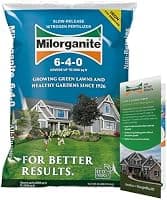
Milorganite Lawn and Garden Nitrogen Fertilizer 6-4-0
Slow-release organic nitrogen fertilizer that feeds your lawn gradually without burning, even in summer heat.
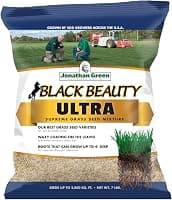
Jonathan Green (10322) Black Beauty Ultra Grass Seed - Cool Season Lawn Seed (7 lb)
Premium cool-season grass seed blend that germinates quickly and fills in bare spots.
Before changing your watering schedule or buying new products, it helps to diagnose what you are working with. Let us diagnose this step by step: grass type, stress type, and site conditions create the framework for every other decision in this guide.
Know Your Grass Type: Cool-Season vs Warm-Season vs Transition-Zone Blends
Knowing whether you have cool-season grass, warm-season grass, or a blend determines the right way to keep your lawn green in the summer heat because each group handles heat, water, and dormancy very differently.
Cool-season grasses include Kentucky bluegrass, tall fescue, fine fescues, and perennial ryegrass. They grow best in spring and fall, and start to struggle when temperatures regularly sit above roughly 80-85°F. In many northern and transition-zone lawns, these grasses naturally slow down, thin, and may go tan or light brown in midsummer if stressed. Pushing them to stay bright green through extreme heat usually requires deeper roots, careful watering, and avoiding heavy fertilization in midsummer.
Warm-season grasses include Bermudagrass, Zoysia, St. Augustine, centipedegrass, and bahiagrass. They love heat, grow best when daytime highs are in the 80s and 90s, and generally stay green in summer if they have enough water and nutrients. Their main risk is drought and thatch, not heat itself. They often go brown in winter, then green up when soil warms in late spring.
In the transition zone (roughly the middle of the US) summers are hot enough and winters cold enough that neither group is perfect. Lawns might be tall fescue, Kentucky bluegrass, Bermudagrass, Zoysia, or blends. Here, grass choice strongly affects how realistic it is to keep the lawn green every week of summer. A cool-season lawn in a hot transition-zone city may be allowed partial dormancy during the worst heat, while a Bermudagrass yard can often stay green with efficient watering.
To identify what you have, look at blade width, texture, growth habit, and seasonal color. Tall fescue has wider, coarse blades that stay clumpier. Kentucky bluegrass spreads by underground rhizomes and has boat-shaped tips. Bermudagrass is fine-textured and forms a dense, wiry mat with runners. St. Augustine has very broad, coarse blades on thick stolons. If in doubt, compare photos from your state’s extension turf resources or take a plug to your local extension office.
Grass type affects everything in this guide: cool-season lawns get higher mowing and protective summer care, while warm-season lawns can tolerate lower mowing and may accept a light summer feeding. Matching strategy to type is the difference between supporting the plant and fighting its natural growth cycle.
Understand Heat Stress vs Drought Stress (and Dormancy)
Understanding heat stress, drought stress, and dormancy is essential because some browning in summer is reversible stress while other browning is permanent damage that needs repair.
Heat stress usually shows as wilting, a dull bluish-green color, and footprints that remain visible for several minutes. Blades may fold or curl lengthwise to conserve water. The soil might still feel somewhat moist an inch or two down, but the plant cannot cool itself effectively in the hot air. This is common during sudden heat waves.
Drought stress appears when the root zone is actually dry. Grass turns tan or straw-colored, feels crunchy, and blades break rather than bend. Patches may start in sunny or sloped areas that dry first. If drought is not relieved, roots can die, not just the blades.
Summer dormancy is the grass’s survival mode. Cool-season grasses in particular will shut down growth and let blades go brown to protect the crown and roots when heat and dryness are high. Dormant turf can look almost dead, but crowns (the white growing point at soil line) remain alive.
Two simple tests help separate dormant from dead:
- Tug test: Grip a handful of brown grass and tug gently. If it resists and stays anchored, crowns and roots are likely alive. If it pulls out easily with little resistance and few roots attached, that area is probably dead.
- Scratch test: Dig up a small plug and use your fingernail or a knife to scratch the crown or upper stem. If you see moist, whitish or greenish tissue inside, it is alive. If it is dry, brown all the way through, that plant is dead.
Cool-season grasses can often stay dormant for 3-4 weeks or more if they receive at least 0.25-0.5 inches of water every 2-3 weeks to keep crowns from completely drying. Warm-season grasses tolerate heat better but may suffer root loss if soil stays bone dry for long stretches. Knowing which condition you have prevents wasting water on dead patches or overwatering disease-prone but heat-stressed areas.
Assess Your Microclimate and Site Conditions
Assessing your yard’s microclimate and site conditions explains why some areas burn out in summer heat while others stay green under the same watering schedule.
Start with sun vs shade. Full-sun lawn areas get the most heat and evaporate moisture faster, but warm-season grasses in particular often perform best there. Shaded areas stay cooler and lose water slower, yet grass in heavy shade usually has weaker roots and is more prone to thinning under stress. A tall fescue lawn in open sun behaves very differently from a patch under a dense maple tree.
Next look for heat islands. Concrete driveways, stone patios, south or west-facing walls, and light-colored fences all reflect heat onto adjacent turf. Lawns bordered by sidewalks often get stripes of brown closest to the hardscape even when watering is adequate elsewhere. This is usually a microclimate problem, not a sprinkler coverage issue.
Finally, consider slopes and low spots. Slopes shed water quickly and dry out faster in heat, and they are prone to runoff when watering. Low spots and compacted areas may stay wet, then develop disease or thin roots that fail once things heat up.
In some locations the most realistic solution is not to keep forcing grass to perform. Turning a chronically stressed strip along a south-facing wall into a mulched planting bed or using drought-tolerant groundcovers can improve the whole yard’s look and reduce wasted water. The goal is a healthy, green landscape, not turf at any cost.
Build a Summer-Resilient Lawn from the Soil Up
Building a summer-resilient lawn from the soil up means improving soil test results, structure, and root depth so the grass can handle heat and drought with less emergency intervention.
A lawn with deep roots in well-structured soil can often go several extra days between waterings in a heat wave compared to one on compacted, low-organic-matter soil. The practices in this section are best done in spring or fall, but they directly determine how your lawn behaves in July and August.
Test and Amend Your Soil Before Summer Stress Hits
Testing and amending your soil before summer stress hits gives you the data needed to support a green lawn in heat instead of guessing with fertilizer and lime.
A basic soil test usually reports pH, organic matter percentage, macronutrients (N, P, K), and sometimes salinity or soluble salts. These factors drive how well roots grow, how water moves, and how efficiently grass uses fertilizer, especially under heat stress.
To get a good test, take 10-15 cores from across the lawn at a depth of about 3-4 inches for established turf, mix them in a clean bucket, and send a composite sample to a reputable lab. Avoid sampling within about 4-6 weeks after fertilizing or liming when possible so the results reflect the soil, not a very recent surface application.
When results arrive, pay particular attention to:
- pH: Most turfgrasses prefer roughly 6.0-7.0. If pH is low, lime is often recommended. If high, elemental sulfur or acidifying practices may help over time. Correct pH improves nutrient availability and root function under stress.
- Organic matter: Higher organic matter (within reason) generally improves water holding capacity and resilience. Very sandy soils often have low organic matter and dry out fast.
- Soluble salts: High salts worsen drought stress because plants have a harder time taking up water. Some synthetic fertilizers and poor-quality irrigation water can add salts.
Common corrective actions include applying lime or sulfur according to lab recommendations, and adding organic matter with compost topdressing. Avoid high-salt amendments or overuse of quick-release fertilizers, which can make heat stress worse by dehydrating roots.
- Penn State Extension guidance emphasizes regular soil testing every few years for lawns, noting that adjusting pH and nutrients based on test results is key to strong roots and stress tolerance.
Improve Soil Structure and Root Depth
Improving soil structure and root depth is the most powerful long-term way to keep your lawn green in the summer heat because deeper roots have access to cooler, moister soil.
Core aeration is the primary tool for relieving compaction in established lawns. It removes small plugs of soil, allowing air, water, and nutrients to penetrate and giving roots space to grow. For cool-season grasses, aeration is best done in early fall or spring so roots can recover before summer. For warm-season grasses, late spring to early summer, once growth is vigorous, is usually ideal.
After aeration, topdressing with a thin layer (about 0.25 inch) of quality compost and lightly working it into the holes can significantly improve water retention and microbial activity over time. This helps the soil hold moisture more evenly, reducing hot spots that go dry first in a heat wave.
Avoid deep tilling in established lawns. While tilling can loosen soil, it also destroys soil structure and can create layers that hold water poorly. In turf, the goal is gradual improvement, not starting over every season.
Watering deeply but infrequently (detailed later) reinforces root depth by encouraging roots to chase moisture downward instead of staying near the surface. Taken together, aeration, organic matter, and correct watering build a root system that can bridge longer dry intervals in summer without browning.
Choose and Maintain the Right Grass Variety (Advanced)
Choosing and maintaining the right grass variety for your climate is an advanced but highly effective way to improve how green your lawn stays in summer heat over the long term.
Newer cultivars of both cool-season and warm-season grasses often have improved heat and drought tolerance. For example, some tall fescue varieties develop deeper roots and maintain color with less water compared to older types. In cool-season regions with repetitive summer stress, overseeding with more heat-tolerant varieties each fall can gradually shift your lawn toward a more resilient mix.
Where existing turf repeatedly fails every summer despite correct care, it may be smarter to renovate and switch grass types. A Kentucky bluegrass lawn in a hot, full-sun, southern transition-zone yard may be an ongoing struggle, while converting to Bermudagrass or Zoysia could significantly improve summer performance, accepting winter dormancy as the tradeoff.
When overseeding cool-season lawns to improve resilience, a high-quality blend like Jonathan Green (10322) Black Beauty Ultra Grass Seed - Cool Season Lawn Seed (7 lb) can be a good fit. It is best for homeowners in cool-season or transition regions who want darker color and better drought tolerance, and who are already planning a fall overseeding or renovation. Pair overseeding with soil improvements and proper watering to get the full summer benefit in the following year.
For more detail on matching species and cultivars to your location, topics like How to Choose the Best Grass Seed for Your Climate and Fall Lawn Overseeding & Prep Guide are useful deeper dives.
Master Watering Strategy to Keep Your Lawn Green in the Summer Heat
Mastering watering strategy to keep your lawn green in the summer heat means applying the right amount of water in deep, infrequent cycles at the best time of day for your soil and grass type.
Most homeowners struggling with summer color either water too often but too shallow or not enough during actual drought. A structured approach based on measurable output changes that.
Deep and Infrequent Watering: How Much and How Often
Deep and infrequent watering keeps your lawn greener in summer by encouraging deep roots and reducing disease, whereas frequent shallow watering keeps roots at the surface where heat and dryness are worst.
As a general guideline, most lawns need about 1.0-1.5 inches of water per week from rain plus irrigation during active summer growth. Cool-season grasses in moderate climates might do well on the lower end, while warm-season grasses in hot, dry climates may require closer to 1.5 inches.
Because sprinkler systems vary widely, measure your actual output. Place several straight-sided cans (tuna cans or similar) around a zone and run sprinklers for 15-20 minutes. Measure the average depth. If you get 0.25 inches in 20 minutes, for example, you know it takes about 80 minutes total run time to deliver 1 inch in that zone, which you can split into 2-3 shorter cycles to prevent runoff.
Sample schedules, adjusted by soil type:
- Cool-season lawns, moderate heat (highs 75-85°F): 0.5 inches twice per week, with at least 2-3 days between waterings, on loam soils. Sandy soils may need 3 smaller waterings; clay soils may require cycle-and-soak (explained below).
- Cool-season lawns, extreme heat waves (highs 90°F+): 0.5-0.75 inches twice per week if allowed by local rules, or 0.75-1 inch once per week as a survival watering if water is limited. The priority is keeping crowns alive, even if color fades.
- Warm-season lawns, hot, dry climates: 0.75 inches twice per week or 0.5 inches three times per week on very sandy soil. Where water is scarce, 1.0 inch per week may be enough to keep acceptable color if mowing height and soil health are optimized.
Soil type modifies these numbers. Sandy soil drains quickly and cannot hold as much water, so irrigations should be smaller but more frequent. Clay soil holds more water but accepts water slowly, so run times should be broken into short cycles with rest periods to soak in.
Perfect Your Watering Timing and Technique
Perfecting your watering timing and technique improves summer color by delivering water when the grass can use it best and minimizing disease and runoff.
The ideal time to water is early morning, roughly between 4 a.m. and 9 a.m. Air is cooler, wind is lower, and evaporation is reduced. Leaves dry shortly after sunrise, which limits fungal disease risk. Late evening watering is less desirable because leaves stay wet all night, creating a favorable environment for diseases like brown patch and dollar spot, especially in humid climates.
Midday watering is often considered wasteful because evaporation is higher, but there is one specific exception. On golf courses and athletic fields, a quick 1-3 minute light application called "syringing" is sometimes used to cool the canopy during extreme heat. For home lawns, this is rarely necessary and can encourage shallow roots if used frequently. It should only be considered as a short term emergency measure on very hot, windy days for high-value areas, not as a regular practice.
If you have an irrigation system, adjust zones individually:
- Rotors (large rotating heads) cover bigger areas but apply water more slowly, so run times will be longer than for sprays to achieve the same depth.
- Sprays (fixed fan nozzles) apply water faster, so you may need shorter runs or more cycles to avoid puddling, especially on clay or slopes.
- Drip along edges and beds delivers water directly to soil with minimal evaporation, useful for narrow strips or areas prone to overspray onto pavement.
Use "cycle and soak" on compacted or sloped areas: instead of one 20 minute run, schedule 3 runs of about 7 minutes each, spaced 30-60 minutes apart. This reduces runoff and helps water penetrate to the root zone.
Smart Irrigation Tools and Drought Restrictions
Smart irrigation tools and adapting to drought restrictions allow you to keep your lawn as green as possible in summer heat while obeying watering limits and avoiding waste.
Smart controllers, rain sensors, and soil moisture sensors can adjust watering based on weather and soil conditions. A controller that uses local weather data can automatically reduce watering after rain or during cooler weeks, and increase it slightly during hotter stretches, all while staying within your programmed maximums. Soil moisture sensors in representative zones can prevent watering when soil is already adequately moist.
When drought restrictions limit watering to certain days or frequencies, prioritize:
- Keeping the entire lawn at least minimally watered to preserve crowns, even if color fades.
- Focusing full-depth waterings on high-visibility or high-use areas such as the front yard or play area.
- Allowing out-of-the-way or low-value areas to go partially dormant if necessary.
Supplement with targeted hand-watering for the hottest microclimates, such as narrow strips along sidewalks, sunny slopes, and areas near reflective walls. A 5-10 minute focused soak with a hose-end nozzle can keep these from burning without increasing run times for the entire system.
For more detail on yearly irrigation adjustments, a topic like Lawn Watering Schedule by Season can help you plan how summer watering fits into the overall calendar.
Adjust Mowing and Maintenance to Reduce Summer Stress
Adjusting mowing and maintenance to reduce summer stress helps keep your lawn green by protecting crowns, shading the soil, and minimizing wounds when the grass is most vulnerable.
Watering is only part of the equation. Mowing height, blade sharpness, and timing of aggressive work can make the difference between a lawn that stays green in heat and one that browns even with proper irrigation.
Mow Higher in Summer to Shade Roots and Soil
Mowing higher in summer helps keep your lawn green by shading the soil surface, reducing temperature, and slowing moisture loss.
Each grass type has an optimal mowing range, and in summer it is wise to stay at the higher end of that range. The following table summarizes typical summer mowing heights for common grasses:
| Grass Type | Category | Typical Summer Mowing Height |
|---|---|---|
| Tall fescue | Cool-season | 3.0 - 4.0 inches |
| Kentucky bluegrass | Cool-season | 2.5 - 3.5 inches |
| Perennial ryegrass | Cool-season | 2.5 - 3.0 inches |
| Bermudagrass (home lawn) | Warm-season | 1.0 - 2.0 inches |
| Zoysiagrass | Warm-season | 1.0 - 2.5 inches |
| St. Augustinegrass | Warm-season | 3.0 - 4.0 inches |
| Centipedegrass | Warm-season | 1.5 - 2.5 inches |
Within those ranges, increase your mowing height by about 0.5-1.0 inch when heat arrives. Taller blades shade the soil, keeping it cooler and slowing evaporation. They also provide more leaf area for photosynthesis, which supports root growth and recovery from stress.
Follow the "one-third rule": never remove more than one-third of the grass height in a single mowing. For example, if you are mowing tall fescue at 3.5 inches, cut when it reaches about 5 inches. Cutting more than that at once can shock the plant, expose stems, and make the lawn look scalped and pale, especially harmful during summer.
Keep Mower Blades Sharp and Mowing Practices Smart
Keeping mower blades sharp and mowing practices smart reduces summer browning by minimizing injury to leaf tips and avoiding added stress on already heat-challenged turf.
Dull mower blades tear grass instead of cutting it cleanly. Torn tips lose water faster, turn brown, and make the lawn look dry and unhealthy even when moisture is adequate. In summer, those ragged edges are also more prone to disease entry. Sharpen mower blades at least once or twice per season, and more often if mowing very frequently.
Adjust mowing schedule to growth, not the calendar. When heat slows growth, you may only need to mow every 7-10 days for cool-season lawns, while warm-season lawns may still grow faster. Avoid mowing when grass is already wilting or during the heat of the afternoon. Early evening or mid-morning after dew dries are better windows.
Change mowing patterns periodically to avoid compacting the same wheel tracks and to reduce rutting or scalping on uneven spots. If the lawn gets unusually tall between cuts (for example, after vacation or heavy rain), raise the mower, take off only the top third, and then lower gradually over successive mowings rather than cutting back to your normal height all at once.
Decide between mulching and bagging clippings based on conditions. Mulching (letting clippings fall) usually helps retain moisture and adds a small amount of nitrogen back to the lawn, which is beneficial in summer. However, bag clippings if grass is very tall, if clumps are forming and smothering spots, or if you are dealing with active disease and want to reduce infected material.
Control Thatch and Compaction That Worsen Heat Damage
Controlling thatch and compaction that worsen heat damage lets water and air reach roots more effectively, improving summer color without overwatering.
Thatch is the layer of undecomposed stems, roots, and organic material between the soil surface and green leaves. A thin layer (under about 0.5 inch) is normal and even helpful, but thicker layers can act like a sponge that stays dry, preventing water from reaching roots, and can increase heat and drought stress.
Signs of thatch problems include a bouncy feel underfoot, water running off instead of soaking in, and roots growing mainly in the thatch instead of the soil. To check, cut a small pie-shaped plug and measure the brownish layer between green leaves and soil. If it is thicker than roughly 0.5 inch, thatch management is worth considering.
Heavy dethatching or power raking is stressful and is usually not recommended during peak summer heat, especially for cool-season lawns. The best windows are early fall for cool-season grasses and late spring to early summer for warm-season grasses, when recovery is fastest. Core aeration, as discussed earlier, also helps reduce thatch over time by mixing soil into the thatch layer and promoting decomposition.
In some soils, liquid soil conditioners and wetting agents can improve water infiltration and distribution. These products are not cure-alls, but on hydrophobic (water-repelling) soils they may help even out dry spots and allow irrigation to be more effective, especially when combined with physical practices like aeration.
Feed and Protect Your Lawn Wisely During Summer Heat
Feeding and protecting your lawn wisely during summer heat means using light, slow nutrition, strengthening soil biology, and carefully diagnosing disease and insect issues before treating.
Summer is the wrong time for aggressive feeding on most cool-season lawns, but with the right products and timing, both cool-season and warm-season lawns can maintain healthy color without being pushed too hard.
Fertilizing Strategy for Summer: Less Is More
Using a "less is more" fertilizing strategy in summer prevents fertilizer burn, disease flare-ups, and excessive growth that stresses your lawn in the heat.
Cool-season grasses are typically fertilized most heavily in fall and sometimes lightly in spring. Heavy nitrogen feeding during hot weather can drive lush top growth at a time when roots are under stress, increasing the risk of diseases like brown patch and burnout if water is not perfect. For most cool-season lawns, it is best to avoid high-nitrogen applications during the hottest part of summer, postponing major feedings until early fall.
Warm-season grasses, by contrast, are in their prime growth period in summer. They can often benefit from a modest mid-summer feeding, provided water is adequate. Even then, slow-release formulations are preferred to avoid rapid flushes of growth that demand more water and mowing.
Slow-release granular fertilizers and organic-based products are generally safer in heat than quick-release, high-salt synthetics. For example, Milorganite Lawn and Garden Nitrogen Fertilizer 6-4-0 is a slow-release organic nitrogen source that releases nutrients gradually and is unlikely to burn, even in summer. It fits best for homeowners who want gentle, extended feeding for either cool- or warm-season lawns and who are focused on soil health as well as color.
Always read labels for NPK ratios and wording about "slow release" or "controlled release." Watch for cautions about temperature or moisture. If a product warns against use in high heat or on drought-stressed turf, wait until conditions improve or choose a more summer-friendly alternative.
- Purdue Turfgrass Science materials consistently emphasize that cool-season lawns should receive most of their annual nitrogen in fall, with minimal or no high-nitrogen applications during peak summer heat to reduce stress and disease risk.
Use Soil Conditioners, Wetting Agents, and Organic Boosters
Using soil conditioners, wetting agents, and organic boosters can help your lawn stay greener in summer by improving how water and nutrients move through the soil without overreliance on synthetic fertilizers.
Wetting agents (surfactants) help water spread more evenly through hydrophobic soils. On lawns where water beads up or runs off rather than soaking in, a properly labeled turf wetting agent applied according to instructions can make each irrigation more effective. These are especially useful in sandy or thatch-heavy soils but should not replace core aeration or good watering practices.
Organic boosters like humic acid, seaweed or kelp extracts, and compost teas aim to support microbial activity and root health. While the research on some of these is still evolving, many homeowners report improved stress tolerance, particularly when combined with solid cultural practices. They are generally low risk and can be part of a balanced program rather than the sole strategy.
Topdressing with compost remains one of the most proven organic approaches. A light layer in spring or fall builds organic matter, improves water-holding capacity, and supplies a slow trickle of nutrients that supports steady, not excessive, summer growth.
Disease, Insect, and Weed Pressure in Summer
Disease, insect, and weed pressure in summer often mimic drought or heat damage, so correct diagnosis is essential before changing watering or applying products.
Common summer lawn diseases include:
- Brown patch: Often affects tall fescue and other cool-season grasses in hot, humid weather, creating circular brown patches that may have a darker ring at the edge. Leaves can appear water-soaked or have lesions.
- Dollar spot: Causes small, silver-dollar-sized spots that can merge into larger areas. Blades may have bleached lesions with reddish-brown borders.
- Leaf spot and melting out: Start as small dark spots on leaves, which can progress to larger thinned areas under stress.
If brown areas stay moist, have a distinct pattern, or show spots or lesions on blades when examined closely, disease is a strong possibility. Many homeowners mistakenly respond by watering more, which often worsens fungal issues. Cultural controls, such as avoiding nighttime watering, reducing thatch, and not overfertilizing with nitrogen, are the first line of defense. Fungicides may be warranted in severe or recurring cases, ideally selected and timed based on extension guidance or label directions.
Insects that cause summer thinning include white grubs, which chew roots, and chin bugs or armyworms, which feed on leaves. Suspect grubs if turf feels spongy and can be rolled back like a carpet. Confirm by peeling back a 1-square-foot section and counting grubs; if you find roughly 10 or more per square foot, treatment is typically justified. Chinch bug damage often appears as irregular yellowing patches in sunny areas that do not respond to watering, and you may see small black-and-white bugs in the thatch.
Weeds also take advantage of thin, heat-stressed turf. Crabgrass and other annual grassy weeds germinate in spring and explode in summer heat where turf is weak. Broadleaf weeds like spurge, knotweed, and purslane spread in compacted or bare spots. Post-emergent weed control in summer must be done carefully, watching temperature limits on herbicide labels to avoid damaging desirable turf. Long term, the best weed control for summer appearance is dense, healthy grass maintained through proper seeding, mowing, and fertilizing at the right seasons.
For detailed tactics, related topics like How to Treat Lawn Fungus Without Killing the Grass and Grub Control Guide for Lawns offer step-by-step treatment options once a diagnosis is confirmed.
Region-Specific Strategies to Keep Your Lawn Green in the Summer Heat
Region-specific strategies are crucial for keeping your lawn green in the summer heat because humidity, rainfall, temperatures, and soil types vary widely across the country.
The same grass species behaves differently in a humid Gulf Coast summer versus a dry inland West climate. Adjusting your expectations and tactics by region avoids frustration and wasted effort.
Hot-Humid Climates (Southeast, Gulf States)
In hot-humid climates, keeping your lawn green in summer heat means prioritizing disease management, airflow, and thatch control just as much as watering.
Challenges include warm nights that never let turf cool down, high humidity that keeps leaves wet, and frequent thunderstorms that can cause alternating saturated and dry periods. St. Augustinegrass, Zoysia, and Bermudagrass are common here and generally handle heat well, but they are prone to fungal diseases in these conditions.
Key strategies:
- Water early and deeply so leaves dry by mid-morning. Avoid evening irrigation that extends the wet period overnight.
- Manage thatch on St. Augustine and Zoysia, which naturally produce more thatch. Timely aeration and, where appropriate, light dethatching in the right season reduce disease-prone layers.
- Encourage airflow by trimming shrubs, thinning dense plantings, and avoiding overwatering that keeps the soil saturated.
Realistic expectations in tropical-style summers might include brief disease-related discoloration even with good care. The goal is to minimize severity and duration, not necessarily to have a golf-course-perfect lawn through every storm cycle.
Hot-Dry and Desert Climates (Southwest, Interior West)
In hot-dry and desert climates, keeping your lawn green in the summer heat means maximizing irrigation efficiency, improving soil, and often reducing the lawn area to what you can reasonably support.
Challenges here include intense sun, very low humidity, rapid evaporation, and often alkaline soils with higher salts. Cool-season lawns are difficult to maintain without very high water use, so many homeowners either choose warm-season grasses or shrink the turf footprint and surround it with drought-tolerant landscaping.
Priority strategies:
- Consider xeriscaping part of the yard, especially front or side areas, with drought-tolerant plants, gravel, and mulch, keeping turf where it is most used or visible.
- Use efficient irrigation: matched-precipitation rotors, high-efficiency nozzles, and drip for borders and tight strips reduce waste. Test output carefully and adjust run times seasonally.
- Amend soils with compost and, where appropriate, gypsum or other amendments recommended by a soil test to improve structure and help manage salt and alkalinity.
Warm-season grasses such as Bermuda and some Zoysia types can stay reasonably green with less water than cool-season species, but deep, infrequent watering is still critical. In the hottest, driest periods, accepting a slightly less intense green or partial dormancy while keeping crowns alive is often the most realistic and sustainable goal.
Cool-Season Regions with Sudden Heat Waves (North, Midwest, Pacific Northwest)
In cool-season regions with sudden heat waves, keeping your lawn green means protecting cool-season grasses through temporary stress periods rather than forcing perfect color every day.
Here, grasses like Kentucky bluegrass and tall fescue are adapted to milder summers. When temperatures spike into the 90s°F for days or weeks, they often shut down growth and may go partially dormant. Trying to keep them peak green with heavy fertilization and extra mowing often backfires.
Key strategies during heat waves:
- Embrace temporary dormancy if needed. A tan lawn can be normal and recoverable as long as crowns remain alive.
- Provide survival watering of about 0.5-1.0 inches per week total during extended dry heat, either in one or two applications, to keep the root zone from completely drying out.
- Avoid stress-inducing work such as dethatching, aggressive aeration, or overseeding during the heat. Save those for early fall.
Planning ahead is crucial. Improving soil structure, adding organic matter, and overseeding with more heat-tolerant cultivars in fall can make the lawn far more resilient when next summer’s heat arrives. Topics such as Spring Lawn Preparation Checklist and Fall Lawn Overseeding & Prep Guide fit into this longer-term view.
Common Mistakes to Avoid When Trying to Keep Your Lawn Green in Summer Heat
Common mistakes when trying to keep your lawn green in summer heat usually involve misdiagnosing problems, mistiming treatments, and using equipment or products in ways that increase stress instead of relieving it.
This section also highlights what other guides often miss: simple confirmation tests before changing watering or applying chemicals, and the importance of seasonal timing for major lawn tasks.
Overwatering and Misreading Symptoms
Overwatering and misreading symptoms are among the most frequent reasons lawns suffer in summer, even when homeowners are putting in a lot of effort.
Many issues that look like drought actually stem from disease, insects, or compaction. For example, brown patch disease in tall fescue can look like dry patches, but extra water just keeps leaves wet and allows the fungus to spread. Grub damage can mimic drought because roots are gone, so the turf cannot use added water effectively.
To avoid this, always perform a simple soil moisture and inspection test before increasing irrigation:
- Use a screwdriver or soil probe. If it slides easily 4-6 inches into soil and comes up moist, the lawn is not suffering from lack of water.
- Dig small plugs in the discolored area. Look for white grubs in the top 2-3 inches, or matted, water-soaked foliage that suggests disease.
If soil is already moist but grass is still declining, adding more water will likely worsen the real problem. Adjust watering only when you confirm dryness in the root zone.
Wrong Timing for Fertilizer, Herbicides, and Heavy Work
Applying fertilizer, herbicides, or heavy mechanical work at the wrong time is a fast way to push a heat-stressed lawn over the edge.
High-nitrogen fertilizer or weed-and-feed products applied in the middle of a heat wave can burn leaf tissue and stimulate tender growth that is easily damaged by heat and disease. Many herbicide labels specifically warn against application above certain temperatures, often around 85-90°F, because turf injury risk rises sharply.
Similarly, dethatching, power raking, or aggressive core aeration during peak temperatures removes protective leaf area and tears up roots at the worst possible time. Cool-season lawns, in particular, may not have the energy to recover until temperatures fall, leading to thin, weed-prone turf.
The fix is to align major tasks with the grass’s growth cycle: fertilize cool-season lawns mainly in fall, schedule heavy mechanical work in fall (cool-season) or late spring (warm-season), and use herbicides within their safe temperature windows. A Monthly Lawn Care Calendar tailored to your region can help map these tasks out.
Scalping, Short Mowing, and Equipment Issues
Scalping, short mowing, and equipment issues directly increase summer heat stress by exposing crowns and soil and creating wounds that dry out quickly.
Dropping mower height suddenly in summer, especially after a period of higher mowing, removes too much leaf area at once. This exposes stems and crowns to full sun, often resulting in pale or brown patches that resemble heat burn. Mowing when grass is already wilted or during the hottest part of the day compounds the stress.
Dull mower blades, as noted earlier, create frayed tips that turn brown, making an otherwise healthy lawn look scorched within days. Bent or imbalanced blades can also cut unevenly, leaving some areas too short.
Maintain a consistent, seasonally appropriate mowing height, avoid drastic changes, mow during cooler parts of the day when turf is hydrated, and keep blades sharpened regularly.
Safety, Pets, and Product Application Errors
Safety, pet exposure, and application errors are often overlooked in summer lawn care, but high heat can change how products behave and how quickly they affect people and animals.
Always read product labels for re-entry intervals after applying fertilizers, herbicides, fungicides, or insecticides, and respect those times for children and pets. High temperatures can increase volatility of some materials, making correct timing and application even more important.
Overlapping spreader passes with granular products can cause streaks or burn lines where double doses land. Calibrate your spreader and watch wheel tracks to avoid this. Storing products in hot garages or sheds may also degrade their effectiveness or safety; check labels for storage temperature recommendations.
When in doubt about any product or symptom, a quick call or email to your local extension office is often the best way to verify before acting.
- Contact your local extension office with photos and a description of symptoms, recent weather, and any products applied to confirm whether your lawn’s summer decline is due to drought, disease, insects, or cultural issues.
Conclusion: A Summer-Ready Strategy for a Green Lawn
A summer-ready strategy for a green lawn combines the right grass type, healthy soil, deep roots, smart watering, and seasonally timed maintenance so your turf can withstand heat waves without constant rescue efforts.
The core principles are straightforward: know your grass and region, build strong roots with soil testing, aeration, and organic matter, water deeply and infrequently in the cool morning hours, mow higher with sharp blades, and feed lightly and carefully during hot weather. At every step, diagnose before treating so you do not mistake disease or insects for drought, or stress your lawn with poorly timed work.
Consistency across seasons is what truly keeps your lawn green in the summer heat. Spring is for building structure and roots, summer is for careful stewardship and protection, and fall is for recovery and strengthening before the next year. A coordinated plan using resources like Spring Lawn Preparation Checklist, Summer Lawn Care: Heat & Drought Strategies, Fall Lawn Overseeding & Prep Guide, Winter Lawn Protection & Care, and a Monthly Lawn Care Calendar will help you fit each practice into the right window.
If you want a gentle, low-burn nutrition source to support color without overstressing turf, a slow-release product like Milorganite Lawn and Garden Nitrogen Fertilizer 6-4-0 can be part of that plan, especially alongside deep watering and higher mowing. For fast cosmetic greening without excessive growth, an iron supplement such as Ironite II by Pennington Mineral Lawn Supplement can help darken color on most grass types during summer when nitrogen use is limited.
With a diagnostic mindset and seasonally smart practices, it is possible to keep your lawn green, resilient, and safe in the summer heat, without wasting water or overusing chemicals.
Free Lawn Care Tools
Most lawns do best with about 1.0-1.5 inches of water per week in summer, applied in 1-2 deep soakings rather than daily light sprinklings. In extreme heat, cool-season lawns may need two 0.5-0.75 inch waterings per week if there is no rain, while warm-season lawns often tolerate slightly less as long as soil is allowed to dry slightly between cycles.
Gently tug on brown grass and dig a small plug. If the turf resists pulling and the crown tissue at the base of the plant is moist and whitish or green when scratched, it is likely dormant and can recover with adequate moisture. If it pulls up easily with few roots and the crown is dry and brown all the way through, that area is dead and will need reseeding or resodding.
Raise your mowing height to the upper end of the recommended range for your grass type in summer. For tall fescue, this usually means 3.0-4.0 inches; for Kentucky bluegrass, about 2.5-3.5 inches; for home-lawn Bermudagrass, roughly 1.0-2.0 inches; and for St. Augustinegrass, about 3.0-4.0 inches. Taller turf shades the soil, lowers surface temperatures, and slows moisture loss.
High-nitrogen fertilizing during a heat wave is risky because it forces soft growth when roots are stressed and can trigger disease or burn. For cool-season lawns, it is usually best to skip major fertilizing in mid-summer and wait for early fall. Warm-season lawns can sometimes handle a light, slow-release feeding in summer if they are well watered, but even then, avoid heavy doses during extreme heat.
Grass along sidewalks and driveways often browns first because of reflected heat from concrete and additional drying at the edges. These strips can reach higher temperatures than the rest of the yard, causing localized drought stress even when other areas look fine. Targeted hand-watering of these edges and, where practical, adjusting irrigation coverage can reduce browning, but some homeowners also convert the hottest strips to mulched beds.
Cool-season grasses like Kentucky bluegrass and tall fescue can often remain dormant for 3-4 weeks or more in summer if their crowns and roots do not completely dry out. Providing about 0.25-0.5 inches of water every 2-3 weeks during dormancy is usually enough to keep crowns alive. Once cooler, wetter weather returns and regular watering resumes, green leaves typically re-emerge from the crowns.

Your lawn plan, in your pocket all season
Grass ID, a season plan, soil-timed reminders, and a lawn journal that remembers what you did. Free on iPhone.