

Best Grass for Texas Lawns: What to Plant by Region
 Marcus GreenTurf Management Pro | 18 Years
As an Amazon Associate we earn from qualifying purchases.
Bermudagrass is the best all-around grass for most Texas lawns in full sun. It loves the heat, shrugs off drought once established, and recovers fast from foot traffic. If live oaks or pecans shade your yard, St. Augustinegrass is the better pick, Zoysiagrass is the low-mow middle ground, and native Buffalograss suits dry, low-water regions.
Texas is all warm-season grass country. Those grasses green up once soil holds above about 65F, which means April into May for sodding, plugging, or seeding. Put pre-emergent down February 1 to March 1, before soil crosses the 55F crabgrass threshold.
Texas is warm-season grass country. The whole state sits in our South Central warm-season zone, where summer soil temperatures climb into the upper 80s and 90s. That rules out cool-season grasses like Kentucky bluegrass and fine fescue as a primary lawn almost everywhere, they cook in a Texas July. So the real decision is which warm-season grass fits your sun, water, and maintenance appetite. If you are trying to put a name to a grass that is already growing rather than choose a new one, start with our field guide to the types of grass in Texas instead. Below are the five that actually make sense here.
The 5 best grasses for Texas lawns
1. Bermudagrass, the default for Texas sun
Bermudagrass is the workhorse of Texas lawns and the grass most new sod farms and seed shelves are built around. It thrives in full sun, handles 95F-plus heat without blinking, and has deep roots that pull it through drought once it is established. It also self-repairs through aggressive runners, so kids, dogs, and summer barbecues do not leave permanent bald spots. The trade-offs: it goes dormant and brown after the first hard frost, it will not tolerate real shade, and those same runners invade flower beds if you let them.
2. St. Augustinegrass, the shade champion
If your lawn lives under tree canopy, which describes a lot of established Texas neighborhoods, St. Augustinegrass is your grass. It tolerates more shade than any other common Texas turf, has a broad, coarse blade, and forms a thick carpet that crowds out weeds. It is sold as sod or plugs rather than seed, so establishment costs more up front. It also drinks more water than Bermuda and is the grass most prone to chinch bugs and brown patch in our humid stretches, so plan on watching for both.
3. Zoysiagrass, the low-maintenance premium pick
Zoysiagrass is the grass people choose when they want a dense, manicured lawn without mowing twice a week. It grows more slowly than Bermuda, takes moderate shade better than Bermuda (though not as much as St. Augustine), and forms a cushiony turf that feels great underfoot. The slow growth is the headline feature and the catch: a thin or damaged Zoysia lawn is slow to fill back in, and establishment takes patience. It is the priciest of the bunch to put down.
4. Buffalograss, the native low-water option
Buffalograss is a Texas native and the pick for homeowners who want the lowest water and fertilizer bill, especially in the drier central and western parts of the state. It has a soft, fine, blue-green blade, needs very little mowing, and survives on natural rainfall in many areas once established. The catch is that it does not love heavy foot traffic, struggles in shade, and looks thin compared to a lush Bermuda or St. Augustine lawn. It is a lifestyle choice as much as a grass choice.
5. Bahiagrass, for tough, sandy, low-input yards
Bahiagrass is more of an East Texas play, where sandy, acidic soils and higher rainfall suit it. It is extremely tough and drought-hardy with a deep root system, and it tolerates poor soil that would starve other grasses. It is also the coarsest and least manicured-looking of the five, sends up tall seed heads that need frequent mowing to control, and is generally chosen for large, low-budget, utility lawns rather than a showcase front yard.
Texas grass comparison at a glance

| Grass | Texas suitability | Sun / shade | Water need | Heat / cold | Mowing | Maintenance |
|---|---|---|---|---|---|---|
| Bermudagrass | Excellent statewide in sun | Full sun, poor in shade | Low once established | Loves heat, browns after frost | Frequent (low cut) | Medium |
| St. Augustine | Excellent in shaded yards | Best shade tolerance | Higher | Great heat, frost-sensitive | Moderate (tall cut) | Medium-high |
| Zoysiagrass | Very good, premium turf | Sun to moderate shade | Moderate | Strong heat, good cold for a warm-season grass | Infrequent (slow growth) | Low-medium |
| Buffalograss | Good in dry central/west TX | Full sun only | Very low (native) | Excellent heat and drought | Minimal | Low |
| Bahiagrass | Good in sandy East TX | Full sun, some shade | Low | Excellent heat and drought | Frequent (seed heads) | Low |
Pick this if...
Pick Bermudagrass if...
- Your lawn gets 6-plus hours of direct sun a day.
- You want the fastest recovery from kids, pets, and traffic.
- You are seeding rather than sodding and want the budget-friendly route.
- You do not mind mowing often and keeping it cut short.
Pick St. Augustinegrass if...
- Trees shade a big chunk of your yard.
- You want a thick, weed-smothering carpet and are okay installing sod.
- You can commit to watching for chinch bugs and brown patch.
Pick Zoysiagrass if...
- You want a dense, premium lawn with the least mowing.
- You have a mix of sun and light shade.
- You are willing to pay more up front and wait for it to fill in.
Pick Buffalograss if...
- You are in a dry region or under water restrictions and want minimal irrigation.
- You prefer a native, low-input, naturalized look over a manicured one.
- Your yard is full sun with light foot traffic.
Best grass for Texas by region
Texas is really five lawn climates wearing one flag. The five grasses above all work somewhere in the state, but which one to plant shifts as you move from the humid Gulf coast to the arid west. Here is the regional cheat sheet.
South Texas (Rio Grande Valley, Corpus Christi, Laredo)
South Texas is hot, humid, and close to frost-free, so warm-season grass grows nearly year-round. St. Augustine is the regional favorite because it handles the humidity and the partial shade of older neighborhoods, while Bermuda owns the full-sun yards and Zoysia is the premium step up. Skip anything that needs a real winter to rest.
Central Texas (Austin, San Antonio, the Hill Country, Waco)
Central Texas is where heat meets drought and water restrictions, over alkaline Blackland clay and thin Hill Country caliche. Bermuda is the default for sun and durability, Zoysia is the low-mow premium pick that tolerates the alkaline soil, and native Buffalograss is the smart choice in the drier Hill Country where you want the lowest water bill. St. Augustine still works under live oaks, but plan to water it. For San Antonio and Austin specifically, where summer watering days are limited, lean Bermuda, Zoysia, or Buffalograss over thirstier options.
West Texas (El Paso, Midland, Odessa, Lubbock)
West Texas is arid, alkaline, and short on rainfall, with bigger winter cold swings than the rest of the state. Native Buffalograss is the standout here because it survives on very little water, and Bermuda is the backup when you can irrigate. Thirsty St. Augustine is a tough, expensive fit in the dry west, so most water-conscious yards skip it.
East Texas (Tyler, Lufkin, the Piney Woods)
East Texas has sandy, acidic soils, more rainfall, and more tree shade than the rest of the state. St. Augustine thrives in the shade and humidity, Bahiagrass is the tough, low-input pick for sandy acidic ground, and Bermuda holds the open sunny areas. This is the one corner of Texas where Bahia genuinely earns a spot.
North Texas (Dallas, Fort Worth, the Metroplex)
North Texas sits on heavy Blackland clay with genuinely cold winters that push it toward transition-zone conditions. Bermuda dominates full-sun lawns, St. Augustine covers the shaded yards, and Zoysia is the premium middle ground. Expect a later spring green-up and an earlier fall dormancy than South Texas, so shift your seeding and pre-emergent timing a week or two later.
Whatever your region, confirm what is already growing before you replace it. Snap a photo with our free grass identifier and you will know exactly what you are starting with.
Recommended products
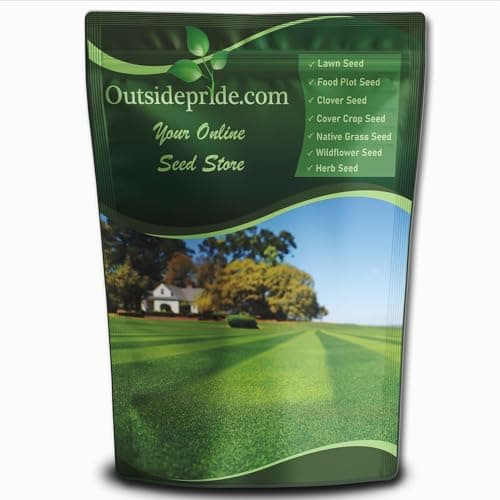
Outsidepride Maya Bermuda Grass Seed
A seeded bermuda for full-sun Texas yards from the Gulf Coast to the Panhandle.
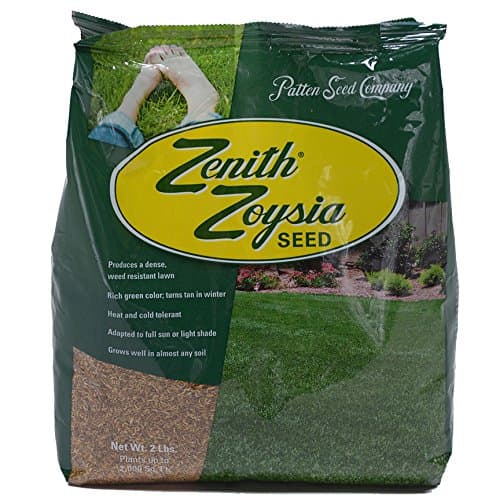
Zenith Zoysia Grass Seed
One of the few zoysias available as seed rather than sod or plugs.
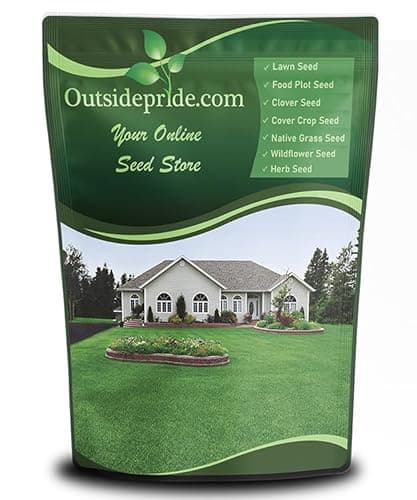
Outsidepride Perennial Buffalo Grass Seed
A native low-water option suited to Central and West Texas where irrigation is limited.
Texas climate, soil, and timing: the real numbers
Texas is big, and the north-to-south spread matters. The whole state is warm-season grass country, but South Texas barely sees frost while the Panhandle and far North Texas get genuinely cold winters that edge toward transition-zone conditions. Use the windows below as statewide anchors and shift them a couple of weeks earlier in the south and later in the north. (We are giving you regional ranges here, not fabricated city-by-city numbers, your local extension office can fine-tune for your exact ZIP.)
Frost dates
Across the South Central zone, the last spring frost typically lands between February 1 and March 1, and the first fall frost between November 15 and December 15. That is a long growing season, which is exactly why warm-season grasses dominate here. South Texas runs at the early end of those ranges; North Texas and the Panhandle run later in spring and earlier in fall.
Soil temperature through the year
Soil temperature, not air temperature, is what wakes your grass up and what triggers weed seeds to germinate. Typical South Central soil temperatures run roughly:
- Spring: March 55-65F, April 60-70F, May 70-80F
- Summer: June 80-90F, July 85-95F, August 85-90F
- Fall: September 75-85F, October 60-70F, November 50-60F
- Winter: December 45-55F, January 40-50F, February 45-55F
Warm-season grasses green up and start actively growing once soil holds above about 65F, which in most of Texas means April into May. That is also the window when sodding, plugging, or seeding takes best.
Pre-emergent timing (the one date most Texans miss)
Crabgrass and other summer weeds start germinating when soil temperatures hit roughly 55F. You want your pre-emergent down before that happens. In the South Central zone, the spring pre-emergent window is February 1 to March 1, because soil crosses that 55F threshold in late February to early March across much of the state. South Texas should aim for the early part of that window; North Texas and the Panhandle can run a week or two later. Then plan a fall pre-emergent application in October to November for cool-season winter weeds.
For post-emergent weed control, the sweet spots are early spring (March to April) and fall (October to November) when weeds are actively growing but temperatures are not extreme.
Soil and common challenges
Texas soils swing from heavy clay (think Blackland Prairie around Dallas and Austin) to sandy (East and coastal Texas), and that affects watering and which grass thrives. The three challenges that bite Texas lawns most are extreme summer heat, drought and water restrictions, and fire ants. All five grasses above are built for the heat, the difference is how much water each needs to look good through a dry August.
Not sure what is already growing in your yard before you decide whether to overseed or replace it? Snap a photo and let our free AI grass identifier tell you what you have first.
Frequently asked questions
What grass grows best in the Texas heat?
Bermudagrass and Buffalograss handle extreme Texas heat best. Both have deep roots and go semi-dormant to survive drought, then bounce back. St. Augustine and Zoysia also take the heat well but need more water to stay green through a dry summer. There is no common Texas lawn grass that the heat itself kills, the limiting factor is almost always water and sun, not temperature.
Bermuda or St. Augustine for a Texas lawn?
It comes down to sun. If your yard gets full sun most of the day, choose Bermuda, it is tougher, cheaper to establish from seed, and recovers faster. If trees shade a meaningful part of the lawn, choose St. Augustine, because Bermuda thins out and dies in shade while St. Augustine keeps a thick carpet. Many Texas yards run Bermuda in the open areas and St. Augustine under the trees.
When should I put down pre-emergent in Texas?
Apply your spring pre-emergent between February 1 and March 1, before soil temperatures reach about 55F and crabgrass starts germinating. Aim for the earlier end in South Texas and the later end in North Texas and the Panhandle. Add a fall application in October to November to head off winter weeds.
What is the lowest-maintenance grass for Texas?
For the lowest water and mowing, native Buffalograss wins in sunny, drier parts of the state. For a more traditional-looking lawn that still cuts down on mowing, Zoysiagrass is the low-maintenance premium option thanks to its slow growth. Both ask for less than a thirsty Bermuda or St. Augustine lawn over a Texas summer.
Can I grow cool-season grass like fescue in Texas?
Generally no, not as a main lawn. Tall fescue can sometimes hang on in heavily shaded North Texas and Panhandle yards where winters are colder, but across most of the state the summer soil heat (85-95F) stresses cool-season grasses badly. Stick with the warm-season options above and you will have a far easier time.
Next steps
Want the full rundown of every Texas grass and how to tell them apart? See our guide to the types of grass in Texas. Still deciding between two grasses? Put them side by side with our grass comparison tool, or dig into the full care details in our guides:
And if you are not sure what is already in your yard, start with a quick photo on our free grass identifier so you know exactly what you are working with before you spend a dime on seed or sod.
Top Picks
- Scotts Turf Builder Grass Seed Bermudagrass (4 lb)Check price on Amazon
- Hancock Argentine Bahia Grass Seed (10 lb)Check price on Amazon
- TifBlair Centipede Grass Seed (1 lb, covers up to ~4,000 sq ft)Check price on Amazon
As an Amazon Associate we earn from qualifying purchases.
Free Lawn Care Tools

Beat weeds and brown spots from your phone
Snap a photo, get the fix, and follow a plan timed to your soil and weather. Free on iPhone.
Related Articles
 Climate & Regional Tips
5 Types of Grass in Hawaii and How to Tell Which You Have
Aug 30, 2026•7 min read Climate & Regional Tips
Types of Grass in Arkansas: The Common Lawn Grasses
Jul 22, 2026•7 min read Climate & Regional Tips
7 Types of Grass in New Mexico and How to Tell Them Apart
Sep 2, 2026•8 min read

