St. Augustine Grass Diseases: Identification and Treatment
 Sarah MitchellLawn Diagnostics Specialist | 12 Years
As an Amazon Associate we earn from qualifying purchases.
If you grow St. Augustine in the South, summer is when the phone starts ringing. In my years diagnosing turf, June through September is when I see the most St. Augustine lawns come apart, and almost always the homeowner has been treating the wrong problem. They reach for more fertilizer, more water, or a bag of bug killer when what they actually have is a fungus that those very habits are feeding.
St. Augustine is a gorgeous, thick, carpet-like grass, but its dense canopy and love of warmth and moisture make it a magnet for disease. The good news is that the diseases that hit it are a short, recognizable list. Once you can read the symptoms, you can usually fix the problem with how you mow and water before you ever reach for a sprayer.
The big St. Augustine diseases are gray leaf spot (small gray-brown lesions on blades, peaks in hot humid summer), brown patch and large patch (large circular patches with yellow rings, peak in mild wet spring and fall, both Rhizoctonia), take-all root rot (slow irregular thinning and yellowing that ignores fertilizer, a root disease), and dollar spot (small silver-dollar bleached spots, less common in St. Augustine than in other grasses). Almost all of them are made worse by mowing too short, watering at night, and overdoing nitrogen.
Treat the cause before the symptom. Raise your mowing height, water deeply in the early morning instead of at night, ease off the nitrogen, and improve drainage. Reserve fungicide for active, fast-spreading outbreaks or high-value lawns, and time it to the disease's season rather than spraying blind.
How to identify St. Augustine diseases
Before you name a disease, look at three things: the season, the pattern, and the blade. Those three together will get you to the right answer faster than any single symptom. I tell homeowners to resist the urge to diagnose from across the yard. Get down on your knees at the edge of the bad area where green grass meets damaged grass, because that boundary is where the disease tells its story.
Read the season first
Timing is the cheapest diagnostic tool you have. Brown patch and large patch are cool, wet weather diseases that show up in spring and fall when soil temperatures are mild. Gray leaf spot is a hot, humid summer disease. Take-all root rot is a slow burner that usually surfaces as a stress symptom in the heat after the roots were already compromised earlier. So if your lawn browns out in July, you can usually cross brown patch off the list right away.
Read the pattern
Step back and look at the shape of the damage. Large, roughly circular patches that expand outward point toward Rhizoctonia diseases. Diffuse, irregular thinning that does not have a clean edge points toward a root problem like take-all. Scattered small bleached spots point toward dollar spot. A general gray, scorched cast across new growth in the heat points toward gray leaf spot. Insect damage, by contrast, tends to be in the hottest, sunniest, driest part of the lawn and spreads in the heat regardless of rainfall.
Read the blade
Finally, pull a few affected blades and look closely. Distinct lesions with colored borders are a leaf-spotting disease. Blades that pull free easily from a rotted base point to patch diseases or root rot. Bleached, hourglass-shaped lesions across the blade suggest dollar spot. If the blade looks fine but the whole plant is yellow and weak, the trouble is likely underground at the roots.
If the pattern is muddy or you are seeing more than one symptom at once, upload a photo for a free AI diagnosis. It weighs your region and the current season against the diseases that are actually active right now, which is exactly how a turf specialist narrows the list.
The St. Augustine disease breakdown
Gray leaf spot
If I had to name the disease most synonymous with St. Augustine, it is gray leaf spot. This one really targets St. Augustine, and it shows up in the hottest, most humid stretch of summer, which is exactly why this guide is timely in June.
On the blade, gray leaf spot starts as tiny olive-gray to brown spots, often with a darker margin and a thin yellow halo. As it progresses the spots stretch into oblong lesions, and a heavily infected lawn takes on a dull, gray, scorched appearance, almost like it got a light burn. It hammers tender new growth, which is why lawns that have been pushed with nitrogen and lawns in humid, shady, low-airflow spots get hit hardest.
The cultural triggers are textbook: too much nitrogen, frequent light watering, watering in the evening, and poor air movement. The single most effective thing most people can do is stop feeding the disease. Lay off the high-nitrogen fertilizer during a hot, humid spell, water deeply and early in the day so blades dry fast, and improve airflow where you can. In a fast-moving outbreak on a lawn you care about, a labeled fungicide can help, but cultural correction is what keeps it from coming back.
Brown patch and large patch (Rhizoctonia)
Brown patch and large patch are caused by the same family of fungus, Rhizoctonia, and on warm-season grasses like St. Augustine the spring-and-fall version is now usually called large patch. Whatever you call it, the look is distinctive: large, roughly circular patches of tan or brown grass, often a foot to several feet across, frequently with a yellow, orange, or bronze ring of transitioning grass at the outer edge. Inside the ring the grass thins out, and blades near the patch edge pull away easily because the fungus rots them right at the base.
This is a cool, wet weather disease. It wakes up in spring as the lawn is greening up and again in fall as things cool down, when soil is moist and temperatures are mild. It is not a peak-summer disease, so if you see big rings in April or October, this is your prime suspect. Overwatering, poor drainage, thatch buildup, and excess nitrogen going into the disease's season are the main accelerants.
For management, the cultural fixes are the same ones that pay off everywhere: cut back on water, especially in the cooler shoulder seasons, improve drainage and reduce thatch, and avoid pushing a lot of nitrogen right as soil temperatures enter the mild range. Because large patch is seasonal and predictable, this is one of the few cases where a preventive fungicide application timed to the start of the disease's window, in early fall before symptoms appear, can be genuinely worthwhile on a lawn with a recurring history.
Because that fall window is the whole ballgame, we broke it out separately in our guide to large patch in zoysia and St. Augustine.
Take-all root rot
Take-all root rot is the one that fools people, because the action is all underground. The fungus attacks the roots and stolons, so what you see above ground is a lawn that is slowly thinning and yellowing in irregular, drifting patches that simply do not respond to fertilizer or water. Homeowners pour on more of both, the lawn gets weaker, and they cannot figure out why.
The tell is the disconnect: weak, off-color, thinning turf with no clean patch edge and no obvious leaf lesions, often worse in summer heat or after a stress like drought. If you tug on the runners they may lift easily because the roots beneath are dark, short, and rotted instead of white and healthy. It tends to be worse in high-pH soils and lawns that have been pushed hard with nitrogen and kept too wet.
There is no quick spray-and-done fix here, and that is the honest truth I give every homeowner. Recovery comes from changing the conditions the fungus loves. Improve drainage so the root zone is not constantly saturated, ease off heavy nitrogen, avoid raising soil pH, raise your mowing height to let the plant build more leaf and root, and be patient. A lawn rebuilding its root system can take most of a season. Some homeowners have success using an acidifying approach and light, balanced feeding to nurse new roots, but the cultural reset is what matters most.
Take-all is involved enough to deserve its own walkthrough. Our full guide to take-all root rot in St. Augustine grass covers the root symptoms, the look-alikes, and what recovery actually takes.
Dollar spot
Dollar spot is more famous on bentgrass and bermuda, but it can show up in St. Augustine too, so it belongs on the list. The name comes from the size of the spots: small, roughly silver-dollar-sized patches of bleached, straw-colored grass, often only a few inches across, that can merge into larger irregular areas if conditions stay favorable. On the blade you may see bleached, hourglass-shaped lesions running across the width.
Dollar spot famously thrives in lawns that are low on nitrogen, which makes it the odd one out, since most St. Augustine diseases are made worse by too much nitrogen. It also favors heavy dew and extended leaf wetness. The practical fix is to keep nitrogen at a sensible, adequate level rather than starving the lawn, water early so the canopy dries quickly, and reduce the long overnight leaf wetness that feeds it. It is rarely a major threat to St. Augustine compared to gray leaf spot, but it is worth recognizing so you do not misdiagnose it.
Nuisance issues that look like disease
Not everything that looks like disease is a fungus. Slime molds will crust gray, white, or dark spores over the blades after wet weather, which looks alarming but is harmless and brushes off. Fairy ring shows up as dark green or dead arcs and rings, sometimes with mushrooms. Algae forms a green-black scum on bare, compacted, wet soil. None of these need a fungicide. They are signals about moisture and soil conditions, and they fade when you fix drainage and airflow.
Telling the look-alikes apart
The most common misdiagnosis I correct is disease that is actually insect damage, and the most expensive mistake is the reverse. In St. Augustine, chinch bugs are the classic impostor. Chinch bug damage shows up as expanding patches of dry, straw-colored grass in the hottest, sunniest, driest part of the lawn, often along sidewalks, driveways, and south-facing edges, and it keeps spreading in the heat regardless of rain. Disease, by contrast, usually tracks humidity and rainfall and often carries colored rings or distinct leaf lesions.
Drought stress is the other big look-alike. Underwatered St. Augustine goes a uniform blue-gray and folds its blades, and footprints linger when you walk across it. That is a watering problem, not a fungus, and the fix is a better watering routine, not a sprayer. Fertilizer burn shows up as streaks and patterns that match how you applied the product, which is a dead giveaway that it is chemical, not biological.
When two or more of these overlap, which happens constantly in a stressed summer lawn, that is exactly the moment to get a second opinion from a photo diagnosis before you spend money on a treatment that targets the wrong thing.
Cultural prevention comes first
Here is the part most guides bury at the bottom, and it should be at the top: the majority of St. Augustine disease problems are prevented or cured by three habits, not by chemicals. I have walked lawns where simply changing the mowing height and watering time cleared up a recurring fungus within a few weeks. Fungicide treats the symptom. Culture treats the cause.
Mow high, and keep the blade sharp
St. Augustine wants to be mowed tall, generally in the three to four inch range, and standard versions like it on the higher end of that. Scalping it short thins the canopy, stresses the plant, and opens the door for nearly every disease on this list. A taller cut shades the soil, builds deeper roots, and helps the lawn outgrow minor infections. A dull blade tears the grass and leaves ragged wounds that are easy entry points for fungus, so keep it sharp. If you are not sure what height fits your variety, our mowing height guidance will point you to the right range.
Water deeply, early, and not at night
If I could change one habit on every St. Augustine lawn, it would be the watering schedule. Frequent, shallow, evening watering keeps the canopy wet through the night and is basically an open invitation to fungus. Water deeply and infrequently instead, and do it in the early morning so the blades dry within a couple of hours of sunrise. Long overnight leaf wetness is the single biggest driver of fungal disease in this grass. Dialing in a smart watering routine does more to prevent disease than any product on the shelf.
Go easy on nitrogen, and time it right
Excess nitrogen pushes soft, lush growth that gray leaf spot, brown patch, and large patch all feed on, and it does it right when the lawn is most vulnerable. Resist the urge to dump high-nitrogen fertilizer during hot, humid weather or right as soil temperatures slide into the mild range in spring and fall. Feed moderately and on a sensible schedule. The one exception is dollar spot, which actually prefers underfed lawns, so the goal is adequate, steady nitrogen, not feast-or-famine.
- Specific nitrogen rates, expressed in pounds of nitrogen per 1,000 square feet, vary by your St. Augustine variety, soil, and region. Confirm your annual program with your state extension office rather than guessing.
- The exact soil-temperature and air-temperature bands that trigger each disease shift by climate. Your local extension can tell you when large patch and gray leaf spot typically become active in your area.
- Fungicide active ingredients, labeled rates, and reapplication intervals are state-regulated and product-specific. Always read and follow the label, and ask extension which products are cleared for residential St. Augustine where you live.
- If you suspect take-all root rot or cannot get a clear answer, your extension office can run an inexpensive lab diagnosis on a soil-and-turf plug, which beats guessing every time.
When fungicide is actually warranted
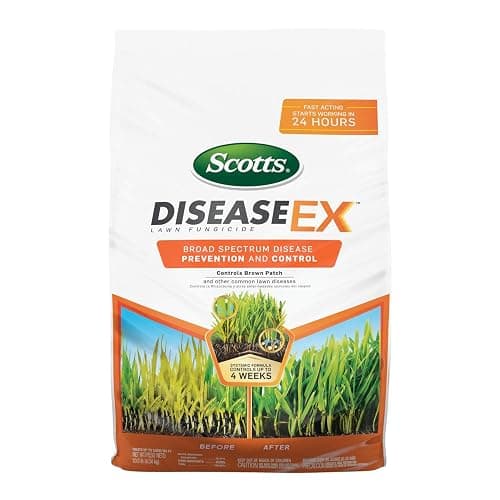
I am not anti-fungicide. I am anti spraying blind. Fungicide is the right call in a handful of situations: an active, fast-moving outbreak that is visibly expanding day to day, a high-value lawn where you cannot afford to wait out a cultural fix, or a recurring seasonal disease like large patch where a preventive application timed to the disease's window stops it before it starts.
What fungicide does not do is fix the conditions that caused the disease. If you spray and then keep mowing short and watering at night, the problem comes right back, and now you have spent money and selected for tougher fungus. Treat the cultural triggers in the same breath as any spray. And timing matters enormously. A curative spray during a peak outbreak is a different decision from a preventive spray before the season starts, and the two are not interchangeable. Because rates, intervals, and approved products are so region and label specific, this is exactly where the extension guidance above earns its keep.
If you have already confirmed the disease and just want to know which product fits it, see our breakdown of the best fungicide for St. Augustine grass.
What other guides miss
Most St. Augustine disease articles give you a tidy list of fungi and a list of fungicides and call it a day. After years of standing in actual yards, here is what I think they leave out.
First, they underweight season as a diagnostic. A reader who knows that brown patch is a spring-and-fall disease and gray leaf spot is a summer disease has already eliminated half the list before looking at a single blade. Season is the fastest filter you have, and most guides treat it as a footnote.
Second, they treat disease as separate from the rest of lawn care, when in reality the same three levers, mowing height, watering timing, and nitrogen, drive almost all of it. Get those right and you are not just managing one disease, you are raising your lawn's resistance to all of them at once. That is why I would rather teach a homeowner to water in the morning than to identify nine fungi.
Third, they jump to chemicals. The honest order of operations is culture first, accurate diagnosis second, and fungicide a distant third reserved for outbreaks that warrant it. A guide that leads with a fungicide table is optimizing for the wrong thing.
And fourth, they rarely mention the look-alikes. So much money gets wasted spraying fungicide on chinch bug damage or drought stress. If you are new to this grass, the St. Augustine grass care guide is a good companion read for understanding the variety's quirks before you start diagnosing problems on it. And if you are establishing or repairing a damaged area, our seeding window guidance helps you time the work for the best recovery.
Your St. Augustine disease-prevention plan
If you do nothing else, do these, in order. This is the same priority list I give homeowners after a yard visit.
- Raise your mowing height into the three to four inch range and keep the blade sharp. This single change prevents more disease than anything else.
- Move watering to early morning and water deeply but less often, so the canopy never stays wet overnight. Use the watering guidance to dial in the right amount.
- Ease off nitrogen during hot, humid weather and during the mild shoulder seasons. Feed moderately and steadily rather than in big pushes.
- Improve drainage and reduce thatch so water moves through instead of sitting in the root zone, which starves out the patch diseases and root rot.
- Diagnose before you treat. Read the season, the pattern, and the blade, rule out chinch bugs and drought, and snap a photo for a free diagnosis if you are not certain.
- Use fungicide only when warranted, timed to the disease, with rates and products confirmed against your local extension and the label.
Get the culture right and most St. Augustine disease problems never reach the point where you need a sprayer. That is the whole game. A tall, deeply rooted, morning-watered, moderately fed lawn is a lawn that shrugs off the fungus its neighbors are fighting all summer.
Free Lawn Care Tools
Pull blades from the edge of the damage, not the dead center, and look at what the fungus drew. Gray leaf spot leaves oblong lesions with a darker border and a yellow halo. Brown patch and large patch rot the sheath instead, so blades pull loose easily at the base and the patch carries a smoky ring. Dollar spot puts a bleached band across the blade with a reddish edge. Take-all root rot leaves the blade itself clean and rots the roots and stolons underground. For the full workup on the summer one, see our guide to gray leaf spot in lawns.
In St. Augustine, large circular brown patches in spring and fall are usually brown patch or large patch, both caused by Rhizoctonia fungus during mild, wet weather. The patches often have a yellow or tan ring at the edge and blades pull out easily at the base. If the browning shows up in the heat of summer instead, gray leaf spot or simple drought stress are more likely culprits, so check the weather timing before you treat.
It can, but recovery is slow and depends on fixing the root cause rather than just spraying. Take-all root rot rots the roots and stolons underground, so the lawn thins and yellows in irregular patches that do not respond to fertilizer or water. The most reliable path is improving drainage, easing off high-pH and heavy nitrogen inputs, raising mowing height, and being patient while new roots establish, sometimes over a full season.
Often, yes. Most fungal problems in St. Augustine are driven by mowing too short, watering at night, poor drainage, or too much nitrogen, and correcting those usually stops the disease from spreading. Fungicide is a backstop for active, fast-moving outbreaks or high-value lawns, not a first move. Fix the cultural triggers first and many lawns grow out of mild infections on their own.
Brown patch and large patch peak in the cooler, wetter shoulder seasons of spring and fall when soil temperatures are mild. Gray leaf spot and many other fungal issues peak in the hot, humid heart of summer. Take-all root rot tends to surface as a stress disease in summer after the roots have already been compromised. Knowing the season narrows the list of likely diseases fast.
Chinch bugs create expanding patches of dry, straw-colored grass in the hottest, sunniest part of the lawn, often along sidewalks and driveways, and the damage keeps spreading outward in heat. Disease patches tend to tie to humidity and rainfall, often have colored rings or distinct leaf lesions, and may pull out easily at the base. When in doubt, part the grass at the green edge of a patch and look for the small black-and-white insects, or snap a photo for a diagnosis.

Your lawn plan, in your pocket all season
Grass ID, a season plan, soil-timed reminders, and a lawn journal that remembers what you did. Free on iPhone.