5 Types of Grass in Idaho and How to Tell Which You Have

As an Amazon Associate we earn from qualifying purchases.
University of Idaho Extension names four grasses: "In Idaho, most home lawns are composed of Kentucky bluegrass, perennial ryegrass, tall fescue, fine fescue or a combination of the four." Buffalo grass is the warm-season outlier for people who want to water far less and accept a brown lawn most of the year.
Seed in late summer. U of I calls late summer and fall the best time to seed cool-season grasses in Idaho, and CIS 1062 targets August 15 to September 15. Above about 4,500 feet the calendar flips: where snow lingers into mid-May and fall arrives in early August, U of I says a spring seeding may be necessary.
Some of the Kentucky bluegrass seed sold for lawns is grown in northern Idaho. A University of Idaho Extension bulletin on Kentucky bluegrass production, published in 2005, reported that seed growing in northern Idaho "began during the 1950's with approximately 10,000 acres and has since grown to 70,000 acres," and that "Idaho produces 50 percent, and the tri-state region (Idaho, Washington, and Oregon) produces 90 percent of the total U.S. Kentucky bluegrass seed," citing a 1978 study and the 1997 Census of Agriculture. Those are historical figures, not this year's, but they make the point: Idaho is not just a place where bluegrass lawns happen to work. It has been one of the places the seed comes from.
That does not mean bluegrass is right for every yard in the state. Idaho runs from 738 feet at the Clearwater and Snake confluence up past 12,000 feet, and University of Idaho Extension sorts its lawn advice by elevation instead of by region. Perennial ryegrass "is not recommended for higher elevations of Idaho but will do very well along the lower Snake River plains." Tall fescue "may become thin in short season, higher elevation areas." Same seed rack in Boise and in Driggs, very different outcomes. Here are the grasses, how to tell them apart, and where each one actually holds up.
The types of grass that grow in Idaho
Kentucky Bluegrass
Kentucky bluegrass is the Idaho default, and CIS 1062 says so plainly: it "is the most widely adapted and used lawn grass in Idaho." U of I says it "does well in sunny areas throughout Idaho, is very cold tolerant, and will form a dense, high-quality turf when grown in full sunlight." The tell is in the leaf: "The leaves have a characteristic boat-shaped leaf tip and a prominent midrib." Bluegrass spreads by rhizomes, so it fills its own bare spots, and U of I notes the same habit "makes Kentucky bluegrass susceptible to thatch development." Those rhizomes are also, in U of I's words, "challenging for gardeners striving to keep this grass from creeping into adjacent flower beds." The real limit is shade, not cold. U of I calls lack of shade tolerance "a major limiting factor of Kentucky bluegrass on home lawns," and under heavy tree shade or on a north wall it thins and picks up powdery mildew. It is also the thirstiest of the group. CIS 1062 says "bluegrass requires the most water and fertilizer of all grasses," which works out to 2 to 5 pounds of nitrogen per 1,000 square feet a season, but it survives a dry stretch by going dormant rather than dying, "as long as it is allowed to properly harden prior to the drought." One Idaho quirk worth knowing: billbugs are "perhaps the most common insect affecting home lawns in Idaho," and U of I says Kentucky bluegrass "is particularly susceptible to these insects," though it adds that "in high altitude areas above 5,000 feet billbugs are not found at very high densities."
Perennial Ryegrass
Perennial ryegrass is the grass that makes Idaho advice elevation-dependent. U of I calls it "a short-lived perennial because of its lack of cold tolerance," and then draws the line explicitly: it "is not recommended for higher elevations of Idaho but will do very well along the lower Snake River plains." In Boise, Nampa or Lewiston it is a legitimate part of a lawn. In the high valleys it is a passenger. The short-season bulletin says it "should not be used as a stand-alone grass for home lawns in short-season, high-altitude areas" and lists it in its table with the note "use only in seed mixes as a nurse grass," because "Kentucky bluegrass will eventually crowd out any perennial ryegrass plants that may survive the cold temperatures of these areas." What it does at any elevation is come up fast. CIS 1062 says bluegrass can take three weeks to appear while ryegrass can be up in six days, which is what makes it useful in a seed mix. Keep the share small: U of I warns it "can overwhelm the other grasses in a mixture if there is too high of a percentage (over 20%)." To identify it, look at the upper leaf surface. Ryegrass leaves "do not have the boat-shaped leaf tip like Kentucky bluegrass, instead have a pointed tip with veins on the top side of the leaves that are very conspicuous." U of I says those veiny leaves "make perennial ryegrass difficult to mow especially if mower blades are not kept sharp," and advises keeping blades sharp "to cut through the tough leaves."
Tall Fescue
Tall fescue is the deep-rooted option, and the one most often oversold. U of I describes it as a bunch-type grass "with a slightly coarser leaf texture than Kentucky bluegrass and perennial ryegrass" that is "very heat and drought resistant due to its deep, extensive root system" and has "good shade tolerance compared with Kentucky bluegrass and perennial ryegrass." U of I also says it "is used on sports fields because it's tough leaves give it good traffic tolerance." What it does not do is cut your water bill. U of I says the deep roots "may allow you to stretch the irrigation frequency by about a day during the summer compared with Kentucky bluegrass," and CIS 1062 is blunter: "Contrary to widely publicized claims, research shows that tall fescue needs as much water over the growing season as Kentucky bluegrass; tall fescue simply needs more water at less frequent intervals." Fewer, deeper soakings, not less water. The Idaho catch is cold and snow. U of I warns that tall fescue "may become thin in short season, higher elevation areas," and the short-season bulletin goes further: it "is not recommended for high snowfall areas or elevations where extended, cold winters are common, because it is intolerant of cold temperatures and is very susceptible to snow mold." The same bulletin gives it a specific eastern Idaho landing zone, noting it "has performed well in eastern Idaho at the warmest edges of high-elevation zones (4,000 to 4,500 ft)." It does take less feeding than bluegrass, 2 to 4 pounds of nitrogen per 1,000 square feet a season, and CIS 1062 credits it with "excellent persistence even in high pH soils," which matters on southern Idaho ground. One buying rule from U of I: "Avoid the variety K-31 or Kentucky 31 as this is the old forage-type variety with wide blades and will result in a poor-quality lawn."
Fine Fescue
Fine fescues are the shade specialists and the high-country favorites. The group covers creeping red, chewings, sheep and hard fescue, and U of I says they are "the most shade tolerant of the cool-season grasses and are commonly used in shade mixtures with Kentucky bluegrass and/or perennial ryegrass." They are also the lowest-input group of the four, "generally considered low maintenance grasses because of their low nitrogen requirement and slow growth," at half a pound to 2 pounds of nitrogen per 1,000 square feet a year. For Idaho mountain towns the short-season bulletin makes them the headline pick: fine fescues are "perhaps best suited to high-altitude climates because of their ability to survive very cold temperatures and their low nitrogen requirement." The trade is heat, not cold. U of I says they are "very drought resistant, but do not tolerate heat very well and may go dormant in the middle of the summer when temperatures reach into the 90s even under well-watered conditions," which is exactly the Treasure Valley and Magic Valley summer. They also will not take a beating: "not recommended for high traffic areas because their leaves do not hold up to wear." Two surprises for owners. Despite being bunch-type grasses they "will produce thatch quickly due to the chemical makeup of their leaves and stems that makes them difficult to break down." And they are awkward to cut, because "the leaves tend to lay over, so they are missed by the mower blade." You will usually meet them inside a blend, where the needle-thin blades give them away.
Buffalograss
Buffalo grass is the honest low-water answer, and U of I is equally honest about the cost. It is a warm-season native that "grows slowly in the spring and fall and will go dormant for up to seven months of the year in Idaho and other northern parts of the U.S.," turning "a purple-gray color after a killing frost in the fall." CIS 1062 puts the tradeoff in plain numbers: buffalo grass dormancy "results in Kentucky bluegrass having about six more weeks of green color at each end of the growing season." What you get back is real. U of I calls out "its excellent heat and drought tolerance as a result of its deep root system and very low water use rate," a "very low nitrogen fertilizer requirement," and slow growth so you mow every two to three weeks instead of weekly. It gets by on "about 1 to 2 inches of water every two to four weeks." It is also picky about where it goes. U of I names its growing season as roughly mid-May to mid-September, says it "is not recommended for high elevation areas (>6,000 ft)," and warns it "is not shade tolerant and does not tolerate heavy traffic," with weeds moving into the dormant turf when sunlight reaches the soil. Identify it by color and calendar. The leaves are "hairy and gray green in color and fine textured," and CIS 1062 says it "looks somewhat like Kentucky bluegrass, but with finer leaves that are not as dark green." Unlike everything else on this list it spreads by aboveground stolons, and it is still dormant in spring when the bluegrass lawns nearby are already growing.
A few grasses come up in Idaho conversations and should not. On the warm-season side, CIS 1062 says "southern-type, warm-season grasses such as bermudagrass and zoysiagrass survive in Idaho but are dormant and brown for up to eight months of the year," while "st. augustinegrass and dichondra, should not be planted in Idaho lawns because they do not survive in our cool climate." On the utility side, the wheatgrasses come up constantly around cabins and acreages. U of I lists crested, western, Siberian, streambank and bluebunch wheatgrass as good for erosion control at elevations up to 10,000 feet and in areas under 14 inches of precipitation, but says flatly that they "are not recommended for use in lawns because most are wide-bladed and produce a thin stand, and also undergo summer dormancy." The same bulletin notes that "the fine fescues, including Idaho fescue, can also function to prevent soil erosion and are much shorter in stature," which is usually the better answer for the strip between the cabin and the driveway.
Idaho grass types compared at a glance
Read the water column carefully. Only buffalo grass genuinely uses less water. Tall fescue changes how often you irrigate, not how much you use over a season.
| Grass | Season | Best role | Sun / shade | Water need | Maintenance |
|---|---|---|---|---|---|
| Kentucky Bluegrass | Cool | The standard Idaho lawn, statewide | Full sun; weakest shade tolerance of the four | Highest of the four; up to 2 in/week in midsummer | Medium to high |
| Perennial Ryegrass | Cool | Fast nurse grass in mixes; a real lawn grass only in the lower valleys | Sun to light shade | Similar to Kentucky bluegrass | Medium to high; keep blades sharp |
| Tall Fescue | Cool | Heat, drought, shade and traffic in the warmer parts of the state | Sun to part shade; better shade than bluegrass | Same seasonal total as bluegrass, applied less often | Low to medium |
| Fine Fescue | Cool | Shade, low input, and mountain valleys | Best shade tolerance of the four | Drought resistant, but dormant in 90-degree heat | Low; lowest nitrogen requirement of the four |
| Buffalograss | Warm | Low-water lawn in the sunny lower valleys | Full sun only | Lowest; 1 to 2 inches every two to four weeks | Low; mow every two to three weeks |
How to tell which type you already have
Start with the season. U of I gives buffalo grass a growing season of roughly mid-May to mid-September, and says it turns purple-gray after a killing frost and stays dormant until late spring, so a patch that is brown while the rest of the lawn is green is the easy call. Everything else here is cool-season and does the reverse, greening in spring and often coasting or going dormant through the hottest weeks. Among the four cool-season grasses, look for spreading versus clumping first: bluegrass fills its own bare spots with rhizomes, while ryegrass and tall fescue are bunch-type. Most fine fescues are bunch-type too, though creeping red fescue has rhizomes. Then use the leaf. Bluegrass has a boat-shaped tip, ryegrass has a pointed tip with heavy veins on the upper surface, tall fescue is noticeably wider and coarser, and fine fescue is as narrow as a pine needle.
| Grass | Blade | Growth habit | Standout tell |
|---|---|---|---|
| Kentucky Bluegrass | Fine, soft, boat-shaped tip with a prominent midrib | Spreads by rhizomes, forms dense sod | Heals its own bare patches; creeps into flower beds |
| Perennial Ryegrass | Fine to medium, pointed tip, very conspicuous veins on top | Bunching, no runners, no thatch | First grass up in a new seeding; hard to mow with a dull blade |
| Tall Fescue | Wider and coarser, ribbed on the upper surface | Bunching; needs overseeding to fill damage | Coarse clumps standing above a finer lawn; snow mold scars in spring up high |
| Fine Fescue | Very narrow, needle-like, resembling a pine needle | Mostly bunching; creeping red fescue has rhizomes | Wispy blades that lay over and dodge the mower; thins in a 90-degree week |
| Buffalograss | Fine, hairy, gray-green | Spreads by aboveground stolons | Turns purple-gray after a killing frost and stays dormant until late spring |
Still not certain? Our free AI grass identifier reads a close-up photo, names the grass, and builds a 12-month care plan tuned to your ZIP.
Which types grow in your part of Idaho
Idaho is not one lawn climate. The Western Regional Climate Center notes that the state runs "from 738 feet of the confluence of the Clearwater and Snake Rivers to 12,655 feet at Mt. Borah," that the north gets a stronger maritime influence, and that "eastern Idaho's climate has a more continental character than the west and north," including a reversal of the wet-winter, dry-summer pattern. The frost-free season tracks that: roughly 200 days around Lewiston, 150 or more in the lower Boise, Payette and Weiser basins, about 125 days in the Pocatello and Idaho Falls area, and a few high valleys with "no month without freezing temperatures." USDA hardiness zones across the state run roughly from 3 in the coldest mountain valleys to 7 in the warm river canyons; treat those as orientation and let elevation and season length drive the actual decision.
- Northern panhandle and the Palouse (Coeur d'Alene, Sandpoint, Moscow, Lewiston): The wettest, mildest corner, and the one that grows the seed. This is where U of I says Idaho's Kentucky bluegrass seed industry expanded from about 10,000 acres in the 1950s to 70,000. Lewiston sits at the bottom of the state's elevation range with roughly a 200-day growing season, so bluegrass, ryegrass and tall fescue are all comfortable. The climate center describes the maritime influence as most marked in northern Idaho, where the air arrives with more moisture than further south. On treed lots, fine fescues are the shade partner U of I names for mixtures with bluegrass and ryegrass. Crabgrass pre-emergent goes down on the early schedule, mid-March to early April.
- Treasure Valley and the lower Snake (Boise, Meridian, Nampa, Caldwell, Payette): 150-day-plus season, hot dry summers, and the part of Idaho where perennial ryegrass genuinely performs, since U of I says it "will do very well along the lower Snake River plains." It is also where alkaline soil bites: U of I notes "the high pH soils of southern Idaho tie up iron making it unavailable to the plant causing it to become yellow (iron chlorosis)," and the short-season bulletin warns that only EDDHA-chelated iron works in Idaho's alkaline soils, since cheaper EDTA "is only active in pH-neutral soils." Buffalo grass is a real option in full-sun yards here. Pre-emergent mid-March to early April.
- Magic Valley and the central Snake River Plain (Twin Falls, Jerome, Burley, Rupert): On U of I's early pre-emergent schedule with the Treasure Valley, mid-March to early April. The Western Regional Climate Center puts much of the central plains among the areas receiving less than 10 inches of precipitation a year, so irrigation is doing nearly all the work. The upside of that dryness is disease pressure: U of I notes that southern Idaho lawns "are generally not faced with many disease problems because of the dry climate."
- Eastern Idaho and the upper Snake (Idaho Falls, Pocatello, Rexburg, Blackfoot): About a 125-day season, and a genuinely different calendar. U of I moves crabgrass pre-emergent here to late March through mid-April, two to three weeks behind Boise. The precipitation season flips too: the climate center reports that in the northeastern valleys and eastern highlands "more than 50 percent of the annual rainfall occurs during the period April through September." Tall fescue is workable at the warmer edges, 4,000 to 4,500 feet, but snow mold risk rises with the snow.
- Mountain valleys above about 4,500 feet (McCall, Ketchum and Sun Valley, Driggs, Salmon, Stanley): U of I treats this as its own zone, defining a short-season, high-altitude Idaho gardener as someone above 4,500 feet, in hardiness zone 4 or lower, or with a frost-free season of 110 days or less. Kentucky bluegrass and fine fescue carry the lawn here. Perennial ryegrass is a nurse grass only, tall fescue is not recommended where deep snow sits for months, and billbug pressure drops off above 5,000 feet. Where snow banks hold into mid-May and fall starts in early August, U of I says a spring seeding may be necessary.
Idaho grass timing that matters
Seeding and irrigation timing here depend on temperature and season length. Alkaline soil is a separate issue, and it mainly affects iron availability and what you put in the spreader. The dates below are U of I's, with the regional splits it publishes.
- Seeding and overseeding: "The best time to seed cool season grasses in Idaho is late summer and fall," because soil temperatures are right, summer annual weeds are done competing, and the seedlings miss the heat. CIS 1062 sets the window at "August 15 to September 15." Spring works as a backup, seeding "as soon as the ground can be worked," but midsummer seeding is difficult "due to high temperatures and drought." Above 4,500 feet the ranking can invert: where "snow banks persist into mid-May and fall conditions begin in early August, a spring seeding may be necessary." U of I does not recommend dormant seeding into frozen ground. Buffalo grass is the exception to all of it and goes in "in late May or early June."
- Crabgrass pre-emergent, a key date that genuinely differs by region: U of I ties it to soil temperature and then names the regions. "Crabgrass will germinate when soil temperatures reach 55 to 60 degrees F. This occurs around mid-March to early April for the Treasure Valley, Magic Valley and northern Idaho and late March to mid-April for central and eastern Idaho." Do not overseed into treated ground; the same chemistry kills your new grass seedlings.
- Fertilizer: Cool-season lawns want 0.5 to 5 pounds of nitrogen per 1,000 square feet a season depending on how good you want it to look, with never more than 1 pound at a time. U of I's schedule feeds mid-March through April, early May and June, nothing in July and early August, then mid-August through September and early October through November. Skip summer nitrogen "except to prevent chlorosis." Southern Idaho's high-pH soils tie up iron and can cause iron chlorosis, and U of I says the chelate has to be EDDHA to work in alkaline soil, because cheaper EDTA "is only active in pH-neutral soils." In cold country, make the last nitrogen application "while the grass is still green and at least two to three weeks before the ground begins to freeze."
- Watering: Bluegrass and ryegrass "may require up to 2 inches of water per week in the heat of the summer, but only about 1 inch in the cooler spring and fall." U of I's Idaho curve runs about 1 inch a week from April to mid-May, about 2 inches from late May to mid-August, just over 1 inch from mid-August to late September, and close to an inch in October. CIS 1157 builds its schedule from Reclamation AgriMet data at Rexburg, Fort Hall, Twin Falls and Boise, which peaks at 0.26 inches of use per day in July. Buffalo grass sits at the other end and "can get by without water for several weeks."
- Aeration: U of I says "most home lawns should be core cultivated at least once each year," in fall or spring, with fall preferred. It is explicit about the season to avoid: "Do not core cultivate during the summer due to excessive heat and drying."
- Mowing: Target 3 inches, and "never mow your lawn lower than 2 inches." The short-season bulletin uses 2.5 to 3 inches up high and explains why height matters more there: "higher mowing heights translate into increased cold tolerance." Keep mowing "late into the fall until the grass has stopped growing, sometimes as late as late November." U of I says that late mowing "will remove excess debris and decrease the chance of snow mold."
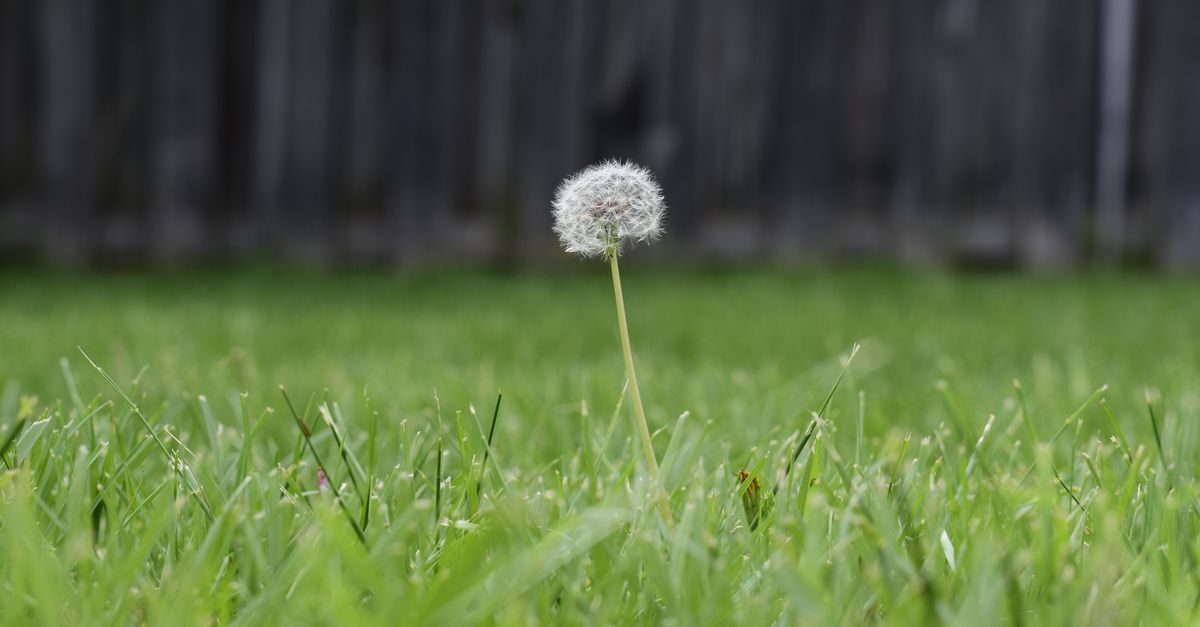
- Winterizing: Keep soil moist going into winter to prevent desiccation damage, but "in colder areas of Idaho, freezing temperatures may dictate stopping irrigation before the end of October." Fall is also the best time to hit dandelions and other perennial broadleaf weeds, around the first fall frost.
The short version: many of the tasks that decide how an Idaho lawn looks, seeding, the heaviest feeding, aeration and perennial weed control, land in late summer and fall. Spring is largely for holding the line on crabgrass, and the date for that moves a couple of weeks later once you cross from Boise into the upper Snake.
Next steps
Not sure whether that clumpy patch is tall fescue or just neglected bluegrass? Send a close-up photo through the free AI grass identifier, or start at the home page analyzer for a 12-month plan built around your ZIP code and elevation. Deciding between bluegrass and a fescue before the August seeding window? The grass comparison tool puts them side by side, and the seeding calculator turns your square footage into pounds of seed. For the bigger picture, see how every state compares.
Top Picks
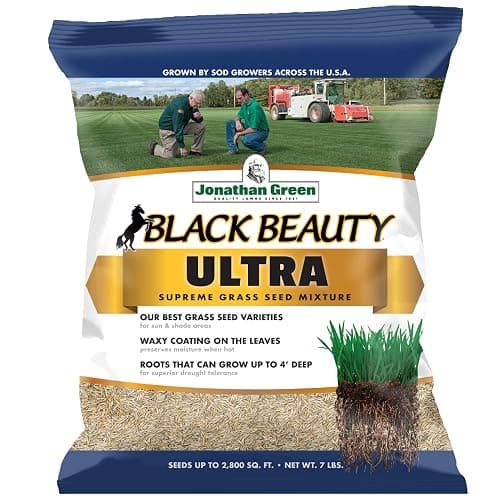
 Jonathan Green Black Beauty Ultra Grass SeedCheck price on Amazon
 The Andersons Professional PGF Complete 16-4-8 FertilizerCheck price on Amazon
As an Amazon Associate we earn from qualifying purchases.
Free Lawn Care Tools
University of Idaho Extension builds its lawn guidance around four cool-season grasses: Kentucky bluegrass, perennial ryegrass, tall fescue and fine fescue. Buffalo grass is the warm-season fifth option for low-water yards below about 6,000 feet. Bermudagrass and zoysiagrass survive in Idaho but U of I says they stay dormant and brown for up to eight months of the year, and it advises against St. Augustinegrass and dichondra outright.
Kentucky bluegrass. U of I Extension calls it the most widely adapted and used lawn grass in Idaho, and says most Idaho home lawns are Kentucky bluegrass, perennial ryegrass, tall fescue, fine fescue or a combination of the four. U of I notes that Kentucky bluegrass seed is usually available as a blend, meaning more than one variety is included, and says blending increases the genetic base and adaptability.
A lot of it is. A 2005 University of Idaho Extension bulletin reported that Kentucky bluegrass seed production in northern Idaho grew from roughly 10,000 acres in the 1950s to 70,000 acres, and that Idaho produced 50 percent of total U.S. Kentucky bluegrass seed, with Idaho, Washington and Oregon together producing 90 percent. Those figures cite a 1978 study and the 1997 Census of Agriculture, so treat them as the historical picture rather than this year's numbers.
Kentucky bluegrass and fine fescue. U of I treats anywhere above 4,500 feet, in hardiness zone 4 or lower, or with a frost-free season of 110 days or less as short-season, high-altitude Idaho, and says fine fescues are perhaps best suited to high-altitude climates because they survive very cold temperatures on low nitrogen. Perennial ryegrass should be used only as a nurse grass in mixes there, and tall fescue is not recommended in high snowfall areas because of snow mold.
It depends which part of the state you are in. U of I says crabgrass germinates at soil temperatures of 55 to 60 degrees, which happens around mid-March to early April in the Treasure Valley, Magic Valley and northern Idaho, and late March to mid-April in central and eastern Idaho. Do not overseed an area you have just treated, because pre-emergent kills new grass seedlings too.
Sources (6)
- University of Idaho Extension: Lawn and Turf (turfgrass selection, establishment, fertilization, mowing, irrigation, weeds and thatch)
- University of Idaho Extension CIS 1062: Starting a Home Lawn
- University of Idaho Extension BUL 875: Lawn Care in Short-Season, High-Altitude Zones
- University of Idaho Extension CIS 1157: Water Home Lawns, How Much and How Often
- University of Idaho Extension BUL 842: Kentucky Bluegrass Production
- Western Regional Climate Center: Climate of Idaho
Photos: Laurel Meredyk / iNaturalist · CC BY 4.0, Bonnie Semmling / iNaturalist · CC BY 4.0, CK2AZ / iNaturalist · CC BY 4.0, Patrick Sowers / iNaturalist · CC0

Beat weeds and brown spots from your phone
Snap a photo, get the fix, and follow a plan timed to your soil and weather. Free on iPhone.
Related Articles
 Climate & Regional Tips
6 Types of Grass in West Virginia and How to Tell Which You Have
Sep 2, 2026•7 min read Climate & Regional Tips
4 Types of Grass in Connecticut and How to Tell Which You Have
Sep 2, 2026•7 min read Climate & Regional Tips
4 Types of Grass in New York and How to Tell Which You Have
Aug 30, 2026•7 min read