

Goosegrass vs Crabgrass: How to Tell Them Apart
Updated November 1, 2026
Look at the center of the clump. Goosegrass has flattened, silver-white stems where it meets the soil, darker green folded blades, and it grows in compacted, walked-on ground. Crabgrass has lime green blades, often hairy, with no white center, and it sprouts weeks earlier in spring.
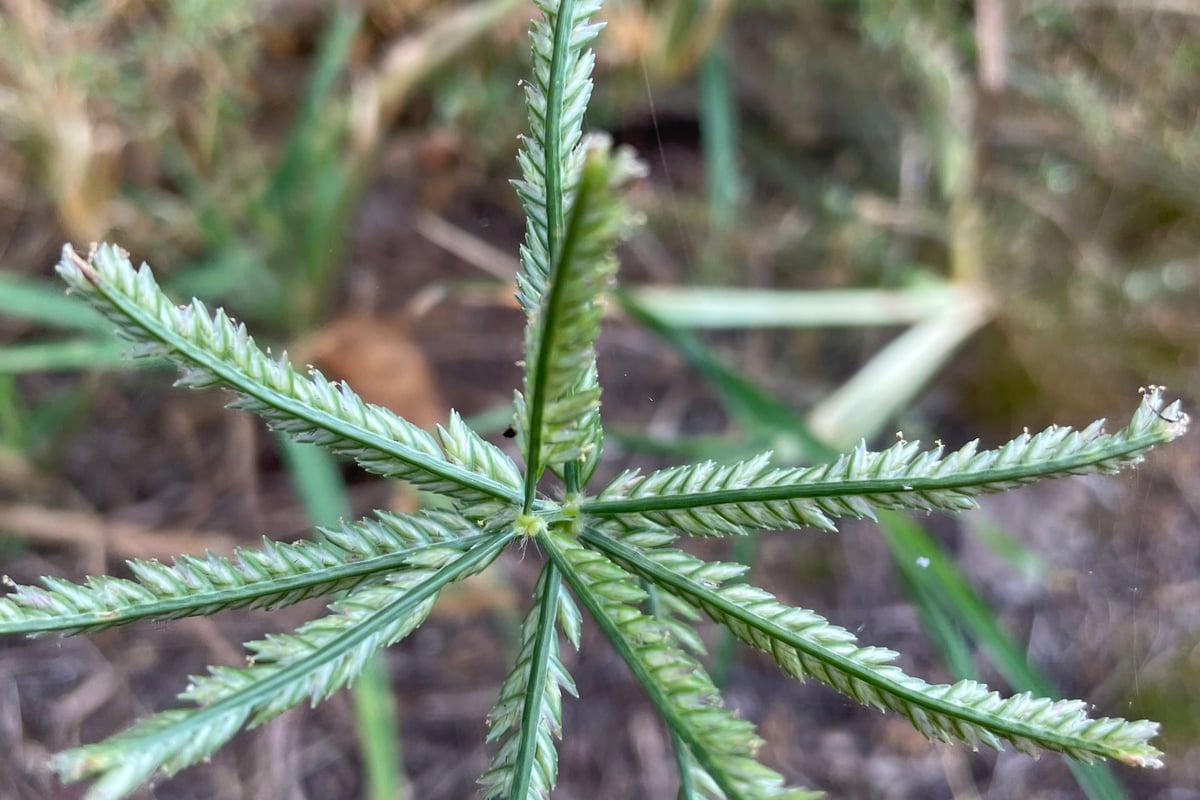
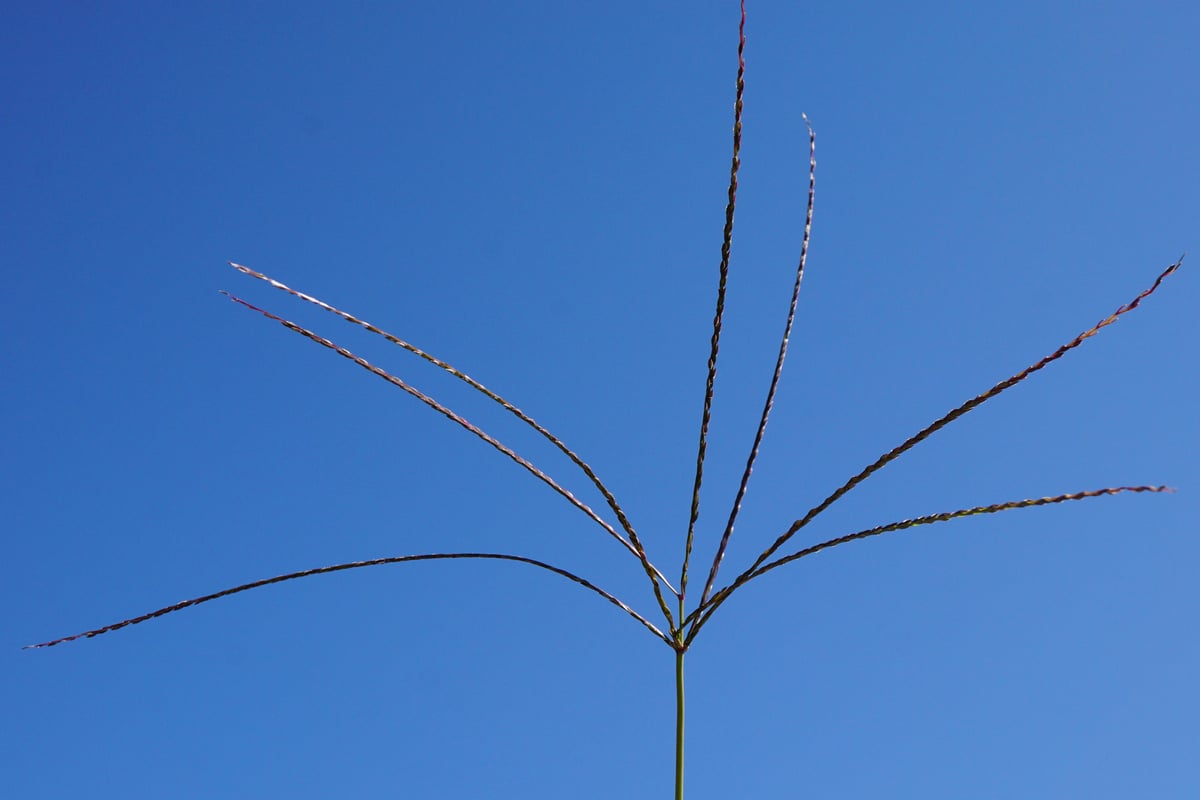
Is the center of the clump white? Kneel down and look where the stems meet the soil. Goosegrass has flattened, whitish stems there, and Rutgers calls that the easiest way to identify it. NC State describes the plant as often white in the center with a wagon-wheel look, and Penn State notes that the silver color is why it is also called silver crabgrass. Crabgrass has no white center. Its blades are lime green, and on large crabgrass the blades and sheaths are covered in hairs, per Rutgers.
Still unsure? Find the newest leaf coming out of a shoot. On goosegrass it emerges folded in half, and on crabgrass it emerges rolled up, per Rutgers. So why does the difference matter if both are summer annual grasses? Goosegrass germinates when soil reaches 60 to 65°F, which NC State puts at least two weeks after crabgrass, so a barrier timed for crabgrass can thin out before goosegrass sprouts. And quinclorac, a common crabgrass spray, does not control goosegrass, according to Rutgers and Ohio State. If you find the white center, check the soil next: goosegrass points to compaction.
Quick verdict
If the clump has a silver-white center, darker green folded blades, and sits in compacted, walked-on soil, it is goosegrass: relieve the compaction, time a pre-emergent to its later window, and leave quinclorac on the shelf. If the blades are lime green, often hairy, with no white center, it is crabgrass, and spring pre-emergent timing handles it.
Goosegrass vs Crabgrass: at a glance
Life cycle
When it sprouts
Center of the plant
Newest leaf on the shoot
Blade color and hairs
Growth habit
Seed head
Where it shows up
Does it pull out?
Does quinclorac control it?
What actually works
AIt is goosegrass if...
- The stems meet in a flattened, silver-white center.
- The blades are darker green than the lawn around them, and the newest leaf emerges folded in half.
- It sits on a path, a play area, or another spot that gets walked on all summer.
- It showed up weeks after the first crabgrass of the year.
- The seed spikes are thick, with two rows of seed like a zipper.
BIt is crabgrass if...
- The blades are lime green and, on large crabgrass, fuzzy with short hairs.
- The center is green or purplish, with no white.
- The newest leaf emerges rolled up.
- Some sprawling stems have rooted where they touch the soil.
- The seed spikes are thin and wiry.
Goosegrass sprouts at warmer soil than crabgrass. Get the spring soil-temperature window for your ZIP before you apply anything.
Get your seasonal lawn care calendar for your ZIP
Every task, from feeding to weed control to aeration, has a window that shifts by region. Add your ZIP and we will email your 12-month lawn calendar right away, starting with this month.
Seasonal reminders and tips. No spam. Unsubscribe anytime.
Frequently asked questions
How do I tell goosegrass from crabgrass?
Start at the center of the plant. Goosegrass has flattened, white or silver stem bases that meet like a wagon wheel, and its newest leaf emerges folded in half. Crabgrass has no white center, its newest leaf emerges rolled up, and its blades are lime green. Large crabgrass is also covered in short hairs, while goosegrass blades are mostly smooth. If the center is white and the leaves are folded, it is goosegrass.
Is goosegrass the same as silver crabgrass?
Yes. Silver crabgrass is another common name for goosegrass (Eleusine indica). Penn State explains that mature plants take on a silver or white look at the base, which is where the name comes from. It is a different plant from true crabgrass (Digitaria), so the crabgrass rules on timing and products do not all carry over.
Why did goosegrass come up after I applied crabgrass preventer?
Timing is the likely cause. Goosegrass germinates when soil reaches 60 to 65°F, which NC State puts at least two weeks after crabgrass, and Penn State and Rutgers say 3 to 4 weeks later. A pre-emergent applied at the crabgrass window may have thinned out by then. Rutgers also notes that goosegrass control varies by pre-emergent product, so check that your label lists goosegrass. The goosegrass guide covers the split application schedule.
Does quinclorac kill goosegrass?
No. Rutgers states that quinclorac does not control goosegrass, and Ohio State says it is not effective on it. Ohio State names topramezone and fenoxaprop as the herbicides that control goosegrass most effectively. Use one only if the label lists both goosegrass and your lawn grass, and apply it at the label rate.
Why does goosegrass grow in my path or along the driveway?
Compaction is the likely cause. NC State notes that goosegrass grows well in compacted soils, and Rutgers says it is common in high-traffic areas with compacted soil and thin turf. NC State adds that close mowing and frequent watering help it compete, and that a heavy infestation may mean the soil needs aeration. Rutgers says you can aerate even after a pre-emergent goes down, because aerating does not break the barrier.