

Dallisgrass vs Crabgrass: Why Pre-Emergent Only Stops One of Them
Updated August 18, 2026
Clumps that return to the same spots every year and ignored your pre-emergent are dallisgrass, and digging the crown out is the reliable fix. Clumps that are new each spring, sprawl flat, and vanish at the first frost are crabgrass, which spring pre-emergent timing prevents.
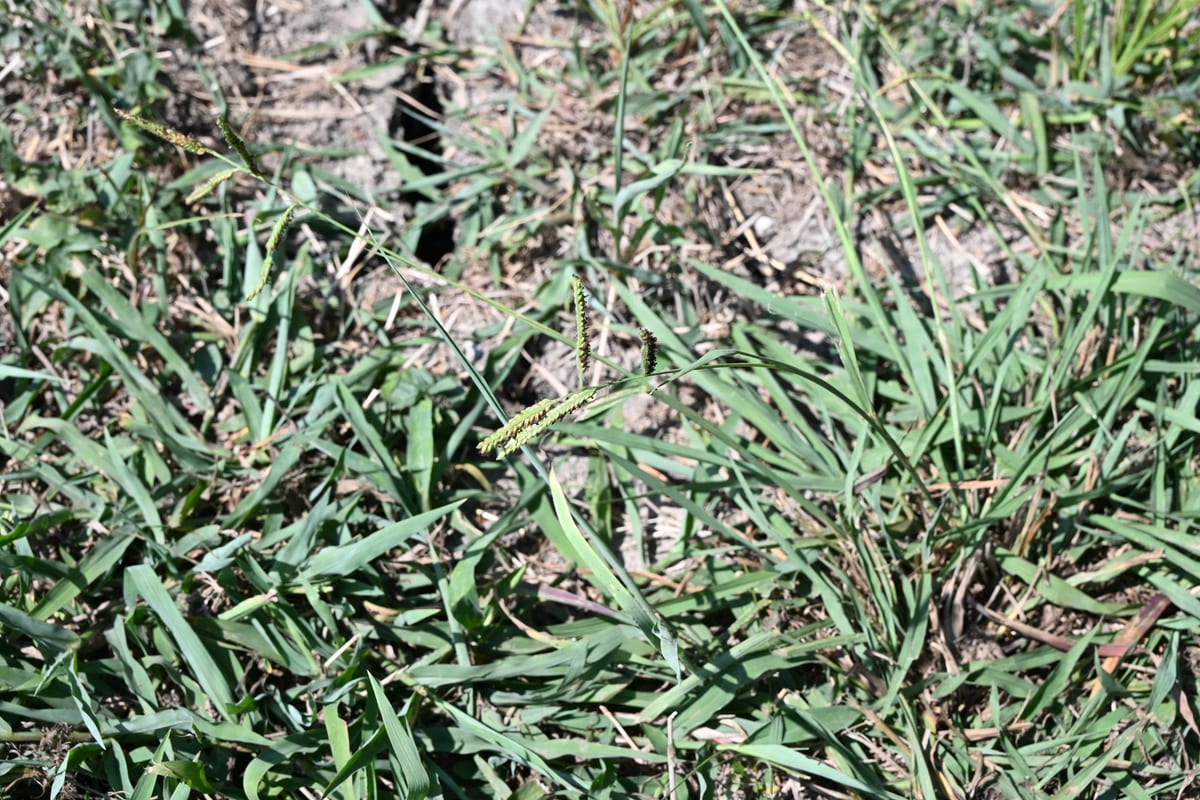
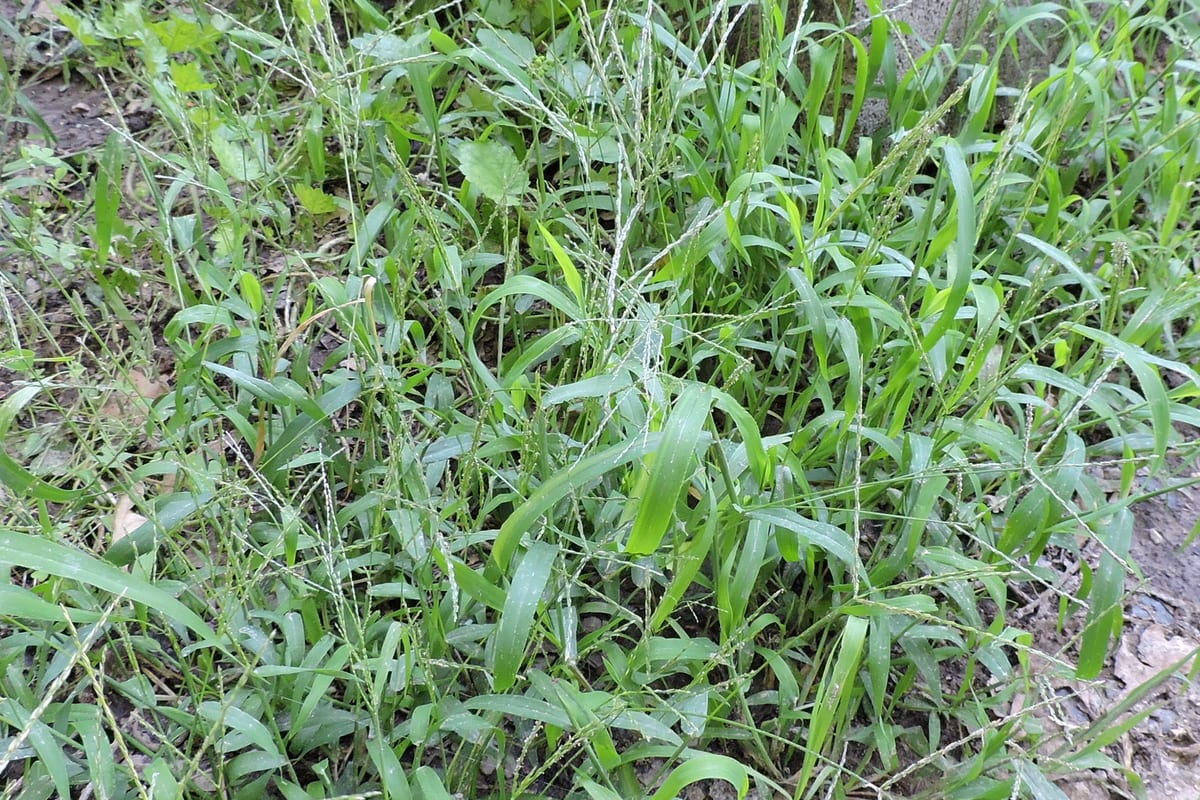
The difference that matters is lifespan: dallisgrass is a perennial that regrows from the same crown every spring, so a pre-emergent barrier does nothing to it, while crabgrass is a summer annual that must start from seed each year and is therefore stopped cold by well-timed pre-emergent. If you have been applying crabgrass preventer for three springs and the same clumps keep reappearing in the same spots, you are almost certainly looking at dallisgrass.
Visually, dallisgrass forms coarse yellow-green circular clumps that stand taller than the mowed lawn within a couple of days of cutting, and older clumps thin out in the middle so the patch reads like a donut. Its seed head carries three to six finger-like spikes off a central stem, often with small black spots. Crabgrass sits much lower, sprawls flat with stems radiating from one point, and pulls out easily as a shallow rosette. Age is the other clue: crabgrass clumps are new every year, while a dallisgrass clump gets wider and more established each season in exactly the same place.
Quick verdict
If the same coarse clumps come back in the same spots year after year and pre-emergent never touched them, it is dallisgrass and digging out the crown is the reliable fix. If the clumps are new each spring, sprawl flat, and vanish at frost, it is crabgrass and spring pre-emergent timing solves it.
Dallisgrass vs Crabgrass: at a glance
Life cycle
Does pre-emergent stop it?
Shape of the patch
Height between mows
Blade texture and color
Seed head
Root system
Does it pull out?
Same spot next year?
What actually works
Verdict
AIt is dallisgrass if...
- The same clumps come back in the same spots every year and get wider each season.
- You have applied crabgrass pre-emergent and it made no difference to them.
- The clumps stand noticeably taller than the lawn two days after you mow.
- Older patches are thinning in the middle and read as rings rather than solid clumps.
- The seed head has finger-like spikes off a central stem, sometimes with small black spots.
BIt is crabgrass if...
- The clumps were not there last November and appeared over the course of this spring.
- They lie flat with stems fanning out from a single center point.
- A firm pull lifts the whole plant out with a shallow root ball.
- They showed up first along the driveway, the sidewalk, or a thin sunny strip.
- The first hard frost wipes them out completely and leaves bare soil behind.
Pre-emergent works on crabgrass and not on dallisgrass. Get the spring window for your ZIP before you spend on either.
Get your seasonal lawn care calendar for your ZIP
Every task, from feeding to weed control to aeration, has a window that shifts by region. Add your ZIP and we will email your 12-month lawn calendar right away, starting with this month.
Seasonal reminders and tips. No spam. Unsubscribe anytime.
Frequently asked questions
Will pre-emergent stop dallisgrass?
No, and this is the most expensive misunderstanding in grassy weed control. Pre-emergent works by stopping seeds from establishing, which is exactly right for a summer annual like crabgrass. Dallisgrass is a perennial: the plant survives winter in a crown of short thick rhizomes and simply resumes growing in spring, with no germination step for the barrier to interrupt. If you have been applying preventer faithfully and the same clumps keep returning, the product is not failing, the diagnosis is.
How do I get rid of dallisgrass?
For a handful of clumps, physical removal is the most reliable answer available to a homeowner: dig out the entire crown plus a few inches of the surrounding soil so no rhizome fragments are left, then reseed or plug the bare spot promptly so nothing else colonizes it. For anything larger, talk to your local extension office about what is labeled for your specific turf species, because selective control options are limited and vary by grass type. Do not improvise a mix, and follow the label rate on anything you do apply.
Is dallisgrass worse than crabgrass?
Harder to deal with, yes. Crabgrass is annoying but it is on a one-year clock and a single well-timed pre-emergent application breaks the cycle. Dallisgrass is permanent until you remove it, gets larger every season, and shrugs off the entire prevention playbook that works on crabgrass. The upside is that dallisgrass usually arrives as a few discrete clumps rather than a general infestation, which makes digging a realistic option if you catch it early.
Does crabgrass come back in the same spot every year?
It looks that way, but the mechanism is different. Crabgrass plants die at frost. What comes back is seed from those plants germinating in the same warm, thin, sunny spots the following spring, which is why the pattern repeats along driveways and sidewalk edges where soil warms first. Dallisgrass genuinely regrows from the same living crown. The tell is size: a returning crabgrass patch starts small each spring, while a dallisgrass clump picks up where it left off and keeps expanding.
How can I tell dallisgrass from bahiagrass?
They are close relatives and both throw finger-like seed heads, which is why they get confused in the South. Bahiagrass produces a distinctive Y-shaped seed head with usually two spikes, sometimes three, and it is commonly a deliberate lawn grass in Florida and the Gulf Coast. Dallisgrass throws three to six spikes off a central stem, often with small black spots, and grows as a coarse circular clump inside another lawn rather than as the lawn itself. If you are not sure, our weed identifier will take a photo and narrow it down.
Can I stop dallisgrass by mowing more often?
Mowing will not remove it, but a good mowing and density program does slow it down. Dallisgrass needs open soil and light to establish new seedlings, so a thick lawn mowed at the right height for its species is genuinely fewer new clumps per year. What mowing cannot do is touch the crowns of the plants you already have. Treat mowing as the thing that stops it spreading and digging as the thing that removes it.