

Nutsedge vs Grass: Why That Fast-Growing Weed Ignores Your Weed Killer
Updated August 18, 2026
Roll the stem between your fingers. Three edges means nutsedge, which shrugs off normal lawn herbicides and needs a sedge-specific product plus a drainage fix. A round or flat stem means grass, and it grows at the same pace as the rest of the lawn.
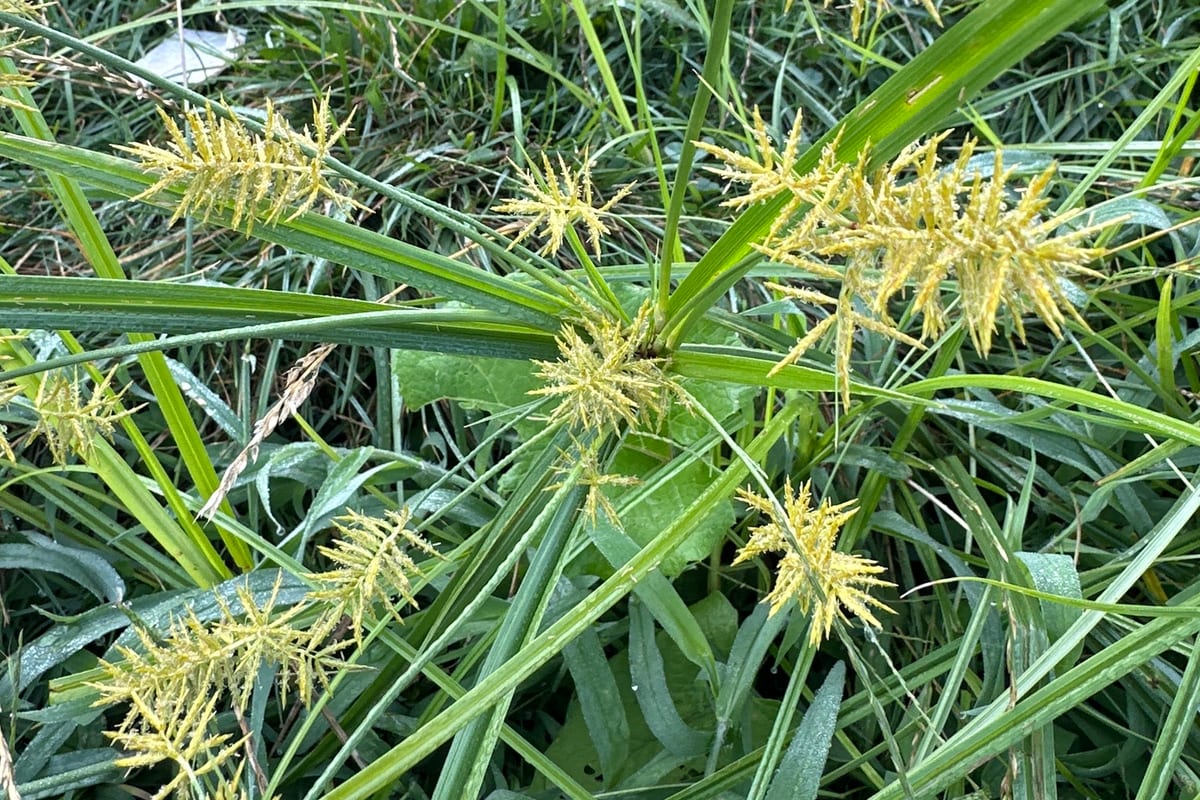
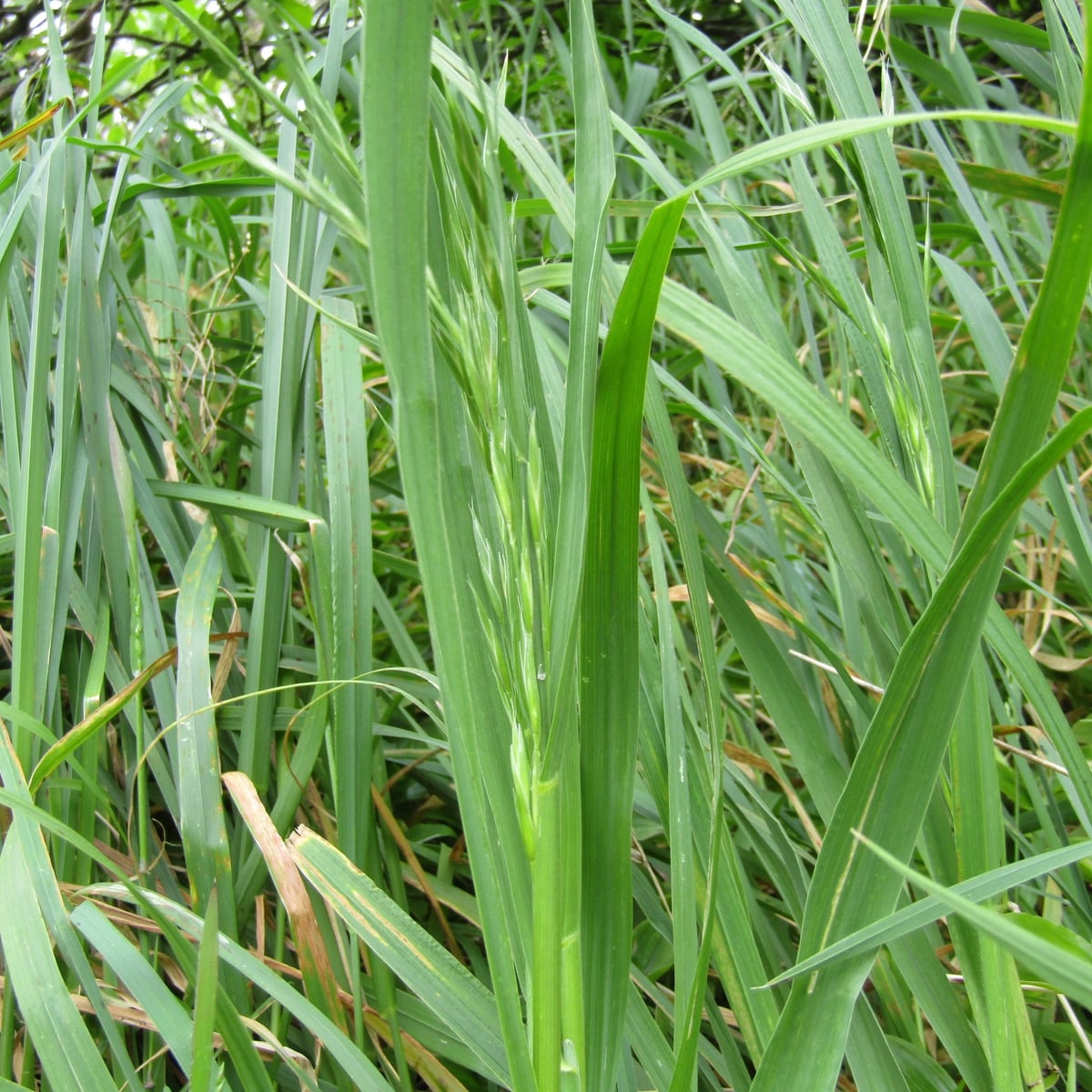
Nutsedge is not a grass and not a broadleaf, which is exactly why the weed killer in your garage did nothing to it. Roll a stem between your fingers: a sedge stem is triangular and you can feel three distinct edges, while every lawn grass has a round or flattened stem. That one test settles the ID in about three seconds, and it is the difference between buying the right product and wasting a season on the wrong one.
The other giveaway is speed. Nutsedge grows visibly faster than the turf around it, so a few days after you mow there are glossy yellow-green spikes standing above an otherwise flat lawn. The leaves come off the stem in threes rather than the two ranks a grass produces, and the whole plant has a waxy shine that turf does not. Where you find it matters too: nutsedge concentrates in damp, poorly drained, or over-irrigated ground, so a patch is usually telling you something about your soil and your sprinklers before it tells you anything about weeds.
Quick verdict
If the stem is triangular, the leaves come in threes, and the plant outgrows the lawn within days of mowing, it is nutsedge and it needs a sedge-specific product plus a drainage fix. If the stem is round or flat and it grows at the same pace as everything else, it is grass.
Yellow Nutsedge vs Lawn Grass: at a glance
Stem cross-section
Leaf arrangement
Blade color and finish
Growth speed after mowing
Where it shows up
Seed head
How it spreads
What happens when you pull it
Response to normal weed killer
What actually works
Verdict
AIt is nutsedge if...
- The stem feels triangular when you roll it between your fingers.
- It is standing above the mowed lawn two or three days after you cut.
- The blades are glossy and yellow-green rather than matte and turf-colored.
- It is concentrated in the wettest, lowest, or most heavily irrigated part of the yard.
- Your normal broadleaf weed killer flattened the dandelions and did nothing at all to this.
BIt is just grass if...
- The stem is round or flattened, with no edges to feel.
- The leaves come off the stem in two ranks, alternating side to side.
- It grows at the same pace as the rest of the lawn between mows.
- The color and finish match the turf around it rather than shining against it.
- It is spread evenly across the yard instead of clustering in the damp spots.
Nutsedge pressure is a moisture map of your yard. Get a deeper, less frequent schedule for your grass type and ZIP.
Get your seasonal lawn care calendar for your ZIP
Every task, from feeding to weed control to aeration, has a window that shifts by region. Add your ZIP and we will email your 12-month lawn calendar right away, starting with this month.
Seasonal reminders and tips. No spam. Unsubscribe anytime.
Frequently asked questions
Why does nutsedge grow faster than my grass?
Because it is not competing on the same terms. Sedges put energy into fast vertical growth from an underground tuber that already holds a reserve, so they can shoot up while turf is still recovering from the mow. That is why the classic sign of nutsedge is a lawn that looks flat on Saturday and speckled with spikes by Tuesday. The speed is a symptom of the tuber system, and it is also why cutting it back never helps: you are trimming the top of a plant whose bank account is underground.
Why does weed killer not kill nutsedge?
Standard lawn herbicides are formulated for two plant families, grasses and broadleaves. Sedges are a third lineage with different biology, so a product that wipes out dandelions and crabgrass leaves nutsedge glossy and thriving. You need a sedge-specific active ingredient, typically a halosulfuron or sulfentrazone product, applied while the plants are young. Whatever you buy, follow the rate and the grass-type restrictions on the label exactly, because sedge products vary a lot in which turf species they are safe on.
Can I just pull nutsedge out?
Only very early, and only if there is not much of it. Each plant sets small tubers on its root system through the summer, and each tuber can resprout several times. Once a plant is past roughly the five-leaf stage, pulling the shoot usually stimulates more shoots than it removes, because you break the top off and leave the tuber intact. Early-season pulling before tubers form does genuinely help. Established patches are a two-season project no matter what you do.
Does nutsedge mean my lawn is too wet?
Usually, yes. Nutsedge pressure maps almost perfectly onto moisture: low spots, poorly drained soil, over-irrigated zones, and anywhere a downspout dumps. Before you buy anything, walk the patch after a rain and see where the water sits. Cutting irrigation frequency in favor of deeper, less frequent watering, filling low areas, and fixing downspout discharge removes the conditions the tubers need, and it makes the herbicide work you do far more durable.
Is nutsedge the same as crabgrass?
No, and they need different products. Crabgrass is a true grass, so it has round stems, two-ranked leaves, and a sprawling flat habit, and it responds to grass-weed herbicides and spring pre-emergent timing. Nutsedge is a sedge, so it has triangular stems, three-ranked leaves, an upright habit, and it ignores both. If a product is labeled for crabgrass and you are looking at a triangular stem, you are about to spend money on the wrong problem.
Will nutsedge come back next year?
If you only treated the tops, yes. The tubers overwinter in the soil and sprout again when it warms, which is why nutsedge control is measured in seasons rather than weekends. Expect visible progress the first year and real control the second, provided you pair the sedge-specific product with the drainage and irrigation changes. A patch treated once and then re-watered on the same schedule will be back on time.