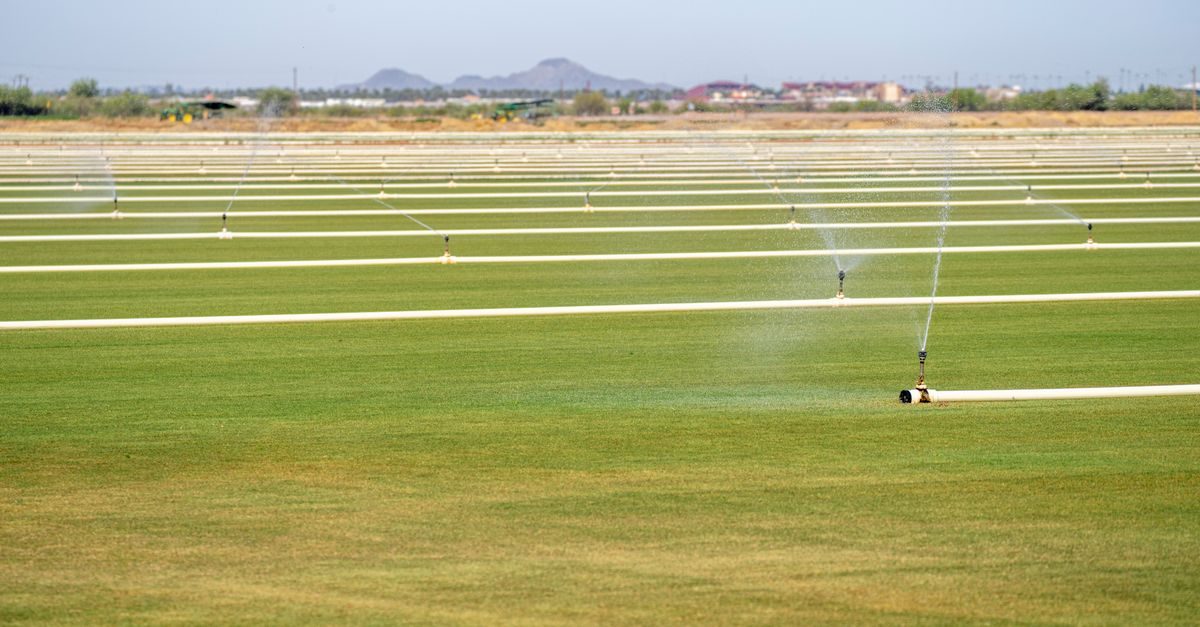

About Annual Ryegrass
Annual Ryegrass (Lolium multiflorum), also called Italian Ryegrass, is a fast-germinating cool-season bunchgrass used for temporary green cover. In home lawns, its most useful role is straightforward: seed it into a dormant or nearly dormant Bermudagrass lawn in fall, enjoy green turf through winter and early spring, then let heat remove it as the Bermuda wakes back up.
That word temporary matters. Annual Ryegrass is not the grass to choose for a permanent northern lawn, and it is not a substitute for Tall Fescue, Kentucky Bluegrass, or Perennial Ryegrass where a year-round cool-season lawn is the goal. It completes its life cycle quickly, produces seed heads in spring, and fades as warm weather arrives. That short life is a feature when you want inexpensive winter color, but a flaw if you expect a lasting lawn.
The appeal is speed and price. Annual Ryegrass can germinate in roughly 5 to 10 days in moist, mild soil, often covering a prepared lawn before slower cool-season grasses have done much at all. Seed is usually less expensive than Perennial Ryegrass, and the bright green stand can make a straw-brown Bermuda lawn look alive all winter. The trade-off is a coarser texture, lighter color, more frequent mowing, and a less polished appearance than a high-quality Perennial Ryegrass overseed.
Key Characteristics
- Botanical name: Lolium multiflorum, although some current plant databases place it under Festuca perennis
- Life cycle: Cool-season annual or short-lived biennial, depending on variety and climate
- Growth habit: Upright bunchgrass with no stolons or rhizomes, so it cannot creep sideways to repair a bare spot
- Color: Bright to yellow-green, usually lighter than Perennial Ryegrass
- Texture: Medium to coarse, with broader leaves and a less refined surface than turf-type Perennial Ryegrass
- Germination: Fast, commonly visible within 5 to 10 days when soil stays moist
- Primary lawn use: Temporary winter overseeding of Bermudagrass and short-term erosion control
Why Choose Annual Ryegrass?
Choose Annual Ryegrass when you have a healthy, sunny Bermudagrass lawn in the South and want economical winter color. It also makes sense when a bare construction area needs quick cool-season cover until the permanent warm-season grass can be planted in late spring. For a rental property, a low-profile recreation area, or a large budget-conscious lawn, the lower seed price can outweigh the difference in turf quality.
It can also protect the soil surface from erosion and provide some winter wear coverage while Bermuda is dormant. That does not make the base lawn indestructible. Dormant Bermuda crowns can still be damaged by heavy traffic, and the winter grass competes with Bermuda for light, water, and nutrients during spring transition.
Decide Before You Seed
Overseeding is an annual commitment, not a one-time lawn improvement. Before buying seed, make sure you can irrigate the entire area evenly, mow through winter, and tolerate a mixed-looking lawn during spring transition. Check local watering restrictions too. A dormant Bermuda lawn can survive on very little supplemental water, while germinating ryegrass may need several short cycles each day. That difference can be significant on a large property.
Also look honestly at the permanent lawn. Bare patches, poor drainage, heavy shade, and weak Bermuda do not disappear under winter green. Ryegrass may hide them for a few months, but it can make recovery harder by competing during spring green-up. If the base lawn needs major repair, skip the overseed, use winter to test soil and plan drainage or grading work, then repair Bermuda during its active planting season.
Finally, consider how the yard is used. A front lawn grown mainly for appearance is easier to overseed than a backyard with constant dog traffic. Young ryegrass seedlings need a few protected weeks, and dormant Bermuda beneath them still takes wear. If you cannot limit traffic during establishment, overseed only the most visible section or accept natural winter dormancy.
The Honest Trade-offs
- Temporary by design: It will not become a permanent southern lawn. Heat and natural maturity end the stand in spring or early summer
- Lower turf quality: Leaves are coarser and lighter green than Perennial Ryegrass, and spring seed heads can look untidy
- Frequent mowing: Fast upright growth means you may mow weekly or more often during mild, wet weather
- Spring competition: A dense ryegrass stand can shade and delay Bermudagrass green-up if transition is not managed
- Extra water and fertilizer: A winter-green lawn is actively growing, so it needs irrigation, mowing, and measured feeding while dormant Bermuda would need much less
- Reseeding risk: If seed heads mature, volunteer plants can return in beds, thin turf, and disturbed soil the next cool season
If you want the finest, darkest, most uniform winter turf and do not mind paying more, Perennial Ryegrass is usually the better overseed. If you want fast, functional, affordable winter green and accept a more practical look, Annual Ryegrass does the job.
How to Identify Annual Ryegrass
Annual Ryegrass is easy to recognize as a vigorous winter bunchgrass, but separating it from Perennial Ryegrass and Tall Fescue takes a closer look. Use several clues together. Color alone is not enough because fertility, cold, and mowing height can change how any ryegrass looks.
The Best Field Clues
- Growth habit: Individual upright clumps with fibrous roots and no creeping runners. Pull apart the canopy and you will not find Bermuda-like stolons or Kentucky Bluegrass rhizomes
- Blade surface: The upper surface is ridged while the underside is smooth and glossy. The shine is a strong ryegrass clue
- Blade tip: Pointed, not boat-shaped like Kentucky Bluegrass
- Auricles: Small clasping, ear-like structures wrap around the stem where the leaf blade meets the sheath. They become more obvious as the plant matures
- Vernation: New leaves are rolled in the bud. This helps separate Annual Ryegrass from folded Perennial Ryegrass
- Color and texture: Usually lighter green and coarser than Perennial Ryegrass, with vigorous vertical growth
- Spring seed head: A narrow spike with alternating spikelets attached edgewise along the central stem. Annual Ryegrass heads heavily as days lengthen and temperatures warm
Annual vs. Perennial Ryegrass
These two are close relatives, so expect overlap. Annual Ryegrass is usually brighter green, coarser, faster-growing, and more eager to form seed heads in spring. Its new leaves are rolled in the shoot. Perennial Ryegrass is generally darker, finer, denser, and folded in the shoot. Perennial types are bred for better turf quality, disease resistance, and a more uniform surface.
The seed label is often more reliable than a lawn photo. Look for the species name and percentage by weight. A bag labeled only "ryegrass" is not specific enough. If the label lists Lolium multiflorum, Italian Ryegrass, Gulf Annual Ryegrass, or another annual cultivar, you are buying Annual Ryegrass. If it lists Lolium perenne, it is Perennial Ryegrass.
Annual Ryegrass vs. Tall Fescue
Tall Fescue also grows in bunches and can look coarse, but its blade margins feel rougher, especially when you run a finger from tip to base. Annual Ryegrass blades feel smoother and have a glossier underside. Mature Annual Ryegrass also has clasping auricles, while Tall Fescue's auricles do not clasp the stem. Tall Fescue is a deeper-rooted permanent lawn grass; Annual Ryegrass is a temporary winter plant.
Annual Ryegrass vs. Cereal Rye
Annual Ryegrass is not the same plant as cereal rye (Secale cereale). Cereal rye is a grain crop with much larger stems and seed heads. It belongs in cover crop and forage systems, not in a mowed home lawn. Product names can be confusing, so always read the botanical name on the seed tag.
What It Looks Like in a Bermuda Lawn
During winter, Annual Ryegrass appears as upright green tufts rising through a straw-colored, low-growing Bermuda base. A good overseed becomes dense enough to hide most of the dormant canopy. In spring, the picture reverses: green Bermuda runners start low in the canopy while taller ryegrass turns lighter, produces seed stalks, and eventually thins.
Not sure what you are looking at? Upload a photo to our free grass identifier for an instant analysis.
Types & Varieties
Annual Ryegrass seed is sold under several names and breeding types. For a temporary lawn, the important decision is not chasing one famous cultivar. It is buying fresh, tested seed that matches your goal and contains as little weed seed as possible.
Common or Gulf-Type Annual Ryegrass
Common and Gulf-type seed is widely available, inexpensive, and fast to establish. It is often the default for erosion control, roadsides, pastures, and low-cost winter overseeding. Turf quality is practical rather than polished: expect a bright green color, coarse leaves, rapid growth, and prominent spring seed heads.
Turf-Selected Annual Ryegrass
Some cultivars are selected for improved color, density, cold tolerance, or disease resistance. They may create a more uniform winter lawn than commodity seed, but they still behave like Annual Ryegrass. They remain temporary, bunch-forming plants that head out and decline as spring advances. If the price approaches that of a quality Perennial Ryegrass blend, compare the seed tags carefully before deciding.
Diploid and Tetraploid Types
These terms describe chromosome number and are more important in forage production than in home turf. Tetraploid types tend to have larger seed, wider leaves, and more open growth. Diploid types generally produce a denser stand with finer leaves. For a mowed lawn, density and leaf texture usually favor a diploid turf-oriented product, but the cultivar's local performance and seed quality matter more than the label alone.
Westerwold and Italian Types
Westerwold types complete their life cycle rapidly and are strongly annual. Italian types may act as winter annuals or short-lived biennials depending on genetics and climate. In a southern winter lawn, both are managed as temporary cover. Do not assume that a short-lived Italian type will persist as a reliable permanent turf.
Intermediate Ryegrass
Intermediate Ryegrass is a cross between annual and perennial types. It is marketed as a compromise: faster or less expensive than elite Perennial Ryegrass, with somewhat better color and texture than basic Annual Ryegrass. It is still best treated as temporary winter turf in the South. If a mix contains annual, intermediate, and perennial seed, use the maintenance expectations for the fastest-growing component.
How to Read the Seed Tag
- Species and cultivar: Confirm that the bag actually contains Annual Ryegrass and note whether it is a named cultivar or common seed
- Germination percentage: Higher tested germination means more of the bag can become turf
- Test date: Buy fresh seed. Germination declines during hot or damp storage
- Pure seed percentage: A high number means less inert filler
- Weed seed: Choose the lowest percentage available, ideally with no noxious weed seed
- Coating: Coated seed weighs more per kernel, so compare coverage based on the label's recommended area, not bag weight alone
For a home lawn, certified seed from a regional turf supplier is a better bet than an anonymous bargain bag. The seed cost is only one part of the project. Water, mowing, and spring transition take the same effort either way.
Best Zones & Climate
Annual Ryegrass is a cool-season plant, but this guide focuses on its most useful lawn role in USDA Zones 7 through 10: temporary winter color over a warm-season base lawn. It grows while Bermudagrass is slowing or dormant, then declines when sustained heat returns.
Ideal Growing Conditions
- Germination: Mild soil, generally around 50 to 65 degrees F, with consistent surface moisture
- Active growth: Cool days and chilly nights, roughly 50 to 75 degrees F
- Heat response: Rapid decline as late-spring and summer heat builds, especially with warm nights and humidity
- Cold response: Better winter survival in the Deep South and low deserts than in regions with prolonged hard freezes or exposed frozen soil
- Sun: Best in full sun. Dense shade produces weak, stretched plants and damp disease-prone turf
Where Annual Ryegrass Makes Sense
The strongest fit is a Bermudagrass lawn in the Southeast, Gulf Coast, lower South, or irrigated Southwest where winter is cool enough for ryegrass but not consistently severe. Arizona's low deserts are a classic example: Bermuda loses color in winter, while ryegrass grows through the mild season. The same basic handoff happens across Texas, Louisiana, Mississippi, Alabama, Georgia, and the Carolinas, although timing changes with latitude and elevation.
Annual Ryegrass can also stabilize bare soil through fall and winter when it is too late to establish a permanent warm-season lawn. Think of it as a temporary cover crop you can mow. When the correct planting window returns, remove or allow the ryegrass to decline, prepare the site, and establish the permanent turf.
Where It Is the Wrong Choice
- Permanent northern lawns: Use a perennial cool-season grass or a regionally appropriate blend instead
- High-end winter turf: Perennial Ryegrass offers finer texture, darker color, and better overall quality
- Stressed base lawns: Do not overseed Bermuda that is thin, diseased, newly planted, or struggling to recover. Winter competition can weaken it further
- Zoysia, Centipede, and St. Augustine lawns: These slower-growing grasses usually transition poorly after overseeding and can be injured by the preparation required
- Water-limited landscapes: Dormant Bermuda uses little winter irrigation. A green ryegrass lawn adds meaningful water demand
Use Temperature, Not a Fixed Date
Calendar dates vary too much to be universal. In many southern locations, the window falls from late September through October. Wait until daytime highs settle into the 70s or low 80s and the warm-season lawn has clearly slowed. Seed too early and active Bermuda outcompetes seedlings. Seed too late and cold soil, frost, and short days delay establishment.
Your county extension office can give you a local overseeding window. That local date is more valuable than a national zone map because elevation, urban heat, and the first-frost pattern all change timing.
Soil Preparation & pH
Annual Ryegrass is adaptable, but fast germination only turns into a uniform lawn when the seed contacts soil. Most overseeding failures are placement failures: seed lands in a thick Bermuda canopy, dries on top of thatch, and never roots well.
Ideal Soil Conditions
- pH: About 6.0 to 7.0 for best nutrient availability
- Drainage: Moist but well-drained. Saturated soil encourages seedling disease and shallow roots
- Texture: Performs in sand, loam, and clay if drainage and irrigation are managed correctly
- Fertility: Moderate fertility supports color and density, but excess nitrogen creates lush, disease-prone growth
- Surface: Firm, level, and open enough for seed to reach the soil
Start with a Soil Test
Test the soil through your local extension service before adding lime, sulfur, phosphorus, or potassium. Remember that you are managing two grasses in one soil. Amendments should support the permanent warm-season lawn as well as the temporary ryegrass. Do not chase a quick winter color change with products your soil does not need.
Preparing an Existing Bermuda Lawn
- Confirm the Bermuda is healthy. A weak base lawn should rest through winter rather than compete with an overseed
- Stop pushing Bermuda growth. Avoid late heavy nitrogen before overseeding
- Let the canopy open. As fall growth slows, lower the mowing height gradually. Do not scalp green, actively growing Bermuda in one brutal cut
- Remove excess debris. Bag the final heavy clipping load if it would block seed from reaching soil
- Lightly rake or verticut only if needed. The goal is seed-to-soil contact, not removal of the Bermuda crowns
- Correct obvious grade or drainage problems first. Seed will not solve standing water
Avoid aggressive dethatching or deep aeration immediately before overseeding. University of Arizona guidance warns that severe preparation can damage the Bermuda crowns and rhizomes needed for spring recovery. Do major cultivation while Bermuda is actively growing in summer, then keep fall preparation light.
Preparing Bare Soil for Temporary Cover
- Remove construction debris, rocks, and perennial weeds
- Test soil and correct pH according to the report
- Loosen only the compacted surface layer, then grade it smooth
- Firm the seedbed so a footprint sinks no deeper than about 1/4 inch
- Spread seed evenly in two perpendicular passes
- Rake lightly so seed sits at or just beneath the surface, then roll for contact
- Apply a thin, clean straw mulch on erosion-prone bare ground if needed, keeping enough soil visible for seedlings to emerge
Do Not Bury the Seed
Annual Ryegrass seed is small and should stay shallow. Deep tilling after seeding or covering it with a thick layer of soil reduces emergence. On an existing lawn, a light rake, drag mat, or very thin topdressing is enough. Good contact plus steady moisture beats deep burial.
Recommended Products
- 1Check price
 Top pick
MySoil Soil Test Kit
Mail-in soil test that reports pH and nutrient levels with recommendations, so lime or fertilizer goes down only where the numbers call for it.
- 2Check price
 Best value
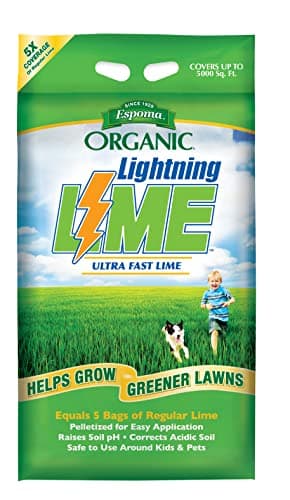
Espoma Organic Lightning Lime (Fast-Acting Pelletized Lime)
Fast-acting pelletized lime for low-pH lawns when a soil test confirms you need to raise pH before fertilizing harder. Covers up to 5,000 sq ft.
As an Amazon Associate we earn from qualifying purchases.
Fertilizer Program
Annual Ryegrass responds quickly to nitrogen, which makes it easy to overfeed. The goal is a dense, mowable winter lawn, not forage-level growth. Too much nitrogen means constant mowing, softer leaves, more disease pressure, and greater risk of delaying the Bermuda in spring.
Base the Program on a Soil Test
Use the soil test for phosphorus, potassium, and pH. Phosphorus should not be applied automatically just because a product says "starter fertilizer." Established soils often contain enough already, and runoff restrictions may apply in your area. Potassium is also a soil-test decision. It supports stress tolerance, but more is not automatically better.
A Practical Winter-Lawn Schedule
At Seeding
If the soil test recommends phosphorus or the site is newly prepared, apply the recommended starter fertilizer and water it in. If phosphorus and potassium are already adequate, wait until seedlings emerge before applying nitrogen. Fertilizer sitting on bare, frequently irrigated soil is more likely to move away from where you need it.
About Two Weeks After Emergence
Once the stand is rooted and has been mowed or is nearly ready to mow, apply about 0.5 pound of nitrogen per 1,000 square feet. Water granular fertilizer off the leaves and into the soil. This application builds density without forcing a surge of tender growth.
Midwinter
Reapply up to 0.5 pound of nitrogen per 1,000 square feet every 4 to 6 weeks only while the grass is actively growing and color or density indicates a need. In cold periods, growth may slow enough that feeding should wait. Never fertilize frozen soil or ahead of heavy rain.
Late Winter and Early Spring
Stop feeding the ryegrass as the warm-season lawn approaches green-up. Continued nitrogen favors the ryegrass at exactly the moment you need Bermuda to regain light and space. Shift your attention from winter color to a clean spring transition.
How to Calculate Nitrogen
Use the first number on the fertilizer bag as the nitrogen percentage. To apply 0.5 pound of nitrogen with a 20-0-10 fertilizer, divide 0.5 by 0.20. The result is 2.5 pounds of product per 1,000 square feet. Measure the actual lawn area, calibrate your spreader, and make two half-rate passes in opposite directions for even coverage.
Slow-Release vs. Quick-Release
- Slow-release nitrogen: Provides steadier color and reduces surge growth, making it the safest default for most homeowners
- Quick-release nitrogen: Works in cool soil and provides a fast response, but it is easier to overapply or burn drought-stressed turf
- Iron: Can deepen color without the same growth surge as nitrogen, but it will not replace actual nitrogen when the grass is deficient
Warning Signs
- Pale, slow grass: Check soil moisture, cold stress, and nitrogen status before feeding
- Dark, floppy growth: Too much nitrogen or water. Back off both and mow often enough to maintain height
- Striping after fertilizing: Spreader overlap or gaps. Use perpendicular half-rate passes next time
- Yellowing in wet areas: Often a drainage or root-health problem, not a fertilizer shortage
Recommended Products
- 1Check price
 Top pick
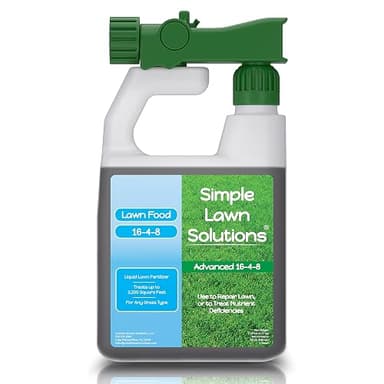
Simple Lawn Solutions Advanced 16-4-8
Liquid 16-4-8 lawn food for quick feeding on established lawns when you want balanced NPK and simple hose-end application.
- 2Check price
 Best value
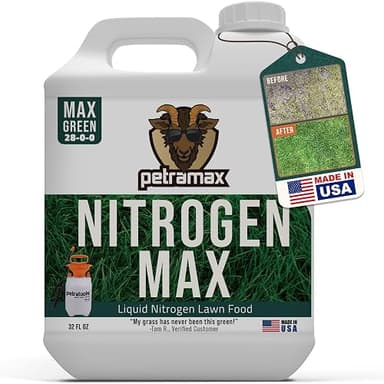
PetraTools Liquid Nitrogen 28-0-0
High-nitrogen liquid spray for quick green-up. Slow-release 28-0-0 formula, 32 oz hose-end application.
As an Amazon Associate we earn from qualifying purchases.
Month-by-Month Care Calendar
Annual Ryegrass follows a one-season arc: prepare in late summer, seed in fall, maintain through winter, transition out in spring, then rebuild the permanent warm-season lawn. Exact timing shifts by region, so pair this calendar with soil temperature and local extension guidance.
August
- Decide whether winter green is worth the added water, mowing, and spring transition work
- Confirm that the Bermuda lawn is healthy and has had a full summer to recover
- Complete core aeration or major dethatching while Bermuda is still actively growing
- Order fresh seed and check the tag for species, germination, test date, and weed seed
- Avoid long-residual pre-emergent herbicides if the label interval would block fall ryegrass germination
September
- Watch daytime highs, nighttime lows, and Bermuda growth rather than seeding on the first cool morning
- Take a soil test if one is not current
- Stop heavy nitrogen applications that would keep Bermuda aggressively growing
- Inspect irrigation coverage and fix clogged or misaligned heads before seed goes down
- In cooler transition-zone locations, the overseeding window may arrive late this month
October
This is the primary overseeding month across much of the South and low desert Southwest.
- Gradually lower the Bermuda canopy as its growth slows
- Open the surface with light raking or verticutting only if thatch blocks soil contact
- Broadcast seed in two directions, rake or drag lightly, and begin germination watering immediately
- Keep the surface moist with short cycles, then reduce frequency after emergence
- Keep people and pets off tender seedlings
November
- Make the first mow when the stand reaches roughly 2.75 to 3 inches, using a sharp blade
- Apply the first light nitrogen feeding once seedlings are established
- Begin deepening irrigation and extending the time between watering days
- Repair thin spots early if enough mild weather remains for germination
- Scout for damping-off, armyworms, and uneven irrigation
December
- Mow as growth requires, never removing more than one-third of the blade
- Water only when rainfall does not meet the lawn's need
- Pause fertilizer during cold spells when growth has stopped
- Keep leaves and debris off the turf so sunlight and air reach the canopy
- Avoid traffic on frost-covered grass
January
- Maintain a 1.5 to 3 inch mowing height based on turf quality and mower type
- Check moisture below the surface before irrigating
- Spot-manage broadleaf weeds only with a product specifically labeled for the ryegrass and situation
- Watch shaded or poorly drained sites for thinning and disease
- Do not force growth with extra nitrogen during prolonged cold
February
- Make the final nitrogen application only if the lawn still needs it and Bermuda green-up is not close
- Sharpen the mower blade before spring growth accelerates
- Begin planning the transition back to Bermuda
- Do not apply a spring pre-emergent blindly. Check how it affects the Bermuda and your transition plan
- Prevent seed heads by maintaining a regular mowing schedule
March
- Stop fertilizing the ryegrass
- As Bermuda begins green-up, lower the ryegrass mowing height gradually to admit light
- Reduce excess irrigation without drought-stressing the emerging Bermuda
- Bag heavy seed-head clippings if they would smother the surface
- Look low in the canopy for green Bermuda runners before deciding the base lawn is dead
April
- Continue frequent, lower mowing to weaken ryegrass and expose Bermuda
- Lightly verticut only if the base lawn is actively growing and healthy enough to recover
- Wait until Bermuda is substantially green before starting its normal fertilizer program
- Do not keep the ryegrass lush with extra water or nitrogen
- Accept a temporary mottled appearance. Transition is a handoff, not an overnight color change
May Through July
- Allow heat and warm-season growth to finish the ryegrass stand
- Resume the correct Bermuda mowing, watering, and fertilizer schedule once fully active
- Core aerate or dethatch now if needed, while Bermuda can recover rapidly
- Repair any weak warm-season areas rather than hiding them with another fall overseed
- Give Bermuda at least a full active-growth season before asking it to support winter ryegrass again
Mowing Guide
Annual Ryegrass grows upright and quickly. Regular mowing is what turns a patch of winter cover into something that looks like a lawn. Skip a week during mild, wet weather and the stand can become shaggy, shade its own lower leaves, and start producing seed heads.
Recommended Height
- Rotary mower: About 2 to 3 inches for most home lawns
- Higher-quality reel-cut turf: Roughly 1 to 1.5 inches, provided the surface is level and mowing is frequent
- First mowing: When seedlings reach about 2.75 to 3 inches and resist a gentle tug
- Spring transition: Lower gradually toward 1 to 1.5 inches as Bermuda green-up begins
A 2 to 2.5 inch target is a practical home-lawn sweet spot. It leaves enough leaf area for winter growth, works with a standard rotary mower, and avoids the scalped look caused by cutting a bumpy lawn too low.
Follow the One-Third Rule
Never remove more than one-third of the leaf height in one mowing. If your target is 2 inches, mow before the lawn exceeds 3 inches. When a stand gets away from you, bring it down over two or three cuts spaced several days apart. One severe cut tears plants, exposes stems, and leaves piles of wet clippings.
Mowing Frequency
- Fall establishment: First mow once rooted, then every 5 to 10 days as growth requires
- Mild winter weather: Often weekly, especially after nitrogen or rain
- Cold periods: Less often or not at all while growth is paused
- Spring: More frequently as temperatures and seed-head production increase
Blade Sharpness Matters
Ryegrass leaves are easily shredded by a dull rotary blade. Frayed tips create a pale or silver cast across the lawn and increase the amount of wounded tissue exposed to disease. Sharpen the blade before the first mow and inspect the cut every few weeks. A cleanly cut tip looks flat; a dull cut looks stringy and torn.
Managing Seed Heads
Seed heads are normal for Annual Ryegrass as spring days lengthen. Frequent mowing keeps them less visible but cannot stop the plant's life cycle. Bag clippings when seed heads are mature enough to scatter seed or when clippings would form clumps. Otherwise, dry, finely chopped clippings can return nutrients to the lawn.
Mowing for Spring Transition
When nights stay warm and Bermuda begins to green, reduce the ryegrass height in stages. More sunlight at the soil surface warms Bermuda crowns and supports new runners. Mow often enough that ryegrass cannot rebuild a tall canopy. Do not drop from 3 inches to 1 inch in a single pass, and do not scalp before the Bermuda is showing active growth.
Simple Practices That Improve the Cut
- Mow when leaves are dry so clippings disperse and the mower does not pull seedlings from wet soil
- Alternate direction to prevent grain and reduce wheel tracks
- Keep mower tires off frost-covered turf
- Clean clumps immediately because wet piles block light and invite disease
- Keep people and pets off the stand until after the first mowing
Watering Schedule
Watering Annual Ryegrass has two distinct phases. Seed needs frequent surface moisture to germinate. Established grass needs deeper, less frequent irrigation. Staying in seedling mode all winter creates shallow roots, soggy soil, disease, and a needlessly high water bill.
Phase 1: Germination
Start watering immediately after seeding. Apply short cycles two to four times per day, depending on sun, wind, temperature, and soil type. The goal is to keep the top fraction of an inch consistently damp without puddles or runoff. Sandy soil and windy desert weather may need more frequent short cycles; cool clay may need fewer.
- Use fine droplets that do not wash seed into low spots
- Check the surface between cycles and adjust before following a fixed timer
- Correct runoff by shortening each cycle and adding soak time
- Keep traffic off saturated soil to avoid ruts and seed movement
Phase 2: Seedling Establishment
After most seed has emerged, reduce frequency gradually and increase the amount per watering. Move from several tiny cycles to once daily, then every other day as roots develop. A seedling that never has to search for moisture stays shallow and wilts quickly.
Phase 3: Established Winter Turf
Once the grass has been mowed and is firmly rooted, water based on weather and soil moisture. In many southern winter climates, rainfall covers much of the need. In the low desert, irrigation remains essential but cool-season demand is still lower than in hot summer.
- Water early in the morning so leaves dry after sunrise
- Wet the root zone, then wait until the soil begins drying before watering again
- Use a screwdriver or soil probe to check moisture several inches deep
- Place straight-sided cans across the lawn to measure sprinkler output and find dry zones
- Reduce or skip irrigation after meaningful rain
How the Lawn Shows Thirst
Annual Ryegrass that needs water turns dull blue-green, holds footprints, and develops folded or rolled leaves. Water before widespread wilt. If only one strip wilts, inspect irrigation coverage rather than increasing every zone.
How the Lawn Shows Too Much Water
Constantly wet soil feels soft underfoot, grows algae at the surface, and produces yellow or weak plants. Mushrooms alone do not prove overwatering, but mushrooms plus soggy soil are a strong clue. Reduce frequency, repair drainage, and stop watering in the evening.
Spring Transition
Do not abruptly shut off irrigation to kill the ryegrass. Drought can also delay the Bermuda you are trying to restore. Instead, stop keeping the ryegrass artificially lush. Water deeply only when the developing warm-season root zone needs it, and let rising heat plus lower mowing do the transition work.
Seeding & Overseeding
Seeding is the heart of Annual Ryegrass management because every winter lawn starts over from seed. Uniform distribution and soil contact matter more than simply buying extra pounds of seed. A thick carpet of seed trapped in Bermuda leaves will still produce a patchy lawn.
When to Seed
Seed after the warm-season lawn has slowed but while enough mild weather remains for establishment. In many southern areas that means late September through October. University of Arizona guidance uses October conditions around 80 to 85 degree F days and roughly 55 degree F nights for low desert overseeding. NC State recommends late fall as soil drops below about 75 degrees F, with local timing shifting by region.
The practical signs are more useful than one national date:
- Bermuda is no longer producing fast runners or requiring frequent mowing
- Daytime highs are consistently in the 70s or low 80s
- Nights are cool, but a hard freeze is not imminent
- Irrigation is working evenly and the surface can stay moist
How Much Seed
Extension recommendations vary with climate, desired density, and seed type. NC State gives a general overseeding range of 5 to 10 pounds per 1,000 square feet, while University of Arizona guidance for desert winter turf uses 12 to 15 pounds per 1,000 square feet. Follow the seed label and your local extension recommendation. Use the lower end for practical cover and the higher local rate for denser winter turf.
More seed is not always better. An excessively dense stand requires more water and fertilizer, holds moisture in the canopy, and competes harder with Bermuda during spring transition.
Calibrate the Spreader
Spreader settings printed on a bag are only starting points because seed size, coating, walking speed, and equipment condition all change the output. Calibrate on a measured hard surface or tarp where escaped seed can be collected. For example, if your target rate is 10 pounds per 1,000 square feet, a 100-square-foot test area should receive 1 pound total. Because you will make two perpendicular passes, put 0.5 pound in the hopper for the first test pass.
Start with a conservative opening, walk at the same steady pace you will use on the lawn, and weigh what remains. Adjust and repeat until the expected amount covers the test area. Write down the spreader model, gate setting, walking pace, seed product, and final rate. That note gives you a better starting point next fall than any generic chart.
On the lawn, close the gate before stopping or turning so seed does not pile up. Use the wheel tracks as a guide and keep each pass evenly spaced. Apply border strips carefully instead of throwing seed into beds or pavement, where volunteer ryegrass becomes a nuisance. Sweep stray seed back onto the turf before watering.
Step-by-Step Overseeding
- Measure the lawn. Length times width gives square feet for a rectangle. Break irregular lawns into smaller shapes and add them
- Prepare the canopy. Gradually lower mowing height as Bermuda slows, and remove enough clippings for seed to reach soil
- Address thatch lightly. Rake or verticut only where a dense layer blocks contact. Save aggressive cultivation for summer
- Divide the seed. Put half in the spreader for north-south passes and half for east-west passes
- Calibrate first. Test a known area rather than trusting a generic spreader setting
- Spread in two directions. Overlap wheel tracks slightly for even coverage
- Improve contact. Drag, brush, or lightly rake the seed down through the canopy. A very thin compost or sand topdressing can help
- Water immediately. Do not let imbibed seed dry after germination begins
- Protect the area. Limit traffic until seedlings have rooted and been mowed at least once
Repairing Thin Areas
If irrigation or distribution left thin spots, reseed as soon as you can diagnose the cause. Scratch the surface, spread fresh seed, press it into contact, and resume light watering in that zone. Do not restart full-lawn germination watering if most of the turf is already established.
Seeding Bare Ground
For temporary erosion control, prepare and firm bare soil, broadcast seed evenly, rake it no deeper than about 1/4 inch, and protect slopes with an erosion-control blanket or light clean straw. Annual Ryegrass can hold the surface through cool months, but it is not a permanent erosion solution. Establish the intended permanent grass when its proper planting season arrives.
Spring Transition Back to Bermuda
- Stop nitrogen applications to Annual Ryegrass before Bermuda green-up
- Watch for active green Bermuda low in the canopy
- Lower mowing height gradually and increase frequency
- Keep irrigation adequate for Bermuda without pampering ryegrass
- Lightly verticut only after Bermuda is actively growing and able to recover
- Begin the normal Bermuda fertilizer program after substantial green-up, not while the lawn is mostly ryegrass
Do not judge transition by one week of mixed color. A blotchy green-and-tan stage is normal. The goal is a healthy Bermuda lawn by early summer, not perfect color every day of spring.
Recommended Products
- 1Check price
 Top pick
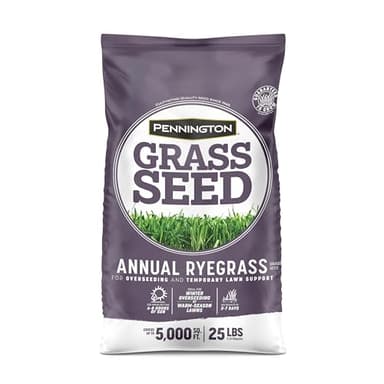
Pennington Annual Ryegrass Retail Bag to Overseed Warm Season Grasses, 25 lb
Fast-germinating annual rye for green winter color over dormant warm-season lawns; 25 lb covers about 5,000 sq ft of overseeding.
As an Amazon Associate we earn from qualifying purchases.
Weed Control
A dense Annual Ryegrass stand suppresses many winter weeds by taking light and space, but overseeding complicates chemical weed control. Products that prevent winter annual weeds can also prevent ryegrass seed from rooting. Herbicides safe on dormant Bermuda may injure actively growing ryegrass. Plan around the seed, not after weeds appear.
Pre-Emergent Timing
If you plan to overseed, read the pre-emergent label months in advance. Many products require a waiting interval between application and seeding. A late-summer or fall barrier intended for Annual Bluegrass can also block Annual Ryegrass. Do not assume that extra irrigation will wash a pre-emergent away.
You often have to choose between two winter strategies:
- Winter-green strategy: Overseed ryegrass and accept more limited grassy-weed control options
- Dormant-lawn strategy: Skip overseeding and use the dormant season for a stronger pre-emergent and selective weed-control program
Prevention During Establishment
- Use certified, low-weed seed
- Prepare only as aggressively as needed so buried weed seed is not brought to the surface
- Seed at the correct rate and distribute it uniformly
- Correct sprinkler gaps that create bare, weedy patches
- Mow before Annual Ryegrass and winter weeds set mature seed
Broadleaf Weeds
Small winter broadleaf weeds are easiest to manage early, but newly germinated ryegrass is sensitive. Wait until the stand is established and has been mowed enough times to meet the herbicide label. Choose a product that explicitly lists the turf species and growth stage. Spot treatment is usually better than blanket spraying a young winter lawn.
Grassy Weeds
Annual Bluegrass and other winter grasses are difficult to remove selectively from Annual Ryegrass because the plants are biologically similar. Prevention, clean seed, hand removal, and mowing before seed maturity are the realistic home-lawn tools. If grassy weeds are severe, skip overseeding the next fall and use the dormant season to reset the weed program.
When Annual Ryegrass Becomes the Weed
Annual Ryegrass can volunteer after seed heads mature. It may show up along bed edges, in disturbed soil, or in a permanent cool-season lawn where its coarse, light-green clumps stand out. Mow seed heads before they mature, pull isolated plants with the crown and roots, and keep the desired turf dense. In a mixed cool-season lawn, there may be no selective herbicide that removes Annual Ryegrass without damaging desirable grasses.
Spring Transition Products
Commercial turf managers sometimes use herbicides to remove ryegrass during transition, but product choice depends on the permanent grass, cultivar, temperature, and local label. Homeowners should not improvise this step. Mechanical transition through mowing, light reduction in irrigation, and active Bermuda growth is safer. If chemical transition is necessary, get a current recommendation from your county extension office and follow the label exactly.
Avoid These Mistakes
- Applying a dormant-Bermuda herbicide over green ryegrass without checking the label
- Spraying tender seedlings before the minimum mowing or age interval
- Using weed-and-feed during spring transition, which may feed the ryegrass you want to remove
- Letting seed heads mature, then wondering why ryegrass returns next fall
Recommended Products
- 1Check price
 Top pick
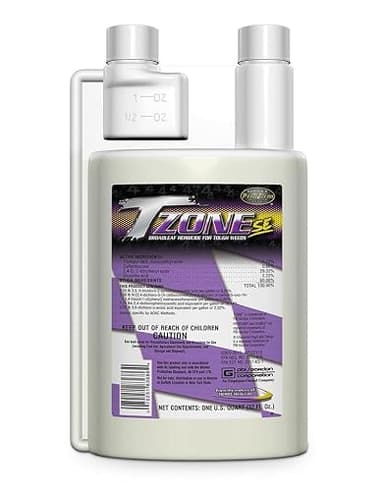
T-Zone SE Broadleaf Herbicide
Pro-grade broadleaf herbicide for tough weeds including clover, ground ivy, wild violet, and oxalis. 1 quart.
- 2Check price
 Best value
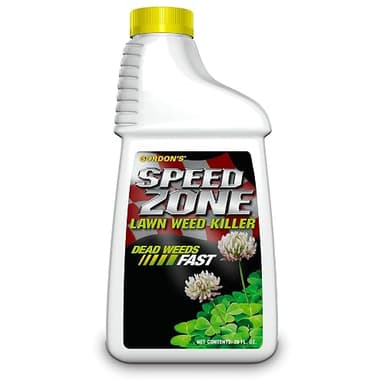
SpeedZone EW Lawn Weed Killer
Fast-acting lawn weed killer for cool-season lawns that targets dandelion, clover, spurge, plantain, and other listed weeds.
As an Amazon Associate we earn from qualifying purchases.
Pests & Disease
Annual Ryegrass grows during cool weather, but establishment often begins while fall days are still warm. Warm soil, frequent irrigation, dense seed, and generous nitrogen create the exact environment that seedling diseases and caterpillars enjoy. Most problems are prevented by correcting water, airflow, and fertility before reaching for a pesticide.
Damping-Off and Seedling Blight
Seedlings fail to emerge, collapse at the soil line, or disappear in irregular patches. The usual setup is constantly saturated soil, poor drainage, excessive thatch, or too much seed in warm weather.
- Water often enough to keep seed damp, not submerged
- Shorten cycles where water puddles or runs
- Seed in the proper temperature window instead of rushing into late-summer heat
- Use the recommended seed rate rather than doubling it
- Improve drainage before reseeding failed areas
Gray Leaf Spot
Gray Leaf Spot can attack ryegrass during warm, humid weather, especially in lush nitrogen-fed turf. Look for small water-soaked spots that become gray or tan lesions with dark margins, followed by rapid thinning under severe pressure. Reduce leaf wetness, water in the morning, avoid excess quick-release nitrogen, and keep mower blades sharp.
Rust
Rust creates orange or yellow powder on leaves, mower shoes, and pant legs. It is most common when growth is slow because of cool, cloudy weather, drought, shade, or low fertility. Correct the limiting condition first. A light nitrogen feeding may help a genuinely deficient lawn grow out of rust, but extra nitrogen is not the answer when wet soil or deep shade is causing slow growth.
Leaf Spot and Crown Rot
Brown or purple leaf lesions often increase when turf stays wet for long periods. Severe cases can move into crowns and thin the stand. Improve airflow, remove leaf piles, mow with a sharp blade, and reduce evening irrigation. Because Annual Ryegrass is temporary, fixing the environment is often more sensible than building a repeated fungicide program.
Fall Armyworms
Armyworms can strip young ryegrass quickly in warm fall weather. Watch for expanding chewed patches, birds feeding heavily, and caterpillars active near dawn or dusk. A soap flush over a small test area can bring caterpillars to the surface. Confirm the pest before treating because drought and seedling disease can create similar thin patches.
Sod Webworms and Cutworms
These caterpillars feed near the soil surface and create irregular thinning. Small moths flying over the lawn at dusk are a clue, not proof. Inspect the edge of damaged areas for green frass and clipped leaves. Young, well-watered seedlings can recover after the pest is controlled, but reseeding may be needed where crowns were lost.
Root and Crown Stress
Not every yellow patch is a pathogen. Compaction, dog urine, fertilizer overlap, buried debris, irrigation gaps, and waterlogged soil can all mimic disease. Before applying anything, check whether the pattern follows a sprinkler, mower path, low spot, or spreader pass.
When Treatment Is Justified
Identify the problem first, then decide whether the value and remaining life of the winter lawn justify treatment. Use a pesticide only when the label includes Annual Ryegrass, the target pest, and the site. Follow local restrictions and protect pollinators, waterways, people, and pets. If the stand is already near spring transition, cultural correction and the return of Bermuda may be the better answer.
Aeration & Dethatching
Annual Ryegrass itself rarely creates a serious thatch layer because it grows in bunches and lives for one season. Aeration and dethatching decisions should protect the permanent warm-season lawn underneath it. The right time for major work is when Bermuda is actively growing, not immediately before winter overseeding.
Understanding the Two-Lawn Problem
In fall, you want enough open surface for ryegrass seed to touch soil. In spring, you need healthy Bermuda crowns and rhizomes to drive recovery. Aggressive fall cultivation can improve seed contact while damaging the exact warm-season structures needed for transition. That is why a light touch matters.
Core Aeration
Best Timing
Core aerate Bermudagrass in late spring or summer after full green-up, when it can close the holes and repair torn runners quickly. If you plan to overseed in fall, complete cultivation early enough for a strong recovery before temperatures fall.
When Aeration Is Needed
- Water runs off before soaking in
- The soil is hard to penetrate with a screwdriver when moist
- High-traffic zones stay thin despite correct light, water, and fertility
- Roots remain shallow above a compacted layer
- Heavy clay has lost pore space over time
How to Aerate
- Use a hollow-tine core aerator, not solid spikes
- Water the soil a day before so it is moist but not muddy
- Make one or two passes, with extra coverage only in compacted traffic lanes
- Leave cores to dry and break down naturally
- Resume the Bermuda care program so active growth closes the holes
Dethatching and Verticutting
Check the permanent lawn before deciding to dethatch. Cut a wedge and measure the springy brown layer between soil and green tissue. A thin layer is normal and protective. If Bermuda thatch is excessive, remove it while Bermuda is growing strongly in late spring or early summer.
Immediately before ryegrass seeding, use only enough vertical mowing or power raking to open the canopy. Deep blades can cut Bermuda crowns and rhizomes. A hard fall scalp followed by severe dethatching may produce a beautiful ryegrass stand and a weak Bermuda lawn the next year.
Spring Transition
Light verticutting can help a stubborn spring transition once Bermuda is clearly active. Pair it with lower mowing and correct warm-season care. Do not core aerate cold, partially dormant Bermuda just to remove ryegrass. Wait until the base lawn can recover.
Topdressing
A very thin layer of compost or sand after seeding can improve contact, but avoid burying Bermuda or Annual Ryegrass crowns. Use material compatible with the existing soil. Repeated heavy sand over clay can create layering and drainage problems, while thick compost can smother seedlings.
Clippings Do Not Create Thatch
Normal finely chopped ryegrass clippings decompose quickly and do not create the fibrous thatch associated with stems, crowns, and roots. Mulch dry clippings when they disperse evenly. Bag them when the lawn is overgrown, wet clumps would smother turf, or mature seed heads are present.
The Annual Rhythm
- Summer: Aerate or dethatch active Bermuda if testing shows a need
- Early fall: Let the base lawn recover fully
- Overseeding: Open the canopy lightly for seed contact
- Winter: Avoid cultivation while Annual Ryegrass is providing cover
- Spring: Use mowing and, if needed, light verticutting to help transition