
The grass that got out of the golf course
Creeping bentgrass is not a wild weed that wandered in. It is a bred, sold, seeded turfgrass, the standard surface for putting greens across the northern half of the country. Everything that makes it great there works against you at home: it tolerates mowing near an eighth of an inch, it drinks daily water without complaint, and it knits itself into a dense mat by pushing stolons sideways across the soil surface, rooting at every node. A putting green wants all of that. A Kentucky bluegrass lawn does not.
It arrives in a few ordinary ways. Bargain seed mixes and old sod can carry it, mowers move stolon fragments from one yard to the next, and lawns near a golf course or a bentgrass-seeded fairway pick it up over the fence. Once it is in, your habits decide how fast it wins. Watering a little every day keeps the top inch of soil damp, which is the one condition bentgrass loves and deep-rooted turf hates, and mowing at two inches or lower hands it the light. That is why the patches so often trace the sprinkler pattern, and why they usually show up first in the wettest, shortest, sunniest part of the lawn.
Three routes out, and which one fits your lawn
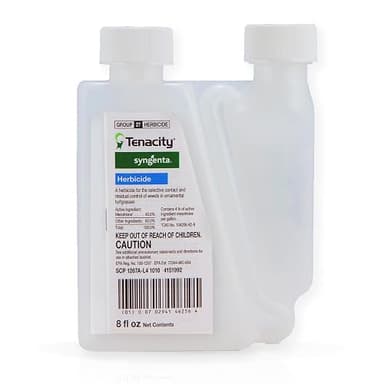
The selective route is real, and this is one of the few grassy invaders where it exists. Mesotrione, sold to homeowners as Tenacity, is labeled to selectively suppress and control creeping bentgrass in Kentucky bluegrass, perennial ryegrass, and tall fescue. Two things make or break it. First, it is not a one-and-done: extension programs at Wisconsin and Michigan State both call for three or four applications through the season rather than a single pass, and skipping the repeats is the most common reason people conclude it "did not work." Second, it only makes sense if you actually know your lawn. Confirm the host grass before you spray, because mesotrione is not for use on bermudagrass, zoysiagrass, or seashore paspalum, and it can thin fine fescue. Follow the label for rates, spacing, and the non-ionic surfactant it requires, and treat past the visible edge of each patch so you catch the stolons already creeping into good turf.
The mechanical route is faster and permanent when there are only a few patches. Cut under the mat with a flat spade about an inch below the surface, take a few inches of apparently clean turf past the visible edge, and lift the whole thing out like sod. Any stolon you leave behind re-roots and refills the hole, which is why the margin matters more than the depth. Then sod or seed the bare spot the same day so nothing else claims it. Where a patch is too large to strip, spot-treating with a non-selective product and reseeding into the dead area is the honest alternative. It costs you that piece of lawn for a few weeks, and it is still less work than fighting a mat that keeps advancing.
Whatever you choose, correct the conditions or you are just buying time. Water deeply and infrequently so the surface dries between soakings, raise the mower to three inches or higher on a cool-season lawn, and keep the turf fed and dense enough to close over the repaired spots. Bentgrass is not out-competing a healthy stand of grass on merit. It is winning the specific microclimate that daily sprinkling and a low mower create.
How to identify creeping bentgrass
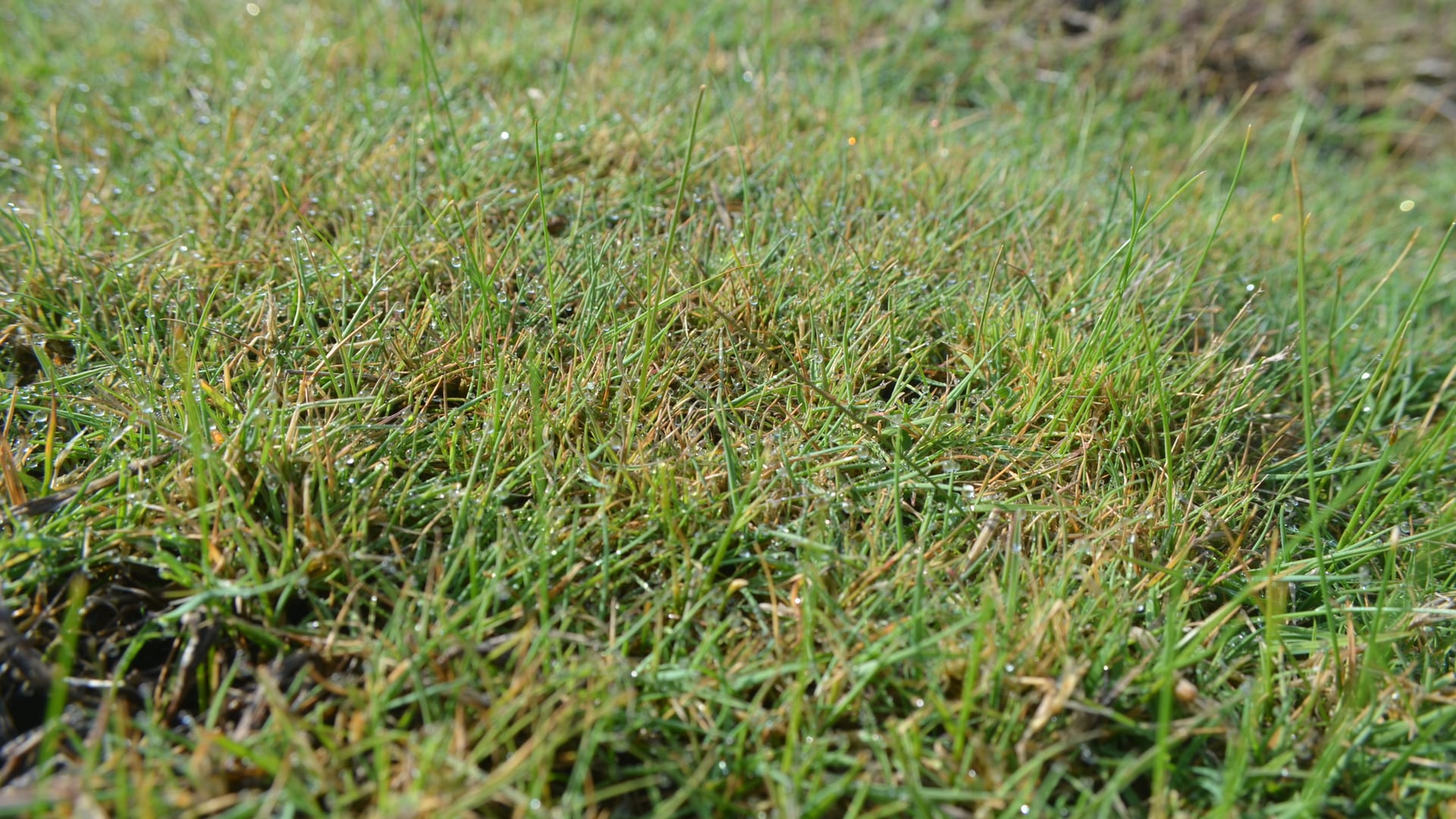
- Puffy, light-green or yellowish patches that read softer and finer than the lawn around them, obvious from standing height
- Those same patches brown out fast in summer heat and drought while the surrounding grass still looks fine
- A dense, spongy mat that lifts like a piece of carpet when you rake or tug at it, rather than coming up as separate plants
- Above-ground runners (stolons) creeping across the soil surface and rooting wherever a node touches ground
- Patch edges advancing outward in a rough circle, so the same spots are noticeably bigger each season
- Very fine, narrow blades, usually strongest where the sprinklers run most often or where the mower cuts lowest
Don't confuse it: Nimblewill is the classic mix-up: it also creeps into grayish patches, but it is a warm-season grass, so it stays brown and dormant well into late spring and its stems are wirier and stiffer. Bermudagrass also spreads by stolons but is coarser, thrives in heat, and goes dormant tan in winter instead of browning in midsummer.
What creeping bentgrass looks like
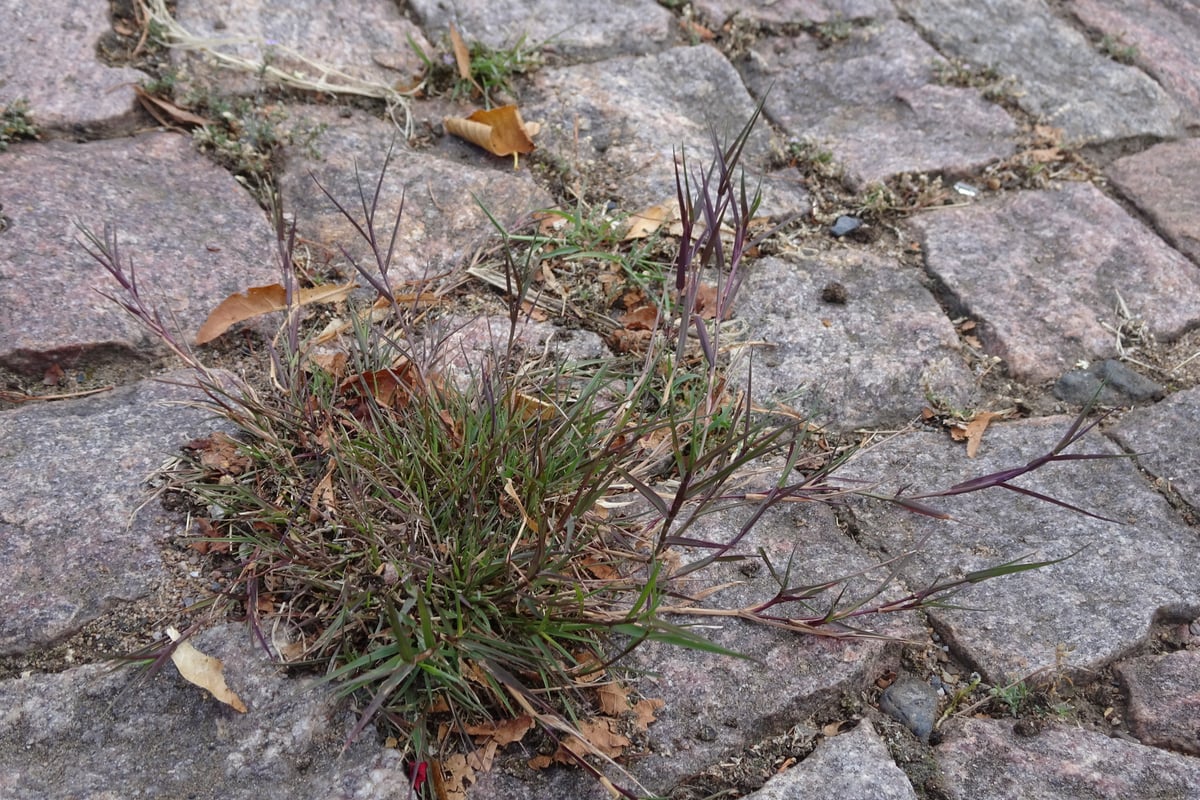
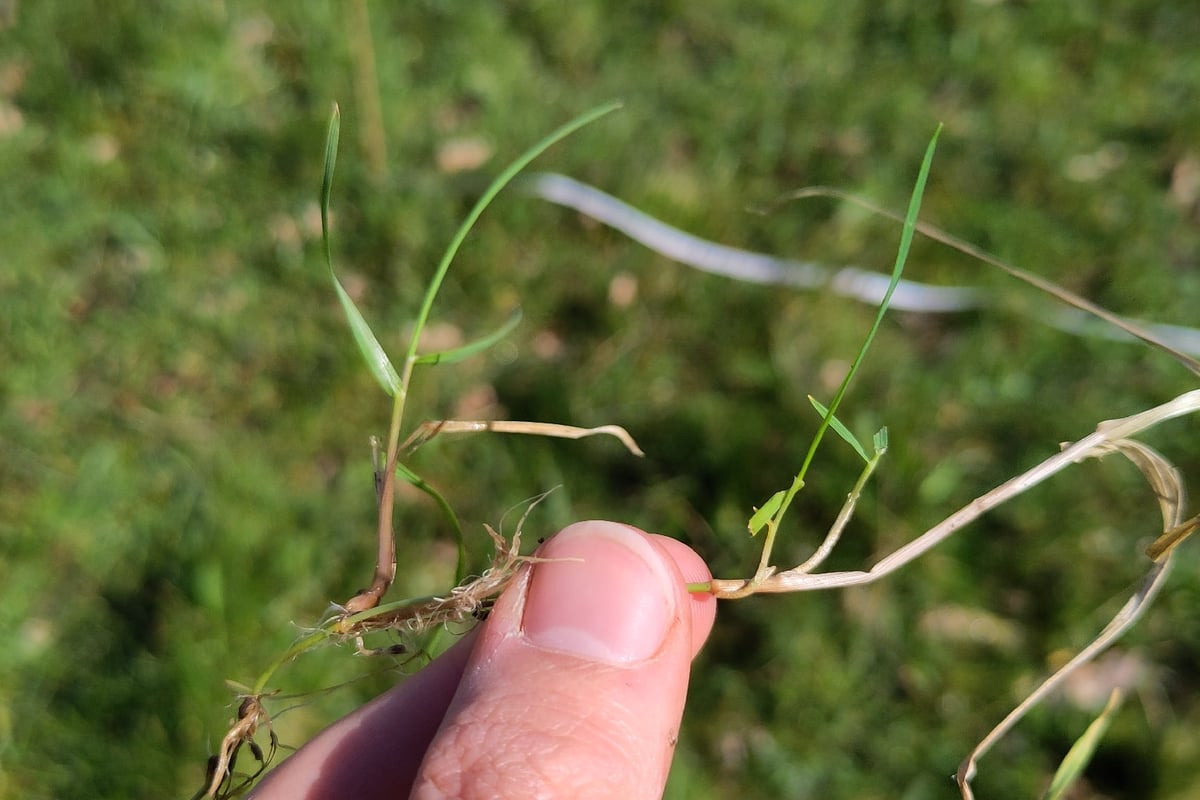
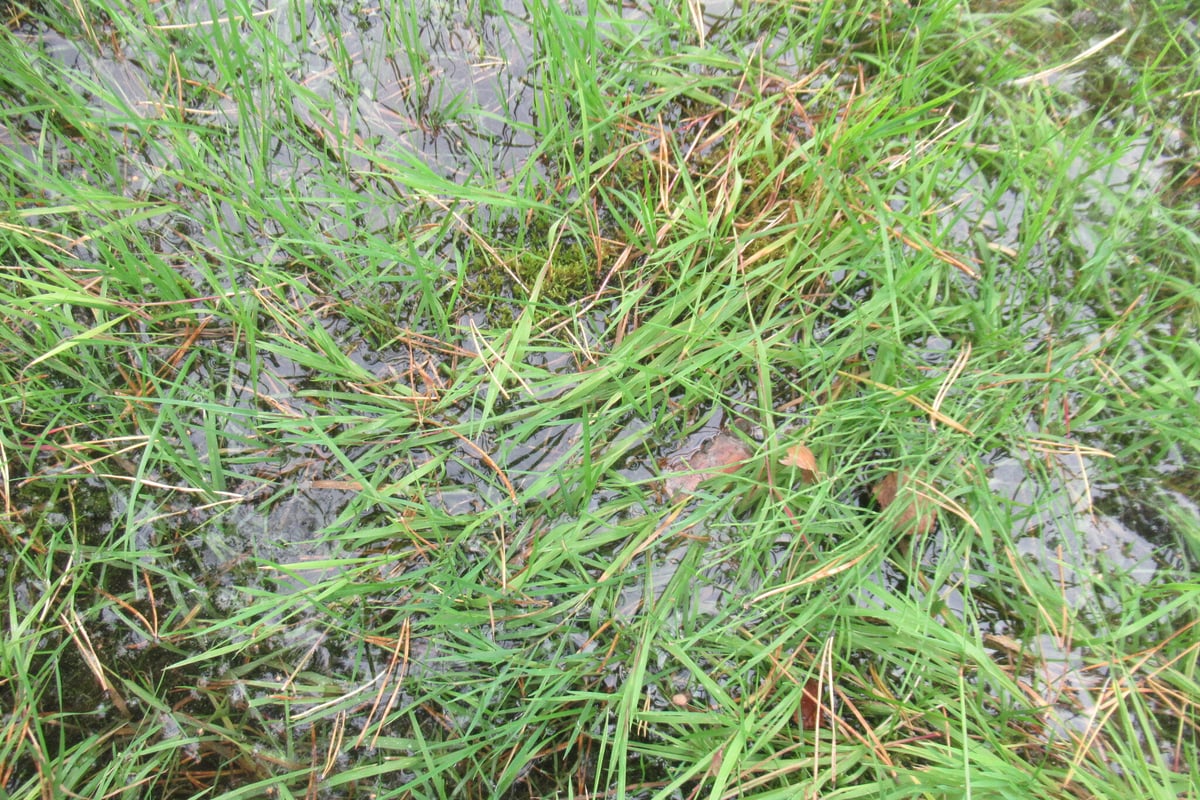
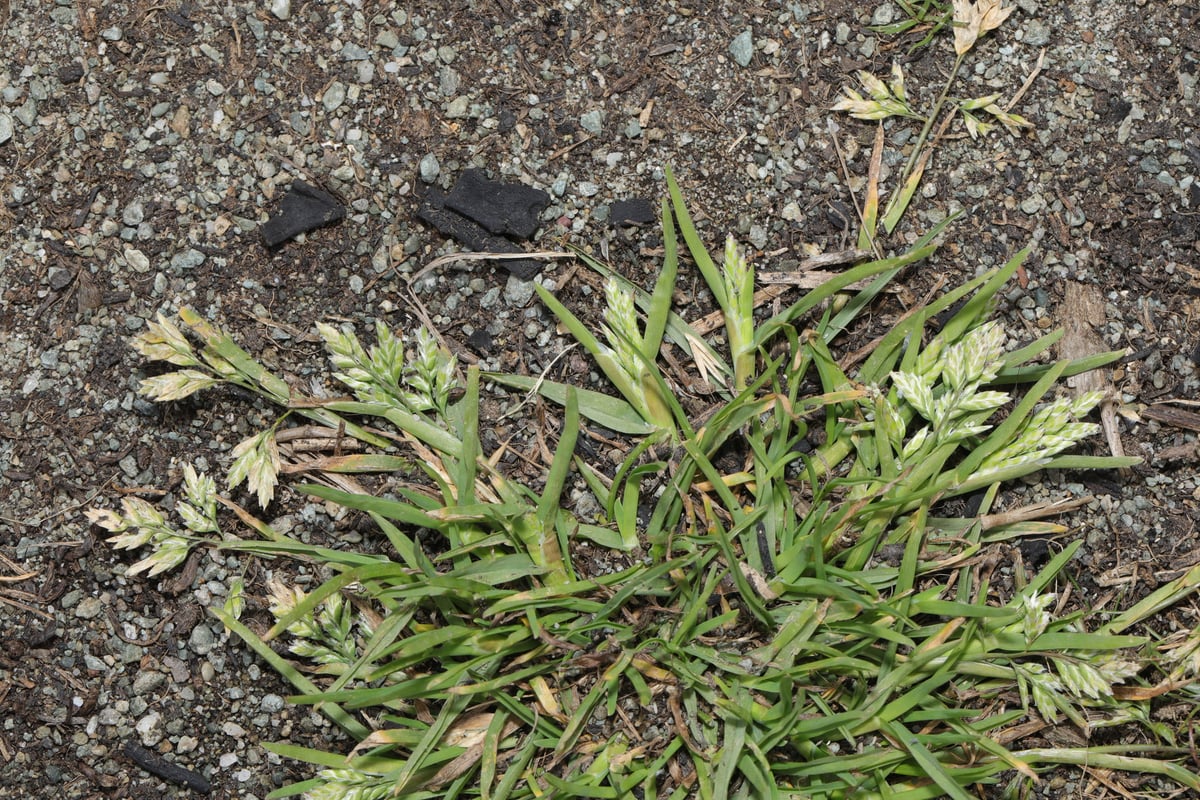
Not sure this is creeping bentgrass? Snap a photo and our AI will identify the weed with treatments matched to your grass type.
When to treat creeping bentgrass
Treatment (post-emergent)
Best time: Late summer into early fall while the mat is actively growing
Target stage: Actively growing green mat, well before dormancy
Conditions: Apply when the foliage is dry · No rain for 24 hours · Temps 60-85°F · Non-ionic surfactant required by the mesotrione label
Germination starts around 50°F soil temperature (optimal 60°F). Track your ZIP's live soil temperature or get an exact plan from the herbicide timing calculator.
How to control creeping bentgrass
- 1Verify the host grass before any selective application; mesotrione is not for bermudagrass, zoysiagrass, or seashore paspalum, and it can thin fine fescue
- 2Follow the mesotrione label for rate, spacing, and the required non-ionic surfactant, and treat a margin past the visible patch edge
- 3For a few patches, strip the mat with a flat spade about an inch deep plus a few inches past the edge, then sod or seed the same day
- 4Water deeply and infrequently instead of a little every day, which is the condition bentgrass depends on
- 5Raise mowing height to three inches or more so the lawn is not being managed at putting-green height
Good to know
- • A cool-season perennial turfgrass used on golf greens, not an annual weed, so there is no yearly seed cycle to interrupt
- • Spreads by above-ground stolons that root at the nodes and form dense, puffy, felt-like mats
- • Mesotrione is the one selective option, and only on verified Kentucky bluegrass, perennial ryegrass, or tall fescue
- • Selective control needs three or four applications through the season; a single application reliably fails
- • Patches brown out early under summer heat and drought because the mat is shallow rooted
Weed control quotes
Get matched with local weed control pros on Angi. Free quotes, no obligation.
Angi is a partner; we may earn a commission if you request quotes there.
Products that work on creeping bentgrass
These picks are not filtered to your lawn. Some herbicides damage certain grasses (atrazine is for warm-season lawns; Trimec harms St. Augustine). Verify your grass type on the product label before applying, or use the herbicide timing calculator for grass-filtered recommendations.
Recommended Products
- 1Check price
 Top pick
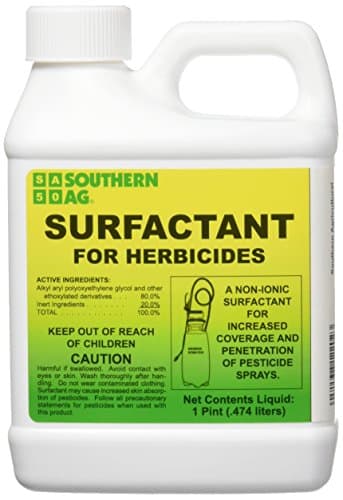
Southern Ag Surfactant for Herbicides Non-Ionic, 16oz, 1 Pint
Surfactant for foliar herbicide applications that need better leaf coverage and uptake. The mesotrione label requires a non-ionic surfactant for post-emergent applications. Without it, coverage on fine bentgrass blades is the limiting factor.
- 2Check price
 Best value
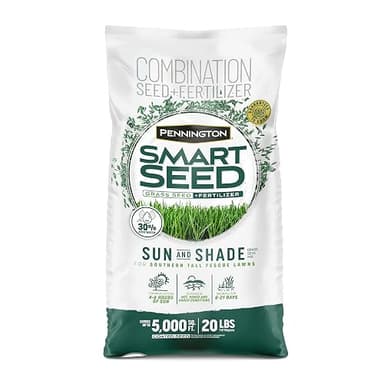
Pennington Smart Seed Sun and Shade Mix
Versatile cool-season blend for overseeding and repairs where a multi-variety mix makes more sense than a single species. Stripped or bleached patches have to be refilled the same season or the stolons come back. Check the seeding tolerance on the herbicide label before overseeding a treated area.
As an Amazon Associate we earn from qualifying purchases.
Where creeping bentgrass shows up
Most common in these regions: