
Is that bright patch doveweed or your lawn?
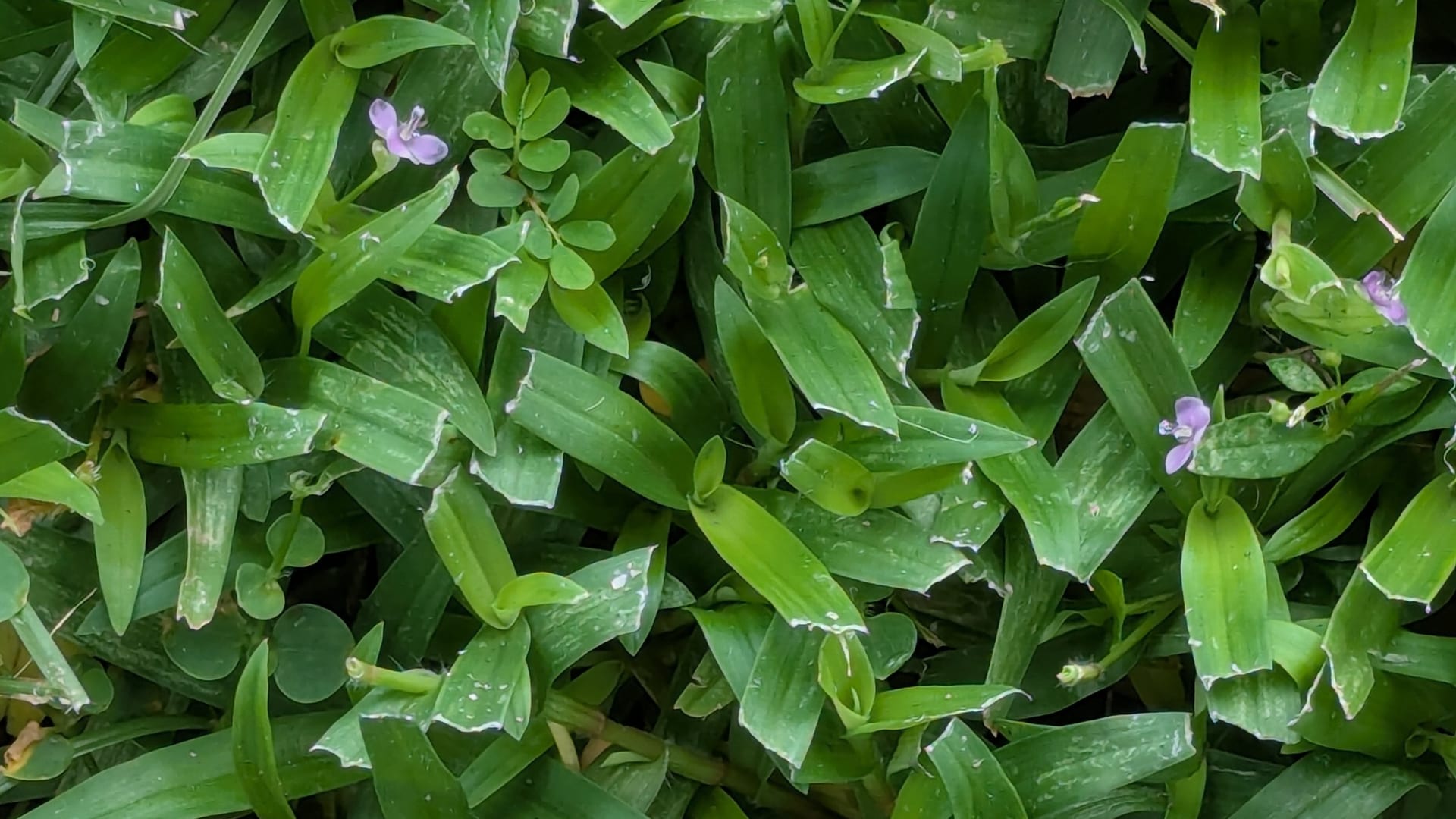
Doveweed is a very convincing impostor. UF/IFAS notes that it looks like grass and has a leaf width similar to St. Augustinegrass and centipedegrass, so it often goes unnoticed until it has spread. So where do you start? With color. Is the patch a brighter, glossier green than your turf ever turns? LSU AgCenter names that bright green as the feature that separates doveweed from these grasses.
Next, pull up one runner and look along it. Doveweed leaves are thick, shiny, and rubbery, and they grow from creeping stems that root at the nodes, per UF/IFAS. LSU adds that those stems are sometimes light pink to red. In summer, look for small flowers with three purple, sometimes blue, petals on short stalks near the nodes. If the color, the rubbery leaves, and the rooting stems all fit, you have doveweed.
Then check where the patch sits. LSU calls doveweed an indicator of poor drainage, and UF/IFAS says infestations favor wet areas. A patch in the low corner of the yard or beside a leaking sprinkler is pointing at the reason it moved in.
Why does doveweed take over in late summer?
Timing is the first reason. UF/IFAS says doveweed seed starts germinating late in spring, when soil temperatures reach 65 to 70°F. A pre-emergent applied in February or March for crabgrass may be fading by then, so doveweed slips through a barrier that worked fine for everything else. LSU notes that it is usually established in lawns by late summer.
Mowing is the second. The stems root at every node, so a mower that cuts and scatters stem pieces spreads the weed even before it sets seed, per UF/IFAS. Mowing too short and too often makes it worse: UF/IFAS explains that doveweed leaves start growing flat to avoid the blade, shading the turf until doveweed displaces it.
Wet soil is the third. Drainage problems and overwatering favor doveweed and weaken the turf at the same time, which UF/IFAS describes as the perfect conditions for doveweed to take over. Growth slows once temperatures fall below 70°F, and that is usually when it drops seed for next year.
What controls doveweed without hurting your grass?
Prevention does most of the work. UF/IFAS calls a strong pre-emergent program the best control, timed to be active right before doveweed emerges in late spring. LSU AgCenter names indaziflam and dimethenamid as effective pre-emergents applied by late spring, and lists both as safe on St. Augustine, centipede, zoysia, and bermuda. If you already put down crabgrass preventer early, this is a second, later application, following the label for timing and rate.
For plants already up, the right product depends on your grass, per LSU's table:
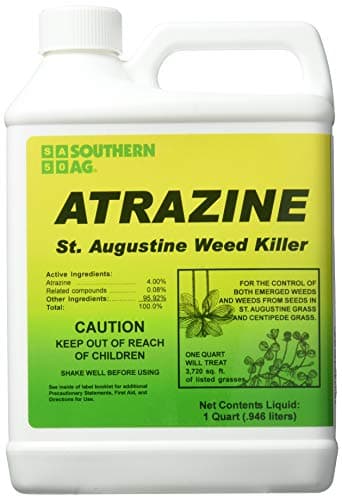
- Atrazine: listed for St. Augustine, centipede, and zoysia. UF/IFAS says it gives both pre-emergent and post-emergent control and works best right before doveweed emerges, and that it significantly harms bermudagrass.
- Thiencarbazone, iodosulfuron, and dicamba (Celsius): listed for all four warm-season grasses. UF/IFAS says it gives good post-emergent control but works slowly, with symptoms taking 2 to 3 weeks to appear.
- Sulfentrazone plus metsulfuron: listed for all four.
- Sulfentrazone with 2,4-D, mecoprop, and dicamba: listed for zoysia and bermuda only. UF/IFAS notes that St. Augustinegrass is partially susceptible to 2,4-D and dicamba, and that some labels warn against use on Floratam.
Expect to repeat. LSU says multiple applications are usually needed, 2 to 4 weeks apart according to the label. Light to moderate nitrogen with or right after a treatment helps the turf recover and shade out survivors, per UF/IFAS. If a small area has been completely overrun, UF/IFAS suggests a directed glyphosate application followed by resodding as the faster fix.
Then change the conditions. Fix drainage, cut back watering, and raise the mower to the height your grass needs. UF/IFAS recommends leaving at least 3.5 to 4 inches on Floratam, Raleigh, and Palmetto St. Augustine. Because seed survives in the soil for several years, UF/IFAS plans doveweed management over two or three years rather than one season.
How to identify doveweed
- Patches a brighter, glossier green than the St. Augustine or centipede around them
- Thick, shiny, rubbery, pointed leaves about as wide as St. Augustine blades
- Creeping stems that root at the nodes, sometimes light pink to red in color
- Small flowers with three purple, sometimes blue, petals on short stalks near the leaf nodes in summer
- A low, dense mat that starts in low spots or poorly drained ground and thins the turf around it
Don't confuse it: From standing height doveweed passes for St. Augustinegrass or centipedegrass, because UF/IFAS notes its leaves are a similar width. Up close the leaves are thicker and glossier, the color is a brighter green, the stems root at every node, and in summer the small three-petaled purple flowers give it away.
Not sure this is doveweed? Snap a photo and our AI will identify the weed with treatments matched to your grass type.
When to treat doveweed
Prevention (pre-emergent)
Apply before germination, when soil reaches about 65°F.
Window: Late spring, just before doveweed emerges. A crabgrass pre-emergent applied in February or March may have faded by then.
Typical dates: Late spring as soil reaches 65-70°F, usually a separate, later application from crabgrass prevention
Treatment (post-emergent)
Best time: As soon as plants appear, while they are young
Target stage: Young plants in early growth stages, before the stolons form a mat
Conditions: Apply when foliage is dry · No rain for 24 hours · Avoid applications when the turf is heat or drought stressed
Germination starts around 65°F soil temperature (optimal 70°F). Track your ZIP's live soil temperature or get an exact plan from the herbicide timing calculator.
How to control doveweed
- 1Apply a labeled pre-emergent in late spring, right before doveweed emerges, rather than relying on the early crabgrass application
- 2On St. Augustinegrass and centipedegrass, atrazine works as both a pre-emergent and a post-emergent; never use atrazine on bermudagrass
- 3Thiencarbazone + iodosulfuron + dicamba (Celsius) is listed by LSU AgCenter as safe on St. Augustine, centipede, zoysia, and bermuda
- 4Expect multiple applications 2 to 4 weeks apart, following the label, and plan on a two to three year program
- 5Fix drainage and stop overwatering, and mow at the recommended height for your grass so doveweed cannot spread flat under the blade
- 6Where a small area is fully overrun, a directed glyphosate application followed by resodding is the faster fix
Good to know
- • Summer annual whose thick, grass-like leaves resemble St. Augustinegrass and centipedegrass, but in a brighter green
- • Thick, glossy, rubbery leaves on creeping stems that root at the nodes, so mowers spread stem pieces
- • Small three-petaled purple to blue flowers on short stalks in summer
- • Seeds germinate late in spring and can survive in the soil for several years
- • Thrives in wet areas, so drainage problems and overwatering favor it
Weed control quotes
Get matched with local weed control pros on Angi. Free quotes, no obligation.
Angi is a partner; we may earn a commission if you request quotes there.
Products that work on doveweed
These picks are not filtered to your lawn. Some herbicides damage certain grasses (atrazine is for warm-season lawns; Trimec harms St. Augustine). Verify your grass type on the product label before applying, or use the herbicide timing calculator for grass-filtered recommendations.
Recommended Products
- 1Check price
 Top pick
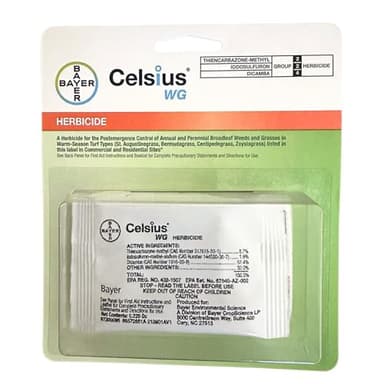
Celsius WG Herbicide (Easy Mix Packet)
Warm-season post-emergent that controls 150+ broadleaf, grassy, and sedge weeds and stays safe on bermuda, zoysia, centipede, and St. Augustine, including in summer heat. Not labeled for cool-season lawns. Thiencarbazone and iodosulfuron give good post-emergent doveweed control, per UF/IFAS. Symptoms take 2 to 3 weeks to show, so judge it before you reapply.
- 2Check price
 Best value
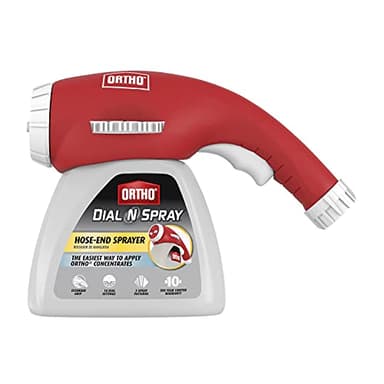
Ortho Dial N Spray Hose-End Sprayer (14 Dilution Settings)
Adjustable metered hose-end sprayer for liquid herbicides, iron, wetting agents, and foliar recovery products. Doveweed usually takes repeat applications 2 to 4 weeks apart. A metered sprayer keeps each pass at the rate on the herbicide label.
As an Amazon Associate we earn from qualifying purchases.
Where doveweed shows up
Most common in these regions: