
Why pulling quackgrass makes it worse
Quackgrass does not really live in the part you can see. Under the surface it runs long white rhizomes with sharp pointed tips that push sideways through soil, and each one carries buds that can grow a whole new plant. Pull the top and you take a few blades. The rhizome network is untouched, and the buds it was already holding in reserve sprout within weeks. That is why the same patch comes back in the same place every spring, and why it seems to shrug off any amount of mowing.
Worse, breaking a rhizome does not kill it. A snapped piece an inch or two long, still holding a bud, is a fresh start. So a hard yank that leaves fragments behind, or a pass with a rototiller through an infested area, does not remove quackgrass at all. It divides it and plants the pieces. Washington State University Extension is blunt about this: digging works only if you remove all the rhizomes, and that is slow, careful work.
The other thing the rhizomes explain is why herbicide is so unsatisfying here. Purdue's turf program notes that quackgrass is hard to control specifically because herbicides do not translocate well through those deep rhizomes, so a treatment can burn everything above ground and still leave living buds below it. Look at a patch and count on the underground half being wider than the visible half.
The honest two-season plan
Start by being clear about what is not available. There is no selective herbicide you can spray on a cool-season lawn that kills quackgrass and leaves the grass. WSU Hortsense lists no approved products for turf areas and warns that the grass-killing sprays that do work will take your lawn with them. Anything sold to you as a quackgrass killer that is safe for a fescue or bluegrass lawn deserves a hard look at its label.
For a small patch, dig. Use a garden fork, lift the whole patch plus several inches past its visible edge, and sift the soil by hand until every white rhizome piece is out. Bag them, do not compost them. Then reseed the bare spot right away, because open soil is exactly what the surviving rhizome tips want.
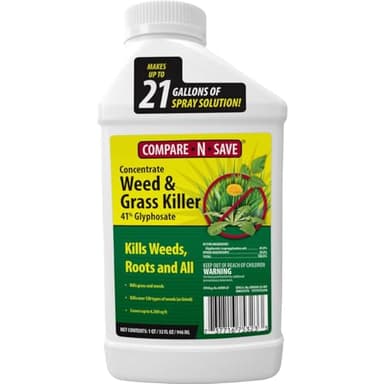
For a patch too big to dig, the standard extension route is a non-selective glyphosate spot treatment, which kills the desirable grass in that spot too and leaves you reseeding. Purdue's recommendation for turf is repeat applications spaced a few weeks apart, followed by reseeding in late summer or early fall, and it specifically says not to till the area before seeding, since tilling brings rhizome pieces up to sprout. Power rake or scarify instead to get seed-to-soil contact. Read and follow the product label, respect its reseeding interval, and shield anything nearby you want to keep.
Season two is density. Mow tall, feed the lawn on a regular schedule, and overseed anywhere thin, because rhizome tips that surface into a thick shaded stand do far worse than ones that surface into bare ground. This will not be a one-weekend job. Expect to watch the treated areas for at least a full season and re-treat the stragglers, and judge your progress by whether the patch is shrinking rather than by whether it is gone.
How to identify quackgrass
- Coarse blue-green patches that stand noticeably taller than the rest of the lawn within a few days of mowing
- Patches expand outward season after season instead of dying back in winter like an annual weed would
- New shoots surfacing in lines or arcs several inches out from the main patch, not in scattered single tufts
- Dig two inches down and you find long white rhizomes with sharp pointed tips running sideways through the soil
- Small claw-like auricles that wrap around the stem where the blade meets the collar, visible in a close phone photo
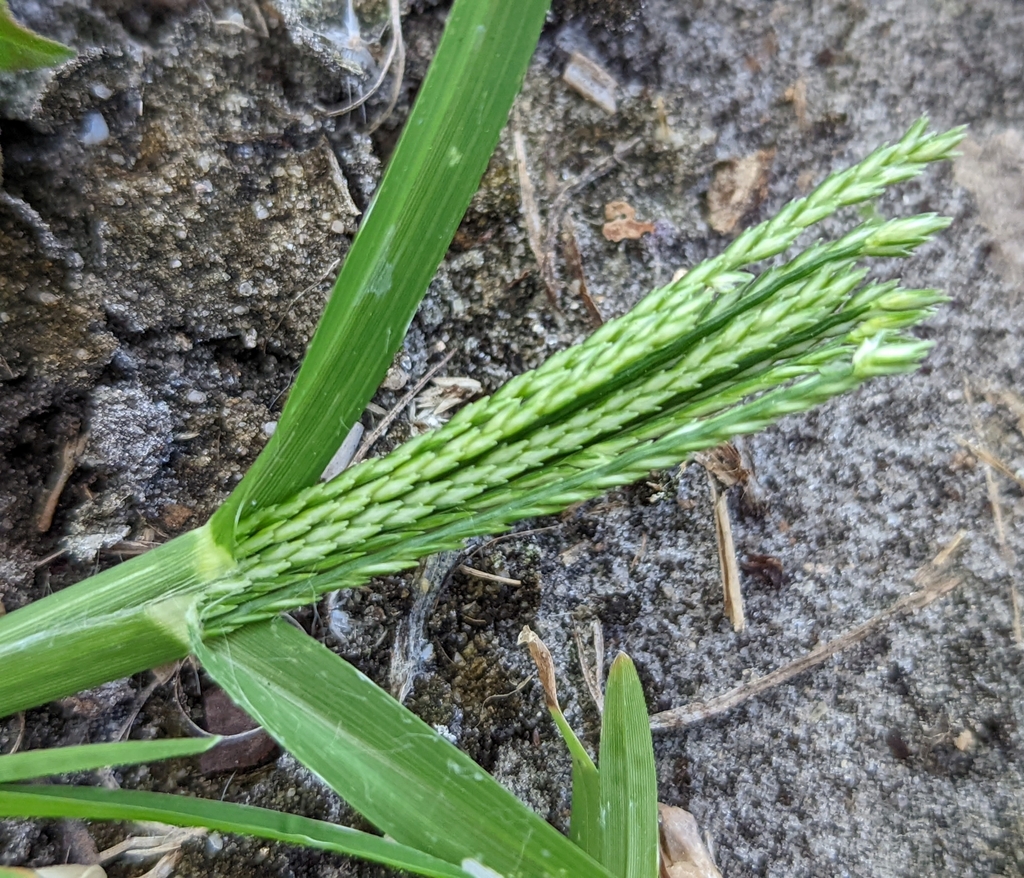
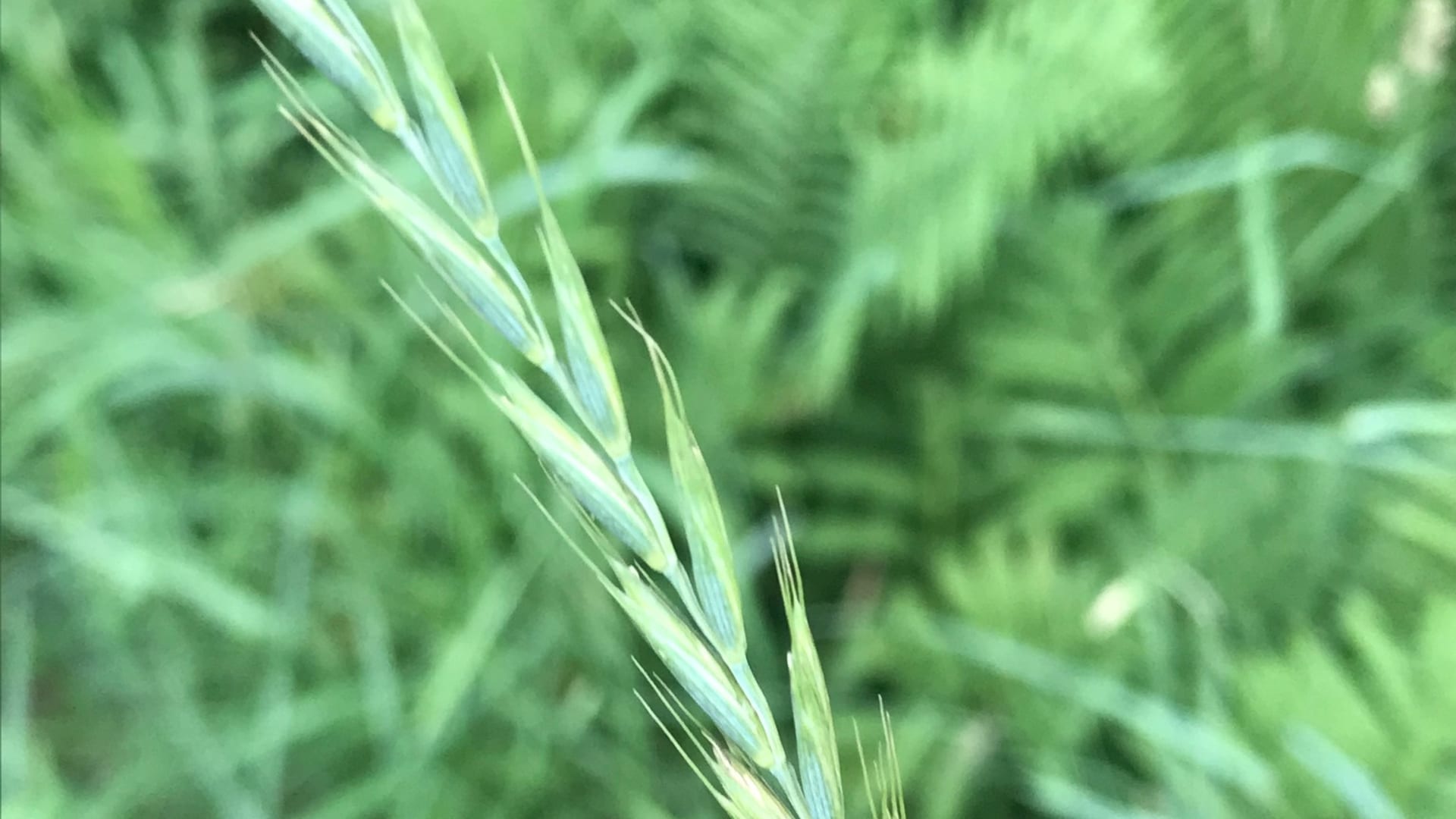
- On unmowed edges, a slim wheat-like seed spike with spikelets set flat against the stem in two rows
Don't confuse it: Crabgrass sprawls flat from a single crown and is a summer annual that dies at frost, while quackgrass stands upright, returns from rhizomes, and is often the first green thing growing in spring. Tall fescue is a similar coarse blue-green, but it grows in a clump that stays put and pulls out with a solid root ball instead of a running white rhizome.
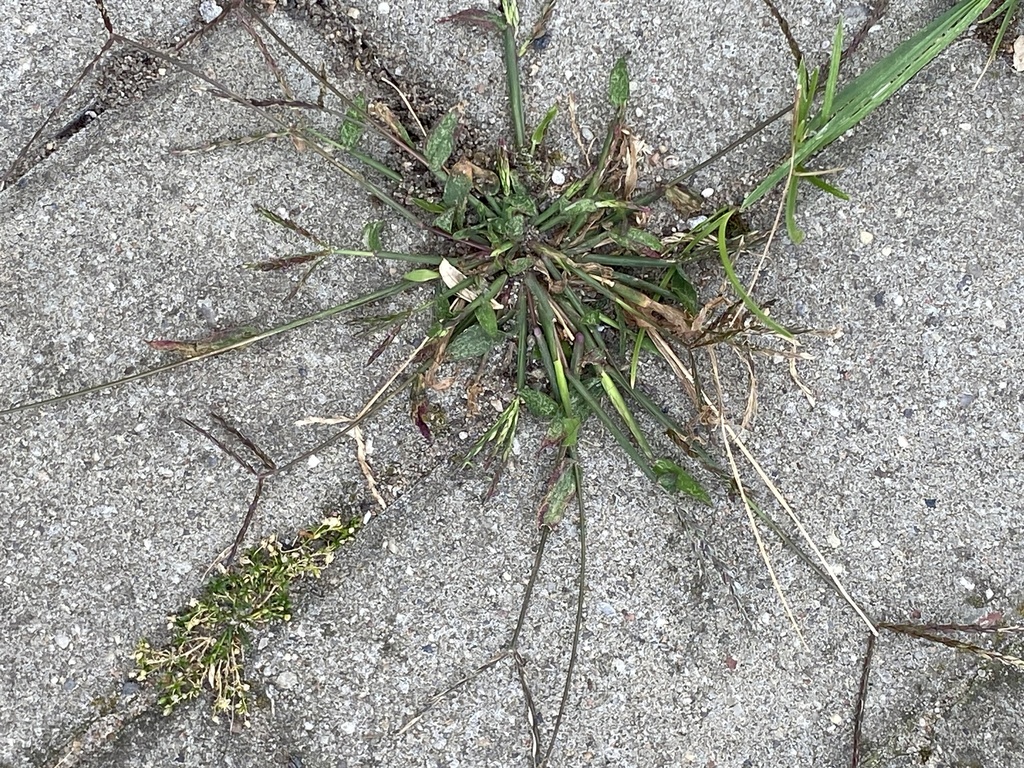
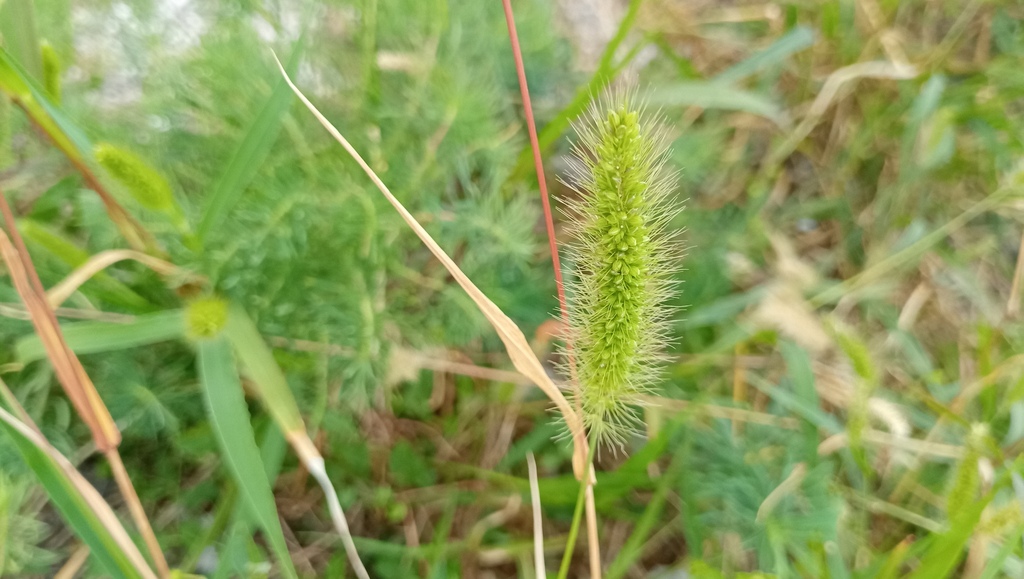
What quackgrass looks like
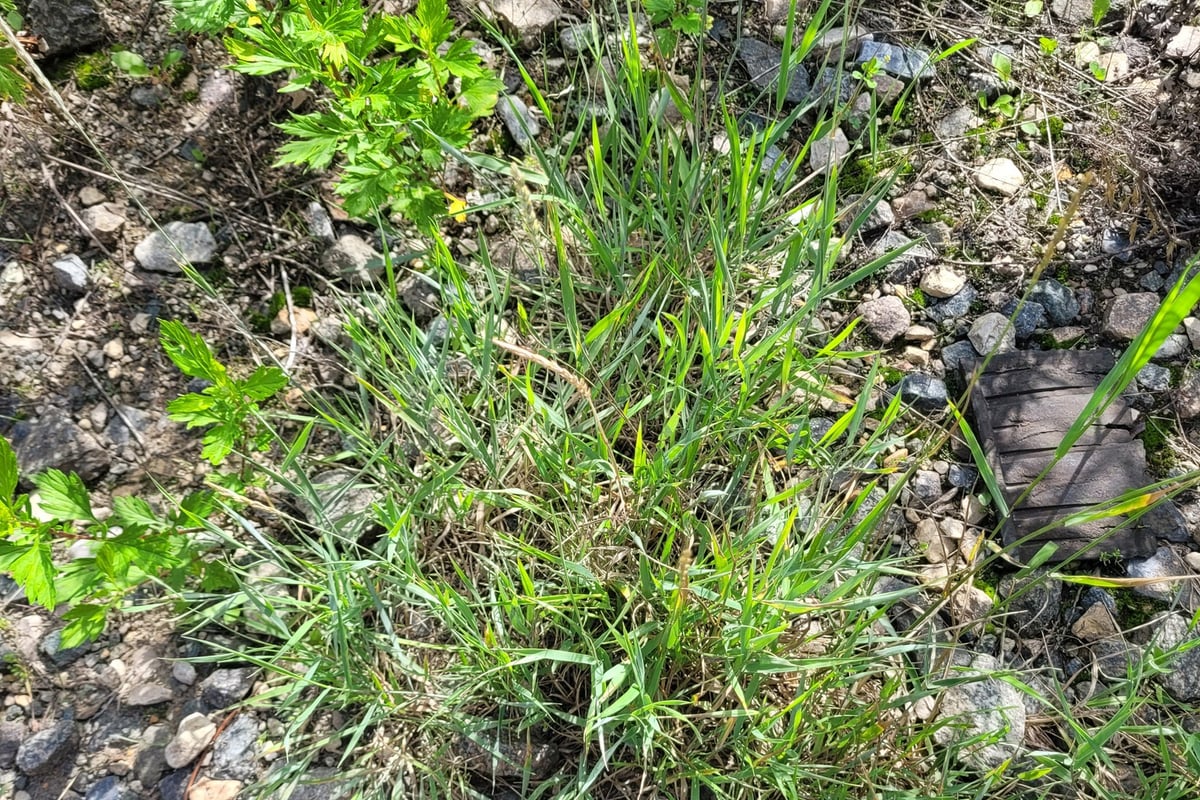
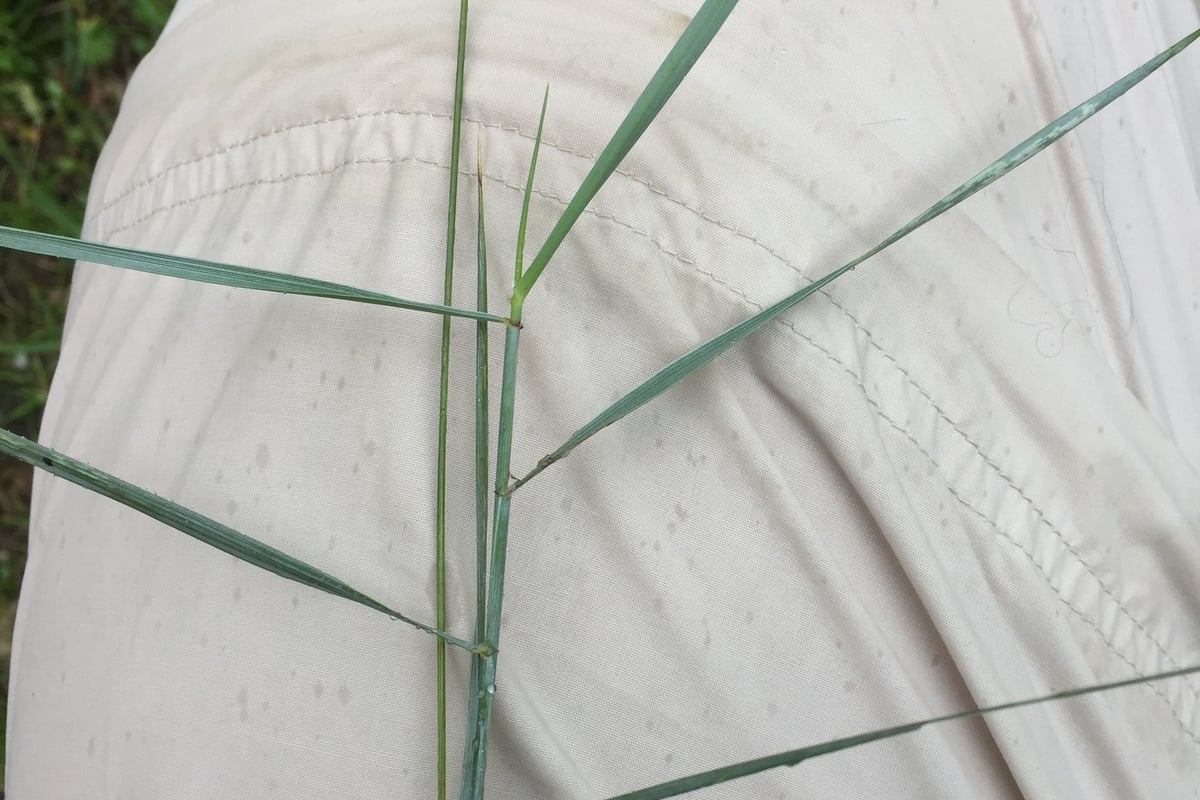
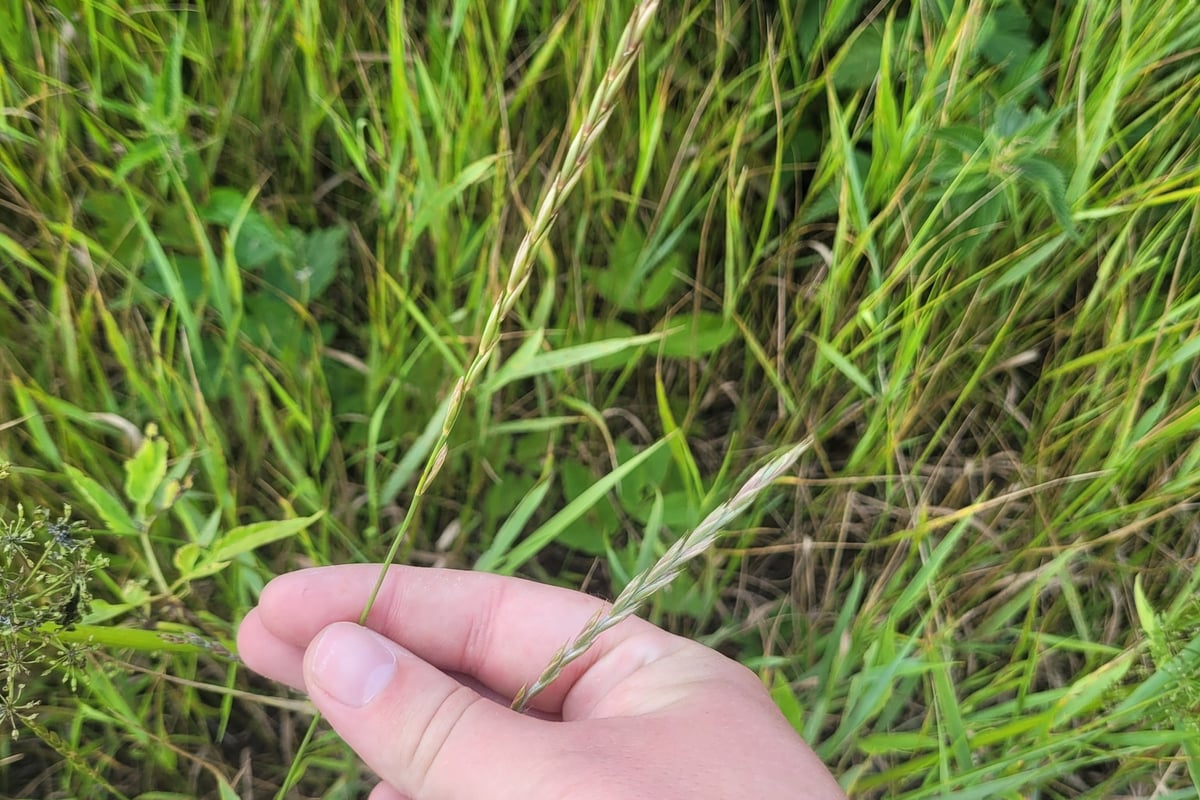
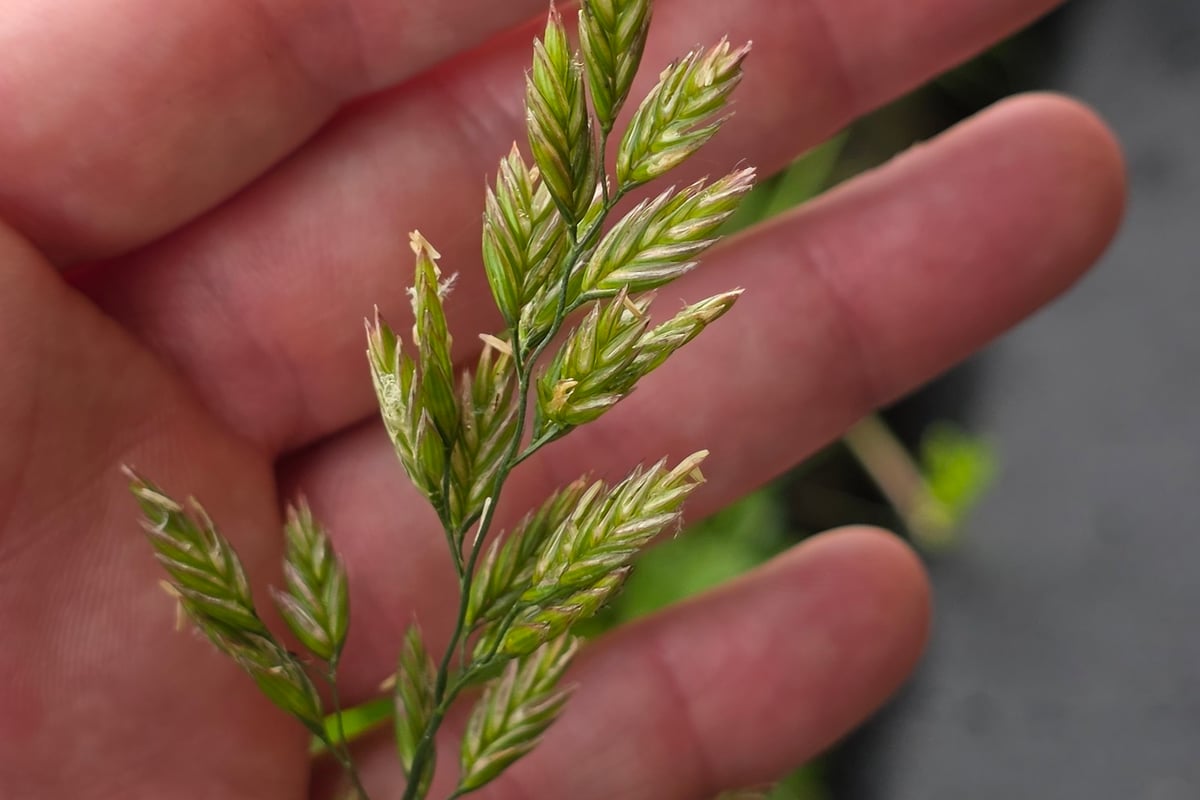
Not sure this is quackgrass? Snap a photo and our AI will identify the weed with treatments matched to your grass type.
When to treat quackgrass
Treatment (post-emergent)
Best time: Late summer to early fall, so a treated area can be reseeded while soil is still warm
Target stage: Actively growing shoots several inches tall, before the patch goes dormant
Conditions: Apply when the grass is dry · No rain for 24 hours · Temps 55-85°F
Germination starts around 45°F soil temperature (optimal 60°F). Track your ZIP's live soil temperature or get an exact plan from the herbicide timing calculator.
How to control quackgrass
- 1Dig small patches out with a garden fork, sifting the soil for every white rhizome piece, then bag the debris rather than composting it
- 2For larger patches, spot-treat with a non-selective glyphosate product, accept that the turf in that spot dies, and reseed after the label interval
- 3Do not till a treated area before seeding, because tilling brings rhizome fragments up to sprout; power rake or scarify for seed-to-soil contact instead
- 4Mow tall, feed on a regular schedule, and overseed thin areas so surfacing rhizome tips meet dense shade instead of open soil
Good to know
- • Cool-season perennial grass that spreads by long white rhizomes with sharp pointed tips
- • Every rhizome fragment can start a new plant, so pulling or rototilling an infested area multiplies it
- • No selective herbicide is labeled to remove quackgrass from a cool-season lawn; the products that work kill the turf too
- • Older leaves carry small claw-like auricles that clasp the stem at the collar, which separates it from crabgrass and most lawn grasses
Weed control quotes
Get matched with local weed control pros on Angi. Free quotes, no obligation.
Angi is a partner; we may earn a commission if you request quotes there.
Products that work on quackgrass
These picks are not filtered to your lawn. Some herbicides damage certain grasses (atrazine is for warm-season lawns; Trimec harms St. Augustine). Verify your grass type on the product label before applying, or use the herbicide timing calculator for grass-filtered recommendations.
Recommended Products
- 1Check price
 Top pick
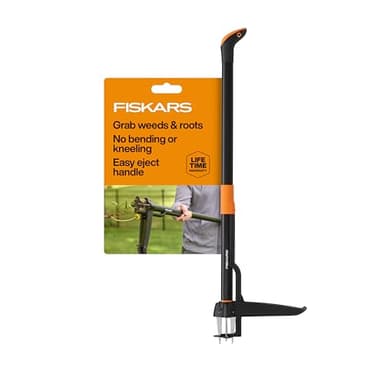
Fiskars Stand-Up Weed Puller Tool (39 in)
Four-claw stand-up puller for removing isolated taproot and rosette weeds without a selective herbicide. Works on small patches only, and only if you lift out every white rhizome piece; any fragment left behind regrows into a new plant.
- 2Check price
 Best value
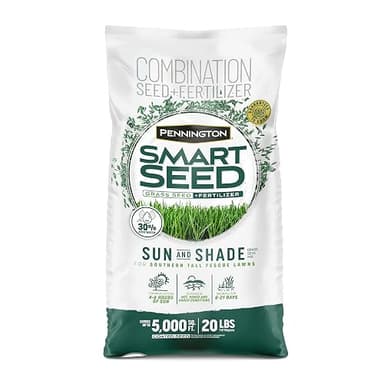
Pennington Smart Seed Sun and Shade Mix
Versatile cool-season blend for overseeding and repairs where a multi-variety mix makes more sense than a single species. Removing or spot-treating quackgrass leaves bare soil, so reseed it. Late summer to early fall is the strongest window for cool-season seed.
As an Amazon Associate we earn from qualifying purchases.
Where quackgrass shows up
Most common in these regions: