
The five-week sprint
Spotted spurge compresses an entire generation into about a month. Seed germinates in hot soil, the mat spreads flat from one central taproot, and new seed is dropping within five weeks, all summer long, wave after wave. That speed is why a spurge problem seems to appear from nowhere in August: the June plants you did not notice have already grandparented the ones you are looking at.
It is heat-seeking by design. Germination wants soil temperatures that lawn interiors rarely reach, but pavement edges hit easily, which is why spurge lines driveways, sidewalks, and curb strips. The red-spotted leaves and the milky sap when a stem snaps make identification certain (the sap also irritates skin, so wear gloves before pulling).
Density plus edge care
Spring pre-emergent at the crabgrass window suppresses the first flush, but spurge keeps germinating all summer, so the chemical barrier alone never quite finishes the job. Your real defense is shade at soil level: raise the mowing height, thicken thin areas, and spurge seed simply cannot get the hot bare soil it requires.
Give the pavement edges special attention because they are the incubator. Water and feed those strips a little better than the rest of the lawn, hand-pull any mats you see while they are small (the single taproot makes this easy and satisfying), and reseed thin edges in fall. Kill the edge habitat and interior spurge mostly stops appearing on its own.
How to identify spotted spurge
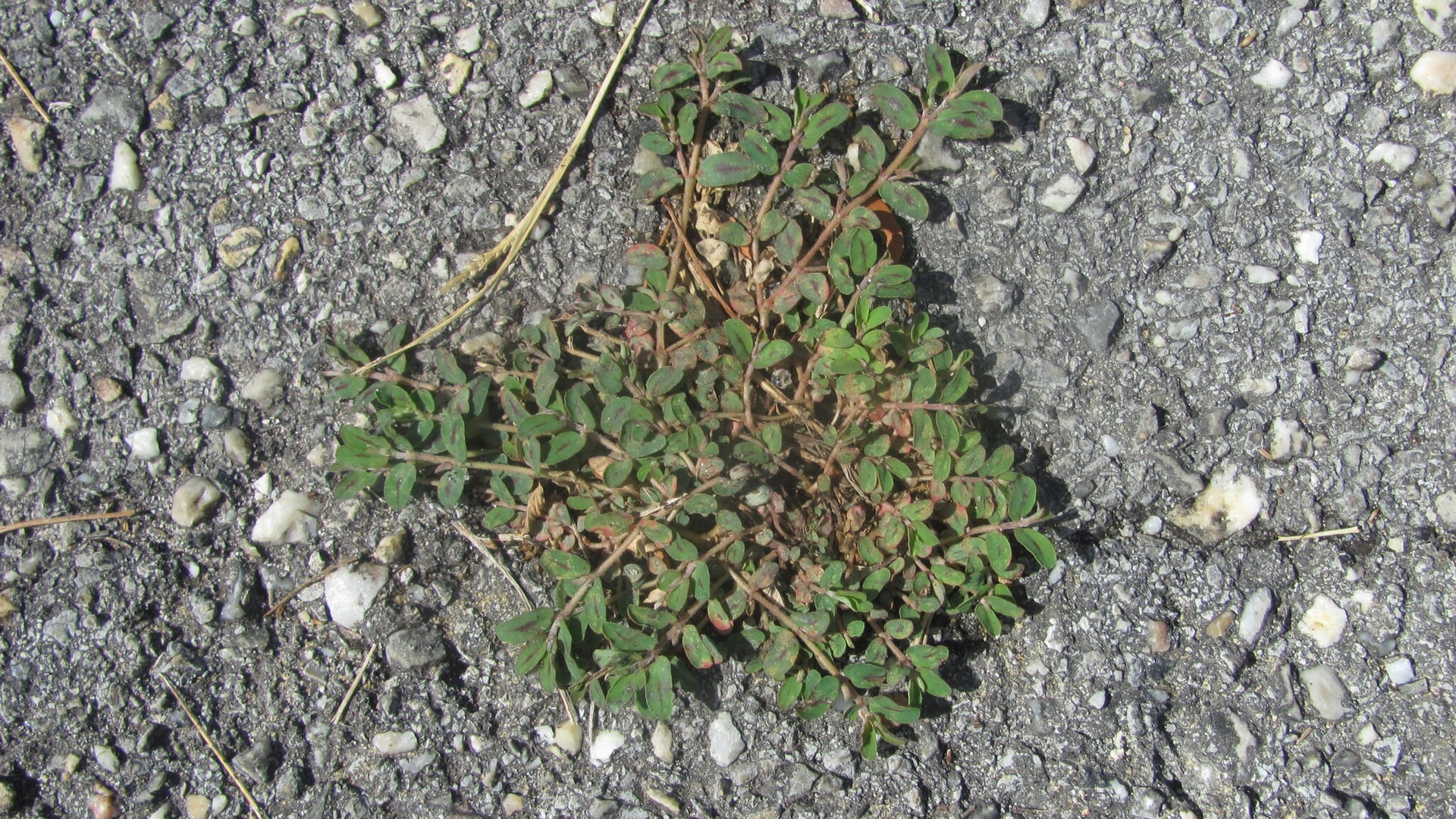
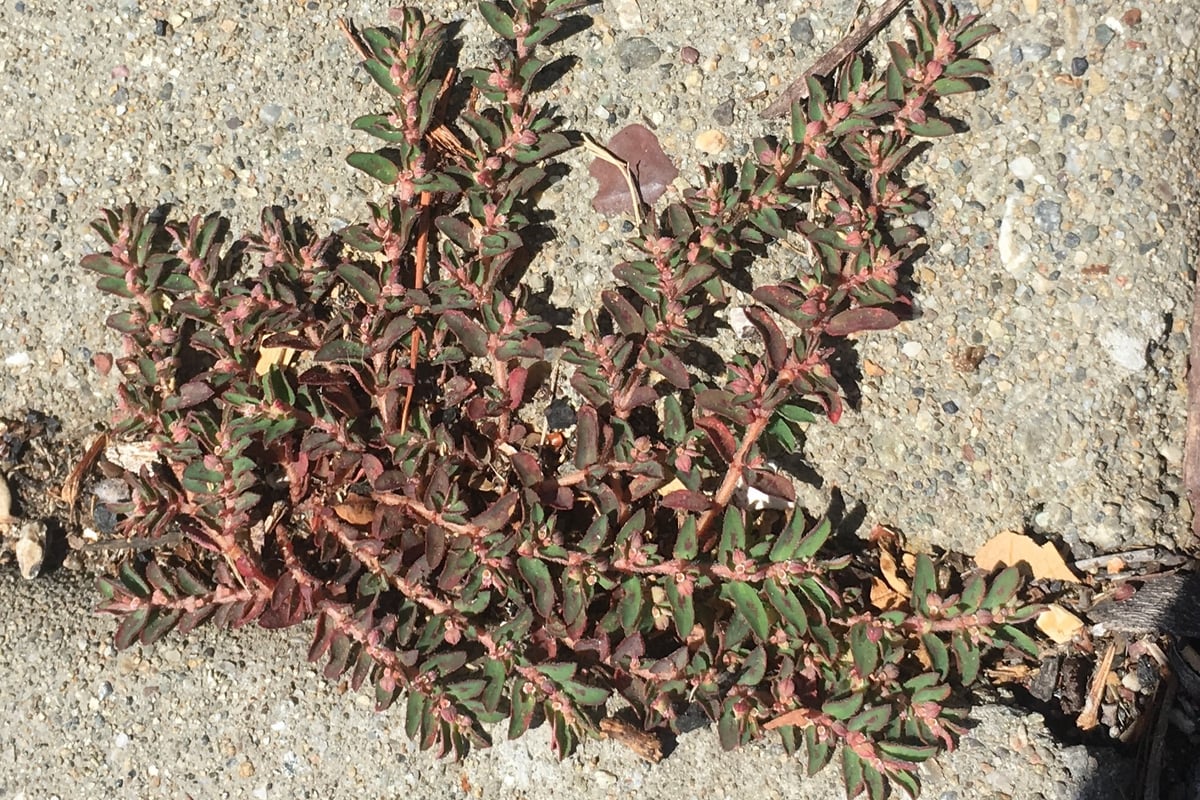
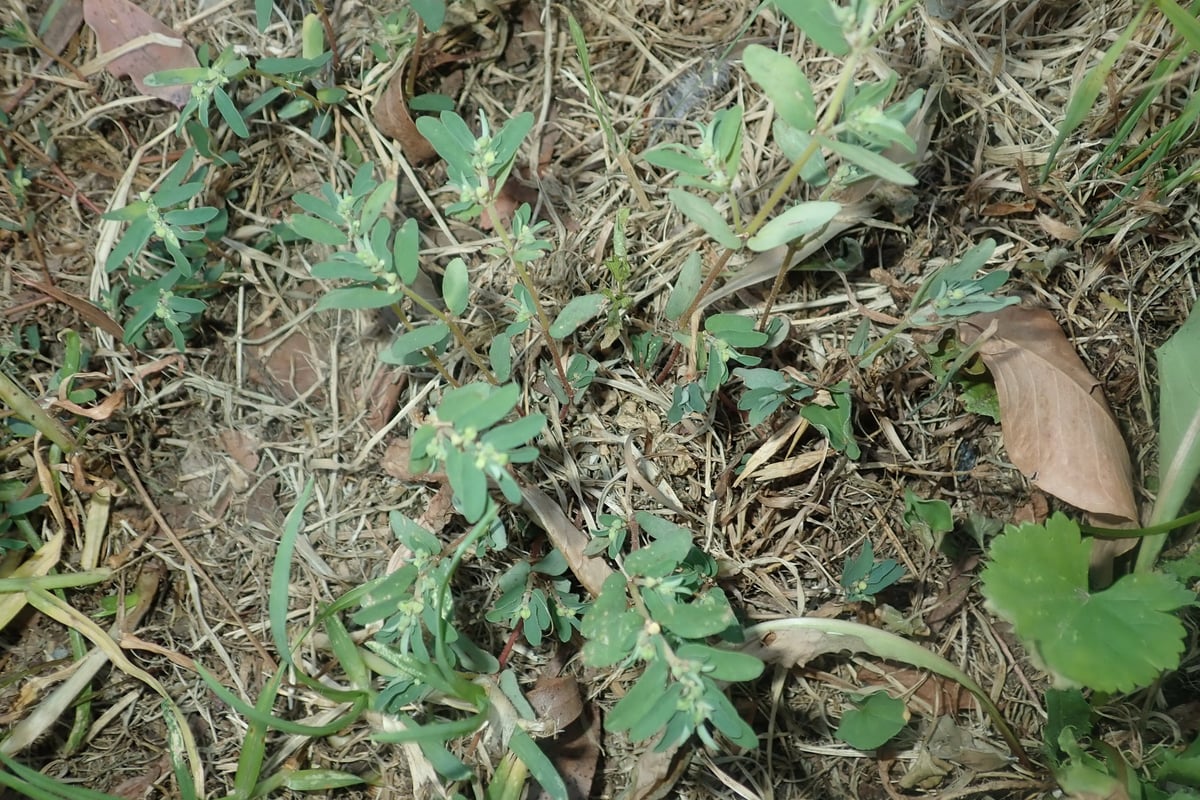
- Flat, pancake-like mats that radiate from a central taproot
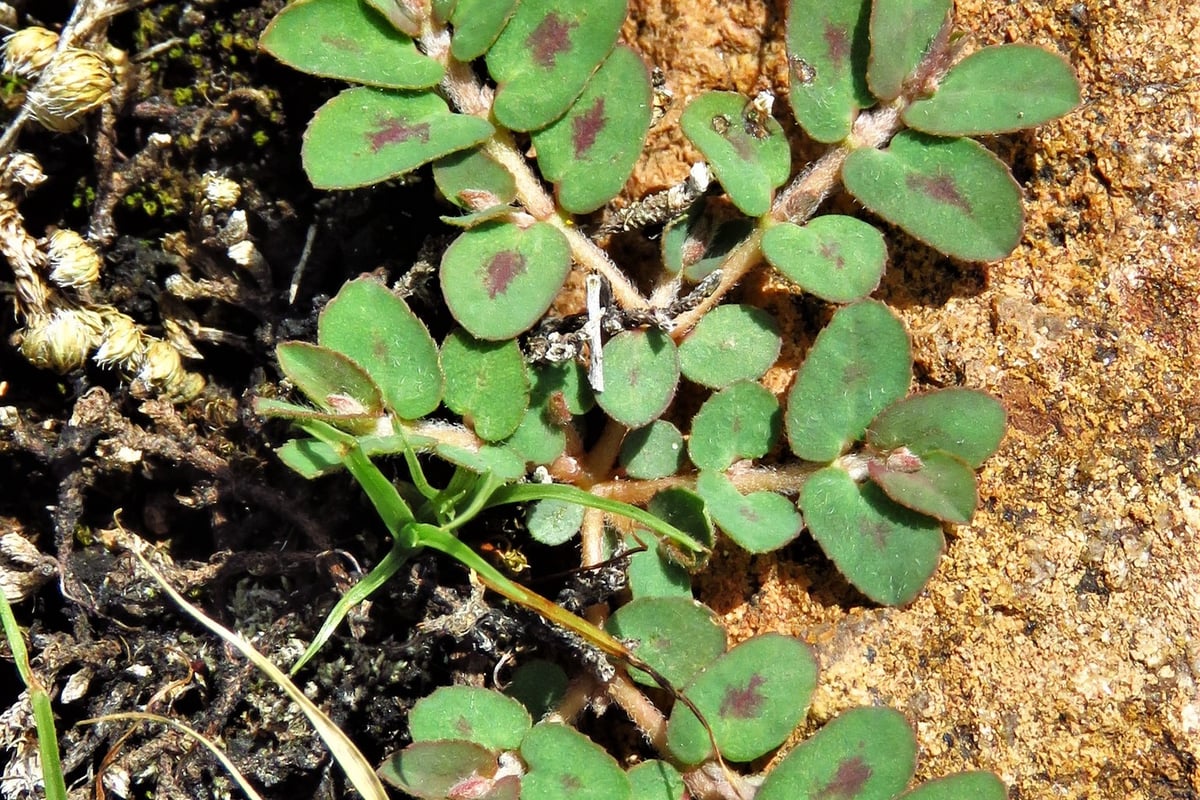
- Tiny oval leaves, each usually with a maroon-red spot in the center
- Stems bleed milky white sap when snapped (wear gloves, it irritates skin)
- Reddish, often hairy stems hugging the soil surface
What spotted spurge looks like
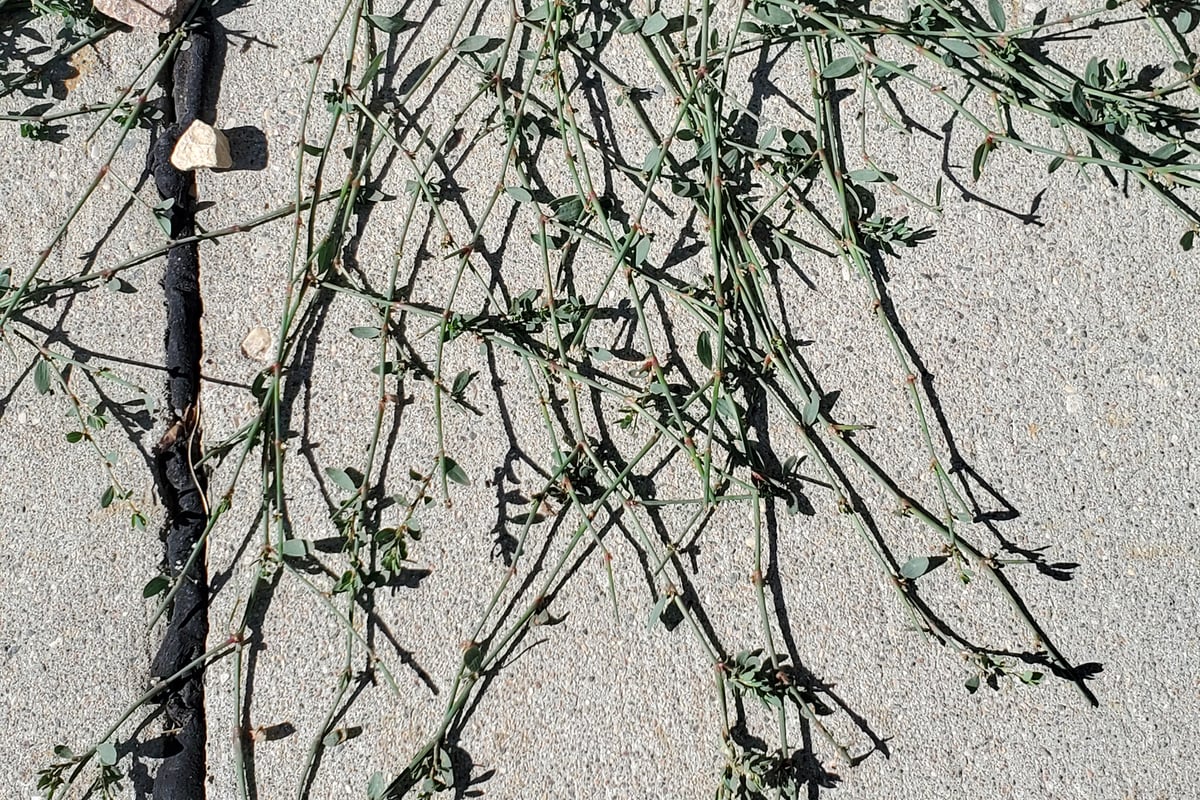
Not sure this is spotted spurge? Snap a photo and our AI will identify the weed with treatments matched to your grass type.
When to treat spotted spurge
Prevention (pre-emergent)
Apply before germination, when soil reaches about 60°F.
Window: Late spring
Typical dates: Before soil reaches 60°F consistently
Treatment (post-emergent)
Best time: Early summer when plants are small
Target stage: Young plants before they spread laterally
Conditions: Apply when weeds are dry · No rain for 24 hours · Temps below 90°F
Germination starts around 60°F soil temperature (optimal 75°F). Track your ZIP's live soil temperature or get an exact plan from the herbicide timing calculator.
How to control spotted spurge
- 1Crabgrass pre-emergent also prevents spurge. The timing overlaps at 55-60°F soil temperature.
- 2Apply post-emergent 2,4-D plus dicamba, or carfentrazone (Quicksilver), to young plants
- 3Hand-pull small infestations before seed set and wear gloves, because the sap can irritate skin
- 4Aerate compacted areas and overseed to improve turf density where spurge colonizes
Good to know
- • Low-growing summer annual that forms flat mats close to the ground
- • Exudes milky white sap when stems are broken, which separates it from similar mat-forming plants
- • Thrives in hot, dry conditions and compacted soil, so it shows up along driveways and thin turf edges
- • Each plant can produce thousands of seeds, creating heavier infestations year after year
Weed control quotes
Get matched with local weed control pros on Angi. Free quotes, no obligation.
Angi is a partner; we may earn a commission if you request quotes there.
Products that work on spotted spurge
These picks are not filtered to your lawn. Some herbicides damage certain grasses (atrazine is for warm-season lawns; Trimec harms St. Augustine). Verify your grass type on the product label before applying, or use the herbicide timing calculator for grass-filtered recommendations.
Recommended Products
- 1Check price
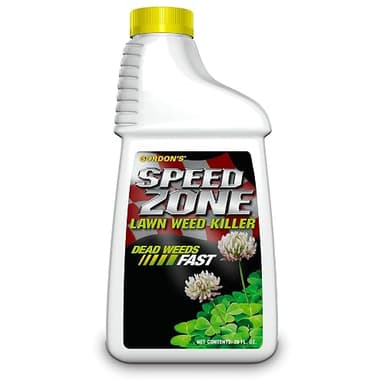 Top pick
SpeedZone EW Lawn Weed Killer
Fast-acting lawn weed killer for cool-season lawns that targets dandelion, clover, spurge, plantain, and other listed weeds. Spurge is easiest to control while young and actively growing.
- 2Check price
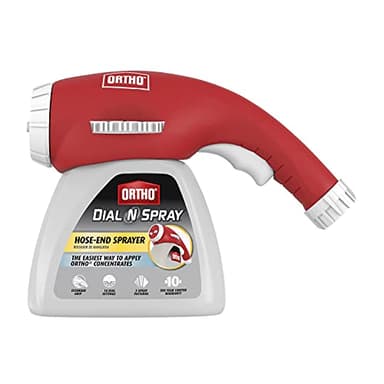 Best value
Ortho Dial N Spray Hose-End Sprayer (14 Dilution Settings)
Adjustable metered hose-end sprayer for liquid herbicides, iron, wetting agents, and foliar recovery products. Celsius and SpeedZone are liquid concentrates; a metered hose-end sprayer covers low spurge mats evenly.
As an Amazon Associate we earn from qualifying purchases.
Where spotted spurge shows up
Most common in these regions: