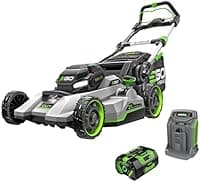
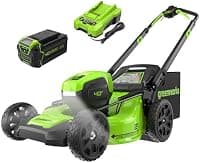
5 Differences Between Ego Vs Greenworks Mower
 James ThorntonLawn Equipment & Maintenance Expert | 20 Years
As an Amazon Associate we earn from qualifying purchases.
Most homeowners comparing battery mowers end up on the same question: Ego vs Greenworks, which one actually fits their yard. Both brands dominate cordless mowers, but they are not interchangeable - the right choice depends on your lawn size, grass type, and how demanding your mowing conditions are.
People searching for “5 differences between Ego vs Greenworks mower” want a direct, practical comparison, not marketing copy. The real split is in five areas: power and runtime, cutting quality and deck design, ergonomics and noise, battery ecosystem, and overall price and value.
By the end of this guide, you will know which brand suits your lawn, climate, and maintenance style, and in which situations either Ego or Greenworks is actually the wrong choice.
Choose Ego if you have medium to larger lawns, thicker grass, or want maximum power and runtime in a single pass. Choose Greenworks if your lawn is smaller, budget matters more than brute force, or you want a lighter mower that is easier to handle. To decide, match your lawn size (in square feet) and grass density to each brand’s battery watt-hours and deck size, then add a 20-30% runtime buffer for tall or wet grass. Do not choose on voltage alone, and expect 2-3 test mows to dial in height and pace.
- The biggest power and runtime differences between Ego vs Greenworks mower lines show up once lawn size passes about 5,000-6,000 square feet.
- A 56V Ego battery with 5.0 Ah delivers about 280 watt-hours, while a 40V 4.0 Ah Greenworks pack delivers about 160 watt-hours.
- Most cool-season lawns look best when cut around 2.5-3.5 inches, and cutting off more than one-third of the blade in one pass increases stress.
- For small city lots under about 3,500 square feet, Greenworks 40V mowers usually cover the yard on one charge at a lower upfront cost.
- Expect quality lithium batteries to last roughly 3-5 seasons if you avoid deep discharges, extreme heat, and full-charge winter storage.
1. Difference in Power, Runtime, and Overall Performance
The primary performance difference between Ego vs Greenworks mowers is how much power and runtime they deliver in real grass, not on a spec sheet.
Ego has built its reputation around high-voltage, high-capacity 56V packs that handle tougher, thicker turf and bigger lawns in one shot. Greenworks spreads its lineup across 40V and 60V systems, which gives more budget and weight options, but runtime and torque vary more by model. The key is to compare watt-hours and match them to your yard, not to chase the biggest voltage number. The mower most people are picturing on the Ego side of this comparison is the EGO POWER+ Select Cut Self-Propelled Mower (LM2135SP), which ships with a 7.5 Ah pack and is the benchmark the Greenworks 40V and 60V models get measured against below.

1.1 Battery Voltage, Amp-Hours, and What They Actually Mean in the Yard
Voltage and amp-hours only matter to you as watt-hours, which is the total energy your mower has available to cut grass before you recharge.
Ego runs a 56V platform, while Greenworks commonly offers 40V and 60V systems. The math that matters is: volts x amp-hours = watt-hours (Wh). For example:
| Brand / System | Sample Battery | Voltage | Amp-Hours (Ah) | Approx. Watt-Hours (Wh) |
|---|---|---|---|---|
| Ego 56V | Typical mid-pack | 56V | 5.0 Ah | ~280 Wh |
| Greenworks 40V | Typical mid-pack | 40V | 4.0 Ah | ~160 Wh |
| Greenworks 60V | Larger pack | 60V | 5.0 Ah | ~300 Wh |
That table shows why the power and runtime differences between Ego vs Greenworks mower lines are not about brand name, they are about which exact battery and system you buy. Higher voltage helps the motor deliver torque in taller or damp grass without bogging, but a small 60V pack can still run out faster than a big 56V pack. Compare watt-hours first, then voltage as a secondary tie-breaker for tough conditions.
1.2 Runtime in Real-World Conditions (Not Just Marketing Claims)
Real-world runtime depends on lawn size, grass density, mowing height, and whether self-propel is engaged, not just the numbers printed on the box.
As a rough yardstick for a 20-21 inch deck and a mid-size battery (around 250-300 Wh):
- Small lawns (under ~1/8 acre, about 5,000 sq ft): Either a mid-range Ego or Greenworks 40V/60V mower usually finishes in one charge if you mow weekly.
- Medium lawns (1/8-1/4 acre, about 5,000-10,000 sq ft): Ego’s 56V system with a larger pack or dual-battery Greenworks 60V setups are safer if you want one-pass mowing without swapping or recharging.
- Larger lawns (1/4-1/2 acre+): You should plan on either multiple batteries, fast chargers, or segmenting mowing into two sessions, whether you choose Ego or Greenworks.
Grass type matters a lot. Thin cool-season lawns like fine fescue or perennial ryegrass load the motor less than thick St. Augustine or Bermuda. A mower that breezes through 6,000 square feet of fescue may start to struggle at 4,000 square feet of deep, thick Zoysia if you also like to mow low.
Self-propel can easily shave 15-25 percent off runtime if you run it near full speed the whole time, and steep slopes or bumpy terrain draw even more power.
Here is a simple way to estimate your needed runtime and pick between systems:
- Measure lawn size. Use a property map, a phone mapping app, or walk it off (one walking step is roughly 2.5-3 feet) to get a rough square footage.
- Note grass density and growth rate. Thick southern grasses or fertilized cool-season lawns cut every 10-14 days demand more watt-hours.
- Match to pack size and coverage claims. Take the mower’s stated coverage (for example 10,000 sq ft on one charge) and only trust about 70-80 percent of that for real conditions.
- Add a 20-30 percent buffer. If you have 6,000 sq ft, choose a setup realistically good for 8,000 sq ft to cover tall, damp, or overdue cuts.
If you run the numbers and your lawn is right on the edge of one battery’s realistic coverage, step up to a higher-capacity pack or a system that can run two batteries at once.
1.3 Cutting Power in Tough Situations (Tall, Wet, or Overgrown Grass)
The biggest practical cutting power difference between Ego vs Greenworks shows up in first-of-the-season cuts, overdue lawns, and damp or wet grass.
Ego’s 56V mowers, especially with larger batteries, tend to hold blade speed better through tall or wet turf and many models use “power boost” or load-sensing modes that automatically increase torque as the grass gets thicker. Greenworks 60V mowers narrow that gap, while many 40V models are better suited to regular, lighter-duty weekly mowing than to hacking through 8-10 inches of overgrowth.
For the first cut of the season or if the lawn got away from you for a couple of weeks, either brand performs better if you:
- Raise the deck to its higher settings on the first pass.
- Take a second pass at your normal height 2-3 days later.
- Walk a bit slower through the heaviest patches.
Cutting wet grass always increases load and clumping risk. A more powerful mower lets you “get away with” mowing damp turf, but that can stress the grass, especially cool-season types. Cutting more than about one-third of the blade at once is where damage starts, no matter how strong your motor is.
- Purdue Turfgrass Science guidance: removing more than one-third of the grass blade height in a single mowing stresses the plant and can weaken turf over time.
If you need to mow when the lawn is still slightly damp, raise the deck one notch and plan to mow again in 3-4 days. That approach protects both the mower and the lawn.
2. Difference in Cutting Quality, Deck Design, and Grass Handling
The cutting quality and deck design differences between Ego vs Greenworks mowers determine how cleanly they cut, how fast you finish, and how well they mulch or bag clippings.
Both brands offer similar deck sizes and 3-in-1 functionality on many models, but blade design, deck airflow, and how the deck is shaped and built (steel vs composite) lead to noticeable differences in finish quality, especially in thick or wet lawns.
2.1 Cutting Width and Deck Design: How It Affects Finish and Productivity
Deck width determines how many passes it takes to mow your yard and how easily you can maneuver around beds, trees, and tight spaces.
Ego and Greenworks both commonly offer 19, 20, 21, and 22 inch decks. Wider decks cover more ground per pass, which helps on open, rectangular lawns over about 6,000-7,000 square feet. Narrower decks are better for small, complex yards with lots of landscaping or narrow gates.
Deck design and airflow matter as much as width. Curved, well-shaped decks with good internal airflow lift grass blades upright, then discharge clippings efficiently into the bag or back into the turf for mulching. Some Greenworks steel decks provide excellent suction and cut consistency, while Ego’s composite decks resist rust and are lighter to push but can ring differently if you encounter debris.
In humid or coastal regions where rust is a concern, composite or well-coated decks hold up better. Steel decks win on ultimate toughness for knocks and bumps but need occasional cleaning and touch-up to avoid corrosion.
2.2 Mulching, Bagging, and Side Discharge Differences
Mulching and bagging performance differences between Ego vs Greenworks mowers show up most in dense, moist grass, where poor airflow leads to clumping and clogging.
Mulching works best when the mower can recirculate clippings long enough to chop them finely. Many Ego models are strong mulchers in cool-season lawns where the grass is not excessively wet, helped by their higher sustained blade speed. Greenworks models with well-designed 60V decks mulch competitively, but some lower-tier 40V units can struggle in thick warm-season turf if you push pace and keep the deck lower.
Bagging capacity and fill pattern matter if you frequently collect clippings, such as when weeds are going to seed or when family allergies are a concern. Look for:
- A bag that fills from back to front, which lets you see when it is getting full.
- A rigid frame that makes removal and dumping easy without fighting the grass chute.
- Bag volume that matches your lawn size so you are not emptying every 2-3 minutes.
Side discharge is helpful when dealing with very tall or wet grass, since it reduces clogging and lets clippings dry before a second mulching pass. Some Greenworks decks scatter clippings more widely, which looks cleaner than tight windrows, while certain Ego models create more defined rows in heavy growth that you may want to re-mow perpendicular for a cleaner finish.
For lawn health:
- Mulching is better in most routine conditions, since it returns nitrogen and organic matter to the soil.
- Bagging is preferred if the lawn has disease issues or visible seed heads from weeds that you do not want to spread.
For a deeper dive into those tradeoffs, the topic Mulching vs Bagging: Which Is Better for Your Lawn is worth reading after you choose a mower.
2.3 Height Adjustment and Consistency of Cut
The main difference in cutting height adjustment between Ego vs Greenworks is whether you get single-lever adjustment and how accurately the settings reflect real turf height.
Many Ego mowers use a single, central lever to move all four wheels, which is faster to adjust. Greenworks offers both single-lever and multi-point systems depending on price tier. More height positions and a wide range (for example roughly 1.25-4 inches) give you more control across seasons and grass types.
The printed height numbers on any residential mower are approximate. A 3 inch setting might leave grass slightly taller or shorter depending on deck design and tire size. Rather than trusting the label, check the actual cut height:
- Mow a small test strip.
- Measure grass blade height with a ruler from soil surface to tip.
- Adjust up or down one notch until you hit the desired range.
Ideal cutting heights vary by grass type:
- Cool-season grasses like fescue, Kentucky bluegrass, and rye usually look best in the 2.5-3.5 inch range in most home lawns.
- Warm-season grasses like Bermuda and Zoysia often tolerate and prefer 1-2 inches when managed closely, while St. Augustine usually looks best closer to 3-4 inches.
- University of Minnesota Extension guidance: most cool-season lawns perform best when maintained at or above roughly 2.5-3.5 inches of mowing height.
To dial in the correct height with a new Ego or Greenworks mower, start on the higher side of the recommended range for your grass type, then drop one notch only if the lawn looks thin or too shaggy after a couple of weeks. That approach protects roots while you learn how your particular mower’s settings translate into real cut height. For detailed numbers by grass, the topic The Ultimate Guide to Lawn Mowing Heights by Grass Type is a helpful next step.
3. Difference in Ergonomics, Noise, and User Experience
The ergonomics, noise, and user experience differences between Ego vs Greenworks are what decide whether mowing feels like a quick task or a tiring chore.
Both brands are far quieter and easier to live with than gas mowers, but they differ in self-propel feel, handle comfort, and how they behave on slopes and rough ground. Those comfort details matter more the longer you are behind the handle.

3.1 Self-Propelled Systems and Handling on Slopes
The self-propel systems on Ego vs Greenworks mowers feel different in how smoothly they engage and how well they handle slopes and uneven lawns.
Many Ego self-propel models provide a smooth, variable-speed drive that is easy to feather, so you can match walking speed closely and avoid jerky starts. Some Greenworks systems, especially on higher-voltage models, also offer good variability, though certain budget units have more “on/off” engagement that takes getting used to.
For slopes and rough terrain, look at:
- Wheel size and tread: Larger rear wheels and decent tread patterns help both brands track better on hills and over bumps.
- Weight balance: Heavier battery packs over the rear wheels can improve traction uphill but make turning slightly harder.
- Speed range: A wide speed range lets you slow down for tight spots or steep sections then speed up on flat ground.
An overly aggressive self-propel system on uneven lawns can scalp high spots if the mower surges forward faster than you can react, so a smooth, easy-to-modulate drive is more important than top speed.
3.2 Handle Design, Vibration, and Operator Fatigue
Handle design and vibration levels on Ego vs Greenworks mowers influence how tired you feel after 30-45 minutes of mowing more than the motor power does.
Both brands typically offer multiple handle height positions and folding designs for storage. Ego tends to use thicker, more cushioned grips on many models, which can feel better for larger hands. Some Greenworks mowers use slimmer handles that smaller hands might find easier to hold for longer periods.
Battery mowers already produce far less vibration than gas machines because there is no engine combustion. Differences between Ego and Greenworks come from deck balance and wheel design more than from the motor itself. To minimize fatigue on either brand:
- Set the handle height so your elbows are slightly bent at your sides, not reaching up or down.
- Mow in longer, straight passes when possible instead of constant turning and backing.
- Let the self-propel do the work on slopes rather than pushing hard uphill.
For a more detailed walk-through of efficient mowing layouts, the topic Best Mowing Patterns for a Professional-Looking Lawn is useful once your mower is chosen.
3.3 Noise Levels and Neighbor-Friendly Operation
Noise levels are broadly similar between Ego vs Greenworks mowers and are dramatically lower than gas, which makes both brands more neighbor friendly.
Typical battery mowers run somewhere around 75 to 85 dB at the operator’s ear, depending on deck design and blade load. EGO, for example, rates its self-propelled models around 75 dB, versus roughly 95 dB for a typical gas mower. That is still loud enough over long sessions to warrant hearing protection, but it is a noticeable reduction compared to gas push mowers.
Lower noise really matters when:
- You like to mow early in the morning or after dinner, especially in tight neighborhoods.
- Your HOA or city has strict noise windows.
- Family members, kids, or pets are sensitive to sound.
One underused advantage of quieter battery mowers is winter leaf cleanup. With a bag attached, either an Ego or Greenworks mower can vacuum leaves from the lawn more quietly than a typical blower, especially if you mow at a slightly higher setting and make two passes.
Even though these mowers are quieter, hearing protection is still recommended for sessions over about 30 minutes, both to protect hearing and reduce fatigue.
4. Difference in Battery Ecosystem, Tools, and Long-Term Flexibility
The battery ecosystem difference between Ego vs Greenworks mowers affects every future yard tool you buy, not just the mower.
Once you commit to a platform, you are more likely to buy compatible trimmers, blowers, and other tools, so your mower choice often becomes the anchor for your entire battery lineup. Ego groups everything on 56V, while Greenworks splits tools across 40V and 60V systems, which changes how easily you can expand.
4.1 Cross-Compatibility Within Each Brand’s Ecosystem
Both Ego and Greenworks offer broad tool ecosystems, but Ego keeps everything on one voltage while Greenworks gives multiple tiers at different voltages.
Ego’s 56V system includes string trimmers, blowers, edgers, hedge trimmers, chainsaws, and even snow blowers that share the same battery interface as the mowers. That makes it simple: any 56V Ego battery runs any 56V Ego tool, though size and balance differ by capacity.
Greenworks offers 40V tools for lighter-duty residential use and 60V tools for higher output and runtime. If you start with a 40V mower, your future tools need to match that 40V line, while a 60V mower anchors you into Greenworks’ higher voltage ecosystem.
A simple way to choose the right ecosystem is:
- List yard tasks. Include mowing, edging, hedge trimming, leaf cleanup, and snow removal if applicable.
- Check each brand’s catalog. See which voltage line covers every one of those jobs at a price level you are comfortable with.
- Consider weight and ergonomics. Handheld tools feel very different with heavy vs lighter batteries.
- Think two to three years ahead. If you may add a chainsaw, pressure washer, or snow blower, confirm your chosen platform supports them.
In many cases, homeowners with heavier yard workloads lean toward Ego’s unified 56V ecosystem, while those wanting multiple price tiers appreciate Greenworks’ split between 40V and 60V tools.
4.2 Battery Longevity, Replacement Cost, and Warranty Differences
Battery longevity and replacement cost for Ego vs Greenworks are similar in principle, since both use lithium-ion cells that age based on use cycles and storage habits.
Realistically, most residential users can expect 3-5 seasons from a primary battery before noticeable capacity loss if they avoid abusive charging and storage. Deep discharging to zero regularly, leaving packs fully charged in hot garages, or storing them in freezing conditions all shorten life.
Replacement battery prices vary by capacity and platform. Larger 56V and 60V packs cost more but often outlive smaller packs under the same workload since they are less stressed per cut. Availability is typically good online and at big-box stores for both brands, with some local dealers also stocking Ego packs.
Warranties usually split between tool and battery coverage, often with slightly shorter coverage on batteries. Improper storage, water damage, and evidence of physical abuse are common reasons claims get denied, regardless of brand.
To stretch battery life with either mower:
- Store batteries around 40-60 percent charge over winter, not at 0 or 100 percent.
- Avoid leaving packs in enclosed cars, sheds, or garages that exceed roughly 90-95°F for long periods.
- Keep contacts clean and dry and seat batteries fully before use.
4.3 Seasonal and Regional Considerations for Battery Use
Climate affects how Ego vs Greenworks batteries perform, with heat degrading packs over time and cold reducing runtime on the day you mow.
In very hot regions like the Southwest and Gulf Coast, any lithium battery stored in unventilated sheds or garages will age faster. Keeping packs indoors or in a cooler part of the garage and letting them cool before charging will help, whether you use Ego or Greenworks.
In cold regions like the Upper Midwest or Canada, both brands will see reduced runtime when mowing in near-freezing temperatures. Batteries also should not be charged when very cold; let them reach room temperature first.
For fall leaf cleanup, when you might use the mower longer than usual, it is smart to:
- Start with a fully charged primary battery and a partially charged backup.
- Use a higher deck setting to reduce load while still picking up leaves.
- Take breaks to keep the motor housing from packing with damp debris.
For broader guidance, the topic How to Winterize Your Battery-Powered Lawn Equipment pairs well with the brand-specific advice in this guide.
5. Difference in Price, Value, and Best-Fit Use Cases
The price and value differences between Ego vs Greenworks mowers come down to how much lawn you maintain and how demanding your conditions are.
Ego usually sits at a higher upfront price for comparable deck sizes and self-propel features, but that extra cost tends to buy more power and runtime. Greenworks offers more budget-friendly entry points, especially in the 40V line, that make sense for smaller or less demanding lawns.

5.1 Upfront Cost vs Total Cost of Ownership
Total cost of ownership for an Ego vs Greenworks mower over 5-7 years includes the mower, batteries, blades, occasional parts, and the electricity to charge, which is minimal.
Roughly, you should consider:
- Entry-level price bands: Greenworks 40V mowers often undercut similar Ego units, which is attractive for small lots where runtime demands are low.
- Mid to premium tiers: As you move to larger packs, wider decks, and stronger self-propel systems, Ego and Greenworks 60V offerings get closer in price, but Ego often still leans premium.
- Batteries over time: Planning for at least one replacement battery during the mower’s life is realistic if you mow heavily for more than 3-5 years.
Electricity use for charging is inexpensive compared to gas and oil. Over 5 years, the cost of power to charge a residential mower for a typical yard is usually far below what you would have spent on fuel for a comparable gas mower.
A more expensive Ego or premium Greenworks setup often saves money long term if it prevents you from needing to buy extra packs, hire mowing help in heavy growth periods, or upgrade early because the mower was underpowered for your turf.
5.2 Best for Small, Medium, and Large Yards
Matching Ego vs Greenworks mowers to yard size is the simplest way to avoid buyer’s remorse.
For small city or tight suburban lots under about 3,500 square feet, a Greenworks 40V mower is usually the better value. It is typically lighter, cheaper, and still finishes the yard on a single charge.
For medium lawns in the 3,500-8,000 square foot range, both brands are viable. Ego becomes more attractive if your grass is thick, you like to mulch, and you want one-pass mowing with a strong self-propel system. Mid-range Greenworks 60V models also work well here, especially if value is a priority and your lawn is mostly flat.
For larger suburban or rural lawns from 8,000 up to 20,000 square feet (roughly 1/4-1/2 acre), the balance tilts toward higher-output systems. Ego’s 56V platform with high-capacity batteries or Greenworks 60V dual-battery mowers are appropriate, but you should expect to own at least two batteries or break mowing into segments.
For rental properties or multiple lawns, prioritize robustness and fast charger availability over the last bit of quiet or convenience. Light commercial work may still be better served by commercial-grade equipment, but many landscapers use higher-end Ego and Greenworks 60V mowers as supplemental tools for noise-sensitive properties.
For help sizing deck width beyond brand choice, the topic How to Choose the Right Mower Size for Your Lawn provides broader sizing rules.
If you would rather match a yard size to a pick in one glance, use this decision table. The square-foot bands are the same ones the sections above walk through.
| Lawn size | Pick | Why |
|---|---|---|
| Under ~3,500 sq ft (small city or tight suburban lot) | Greenworks 40V | Lighter and cheaper, and it still finishes on one charge with weekly mowing. Ego is more mower than the yard needs. |
| 3,500 to 8,000 sq ft (medium lawn) | Either, leaning Ego for thick or mulched turf | Both are viable. Ego's 56V power and strong self-propel win for dense grass and one-pass mowing; a Greenworks 60V is a solid value pick on flatter, thinner lawns. |
| 8,000 to 20,000 sq ft (larger suburban or rural, ~1/4 to 1/2 acre) | Ego 56V or Greenworks 60V, plus a second battery | Higher-output systems only, and plan on owning at least two batteries or splitting the mow into segments. |
| Rental properties or multiple lawns | Higher-end Ego or Greenworks 60V | Prioritize robustness and fast-charger availability; heavy commercial work may still be better served by commercial-grade gear. |
One budget aside that sits outside both brands: if your lawn is very small and flat and you mow at least weekly, a manual reel mower like the American Lawn Mower Company 1204-14 14-Inch 4-Blade Push Reel Lawn Mower costs a fraction of any cordless model here and needs almost no maintenance. It is a real option for a tiny lot, not a replacement for either Ego or Greenworks on anything larger.
5.3 Special-Case Scenarios: Thick Turf, Pets, and Allergies
Special scenarios like very dense turf, pets, and allergies highlight specific strengths and weaknesses between Ego vs Greenworks mowers.
For very dense warm-season turf like Bermuda, Zoysia, or St. Augustine, Ego’s stronger 56V output and load-sensing modes often give it an edge for mulching at lower heights and for keeping blade speed up when grass is vigorous. High-end Greenworks 60V units narrow that gap, but low to mid 40V models are better reserved for lighter-duty maintenance on these grasses.
For pet owners, bagging performance and deck cleanliness matter because clippings tracked into the house can be a hassle. Choose a model from either brand with a high-capacity bag and easy-on, easy-off design. Quieter operation is also useful for noise-sensitive dogs, where both Ego and Greenworks beat gas. Using the mower regularly at the right height also helps prevent moisture-loving turf issues like muddy spots where pets spend time.
For allergy sufferers, clean bagging and regular mowing intervals are more important than brand. Consistent cutting every 5-7 days in peak season, collecting clippings when weeds are present, and avoiding mowing in high pollen windows can reduce symptoms. A mower that mulches very finely can be helpful when pollen levels are lower, since clippings break down quickly without creating dust.
Frequency matters here: topics like How Often Should You Mow Your Lawn for Optimal Health explain why weekly or even twice-weekly mowing during peak growth produces a cleaner, healthier lawn with fewer large clippings to aggravate allergies.
6. Real-World Comparison Checklist: How to Choose Between Ego vs Greenworks
The easiest way to choose between Ego vs Greenworks mowers is to run through a short comparison checklist that matches the mower’s capabilities to your yard and habits.
Rather than picking solely on voltage or price, work step by step through lawn size, grass type, terrain, storage, and ecosystem needs. This method prevents spending on unused features or buying a mower that is underpowered for your actual conditions.
6.1 Pre-Purchase Assessment Checklist
Use this checklist to narrow down which brand and system fits best before you buy:
- Yard size and shape: Estimate square footage and note whether the yard is open or full of beds, trees, and tight corners. Decide how long you are willing to spend mowing (for example, 30 vs 60 minutes).
- Grass type and density: Note whether you have cool-season (fescue, bluegrass, rye) or warm-season (Bermuda, Zoysia, St. Augustine) turf, and whether it is thick or sparse.
- Terrain: Record if the yard is mostly flat, gently sloped, or has steep sections or bumps that make self-propel and larger wheels more important.
- Storage space and weight tolerance: Check gate widths, shed or garage space, and whether you need a mower that folds compactly or can be stored vertically.
- Noise and time-of-day constraints: If you often mow early or late, noise advantages of battery matter more, and both brands are suitable.
- Battery ecosystem needs: List tools you plan to own within 2-3 years (trimmer, blower, edger, chainsaw, snow blower) and confirm which brand’s ecosystem covers them.
- Budget range and flexibility: Decide your realistic budget band, then determine if a slightly higher upfront spend on a stronger system might prevent future upgrades.
Once you fill that out, you can usually see whether Ego’s higher-output 56V platform or a Greenworks 40V or 60V setup aligns better with your priorities.
6.2 On-the-Ground Testing Tips if You Can See Them In Person
If you can inspect Ego and Greenworks mowers in person before buying, a few simple tests quickly show whether a model feels right.
In-store, check:
- Handle comfort and folding: Grip the handle as if mowing, walk a few steps, and make sure the handle height suits your arms. Test the folding mechanism to see if it feels solid and easy.
- Self-propel feel: If a demo area or powered display is available, gently engage self-propel and vary speed to see if it is smooth or jerky.
- Height adjustment: Try raising and lowering the deck. Single-lever systems should move easily without feeling flimsy.
Ask sales staff:
- Where the nearest service center is for each brand.
- How warranty claims are handled and average turnaround time.
- Whether common parts (blades, belts, wheels) are stocked locally.
When reviewing online feedback, focus on:
- Runtime reports vs claimed specs from owners with similar lawn sizes.
- Complaints about bogging or stalling in thick or tall grass, especially in your grass type.
- Durability issues showing up after two or more seasons, not just week-one impressions.
If you want a plug-and-play cordless mower with strong runtime and power, the EGO POWER+ Select Cut Self-Propelled Mower (LM2135SP) is a strong fit for medium lawns and up. It is best for homeowners who want a gas-like cut and runtime without fuel or oil, and who plan to stay in the Ego 56V ecosystem for trimmers and blowers. For very small lawns where runtime is less critical, a lighter Greenworks 40V mower often delivers better value.
Here is how the two mowers most people cross-shop stack up head to head. Specs are manufacturer-rated, so treat runtime as an "up to" figure that real grass, pace, and self-propel use will pull down.
| Spec | EGO POWER+ LM2135SP (56V) | Greenworks 40V 21" self-propelled |
|---|---|---|
| Battery platform | 56V ARC Lithium | 40V |
| Included battery energy | 7.5 Ah (~420 Wh) | 5.0 Ah (~200 Wh) |
| Rated runtime | Up to 60 min | Up to roughly 45-60 min |
| Charge time | ~60 min (rapid charger) | ~60-120 min depending on charger |
| Deck size | 21 in | 21 in |
| Self-propelled | Yes (variable-speed Touch Drive) | Yes (variable-speed) |
| Weight (with battery) | ~62 lb | ~56 lb |
| Warranty | 5-year tool / 3-year battery | 3-year (Greenworks standard line) |
| Typical price band | ~$500-600 | ~$350-450 |
Warranty terms per the Greenworks warranty (standard-line tools and batteries, which is where the 40V lineup sits, are covered three years; the four-year term applies to Greenworks Pro, its 60V and 80V equipment) and the EGO LM2135SP product listing. Runtime numbers are manufacturer "up to" ratings.
Common Mistakes to Avoid
Most guides comparing Ego vs Greenworks mowers miss how easy it is to buy on specs alone and end up with a mower that does not match your turf, climate, or mowing habits.
Avoiding a few common mistakes will save you from disappointment and keep both your mower and lawn healthier for more seasons.
7.1 Assuming All Battery Mowers Are the Same
One of the biggest mistakes is treating all battery mowers as interchangeable and choosing based purely on voltage or brand reputation.
Voltage numbers without watt-hours and deck design can mislead. Two mowers can both say 60V, but one may have far more energy storage and a better blade and deck system than the other. Similarly, buying only on marketing or friends’ opinions without matching to lawn size, grass type, and how often you mow leads to underpowered or overkill purchases.
Remember that the “5 differences between Ego vs Greenworks mower” for someone with a 2,000 square foot flat fescue lawn are very different from someone with 10,000 square feet of thick Bermuda on slopes.
7.2 Ignoring Regional and Seasonal Factors
Buying a mower based on reviews from a completely different climate often causes runtime and cut quality surprises.
Cool, moist climates typically grow lush cool-season turf that is tall but not as dense as some warm-season lawns. Hot, humid Gulf Coast lawns with St. Augustine or Bermuda can be thicker, coarser, and more stressful on mowers. A Greenworks 40V mower praised for a small northern bluegrass yard may feel underpowered in a deep southern lawn if cutting height is low and growth is aggressive.
Season also matters. If you mow only every 10-14 days in peak season, or if you frequently cut when the grass is still damp, you should step up in battery capacity or mower tier to prevent stalling and overloading.
7.3 Misusing Features and Shortening Tool Life
Many battery mowers fail early or perform poorly because of misuse, not because the brand is weak.
Common issues include:
- Running batteries all the way to zero every time instead of recharging when power drops significantly, which strains lithium cells.
- Storing batteries fully charged in hot garages or sheds over winter, which accelerates capacity loss.
- Mowing very wet or overgrown grass at low deck settings, causing overloads, thermal shutdowns, and excessive wear on blades and motors.
- Letting blades dull for years, which tears grass rather than cutting it cleanly and can make any mower seem weak.
- Penn State Extension guidance: sharp mower blades cut grass cleanly, reducing frayed leaf tips that can be entry points for disease compared to ragged, torn cuts.
Sharpening blades at least once or twice per season, adjusting mowing height properly, and following basic battery care rules will extend the life of either an Ego or Greenworks mower. For detailed technique, the topic How to Sharpen Lawn Mower Blades is a good skills upgrade.
Ego vs Greenworks: Frequently Asked Questions
Is Ego being discontinued?
No. Ego is not discontinued, and it is arguably stronger than ever. It is currently marketed as the number one rated brand in cordless outdoor power, and its parent company reported double-digit revenue growth into 2025 on the strength of the Ego line. The confusion usually comes from individual models being rotated out and replaced by newer versions, for example a self-propelled mower getting an updated model number, which is normal product-cycle churn rather than the brand going away.
Is Ego a Chinese brand?
Ego Power+ is owned by Chervon, a company founded in China, and its products are manufactured there. Chervon also runs sizable North American operations, and Ego tools and batteries are sold and serviced widely across the US. Worth knowing before you use this as a tie-breaker: Greenworks is also a China-based brand (owned by Globe Tools Group), so country of origin does not really separate these two.
Why did Home Depot stop selling Ego?
Ego shifted its major retail partnerships rather than disappearing. Starting around 2020 to 2021 it moved its big-box presence to Lowe's nationwide, and it is also carried at Ace Hardware, on Amazon, and through John Deere dealers as of 2023. So if your local Home Depot no longer stocks it, that is a distribution decision, not a sign of a quality or support problem, and the tools remain easy to buy and to warranty.
Does Ego or Greenworks have the better warranty?
Ego generally leads on tool coverage. Ego backs its tools for 5 years and its batteries for 3 years. Greenworks runs a 3-year warranty on its standard, mostly 40V, tools and batteries, stepping up to 4 years on its Pro 60V and 80V line. For the mid-range mowers most homeowners cross-shop, Ego's 5-year tool warranty is the longer of the two.
Are Ego and Greenworks batteries interchangeable?
No. Ego batteries only fit Ego 56V tools, and Greenworks packs are locked to their own 40V or 60V lines. That is why your mower choice usually locks in your whole outdoor tool ecosystem, from trimmers to blowers, so pick the platform that covers every tool you expect to own over the next few years.
Conclusion
The 5 core differences between Ego vs Greenworks mowers come down to power and runtime, cutting quality and deck design, ergonomics and noise, the surrounding battery ecosystem, and overall price and value.
Ego is usually the better fit for medium to larger lawns, dense turf, and homeowners who want maximum power and longer runtime in a single pass. Greenworks often wins on value and maneuverability for smaller, flatter yards where extreme power is not necessary.
The best next step is to use the comparison checklist section above to match your yard size, grass type, terrain, and tool plans to a short list of 1-2 candidate models. Once your mower is chosen, topics like Best Lawn Mowers in 2026, Robotic Lawn Mowers: Are They Worth It?, Proper Mowing Height for Every Grass Type, and How Often Should You Mow Your Lawn for Optimal Health will help you dial in a mowing routine that keeps your turf healthy.
Invest once, match the mower to your real-world conditions, and either a well-chosen Ego or Greenworks setup can give you a cleaner cut, healthier lawn, and easier maintenance for years.
Free Lawn Care Tools
For small lawns under about 3,500 square feet, a Greenworks 40V mower usually offers better value. It is typically lighter, less expensive, and still provides enough runtime to finish in one charge when you mow weekly. Ego is more mower than you need unless you want to grow into a larger 56V tool ecosystem.
Ego’s 56V mowers are generally more powerful than many Greenworks 40V models, especially in tall, dense, or wet grass. However, Greenworks 60V mowers can match or exceed Ego in watt-hours if you choose larger batteries, so you should compare specific battery capacities and deck designs rather than brand name alone.
Most Ego and Greenworks mower batteries last about 3–5 seasons for typical homeowners if they are not run to zero frequently or stored in extreme heat or deep cold. To extend life, recharge before packs are completely empty, store them around half charge in a cool, dry place over winter, and avoid leaving them fully charged in hot garages.
You can mow slightly damp grass with either Ego or Greenworks, but performance drops and clumping increases as moisture rises. Raise the deck one notch, walk slower, and expect reduced runtime. Avoid mowing saturated lawns where water squeezes underfoot, and if the grass is very tall, plan two passes a few days apart to protect both the mower and turf.
Ego uses a single 56V platform across most of its tools, which simplifies sharing batteries between mowers, trimmers, blowers, and snow blowers. Greenworks splits its tools into 40V and 60V ecosystems, which gives more budget and performance options but requires you to commit to one voltage line for best cross-compatibility.
Yes, both Ego and Greenworks battery mowers are noticeably quieter than comparable gas push mowers, often reducing sound levels by several decibels. This makes early morning or evening mowing more acceptable in tight neighborhoods, although wearing hearing protection is still a good idea for long mowing sessions.
It depends on your yard. For a larger or thicker lawn where you want maximum power, longer one-pass runtime, and EGO's 5-year tool warranty, the higher price usually pays off. For a small, flat yard on a budget, it does not: a lighter Greenworks 40V mower finishes the job for less, and the extra EGO power just sits unused.
No. EGO and Greenworks are closed, proprietary battery ecosystems, so an EGO 56V pack does not fit a Greenworks mower, and Greenworks 40V or 60V packs do not fit EGO tools. The chargers are not cross-compatible either. Whichever brand you buy into, plan to stay on that platform for your trimmer, blower, and other tools.

Your lawn plan, in your pocket all season
Grass ID, a season plan, soil-timed reminders, and a lawn journal that remembers what you did. Free on iPhone.