When to Stop Mowing Your Lawn: Last Mow of the Season by Grass Type
 James ThorntonLawn Equipment & Maintenance Expert | 20 Years
As an Amazon Associate we earn from qualifying purchases.
You head out to the garage, glance at the mower, and pause. The mornings are frosty, the grass has barely grown in two weeks, and you are wondering if you just did your last mow of the season or if you owe the lawn one more pass. It is one of the most common fall questions I get, and the honest answer is that the calendar will not tell you. Your grass will.
Not sure whether your lawn has actually gone dormant or whether it is struggling from something else? Snap a photo for a free AI diagnosis and get a read on what your grass is doing before you put the mower away for winter.
Fast Answer: Stop mowing when your grass stops growing, not on a set date. For cool-season lawns that usually means when daytime highs hold below about 50F and soil temperatures drop into the low 50s, often October into November up north and later in a mild year. For warm-season lawns it is around the first hard frost, when the turf browns and goes dormant.
Make your final cut slightly shorter than your summer height, roughly 2 to 2.5 inches for cool-season grass, to keep long blades from matting under snow and reduce snow-mold risk. Do not scalp it. And even after growth stops, you may still run the mower to mulch fallen leaves so they do not smother the lawn over winter.
The real signal: growth rate and soil temperature, not the date
Here is the thing most people get backwards. Grass does not stop growing because the calendar flipped to November. It stops growing because the soil got cold. Air temperature swings around all day, but soil temperature is steady and slow to change, and that is what the roots actually respond to.
Cool-season grasses keep putting on top growth while soil temperatures sit in the 50s and 60s. Once soil drops consistently into the low 50s and below, growth crawls to a near stop and the plant shifts its energy down to the roots to store up for spring. That is your window. When you go out to mow and you are barely taking anything off the top, you are at or near your last mow.
You can feel this out without any gear, but a soil thermometer takes the guesswork out of it. If you would rather not buy one, you can estimate what your soil is doing with our soil temperature tool and match it against the growth ranges above. The point is to watch the plant and the soil, not the wall calendar.
A quick gut check
Ask yourself three questions on your next planned mow. Has the grass grown enough since the last cut that it actually needs it? Are daytime temperatures still climbing above 50F on a regular basis? Is the lawn still green and actively putting out new blades? If the answer to all three is no, you have probably reached the end of the season.
Cool-season vs warm-season grass: two different clocks
Your grass type changes the whole timeline, so the first thing to know is which camp you are in. If you are not certain what you are growing, our grass ID can sort it out from a photo, and it matters here because a Bermuda lawn and a fescue lawn stop growing at very different points in the fall.
Cool-season grasses (tall fescue, Kentucky bluegrass, perennial ryegrass)
These grasses love fall. They actually get a second wind as summer heat breaks, and they keep growing later than most people expect. Cool-season lawns commonly need mowing well into October and often November. They stop when soil temperatures fall into the low 50s and daytime highs stop climbing past 50F with any consistency. In a warm fall, do not be surprised if you are still mowing right up to Thanksgiving.
Warm-season grasses (Bermuda, zoysia, St. Augustine, centipede)
Warm-season grasses run the opposite schedule. They shut down early. As nights get cold and the first hard frost arrives, these grasses brown out and go fully dormant, and that dormant tan color is normal, not dead. Your last mow lands right around that first frost and browning. After the lawn goes dormant, there is nothing to cut, so you are done until spring green-up.
Whichever type you have, once you know your final height target, our mowing height calculator can dial in the right setting for that last cut. For a deeper breakdown of ideal heights across every common grass, our mowing height by grass type guide covers each one.
The last-mow height question: shorter, but not scalped
This is where people get tripped up. There is old advice floating around to either cut the lawn extra short before winter or to leave it long for protection, and the right answer is in between.
For cool-season lawns, drop down to about 2 to 2.5 inches on the final one or two mows. That is a touch lower than your summer mowing height, and there is a good reason for it. Tall blades left going into winter flop over and mat down under snow. That dense, damp mat is exactly the environment snow mold loves, and it is one of the more common reasons a lawn comes out of winter with matted gray or pink patches. Trimming the length down keeps air moving and gives mold less to work with.
But do not overcorrect and scalp it. Cutting too low right before dormancy strips the crown of its insulation, exposes the soil, and stresses the plant at the worst possible time. You want short enough to resist matting, tall enough to protect the crown. That middle ground is the whole game.
For warm-season grasses, take a little off the top going into dormancy but hold off on any hard scalping until spring. A late-season scalp on dormant Bermuda or zoysia does not help and can expose the crown to cold.
- Exact last-mow dates and final heights vary a lot by grass cultivar, microclimate, and elevation. Your regional cooperative extension office publishes locally calibrated fall lawn calendars and can tell you the precise final height for your specific grass and climate.
- Snow-mold pressure and the best pre-winter height differ between, say, the upper Midwest and the transition zone. If mold has hit your lawn before, ask your extension office about the recommended final height and any fungicide timing for your area.
Recommended products
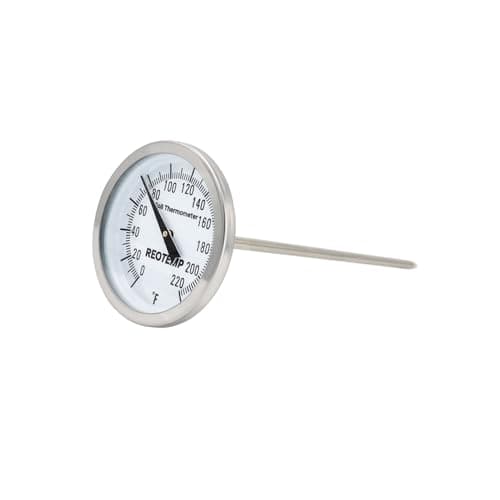
REOTEMP Waterproof Soil Thermometer, 5 inch Stem
A soil thermometer that gives you the real last-mow signal.
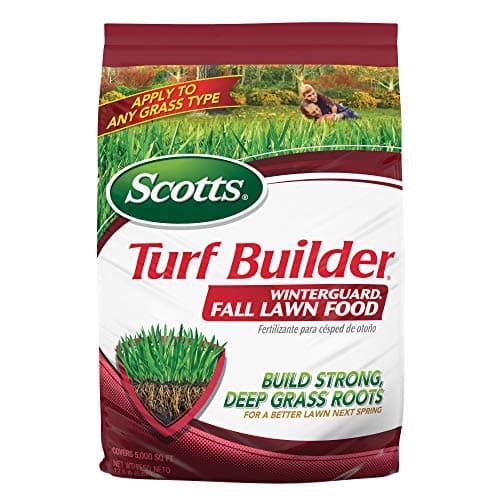
Scotts Turf Builder WinterGuard Fall Lawn Food
A fall feeding for cool-season lawns that goes down before growth stops.
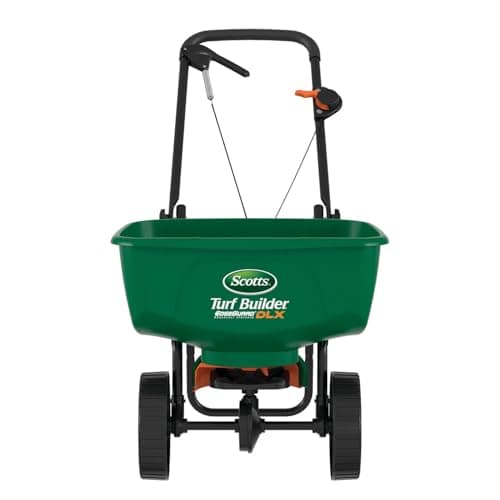
Scotts Turf Builder EdgeGuard DLX Broadcast Spreader
A broadcast spreader with an edge shield for keeping fertilizer off drives and beds.
Rough regional windows (treat these as starting points)
With the soil-temperature caveat firmly in mind, here are the ballpark windows people ask about. These are rough, and a warm or cold year will shift them by weeks in either direction.
- Northern / cool-season regions: Last mow often falls in mid-October through November, when soil finally cools into the low 50s.
- Transition zone: Frequently November, and it depends heavily on whether you run a cool-season or warm-season lawn, since both are common here.
- Southern / warm-season regions: Usually November into December, timed to the first hard frost and the lawn browning into dormancy.
For the fuller picture of what dormancy looks like and when it sets in, our guide on when grass goes dormant walks through the signs by grass type.
Watering runs on a similar but slightly longer clock, and our guide on when to stop watering your lawn in fall covers the month-by-month taper, the final deep soak, and the timing by region.
What to do with clippings and leaves on the final mow
The last mow does double duty in fall because it usually happens right in the thick of leaf drop. Do not bag and haul everything off out of habit. Mulch-mowing chops both grass clippings and fallen leaves into small pieces that break down and feed the soil over winter. A thin, chopped layer is a free soil amendment.
The one thing you do not want is a thick, wet mat of whole leaves sitting on the turf all winter. That blocks light, traps moisture against the crowns, and can smother patches of grass so they come up thin or bare in spring. So even after the grass itself stops growing, it is worth running the mower a time or two just to keep the leaves broken up and moving. If the leaf layer is genuinely heavy, mulch what you can and rake or bag the excess rather than leaving a blanket of it.
Quick mower winterization before you park it
Once you are confident the last mow is done, spend fifteen minutes setting the mower up so spring is painless. Three things matter most.
- Fuel: Add fuel stabilizer to the tank and run the engine a few minutes so it works through the carburetor, or run the tank dry. Untreated gas left sitting all winter gums up the carb and is the number one reason mowers will not start in April.
- Blade: Pull the blade and sharpen it, or swap in a fresh one, so you start the season with a clean cut instead of tearing the grass. A dull blade shreds blade tips and leaves them prone to disease.
- Cleanup: Scrape the caked grass off the deck and check the oil. A clean, dry deck does not rust over winter.
None of this is complicated, but doing it now beats fighting a dead mower on the first warm Saturday in spring.
What Other Guides Miss
Almost every article on this topic hands you a date. Stop mowing October 15. Last cut by the first week of November. The problem is that grass cannot read a calendar, and those dates are averages that can be badly wrong for your actual yard in your actual year.
The real signal is growth rate, and growth rate is driven by soil temperature. A warm November keeps cool-season grass growing, which means you keep mowing, calendar be damned. Skip that last cut because a chart told you the season was over and you leave the lawn too long, matted under the first snow, and set up for mold. On the flip side, an early cold snap can shut growth down two weeks ahead of any date a guide would quote.
So watch the plant, not the page. When the grass stops needing a cut, when you are barely taking anything off the top and the soil has gone cold, you are done, whether that is October 10 or December 5. That single shift, from date-watching to growth-watching, is what actually keeps a lawn healthy through winter.
If you want that dialed in for your exact address, a personalized care plan uses your zip code and grass type to give you your specific last-mow window instead of a national average, so you are not guessing. You can start by getting a read on your lawn with a free AI diagnosis, then let the plan handle the timing. For the full fall runway leading up to this, our fall lawn care schedule and checklist lays out every step in order, and once the mowing wraps, our guide on winter lawn treatment to prepare your grass for cold picks up where this leaves off.
Your last-mow action plan
- Confirm your grass type (cool-season or warm-season) so you know which clock you are on. If unsure, run a quick photo ID.
- Watch growth and soil temperature, not the date. When soil holds in the low 50s and growth stalls, you are close.
- Make the final cut slightly shorter than summer height, around 2 to 2.5 inches for cool-season lawns. Do not scalp it.
- Mulch-mow the clippings and fallen leaves so nothing mats down and smothers the turf over winter.
- Wait for frost to melt and blades to dry before any late-season mow. Never cut frozen, frost-covered grass.
- Winterize the mower: stabilize or drain the fuel, sharpen the blade, clean the deck.
- Check your local extension office for the precise final height and last-mow window for your grass and climate.
Get those right and your lawn goes into winter set up to come back strong. When in doubt about what your grass is actually doing right now, snap a photo for a free AI diagnosis before you make the call.
Top Picks
- Spectracide Weed Stop for LawnsCheck price on Amazon
- EGO POWER+ Self-Propelled Cordless Lawn Mower (Select Cut, LM2135SP)Check price on Amazon
- Jonathan Green (10322) Black Beauty Ultra Grass Seed - Cool Season Lawn Seed (7 lb)Check price on Amazon
As an Amazon Associate we earn from qualifying purchases.
Free Lawn Care Tools
Slightly, yes. Drop your cool-season lawn to around 2 to 2.5 inches on the final one or two mows, which is a bit lower than your summer height. This helps prevent long blades from matting under snow and lowers the risk of snow mold. Do not scalp it though. Going too short strips the crown of insulation and stresses the plant right before dormancy. For warm-season grasses, take a little off the top going into dormancy but avoid a hard scalp until spring green-up.
Wait until the frost has melted and the blades have dried and firmed back up, usually by late morning. Mowing or even walking on frozen, frost-covered grass fractures the ice crystals inside the blades and leaves bruised, straw-colored footprints and tracks that can take weeks to recover. A light frost does not mean the season is over either. If the grass warms up and keeps growing, you keep mowing.
Stop mowing when the grass stops growing, not on a fixed date. For cool-season lawns that is typically when daytime highs hold below roughly 50F and soil temperatures fall into the low 50s and below. For warm-season lawns it is around the first hard frost, when the turf browns and goes dormant. In a warm fall you may still be mowing into late November or December, and that is normal.
For cool-season grasses like tall fescue, Kentucky bluegrass, and perennial ryegrass, aim for about 2 to 2.5 inches on the final cut. For warm-season grasses like Bermuda and zoysia, leave them at or slightly below their normal mowing height going into dormancy. The goal is short enough to resist matting and mold, tall enough to keep the crown protected. Your local extension office can give a precise number for your grass and climate.
Yes, run the mower to deal with the leaves even after growth slows. A thick, wet mat of leaves left on the turf all winter blocks light and traps moisture, which invites disease and can smother patches by spring. Mulch-mowing the leaves into small pieces returns nutrients to the soil. Just do not let a heavy layer sit there untouched until March.
It is. The calendar is a rough guide, but grass responds to soil temperature and growth rate, not the date. Cool-season grass keeps actively growing while soil sits in the 50s and 60s, which in a mild fall can run well past the dates most guides quote. A soil thermometer or a soil-temperature tool tells you what the plant is actually doing. When growth stalls and you are barely taking anything off the top, you are near your last mow.

Beat weeds and brown spots from your phone
Snap a photo, get the fix, and follow a plan timed to your soil and weather. Free on iPhone.