How to Dethatch a Lawn: When, How, and Dethatch vs Aerate
 James ThorntonLawn Equipment & Maintenance Expert | 20 Years
As an Amazon Associate we earn from qualifying purchases.
If your mower keeps scalping high spots, water beads up and runs off instead of soaking in, or the lawn feels spongy underfoot like a thin mattress, you may have a thatch problem. Thatch is one of the most misdiagnosed issues in lawn care because people confuse it with soil compaction and reach for the wrong tool. Dethatching and aerating look similar from the curb, both involve a scary-looking machine chewing up your turf, but they fix two completely different problems. Mix them up and you can spend a Saturday tearing up a perfectly healthy lawn for no reason.
This guide covers how to tell whether you actually have thatch, when dethatching helps versus when aeration is the real answer, the right timing by grass type, and the equipment ladder so you do not rent a machine you do not need. The short version: most lawns do not need dethatching every year, and a thin or stressed lawn should usually be left alone.
Not sure if it is thatch or compaction? Skip the guesswork. Upload a photo of your lawn for a free AI diagnosis and get a read on what is actually going on before you rent a machine. If you want a step-by-step plan tied to your grass type, region, and the current season, the premium personalized plan builds it for you.
Fast Answer: Dethatch only when the spongy layer of dead organic material between your green grass and the soil is thicker than half an inch. Measure it by cutting a small wedge of turf and looking at the brown layer in cross-section. If thatch is the problem, the trigger is that half-inch threshold, not the calendar. Use a manual thatch rake for a small or lightly affected lawn, rent a power rake or dethatcher for a medium lawn, and step up to a vertical mower only for large or heavily matted turf.
The big decision is dethatch versus aerate. Thatch is a surface layer of dead stems and roots that sits above the soil. Compaction is dense, hard soil underneath. Dethatching removes the dead layer, aeration pulls cores to relieve compaction. They are not interchangeable, and plenty of lawns that look like they need dethatching actually need aeration instead. Time either job for the growing season so the grass can recover: fall for cool-season lawns, late spring into early summer for warm-season lawns. Doing it now sets you up to hit that fall recovery window cleanly.
What thatch actually is (and how to measure it)
Thatch is the tan, fibrous layer of living and dead stems, roots, and crowns that builds up between the green blades on top and the soil below. A little is normal and even helpful. A thin layer, under half an inch, insulates the crowns, buffers soil temperature swings, and cushions foot traffic. The trouble starts when it builds faster than soil microbes can break it down.
People assume grass clippings cause thatch. They mostly do not. Clippings are high in water and break down fast. Thatch comes from the tougher, lignin-rich parts of the plant: stems, rhizomes, stolons, and roots. That is why aggressive spreaders like Bermuda, Zoysia, and Kentucky bluegrass build thatch faster than bunch-type grasses like tall fescue. Overfertilizing with nitrogen and overwatering both push growth faster than decomposition can keep up, the most common way homeowners create their own thatch problem.
You do not guess at thatch, you measure it. Take a hand trowel or a soil knife and cut out a small wedge of turf about three inches deep, like a slice of cake. Look at it from the side. You will see green blades on top, then a spongy brown layer, then darker soil. That brown layer is your thatch. Measure it with a ruler.
- Under half an inch: healthy. Leave it alone. Dethatching here does more harm than good.
- Half an inch to three quarters of an inch: the action zone. This is when dethatching starts to pay off.
- Over three quarters of an inch: a real problem. Roots may be growing in the thatch instead of the soil, which makes the lawn drought-prone and disease-prone. Plan a careful dethatch, possibly in stages.
The half-inch threshold is the single most important number in this whole guide. If your brown layer is thin, your spongy, struggling lawn is telling you something else is wrong, and that something is usually compaction, watering habits, or the wrong grass for the conditions.
Dethatch versus aerate: the distinction that saves your Saturday
This is the part most guides gloss over, and it is the most important decision you will make. Dethatching and aeration solve two separate problems that happen to produce similar symptoms.
Dethatching removes the dead organic layer sitting on top of the soil. The tools have stiff tines or vertical blades that rake or slice through that mat and pull it up to bag. You are dealing with the layer between the grass and the dirt.
Aeration deals with the soil itself. Core aeration pulls thousands of small plugs out of the ground, which relieves compaction and opens channels for air, water, and nutrients to reach the roots. You are dealing with what is below the dirt line. We cover the full timing in when to aerate your lawn and the technique in how to aerate your lawn the right way.
Here is how to tell which one you need:
- You need to dethatch when your wedge test shows a thatch layer thicker than half an inch and the soil underneath is reasonably loose. The problem is the mat on top.
- You need to aerate when the thatch layer is thin but the lawn is still struggling: water puddles or runs off, the soil is rock-hard, a screwdriver will not push in easily, or the lawn gets heavy foot traffic. The problem is dense soil.
- You need both when you have thick thatch sitting on top of compacted soil, which is common in older, high-traffic, heavily-fed lawns. In that case dethatch first to clear the mat, then aerate to open the soil, then overseed into the freshly opened canopy.
A quick field test for compaction: push a long screwdriver into the lawn after a normal watering. If it slides in with light pressure, your soil is fine and aeration is not the answer. If you have to lean on it, you have compaction, and that is an aeration job no amount of dethatching will fix.
From the extension agronomists: University turf programs converge on a few thresholds worth trusting. Thatch over one half inch warrants control, and over three quarters of an inch is considered excessive and damaging. Both dethatching and core aeration should be done only when the grass is actively growing so it can recover, never during summer heat stress for cool-season grass or dormancy for warm-season grass. For specifics on thresholds and the right window in your area, check your state land-grant extension office, which publishes regional turf calendars tuned to your climate and grass type.
When to dethatch by grass type and season
Timing is not optional. Dethatching is mildly traumatic to a lawn. You are ripping out material and exposing the crowns, so you want to do it right before a strong growth period so the grass fills back in fast. Do it at the wrong time and you hand weeds an open invitation or leave thin turf to bake in summer heat.
Cool-season grasses (Kentucky bluegrass, tall fescue, perennial ryegrass, fine fescues): dethatch in early fall, roughly late August through September in most regions. The soil is still warm, the air is cooling, and the grass has weeks of vigorous growth ahead before winter. Early spring, once the lawn is actively growing but before summer heat, is an acceptable backup window. Fall is the better choice because it pairs perfectly with overseeding.
Warm-season grasses (Bermuda, Zoysia, St. Augustine, centipede): dethatch in late spring into early summer, after the lawn has fully greened up and is growing hard. These grasses are most aggressive in the heat of summer, so giving them a long, hot growing runway after dethatching is exactly what they want. Never dethatch a warm-season lawn in fall, you would be tearing it up right as it heads into dormancy with no ability to recover.
This is why the guide is worth bookmarking even off-season: planning the job sets up the recovery window. Cool-season homeowners, now is the time to map your fall dethatch-and-overseed weekend against a full fall lawn care schedule. Knowing your lawn size ahead tells you whether a rake will do or whether you are renting a machine. Run the numbers with the Lawn Size Calculator so you book the right equipment and buy the right amount of seed.
How to dethatch: the equipment ladder
Do not over-buy or over-rent. The right tool scales with how much thatch you have and how big the lawn is. Here is the ladder from lightest to heaviest.
1. Manual thatch rake (small lawns, light thatch)
A thatch rake is a hand tool with short, curved, knife-like tines built to slice into the mat and pull it up. For a small lawn or a thatch layer in the half-inch range, this is all you need. It is physical work, but it gives you the most control, costs the least, and there is no machine to rent. Work in one direction, rake up what comes loose, and stop when you have lifted the dead material without tearing into healthy crowns. If your lawn is small enough to rake in an afternoon, start here before you think about renting.
2. Power rake or dethatcher rental (medium lawns, moderate thatch)
For most homeowners with a medium lawn and a genuine thatch problem, a rented power rake (also sold as a dethatcher) is the sweet spot. Its spring-steel tines or flail blades spin and comb the thatch up to the surface. Set the depth so the tines just reach the soil and barely scratch it: too deep gouges the soil and damages roots, too shallow accomplishes nothing. Make one pass, bag the debris, and only make a second pass at a different angle if the layer is genuinely thick. A half-day rental is far cheaper than buying.
3. Vertical mower / verticutter (large or heavily matted lawns)
A vertical mower, or verticutter, has fixed vertical blades that slice down into the thatch and slightly into the soil. This is the aggressive, heavy-duty option for large lawns or thick, established thatch over three quarters of an inch, the right call for a big Bermuda or Zoysia lawn that has gone years without attention. For a typical residential lawn it is usually more machine than you need, which is why renting beats buying: you match the tool to the one job in front of you instead of owning overkill. For blade-spacing and depth settings, follow the rental shop's guidance and your extension office, since the right setting depends on your grass.
Recommended products
Greenworks 13 Amp Corded Dethatcher
A corded dethatcher with adjustable tine depth, worth buying only if you dethatch a small lawn most years.
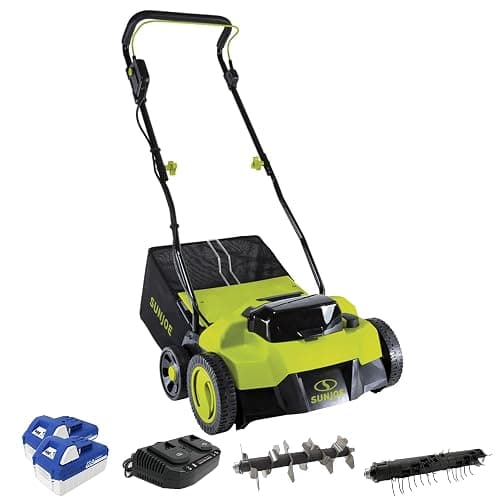
Sun Joe 24V Cordless Scarifier and Dethatcher
A cordless unit that swaps between spring tines and scarifying blades.
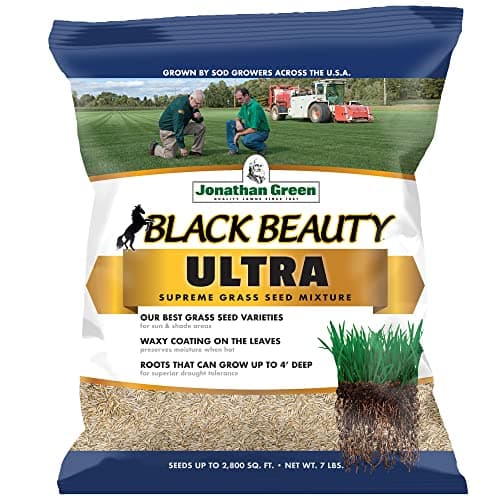
Jonathan Green Black Beauty Ultra Grass Seed
A tall fescue and bluegrass blend for the overseeding pass right after dethatching.
Prep, depth, cleanup, and overseeding after
The job is more than the machine pass. A few steps before and after make the difference between a lawn that bounces back in two weeks and one that struggles.
Mow first. Cut the lawn to about half its normal height a day or two before. Shorter grass lets the tines reach the thatch instead of combing the blades. Do not scalp it, just expose the surface.
Water ahead, not during. Lightly moisten the soil a day or two before so it is soft enough to release thatch but not muddy. Dethatching soggy soil rips out healthy grass along with the dead stuff. Moist, not soaked.
Mind the depth. Whatever tool you use, the goal is to lift the dead layer, not excavate the soil. If you are pulling up clouds of dirt and chunks of healthy turf, you are too deep. Back off.
Clean it all up. Dethatching produces a shocking volume of debris. Rake it into piles and bag or compost it. Left on the lawn it smothers the grass you are trying to help and starts a new thatch layer.
Overseed and feed into the opening. This is the payoff, especially for cool-season lawns dethatched in fall. You have just exposed bare soil and opened the canopy, which is a perfect seedbed. Spread seed, topdress lightly if you like, water consistently, and the new grass knits the lawn back denser than before. Getting that seed and starter fertilizer down evenly is a job for the right spreader, and our guide on the broadcast versus drop spreader decision covers which one suits your lawn and how to avoid striping. If the lawn is too far gone to overseed back and you are weighing a full reset, our comparison of sod versus seed walks through which route fits your budget and timeline. Pair this with the steps in overseeding best practices and the broader aeration, overseeding, and topdressing guide for thickening a thin lawn. If you are pairing a dethatch with aeration, size that job with the Aeration Calculator so you know how much ground you are covering.
Aftercare: the two weeks that matter
A freshly dethatched lawn is recovering, so treat it gently. Keep the soil consistently moist, especially if you overseeded, with light frequent watering until new grass establishes. Hold off on heavy foot traffic. Apply a balanced starter fertilizer to fuel the regrowth, but do not pile on nitrogen, since overfeeding is what creates thatch in the first place. Wait until the lawn has clearly recovered and grown a couple of times before going back to your normal mowing height. Within two to three weeks a healthy lawn in its growing season should look noticeably better, denser, and ready to thrive.
What Other Guides Miss
Most dethatching articles treat it as a yearly chore everybody should do every spring. That advice causes real damage. Here is what gets left out.
Dethatching a thin lawn does more harm than good. If your wedge test shows thatch under half an inch, dethatching strips out healthy grass and crowns, opens bare ground for weeds, and stresses turf that was not in trouble. A spongy feel alone is not proof of thatch. Measure first, always.
Wrong-season dethatching can wreck a lawn. Dethatch a cool-season lawn in late spring and the thinned turf hits summer heat with no time to recover, leaving you with bare patches and crabgrass. Dethatch a warm-season lawn in fall and it goes dormant before it can fill in. The calendar is not a suggestion here, it is the difference between recovery and a setback.
Sometimes the answer is aeration, not dethatching. This is the big one. A struggling, water-shedding, hard-as-a-rock lawn with thin thatch does not need dethatching at all. It needs core aeration to break up compaction. Dethatching it would tear up the surface and never touch the real problem in the soil. When in doubt, run the screwdriver test and the wedge test first. If the screwdriver fights you and the thatch is thin, put the dethatcher back and rent a core aerator instead.
Not sure which camp you are in? This is exactly the kind of call that is easy to get wrong from the curb and expensive to get wrong with a rented machine. Upload a photo and let the free AI diagnosis weigh in on whether your lawn is showing thatch, compaction, or something else entirely. The premium personalized plan then maps the right job to your grass type and region, with the timing window spelled out, so you know whether you are dethatching or aerating this fall and exactly when to do it.
Your dethatching action plan
- Measure before you do anything. Cut a three-inch wedge of turf and measure the brown thatch layer. Under half an inch, stop, you are done, leave the lawn alone.
- Rule out compaction. Push a screwdriver into watered soil. If it resists, your problem is compaction and you want aeration, not dethatching.
- Match the timing to your grass. Cool-season: early fall. Warm-season: late spring into early summer. Plan the date now so you hit the recovery window.
- Pick the right tool. Small lawn or light thatch, hand thatch rake. Medium lawn, rent a power rake. Large or heavily matted, rent a vertical mower. Size the job with the lawn-size and aeration calculators.
- Prep, pass, and clean up. Mow low, lightly moisten the soil, set depth to just reach the surface, make one pass, then bag every bit of debris.
- Overseed and feed into the opening. Especially in fall. Seed, topdress lightly, apply starter fertilizer, and keep it watered.
- Baby it for two weeks. Consistent moisture, light traffic, no heavy nitrogen, and let it recover before your normal mowing resumes.
Dethatching done at the right time, on a lawn that actually needs it, is one of the highest-return jobs in lawn care. Done on the wrong lawn at the wrong time, it is a step backward. The measuring tape and the screwdriver are the two tools that tell you which situation you are in, so use them before you fire up anything with an engine.
Free Lawn Care Tools
Cut a small wedge of turf about three inches deep and look at it from the side. Between the green blades and the soil you will see a spongy brown layer, which is the thatch. Measure it with a ruler. If that layer is thicker than half an inch, dethatching will help. If it is under half an inch, leave the lawn alone, because dethatching healthy turf does more harm than good. A spongy feel by itself is not proof, so always measure before you act.
Dethatching removes the dead organic layer of stems and roots sitting on top of the soil, while aeration pulls cores out of the soil to relieve compaction underneath. They look similar from the curb but fix opposite problems. If your thatch layer is over half an inch, you dethatch. If the thatch is thin but the soil is hard and sheds water, you aerate. Heavily used, older lawns sometimes need both, in which case you dethatch first, then aerate, then overseed.
Dethatch right before your grass's strongest growth period so it recovers fast. Cool-season grasses like fescue and Kentucky bluegrass are best dethatched in early fall, roughly late August through September, which also pairs perfectly with overseeding. Warm-season grasses like Bermuda and Zoysia are best dethatched in late spring into early summer, once they have fully greened up. Never dethatch a warm-season lawn in fall or a cool-season lawn going into summer heat.
If your lawn genuinely needs both, dethatch first. Removing the thatch layer clears the surface so the aerator can pull clean soil cores instead of just chewing through the dead mat. After you dethatch and aerate, that freshly opened canopy and bare soil make an ideal seedbed, so overseeding right then gives the new grass the best chance to fill in densely.
Match the tool to the lawn. A manual thatch rake handles a small lawn or a light, half-inch thatch layer and gives you the most control. A rented power rake or dethatcher is the sweet spot for a medium lawn with a real thatch problem. A vertical mower, or verticutter, is the heavy-duty option reserved for large lawns or thick, established thatch over three quarters of an inch. For most homeowners, renting beats buying because you only need the machine for one job.
Yes, if you do it on the wrong lawn or at the wrong time. Dethatching a thin lawn with little thatch strips out healthy grass and opens bare ground for weeds. Dethatching during summer heat for cool-season grass, or in fall for warm-season grass, leaves thinned turf with no time to recover. Setting the machine too deep gouges the soil and tears out roots. Measure your thatch, time the job to your grass's growing season, and keep the depth shallow to stay safe.

Your lawn plan, in your pocket all season
Grass ID, a season plan, soil-timed reminders, and a lawn journal that remembers what you did. Free on iPhone.