

Liquid vs Granular Fertilizer: Which Is Better for Your Lawn?
 James ThorntonLawn Equipment & Maintenance Expert | 20 Years
As an Amazon Associate we earn from qualifying purchases.
You are standing in the fertilizer aisle holding a jug of bright blue liquid in one hand and a 40 pound bag of granules in the other. Both labels promise a greener lawn, both cost real money, and nobody on the shelf is telling you which one your yard actually needs. So which is it, liquid or granular fertilizer for your lawn? Short version: both work. They just work differently, and picking the wrong one for your situation wastes cash and a Saturday.
Granular fertilizer is the better default for most home lawns. It is cheaper per pound of nitrogen, lasts six to eight weeks or longer when it is slow-release, and is the right tool for your main seasonal feedings. Liquid fertilizer works faster because the grass can absorb part of it through the leaf, but it burns through in two to three weeks and costs more per application, so it shines as a quick green-up or a targeted spoon-feed between granular rounds.
The honest answer to the liquid vs granular fertilizer question is that you do not have to choose. The most efficient program uses granular for the heavy lifting four to five times a year and liquid for the in-between touch-ups when you want fast color or are correcting a specific deficiency. Below is the head-to-head table, then a pick-by-situation guide so you can match the product to your real problem instead of the marketing on the jug.
Liquid vs granular fertilizer at a glance
Forget the brand claims for a minute. The two forms differ on a handful of practical factors, and once you see them side by side the decision gets a lot simpler.
| Factor | Granular | Liquid |
|---|---|---|
| Speed of response | Slower, color builds over 1 to 2 weeks | Faster, visible green-up in days |
| How long it feeds | 6 to 8 weeks, longer if slow-release | 2 to 3 weeks, mostly quick-release |
| Cost per application | Lower per 1,000 sq ft | Higher per 1,000 sq ft |
| Coverage evenness | Even with a calibrated spreader | Even only if the sprayer is calibrated |
| Ease for big lawns | Easier, one pass with a spreader | Tedious, frequent refills |
| Uptake path | Through the roots from the soil | Through the leaf and the roots |
| Best use | Main seasonal feedings | Fast touch-ups and spoon-feeding |
Notice that the table is not declaring a winner. It is sorting the two by job. Granular is the truck that hauls the load. Liquid is the sports car you take out for a quick errand. You would not use either for the other's job.
How each one actually feeds the grass
The marketing loves to talk about foliar vs granular feeding like it is some secret, so let me strip the hype. The difference comes down to where the nutrient enters the plant and how fast it is available.
Granular: a slow buffet in the soil
Granular fertilizer is dry prills that you spread on the surface. They do nothing until water dissolves them and carries the nutrients down to the root zone, where the grass takes them up over weeks. That delay is a feature, not a bug. Slow-release and coated granular products meter the nitrogen out gradually, which is why a single application can feed for two months and why granular is the form that builds steady, even color without a surge-and-crash cycle. The catch is that nothing happens until it gets watered in, so granular is a poor choice the week before a drought or a watering ban.
Liquid: a fast snack through the leaf
Liquid fertilizer is nutrients already dissolved in water, which means they are available the moment they land. Some of that gets absorbed straight through the leaf blade, which is the foliar part, and the rest washes down to the roots. Because it is mostly quick-release and already in solution, you see color fast, often within a few days. The downside is just as fast: the plant uses it up, rain and mowing carry it off, and you are back to where you started in a couple of weeks. Liquid is a snack, not a meal.
This is also where the burn risk differs. Liquid puts salts right on the leaf, so spraying in midday heat or mixing too strong a concentration can scorch the blades quickly. Granular sits on the soil and is most likely to streak or burn when you skip watering it in or your spreader dumps a concentrated overlap. Neither is dangerous if you respect the label rate.
Pick by situation
Here is the part most articles skip. The right answer depends on what you are actually trying to do this weekend, not on which form is theoretically superior. Find your situation below.
- Large lawn, routine feeding: Granular, every time. The cost and labor math is not close once you are past a few thousand square feet.
- You need color before a party or photos: Liquid. A light foliar application greens things up in days when granular would still be dissolving.
- Small city lawn or strips: Either works, and a ready-to-spray liquid is genuinely convenient when you do not want to own and calibrate a spreader.
- Brand new sod or seedlings: A gentle liquid starter avoids the streak-burn risk a heavy granular pass can cause on tender turf, then switch to granular once it is established.
- Correcting a specific deficiency: Liquid, because you can target iron for color or a quick nitrogen bump without committing to a full eight-week granular dose.
- Going on vacation or hate frequent chores: Slow-release granular. Set it and forget it for two months.
- Hot, dry stretch with no irrigation coming: Wait on both, but if you must feed, a diluted liquid is less likely to sit unused and scorch than un-watered granular.
If you read that list and realized you are not actually sure whether your thin, off-color lawn needs nitrogen at all, that is worth checking first. Run a free photo diagnosis before you buy anything, because fertilizer makes a hungry lawn greener and a sick lawn sicker.
How to combine them across a season
The pros do not argue liquid vs granular. They run a program that uses both, with granular as the backbone and liquid for the touch-ups. Here is a simple cool-season example you can adapt. Warm-season grasses shift the calendar but the logic holds.
| Timing | Form | Why |
|---|---|---|
| Early spring | Granular | Slow-release backbone as growth wakes up |
| Late spring | Liquid | Light spoon-feed to hold color into heat |
| Early summer | Granular (lighter) | Steady feeding without pushing tender growth |
| Late summer | Liquid (as needed) | Quick recovery green-up after stress |
| Early fall | Granular | The biggest, most important feeding of the year |
| Late fall | Granular | Final feeding to store energy for spring |
The one rule that ties this together: count your total nitrogen for the year. Each grass type has a recommended annual amount, and it is easy to blow past it when you start sprinkling liquid touch-ups on top of full granular rounds. If you are not sure how much you are actually putting down, our fertilizer calculator turns your lawn size and product label into a real number, and the deeper walkthrough in how to calculate the right amount of fertilizer shows the math by hand. For the spreader side of granular, the settings and overlap technique that prevent streaking live in how to apply granular fertilizer.
- Typical home lawns need somewhere in the range of 1 to 4 pounds of nitrogen per 1,000 square feet per year, but the right total depends heavily on your grass type, soil, and how much clippings you return. Your local cooperative extension office publishes a specific annual rate for your region.
- Single-application rates and the safe gap between feedings vary by product. Confirm the per-application maximum and re-treat window on your label and against your extension's turf guide rather than guessing.
- Foliar liquids often want a window on the leaf before watering, while soil-targeted products want watering in. Because that flips by formulation, treat the label as the deciding voice.
- Best application temperatures and burn thresholds differ by climate and grass. Ask your extension office for the local safe-feeding window before fertilizing in summer heat.
Recommended products
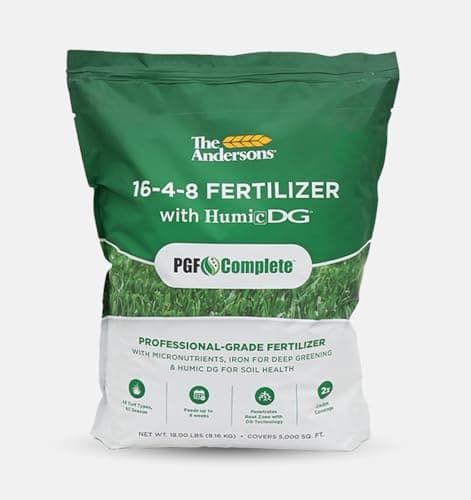
The Andersons PGF Complete 16-4-8
A slow-release granular fertilizer that works as the backbone of a season-long program.
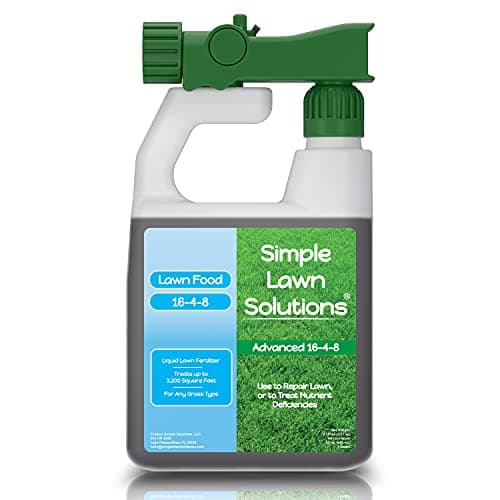
Simple Lawn Solutions Advanced 16-4-8 Liquid Fertilizer
A liquid NPK concentrate for the fast touch-ups between granular rounds.
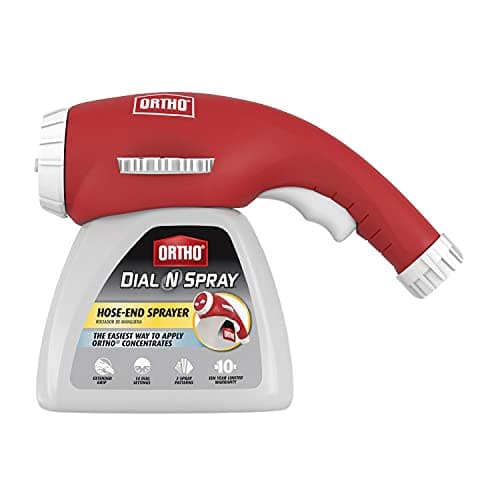
Ortho Dial N Spray Hose-End Sprayer
A hose-end sprayer with 14 dilution settings, which is what makes liquid applications repeatable.
What Other Guides Miss
Most liquid vs granular articles quietly confuse form with speed, and that is the mistake that costs you money. The real variable is not whether the fertilizer is wet or dry. It is the release rate of the nitrogen. You can buy a granular product that is mostly quick-release and acts almost as fast as liquid, and you can buy a liquid loaded with slow-release nitrogen that lasts much longer than the typical jug. When someone tells you granular always lasts longer, they are describing the common products, not a law of nature. Read the guaranteed analysis for the words slow-release, controlled-release, or coated, and let that drive your expectations more than the form factor on the front of the bag.
The second thing guides gloss over is the coverage claim. Granular gets called streaky and liquid gets called perfectly even, but that is backwards for most homeowners. A calibrated spreader lays granular down in tidy, repeatable lanes. A hose-end sprayer that changes flow with your water pressure, walking speed, and how much you wiggle the wand is the one that actually produces zebra stripes. Liquid is only as even as your discipline with the sprayer, and most ready-to-spray bottles are not precision instruments.
Third, almost nobody runs the cost-per-actual-nitrogen math. A jug that looks cheap on the shelf often covers a tiny area, while a heavy granular bag covers a whole yard. Compare price against pounds of nitrogen delivered and square footage covered, not the sticker price, and granular's cost advantage on big lawns becomes obvious. Liquid earns its higher price only when speed or precision is the point.
One more distinction worth keeping straight: liquid vs granular is a separate question from organic vs synthetic. Both forms come in both chemistries, so do not assume liquid means gentle and granular means harsh. If that tradeoff matters to you, organic vs synthetic fertilizers breaks down how the source changes release behavior and soil impact, independent of whether it pours or pours out of a bag.
The piece a chart cannot give you
A comparison table tells you how the two forms behave. It cannot tell you the exact week your specific lawn should get its biggest feeding, because that depends on your grass type, your zip code's frost dates, and what is actually wrong with your turf right now. That is the gap a generic guide leaves open, and it is exactly the gap that wrecks otherwise good fertilizer programs, since timing matters more than form.
That is where the paid plan earns its keep. A personalized 12-month care plan tells you the exact week to fertilize for your zip and grass type, whether to reach for granular or liquid at each step, and how much nitrogen to put down so you never overshoot the annual total. It starts from the same free photo diagnosis, so you can see what your lawn needs before you decide whether the plan is worth it.
Your liquid vs granular action plan
- Confirm the lawn is actually hungry. Thin, pale, slow-growing turf usually wants nitrogen, but disease and pests fake the same look. Run the free photo diagnosis first so you feed a hunger, not a disease.
- Make granular your backbone. Plan four to five slow-release granular feedings as your main program for the year. This is where most of your nitrogen and most of your money should go.
- Calculate your nitrogen before you buy. Use the fertilizer calculator so you know the pounds you are putting down and stay inside your grass type's annual range.
- Add liquid only for a reason. Reach for liquid when you need fast color, are feeding new turf, or are correcting a specific deficiency. Do not default to it for routine feeding on a big lawn.
- Calibrate whatever you use. Dial in the spreader for granular and the sprayer for liquid. Even coverage is a technique, not a product promise.
- Water in unless the label says otherwise. Most granular and soil-targeted liquids need watering in. Foliar liquids may want a window on the leaf first. The label decides.
- Track the annual total. Add your liquid touch-ups into your yearly nitrogen count so the extras do not push you past the recommended amount.
Do that and the liquid vs granular debate stops being a debate. You will have granular doing the steady work and liquid on call for the fast jobs, which is exactly how a lawn stays green without you overspending on either jug or bag.
Top Picks
- GS Plant Foods Liquid Kelp FertilizerCheck price on Amazon
- PetraTools Liquid Nitrogen Fertilizer 28-0-0Check price on Amazon
- Simple Lawn Solutions Advanced 16-4-8 Liquid FertilizerCheck price on Amazon
As an Amazon Associate we earn from qualifying purchases.
Free Lawn Care Tools
For most home lawns, granular is the better default. It costs less per pound of nitrogen, lasts six to eight weeks or longer when it is slow-release, and handles your main seasonal feedings. Liquid is better when you want a fast green-up in a week or two or are spoon-feeding small amounts between granular rounds. The strongest programs use both rather than picking one.
Liquid fertilizer usually feeds for about two to three weeks because most of it is quick-release nitrogen the plant uses fast. Granular fertilizer commonly feeds for six to eight weeks, and slow-release or coated granular products can stretch that to ten to twelve weeks. Always confirm the release window on your specific product label, since formulations vary widely.
Yes, and that is often the most efficient approach. A common pattern is to run four to five granular feedings as the backbone of the year and drop in a light liquid application when you want quick color or are correcting a specific deficiency. Just track your total annual nitrogen so the liquid touch-ups do not push you over your grass type's recommended yearly amount.
Both can burn if you over-apply, but the failure modes differ. Liquid puts salts directly on the leaf, so applying in midday heat or at too strong a concentration can scorch quickly. Granular sits on the soil and is most likely to streak or burn when it is not watered in or when a spreader dumps a concentrated overlap. Following label rates and watering in are the two biggest protections for either form.
Granular is almost always cheaper per pound of actual nitrogen and per thousand square feet covered, which is why it is the workhorse for large lawns. Liquid concentrates and ready-to-spray hose-end bottles cost more per application and cover less area, so they make the most sense on small lawns or as occasional touch-ups rather than your primary feeding.
It depends on the product. Foliar-style liquids are meant to be absorbed through the leaf, so many labels say to let them sit on the blade for a window before watering. Soil-targeted liquids and most granular products should be watered in to move the nutrients to the root zone and reduce burn risk. The label is the deciding voice, so read it before you spray or spread.

Your lawn plan, in your pocket all season
Grass ID, a season plan, soil-timed reminders, and a lawn journal that remembers what you did. Free on iPhone.
Related Articles
 Fertilizing
Liquid Lawn Feeding Schedule: Which Simple Lawn Solutions Product Each Season (2026)
Jun 27, 2026•1 min read Fertilizing
Scotts Liquid Weed and Feed Instructions: Hose-End Sprayer Guide
Jul 18, 2026•11 min read Fertilizing
Best Fertilizer for Bermuda Grass in Oklahoma (2026)
Jul 18, 2026•8 min read

