

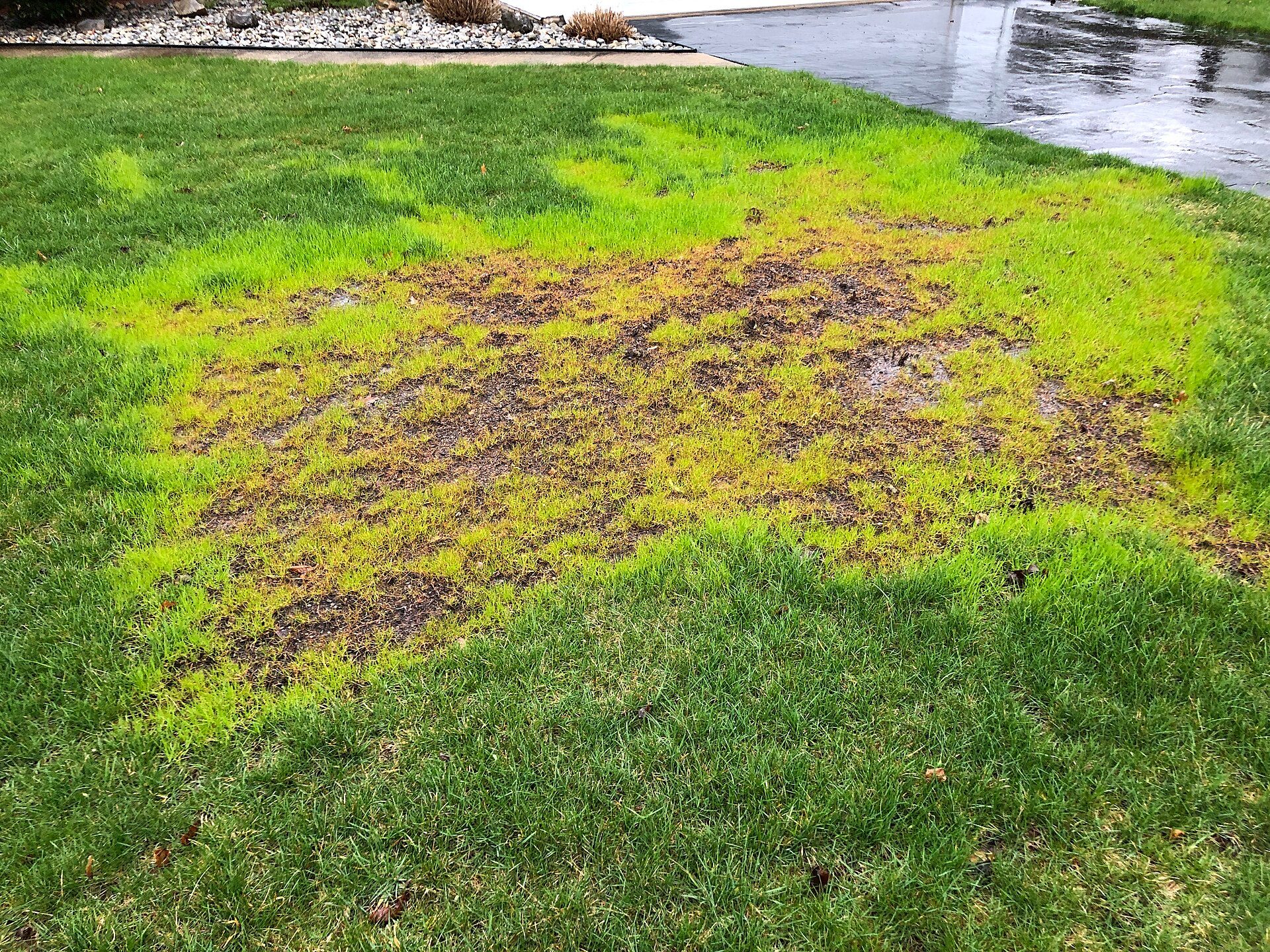
When to Apply Starter Fertilizer: Before or After Seeding

As an Amazon Associate we earn from qualifying purchases.
On a course grow-in, the starter fertilizer goes down the same day as the seed, with the spreader working right behind the seeder. Nobody waits for green. Home lawns run on the same clock.
Apply starter fertilizer the same day you seed, right before or right after the seed goes down. Penn State Extension puts it just before or just after seeding, at 0.5 to 1 pound of nitrogen per 1,000 square feet. The Scotts label for its 24-25-4 starter says the same and covers sod and plugs too.
The next feeding waits. Penn State gives a half pound of nitrogen 4 to 8 weeks after the starter, and Scotts says 6 to 8 weeks. No weed and feed on a new seeding until the grass is established. Hold to it.
Starter Fertilizer Timing by Planting Job
| Job | Use starter? | When | How much phosphorus matters |
|---|---|---|---|
| New lawn from seed | Yes | Same day, right before or right after seeding (Penn State) | Most. Phosphorus moves slowly in soil, so extra often helps new turf (UMN) |
| Overseeding a thin lawn | If a soil test shows low phosphorus | Same day as the seed | Add phosphorus and potash as the soil test directs. Extra nitrogen feeds the old grass, which crowds the seedlings (UMN) |
| Sod | Yes, once | Worked into the soil before laying (Clemson) or spread right after (Scotts) | Matters at soil prep. Clemson says no more feeding until the sod has rooted |
| Plugs | Yes | At planting (Scotts label), then a feeding 3 to 4 weeks after plugging (Clemson) | Test first. Centipede is sensitive to high phosphorus (Clemson) |
Sod rooting is covered in how long sod takes to root.
Before or After Seeding?
Either one, as long as it is the same day. Penn State says just before or just after seeding, and the Scotts product page says immediately before or after planting. Starter spread on top of the seed gets carried in by your first watering. Pick the order that keeps your boots off the finished seedbed.
The rate matters more than the order. Penn State warns that more than 1.5 pounds of nitrogen per 1,000 square feet can burn young turf. The Scotts label puts a 3-pound bag on 1,000 square feet, and at 24 percent nitrogen that is about 0.72 pound, inside Penn State's range. Pennsylvania law caps each application at 0.9 pound of total nitrogen and 0.7 pound of readily available nitrogen, seeding included. The Scotts starter fertilizer calculator sizes that bag for your yard, and the fertilizer rate calculator handles any other one.
For a granular bag, Scotts Turf Builder Starter Fertilizer for New Grass is the 24-25-4 in that math. If you spray, the 3-18-18 liquid starter covers the hose-end route.
Do I Need Starter Fertilizer?
On new seed, usually yes, unless your soil test says phosphorus is already high. University of Minnesota Extension says phosphorus doesn't move easily in soil, so extra often helps when you establish new turf, while established lawns show little response to it. That big middle number is the reason the bag says "new grass."
The three numbers are percent by weight of nitrogen, phosphate and potash, per UMN, and how to read fertilizer numbers covers the rest. A starter doesn't replace the soil test. Penn State says it is no substitute for the phosphate and potash your report calls for, and Clemson, writing about phosphorus-sensitive centipedegrass, switches to a slow-release 15-0-15 at planting when phosphorus tests medium or above. A kit like the MySoil Soil Test Kit or your county office settles it.
Do I Need Starter Fertilizer When Overseeding?
Only if a soil test shows your soil is low in phosphorus. University of Minnesota Extension says to add phosphorus and potassium as the test directs and to skip extra nitrogen, which pushes the old grass ahead of the seedlings. Most state phosphorus exemptions are written for new turf, so check your state's line below.
States That Limit Phosphorus Make an Exception for New Grass
Several states ban lawn phosphorus but carve out new seedings:
- Minnesota: allowed when first establishing turf by seed or sod, in the first growing season, or with a soil test from the last three years showing a need.
- New York: allowed for a new lawn in its first growing season, or when a soil test shows a need. No lawn fertilizer with N, P or K from December 1 to April 1.
- Wisconsin: allowed to establish grass by seed or sod in the season you started, or when a soil test no more than 36 months old shows the soil is short on phosphorus.
- Michigan: allowed for new turf from seed or sod in its first growing season, or when a soil test from the last 3 years shows a deficiency.
- Pennsylvania: no phosphate unless the product is labeled for establishing, reestablishing or repairing turf, or is an enhanced efficiency phosphorus product.
Most of these are written for new turf. New York's bare-spot allowance stops where turf is already established, so an overseeding there takes a soil test. Pennsylvania's covers repair. Elsewhere, check before you spread a phosphorus starter on an overseeding.
When Do You Fertilize New Grass Again?
About 4 to 8 weeks after the starter, with roughly half a pound of nitrogen per 1,000 square feet. That is Penn State's number. Clemson feeds the same half pound when seedlings reach 1½ to 2 inches, UMN after the first mowing with slow-release nitrogen, and Scotts at 6 to 8 weeks.
I'd wait for the first mowing and at least four weeks, whichever comes later. Log the seeding date in the grass seed germination tracker, and see the slow-release fertilizer guide for that second bag.
- Clemson says some coastal South Carolina soils carry very high phosphorus. There it swaps the starter for a slow-release 15-0-15 with iron.
- Your soil test and your state's phosphorus rule outrank the bag. Your county extension office has the local rates.
Two Mistakes That Cost You the Seeding
The first is weed and feed. Clemson says most herbicides are somewhat toxic to newly germinated grass, and Penn State says many broadleaf herbicides should wait 4 to 6 weeks after establishment. Scotts says to wait at least a month after a weed and feed before you seed or lay sod, and Penn State says no herbicides on new sod or on the soil before sodding. If one is already down, overseeding after a weed and feed covers the wait. Use a straight starter. If something weedy comes up in the seedbed, get a free photo ID before you spray.
The second is too much nitrogen. In my experience it shows up on an overseeding, when the owner figures a heavier feed will thicken things faster. The old grass jumps first and shades the seedlings out. Scotts warns that over-fertilizing can damage new grass. Feed the seed at the label rate and stop.
Where the Bag and the Extension Office Part Ways
A homeowner reads the Scotts FAQ, which says not to fertilize before seeding, then reads Clemson, which has you mix fertilizer into the soil before planting. Both hold up. Clemson's pre-plant step is the soil-test phosphorus and potash, worked 4 to 6 inches deep because those nutrients move slowly. The Scotts starter is a surface feed for the seedlings. On a bare lot, do the soil-test step first and spread the starter on seeding day. On an overseeding, skip the tilling, and spread the starter with the seed only where your soil test and state rule allow the phosphorus.
The second feeding and the first safe weed treatment are easy to lose in a busy fall. WGIS Premium builds a 12-month care plan around your grass and ZIP code, with reminders that land in the right week.
Your Starter Fertilizer Action Plan
- Test the soil and check your state's phosphorus rule.
- Check the soil temperature and size the seed with the overseeding calculator.
- Spread starter the same day as the seed, at the label rate.
- Keep the seedbed damp, on the grass-from-seed timeline.
- Feed again after the first mowing, four or more weeks out.
- No weed and feed until the grass is established. Not sure what came up? Snap a photo.
Top Picks
- Scotts Turf Builder Starter Fertilizer for New GrassCheck price on Amazon
- Simple Lawn Solutions Ultimate 3-18-18 Liquid FertilizerCheck price on Amazon
- The Andersons Professional PGF Complete 16-4-8 Fertilizer with 7% Humic DG (5,000 sq ft)Check price on Amazon
As an Amazon Associate we earn from qualifying purchases.
Free Lawn Care Tools
Either, as long as it goes down the same day as the seed. Penn State Extension says to apply starter fertilizer just before or just after seeding, and Scotts says its starter can go down immediately before or after planting. Water it in with the first watering of the seedbed.
About 4 to 8 weeks. Penn State Extension recommends about half a pound of nitrogen per 1,000 square feet 4 to 8 weeks after the starter, and Scotts says to wait 6 to 8 weeks. Waiting for the first mowing as well keeps the second feeding off seedlings that are still rooting.
Yes, once, at installation. Clemson Extension works soil-test fertilizer into the soil before the sod goes down, and Scotts says to spread its starter right after laying sod. Clemson says no more fertilizer should be needed until the sod has rooted, so start the regular program after that.
Only if a soil test shows your soil is low in phosphorus. University of Minnesota Extension says to add phosphorus and potassium as a soil test directs and to avoid extra nitrogen, which pushes the existing grass and crowds out the seedlings. In states that restrict lawn phosphorus, overseeding may not count as establishing new turf, so test before you buy a starter.
Not until the new grass is established. Clemson Extension says most herbicides are somewhat toxic to newly germinated grass, and Penn State says many broadleaf herbicides should wait 4 to 6 weeks after establishment. Scotts says to wait at least a month after a weed and feed before seeding, so use a plain starter fertilizer on new seed.
You can still feed the seedlings. Clemson Extension feeds new seedlings about half a pound of nitrogen per 1,000 square feet once they reach 1 1/2 to 2 inches tall, watered in. If you missed seeding day, feed at that height at that light rate.
Sources (12)
- Penn State Extension, Lawn Establishment
- Clemson Cooperative Extension HGIC 1203, Lawn Establishment
- University of Minnesota Extension, Fertilizing lawns
- University of Minnesota Extension, Renovating a lawn
- Scotts Turf Builder Starter Food for New Grass, product page
- Scotts, Frequently Asked Questions About Fertilizing Your Lawn
- Minnesota Statutes 18C.60
- NYSDEC, Lawn fertilizer law FAQ
- Wisconsin Statutes 94.643
- Michigan Compiled Laws 324.8512b
- Pennsylvania Department of Agriculture, Fertilizer law for homeowners and applicators
- Pennsylvania Fertilizer Law, 3 Pa.C.S. 6813 (unofficial copy, PDA)
Photos: Famartin / Wikimedia Commons. Resized for display · CC BY-SA 4.0
Related Articles
 Fertilizing
How to Apply Liquid Lawn Fertilizer With a Hose-End Sprayer (Rates and Timing)
Jun 27, 2026•2 min read Fertilizing
3-18-18 Liquid Starter Fertilizer for New Grass and Overseeding (2027)
Jun 27, 2026•1 min read Fertilizing
Best Organic Lawn Fertilizer: Picks, Label Terms and Rates
Nov 26, 2026•4 min read
