Does St. Augustine Grass Come in Seed? What to Plant Instead

As an Amazon Associate we earn from qualifying purchases.
Every spring somebody walks into a garden center in Houston or Tampa, asks for a bag of St. Augustine seed, and gets pointed at the sod pallets. The shelf is empty for a reason, and it's the same reason every St. Augustine lawn in the South started as a piece of another one.
Fast Answer: No. St. Augustine grass is established by vegetative propagation only, which means sod, plugs or sprigs, according to UF/IFAS Extension. Texas A&M AgriLife says seed is not currently available, and LSU AgCenter reports no commercial St. Augustine seed in Louisiana. Clemson lists Sapphire with the cultivars planted from sod, sprigs or plugs.
If you want St. Augustine, buy plugs for a cheap, slow fill or sod for an instant lawn. If you want to seed, pick a grass that sets seed in the same climate: centipede, zoysia, common bermuda or bahia.
How Long Do St. Augustine Plugs Take to Fill In?
For Floratam at 12-inch spacing, about three to four months. A Texas A&M AgriLife planting table for Floratam puts 4-inch plugs at about 3 months and 3-inch plugs at about 4 months to full cover, and 24-inch spacing at about 9 months either way. AgriLife gives those times for Floratam only. UF/IFAS adds that closer spacing covers faster and keeps weeds out.
| Method | Spacing | Time to cover | Cost direction |
|---|---|---|---|
| Sod | Laid tight, staggered like brick | Covered the day it goes down; fully established in 3 to 4 weeks (UF/IFAS) | About 111 sq yd of sod per 1,000 sq ft |
| Plugs, 4-inch | 12 inches on center | About 3 months (AgriLife, Floratam) | About 12.5 sq yd of sod per 1,000 sq ft |
| Plugs, 3-inch | 12 inches on center | About 4 months (AgriLife, Floratam) | About 7 sq yd of sod per 1,000 sq ft |
| Plugs, 3 or 4-inch | 24 inches on center | About 9 months (AgriLife, Floratam) | 2 to 3.5 sq yd of sod per 1,000 sq ft |
| Sprigs | Furrows 6 to 12 inches apart | Slower than sod (UF/IFAS) | Less than sod (UF/IFAS) |
Solid sod runs about 111 square yards per 1,000 square feet; 3-inch plugs at 12 inches need about 7. You trade money for months. For prices, see what sod costs per square foot and per pallet, and size the job with the sod calculator.
UF/IFAS gives a plug spacing range of 6 to 24 inches. Set plugs in holes the same size, tamp them in and water thoroughly. Sprigs, pieces of runner with growing points, go end to end in furrows with the stems covered and the blades showing. Sod needs no fill time at all; our sod rooting timeline covers the first weeks.
Can You Grow St. Augustine From Seed?
Not from anything you can buy. Some cultivars do make viable seed, but nobody harvests and bags it. UF/IFAS Extension in Osceola County, drawing on UF turfgrass breeder Kevin Kenworthy, says Palmetto, Raleigh and Seville produce very viable seed, while CitraBlue, Floratam and ProVista seed has poor fertility.
Walk a St. Augustine lawn in the growing season and you may find thick spikes standing just above the blades. LSU AgCenter describes them as thick, single seed heads, and people who spot them figure the seed is sold somewhere. The same UF/IFAS article gives three reasons the seed never reaches a shelf: yields are low, so the seed would be very expensive; breeding for more seed would hurt the look of the turf; and the seed sits in a corky spike that is very hard to clean. That's the rule. A grass that won't give up its seed gets sold by the piece.
The same goes for Sapphire. Clemson HGIC lists it with Captiva and Delmar among the common dwarf cultivars and says St. Augustine is planted by vegetative means, including sod, sprigs or plugs. Buy Sapphire as sod or plugs like the rest; the St. Augustine guide compares cultivars.
What Are the St. Augustine Seed Bags Sold Online?
Check the species name on the listing first. Texas A&M AgriLife says St. Augustine seed is not currently available, and the top listings for "St. Augustine grass seed" describe sun-and-shade mixes and overseeding seed. The seed tag settles it.
Penn State Extension says seed sold in Pennsylvania and other states is required by law to carry a label that lists each kind and variety in order of predominance, the percent pure seed, the germination percentage and the date of the germination test. If the kind line says ryegrass, fescue or bermudagrass, that's what you'd be planting, whatever the photo shows.
When to Plant St. Augustine Plugs or Sod
Plant while the grass is actively growing. UF/IFAS says that's the best time for any warm-season grass, and in central and north Florida it says to avoid cold winter and hot, dry summer months. Clemson says St. Augustine grows best in the warm months of spring, summer and early fall, at 80 to 95°F.
Plugs have to spread before winter, so give them the longest warm run you can. Check your ground with the soil temperature tracker first. In colder spots ask for Raleigh, which Clemson rates as cold-hardy enough for most of South Carolina.
Which Grasses Can You Seed Instead?
Four warm-season grasses sell as seed in St. Augustine country. None matches it in shade: Clemson calls St. Augustine the most shade-tolerant warm-season grass, though it still needs 4 to 6 hours of sun.
- Centipede. Clemson HGIC says it can be established from seed or sod and names TifBlair as the cultivar currently available as seed. See the centipede guide.
- Zoysia. Clemson says Zoysia japonica is the only zoysia with seed on the market, including Zenith and Compadre, but seeding is slow and seeded types trail the vegetative cultivars. See the zoysia guide.
- Common bermuda. UF/IFAS says only common bermudagrasses can be seeded and names Princess 77 and Sultan as seeded varieties that did well in Florida. See the bermuda guide and our bermuda seed planting guide.
- Bahia. UF/IFAS says bahiagrass seed is abundant and relatively inexpensive but germinates slowly and takes longer to cover. See the bahia guide.
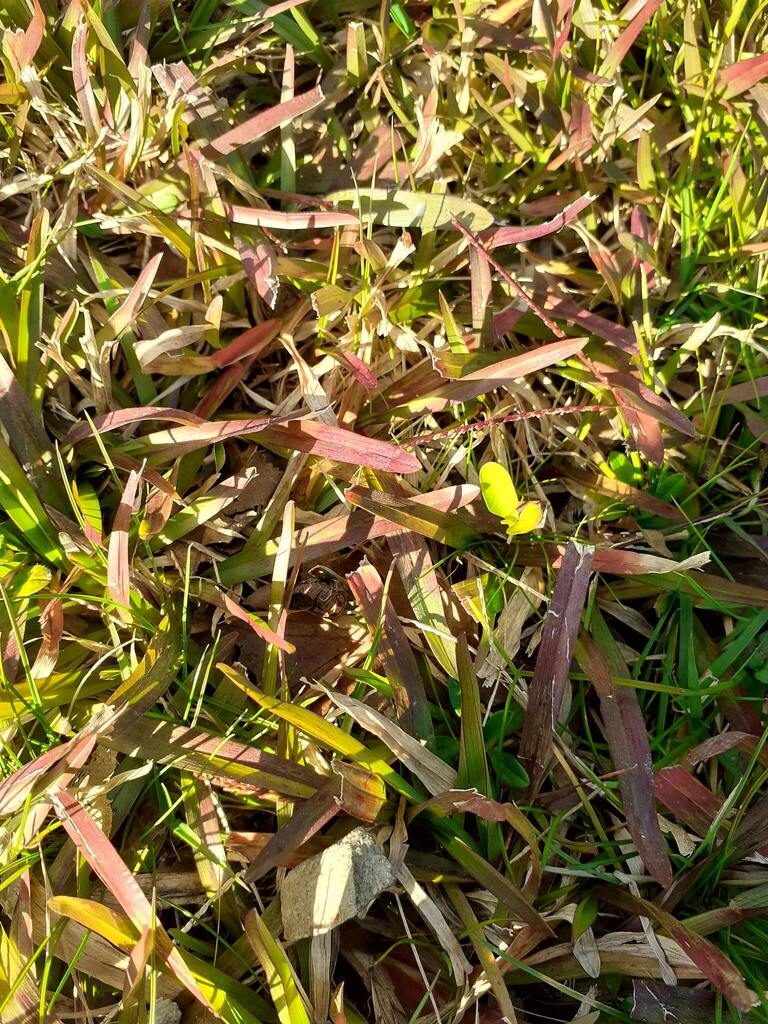
Not sure what's growing now? Folks call any wide-bladed grass St. Augustine, and carpetgrass is a common look-alike. A photo through the free grass ID scan settles it.
- Spacing, timing and cultivar choice vary by state. Start with LSU AgCenter's St. Augustinegrass sheet or your state's extension page, then ask your county office for local dates.
- UF/IFAS says not to fertilize a new planting until 30 to 60 days after it goes in.
Your St. Augustine Planting Action Plan
- Scan your lawn or the neighbor's at the free grass ID to confirm the grass.
- Pick a cultivar for your light; the St. Augustine shade guide covers which ones hold under trees.
- Choose plugs or sod by budget and patience, and plant during active growth.
- Hold the fertilizer 30 to 60 days, then follow the St. Augustine fertilizer schedule.
- Sign in for a 12-month care plan timed to your ZIP, free right now, so mowing, water and feeding land in the right weeks.
Plant while the ground is warm and let the runners do the rest.
Top Picks
- Scotts EZ Seed Patch and Repair Sun and ShadeCheck price on Amazon
- Pennington Smart Seed Sun and Shade MixCheck price on Amazon
- Scotts Turf Builder Grass Seed Bermudagrass (4 lb)Check price on Amazon
As an Amazon Associate we earn from qualifying purchases.
Free Lawn Care Tools
Not from seed you can buy. UF/IFAS Extension says St. Augustinegrass is established by vegetative propagation only, meaning sod, plugs or sprigs. Some cultivars, such as Palmetto, Raleigh and Seville, do set viable seed, but UF/IFAS notes the yield is low and the seed is hard to clean, so it is not sold.
Sapphire goes in as sod or plugs, the same as other St. Augustine. Clemson HGIC lists it among the common dwarf St. Augustine cultivars and says St. Augustine is planted by vegetative means, including sod, sprigs or plugs. Order it from a sod farm or a plug supplier.
Because the seed is too scarce and too hard to process. UF/IFAS Extension says seed yields are low, which would make the seed very expensive, breeding for more seed would hurt the turf's appearance, and the seed is embedded in a corky spike that is very hard to clean. LSU AgCenter reports no commercial St. Augustine seed available in Louisiana.
UF/IFAS gives a range of 6 to 24 inches, and LSU AgCenter suggests about 1 foot apart. Closer spacing covers faster and leaves less room for weeds, per UF/IFAS. Tamp each plug into a hole the same size and water thoroughly.
About 3 to 4 months at 12-inch spacing, according to a Texas A&M AgriLife planting table for Floratam: about 3 months for 4-inch plugs and about 4 months for 3-inch plugs. At 24-inch spacing the same table gives about 9 months. Plant during active growth so the runners have a full warm season to spread.
Centipede, zoysia, common bermuda and bahia all sell as seed in St. Augustine climates. Clemson HGIC names TifBlair centipede and Zenith and Compadre zoysia as seeded options, and UF/IFAS names Princess 77 and Sultan as seeded bermudas. None matches St. Augustine in shade, which Clemson calls the most shade-tolerant warm-season grass.
Sources (10)
- UF/IFAS Extension, St. Augustinegrass for Florida Lawns (ENH5)
- UF/IFAS Extension Osceola County, St Augustine Grass: Did You Know? (2023, updated 2025)
- Texas A&M AgriLife Extension, St. Augustinegrass Lawn Management (EHT-144)
- Texas A&M AgriLife Extension, Bexar County, Floratam St. Augustine
- LSU AgCenter, Louisiana Home Lawn Series: St. Augustinegrass (Pub. 3624-SS)
- Clemson HGIC, St. Augustinegrass
- Clemson HGIC, Centipedegrass
- Clemson HGIC, Zoysiagrass
- UF/IFAS Extension, Bermudagrass for Florida Lawns and Bahiagrass for Florida Lawns
- Penn State Extension, Turfgrass Seed and Seed Mixtures
Photos: Forest and Kim Starr / Wikimedia Commons · CC BY 3.0 US