

Tall Fescue Clumps vs Crabgrass: Which One Is In Your Lawn?
Updated August 18, 2026
Tall fescue clumps stand upright, read the same green as the lawn or darker, root deep, and are there all year. Crabgrass sprawls flat, reads lighter and yellower, and pulls out shallow. Crabgrass products only work on the crabgrass; fescue clumps have to be dug out and reseeded.
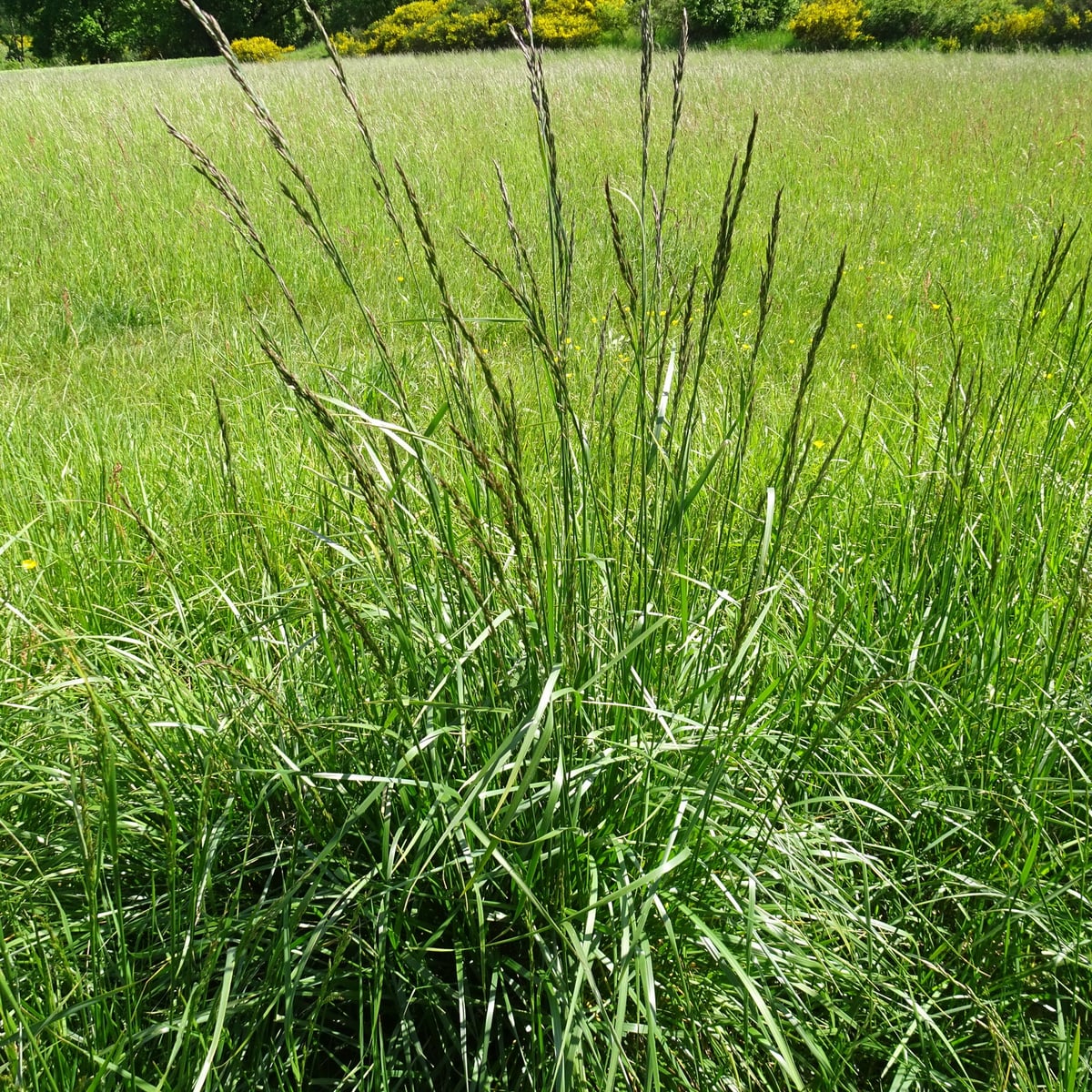
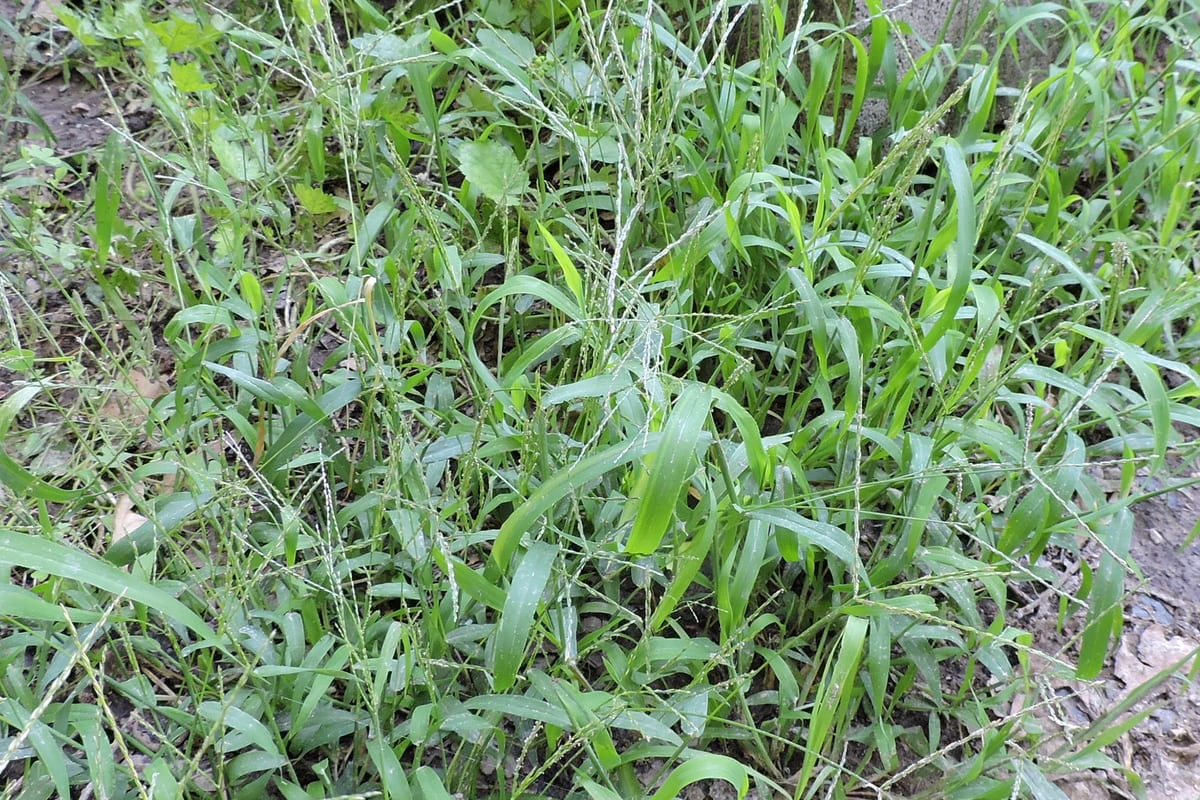
If the clump is darker or equal in color to the lawn, stands upright, and refuses to pull out, it is tall fescue, not crabgrass, and no crabgrass product will touch it. Crabgrass is the opposite on every count: lighter than the lawn, sprawling flat rather than standing up, and easy to lift out as a single shallow rosette. People reach for crabgrass killer on fescue clumps constantly, and it is a wasted application every time.
The confusing part is that tall fescue is a perfectly good lawn grass. It is simply out of place: a few coarse, deep-rooted clumps sitting inside a finer bluegrass or ryegrass stand, usually from contaminated seed or an old pasture-type fescue that survived a renovation. Because it is a desirable species, nothing selective will remove it from a cool-season lawn, so the honest fix is physical. Dig the clump, take the roots, and reseed the hole. Season matters more than product choice here, and the tell is timing: fescue clumps are there in April and still there in December, while crabgrass arrives in June and is gone after the first hard frost.
Quick verdict
Tall fescue clumps are upright, coarse, the same green or darker than the lawn, deep-rooted, and present all year. Crabgrass is flat, lighter, shallow, and seasonal. Only crabgrass responds to crabgrass products; fescue clumps have to be dug out and reseeded.
Tall Fescue Clumps vs Crabgrass: at a glance
Color against the lawn
Posture
Blade texture
Does it pull out?
Growth habit
Life cycle
When it appears
What winter does
Response to crabgrass killer
What actually works
Verdict
AIt is tall fescue if...
- The clump is as dark as the lawn or darker, never paler.
- It stands upright in a tight bunch instead of sprawling flat.
- The blades feel coarse and stiff, with ribs you can see along the length.
- You cannot pull it out, and getting it up means a shovel.
- It was there last winter, and it will be there next winter.
BIt is crabgrass if...
- The clump is lighter and yellower than the grass around it.
- It lies flat with stems fanning out from one center point.
- A firm pull brings up the whole plant with a shallow root ball.
- It showed up this summer and was not there in the spring.
- The first hard frost kills it outright and leaves bare soil.
Removing a fescue clump leaves a hole. Get the seed quantity and the right window for your ZIP so it closes cleanly.
Get your seasonal lawn care calendar for your ZIP
Every task, from feeding to weed control to aeration, has a window that shifts by region. Add your ZIP and we will email your 12-month lawn calendar right away, starting with this month.
Seasonal reminders and tips. No spam. Unsubscribe anytime.
Frequently asked questions
Is that clump tall fescue or crabgrass?
Look at color and posture first, because they split cleanly. Tall fescue clumps are the same green as the lawn or darker, and they stand upright in a tight bunch. Crabgrass is lighter and yellower, and it sprawls flat with stems radiating from a single point. Then pull. Crabgrass lifts out with a shallow root ball; tall fescue holds because its roots run deep. If you still cannot decide, wait for the first hard frost: crabgrass dies and leaves a bare spot, and tall fescue is still there and still green.
Will crabgrass killer kill tall fescue clumps?
No, and the application is worse than wasted. Post-emergent crabgrass products are designed to hit a specific annual grass without harming desirable turf, and tall fescue is desirable turf, so it survives. Meanwhile you have put a herbicide on a lawn for no benefit and taken on whatever risk the label carries for your grass type. If the clumps are fescue, put the sprayer away and get a shovel.
How do I get rid of tall fescue clumps in my lawn?
Physical removal is the practical answer for a cool-season lawn, because nothing selective removes one desirable grass from another. Dig each clump out with its root mass, take a couple of inches of surrounding soil so you do not leave crowns behind, then fill and reseed the hole with the seed your lawn actually is. Do it in the fall overseeding window if you can, so the new seed germinates fast and nothing else colonizes the bare patch first.
Why does tall fescue grow in clumps in my lawn?
Tall fescue is a bunch-type grass, which means it widens slowly from a crown rather than running sideways with stolons or rhizomes. In a lawn that is mostly tall fescue, that is invisible because all the bunches sit together. In a bluegrass or ryegrass lawn, each fescue plant reads as a distinct coarse clump. The usual source is contaminated seed or an older pasture-type fescue that survived a renovation. Modern turf-type tall fescue is much finer, which is why an old clump can look coarse next to a newer fescue lawn too.
Should I just leave tall fescue clumps alone?
That is a legitimate choice, especially if there are only a few. Tall fescue is drought-tolerant, deep-rooted, and stays green when finer grasses struggle, so the clumps are not hurting the lawn, they are just a texture mismatch. What they do not do is blend in over time, and each clump slowly widens. If the look bothers you, remove them while there are a handful. If it does not, they are harmless.
Does tall fescue die in winter like crabgrass?
No. Tall fescue is a cool-season perennial and it is one of the last grasses in a lawn to lose color in fall, so a clump that is still standing green in December is a strong ID by itself. Crabgrass has no winter at all: the first hard frost kills the plants outright and leaves a bare spot that reseeds itself the following spring. If you want a free ID with zero effort, note where the clumps are in September and go back and look in January.