
About Kikuyugrass
Kikuyugrass (Cenchrus clandestinus, formerly Pennisetum clandestinum) is a coarse, warm-season perennial that feels right at home in the mild coastal climate of Southern and Central California. It arrived in California as an erosion-control plant, then showed everyone just how well it could spread. Today it is both a practical turfgrass and a serious weed, depending on whether you want it where it is growing.
That split personality is the first thing to understand. As a lawn, Kikuyugrass handles traffic, heat, salt air, and dry periods very well. Its thick surface runners and underground rhizomes repair worn spots quickly, which is why it can make a durable play lawn near the coast. Outside the lawn, those same runners crawl into beds, cross edging, clog low irrigation outlets, and establish from chopped stem pieces. UC IPM describes it as extremely aggressive for good reason.
Kikuyugrass is not a low-work lawn just because it survives neglect. It may stay alive with little attention, but an attractive Kikuyugrass lawn needs frequent mowing, firm boundaries, restrained fertilizer, and regular thatch checks. Miss several cuts during warm weather and the turf can become stemmy and uneven. Then a normal-height mowing removes too much green tissue at once and leaves a brown, scalped surface.
Key Characteristics
- Blade width: Medium to coarse, usually about 4 to 6 millimeters wide
- Color: Light to medium green, often brighter than Bermudagrass and less blue-green than many tall fescues
- Growth habit: Extremely aggressive spreading through thick above-ground stolons and underground rhizomes
- Texture: Coarse and slightly hairy, especially around the leaf sheath and stem
- Density: Forms a dense mat that tolerates wear but can become spongy when thatch accumulates
- Season: Warm-season, with the strongest growth from late spring into early fall
- Winter behavior: Often semi-dormant in frost-free coastal areas and brown after frost or prolonged cold
Where Kikuyugrass Makes Sense
Kikuyugrass makes the most sense for a sunny, heavily used lawn in a mild-winter coastal climate where it is already established. UC IPM notes that once Kikuyugrass makes up roughly 40 percent of a lawn, maintaining it as the main turf can be more sustainable than repeatedly trying to suppress it. That is not an invitation to plant it everywhere. It is a practical recognition of how difficult established rhizomes and stolons are to remove.
A Kikuyugrass lawn can be a good fit when you value recovery and durability more than fine texture. It is much less appealing around open planting beds, delicate ground covers, neighboring lawns, or natural areas where escaped runners would be difficult to contain.
Durability Is Different from Low Maintenance
Kikuyugrass survives conditions that make many lawn grasses thin out, but survival and presentation are different standards. A utility lawn can tolerate a coarser canopy, visible runners, and seasonal color changes. A front lawn kept at a uniform height needs much tighter control. Decide which result you actually want before choosing the maintenance level. The grass does not need golf-course care to stay alive, but it needs a reliable routine to look intentional.
Traffic tolerance is strongest while the turf is actively growing. Warm soil lets runners replace damaged leaves and root into worn areas. During cool weather, recovery slows even if the lawn remains partly green. Rotate portable goals, play equipment, furniture, and dog runs so the same crowns are not compressed every day. Moving concentrated wear a few feet can prevent a bare strip that later fills with weeds.
Containment Starts with Site Design
A mowing strip, broad hardscape edge, or deep physical boundary gives you room to see and cut escaping runners. A narrow decorative border hidden by foliage does not. Keep irrigation spray inside the lawn where possible because consistently moist soil beyond the edge makes escaped nodes easier to root. Where Kikuyugrass meets a fence, leave enough access to inspect both sides rather than creating an unseen corridor into the neighboring property.
Think about equipment movement too. A mower that cuts Kikuyugrass and then immediately crosses a cool-season lawn can carry stem pieces or seed. Use a planned mowing order, finishing clean lawns before Kikuyugrass areas, then clean the deck and wheels. That small operational habit matters more than an occasional dramatic edging project.
The Honest Trade-offs
- Fast mowing cycle: Peak summer growth may require mowing every 4 to 7 days to prevent stemminess and scalping
- Heavy thatch: Stolons, rhizomes, and old stems build a dense organic layer that needs monitoring and periodic removal
- Invasive spread: Runners cross weak borders and stem pieces can move on mowers, cultivation equipment, soil, and sod
- Coarse appearance: Its hairy, light green blades do not produce the fine carpet look of hybrid Bermudagrass
- Poor cold fit: Frost causes browning, and repeated hard freezes put the turf outside its comfortable range
- Limited shade tolerance: Dense, healthy Kikuyugrass still needs strong sun; shaded sections become thin and easier for weeds to invade
How to Identify Kikuyugrass
What Kikuyugrass looks like
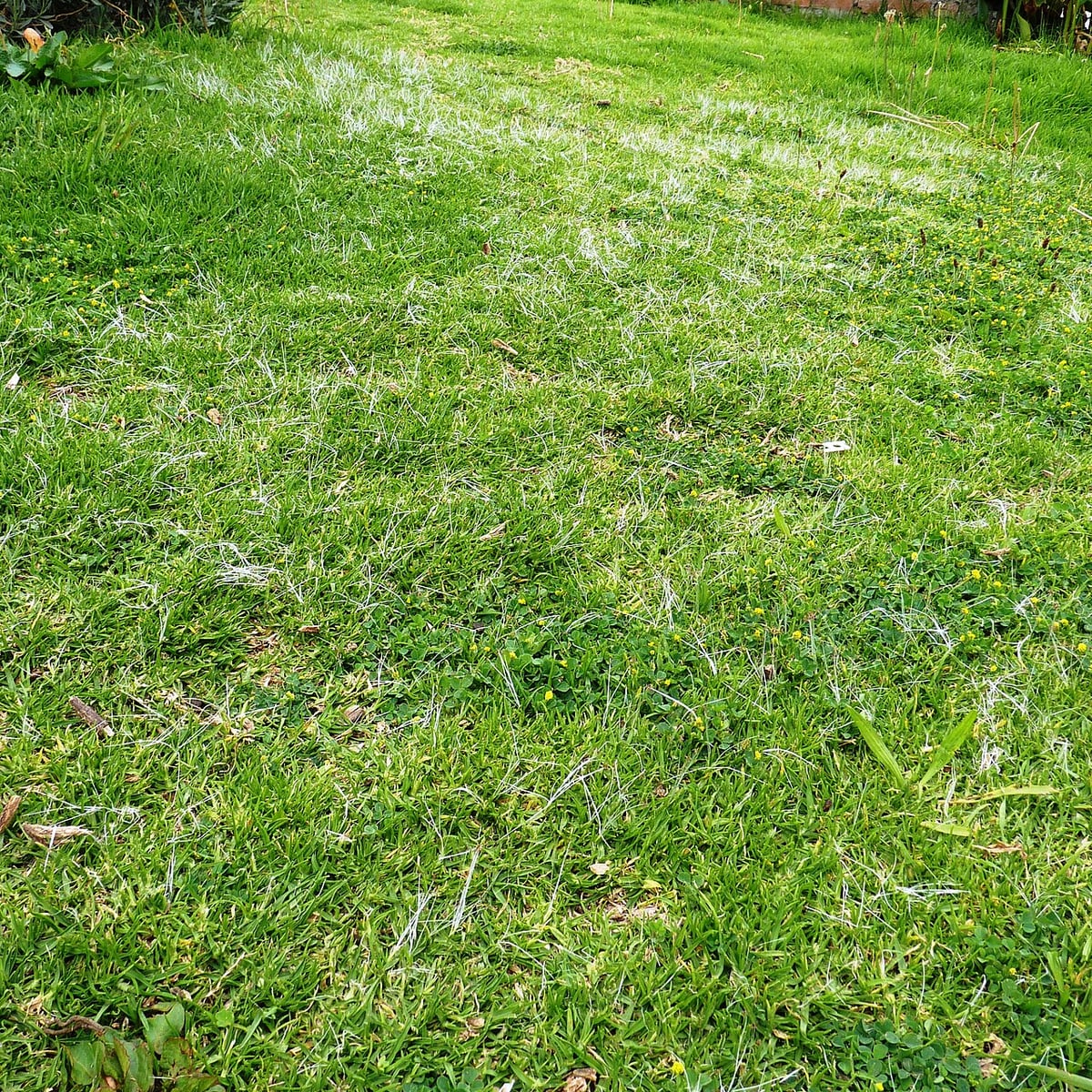
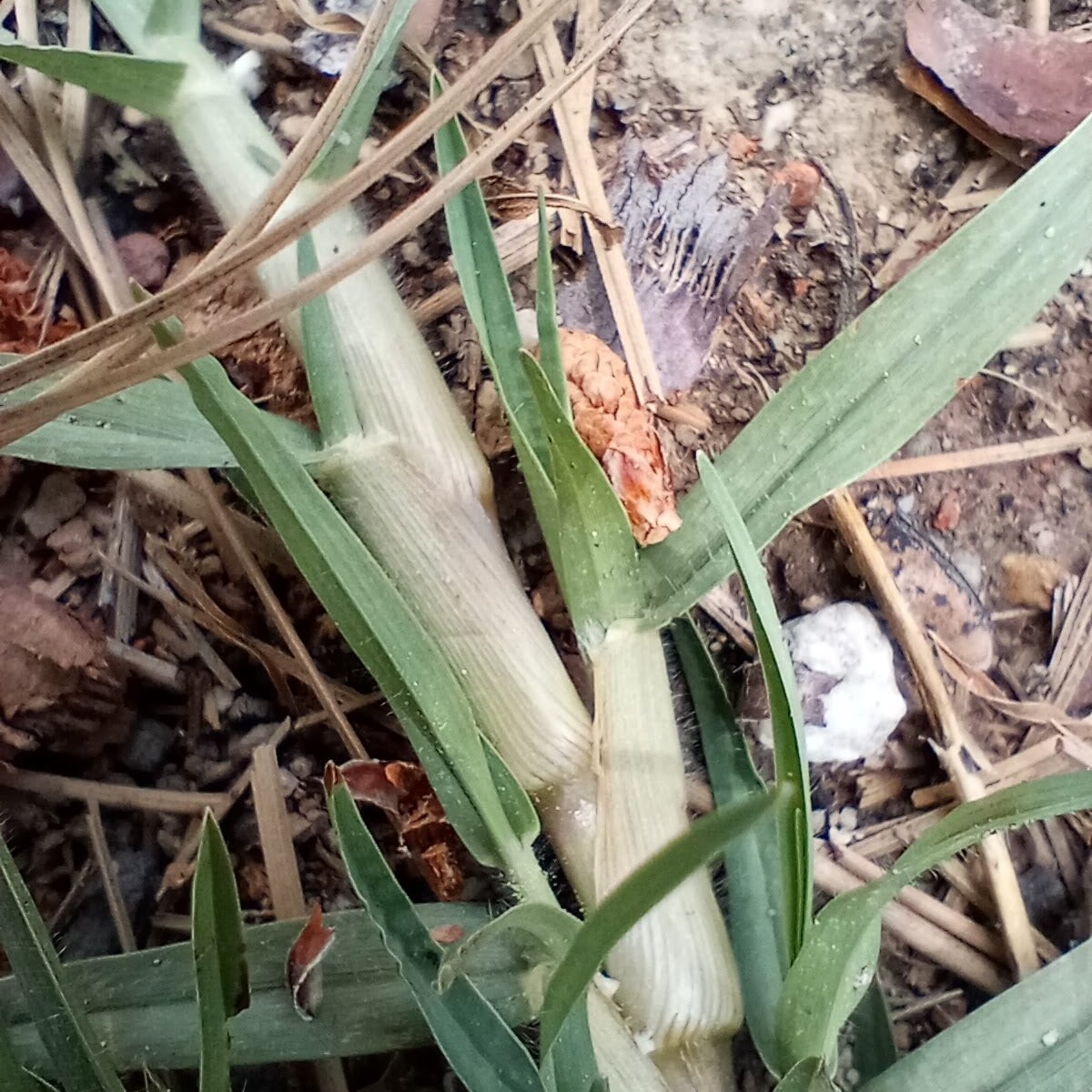
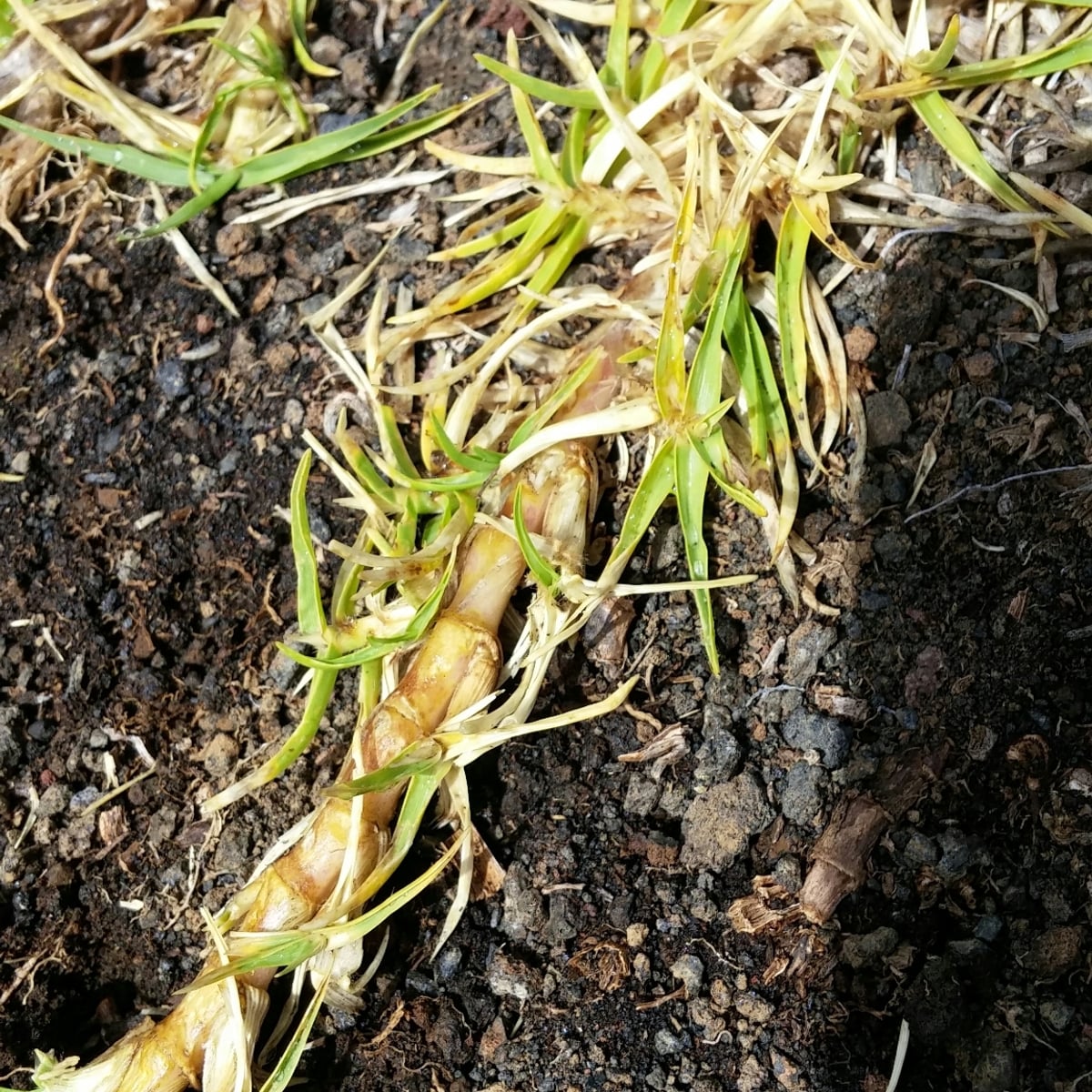
Kikuyugrass is often confused with St. Augustinegrass, Bermudagrass, or a coarse cool-season lawn. The best identification comes from combining several clues instead of relying on color alone.
Look for Thick, Aggressive Runners
Part the canopy and find a surface runner. A Kikuyugrass stolon is thick, round, and vigorous, with roots and new shoots forming at its nodes. Follow it toward a sidewalk or planting bed and you may find it traveling well beyond the original patch. Below the soil, rhizomes form a second spreading system. This combination explains why pulling only the visible leaves rarely removes the plant.
Check the Leaves and Stems
- Blade: Flat, medium-coarse, and usually 4 to 6 millimeters wide
- Color: Light to medium green
- Surface: Noticeable hairs on the stem, leaf sheath, and near the collar area
- Tip: Pointed to somewhat boat-shaped, depending on blade maturity and how recently it was cut
- Bud: New leaves are folded rather than rolled
- Mat: Dense, springy, and often difficult to cut cleanly when thatch has built up
Kikuyugrass vs. St. Augustinegrass
Both grasses make obvious surface stolons, but St. Augustinegrass has broader blades, flatter stolons, and generally lacks the conspicuous hairs seen on Kikuyugrass stems. St. Augustine leaf tips are usually rounded or boat-shaped. Kikuyugrass is narrower, hairier, and tends to produce a more tangled mass of runners.
Kikuyugrass vs. Bermudagrass
Bermudagrass blades and stolons are much finer. Bermuda runners feel wiry, while Kikuyugrass runners look thick and fleshy by comparison. Kikuyugrass also has a brighter, coarser canopy and more obvious hair around the leaf sheaths.
Kikuyugrass vs. Tall Fescue
Tall fescue grows in bunches and does not make long surface stolons. A mixed California lawn may have tall fescue blades growing above a Kikuyugrass mat, which can make photo identification tricky. Trace a runner across the soil and inspect several plants from the same patch before deciding.
Flowers and Seed
Kikuyugrass flowers are partly hidden within the leaf sheath, which is reflected in the species name clandestinus. Fine white filaments may be visible in a flowering lawn. UC IPM notes that mowing can stimulate flowering, so the absence of a familiar upright seed head does not rule Kikuyugrass out.
How to Collect a Useful Sample
A handful of clipped leaves is rarely enough for a confident identification. Use a hand trowel to lift a small piece from the edge of the patch, including roots, a connected runner, two or three nodes, and several intact leaves. Shake off loose soil without stripping away the leaf bases. A good sample shows whether growth is bunching, creeping only above ground, or spreading both above and below the surface.
For photographs, take one image of the whole patch, one directly above the canopy, and one close view of the runner and collar. Place a ruler or coin beside the blade for scale. Avoid relying on a freshly mowed patch because the cut removes leaf-tip clues, and avoid a single yellow blade because stress changes color and shape.
Do Not Identify by Aggressiveness Alone
Bermudagrass, St. Augustinegrass, zoysiagrass, and several lawn weeds also spread laterally. Kikuyugrass becomes the stronger conclusion when thick runners, underground rhizomes, hairy stems, coarse light green leaves, and the right California climate appear together. If those traits conflict, keep the identification open and ask a county extension office or turf professional to inspect a sample.
Not sure what you are looking at? Upload a photo to our free grass identifier and include a close view of a runner, node, and leaf collar if you can.
Types & Varieties
For most California homeowners, Kikuyugrass is not sold through the broad cultivar menu you see with Bermudagrass, tall fescue, or Kentucky bluegrass. It usually arrives as an existing lawn, an escaped patch, locally available sod, or plugs taken from known turf. The first decision is therefore not which named cultivar to buy. It is whether Kikuyugrass is appropriate and containable on the site.
Common Kikuyugrass
Most established California Kikuyugrass is the common species. It has the familiar light green color, coarse hairy leaves, thick runners, fast recovery, and strong thatch production described throughout this guide. Maintenance has a larger effect on its appearance than a cultivar name: frequent mowing makes it tighter and more uniform, while excess nitrogen and missed mowing make it rank and stemmy.
Sod and Plug Selections
Where Kikuyugrass is intentionally offered, it is usually sold vegetatively as sod or plugs. Ask the supplier what selection it carries, how that material performs in your local winter temperatures, and whether it has been inspected for weeds and unwanted grasses. UC guidance recommends sod or plugs for planting. Vegetative material also establishes the same growth habit as the source turf, while seed can be less predictable and is not widely stocked for residential lawns.
Existing Mixed Stands
Many coastal lawns are not pure Kikuyugrass. They contain tall fescue, perennial ryegrass, Bermudagrass, or other turf left from earlier plantings. If Kikuyugrass is a small, isolated patch and you want to keep the original lawn, early removal is far easier than waiting. If it already dominates the stand, forcing a permanent cool-season lawn through repeated suppression can become an expensive cycle.
Map the stand before deciding. Walk the lawn in spring and again in late summer, marking where thick stolons and hairy leaves occur. Cool-season grass may dominate the view in mild spring weather while Kikuyugrass runners are already spreading below it. In late summer, the warm-season portion becomes easier to see. A two-season map gives you a better basis for renovation than one inspection after mowing.
Choose for the Maintenance System
If you are buying sod or plugs, compare more than color on the delivery day. Ask for the supplier's normal mowing height, winter behavior, source-field inspection practices, and expected thatch production. Confirm that replacement material will remain available if a later construction project damages the lawn. A selection that looks excellent under frequent sod-farm mowing may become coarse in a homeowner schedule, so be honest about the equipment and time you will use.
What to Ask Before Planting
- Is Kikuyugrass intentionally used and locally acceptable in your municipality or community?
- Can the lawn be separated from beds, neighboring properties, drains, and natural areas with durable edging?
- Does the site receive strong sun and avoid regular hard freezes?
- Can you mow every week, and more often during a summer growth surge?
- Is the sod or plug source free from weeds and other unwanted turf species?
Do not move plugs from an unknown roadside, park, or infested property. Besides ownership and pesticide concerns, soil and stem pieces can carry weeds, pests, and diseases into your lawn.
Best Zones & Climate
Kikuyugrass has a narrow sweet spot in the United States: sunny locations with warm summers, mild winters, and enough moisture to stay active. UC IPM places its best California adaptation in coastal Southern and Central California, especially within about 50 miles of the ocean. It also occurs in some inland valleys, usually where irrigation or persistent soil moisture supports it.
Ideal Climate Conditions
- Summer: Warm, sunny weather drives rapid spreading and recovery
- Winter: Frost-free or only occasional light frost allows the lawn to retain more color
- Sun: Full sun is best; prolonged shade reduces density and competitive strength
- Moisture: Established turf tolerates dry periods well, but active growth responds quickly to irrigation
- Coastal exposure: Kikuyugrass performs well in the moderate temperatures and salt air common to the Southern California coast
Southern California Coast
This is the classic Kikuyugrass region. From San Diego County through the Los Angeles basin and along other mild coastal areas, it may stay partly green all winter unless frost or a cold spell slows it down. Growth can continue across a long season, which means the mowing and edging season may also be long.
Central Coast
Kikuyugrass can perform well in sunny Central Coast sites, but cool summers, fog, or winter frost can slow growth. Coastal microclimates change quickly with elevation and distance from the ocean, so judge your site by actual frost history and summer sun rather than a broad zone map.
Inland Valleys
Inland heat is not usually the limiting factor. Winter cold, irrigation demand, and uncontrolled spread are bigger concerns. Kikuyugrass can persist around frequently irrigated turf, drainage areas, and ditches, but that does not make it the best intentional lawn choice for every inland property.
Cold and Frost
Light frost browns the canopy and can send the lawn into partial dormancy. Repeated hard freezes can damage crowns and runners. Do not fertilize heavily to force color during cold weather. Wait for warm spring conditions and clear signs of active growth before beginning renovation work.
Read the Microclimates in One Yard
A south-facing slope beside masonry may warm weeks before a low area on the north side of the house. Ocean wind can moderate heat but also dry exposed ridges. Frost settles in low spots while a nearby raised lawn stays green. These differences explain why one irrigation or fertilizer calendar can produce uneven results across a small property.
Track first green-up, first frost browning, and summer dry spots by zone for one year. Use those observations to adjust mowing and irrigation separately rather than pushing the slowest zone with extra fertilizer. If a cold pocket suffers repeated winter injury, replacing that small section with a better-adapted surface may be more practical than treating it as a whole-lawn problem.
Shade and Trees
Kikuyugrass is not a shade solution. Under dense tree canopies it becomes thin, and roots from the tree compete with the lawn for water. Raising the mowing height slightly may help a marginal area, but it will not replace sunlight. Consider mulch or a shade-adapted ground cover where the canopy is truly too dark for turf.
Soil & pH Requirements
Kikuyugrass is adaptable, but adaptable does not mean indifferent. It performs best in fertile, well-drained soil with enough pore space for deep roots. A dense Kikuyugrass mat can hide drainage and compaction problems for a while, so test the soil instead of judging only by how green the surface looks.
Preferred pH
A practical target is pH 5.5 to 7.5. Kikuyugrass can survive outside that range, but nutrient availability becomes less predictable. High-pH soil deserves special attention because UC ANR associates high soil pH and low manganese with Kikuyugrass decline. Do not add lime just because a generic lawn schedule recommends it. Lime raises pH and should be applied only when a soil test shows that it is needed.
Start with a Soil Test
Test before major fertilizer, lime, sulfur, or micronutrient applications. A useful laboratory report should include pH, salinity, organic matter, and available nutrients, plus amendment recommendations for turf. Recheck every two to three years, or sooner if the lawn shows persistent chlorosis or poor growth despite reasonable care.
Drainage Matters
Kikuyugrass responds strongly to water, but constantly saturated soil is not healthy turf soil. Waterlogging reduces oxygen around roots and is one of the conditions associated with root decline. Correct broken irrigation heads, low spots, and runoff before reaching for fungicide or extra fertilizer.
Clay Soil
Many Southern California lawns sit on compacted clay or construction fill. Use core aeration during active warm-season growth to open channels for water and air. Compost topdressing can improve the surface gradually, but one heavy application will not transform the soil profile. Avoid adding a thin layer of sand to clay without a site-specific recommendation because the wrong mixture can make the surface harder.
Sandy and Coastal Soil
Sandy soil drains quickly and may need smaller fertilizer applications to reduce leaching. It can also dry unevenly. Split irrigation into cycles when water moves through too fast or when a sloped lawn begins to run off, while still aiming for a deep wetting rather than daily surface moisture.
Salinity and Irrigation Water
Coastal location does not automatically mean the root zone has a salinity problem, but recycled water, shallow groundwater, sea spray, and poor drainage can contribute salts. White crust on soil, burned leaf margins, and stubborn dry patches are reasons to test irrigation water and soil electrical conductivity rather than guessing. Salt management depends on water quality and drainage. Applying more water without a way for it to move below the roots can make a wet, oxygen-poor site worse.
Organic Matter and Topdressing
A thin compost topdressing after core aeration can improve the surface and introduce material into open holes. Keep the layer thin enough that leaves remain visible and runners are not buried under a wet blanket. Use screened, mature compost free of weed seed. Topdressing is a gradual soil-management practice, not a substitute for correcting the grade or removing an excessive thatch layer.
Fixing Compaction
- Core aerate when the lawn is fully green and growing rapidly
- Use hollow tines that remove plugs rather than solid spikes that press soil sideways
- Make extra passes over walkways, goal mouths, and other high-traffic zones
- Keep vehicles and heavy equipment off wet soil
- Correct irrigation coverage so compacted areas are not also chronically dry
Recommended Products
- 1Check price
 Top pick
MySoil Soil Test Kit
Mail-in soil test that reports pH and nutrient levels with recommendations, so lime or fertilizer goes down only where the numbers call for it.
- 2Check price
 Best value
Espoma Organic Lightning Lime (Fast-Acting Pelletized Lime)
Fast-acting pelletized lime for low-pH lawns when a soil test confirms you need to raise pH before fertilizing harder. Covers up to 5,000 sq ft.
As an Amazon Associate we earn from qualifying purchases.
Fertilizer Guide
Kikuyugrass can grow faster than most homeowners can mow, so fertilizer should support healthy color and recovery without turning the lawn into a weekly emergency. UC IPM's management guidance recommends about 2 pounds of nitrogen per 1,000 square feet per year during active growth and advises limiting fertilization during the hottest summer period.
A Practical Annual Program
Use the soil test and the actual length of your growing season to divide the annual nitrogen total. A simple coastal program might look like this:
- Spring green-up: Apply 0.5 to 0.75 pound of nitrogen per 1,000 square feet after the turf is actively growing and has been mowed at least once or twice
- Early summer: Apply 0.5 pound if color or recovery shows a need
- Late summer: Skip or use a light application during extreme heat; do not feed simply because the calendar says to
- Early fall: Apply the remaining 0.5 to 0.75 pound while warm weather still allows the grass to use it
- Winter: Do not fertilize frost-browned or dormant turf
Those amounts are a framework, not a reason to force exactly four applications. A lawn that receives compost, recycled irrigation nutrients, or clippings may need less. A heavily used lawn recovering from wear may use the full annual amount.
Choose Fertilizer from the Soil Test
Nitrogen drives green growth, but phosphorus and potassium should not be added blindly. Many established soils already contain adequate phosphorus. Choose a product whose nutrient analysis matches the soil report, and follow local phosphorus restrictions where they apply.
Slow Release Helps Control Growth
A fertilizer with a meaningful slow-release nitrogen fraction produces steadier color and less of the sudden top growth that leads to mowing piles and scalping. Water the product in according to its label, sweep granules off sidewalks, and keep fertilizer out of storm drains.
Clippings Contribute Nutrients
Routine clippings decompose and return some nitrogen and potassium to the lawn. That contribution is one reason a healthy lawn that mulches fine clippings may need less bagged fertilizer than a schedule assumes. Bagging overgrown, diseased, or stem-filled material is still appropriate, but do not automatically replace every bagged clipping with an extra fertilizer application. Judge color and growth over several weeks.
Separate Color from Growth
A pale lawn is not always nitrogen-deficient. Cold soil, saturated roots, high pH, mowing stress, and uneven irrigation can all reduce color. Before feeding, compare the pale pattern with sprinkler coverage and drainage, inspect roots, and review the last application. Nitrogen applied to a root problem may make the unaffected grass grow faster while the damaged area remains yellow.
Calculate Actual Nitrogen
The first number on the bag is the percentage of nitrogen by weight. To apply 0.5 pound of nitrogen with a 20-0-10 fertilizer, divide 0.5 by 0.20. The answer is 2.5 pounds of product per 1,000 square feet. Calibrate the spreader on a measured area instead of trusting a generic dial setting.
Measure only the lawn, excluding the house, driveway, beds, and pool. Divide an irregular property into rectangles and triangles, calculate each area, and add them. When using a broadcast spreader, make two perpendicular passes at half the product rate to reduce stripes. Shut the gate while turning on hardscape, then sweep any granules back onto the lawn.
Signs of Too Much Fertilizer
- The lawn grows tall again only a few days after mowing
- Stolons surge across borders and into beds
- Thatch thickens faster than normal
- Dark, lush growth stays wet longer and disease pressure increases
- Striping or burned patches appear from uneven application
Iron and Manganese
If a soil or tissue test confirms a micronutrient issue, correct the cause and use the recommended product rate. Do not use iron to mask overwatering, root decline, or cold-weather dormancy. If high pH and low manganese are contributing to Kikuyugrass decline, work with a local extension professional or qualified turf adviser on a measured correction.
Recommended Products
- 1Check price
 Top pick
The Andersons PGF Complete 16-4-8
Balanced slow-release fertilizer for established lawns that need steady feeding without a quick flush of top growth.
- 2Check price
 Best value
Dark Matter 21-0-0 Ammonium Sulfate
High-nitrogen, fast-acting small prill ammonium sulfate for quick green-up and iron supplementation. 40 lb bag.
As an Amazon Associate we earn from qualifying purchases.
Seasonal Care Calendar
Kikuyugrass follows temperature more than a rigid four-season calendar. A frost-free San Diego lawn may grow through much of winter, while a colder inland lawn can brown for months. Use this calendar as a coastal California starting point, then adjust it to actual growth.
Late Winter (January Through February)
- Mow only when there is measurable growth; avoid repeated traffic on frost-covered turf
- Remove leaves and debris that hold moisture against the canopy
- Inspect borders for runners that entered beds during the previous season
- Repair irrigation leaks, clogged nozzles, and low areas before warm weather arrives
- Order a soil test if the lawn had persistent yellowing, drainage problems, or poor recovery last year
- Do not fertilize brown or semi-dormant turf to force early color
Spring Green-up (March Through April)
- Resume regular mowing when the lawn begins producing new leaves
- Lower an overgrown canopy gradually rather than removing all brown material in one severe cut
- Apply the first fertilizer only after active growth is obvious and the lawn has been mowed
- Check that irrigation wets the root zone evenly without runoff
- Edge beds and hardscape before runners accelerate
- Plan aeration or dethatching for late spring, when recovery will be fast
Late Spring (May Through June)
- Mow at 1 to 1.5 inches and follow the one-third rule
- Core aerate compacted areas once the turf is fully green
- Verticut or dethatch if the measured thatch layer exceeds about one-half inch
- Collect and contain renovation debris so living stem pieces are not moved to beds or neighboring areas
- Plant sod or plugs now if intentional establishment is appropriate for the property
- Use irrigation records and local weather, not a fixed daily timer
Summer (July Through August)
- Expect the fastest growth and mow every 4 to 7 days when needed
- Sharpen the mower blade frequently because coarse leaves and dense stems expose a dull cut
- Water deeply and infrequently, preferably early in the morning
- Cycle irrigation on slopes or compacted soil to prevent runoff
- Limit nitrogen during extreme heat, especially if the lawn already has strong color and rapid growth
- Watch for sudden chewing damage, dry spots, and clogged irrigation hidden by the canopy
- Edge aggressively before stolons root beyond the lawn
Early Fall (September Through October)
- Apply the final light fertilizer while the lawn is still actively growing, if the annual nitrogen budget and soil test call for it
- Keep mowing on growth rather than switching immediately to a winter schedule
- Reduce irrigation as days shorten and evaporation falls
- Repair worn spots early enough for runners or plugs to root before cool weather
- Inspect the root zone if irregular yellow patches appear; Kikuyugrass decline damage can develop during cool, wet periods
Late Fall (November Through December)
- Allow mowing frequency to fall naturally as growth slows
- Stop routine nitrogen applications
- Do not keep summer irrigation run times through cool or rainy weather
- Remove fallen leaves and keep drainage paths open
- Expect partial browning after frost; do not mistake uniform cold response for a disease outbreak
- Clean soil and stem fragments from equipment before using it in Kikuyugrass-free areas
Mowing Guide
Mowing is the practice that makes or breaks a Kikuyugrass lawn. UC IPM recommends mowing frequently at 1 to 1.5 inches. At that height, regular cutting encourages a tighter canopy. When the grass is allowed to get tall, the upper leaves hide a layer of pale stems. Cutting back to the normal height all at once exposes those stems and makes the lawn look brown.
Recommended Height
- Healthy, sunny lawn: 1 to 1.5 inches
- Minor heat or drought stress: Stay near the upper end of the range
- Shaded or struggling area: A slight increase may reduce stress, but severe shade still needs a non-turf solution
- Overgrown lawn: Lower the height in several mowings, never in one drastic cut
Use the One-Third Rule
Never remove more than one-third of the leaf height in a single mowing. At a 1.5-inch target, mow before the grass grows much above 2.25 inches. Kikuyugrass can cross that threshold quickly in warm, irrigated weather, so a calendar that worked in April may be too slow in July.
Mowing Frequency
- Peak warm-season growth: Every 4 to 7 days
- Spring and fall: About weekly, adjusted to actual growth
- Cool winter: Every 2 to 4 weeks or only as needed
- After fertilizer: Be ready for a temporary increase in frequency
Mower Setup
A well-maintained rotary mower can handle most residential Kikuyugrass at 1 to 1.5 inches, but it needs enough power and a sharp blade to move through the dense mat. A reel mower can produce an even cut on a level, frequently maintained surface. Whichever mower you use, verify the real cutting height on a hard surface rather than relying only on the deck number.
Check blade condition by looking at grass tips a day after mowing. Clean green cuts indicate a sharp edge. Frayed, gray, or torn ends mean the blade needs sharpening or replacement. Remove packed clippings from the underside of the deck with the engine safely disabled, because buildup reduces airflow and leaves clumps that shade the turf.
Recovering an Overgrown Lawn
If vacation or equipment failure leaves the lawn several inches tall, set the mower high and remove only the upper third. Wait a few days, then lower it one setting. Repeat until you return to the target height. The canopy may still show pale stems, but staged mowing preserves more leaf area and avoids the shock of a one-day scalp.
Bag the bulky first cuts and inspect the thatch after the lawn settles. Do not apply a heavy dose of nitrogen to speed recovery. Kikuyugrass already has the growth capacity to rebuild once light reaches the lower leaves. Consistent mowing and normal irrigation are more useful than forcing another surge.
Mowing Slopes and Uneven Ground
On slopes, mow across the grade only when the equipment manufacturer says that direction is safe, and never work on wet turf. Raised crowns and depressions create repeated scalp marks even when the average deck height is correct. Mark those spots and correct the grade with light topdressing during active growth instead of raising the entire lawn to accommodate a few low areas.
Prevent Scalping
- Mow often enough that green leaves remain below the cut line
- Level small depressions during active growth so the mower does not drop into them
- Reduce excess thatch that causes the mower deck to bounce
- Turn gently to avoid tearing stolons
- Do not mow wet, matted grass
Clippings and Spread Prevention
Fine clippings from a routine mowing can usually return to a healthy lawn. Bag when the lawn is overgrown, flowering heavily, diseased, or producing pieces of living stolon. UC IPM warns that Kikuyugrass can spread through seed and stem fragments carried on mowing and renovation equipment. Clean the mower deck, wheels, edger, and dethatcher before moving them to a Kikuyugrass-free site. Do not dump living clippings or dethatching debris into planting beds.
Edging Is Part of Mowing
A crisp edge is not only cosmetic with Kikuyugrass. It is a weekly containment check. Cut runners before they root deeply across a boundary, then remove the severed pieces. Thin plastic edging that sits nearly flush with the soil rarely stops this grass for long. Use a durable, deep boundary where escape would create a serious problem.
Watering Schedule
Established Kikuyugrass is drought tolerant and can recover after dry periods. UC IPM recommends watering deeply and infrequently. The goal is not to keep the top of the thatch wet. It is to wet the soil beneath the thatch, then allow oxygen to return before the next irrigation.
Start with the Lawn, Not a Fixed Number
Coastal fog, inland heat, slope, soil texture, sprinkler output, and local watering rules all change the schedule. Use local evapotranspiration guidance where available and count rainfall. During mild coastal weather, an established lawn may need far less water than the same grass at an inland site.
Signs It Is Time to Water
- Footprints remain visible instead of springing back
- Leaves fold or roll and the color shifts toward dull blue-green
- The lawn loses resilience in the hottest part of the day and does not recover by morning
- A soil probe shows that the root zone is dry, not merely the surface
How to Water Deeply
- Place several straight-sided containers across each irrigation zone
- Run the zone for a measured time and compare the collected depths
- Repair heads or pressure problems if one area receives much more or less than another
- Apply enough water to moisten the soil several inches deep
- Check depth with a screwdriver or soil probe after the cycle
- Wait until the lawn and root zone show a need before watering again
Use Cycle and Soak
If water begins running off before the root zone is wet, divide the total run time into two or three shorter cycles separated by soak periods. This is especially useful on slopes, compacted clay, and heavily thatched turf. The total application should still be deep enough to encourage roots below the surface.
Audit Every Irrigation Zone
A green lawn can hide poor distribution until a hot week exposes it. Place catch cans at the head, middle, and far edge of a zone. Run the system, record each depth, and compare them. A dry corner beside an oversaturated strip is a distribution problem, not a reason to increase every head's run time.
Watch each zone operate. Replace mismatched nozzles, straighten tilted heads, trim grass that blocks low spray, and correct heads that water pavement. Kikuyugrass runners can grow over small pop-up heads and redirect the stream. Include head clearance in the weekly edge and mowing inspection during peak growth.
Check Moisture Below the Thatch
Push a soil probe into several locations after irrigation. The depth of easy penetration gives a rough picture of wetting depth, while a plug shows whether water stopped in the thatch. Compare a healthy area with a stressed one. If both received similar water but the stressed area's soil stays hard and dry, aeration, hydrophobic soil, or root loss may be involved.
Best Time of Day
Water in the early morning. Wind and evaporation are usually lower, and the leaves dry after sunrise. Repeated evening irrigation extends leaf wetness and increases disease risk. Midday watering can be inefficient and may be restricted locally.
Do Not Irrigate Dormancy Away
Cold-induced browning is not a request for extra water. Reduce irrigation as temperatures and daylight fall. In a rainy coastal winter, the system may stay off for long periods. Keep enough moisture to protect roots during an unusual dry spell, but do not saturate cool soil.
Thatch Can Fool You
A thick thatch layer can intercept water, leaving the surface damp while the soil beneath remains dry. If irrigation runs off or beads on the canopy, measure the thatch, correct compaction, and use cycle-and-soak scheduling. More frequent shallow watering will deepen the problem.
Seeding & Establishment
UC IPM recommends planting Kikuyugrass as sod or plugs. That is the most predictable establishment method for residential turf, and it avoids the uneven availability and variable quality of seed. Before planting, confirm that Kikuyugrass is appropriate for the property and that you can contain it.
Best Planting Window
Plant in late spring through early summer after the soil has warmed and the grass is growing vigorously. Warm conditions help roots and runners establish before winter. Avoid installing just before cold weather because the sod may look intact without developing the root system needed to survive stress.
Site Preparation
- Remove existing turf and perennial weeds completely, including rhizomes and roots
- Correct drainage, low spots, and irrigation coverage before the new turf hides them
- Test the soil and make only the amendments supported by the results
- Grade the surface so water moves away from structures without creating runoff
- Install durable edging around beds and boundaries where Kikuyugrass must stop
- Firm and smooth the final soil surface so sod does not bridge air pockets
Establishing Sod
- Install fresh sod immediately after delivery, staggering seams like bricks
- Press the sod into contact with the soil and avoid stretching pieces
- Water promptly so the sod and upper soil are uniformly moist
- Keep the root zone consistently moist during the first stage of rooting without leaving it saturated
- Begin reducing frequency and increasing depth once the sod resists a gentle lift
- Mow when the turf is rooted enough that the mower will not shift it, following the one-third rule
The First Six Weeks
New sod changes from a shallow, frequently watered surface to a lawn that can handle deeper, less frequent irrigation. Make that transition by checking roots, not by switching abruptly on a preset date. During the first days, seams and edges dry first. As roots enter the soil, lengthen the interval between watering while applying enough to wet the new root zone.
Avoid heavy traffic until pieces resist lifting and the surface is firm. Make the first mow with a light mower on dry turf, using a sharp blade and removing less than one-third. Delay broadleaf herbicides, aggressive fertilization, aeration, and dethatching until the sod is fully anchored and the product label permits treatment.
Establishing Plugs
Plugs cost less than full sod but leave open soil while they spread. Set healthy plugs in a regular pattern, press them firmly into prepared soil, and keep them evenly moist until rooted. Spacing controls how long coverage takes. Closer plugs fill sooner but use more material. Weed by hand or use only products specifically labeled for the newly planted turf and establishment stage.
Why Seeding Is Not the Default
Kikuyugrass can produce seed, especially under regular mowing, but residential seed supplies are less common than sod and plugs. Seed also creates more opportunity for the grass to establish where it is not wanted. If a locally reputable supplier offers seed, follow that exact label for rate, preparation, and irrigation rather than adapting a Bermudagrass schedule.
Repairing Bare Spots
Small sunny gaps in an established lawn often close from surrounding runners once compaction, irrigation, or wear is corrected. For larger repairs, use clean plugs or matching sod from a known source. Do not scatter chopped runners across the lawn. Stem pieces that wash or move beyond the target area can start new infestations.
Diagnose why the spot opened before adding material. A plug placed under dense shade, beside a leaking head, or in a dog path will fail for the same reason as the original turf. Loosen compacted soil, restore grade and irrigation, then protect the repair until roots and runners hold it in place.
Containment During Establishment
Inspect the perimeter every week. New stolons are easiest to remove before they root. Clean soil and fragments from tools, shoes, and equipment, and dispose of living material according to local green-waste guidance.
Weed Control
A dense Kikuyugrass lawn can crowd out many weeds, but thin areas, wet spots, scalped patches, and open soil create entry points. Start by correcting the condition that weakened the turf. Herbicide alone will not fix shade, broken irrigation, compaction, or an excessively thick thatch layer.
Cultural Weed Prevention
- Mow at 1 to 1.5 inches often enough to avoid scalping
- Water deeply rather than keeping the surface wet every day
- Feed moderately so the turf stays dense without producing excessive stems
- Core aerate compacted high-traffic areas during active growth
- Repair bare soil before windblown weed seed establishes
- Correct low, wet areas that favor sedges and annual bluegrass
Identify the Weed First
Grass-like weeds require different products than broadleaf weeds or sedges. Pull a whole specimen, including the base, and compare its stem shape, leaf arrangement, roots, and seed head. Kikuyugrass itself is treated as a weed in many UC IPM resources, so a product described as controlling Kikuyugrass is obviously not a safe choice for a lawn you intend to keep.
Pre-Emergent Herbicides
Pre-emergents prevent susceptible seeds from establishing. They do not remove mature weeds, and they can interfere with seed or plug rooting. Timing depends on the target weed and local soil temperature. If you plan to establish or repair turf, check the reseeding and replanting interval on the label before applying anything.
Post-Emergent Herbicides
Use only a product whose current label lists both the weed and Kikuyugrass at your site type. Warm-season grasses do not all tolerate the same active ingredients. UC IPM specifically warns that triclopyr can injure Kikuyugrass, even though it is commonly found in lawn weed products intended for cool-season turf.
California pesticide registrations and labels change. Read the entire label at purchase and application, follow temperature and irrigation restrictions, and spot-test a small area when the label permits. A licensed professional is the safer choice for a large infestation or for products restricted to commercial turf.
Hand Weeding Without Spreading the Lawn
Moisten dry soil lightly, then remove young broadleaf weeds with the root. Work slowly around Kikuyugrass runners so you do not chop and carry them into beds. For grassy weeds, trace the unwanted plant to its crown and confirm that it is not simply a Kikuyugrass shoot emerging from a buried rhizome. Fill large holes and let surrounding turf close them during active growth.
Coordinate Renovation and Pre-Emergent Timing
Core aeration and verticutting disturb the soil and thatch layer where a pre-emergent barrier operates. UC IPM advises completing that work before the herbicide application. If you apply first and renovate later, equipment can break or remove the barrier and reduce performance. Write down application dates and label replanting intervals so a later plug or sod repair is not damaged by a product you forgot was present.
Common Trouble Spots
- Annual bluegrass: Often appears in cool, wet winter turf; reduce excess irrigation and address compaction
- Nutsedge and kyllinga: Favor persistently wet soil; fix leaks and drainage while using only a labeled sedge control
- Oxalis and clover: Can indicate thin turf or fertility imbalance; avoid grabbing a triclopyr blend without checking Kikuyugrass safety
- Crabgrass: Establishes in open, warm soil; density and correctly timed prevention are more reliable than treating mature plants
- Unwanted cool-season grass: Often creates taller clumps in a Kikuyugrass mat; identify the species before choosing a selective treatment
When Kikuyugrass Is the Weed
If Kikuyugrass is invading a different lawn or planting bed, act while patches are small. Digging must remove the entire crown, stolons, and rhizomes. Chopping or cultivating can spread viable pieces. UC IPM notes that established infestations usually require repeated management, and spot treatment with a nonselective herbicide also kills surrounding desirable turf. Once Kikuyugrass dominates a lawn, full renovation or accepting it as the main turf may be more realistic than endless spot suppression.
Recommended Products
- 1Check price
 Top pick
Trimec Classic
Classic three-way broadleaf herbicide for tolerant lawns when you need dependable control of clover, dandelion, plantain, and chickweed.
As an Amazon Associate we earn from qualifying purchases.
Pest & Disease Management
Kikuyugrass is generally durable, and many apparent disease problems begin with water, mowing, or soil conditions. Diagnose the pattern before applying a pesticide. Uniform winter browning points toward cold response. A strip matching a sprinkler gap points toward irrigation. Scattered leaf chewing suggests insects. Slow yellow patches with damaged roots deserve a closer disease investigation.
Kikuyugrass Decline
Kikuyugrass decline is associated with Gaeumannomyces graminis var. graminis. UC ANR describes yellowish patches that may expand to several feet and slowly decline or die. Black fungal growth may be visible on roots and stolons.
Risk is associated with high soil pH, waterlogged soil, drought stress, and low manganese. Root damage can begin during cool weather and become obvious only when warm weather raises water demand. That delayed symptom pattern is why throwing extra irrigation at a summer yellow patch can make the underlying wet-soil problem worse.
Management Priorities
- Confirm soil pH and nutrient status with testing
- Correct low spots, overwatering, and poor drainage
- Provide adequate summer irrigation without saturating cool-season soil
- Avoid unneeded lime on already alkaline soil
- Seek a laboratory or extension diagnosis before starting fungicide treatment
Leaf and Patch Diseases
Extended leaf wetness, excessive nitrogen, and humid weather can support fungal disease in many turfgrasses. Water early, improve airflow, and keep nitrogen moderate. Avoid mowing wet, symptomatic turf, and clean equipment before moving to healthy areas. If patches continue expanding after cultural corrections, send a sample that includes the active edge, roots, soil, and healthy adjacent turf to a diagnostic laboratory.
Chewing Insects
Armyworms and sod webworms can feed on warm-season lawns, producing irregular brown or thin areas. Look for fresh chewing, green pellets of frass, birds feeding intensely, or caterpillars active near dawn and dusk. A soap flush can help bring surface-feeding caterpillars up for identification. Treat only after confirming the pest and checking whether the population is high enough to justify control.
Root-Feeding Grubs
White grubs feed below the surface. Damaged turf may feel loose and lift more easily because roots have been pruned. Cut and fold back a measured section at the edge of damage, count and identify the larvae, and compare the result with local extension thresholds. Irrigation stress, decline disease, and poor rooting can look similar from above.
Animal and Mechanical Damage
Raccoons, skunks, and birds may tear turf while searching for insects, but their activity does not prove that a pesticide is needed. Dogs and repeated foot traffic can also flatten a thick, wet canopy. Kikuyugrass recovers quickly during warm growth if you correct the cause and avoid overfeeding the damaged patch.
Integrated Pest Management Checklist
- Map the pattern and note how quickly it changed
- Check irrigation coverage and soil moisture at root depth
- Inspect blades, crowns, stolons, and roots
- Identify any insect or weed rather than treating from color alone
- Correct mowing, drainage, fertility, and thatch problems
- Use a pesticide only when the diagnosis and current label support it
Send a Diagnostic Sample Before the Patch Dies
The center of a dead patch often contains little useful tissue. Sample the advancing margin where healthy and affected turf meet. Include several inches of roots and attached soil, keep the sample cool, and avoid sealing wet leaves in a hot plastic bag for hours. Photograph the whole pattern and note irrigation, fertilizer, pesticide, and mowing dates.
Tell the laboratory that the turf is Kikuyugrass because management and disease susceptibility differ by species. A clear history can separate a root disease from fertilizer burn, herbicide injury, drought, or a broken sprinkler. That evidence is more valuable than applying a broad fungicide and waiting to see what happens.
Recovery After Damage
Once the cause is controlled, encourage recovery with normal mowing and irrigation. Runners will move into small openings during warm weather. Avoid covering crowns with a deep layer of soil or compost, and avoid a high nitrogen rescue treatment that produces weak top growth. If the area stays open, reassess light, drainage, and root health before adding sod.
Aeration & Dethatching
Kikuyugrass produces thick stolons, rhizomes, and stems, so thatch management is not optional on a high-quality lawn. UC IPM lists heavy thatch as one of the species' defining maintenance problems. A thin layer cushions the surface, but too much lifts the mower, blocks water, hides pests, and encourages roots to live above the soil.
Measure Before You Dethatch
Cut a small wedge from the lawn and measure the brown, springy layer between the green canopy and mineral soil. Do not count loose clippings. If the layer approaches or exceeds one-half inch, water and air movement may already be affected. Check several areas because thatch is often deepest in overfertilized or heavily irrigated zones.
Best Timing
Aerate and dethatch in late spring or early summer after full green-up, when Kikuyugrass can repair the disruption quickly. Avoid aggressive renovation during winter dormancy, immediately before a cold period, or while the lawn is already under drought stress.
Core Aeration
- Water dry soil lightly the day before so hollow tines can pull clean plugs
- Use a core aerator, not a solid spike tool
- Make one or two passes, with additional passes over compacted traffic lanes
- Allow soil plugs to dry, then break them across the surface
- Keep plugs and living stem pieces inside the Kikuyugrass lawn
- Water normally afterward and allow active growth to close the holes
Verticutting and Dethatching
For a thick mat, use a vertical mower or power dethatcher set to cut through the thatch without excavating the entire root system. Test a small area first. One controlled pass may be enough for annual maintenance. A severely neglected lawn may need staged renovation instead of the deepest setting in one day.
Rake and remove the loosened material. Expect a large volume because Kikuyugrass stores many stems beneath the green leaves. Living fragments can root elsewhere, so contain the debris, clean equipment, and do not use it as mulch in beds.
Aeration and Dethatching Are Not the Same Job
Core aeration addresses compacted soil by removing plugs. Verticutting cuts and lifts the fibrous layer above the soil. Aeration can help microbes and water move through a moderate thatch layer, but it will not remove a deep mat of intertwined stolons. Dethatching exposes the surface, but it does not relieve deep compaction. Measure both problems and use the tool that matches each one.
Sequence a Combined Renovation
- Mow the lawn near its normal height and mark irrigation heads
- Verticut conservatively and remove loosened stems and thatch
- Core aerate the exposed, slightly moist soil
- Break up clean soil plugs across the surface
- Apply a very thin, soil-test-appropriate topdressing if needed
- Resume normal irrigation and allow warm growth to repair the canopy
Do not combine the most aggressive settings of every operation simply because the equipment is rented for one day. A dense lawn can recover quickly, but removing too many living stolons at once leaves open soil and increases weed pressure. Test settings in an inconspicuous area and stop if crowns are being torn out rather than the thatch being sliced.
Recovery
- Return to regular irrigation without keeping the damaged surface constantly wet
- Apply fertilizer only if the annual plan and soil test support it
- Resume mowing when new growth is secure and the surface is firm
- Keep traffic light until exposed runners have produced new leaves
- Watch open soil for weeds while the canopy closes
Preventing Excess Thatch
- Mow often at 1 to 1.5 inches
- Keep annual nitrogen near the modest Kikuyugrass target rather than feeding for maximum color
- Water deeply and infrequently
- Core aerate compacted soil during active growth
- Do not blame routine fine clippings for a layer made mostly of slow-decaying stems, stolons, rhizomes, and roots