

Fairy Ring in Lawns: What Causes It and How to Get Rid of It
 Sarah MitchellLawn Diagnostics Specialist | 12 Years
As an Amazon Associate we earn from qualifying purchases.
If you have ever walked out to a circle of mushrooms in the lawn, or a ring of grass that is suspiciously greener than everything around it, you have met fairy ring. I have been diagnosing turf disease for about twelve years, and this is one of the problems homeowners describe most vividly and understand least. The folklore is charming. The reality in your soil is a stubborn fungus that does not care about your weekend plans. Let me walk you through what is actually happening down there and how to deal with it honestly.
Fairy ring is caused by soil fungi that feed on decaying organic matter buried in your lawn, like old roots, stumps, construction wood, or heavy thatch. As the fungus spreads outward in a circle, it releases nitrogen (which greens up a ring of grass) and can make the soil water-repellent (which dries out and kills a ring of grass). Some rings also push up a circle of mushrooms after rain. You get dark green rings, dead rings, mushroom rings, or some combination of all three.
Here is the part nobody likes to hear: fairy ring is genuinely hard to cure. The fungus lives deep in the soil where sprays cannot reach. The realistic plan is to break up the water-repellent soil with aeration, apply a wetting agent, water deeply, and mask the color difference with balanced fertilizer. Fungicide helps only in limited cases. In severe situations the most reliable fix is physically removing and replacing the affected soil. Patience and consistency beat any single product here.
What Fairy Ring Actually Is
Fairy ring is not really a leaf disease the way brown patch or dollar spot is. It is a soil condition driven by fungi that live in the ground and feed on dead organic material. Dozens of fungal species can cause it, but they all behave roughly the same way. The fungus starts at a single point, usually a chunk of buried wood or a decaying root, and grows outward in every direction at a fairly even rate. Because it expands evenly from a center point, the visible result is a circle, or an arc if part of the ring runs into a sidewalk, a tree, or a patch of poor soil.
As that underground fungal mat (the technical term is mycelium) breaks down organic matter, two things happen that you can see from the surface. First, the decomposition releases nitrogen into the soil, which feeds the grass directly above and turns it darker green. Second, the dense mat of fungal threads can coat soil particles and make them water-repellent, a condition called hydrophobic soil. Water hits that zone and runs off or beads up instead of soaking in. So depending on which effect dominates in your lawn, you see lush green rings, drought-stressed dead rings, or both at once.
The Three Ways Fairy Ring Shows Up
Turf folks usually sort fairy ring into three types based on what you see, and it helps to recognize which one you are dealing with because it changes your expectations.
- Type 1: dead or damaged rings. This is the frustrating one. The soil under the ring becomes so water-repellent that grass roots cannot get moisture, and you get a ring of thin, brown, or dead turf. Sometimes there is a band of dark green just inside or outside the dead zone. This type does real cosmetic and turf damage.
- Type 2: dark green rings. Here the dominant effect is the nitrogen release, so you get a ring or band of grass that is noticeably greener and faster-growing than the surrounding lawn. No dead grass, just an uneven color that you cannot fertilize your way out of evenly. Annoying, but the least harmful.
- Type 3: mushroom rings. After rain or heavy irrigation, the fungus sends up a circle or arc of mushrooms or puffballs. These are just the fruiting bodies, the reproductive part, of the fungus already living in your soil. They come and go with moisture and often appear without any obvious green or dead ring at all.
Plenty of lawns show a mix. You might have a faint green ring most of the season that throws up mushrooms after a big storm, then develops dead patches in a dry August. They are all the same underlying problem expressing itself differently.
Why Fairy Ring Appears in the First Place
The single biggest driver is buried organic matter. Anything woody and decaying in the soil is fuel for these fungi. The usual suspects are old tree stumps and roots from trees that were removed before the lawn went in, scrap lumber and construction debris left buried during home building, dead roots from old landscaping, and in some cases a thick layer of undecomposed thatch sitting on top of the soil. This is why brand-new lawns over cleared woodland, or lawns on lots where a builder buried wood scraps, are classic fairy ring candidates. The fungus found a buffet and went to work.
The second major factor is dry, hydrophobic soil. Sandy soils, slopes, and lawns that are watered shallowly and frequently are all prone to developing water-repellent zones, and that condition both encourages fairy ring symptoms and makes them worse once they start. If your soil is already struggling to absorb water, a fairy ring fungus tips it over the edge into a visibly dry, dead band. Compaction plays into this too, since compacted soil drains poorly and aerates poorly, which keeps the fungal-friendly conditions in place.
Warmth and moisture cycles trigger the visible flare-ups. The fungus is present year round, but you tend to notice rings and especially mushrooms during warm, humid stretches and after heavy rain. None of this means you did something wrong. Fairy ring is overwhelmingly about what is buried in the ground, not your mowing or fertilizing habits.
How to Identify Fairy Ring (and Its Look-Alikes)
The dead giveaway is the shape. Fairy ring is circular or arc-shaped and grows outward over time, so if you have a ring that is a little bigger this year than last, that is a strong signal. A true fairy ring will usually have a sharp, fairly even edge rather than a ragged blotch. Mushrooms arranged in a circle or partial arc are about as conclusive as it gets.
A few things get mistaken for fairy ring, so check these before you commit to a plan:
- Random scattered mushrooms. Mushrooms popping up all over the yard after rain, not in a ring, are usually just normal saprophytic fungi breaking down organic matter. Harmless and not fairy ring.
- Other ring-forming diseases. Some leaf diseases like certain patch diseases form rough circles too, but they typically lack the dark green band and the mushrooms, and the affected grass looks diseased rather than simply lush or dry. Our grass-specific guides cover those in detail for Bermuda, zoysia, and St. Augustine lawns.
- Dog urine spots. A green ring with a dead center can look ring-ish, but urine damage is irregular and does not expand outward year over year the way a fairy ring does.
- Fertilizer spreader overlap. Streaks of dark green from overlapping fertilizer passes can mimic a green ring, but they follow straight mowing lines, not circles.
If you are second-guessing yourself, that is exactly the situation our diagnosis tool is built for. Upload a photo and let the AI compare it against the diseases that are actually active in your region and season instead of guessing from a forum thread.
Which Grasses Get Fairy Ring
All of them. This is important because people often assume their grass type is the problem, and it is not. Cool-season lawns (tall fescue, fine fescue, perennial ryegrass, Kentucky bluegrass) and warm-season lawns (Bermuda, zoysia, St. Augustine, centipede) all develop fairy ring, because the fungus is feeding on organic matter in the soil, not attacking the grass itself. The grass is just the bystander sitting on top of the action. So switching grass varieties will not prevent it, and a thicker, healthier lawn helps mainly because it masks the symptoms and recovers faster, not because it is immune.
How to Manage Fairy Ring (the Honest Version)
I want to set expectations before we get into tactics: fairy ring is one of the hardest turf problems to eradicate completely. The fungus lives deep, sometimes a foot or more down, and it does not respond to the quick fixes that work on leaf diseases. What follows is a set of tools that genuinely help, ranked roughly from least to most aggressive. Most lawns get a satisfying result by combining the first several rather than reaching for the last one.
1. Core Aeration to Break Up the Soil
The water-repellent layer is the enemy, and the first step is physically punching through it. Core aeration over and a few feet around the ring opens up channels that let water and air reach the fungal zone and the grass roots. This is the foundation that makes everything else work, because a wetting agent and deep watering do not do much if the water cannot get down in the first place. If you are not sure how often or when to aerate your lawn, our aeration calculator will give you timing based on your grass and region.
2. Soil Wetting Agents (Surfactants)
A wetting agent, also called a soil surfactant, is one of the most effective tools against the hydrophobic soil that fairy ring creates. It breaks the surface tension so water can penetrate the repellent zone instead of beading off. Applied after aeration and watered in, a wetting agent helps rehydrate the dead-ring type especially. These are widely available at garden centers, and many homeowners see the dry ring recover within a few weeks once moisture can finally reach the roots again.
3. Deep, Thorough Watering
Once you have aerated and applied a wetting agent, you need to actually get water deep into the affected area, and that means long, slow soaks rather than quick daily sprinkles. The goal is to saturate the repellent zone, which often takes more water than you would expect. Some turf managers soak a stubborn dead ring heavily for an extended stretch to drive moisture into the dry soil. Dialing in a sensible schedule for your grass and climate makes a real difference here, and our watering schedule tool can build one for you.
4. Masking With Nitrogen
For the dark-green-ring type especially, the most practical fix is often to make the rest of the lawn match the ring rather than fighting the ring itself. A balanced application of nitrogen fertilizer across the whole lawn greens up the surrounding grass so the ring no longer stands out. It is cosmetic, not curative, but for a Type 2 green ring that is doing no real harm, masking is frequently the smartest, lowest-effort choice.
5. Soil Removal in Severe Cases
When a ring is severe, persistent, and ruining the look of a prominent part of the lawn, the most reliable cure is also the most labor-intensive: physically dig out the affected soil and the buried organic matter feeding the fungus, then backfill with clean soil and reseed or resod. This is a real project, often excavating a band a foot or more deep and well beyond the visible ring, and it is usually a last resort. But it is the closest thing to a permanent fix because it removes the fuel source entirely.
Where Fungicide Fits (Spoiler: Limited)
People always ask about fungicide first, and I always temper it. Because the fungus lives so deep in the soil, surface fungicide applications usually cannot reach the part that matters, so a casual spray rarely does much. In severe cases a turf professional may use a labeled fungicide combined with a wetting agent and heavy watering to physically carry the product down toward the fungus, and that can help. But fungicide is a supporting tactic at best, not the headline cure, and for most home lawns the aeration plus wetting agent plus watering combination is a better use of time and money.
- Product choices, application rates, and any fungicide active ingredients vary by state and grass type. Your regional university extension service can recommend what is actually labeled and effective in your area.
- If you want to try fungicide, extension specialists can advise which products penetrate soil and how to combine them with wetting agents and irrigation for the best chance of contact.
- For severe or spreading rings on high-value lawns, a local turf professional or extension master gardener can confirm the type and steer you between masking, treating, and soil removal before you invest in a big project.
Recommended products

GS Plant Foods Kelp and Yucca Wetting Agent
A yucca-based soil surfactant that breaks the water-repellent layer fairy ring builds.
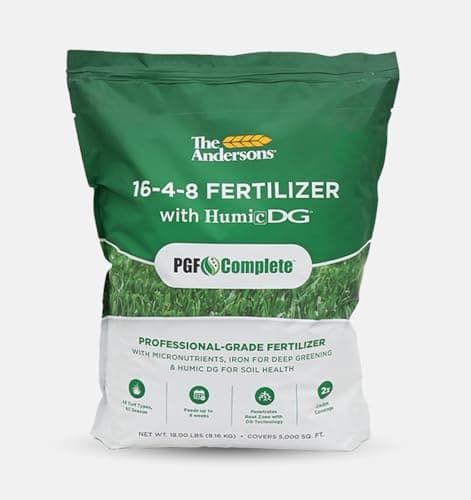
The Andersons PGF Complete 16-4-8
A balanced slow-release fertilizer for the masking approach, greening the rest of the lawn so a dark ring stops standing out.
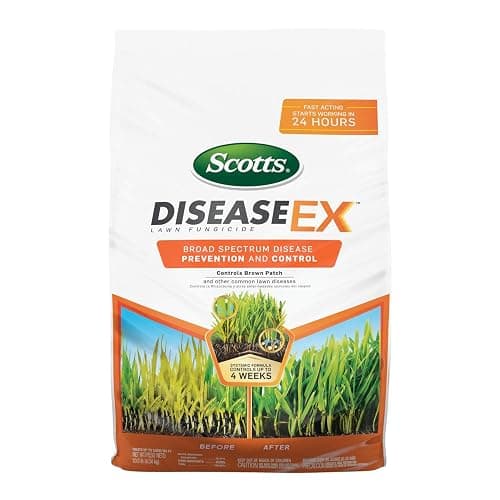
Scotts DiseaseEx Lawn Fungicide
A granular azoxystrobin option for homeowners who want to try the supporting tactic anyway.
Realistic Expectations
Here is the part I wish more articles said plainly. You may not make a fairy ring disappear completely, and that is normal. A green ring can be masked. A dead ring can usually be rehydrated and brought back close to normal. Mushrooms can be knocked down whenever they appear. But the underlying fungus often persists in the soil for years until the buried organic matter it is eating finally runs out, and the ring may keep nudging outward in the meantime. Success with fairy ring usually means managing the symptoms well, not winning a one-time battle. If you go in expecting steady improvement rather than instant eradication, you will be far less frustrated.
What Other Guides Miss
Most fairy ring articles jump straight to fungicide, and that is exactly backwards. The single most overlooked fact is that fairy ring is primarily a soil-water problem, not a spray-it-and-done leaf disease. The water-repellent soil is doing most of the visible damage, which is why aeration and a wetting agent outperform a fungicide on the typical home lawn. If you only remember one thing, remember to fix the water before you fix the fungus.
The second thing guides skip is honesty about the timeline. They imply a clean cure that rarely exists. Fairy ring is a manage-it problem, and pretending otherwise sets you up to waste money on products that promise eradication. The third gap is the distinction between the three types. Whether you have a green ring, a dead ring, or just mushrooms completely changes whether you should mask, rehydrate, or simply rake and move on. Lumping them together leads people to over-treat a harmless green ring or under-treat a dying one.
Your Fairy Ring Action Plan
Here is the sequence I would actually follow on a home lawn, in order:
- Confirm it is fairy ring. Look for the circular or arc shape that expands over time, plus any dark green band or ring of mushrooms. If you are unsure, run a quick photo diagnosis before spending on treatment.
- Identify the type. Dark green ring (Type 2), dead or dry ring (Type 1), or just mushrooms (Type 3). This decides how hard you need to push.
- Core aerate the ring and a buffer around it. Open the soil so water and air can finally get down. Use the aeration calculator for timing.
- Apply a soil wetting agent and water it in. This is the workhorse step for breaking the water-repellent layer.
- Water deeply and consistently. Long, slow soaks over the affected zone, not light daily sprinkles. Build a schedule with the watering tool.
- Mask the color with balanced nitrogen. For a green ring, greening up the rest of the lawn is often the whole fix.
- Knock down mushrooms as they appear. Rake or mow them off, especially around kids and pets, and never eat wild lawn mushrooms.
- Escalate only if needed. Consider professional fungicide-plus-surfactant treatment, or full soil removal, only for severe, persistent rings on lawns where the look truly matters.
- Be patient. Expect steady improvement over seasons, not an overnight cure, and keep up the aeration and watering habits that keep symptoms in check.
Fairy ring has a reputation for being mysterious, but once you understand it is really a buried-organic-matter-plus-dry-soil problem, the plan becomes practical. Fix the water, mask the color, manage the mushrooms, and only reach for the heavy tools when the situation truly calls for it.
Free Lawn Care Tools
Fairy ring comes from soil-dwelling fungi that feed on decaying organic matter like buried wood, old roots, tree stumps, or thatch. As the fungus grows outward in a circle, it releases nitrogen that greens up the grass and can also make the soil water-repellent. That combination is what produces the rings, arcs, and mushrooms you see on the surface.
There is no quick spray that erases fairy ring, and honestly it is one of the hardest lawn problems to fully cure. The most reliable approach is to break up the water-repellent soil with core aeration, apply a soil wetting agent, and water deeply so moisture can reach the affected zone. Masking the ring with balanced nitrogen fertilizer evens out the color while you work on the soil underneath.
The mushrooms in a fairy ring are not harmful to your grass, and most are simply the visible fruiting bodies of the fungus already living in the soil. They are usually a cosmetic nuisance more than a threat to the lawn. That said, never eat wild lawn mushrooms, since some species are toxic, and knock them down or rake them up if children or pets play in the yard.
Sometimes a ring fades on its own once the buried organic matter it is feeding on has fully decomposed, but that can take years and it is not something to count on. More often the ring keeps expanding outward season after season until you change the conditions in the soil. Active management with aeration, wetting agents, and deep watering gives you far more control than waiting.
Fungicide has only limited value against fairy ring. The fungus lives deep in the soil where sprays struggle to reach, so a surface application rarely makes contact with the part that matters. In severe cases a turf professional may use a fungicide combined with a wetting agent and deep watering to push the product down, but it is a supporting tactic, not a standalone cure.
All turf grasses can develop fairy ring, including cool-season types like fescue, ryegrass, and Kentucky bluegrass and warm-season types like Bermuda, zoysia, and St. Augustine. The fungus is feeding on organic matter in the soil rather than attacking a specific grass species, so the trigger is the same regardless of what you grow. Lawns built over cleared woodland or old construction debris tend to see it most.

Your lawn plan, in your pocket all season
Grass ID, a season plan, soil-timed reminders, and a lawn journal that remembers what you did. Free on iPhone.