Grass Seed Mats: When to Use One and How to Lay It

As an Amazon Associate we earn from qualifying purchases.
Buy a grass seed mat for a small bare patch that keeps washing out. Skip it for a whole lawn with stable, level soil. A mat can hold a seedbed in place, but you still have to prepare the soil, pick the right grass, and water the seed.
Fast Answer: A grass seed mat works best where loose seed or straw keeps moving. First check the package. Some rolls contain seed in a fiber mat. Others are empty erosion-control blankets that go over seed you buy separately. Prepare a smooth seedbed, use a grass suited to your site, lay the roll flat, secure it as directed, and keep the seedbed moist.
For a large, level lawn, ordinary seed and clean straw usually cost less and do the job. University of Wisconsin Extension calls straw the usual economical mulch and notes that preseeded fiber blankets need frequent irrigation. Check the package before deciding whether the mat stays or comes off after germination.
Know which roll you have
The name on the shelf does not tell you what's inside. Wisconsin Extension describes an "instant sod" blanket made from wood fibers with grass seed embedded. The same publication says its seed mix may be wrong for some locations. Read the species list before buying. If the package does not name the grass, leave it there.
An erosion-control blanket is a different product. North Carolina State Extension describes rolls of straw, wood fiber, or coir, with or without netting. These usually cover seed already placed on prepared soil. The blanket holds the surface while the grass establishes. Check the product instructions for seed placement, anchoring, overlap, and removal. Designs vary.
A loose mulch is the third choice. Straw works on many level seedbeds. Rutgers Cooperative Extension recommends clean straw for newly seeded lawns and says erosion-control matting can help on steep areas. The slope and water flow decide whether a loose cover will stay put.
Buy for the site
For a few bare patches on level ground, seed and a light straw cover are usually enough. See our straw guide for how to spread it without hiding the soil. A mat earns its place where rainfall moves the seed or a mild slope sheds the mulch. University of Minnesota Extension also recommends a germination or erosion-control blanket over bare dormant seeding, especially on sloped sites.
For a steep bank or a channel that carries flowing water, skip the small patch roll. North Carolina State Extension selects erosion blankets by slope and the force of water. Some sites need a different blanket class or professional erosion-control design. A household roll is not a drainage fix.
Check the seed mix next. A preseeded roll makes sense only if its grass species fits your region, light, and existing lawn. An empty blanket lets you choose the seed yourself. If you are unsure what grass is already growing, use the free grass identification tool before buying a seed mix. A paid care plan can then place seeding and later care on a calendar for your grass and location.
Prepare the seedbed
Clear stones, roots, and clods. Fix a low spot that collects runoff. Rake the exposed soil smooth and loosen the surface. Wisconsin Extension says seed needs soil contact and recommends lightly raking ordinary seed into the top quarter inch, then gently firming the surface. Do not lay a roll over hard crust and expect roots to find their way through it.
For a preseeded mat, follow its instructions on which side touches the soil. Do not add a second layer of seed unless the package calls for it. For an empty blanket, spread the seed at the seed label's rate, make soil contact, and then install the blanket. These are two different jobs.
Lay the roll flat
- Measure the bare area. A patch 6 feet by 8 feet is 48 square feet. Compare that with the roll's stated coverage. Include any overlap the product requires.
- Start at the high edge if the patch slopes. Follow the blanket's instructions for securing that edge. North Carolina State Extension shows a trench and staples for erosion-control blankets on slopes. A small patch product may use a different pattern.
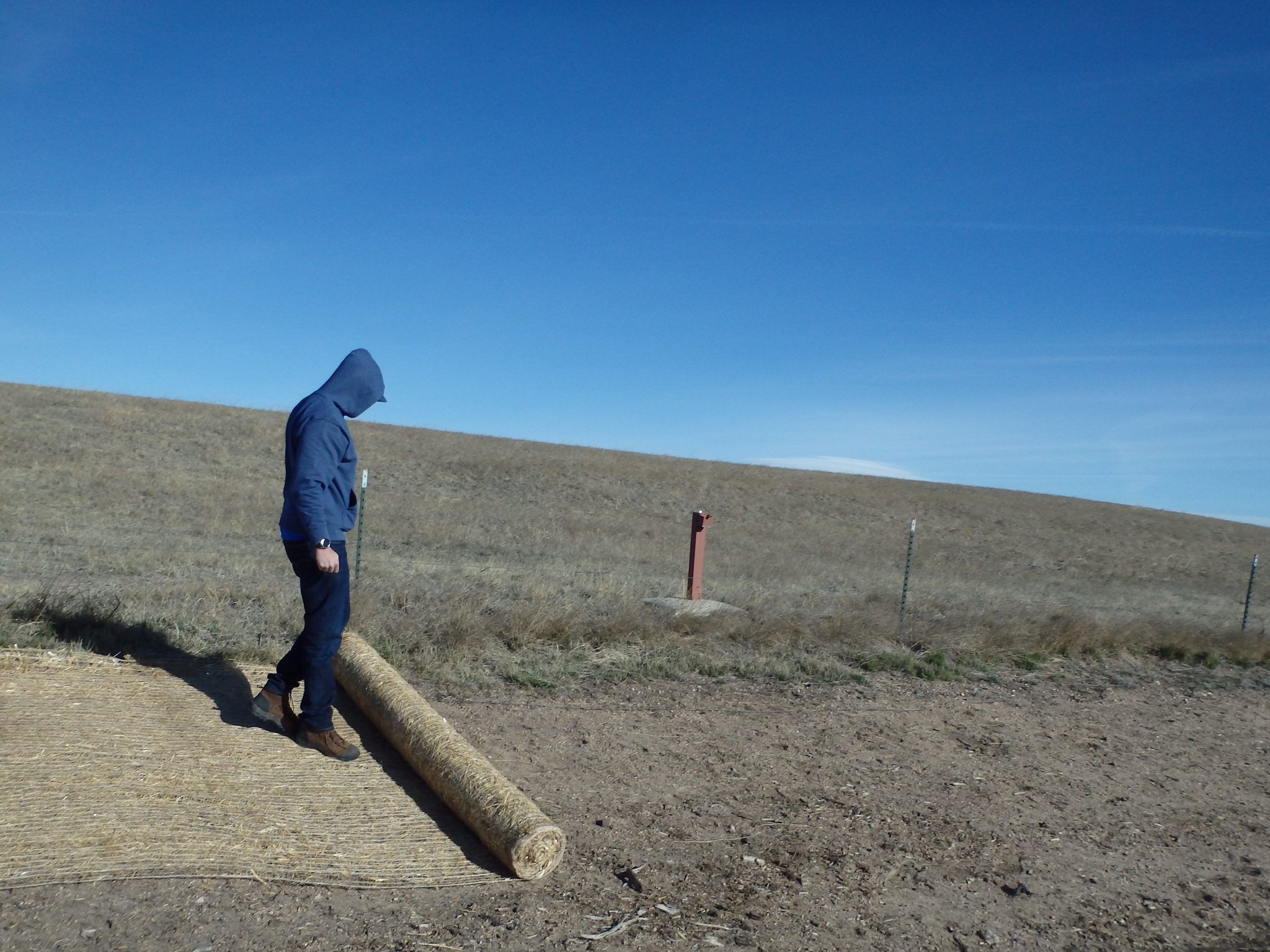
- Unroll across the prepared soil without stretching it. Press down any raised spots and fasten the edges as directed. Water must not run under the blanket. North Carolina State Extension says close soil contact helps prevent washouts.
- Water gently until the mat and soil below are moist. Stop before water carries soil or seed downhill.
That 48-square-foot example is only a measuring exercise. Roll coverage, overlap, and staple spacing come from the product label and the site, not from the arithmetic.
Water and check the seedlings
Keep the seedbed moist during establishment. Wisconsin Extension warns that preseeded blankets require frequent irrigation so the embedded seed does not dry out. Rutgers also advises keeping the top layer moist without turning it muddy. Look at the soil at an exposed edge. Change your watering when weather changes and when seedlings take root. A timer can help, but the damp soil is the check.
Keep feet and mower wheels off the patch while seedlings are small. Wisconsin Extension recommends waiting until seedlings reach about 3 inches before the first mow. Follow the mowing height for your grass after that. The new seed watering guide explains how watering changes after germination.
Remove it or leave it?
Read the roll's removal instructions before you plant. Some fiber blankets are designed to break down in place. Some temporary covers must be removed soon after germination so seedlings get light and air. Penn State Extension warns that leaving a removable cover too long can encourage disease and block light. Rutgers describes erosion matting that stays in place while it breaks down. The material and product directions decide the answer.
Before mowing, check for loose netting, exposed staples, and lifted edges. Follow the product directions for any material that remains. Do not pull a blanket through rooted seedlings just because the grass has turned green.
What other guides get wrong
A mat is a cover, not a soil repair. If runoff is still cutting a path through the patch, fix the water route first. If the soil is compacted, prepare the seedbed. If the roll contains a grass that does poorly at your site, convenient packaging will not change that. Wisconsin Extension makes the seed-mix warning explicit.
The store may show one "grass seed mat" beside several erosion blankets. Check the contents before comparing price. A roll with seed and a roll without seed do not cover the same job.
- Use your local Extension office to select grass species and a seeding window for your region.
- Use the seed label for the rate and the blanket maker's instructions for anchoring, overlap, watering, and removal.
- Ask for site-specific erosion advice when water runs down a steep bank or through a drainage channel.
The grass seed mat punch list
- Check whether the roll contains seed. If it does, check the species.
- Measure the patch and prepare smooth, loose soil.
- Place seed before an empty blanket; follow the package for a preseeded mat.
- Anchor the roll flat. Keep the seedbed moist and watch for runoff.
- Read the removal instructions before the first mow.
Sources: University of Wisconsin Extension, Lawn Establishment and Renovation; Rutgers Cooperative Extension, Seeding Your Lawn; North Carolina State Extension, Mulch Options for Erosion Control; University of Minnesota Extension, Dormant Seeding; Penn State Extension, Lawn Establishment.
Top Picks
- Scotts Wizz Spreader for Grass SeedCheck price on Amazon
- Simple Lawn Solutions Ultimate 3-18-18 Liquid FertilizerCheck price on Amazon
- Scotts Turf Builder Grass Seed Bermudagrass (4 lb)Check price on Amazon
As an Amazon Associate we earn from qualifying purchases.
Free Lawn Care Tools
Some do and some do not. Preseeded fiber mats contain seed, while erosion-control blankets usually cover seed spread separately. Read the product label and check the grass species before buying.
Put seed under an empty erosion-control blanket after preparing the soil. A preseeded mat already contains seed; follow its package instructions rather than adding seed by default. Keep either product in close contact with the soil.
A suitable erosion-control blanket can help hold seed and soil on a slope when installed correctly. Choose the blanket for the slope and expected water flow. Ask for site-specific advice if a steep bank or channel carries running water.
Keep the seedbed moist during establishment without making it muddy or washing soil away. Check the soil at an exposed edge and adjust for weather. University of Wisconsin Extension notes that preseeded blankets need frequent irrigation.
Follow the specific product instructions. Penn State Extension advises removing temporary covers soon after germination so light and air reach seedlings. Other erosion-control blankets are designed to stay in place and break down.
A mat can help where a light straw cover keeps moving, but straw is usually the economical choice on stable, level soil. University of Wisconsin Extension calls straw the usual low-cost mulch. Compare the site, grass species, and whether the roll includes seed.
Photos: Alex Schubert / USFWS / Wikimedia Commons · Public domain

Beat weeds and brown spots from your phone
Snap a photo, get the fix, and follow a plan timed to your soil and weather. Free on iPhone.