Creeping Thyme Lawn: Where It Fits and How to Start Small

A creeping thyme lawn fits a small, sunny area with good drainage and light foot traffic. Keep turf or a firm path where children play, dogs run, or people walk every day. Check those conditions before removing healthy grass.
Fast Answer: Creeping thyme can replace grass in a small area or fill gaps between stepping stones. Illinois Extension recommends those uses for Thymus serpyllum. Choose a site with full sun and well-drained soil, and match the exact species and cultivar (named plant selection) to your climate.
Keep regular walking routes on paving. Wisconsin Extension lists creeping thyme as tolerant of light foot traffic and warns that most groundcovers handle heavy traffic poorly. A flowering groundcover also needs care while it establishes. Start with a small area you can protect and maintain.
Match the Plant to the Place
Picture a sunny strip beside a patio. You want flowers there, and nobody needs to run across it. Now picture the worn route from the back door to the gate. Those spaces need different surfaces. Put the walking route on a firm path.
Illinois Extension describes Thymus serpyllum as a low-growing creeper suited to small lawn-substitute areas and stepping stones. NC State Extension describes Thymus praecox as a spreading perennial that forms a mat. Both need well-drained soil. A nursery's common name alone is too little information: record the botanical name and cultivar.
Check Sun, Water, and Traffic
Watch the proposed planting area through a clear day. NC State defines full sun for T. praecox as at least six hours of direct sunlight. Look at the soil after rain, too. That species tolerates dry conditions but can develop root rot in poor drainage. Correct persistent wetness before planting.
Small sunny area with little walking
A small thyme planting is worth considering if the soil drains well. Check the exact plant, local suitability, and establishment care.
Sunny path with stepping stones
Put thyme in the gaps and keep feet on the stones. Check that the walking surface is stable and the gaps leave room for the plants.
Frequent play, dog runs, or a daily walking route
Keep suitable turf or provide a firm path. Choose for actual wear rather than a general claim that thyme is walkable.
Persistent wetness or deep shade
Choose a groundcover suited to those conditions. Record drainage and available light, then ask for local plant advice.
The traffic descriptions need context. NC State says T. praecox tolerates moderate foot traffic. Wisconsin Extension lists creeping thyme for light traffic. Neither description supplies a daily walking count or promises a play surface. Plan for occasional steps and protect the regular routes.
Plan a Small Planting First
- Mark the area and its walking routes. Use the lawn size calculator to check the area before requesting a plant quote.
- Ask a local nursery or Extension office which species and cultivar suit your site. Confirm winter hardiness and a local planting window.
- Remove existing grass and weeds from the selected planting area. Agree on a suitable removal method before buying plants. A general weed killer can injure a new broadleaf groundcover.
- Choose rooted plants or plugs and spacing for that exact selection. Illinois recommends 8 to 12 inches between T. serpyllum plants. An Iowa Extension response recommends plugs planted in spring for its Iowa case, with 8 to 18 inches between plants. Use local instructions rather than mixing those ranges.
- Plant into prepared, draining soil. Water and check the new plants as directed. Keep traffic off while they establish, and remove weeds between them.
- Inspect the planting through wet weather, dry weather, and normal use before expanding it.
The Iowa response warns that the planting may take several years to fill in. Wisconsin Extension also identifies irrigation and weed control as establishment work for groundcovers. Budget for that work as well as the plants. Drought tolerance after establishment does not remove the need to care for new roots.
A Lawn I'd Walk You Through: A Patio Strip and a Gate Route
Consider an illustrative yard with two areas. The patio strip gets full sun, drains well, and receives occasional steps. The route to the gate gets daily traffic. No installation or field trial is claimed here; these are planning inputs.
I'd assess the patio strip for a small thyme planting and keep the gate route on turf or paving. The recommendation follows Illinois's small-area guidance and Wisconsin's traffic limit. If the patio strip stays wet after rain, I'd stop the thyme plan and ask for a plant suited to that condition. Match each area separately.
What Other Guides Miss
A homeowner removes a whole lawn after seeing a flowering thyme photo. In this hypothetical case, the same area must still carry games and the route to the shed. The planting now has to meet a use the photo never documented. Set the use before the plant.
Wisconsin Extension says groundcovers need establishment care and most handle heavy traffic poorly. A nursery photo proves neither performance in your yard nor maintenance savings. Ask about the exact plant, light, drainage, winter behavior, and traffic. For broader options, compare the drought-tolerant lawn guide.
- Confirm a locally suitable species, cultivar, and planting window before removing turf.
- Ask for a drainage assessment if the area stays wet.
- Use a plant-specific care plan. Turf fertilizer, herbicide, and watering instructions do not automatically apply to thyme.
Your Creeping Thyme Action Plan
- Record sun, drainage, walking routes, and the use you need to preserve.
- Match the exact botanical name and cultivar to your site.
- Get a quote that includes plants, site preparation, and establishment care.
- Start small and protect the planting while it roots.
- Keep a separate plan for any remaining grass. If you need help with that turf, upload a lawn photo and compare the paid care-plan options. A turf plan supports the grass area; confirm thyme care with local plant guidance.
Sources: NC State Extension, Thymus praecox; Illinois Extension, creeping thyme; Wisconsin Extension, groundcovers; Ask Extension, Iowa planting response.
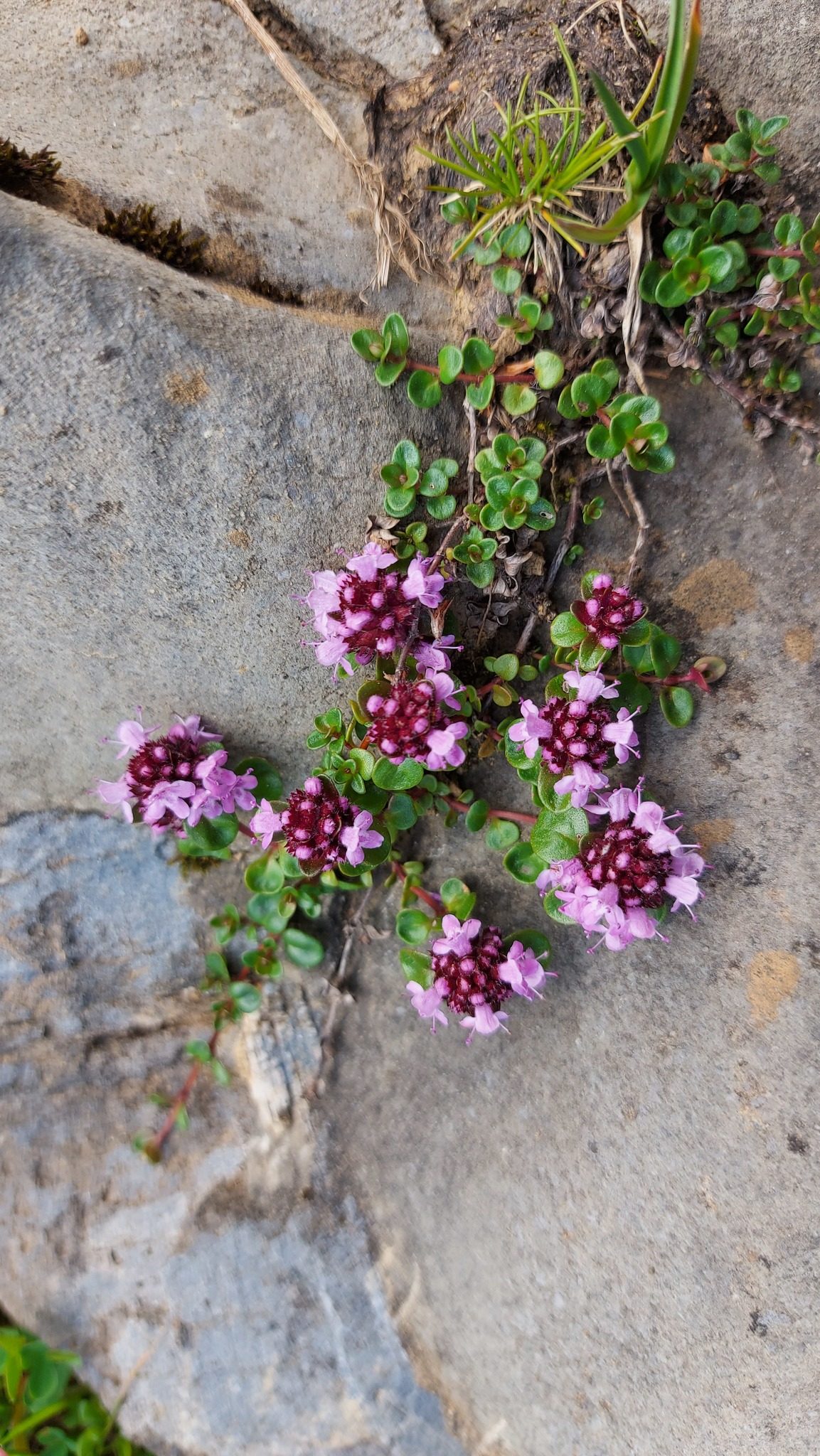
The hero shows flowering Thymus praecox among rocks in an iNaturalist observation. It does not document a planted lawn or a traffic test.
Display crops vary by screen.
Free Lawn Care Tools
It can suit a small area with sun, well-drained soil, and light foot traffic. Illinois Extension recommends Thymus serpyllum for small lawn-substitute areas and stepping stones. Keep a separate surface for regular play and walking routes.
Plan for occasional steps rather than constant wear. Wisconsin Extension lists creeping thyme for light foot traffic, while NC State describes moderate tolerance for Thymus praecox. Neither gives a daily walking limit; put busy routes on a firm path.
Check the exact species. NC State lists at least six hours of direct sunlight for Thymus praecox, while Illinois allows full sun to very light shade for Thymus serpyllum. Both require well-drained soil.
Rooted plants or plugs provide an established starting plant. The cited Iowa Extension response recommends plugs in spring for its Iowa case and says seed is less successful there. Confirm the local planting window and spacing for your exact selection.
Expect establishment care. Wisconsin Extension identifies irrigation and weed control among the tasks groundcovers need while they fill in. Check the new planting regularly and follow plant-specific advice instead of applying a turf maintenance schedule.
Photos: Gergely Nigg / iNaturalist · CC BY 4.0

Beat weeds and brown spots from your phone
Snap a photo, get the fix, and follow a plan timed to your soil and weather. Free on iPhone.
Related Articles
 Lawn Care Tips
Powdery Mildew on Grass: Check the White Coating and Fix the Conditions
Oct 8, 2026•3 min read Lawn Care Tips
Florida Betony in Lawns: Identify the Tubers and Control Regrowth
Oct 7, 2026•3 min read Lawn Care Tips
Grass Seed for Sandy Soil: What to Plant and How to Start It
Oct 1, 2026•4 min read