How Often to Water New Grass Seed (Stage-by-Stage Schedule)

As an Amazon Associate we earn from qualifying purchases.
You spread the seed, raked it in, and now you're standing there with the hose. Once a day? Three times? When do you stop? New seed is unforgiving, and the schedule that works for an established lawn is the one that kills a new seeding. Here's the stage-by-stage version I give homeowners.
Fast Answer: Water new grass seed lightly, two to three times a day, every day, keeping the top inch or so of soil moist but never soggy until the seed germinates. Clemson Extension recommends small amounts two or three times a day for about two to three weeks, and University of Missouri Extension says a new seeding may need as many as four light waterings a day when it's dry and windy. Each session is short: Nature's Seed suggests about 10 to 15 minutes, though fast spray heads may need only a few minutes to wet the surface.
Once seedlings reach about 2 inches, Missouri Extension says to water less often but more deeply, and after two or three mowings, switch to deep, infrequent watering. Slow germinators like Kentucky bluegrass and warm-season seed stay on the light daily schedule longer.
The Stage-by-Stage Watering Schedule for New Grass Seed
Here's how I break it into stages after twenty years of seeding lawns.
| Stage | Rough timing | How often | How much | Goal |
|---|---|---|---|---|
| Before seeding | Day before | Once | Enough to moisten a few inches down | Damp, workable seedbed, not mud |
| Seeding day | Day 0 | Right after seeding | Gentle, light soak with no runoff | Settle seed into soil contact |
| Until germination | Roughly days 1 to 21, longer for bluegrass and warm-season seed | 2 to 3 times a day, up to 4 in hot, dry, windy weather | Short sessions: minutes, sized to your sprinkler | Top inch never dries out |
| Seedlings up to about 2 inches | The weeks after germination | Keep daily, 1 to 4 light waterings | About 1/8 to 1/4 inch of water per day total | Keep the young roots moist |
| Seedlings past 2 inches | Once seedlings reach 2 inches | Gradually less often | Longer, deeper sessions | Push roots down |
| After 2 or 3 mowings | Later in the 4 to 8 week establishment period | Deep and infrequent | Established-lawn schedule | Build a drought-hardy root system |
Frequency, the 2-inch and mowing triggers, and the 1/8 to 1/4 inch per day figure come from Missouri Extension's G6700. The 7 to 21 day germination watering window is from NC State Extension, and the 4 to 8 week critical period from Penn State. Seed type and weather move every stage, so go by what the seedlings are doing, not the date.
Watering Before You Seed
Start a day early. Nature's Seed recommends watering the plot before planting so moisture sinks down a few inches, so seed lands on damp soil instead of dust.
Don't overdo it. Waterlogged soil is its own problem, and Penn State Extension notes that slightly moist soil is easier to prepare for seeding than wet soil. If it puddles, let it drain before you rake.
The First Watering After Seeding
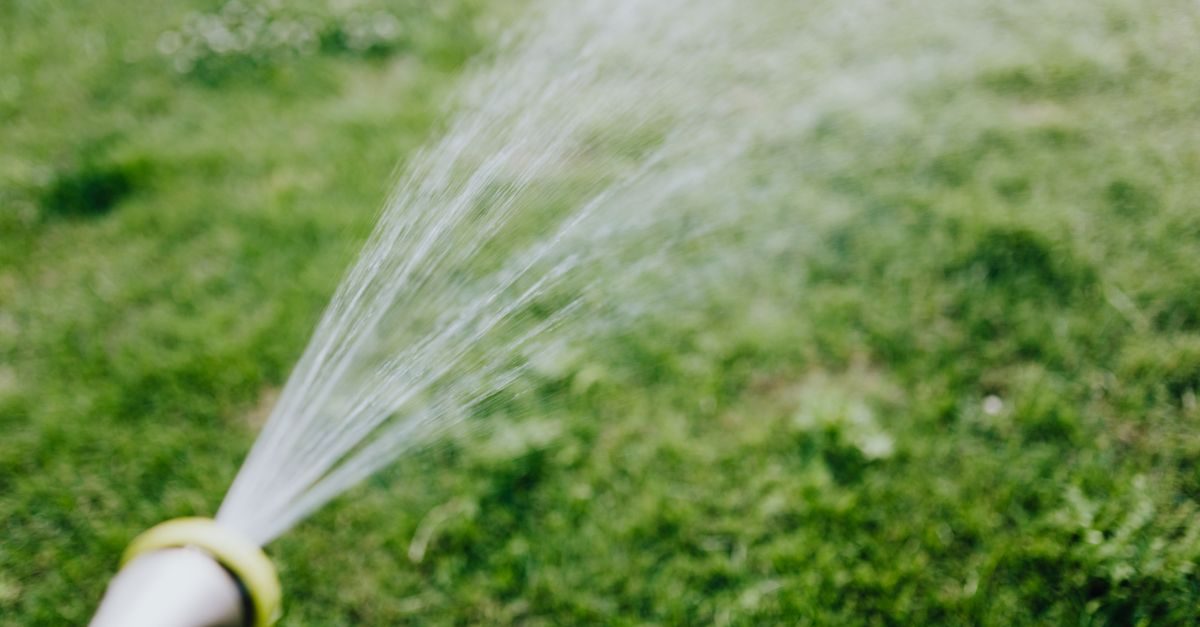
Clemson says to water as soon as possible after seeding, aiming to keep moisture in the top 2 to 3 inches of soil. Do it gently: a hard blast washes seed into low spots. Use a mist or shower setting or an oscillating sprinkler, and stop when water starts to pool or run.
If you mulched with straw, water right through it. Clemson notes straw lightly shades the seed and holds moisture, and Missouri Extension's watering guide adds that it reduces seedling damage from large sprinkler drops.
The Germination Phase: How Often, How Long, and Every Day?
Yes, water every day. This is the stretch where new seedings live or die. Clemson puts it bluntly: if the soil surface dries out after the seeds begin to swell and before roots develop, many seedlings die.
- How often: two to three times a day is the standard. Clemson and NC State Extension both say two or three light waterings daily, and Missouri says as many as four on dry, windy days.
- How long each time: short. Nature's Seed suggests roughly 10 to 15 minutes per session. Treat that as a ceiling, not a target: fixed spray heads put water down much faster than an oscillating sprinkler, so they may only need a few minutes. The catch-cup test below settles it.
- How deep: shallow. NC State says to keep the top 1.5 inches moist, and Missouri says 1 to 2 inches.
- How long this lasts: NC State says light watering two or three times a day may be needed for 7 to 21 days.
The target, in Clemson's words, is soil like a wrung-out sponge. Press a finger in at midday: dry means you're behind, squishy means skip a session.
Missouri Extension defines germination as a green cast across the lawn with seedlings 1/4 to 1/2 inch tall. That's your signal to move to the next stage, not to stop watering.
After Sprouting: When to Stop Daily Watering
This is where I see the most mistakes: quitting at the first sign of green, or misting three times a day into November.
The transition is gradual. Missouri Extension lays it out in three steps:
- Right after germination: keep watering one to four times a day with light applications, about 1/8 to 1/4 inch of water per day in total.
- When seedlings reach about 2 inches: gradually water less often, but more deeply each time.
- After the new lawn has been mowed two or three times: water deeply and infrequently, like an established lawn.
In practice, you go from several sessions a day to one, then every other day. Nature's Seed describes stepping down to once a day, then every other day, for about 30 minutes each. Jonathan Green says that once new grass is about 4 inches tall and ready to mow, you can cut back to two or three times a week, 15 to 20 minutes per zone.
So when do you stop daily watering? When the seedlings are a couple of inches tall and rooting in, not when you first see green. That lines up with the 2 to 3 week light-watering window our overseeding calculator shows for most seedings, but slower species like bluegrass can need longer, so go by seedling height (about 2 inches) rather than the calendar. After that, our watering schedule calculator and lawn watering schedule guide cover the long-term routine.
Cool-Season vs Warm-Season Seed: Germination Times Change the Schedule
How long you stay on the light daily schedule depends mostly on what's in the bag.
| Grass | Typical range to germinate | What extension and seed sources add |
|---|---|---|
| Perennial ryegrass | 5 to 10 days | In a seed mix, ryegrass often shows in 3 to 5 days, with other species filling in over 10 to 30 days (University of Minnesota Turfgrass Science) |
| Tall fescue | 7 to 14 days | Faster than bluegrass; NC State says bluegrass takes 7 to 14 days longer than other cool-season grasses (NC State Extension) |
| Kentucky bluegrass | 14 to 30 days | Two to three weeks in spring (Missouri Extension) |
| Bermudagrass | 10 to 30 days | Warm-season seed generally takes 2 to 4 weeks (Nature's Seed) |
| Zoysia | 14 to 21 days | May not come up for 14 to 21 days (Nature's Seed) |
The typical ranges match the germination data behind our soil temperature tool and Lawn Seeding Calculator. Cool soil pushes seed toward the slow end.
The bluegrass trap is the one I'd underline. Most northern bags are mixes of bluegrass, ryegrass and fescue. The ryegrass pops in a few days, the lawn looks green, and people back off the water. NC State warns specifically against this: with bluegrass in the mix, keep watering until the bluegrass seedlings emerge too.
Warm-season seed goes down in heat and germinates slowly, so it needs the light schedule longer. Check soil temperatures before you buy seed, and see our germination temperature chart by grass type.
- Germination ranges assume good conditions. Cold soil, dry spells and deep seed placement stretch them.
- Seeding windows are regional. Missouri Extension notes that lawns seeded within a week of Labor Day are more likely to fill in by winter than lawns seeded in October, but your best dates depend on where you live. Our spring and fall seeding deadlines by region is a good starting point.
- For seeding rates and starter fertilizer in your state, check your extension office. Penn State, Clemson and NC State all publish establishment guides.
Adjusting for Weather and Soil
- Hot, sunny, windy days: add sessions, not minutes. Nature's Seed says cool-season seed planted during a hot stretch may need watering 4 to 5 times a day in short 5 to 10 minute bursts.
- Cool, cloudy weather: the surface dries slowly. Nature's Seed says that in cooler temperatures above 55 degrees you can often drop to one or two times a day. Penn State also says to reduce irrigation during cool, overcast conditions.
- Rain: Penn State says to cut back during rainy periods. A gentle rain counts as a watering; a downpour that washes seed away means reseeding.
- Mulch: Clemson notes that unmulched soil dries out quickly and mulched beds need less irrigation.
- Clay soil: it takes water slowly, so run shorter cycles to avoid puddles and runoff. Missouri Extension's watering guide says most soils in that state absorb only about 1/2 inch of water per hour.
- Sandy soil: it drains and dries fast, so expect to be at the high end of the frequency range.
- Slopes, shade and sun: slopes shed water before it soaks in, so use shorter sessions and let each one absorb before the next. NC State describes the same approach for slopes and compacted soil: water until runoff is about to start, wait 30 minutes, then apply more. Shaded areas dry out more slowly than full-sun areas, so check them before adding water. If one zone covers both, the sunny side usually sets the schedule.
Best Time of Day to Water New Grass Seed
Early morning is the anchor. NC State recommends early morning watering because it reduces disease risk and water lost to evaporation. New seed needs more than one session. Nature's Seed gives a sample fall schedule of early morning, mid-morning and late afternoon, and says to avoid the peak sun hours between 10 a.m. and 4 p.m. when you can.
A quick midday spritz still beats a dried-out seedbed. Avoid watering at night. Jonathan Green notes that nighttime watering lets moisture sit on the grass and promotes fungus, and tender seedlings are exactly what disease goes after.
Overseeding vs Bare Spots vs a Brand New Lawn
The goal is the same in all three: keep the seed moist until it roots.
- Overseeding: the existing grass intercepts water, so make sure the soil under the canopy is actually damp. Then step down as soon as the seedlings allow, because weeks of light daily watering invite shallow roots and disease in the lawn you already have. Our fall overseeding guide covers the full process.
- Bare spots: small patches dry fastest. A hose-end sprayer on a shower setting and a thin straw cover are easier than running a whole zone.
- A new lawn from bare soil: the most exposed soil and the longest light-watering stretch. Penn State calls the 4 to 8 weeks after seeding the critical period, so plan to be around. Our guide to growing grass from seed walks through the timeline.
Laying sod instead? That needs deeper soakings; see how long sod takes to root.
Sprinkler Run Times and the Catch-Cup Test
"Water for 10 minutes" means nothing until you know what your sprinkler puts out, and rotors and spray heads differ a lot.
Missouri Extension describes the method: set out shallow, straight-sided containers (tuna cans work well) or rain gauges in a grid across the area, run the sprinkler for a set time, and measure the depth collected. From there it's simple math. Their example: if a sprinkler puts down 1/4 inch in 45 minutes, it applies 0.33 inch per hour.
For the post-germination stage, Missouri Extension's G6700 puts the target at about 1/8 to 1/4 inch per day total, split across light sessions. Once you know your rate, divide that daily amount across your two to four sessions and you have real run times instead of guesses. With fast spray heads, that can mean sessions of only a few minutes, shorter than the 10 to 15 minutes often quoted. A few more tips:
- Look at the grid of cans, not just the average. Uneven catch means puddles in one spot and bare soil in another.
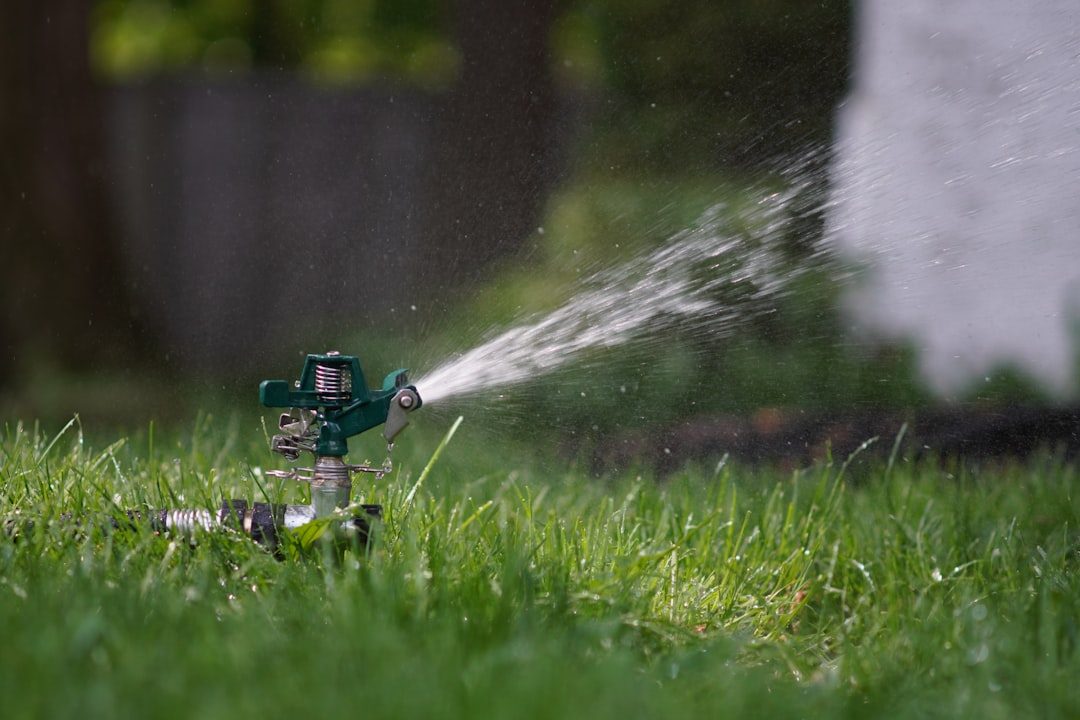
- Missouri Extension notes that wheel-driven traveling sprinklers are not suitable for newly seeded lawns, because they get stuck in soft soil.
- On an irrigation controller, set several short start times a day on the seeded zones instead of one long run. Missouri Extension's watering guide notes controllers can be set for several short cycles to deliver the total without runoff. On a hose, a cheap timer does the same job.
Signs You're Overwatering or Underwatering New Seed
Too much water: puddles, soggy soil, seed collecting in low spots, algae, and mushrooms, which Nature's Seed flags as an overwatering sign. Seedlings that collapse at the soil line are a warning too: Missouri Extension notes the constant watering seedlings need, especially in summer, raises the chance of Pythium damping off and brown patch. More in signs of overwatering grass.
Too little water: a dry, pale soil surface between sessions, seedlings that sprout then wilt, and germination only in low spots. See signs of underwatering in grass.
Seed patchy or not germinating? Watering is only one possible cause. Old seed, seed buried too deep, cold soil, a pre-emergent applied earlier in the season, disease or weeds that look like grass seedlings can all look similar at a glance. Before you dump more seed on it, snap a photo for a free AI lawn diagnosis. It can help tell whether those sprouts are your grass or a weed like crabgrass, and whether the thin spots look like a watering problem or something else.
What If You Missed a Day of Watering?
Don't panic, and don't flood it. It depends on the stage.
- Seed hadn't started to swell yet (first day or two, cool weather): it probably just paused. Resume the normal schedule.
- Seed had swollen or sprouted, and the surface dried out: some of it likely died. Clemson says seedlings die if the surface dries out after seeds swell and before roots develop. Nature's Seed notes that new seed is especially vulnerable to a missed watering in the first 2 to 3 weeks.
- Seedlings a couple inches tall: one dry day in mild weather is usually survivable.
Either way, go back to light, frequent watering, not one heavy soak that washes seed around. If patches stay bare past the germination range for your seed, rake lightly and reseed. Leaving town? Nature's Seed suggests having someone keep up the watering.
When to Mow and Fertilize New Grass
Mow once the soil is firm enough not to rut. Penn State says to start when grass is no more than one-third taller than your target height, so a 3-inch lawn gets cut before it reaches 4 inches; our first-time mowing guide has heights by grass type. For feeding, NC State says to fertilize new seedlings about six to eight weeks after emergence, and our starter fertilizer guide covers seeding day.
Those dates are easy to lose. You seed in September, get busy, and it's November before you remember the first feeding. WGIS Premium builds a 12-month care plan around your grass and ZIP code, with smart seasonal reminders so the first fertilizer and follow-up care land in the right week.
What Other Guides Miss
Most guides give a frequency and stop. The schedule is really set by two things you can check: your sprinkler's output and the seed in your bag.
Two neighbors both "water 15 minutes, three times a day." One has spray heads, the other rotors. One yard puddles, the other germinates in stripes. Same instructions, opposite failures, and the catch-cup test fixes it in a morning.
Then the bag. A mix with ryegrass and bluegrass can look finished while the bluegrass, the part that spreads, is still underground. Find the slowest species on the label and run the schedule to that one.
And one more: new seedlings are hard to tell apart. In spring seedings especially, crabgrass sprouts in the same moist seedbed you built for your grass, which Missouri Extension warns about. If what's coming up doesn't match what you planted, a free photo diagnosis can help sort it out before you spend a month watering weeds.
When you graduate to deep, infrequent watering, watering your lawn the right way covers the routine.
Your New Grass Seed Watering Action Plan
- Time and size the seeding with the soil temperature tool and overseeding calculator.
- Run the catch-cup test so run times match your sprinkler.
- Pre-water the day before, then water gently right after seeding.
- Water two to three times a day until the slowest species in your mix sprouts.
- At about 2 inches, water less often and deeper; after two or three mowings, go deep and infrequent.
- Patchy or odd-looking sprouts? Try a free photo diagnosis before reseeding.
- Put the first mow and feeding on a calendar, or let a Premium care plan remind you.
New seed isn't hard, it's just needy for a few weeks. Keep the surface moist, step down gradually, and you'll have a lawn that roots deep enough to stop needing you so much by next summer.
Free Lawn Care Tools
It depends on timing. If the seed had not started to swell yet, it usually just pauses. If it had swollen or sprouted and the soil surface dried out, Clemson Extension says many seedlings die, so expect some thin spots. Go back to light, frequent watering, give it a week or two, and reseed any patches that stay bare.
Lightly, two to three times a day, every day, so the top inch or so of soil never dries out. Clemson and NC State Extension both recommend two or three light waterings daily, and University of Missouri Extension says a new seeding may need up to four on dry, windy days. Keep it moist but not soggy.
Yes. Puddles, soggy soil, seed washing into low spots, algae and mushrooms are all signs of too much water. Constant wet soil also raises the risk of seedling diseases like Pythium damping off, which Missouri Extension flags for summer seedings. Aim for soil that feels like a wrung-out sponge, not mud.
Dry, unsprouted seed can sit for a while, but once seed has absorbed water and begun to swell it is vulnerable. Clemson Extension notes that if the surface dries out after seeds swell and before roots develop, many seedlings die. Nature's Seed calls the first 2 to 3 weeks the most vulnerable period, so set a timer or have someone water if you are away.
Morning. NC State Extension recommends early morning watering because it reduces disease risk and evaporation. New seed needs more than one session, so add a mid-morning or late-afternoon watering too. Avoid watering at night, which Jonathan Green notes leaves moisture sitting on the grass and promotes fungus.
For cool-season grasses like tall fescue and Kentucky bluegrass, late summer to early fall is best. University of Missouri Extension notes lawns seeded within a week of Labor Day are more likely to fill in by winter than October seedings. NC State Extension says warm-season grasses are best planted in late spring and early summer. Your exact window depends on your region and soil temperature.

Your lawn plan, in your pocket all season
Grass ID, a season plan, soil-timed reminders, and a lawn journal that remembers what you did. Free on iPhone.