Powdery Mildew on Grass: Check the White Coating and Fix the Conditions

Does a shaded part of your lawn look white or gray? Inspect a few blades before you treat it. Powdery mildew produces a powder-like coating on leaves. Tiny surface beads or web-like threads point to a different problem.
Fast Answer: Powdery mildew on grass usually improves when you reduce shade, improve air movement, and adjust care for shaded turf. Penn State Extension says fungicides are generally unnecessary on home lawns. The disease can weaken grass, so investigate a patch that keeps thinning.
Check individual leaves first. A white to gray powdery coating on shaded grass is consistent with powdery mildew, especially on Kentucky bluegrass. Compare the coating with the lookalikes below. If the signs do not fit, get a confirmed diagnosis before applying a pesticide.
Is the white coating powdery mildew?
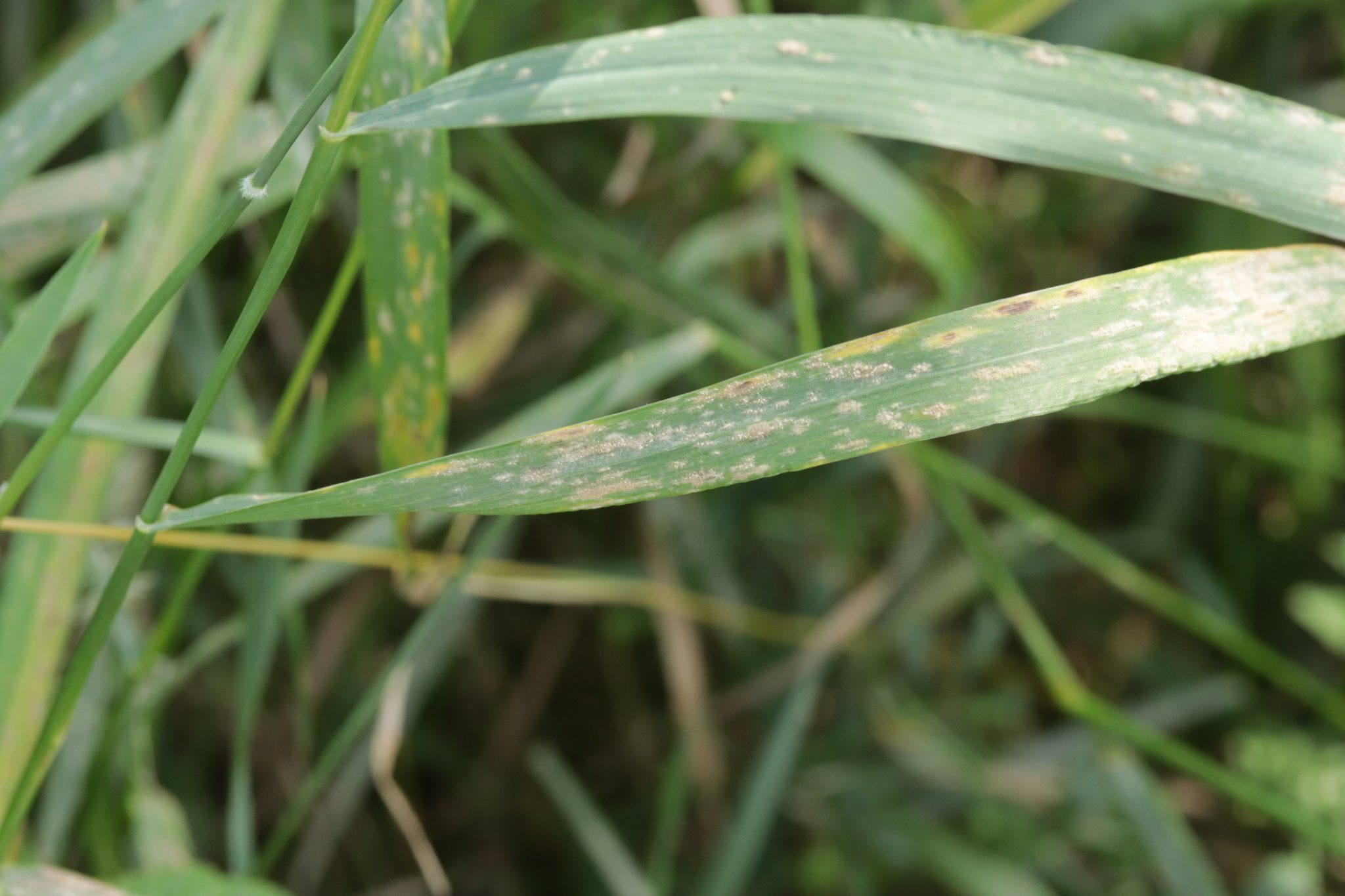
Is the coating attached to individual leaves? Look closely at several blades from the affected patch. Penn State Extension describes small gray-white patches that can spread over a leaf. Older infected leaves may turn yellow. The fungus, Blumeria graminis, feeds from leaf cells.
Is the affected grass mostly in shade? That pattern strengthens the identification. Penn State identifies Kentucky bluegrass as particularly susceptible. A white coating alone cannot confirm the cause.
The hero photograph shows powdery mildew recorded on couch grass, also called quackgrass, in an iNaturalist observation. It illustrates a leaf coating; it does not show a Kentucky bluegrass lawn or establish your grass species.
Could it be another white lawn problem?
Small beads on the blades
Can you see many tiny, round structures on the surface? The University of Minnesota's turf diagnosis key describes this sign for slime mold, which often follows rain or high humidity. The structures can be white or several other colors. Compare them with the photographs in our slime mold guide.
Web-like threads over tan patches
Do you see threads between blades and distinct tan, dead areas? Minnesota describes cobweb-like growth during cool, wet periods as a sign of dollar spot. Purdue's powdery mildew profile says powdery mildew does not produce web-like growth on plant surfaces. Threads alone do not confirm dollar spot; use the patch pattern and leaf damage too.
Loose powder after an application
Was lime or another granular material applied just before the white appearance? Check the application record and compare untreated grass. This is a history check, not a disease test. If you cannot distinguish residue from fungal growth, send close photographs and that history to your county extension office.
Why does it keep appearing in shade?
Is the patch beside a wall, solid fence, or dense shrubs? University of Maryland Extension identifies shade and poor air circulation as favorable conditions. Spring and early autumn are common outbreak periods. Maryland lists cool conditions around 55 to 70°F, but that range supports a diagnosis rather than proving one.
Does the lawn have mildew even when the blades are dry? NC State Extension explains that this disease needs high humidity but does not require water on the leaf surface. Extra irrigation is not a treatment. Check the soil and the grass's water needs before running the sprinkler.
What should you change first?
Can you increase light or air movement without damaging nearby plants? Penn State recommends reducing shade and improving air circulation. Start with manageable shrubs; ask a qualified arborist about large tree work. Then adjust maintenance to the grass and location.
- Photograph the whole patch and a close leaf view. Record whether it is beside a fence, under a tree, or in a more open area.
- Reduce crowding from suitable shrubs where practical. Do not remove major tree limbs solely from a lawn diagnosis.
- Check the mowing height for your grass. NC State warns that shaded turf tolerates low mowing poorly. The mowing height calculator can help you check your setting.
- Adjust irrigation to the shaded area. NC State says shaded turf needs less water than turf in full sun. For established grass, avoid frequent light watering; water according to soil conditions and your local guidance.
- Review fertilizer use. Purdue warns that excess nitrogen may increase mildew risk. Maryland also advises avoiding low fertility and drought stress. Follow a soil-test-based care plan instead of adding fertilizer to treat the white coating.
- Compare new growth and the amount of thinning at later checks. If the patch expands, leaves die, or the identification remains uncertain, contact your extension office.
This is a source-based inspection and care procedure. It is not a reported treatment trial, and it does not promise a recovery time.
Do you need a fungicide or different grass?
Is the lawn growing normally apart from the coating? Penn State says powdery mildew rarely kills turf and generally does not need fungicide outside highly managed turf. NC State adds that prolonged disease can thin grass. Continued decline warrants diagnosis rather than an automatic spray.
Does the same deeply shaded area fail each season? Penn State describes fine fescues and tall fescue as more resistant than Kentucky bluegrass. Resistance does not make grass immune, and it does not make deep shade suitable for turf. Maryland recommends a shade-tolerant cultivar, a named grass variety, or a lawn alternative where direct sun is inadequate. Select for your climate and site before reseeding.
Extension Guidance: Ask your county extension office to confirm persistent thinning and recommend grass for the available light. If a fungicide is justified, use a current product labeled for the lawn use site and powdery mildew. Follow its rate, interval, protective equipment, and entry restrictions. An active ingredient mentioned in an older guide does not establish the current label on a bottle.
What other guides misdiagnose
Did mildew appear on roses or cucumbers near the lawn? Maryland explains that powdery mildew on those plants is caused by different species and is not the source of the turf infection. A garden-plant treatment does not establish a lawn treatment.
Can a photo settle every case? It can help narrow the visible signs. A lawn photo diagnosis is a starting point; a county extension diagnosis is the next step when several causes fit or the turf keeps declining.
Your powdery mildew diagnosis checklist
- Inspect several leaves for a powdery coating, round beads, or web-like threads.
- Confirm the lawn grass and compare shaded and sunny areas.
- Improve light and air movement where practical.
- Check mowing, irrigation, and fertilizer for the shaded site.
- Get help for persistent thinning before choosing a fungicide or reseeding.
A personalized lawn care plan can organize routine mowing, watering, and feeding for your grass and location. Keep a persistent disease diagnosis with your extension office.
Hero photo shows powdery mildew on couch grass. Display crop varies by screen.
Free Lawn Care Tools
Inspect several leaves for a white to gray powdery coating and check whether the patch is shaded. Penn State identifies Kentucky bluegrass as particularly susceptible. Tiny round beads or web-like threads require a different diagnosis.
Penn State says it can weaken grass but rarely kills turf. NC State warns that prolonged disease can cause thinning. Get a diagnosis if the patch keeps declining instead of assuming every white patch is harmless.
NC State says the fungus needs high humidity but does not need water on the leaves. Shade and poor air circulation also matter. Check soil conditions and reduce unnecessary irrigation; do not water to wash away the disease.
Penn State says fungicides are generally unnecessary on home lawns. Address shade and care first. For persistent decline, obtain a diagnosis and follow the exact current label of any treatment recommended for your lawn.
University of Maryland Extension says powdery mildew on roses or cucumbers is caused by different species from the turf infection. Inspect the lawn independently. A product used on a garden plant does not establish a safe lawn use.
Sources (5)
- Penn State Extension: Turfgrass diseases, powdery mildew. Leaf signs, susceptibility, cultural control, and the usual limits of fungicide need.
- University of Maryland Extension: Diseases of home lawns. Seasonal conditions, care, and host-specific powdery mildews.
- NC State Extension: Powdery mildew in turf. Humidity, shade care, prolonged thinning, and chemical-use cautions.
- Purdue Extension: Turfgrass disease profiles, powdery mildew. Leaf diagnosis, air circulation, and nitrogen limits.
- University of Minnesota Extension: Discolored turf leaf blades. Slime mold and dollar spot comparisons.
Photos: Björn Sothmann / iNaturalist · CC BY-SA 4.0

Beat weeds and brown spots from your phone
Snap a photo, get the fix, and follow a plan timed to your soil and weather. Free on iPhone.