Straw on Grass Seed: How Much to Use and When to Remove It

As an Amazon Associate we earn from qualifying purchases.
A newly seeded yard can look bare even after a full afternoon of work. It is tempting to hide every bit of soil under straw. Leave the cover light. The seed needs contact with moist soil, and the new blades need room to come through.
Fast Answer: Yes, you can put straw over grass seed. Rake the seed lightly into prepared soil first, then spread clean straw in a loose, even layer. Clemson Extension recommends one 60- to 80-pound bale for about 1,000 square feet of newly seeded lawn in its South Carolina guidance. A bale count is a starting point because bales vary in weight and local recommendations differ.
Keep the seedbed moist without puddles. If new grass yellows under the cover, gently remove some straw. Clemson says you may remove straw when grass reaches 1 to 1½ inches or leave a light layer to break down. Read Clemson's lawn establishment guidance.
Put Seed in Soil Before You Spread Straw
Straw helps keep a bare seedbed moist and shields it from the force of watering. It cannot replace soil preparation. Clemson advises mixing seed into the top quarter inch of soil and firming the seedbed so seed touches soil.
Missouri Extension recommends raking cool-season seed under ⅛ to ¼ inch of soil, then rolling lightly before mulching. Follow the planting depth for your grass and your local extension guidance. Clemson Extension and Missouri Extension give the full seeding sequence.
Picture an illustrative 500-square-foot bare patch after grading. The owner scatters seed over firm, fine soil, rakes it in at the depth recommended for that grass, then spreads straw. Suppose clumps settle after watering and the new grass beneath them starts to yellow while the open parts stay green. Clemson says excess straw can shade seedlings; gently lift those clumps.
The rule starts before the straw goes down: give seed soil contact, then keep the cover light. For an existing lawn with thin spots, expose enough soil for the seed first. The fall overseeding steps cover that preparation in more detail.
How Much Straw Goes Over Grass Seed
Use a light, even layer that protects the surface without burying the seedlings. Clemson's South Carolina factsheet gives one 60- to 80-pound bale of wheat straw per 1,000 square feet. Missouri Extension gives one to one and a half bales per 1,000 square feet for a cool-season lawn, without fixing a bale weight in that passage. These are source-specific guides, so compare the bale's actual weight and the site's exposure instead of treating every bale as identical. Clemson and Missouri explain their rates.
For the illustrative 500-square-foot patch, Clemson's rate works out to half of its specified bale. Open the bale and shake out small handfuls across the area. Check the cover from several directions. Break up clumps where you cannot see the surface between stems, and fill bare spots that are exposed to runoff.
Treat this visual check as a way to apply the extensions' light-cover guidance. Oregon State Extension warns that too-deep mulch can prevent seedlings from emerging. Its advice for fine mulch is about ⅛ to ¼ inch; coarse straw does not settle into a uniform depth, so do not use that depth as a straw-bale conversion. Read Oregon State's mulching section.
A slope changes the job. The cover may wash or blow away, and seed can move with it. Missouri Extension describes straw as a way to reduce soil erosion on newly seeded ground.
If runoff crosses the slope, ask your local extension office which anchored erosion blanket or other site control is suitable. Loose straw alone may not stay where you put it. Missouri's establishment guidance covers erosion and watering.
Choose Clean Straw and Know Its Limits
Ask for clean wheat straw with little grain or weed seed. Straw is the dry stalk left after grain harvest; hay includes more seed-bearing plant material. Even straw can introduce weeds.
Missouri Extension advises avoiding straw on small bare patches because of weed seed and suggests a commercial seed mulch instead. If you are repairing a few spots in an otherwise sound lawn, a light layer of quality compost or a suitable seed mulch may be easier to place precisely. See Missouri Extension's small-patch advice.
Oregon State lists fine compost, ground straw and other fine materials as possible mulches. It also notes that mulch is optional when seed is worked into a well-prepared bed and careful watering keeps the surface moist. That matters on a small patch next to a hose: you may be able to manage moisture without bringing in a full bale. On an exposed new lawn, mulch gives you more protection against drying and erosion. Oregon State compares those conditions.
- Use local extension advice for the grass species, planting season and mulch rate. Clemson's and Missouri's bale counts describe different regional guidance.
- Check the seed label and any herbicide label before seeding. Many weed-control products restrict when you may plant grass seed.
- On a steep slope or an area with concentrated runoff, ask about an anchored erosion-control method rather than relying on loose straw.
Water Through the Straw, Then Watch the Seedlings
Water as soon as you finish seeding. A gentle spray should wet the seedbed through the straw without washing seed into low spots. Clemson says to keep the soil moist but not excessively wet during germination.
Missouri Extension says newly seeded soil may need several light waterings a day in dry, windy weather, then deeper and less frequent watering as roots develop. A fixed clock schedule cannot account for rain, wind and soil texture. Lift a little straw and check the soil surface; water when it begins to dry, and stop before water pools or runs off. Clemson and Missouri describe the watering stages.
If you need a stage-by-stage watering plan, use our new-grass-seed watering guide. Straw slows surface drying, but it does not make irrigation optional. A seedbed that repeatedly dries after germination can lose young seedlings, even under a good cover. Clemson also warns that a wet, shaded mat can yellow new grass. Look under the straw each day as the first blades appear.
When to Remove Straw From New Grass
Do not rake the whole area immediately when you see the first green blades. Clemson says a thin straw layer can remain and decompose. It also says straw can be removed when seedlings are 1 to 1½ inches tall.
If the new blades yellow or a clump blocks light, gently lift or lightly rake away that excess while you can see the seedlings. Avoid pulling tender grass out with the straw. Clemson's after-germination section gives those signs.
There is no single cleanup date for every grass and climate. A light cover on a level lawn may settle into the growing stand. A heavy windrow needs attention sooner.
As the stand fills in, keep checking that light reaches the blades and that the soil stays moist. When mowing begins, use the mowing height recommended for the grass and keep the blade sharp; Clemson cautions that a dull blade can pull young seedlings. Keep enough light on the new stand.
What Other Guides Miss
Straw helps conserve moisture and limit erosion after you prepare the seedbed. Oregon State found that well-prepared seed with good soil contact and careful watering can perform as well as a mulched seedbed. It also warns that mulch can increase surface heat and disease risk during warm planting periods.
Seed at the right time for your grass first. Then choose a cover for the exposure and weather you have. Oregon State explains the tradeoff. For the season and grass type, check the seeding calculator; it uses your ZIP code and grass type to show a local window and seed quantity.
Consider two illustrative sites after a hard rain. A small, level patch beside a spigot remains moist and its seed stays in place. On a bare bank, water cuts narrow channels and loose straw gathers downhill. NC State Extension says loose straw can blow away and describes anchored erosion blankets for slopes.
The level patch may need little or no mulch if you can water it carefully. The bank needs a cover that stays put. Match the cover to the site. NC State's erosion guide explains the slope risk.
Your New-Seed Action Plan
- Choose seed for the site and planting season. Prepare and level the soil.
- Spread seed at the label rate, rake it into soil at the recommended depth and firm the surface.
- On a bare area that needs protection, spread clean straw lightly and break up clumps. Use the local extension rate and the bale's actual weight as guides.
- Water gently through the cover. Keep the seedbed moist during germination without puddles or runoff.
- Check emerging grass for shading. Lift excess straw if seedlings yellow. Leave a thin layer to break down or remove it gently when the grass is established enough for the method Clemson describes.
Top Picks
- Scotts Turf Builder Grass Seed Bermudagrass (4 lb)Check price on Amazon
- Scotts Turf Builder Starter Fertilizer for New GrassCheck price on Amazon
- Scotts Wizz Spreader for Grass SeedCheck price on Amazon
As an Amazon Associate we earn from qualifying purchases.
Free Lawn Care Tools
Straw can help keep a newly seeded bed moist and reduce seed movement on exposed soil. Rake the seed into prepared soil first, then spread a light cover. Oregon State Extension notes that careful watering and good seed-to-soil contact can also work without mulch.
Clemson Extension's South Carolina guidance uses one 60- to 80-pound bale per 1,000 square feet. Missouri Extension gives one to one and a half bales for a cool-season lawn without specifying the bale weight in that passage. Check your bale's weight and local extension advice before converting a bale count into an amount.
Yes. A thick cover can block seedlings and shade new grass. Oregon State Extension warns that too-deep mulch can prevent emergence; Clemson advises gently removing some straw if seedlings yellow beneath it.
Clemson Extension says you can remove straw when grass reaches 1 to 1½ inches, or leave a thin layer to decompose. If seedlings yellow or a clump blocks light, gently lift that excess sooner. Avoid pulling up young grass while you work.
It can. Missouri Extension warns that straw contains weed seed and advises a suitable commercial seed mulch for small bare patches. Use clean straw with little grain or weed seed when you need a cover for a larger area.
Yes. Water gently through the cover and keep the seedbed moist without puddles or runoff. Missouri and Clemson Extension both advise frequent light watering during germination, adjusted for weather and soil conditions.
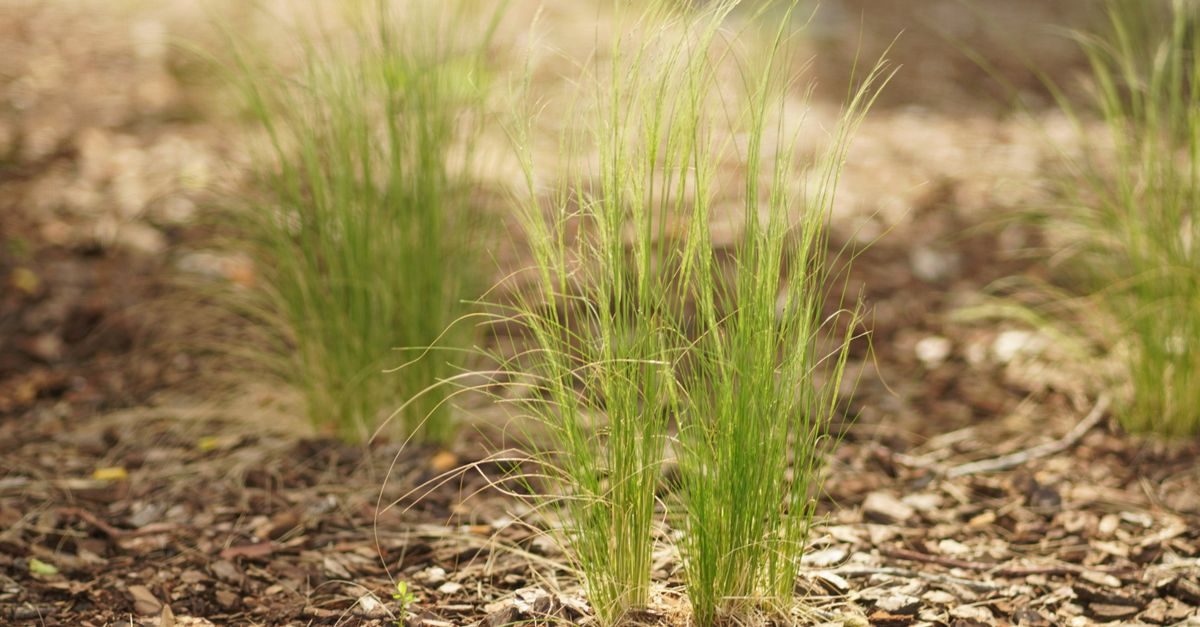
Photos: Safdar hussaini / Pexels. The photo shows grass through light mulch; it does not show a measured seeding rate · Pexels License

Beat weeds and brown spots from your phone
Snap a photo, get the fix, and follow a plan timed to your soil and weather. Free on iPhone.