5 Types of Grass in Hawaii and How to Tell Which You Have

As an Amazon Associate we earn from qualifying purchases.
Hawaii lawns are warm-season grass, full stop: bermudagrass, zoysiagrass, St. Augustinegrass, centipedegrass, and kikuyugrass, with seashore paspalum and carpetgrass filling the salty and soggy corners. UH CTAHR is blunt that the bluegrass and fescue mixes sold in stores here die after about two months of summer. What decides your grass is rain and elevation, not season: dry leeward coasts lean bermudagrass and paspalum, wet windward yards lean St. Augustine and centipede, and cool upcountry ground near pasture is where kikuyu shows up.
Bermudagrass is the easy tell: fine, gray-green, with bird-foot seedheads. St. Augustine has the widest blades and rounded tips. Kikuyu is bright apple-green with hairy, fleshy runners.
Hawaii is the only state where the whole cool-season lawn playbook simply does not apply. There is no spring green-up, no fall overseeding window, and no winter dormancy on the coast. The University of Hawaii's College of Tropical Agriculture and Human Resources (CTAHR) puts it plainly: "Only 'warm-season grasses' (sometimes called 'tropical grasses') are suitable for lawns in Hawaii," and the shady-lawn mixes of bluegrass, fescue, and ryegrass on store shelves "will provide temporary cover, but they die after about two months of summer weather." So the question here is never warm versus cool. It is wet versus dry, sun versus shade, sea level versus upcountry. A windward Hilo yard and a leeward Kihei yard sit in the same state and want different grasses, and a Kula or Waimea lawn at 3,000 feet plays by a third set of rules. Here is the lineup CTAHR covers, how to identify what you already have, and how the islands' climate zones sort them.
The types of grass that grow in Hawaii
Bermudagrass
Bermudagrass is Hawaii's default sunny-lawn grass. CTAHR's lawn grass table credits common bermudagrass with wear resistance, a "deep root system, low moisture requirement; tolerates saline, alkaline, and moderately acid soils," which is why it holds up on dry leeward coasts where irrigation and salt are facts of life, though it also invades where it is not wanted and throws frequent seed heads. The hybrids ('Tifway', 'Tifgreen', and the old Hawaii standby 'Sunturf', introduced in 1962) trade that for polish: CTAHR's bermudagrass publication credits them with "improved levels of quality, density, and color" and very few seed heads, with "higher maintenance requirements" as the cost, and puts mature stands on monthly nitrogen feedings. 'Tifway' is the one CTAHR says "is best utilized on golf course fairways and tees and on well maintained athletic fields and lawns." Two hard limits matter. First, sun: CTAHR states "a minimum of 6 hours of full sunlight is required daily," so it thins under trees and on the cloudy windward side. Second, cold: "in climates where temperatures fall below 55°F, such as those found at higher elevations in Hawai‘i, bermudagrass may undergo dormancy."
Zoysiagrass
Zoysia is the slow, dense, low-water choice, and CTAHR's zoysiagrass publication notes that "zoysiagrasses grow throughout the year in Hawai‘i." Three species are grown here (Z. japonica, Z. matrella or manilagrass, and mound-forming Z. tenuifolia or templegrass), but the home-lawn workhorse is 'El Toro', which CTAHR says "is commonly used in home lawns statewide," along with 'Z-3', a hybrid selected in Waimanalo. The trade-off is patience: plugging is the most common way to plant it here, and CTAHR's sources give different milestones. Its establishment column says plugged zoysia "may take up to 6 months to get full coverage," while the zoysiagrass publication says "approximately 12–18 months are required to completely fill in the bare soil between the plugs," depending on plug size, spacing, and conditions. Filled in, it asks for little: CTAHR describes watering on an "as-needed" basis once established, and it tolerates shade better than bermudagrass. Mow it low and often. CTAHR puts the optimum at 3/4 inch, says "a reel mower is required" at 1 inch or below, and warns that above 2 inches most zoysias form "a puffy, tufted, dense turf with a deep thatch layer" that scalps easily. Billbugs are the pest to watch.
St. Augustinegrass
St. Augustine is the shade grass, and on the windward side, where tree canopy and cloud cover are the norm, that makes it a favorite. CTAHR's St. Augustinegrass publication says it "is commonly used in home lawns and other landscaped areas, as it is adapted to a wide array of soils," with "better shade tolerance than most other warm-season turfgrasses." CTAHR ranks it highest of the island grasses for shade and second only to seashore paspalum for salt tolerance, so it also works near the beach. The most common cultivar in Hawaii is 'Floratine'. Its weaknesses are real: CTAHR says it "tends to be shallow-rooted and therefore does not withstand drought conditions as well as some other turfgrasses," it has "poor tolerance of wear," and "the major insect pest of this turfgrass in Hawai‘i is the chinch bug." CTAHR's mowing height for standard cultivars is 3 to 4 inches (1.5 to 2.5 for the semi-dwarfs). Keep nitrogen to 4 to 6 pounds per 1,000 square feet a year, and never put MSMA on it. Plugging is the usual way to start it here, and it is difficult to establish from loose stolons.
Centipedegrass
Centipedegrass, called hunangrass in CTAHR's older lawn table, is the wet-side low-input lawn. CTAHR's centipedegrass publication notes it "is sometimes called 'the lazy man's grass'" and that "centipedegrass thrives in areas receiving 40 inches or more of rain per year," which describes most of windward Oahu, Kauai, and the Hilo side. It wants moist, acidic soil with a pH of 5 to 6 and almost no fertilizer: one pound of slow-release nitrogen per 1,000 square feet in spring, never more than two pounds a year. It is also the one grass CTAHR says is most often started from seed here. Its limits track its strengths. Drought tolerance is poor, traffic tolerance is low, and it "has poor salt tolerance and therefore should not be used in areas subjected to salt spray (i.e., near the beach)." On coral or alkaline ground it yellows with iron chlorosis, and CTAHR suggests that on those sites the cheaper fix may be a different grass. Mow at 1.5 to 2 inches and never scalp it.
Kikuyugrass
Kikuyu is the upcountry grass, and it is the one CTAHR's turf series is quiet about. Its lawn-grass table and adaptation guide do not list it, but CTAHR's forage publication explains why you will meet it anyway: "the wide adaptability of the grass, from sea level up to 6000 feet elevation, makes it the predominant pasture grass in the state," and "it requires an annual rainfall above 35 inches." Its role as an upcountry lawn grass is an inference from that pasture range, not a CTAHR recommendation: CTAHR's turf guidance stops at bermudagrass dormancy below 55°F at higher elevations, and the University of California's IPM program, which does cover kikuyu in lawns, notes that "unlike bermudagrass, kikuyugrass is able to maintain its steady growth rate at lower temperatures." Put those together and cool, wet upland yards near pasture are where to expect it. UC IPM also calls it "an extremely aggressive perennial weed of turfgrass, ornamental plantings, orchards, and noncrop areas" in California, so treat it as a grass to contain. CTAHR notes it "is listed on the federal noxious weed list," seed imports need a USDA permit, and most stands are started from stems and stolons rather than seed.
Two more grasses matter on the islands even though they are not in the photo lineup above. Seashore paspalum is the salt specialist, and CTAHR's publication on it says it "should be selected over bermudagrass for coastal areas of Hawai‘i affected by salt spray." It tolerates brackish irrigation, forms a dark, waxy, bermuda-like turf, and CTAHR calls it and 'El Toro' zoysia "two of the more popular species of turfgrass that are being used for home lawns" here. 'Salam' is the most common cultivar, though the legacy paspalum present since the mid-1970s often gets that name too. The catches are heavy thatch, a need to mow below 1 inch, and sensitivity to many herbicides. Carpetgrass is the opposite case: CTAHR's lawn table says it "tolerates wet and shady conditions, poorly drained soils; prefers acid soils" but is "not suitable for a quality lawn." You will see it as the ground cover between coffee rows in Kona and in the soggiest windward yards. Hilograss (Paspalum conjugatum) is the wet-side volunteer that CTAHR calls "an invader in most cases"; it "does well in high rainfall areas" and "may cause an allergic rash to sensitive skin."
Hawaii grass types compared at a glance
All of these are warm-season grasses, so the "Season" column is the same down the line. The columns that actually separate them in Hawaii are shade, water, and how much work you want to do.
| Grass | Season | Best role | Sun / shade | Water need | Maintenance |
|---|---|---|---|---|---|
| Bermudagrass | Warm | Sunny leeward lawns and sports turf | Full sun only (6+ hours) | Moderate; irrigated on dry coasts | Medium (hybrids high) |
| Zoysiagrass | Warm | Dense low-water lawn statewide | Sun or light shade | Low once established | Medium; reel mower under 1 inch |
| St. Augustinegrass | Warm | Shady, low-use windward yards | Best shade tolerance of the group | Moderate; shallow roots, weak in drought | Low-medium; watch chinch bugs |
| Centipedegrass | Warm | Low-input lawn where rain tops 40 inches | Sun or light shade | High rainfall; poor drought tolerance | Very low (1 lb N a year) |
| Kikuyugrass | Warm | Cool upcountry and pasture-edge lawns | Full sun | 35+ inches of rain or irrigation | Medium; mow low, edge often |
How to tell which type you already have
Start with blade width and color. St. Augustine is the widest and blue-green, kikuyu is bright light green and hairy, bermudagrass is the finest and grayest, and centipede and zoysia sit in the middle. CTAHR's own trick for the two look-alike pairs: St. Augustine leaves sit opposite each other at the nodes while centipede leaves alternate, and centipede's leaf bud is folded while zoysia's is rolled. Then look at the runners. Each of these grasses spreads by stolons, but St. Augustine and centipede have no rhizomes, while bermudagrass, zoysia, paspalum, and kikuyu also run underground.
| Grass | Blade | Growth habit | Standout tell |
|---|---|---|---|
| Bermudagrass | Fine, gray-green, pointed | Wiry stolons plus rhizomes, tight mat | Bird-foot seedheads; runners over sidewalks; browns upcountry in winter |
| Zoysiagrass | Medium, stiff, bristly | Slow creeping, very dense | Stiff underfoot; rolled leaf bud (centipede is folded); puffy tufts if mowed high |
| St. Augustinegrass | Widest, coarse, rounded tips | Thick flat stolons, no rhizomes | Leaves opposite at the nodes; blue-green, spongy underfoot |
| Centipedegrass | Medium, pointed tip, apple-green | Short thick leafy stolons, no rhizomes | Leaves alternate at the nodes; yellows on coral or alkaline soil |
| Kikuyugrass | Light green, flat, slightly hairy | Thick fleshy stolons and rhizomes, rampant | Whitish cast from white filaments; hairy where St. Augustine is smooth |
Still not certain? Our free AI grass identifier reads a close-up photo, names the grass, and builds a 12-month care plan tuned to your ZIP.
Which types grow in your part of Hawaii
Hawaii's lawn zones follow rain and elevation, not island or county lines. The National Weather Service's Honolulu office describes the pattern: trade winds push moist air up the windward slopes, so "leeward areas, where the air descends, tend to be sunny and dry," and "temperature decreases with elevation by about 3 degrees per thousand feet." Annual rainfall runs from 20 inches or less on leeward coasts to more than 300 inches on the lower windward slopes of the big mountains, and half the state sits above 2,000 feet. Each major island has most of these zones. CTAHR does not publish a per-region species list, so the picks below are practical inferences from its adaptation rankings for shade, salt, drought, and water, laid over rainfall and elevation. (USDA zones run roughly from 9 in the highest inhabited uplands to 11 and 12 on the coasts; treat that as orientation only, because rainfall matters more.)
- Windward lowlands (Hilo, Kaneohe and Kailua, Kapaa and Hanalei, Hana): Wet, cloudy, and often shaded by big trees, with acid soils. That points to St. Augustine (CTAHR's top shade grass) and centipede (which wants 40 inches of rain or more), with zoysia where there is more sun. CTAHR says shade adaptation "is a primary consideration in choosing a turfgrass, especially on windward sides of the islands," and tells you to cut or skip nitrogen in winter here because the grass grows slowly. Carpetgrass and hilograss move in on their own where drainage is poor.
- Leeward coasts (Honolulu, Ewa and Kapolei, Kihei and Lahaina, Waikoloa, Poipu): Sunny, dry, and salty, with parts CTAHR calls "true deserts" under 10 inches of rain. Irrigation is not optional, and CTAHR notes water-use restrictions on Oahu and Maui "are becoming more of a reality." Bermudagrass fits the full sun (CTAHR ranks it near the top for drought tolerance), seashore paspalum is CTAHR's pick over bermuda where salt spray or brackish water is the problem, and zoysia is the low-water middle ground. Centipede's poor salt tolerance rules it out near the beach.
- The Kona coast (Kailua-Kona, Holualoa, Captain Cook): The one region in the islands where summer rainfall exceeds winter rainfall. Seashore paspalum shows up on the resort golf turf near the shore (CTAHR's own paspalum photos come from Kailua-Kona), bermudagrass suits the sunny home lawns, and CTAHR documents carpetgrass as the working ground cover between coffee rows up the hill.
- Interior lowlands (Mililani, Wahiawa, Kahului, Wailuku): Central Oahu and Maui sit between the two extremes, with the northeast ends wetter and the southwest ends drier. Bermudagrass and zoysia are the low-risk inferences here, and St. Augustine fits the shadier, wetter pockets.
- Upcountry and high elevation (Kula, Waimea and Kamuela, Volcano, Kokee): Temperatures drop about 3 degrees per thousand feet, and CTAHR notes bermudagrass "may undergo dormancy" where temperatures fall below 55°F, "such as those found at higher elevations." Kikuyu is the predominant pasture grass across this elevation range and keeps growing at lower temperatures than bermuda, so expect it in and around upland yards; zoysia is the tidier option where there is enough sun. The state's lowest temperatures are on the high mountains, where readings below freezing are common.
Hawaii grass timing that matters
Hawaii has no seeding window in the mainland sense because there is no off-season on the coast. CTAHR's fertilizer guide says it directly: "In Hawaii, where the growing season is year-long, it is necessary to apply fertilizers throughout the year." Growth is year-round, but fertilizer timing and amounts are grass-specific, and the calendar that does exist is about grow-in speed, water, and elevation.
- Planting: Grow-in speed depends on the grass and the method more than the month. CTAHR's establishment column says stolonized bermudagrass or paspalum "may take only 6 weeks or so during the summer months," plugged zoysia "may take up to 6 months to get full coverage" (its zoysia publication allows 12 to 18 months to fill completely), and seeded centipede germinates in 3 to 5 weeks. Do not sow seashore paspalum seed when soil is below 60°F, which only matters upcountry. For carpetgrass sprigs, CTAHR's cover-crop note prefers winter and early spring planting.
- Fertilizer: Grass-specific. CTAHR recommends that if you feed only once, do it "in late April, just before the summer growth spurt." Bermudagrass wants monthly feeding; centipede gets a single spring application (March to May); and in windward locations CTAHR says to reduce or omit nitrogen in the winter months because the grass cannot use it.
- Pre-emergent: CTAHR publishes no spring trigger date because weeds germinate year-round here. Its guidance is that pre-emergents "can be used in all established turfgrasses on a regular basis as a preventive measure." For context, leeward areas get most of their rain from a few winter storms and have dry summers.
- Watering: CTAHR's rule of thumb is about 3/10 inch a day in midsummer and 1/5 inch or less in winter, applied as 3/4 to 1 inch at the first sign of wilt, which usually means two or three waterings a week in summer and fall. Cool, high-elevation lawns use noticeably less.
- Dethatching: Zoysia, paspalum, and hybrid bermuda build thatch fast. CTAHR says to vertical-mow only during active growth, "during late spring and mid-summer," so the lawn recovers quickly.
- Dormancy: None on the coast. At higher elevations, where temperatures fall below 55°F, CTAHR says bermudagrass may go dormant; kikuyu is documented to keep growing at lower temperatures than bermuda.
The through-line: in Hawaii you manage the grass by where it grows, not by what month it is. Get the zone right and the calendar mostly takes care of itself.
Next steps
Not sure whether that bright green mat climbing your curb is kikuyu or St. Augustine? Snap a photo for a free AI identification, or start from the home page analyzer for a 12-month plan tuned to your ZIP. Weighing zoysia against seashore paspalum for a leeward yard? The grass comparison tool lines them up, and the seeding calculator turns square footage into pounds of centipede or bermuda seed. For the wider picture, see how every state compares.
Top Picks
 Outsidepride Maya (Blackjack II) Bermuda Grass Seed (5 lb)Check price on Amazon
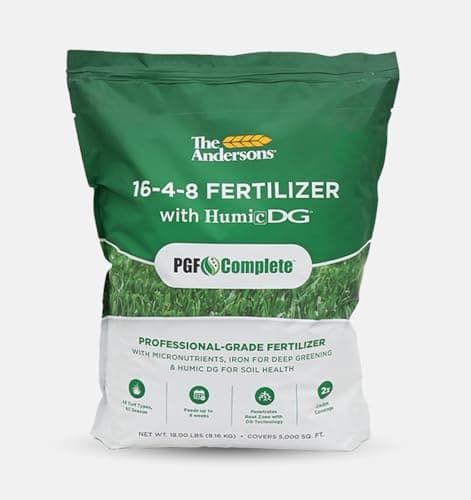
 The Andersons Professional PGF Complete 16-4-8 FertilizerCheck price on Amazon
As an Amazon Associate we earn from qualifying purchases.
Free Lawn Care Tools
CTAHR covers a core set of warm-season lawn grasses: bermudagrass (common and hybrids), zoysiagrass, St. Augustinegrass, centipedegrass, and seashore paspalum, with carpetgrass and buffalograss as minor entries. Kikuyugrass is the upcountry pasture grass that ends up in cool, high-elevation lawns. Cool-season grasses like bluegrass and fescue are not on the list because they die after a couple of months of summer.
CTAHR does not publish acreage or a species ranking, so there is no official answer. What it does document: the hybrid Sunturf bermudagrass, introduced in 1962, quickly replaced common bermuda as the turf of choice in many situations; El Toro zoysia is commonly used in home lawns statewide; St. Augustine is commonly used in home lawns and is the top shade grass; and seashore paspalum is the pick where salt is the problem.
Not as a lawn. CTAHR says only warm-season grasses are suitable for lawns in Hawaii and warns that store-bought bluegrass, fescue, and ryegrass mixes give temporary cover and then die after about two months of summer weather. CTAHR does document ryegrass at about 10 percent by weight, mixed into a warm-season seeding, as a temporary erosion cover while the permanent grass fills in.
Seashore paspalum where salt spray or brackish irrigation is the problem; CTAHR says to choose it over bermudagrass on salt-affected coastal sites. Bermudagrass is the standard where you have fresh irrigation water and full sun, and zoysia is the lower-water option. Keep centipedegrass away from the beach, since it has poor salt tolerance and yellows on coral soils.
Not on the coast, where lawns grow all year and CTAHR advises fertilizing year-round. It changes with elevation: temperatures drop about 3 degrees per thousand feet, and CTAHR notes bermudagrass may go dormant at higher elevations where temperatures fall below 55°F. In upcountry areas like Kula, Waimea, or Volcano, expect bermuda to go dormant in cool weather, while kikuyu is documented to keep growing at lower temperatures.
Sources (16)
- UH CTAHR: Adaptation of Turfgrasses in Hawaii (TM-4)
- UH CTAHR: Common Lawn Grasses for Hawaii (TM-12)
- UH CTAHR: Bermudagrass (TM-5)
- UH CTAHR: Zoysiagrass (TM-8)
- UH CTAHR: St. Augustinegrass (TM-3)
- UH CTAHR: Centipedegrass (TM-14)
- UH CTAHR: Seashore Paspalum (TM-1)
- UH CTAHR: 'El Toro' Zoysiagrass vs. Seashore Paspalum (PP-08)
- UH CTAHR: Turf Establishment (PP-07)
- UH CTAHR: Turf Fertilizers for Hawaii's Landscapes (TM-13)
- UH CTAHR: Watering Lawns (TM-7)
- UH CTAHR: Cover Crops: Carpetgrass (SA-CC-1)
- UH CTAHR: Kikuyugrass for Forage (LM-5)
- UC IPM: Kikuyugrass Pest Note
- National Weather Service Honolulu: Climate of Hawaii
- Western Regional Climate Center: Climate of Hawaii narrative
Photos: Kevin Faccenda / iNaturalist · CC BY 4.0, Becky Dill / iNaturalist · CC0, Peter Brastow / iNaturalist · CC BY 4.0

Beat weeds and brown spots from your phone
Snap a photo, get the fix, and follow a plan timed to your soil and weather. Free on iPhone.
Related Articles
 Climate & Regional Tips
Types of Grass in Arkansas: The Common Lawn Grasses
Jul 22, 2026•7 min read Climate & Regional Tips
8 Types of Grass in Nevada and How to Tell Which You Have
Sep 2, 2026•9 min read Climate & Regional Tips
7 Types of Grass in New Mexico and How to Tell Them Apart
Sep 2, 2026•8 min read