
Why chinch bugs always hit the same part of the lawn
Chinch bugs are heat lovers, and that single fact explains the pattern. They breed fastest in hot, dry, sunny turf, so the strip of lawn baking beside a driveway or a south-facing wall is the ideal nursery. That is also the part of the lawn most likely to be drought stressed already, which is exactly why so many homeowners water harder, see no improvement, and never think to look for an insect.
They also live in the thatch layer rather than the soil, which changes what works against them. A thick thatch mat gives them shelter, insulates them, and blocks anything applied to the lawn from reaching them. In warm climates chinch bugs run several generations in a single season, so a population can build from unnoticeable to lawn-killing over a few hot weeks. St. Augustine lawns in the South and bluegrass and ryegrass lawns further north are the usual victims.
How to take the pressure off for good
Start with the thatch, because it is the habitat. Keeping the thatch layer thin removes the shelter chinch bugs depend on and lets water, nutrients, and any treatment actually reach the soil. If your lawn has a spongy mat you can sink a finger into, that is the first project, and it pays off against several other pests at the same time.
Then fix the hot edge. Those strips need more water than the middle of the lawn, not the same amount, and they benefit from anything that reduces reflected heat. Go easy on nitrogen in midsummer, since lush, soft growth feeds a chinch bug population rather than outrunning it. If you are in the South and replanting a damaged St. Augustine lawn, choosing a cultivar with known chinch bug resistance is the single most durable change you can make.
How do you identify chinch bugs?
- Damage starts along driveways, sidewalks, and south-facing edges where the soil bakes
- Grass goes yellow first, then straw brown, and the edge of the patch keeps moving outward
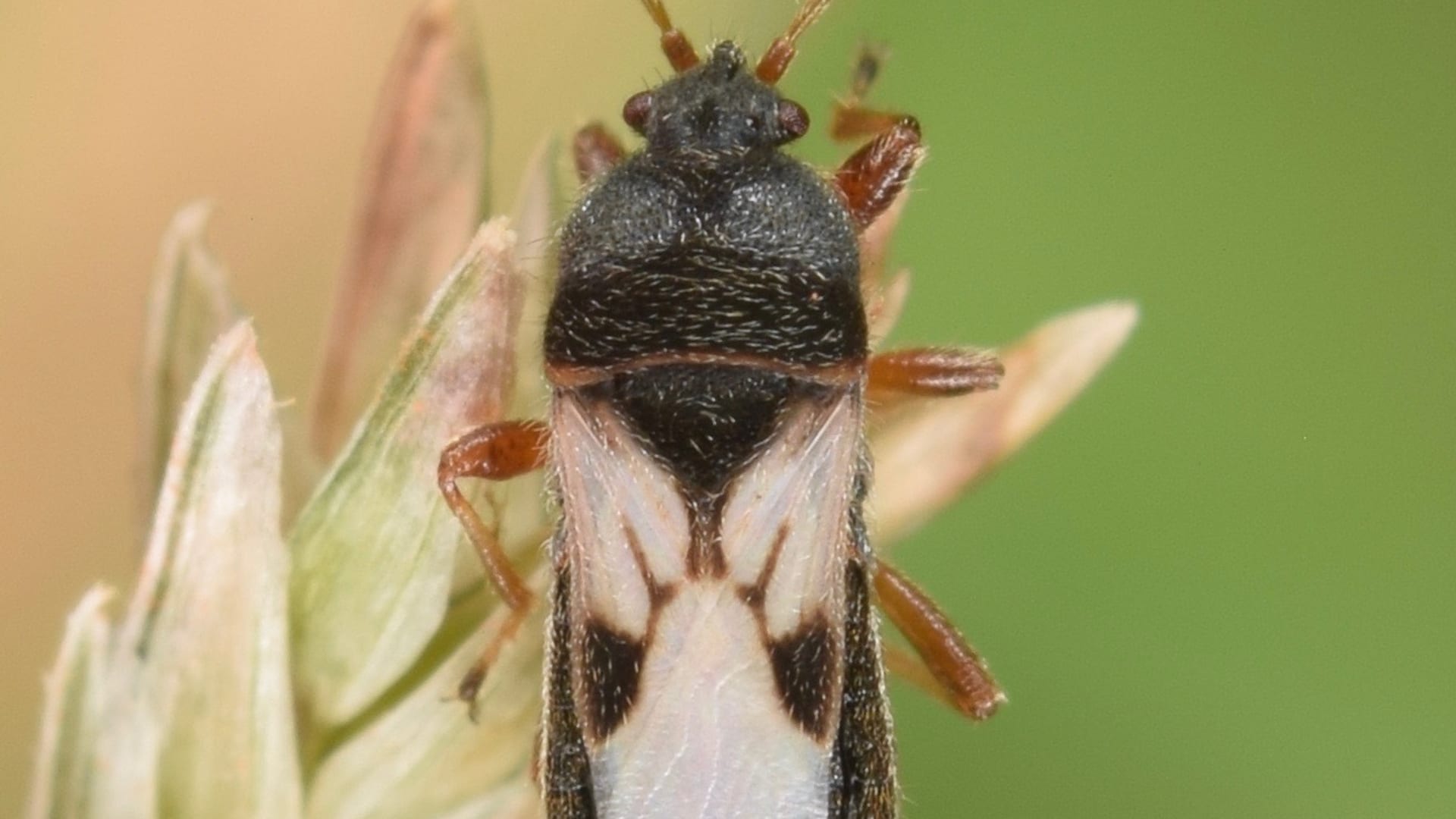
- Black insects about a sixth of an inch long with a white patch on each folded wing
- Smaller nymphs are red-orange with a pale band across the back before they darken
- Parting the grass at the edge of a patch shows insects scattering down into the thatch
What the damage looks like
Irregular yellow patches expanding outward, often along driveways and sidewalks (heat-retaining edges).
Is it chinch bugs or something else?
How do you check for chinch bugs?
Flotation test: cut both ends from a coffee can, push one end into the soil at the edge of damage, fill with water. Chinch bugs will float to the surface within 5 minutes.
Sample at the boundary between yellowing grass and green grass, because chinch bugs move ahead of the damage they cause and are scarce in the dead center. Do the check in the heat of the afternoon when they are active near the surface, and repeat it in two or three spots along the advancing edge.
When should you treat for chinch bugs?
- Early summer: start checking the hot edgesAdults come out of the thatch and plant debris they overwintered in and start breeding as the lawn heats up. Run the flotation test along driveways, sidewalks, and south-facing edges every couple of weeks, because that strip is where the population builds first.
- July and August: the damage peakThis is when chinch bug damage lands in most lawns, and warm climates run two to three generations in a season, so a population can go from unnoticeable to lawn-killing in a few hot weeks. Treat on a confirmed find at the advancing edge, not on the calendar.
- Any time you find them: treat the moving edgeThe insects sit ahead of the brown, so treatment goes on the yellowing boundary and the green grass just past it, not the dead middle. Chinch bugs shelter in thatch, so the label directions on watering in matter more here than on most pests.
- Off season: take the habitat awayKeeping thatch below half an inch removes where they overwinter and where they hide from treatment. Going easy on nitrogen in midsummer and watering the hot edges more than the middle both lower the pressure before the next summer starts.
These windows shift by a few weeks with latitude and with the season you are actually having, so treat them as the shape of the year rather than as dates. Your county extension office publishes the local timing, and the population that justifies treating where you live.
How do you get rid of chinch bugs?
Start here: cultural
- Reduce thatch (chinch bugs harbor in thatch)
- Water adequately during drought
- Avoid excess nitrogen
Organic and biological
- Beauveria bassiana (biological insecticide)
- Beneficial big-eyed bugs (natural predator)
- Diatomaceous earth
Conventional product categories
- Bifenthrin
- Trichlorfon
- Clothianidin
Keep kids and pets off treated areas until the product has dried and any re-entry interval printed on the label has passed. That applies to the organic and biological options too, since most of them are still pesticides.
These are active ingredient categories, not a prescription. Rate, timing, and watering-in come from the product label. Confirm the label lists both your pest and your grass type before you apply anything.
Keeping it from coming back
- Keep thatch below 1/2 inch
- Water during dry periods
- Choose chinch bug-resistant St. Augustine cultivars (e.g., Floratam)
Pest control quotes
Get matched with local pest control pros on Angi. Free quotes, no obligation.
Angi is a partner; we may earn a commission if you request quotes there.
What products work on chinch bugs?
These picks are not filtered to your lawn. Insect products differ in which pests and which grasses they are labeled for, and none of them are a substitute for confirming the pest first. Read the label for your pest, your grass type, and the rate before you buy.
Recommended Products
- 1Check price
 Top pick
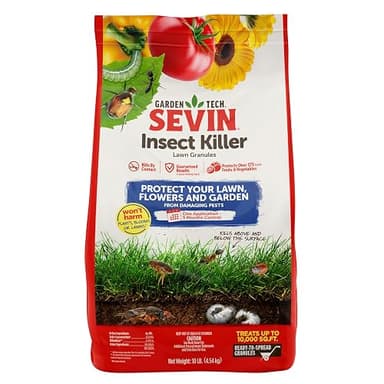
Sevin Insect Killer Granules 10 lb
Broad-spectrum granular insect killer for grubs, ants, fleas, ticks, and 100+ listed lawn pests. Use after a flotation test confirms active chinch bugs.
- 2Check price
 Best value
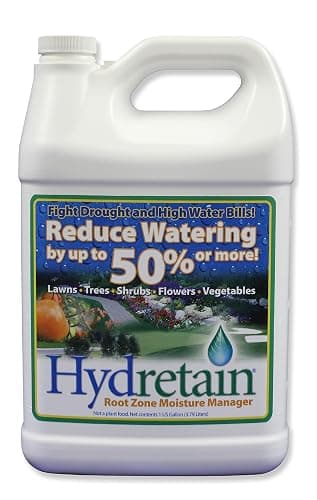
Hydretain Root Zone Moisture Manager
Converts humidity into plant-usable water in the root zone. Reduces watering needs by up to 50% in summer heat. Moisture support helps turf recover from hot-edge chinch damage.
- 3Check price
 Also great
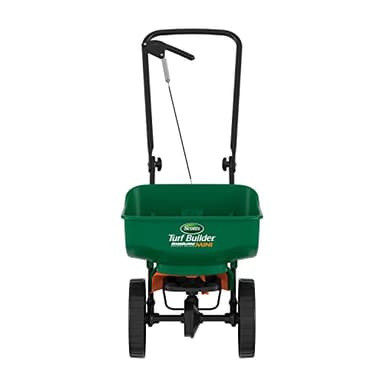
Scotts Turf Builder EdgeGuard Mini Broadcast Spreader
Simple broadcast spreader for granular fungicides, grub control, fertilizer, and recovery products that need even coverage. Use for granular insect-control passes.
As an Amazon Associate we earn from qualifying purchases.
Where do chinch bugs show up?
Most common in these regions:
Grass types at risk