Types of Grass in Missouri: The Common Lawn Grasses
 Marcus GreenTurf Management Pro | 18 Years
As an Amazon Associate we earn from qualifying purchases.
Missouri sits in the transition zone and grows both. Tall fescue is the statewide backbone, and MU Extension calls it a favorite for nonirrigated Missouri lawns. Kentucky bluegrass and fine fescue fill the cooler north and dry shade, zoysia is the main warm-season pick in the south, and buffalograss suits the drier west.
Seed cool-season grass between August 25 and October 10, and lawns seeded within a week of Labor Day fill in best by winter. Plant zoysia and buffalograss in late spring or early summer instead. Bermudagrass is not recommended for Missouri lawn turf.
Missouri is caught between North and South. University of Missouri Extension calls it a transition state where cool-season grasses perform better in the northern part of the state and warm-season grasses perform better in the southern part, with neither perfectly at home. Tall fescue is the common thread that holds most of the state. This guide covers each common Missouri grass and how to tell which is in your yard.
The types of grass that grow in Missouri
Tall Fescue
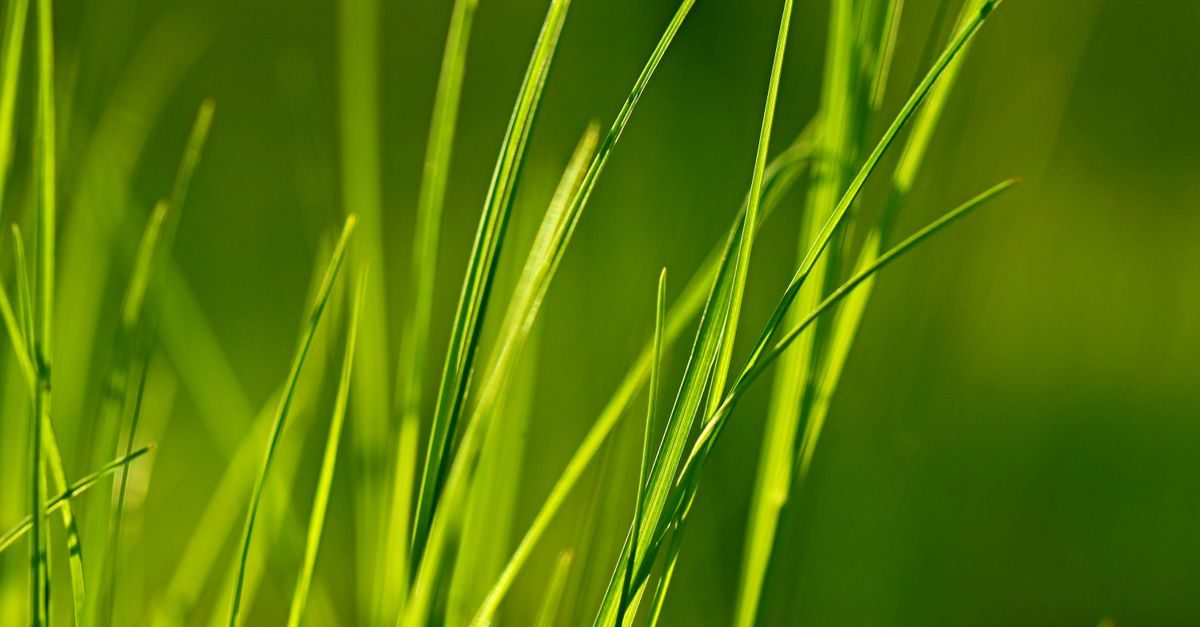
Tall Fescue is Missouri's dominant lawn grass, the deep-green, coarse grass in most yards statewide. MU calls it a favorite for nonirrigated lawns in Missouri and a favorite for nonirrigated turfgrass in the Transition Zone since the release of Kentucky 31 in 1943, because it tolerates summer heat and drought better than any other cool-season grass. Its deep roots carry it through Missouri summers, but it grows in clumps, so thin stands get overseeded each fall.
Kentucky Bluegrass
Kentucky Bluegrass is the cool-season blend partner, strongest in the cooler north. MU notes it is well adapted to a moderate climate with average daily summer temperatures below 90 degrees F, soil pH of 6.0 to 7.0, and adequate moisture. It spreads by rhizomes into a dense, self-repairing sod, which is why most sod grown in Missouri is straight Kentucky bluegrass or a mixture of mostly tall fescue combined with a small amount of Kentucky bluegrass.
Zoysiagrass
Zoysiagrass is Missouri's main warm-season lawn grass, the one that thrives in the hot, humid south of the state where cool-season grasses struggle in summer. The Meyer variety is the transition-zone standard, though it comes with a long dormancy: MU notes Meyer zoysia is dormant about six months from fall to spring in the Transition Zone. It forms a tight, weed-resisting carpet in full sun, but it is slow to establish and goes tan from the first frost until late spring.
Fine Fescue
Fine Fescue is Missouri's dry-shade grass. MU notes fine fescues grow best in dry, shady lawn areas that have slightly acid soils, conditions that discourage growth of Kentucky bluegrass. Their needle-fine blades tolerate shade and low fertility where bluegrass and tall fescue thin out, so they earn their place under trees, usually blended into a cool-season seed mix rather than grown alone.
Buffalograss
Buffalograss is Missouri's native low-water option, best in the drier western parts of the state and low-maintenance areas. MU says it is well adapted to the drylands of the western prairies and plains and, though it adapts best to full sun, acceptable turf grows with six to eight hours of direct sun. MU positions it for low-maintenance areas such as golf course roughs, roadsides, parks and low-maintenance lawns, where its drought tolerance shines and its short stature means little mowing.
Two more grasses come with caveats. Perennial ryegrass is a blend and nurse grass, not a stand-alone Missouri lawn: MU says its best use in the Transition Zone is for sports fields where rapid establishment is needed. And Bermudagrass, despite its southern reputation, is not recommended for lawn turf in the Transition Zone per MU, which limits it to golf courses and athletic fields in the southern half of the state.
Missouri grass types compared at a glance
| Grass | Season | Best role | Sun / shade | Water need | Maintenance |
|---|---|---|---|---|---|
| Tall Fescue | Cool | Statewide default lawn | Sun to part shade | Low (deep-rooted) | Low-medium |
| Kentucky Bluegrass | Cool | Self-repairing blend partner | Sun to light shade | Moderate to high | Medium-high |
| Zoysiagrass | Warm | Warm-season, southern MO | Full sun (6-8 hrs) | Moderate | Low-medium |
| Fine Fescue | Cool | Dry-shade component | Best shade tolerance | Low | Low |
| Buffalograss | Warm | Native low-water, western MO | Full sun (6-8 hrs) | Very low | Low |
How to tell which type you already have
Start with the season: cool-season grasses (tall fescue, bluegrass, fine fescue) stay green through winter and green up first; warm-season grasses (zoysia, buffalograss) go brown in winter and green up late. From there, does it clump or run? Tall and fine fescue clump; bluegrass and buffalograss spread; zoysia creeps slowly into a dense carpet.
| Grass | Blade | Growth habit | Standout tell |
|---|---|---|---|
| Tall Fescue | Wide, coarse, rough edges | Bunching, no runners | Grows in clumps; stays green in winter |
| Kentucky Bluegrass | Fine, soft | Spreads by rhizomes, dense sod | Boat-shaped blade tip; open seed-head panicle |
| Zoysiagrass | Fine to medium, stiff | Slow, very dense | Springy carpet feel; tan half the year |
| Fine Fescue | Very fine, needle-like | Bunching, some creeping | Wispy, thread-thin blades in dry shade |
| Buffalograss | Fine, blue-green, curly | Spreads by stolons, low | Soft blue-green mat; goes straw-tan after frost |
Still not certain? Our free AI grass identifier reads a close-up photo, names the grass, and builds a 12-month care plan tuned to your ZIP.
Which types grow in your part of Missouri
Missouri runs cooler in the north and warmer in the south, and MU splits its grass advice the same way: cool-season grasses perform better up north, warm-season grasses better down south, with tall fescue the statewide common thread.
- Northern Missouri (cooler): Cool-season country. Tall fescue and Kentucky bluegrass, with fine fescue for dry shade. Warm-season grasses stay dormant longer here, so they are less popular.
- Central Missouri (Columbia, the heart of the transition): The hardest zone to pick for, where both hot summers and cold winters bite. Tall fescue dominates, and Meyer zoysia is the reliable warm-season option for full-sun yards.
- Southern Missouri (warmer): Warm-season grasses come into their own. Zoysia is the main warm-season lawn; tall fescue still holds shady and cool sites.
- Western Missouri (drier): The best fit for native buffalograss and other low-water, low-maintenance plantings.
Missouri grass timing that matters
The key Missouri timing rule is that cool- and warm-season grasses go in at opposite ends of the year. Soil temperature drives the rest:
- Cool-season seeding (tall fescue, bluegrass, fine fescue), the key window: MU says the best time to seed cool-season grasses is between Aug. 25 and Oct. 10, and that lawns seeded within a week of Labor Day are more likely to fill in completely by winter.
- Spring seeding is second-best: MU notes spring seeding of cool-season grasses is not as successful as fall seeding, since it collides with summer heat and crabgrass.
- Warm-season planting (zoysia, buffalograss): late spring to early summer, once the soil is warm, so roots establish before the next winter.
- Spring pre-emergent: put crabgrass pre-emergent down in spring before the soil warms through about 55F and crabgrass germinates.
Our herbicide timing tool pins the exact pre-emergent date for your ZIP.
Next steps
Once you know your grass type, the care gets specific. Dig into the full guides for Tall Fescue, Kentucky Bluegrass, Zoysiagrass, or Fine Fescue, or line any two up in our grass comparison tool. For the wider picture, see how every state compares.
And if you are not sure what is growing out there, start with a quick photo on our free grass identifier.
Top Picks
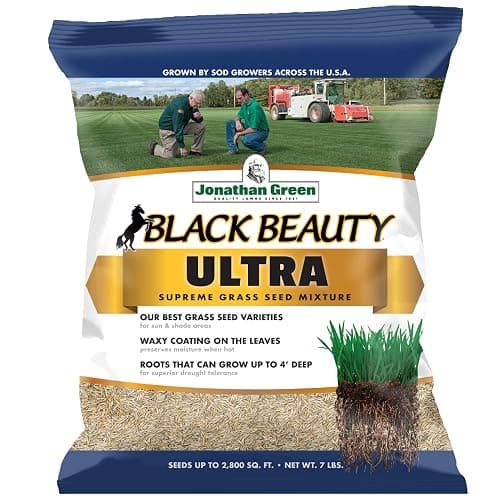
 Jonathan Green Black Beauty Ultra Grass SeedCheck price on Amazon
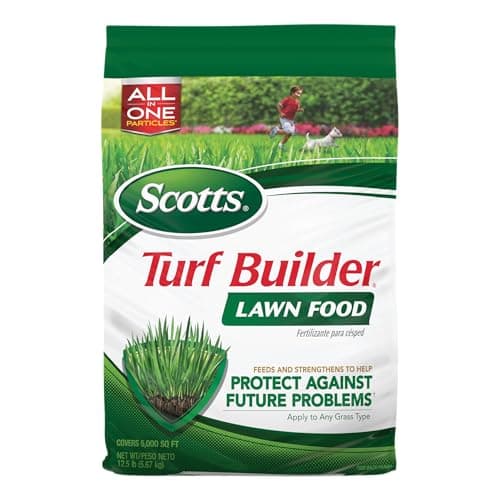
 Scotts Turf Builder Lawn FoodCheck price on Amazon
As an Amazon Associate we earn from qualifying purchases.
Free Lawn Care Tools
Tall fescue. MU Extension calls it a favorite for nonirrigated Missouri lawns, and it is the statewide backbone, usually blended with a little Kentucky bluegrass. Zoysia is the common warm-season pick in southern Missouri.
Five do most of the work: cool-season tall fescue, Kentucky bluegrass, and fine fescue, plus warm-season zoysia and native buffalograss. Perennial ryegrass shows up in blends, and bermudagrass is not recommended for Missouri lawns.
No. MU Extension states bermudagrass is not recommended for lawn turf in the transition zone, limiting it to golf courses and athletic fields in the southern half of the state. For a warm-season Missouri lawn, zoysia is the recommended choice instead.
Tall fescue still leads, but southern Missouri is where warm-season zoysia comes into its own, forming a dense, weed-resisting carpet in full sun. MU favors the Meyer variety for its cold tolerance in the transition zone.
For cool-season grasses like tall fescue, between August 25 and October 10 per MU, with the week around Labor Day ideal. Warm-season zoysia and buffalograss go in during late spring to early summer instead, once the soil is warm.
Sources (3)
- University of Missouri Extension, Managing Lawns and Turfgrass (MG10) and Cool-Season Grasses: Lawn Establishment and Renovation (G6700).
- MU Extension, Establishment and Care of Buffalograss Lawns (G6730).
- MU Extension, Consider lawn needs in fall.
Photos: Cecelia Alexander / iNaturalist · CC0, Nathan Aaron / iNaturalist · CC BY 4.0, Kevin Faccenda / iNaturalist · CC BY 4.0, Lila / iNaturalist · CC0

Beat weeds and brown spots from your phone
Snap a photo, get the fix, and follow a plan timed to your soil and weather. Free on iPhone.
Related Articles
 Climate & Regional Tips
Types of Grass in Kentucky: The Common Lawn Grasses
Jul 22, 2026•7 min read Climate & Regional Tips
Types of Grass in Indiana: The Common Lawn Grasses
Jul 22, 2026•7 min read Climate & Regional Tips
6 Types of Grass in West Virginia and How to Tell Which You Have
Sep 2, 2026•7 min read