Types of Grass in Ohio: The Common Lawn Grasses
 Marcus GreenTurf Management Pro | 18 Years
As an Amazon Associate we earn from qualifying purchases.
Ohio is cool-season lawn country. Four grasses make Ohio lawns: Kentucky bluegrass, tall fescue, perennial ryegrass, and fine fescue, almost always planted as a blend. OSU recommends only these four, so warm-season grasses like bermuda and zoysia are not part of the recommended Ohio set, even in the milder far south.
The whole state is one zone, so timing matters more than species. Seed between August 15 and September 30, with northern Ohio at the early end, August 15 to September 15, and slow-germinating bluegrass down first. Put crabgrass pre-emergent down before the soil warms through about 55F.
Every grass that makes an Ohio lawn is cool-season, built for the cool of spring and fall. Ohio State University Extension lists the four turfgrass species most commonly used in Ohio, and this guide covers each one and how to tell which is already in your yard.
The types of grass that grow in Ohio
Kentucky Bluegrass
Kentucky Bluegrass is the traditional Ohio lawn grass, the dense, lush turf most homeowners picture. It spreads by rhizomes into a self-repairing sod and shrugs off Ohio winters, but OSU notes it will turn brown and go dormant if not irrigated during hot, dry summers and needs higher-than-average nitrogen. It is slow to establish, so it usually goes in blended with faster grasses.
Tall Fescue
Tall Fescue is the low-input survivor. OSU calls turf-type tall fescue perhaps the best choice for a natural organic lawn, because its deep roots let it survive Ohio's droughts without irrigation and stay green while bluegrass goes brown. The trade-off is a coarser blade and a bunching habit that does not knit together the way bluegrass does.
Perennial Ryegrass
Perennial Ryegrass is the fast starter. It establishes quickly, forming a dense canopy that will crowd out weeds, which is why it anchors Ohio seed mixes and gets used for quick cover and overseeding. It has good wear tolerance but less cold-hardiness than bluegrass, so it rides in a blend rather than standing alone.
Fine Fescue
Fine Fescue is the shade grass. OSU notes it is frequently mixed with Kentucky bluegrass and will dominate in shady areas. Its needle-fine blades tolerate shade, drought, and low fertility where bluegrass thins, so it earns its place in the tree-shaded parts of an Ohio lawn.
Ohio is cool-season country statewide. OSU recommends only these four species for home lawns; warm-season grasses like bermuda and zoysia are not part of the recommended Ohio lawn set, even in the milder far south.
Ohio grass types compared at a glance
| Grass | Season | Best role | Sun / shade | Water need | Maintenance |
|---|---|---|---|---|---|
| Kentucky Bluegrass | Cool | Traditional dense lawn | Sun to light shade | Moderate to high | Medium-high |
| Tall Fescue | Cool | Low-input drought survivor | Sun to part shade | Low | Low-medium |
| Perennial Ryegrass | Cool | Fast-start blend partner | Sun to part shade | Moderate | Medium |
| Fine Fescue | Cool | Shade and low input | Best shade tolerance | Low | Low |
How to tell which type you already have
All four Ohio grasses are cool-season, and only Kentucky bluegrass truly spreads, by rhizomes; tall fescue, ryegrass, and fine fescue grow in clumps. So blade width, color, and the seed head do most of the sorting.
| Grass | Blade | Growth habit | Standout tell |
|---|---|---|---|
| Kentucky Bluegrass | Fine, soft | Spreads by rhizomes, dense sod | Boat-shaped blade tip; open seed-head panicle |
| Tall Fescue | Wide, coarse, rough edges | Bunching, no runners | Grows in clumps, coarser than the rest |
| Perennial Ryegrass | Fine to medium, glossy | Bunching | Shiny blade underside; fast to sprout |
| Fine Fescue | Very fine, needle-like | Bunching, some creeping | Wispy, thread-thin blades in shade |
Still not certain? Our free AI grass identifier reads a close-up photo, names the grass, and builds a 12-month care plan tuned to your ZIP.
Which types grow in your part of Ohio
Unlike the South, Ohio does not split into different grass zones. OSU treats the whole state as cool-season, and the four grasses grow statewide. The main geographic difference is timing more than species: northern Ohio seeds earliest in the fall window, and the far south sits at the northern edge of the transition zone with slightly longer, warmer summers. See how Ohio compares to the rest of the country in our roundup of lawn grasses across every state we cover.
- Northern Ohio (Cleveland, Toledo, the lake counties): The coolest, with cooler falls and lake-influenced weather near Lake Erie. Seed earliest in the fall window; bluegrass and fine fescue blends do well.
- Central Ohio (Columbus, Dayton): The heart of the state, on heavier clay soils. The standard bluegrass, ryegrass, and fescue mixes, with tall fescue the pick where drought and low input matter.
- Southern Ohio (Cincinnati, the Ohio River counties): The mildest, at the northern edge of the transition zone with longer, warmer summers. The same four cool-season grasses, but tall fescue's heat tolerance is most useful here.
Ohio grass timing that matters
The key Ohio timing rule is that cool-season grasses go in during late summer, not spring. Soil temperature drives the rest:
- Fall seeding, the key window: OSU recommends seeding between August 15 and September 30, with northern Ohio at the early end (August 15 to September 15). Slow-to-germinate bluegrass should go down first.
- Last spring frost: roughly late April to mid-May, a bit earlier in the south.
- First fall frost: roughly early-to-mid October.
- Spring pre-emergent: put crabgrass pre-emergent down in spring before the soil warms through about 55F and crabgrass germinates.
- Peak growth: spring and fall; hot, dry midsummer pushes unwatered bluegrass toward brown dormancy, while deeper-rooted tall fescue holds its color longer.
Our herbicide timing tool pins the exact pre-emergent date for your ZIP.
Can You Grow Bermuda Grass in Ohio?
Mostly no, and in the few places you technically can, you probably should not want to. Bermuda is a warm-season grass built for long, hot summers, and Ohio's climate gives it the opposite: winters cold enough to kill it outright and a growing season short enough that even a surviving stand spends roughly six months of the year brown and dormant in much of Ohio, longer in the north. That is why OSU's home-lawn guidance recommends only the four cool-season species and leaves bermuda off the list entirely.
The one partial exception is the far south along the Ohio River, where the state brushes the northern edge of the transition zone. Homeowners around Cincinnati occasionally see bermuda survive in a hot, sunny microclimate, and it often arrives in contaminated seed or creeps in from a neighbor's lawn rather than being planted on purpose. Even there it is a gamble: a single severe winter can wipe out several seasons of establishment, and the long tan dormancy stands out badly next to green cool-season lawns.
If what draws you to bermuda is a dense, tough, traffic-tolerant lawn, the Ohio answer is turf-type tall fescue for durability or an improved Kentucky bluegrass blend mowed short, around 1 to 2 inches without scalping, for that tight, carpet look. And if a wiry, fast-spreading grass has already shown up in your yard and you suspect it is bermuda, a free photo diagnosis can confirm it before you decide whether to fight it or live with it. For cultivar-level choices, OSU Extension's turfgrass selection guidance is the authority worth checking.
Next steps
Once you know your grass type, the care gets specific. Dig into the full guides for Kentucky Bluegrass, Tall Fescue, Perennial Ryegrass, or Fine Fescue, or line any two up in our grass comparison tool.
And if you are not sure what is growing out there, start with a quick photo on our free grass identifier.
Top Picks
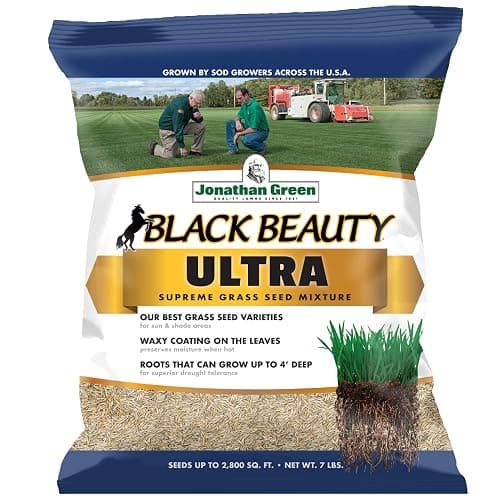
 Jonathan Green Black Beauty Ultra Grass SeedCheck price on Amazon
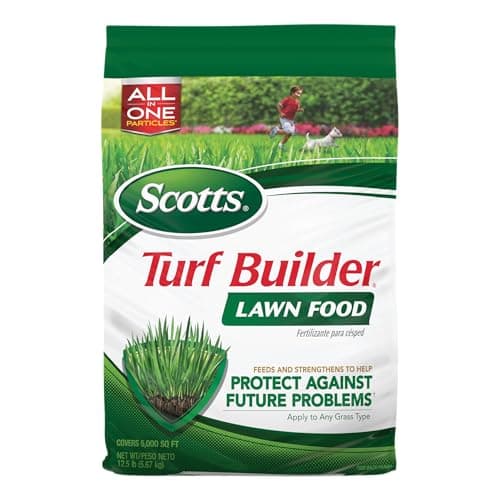
 Scotts Turf Builder Lawn FoodCheck price on Amazon
As an Amazon Associate we earn from qualifying purchases.
Free Lawn Care Tools
Kentucky bluegrass, usually in a blend with perennial ryegrass and fine fescue. It is the dense, traditional Ohio lawn. Tall fescue is the common pick where people want a lower-input, drought-tougher lawn.
Four cool-season grasses make up Ohio lawns: Kentucky bluegrass, tall fescue, perennial ryegrass, and fine fescue. OSU recommends only these four; cool-season species dominate Ohio lawns, and while a warm-season grass can occasionally persist in the far south along the Ohio River, bermuda is not reliably recommended anywhere in the state.
Not reliably. Ohio winters kill bermuda in most of the state, and even in the mild far south along the Ohio River it spends roughly six months brown, longer in the north, and risks winterkill in any severe winter. OSU recommends only cool-season grasses for Ohio lawns; turf-type tall fescue is the closest match for bermuda's toughness.
Not as a recommended lawn. OSU's home-lawn guidance names only the four cool-season species. Ohio winters are too cold and summers too short for bermuda or zoysia to make a reliable statewide lawn.
Late summer, between August 15 and September 30 per OSU, with northern Ohio at the early end. Fall seedings root before winter and beat the crabgrass and heat that ruin spring seedings.
Turf-type tall fescue. Its deep roots let it survive most Ohio droughts without irrigation and stay green while Kentucky bluegrass browns out and goes dormant.
Sources (3)
- Ohio State University Extension, Lawn Grass Cultivar Selection (HYG-4027).
- OSU Extension (CFAES), Natural Organic Lawn Care.
- OSU Buckeye Turf, Turfgrass Establishment Series.
Photos: Sandra Keller / iNaturalist · CC BY 4.0, ashleyrsteel / iNaturalist · CC BY 4.0, Dominic Gentilcore / iNaturalist · CC BY 4.0, Kevin Faccenda / iNaturalist · CC BY 4.0

Beat weeds and brown spots from your phone
Snap a photo, get the fix, and follow a plan timed to your soil and weather. Free on iPhone.
Related Articles
 Climate & Regional Tips
6 Types of Grass in West Virginia and How to Tell Which You Have
Sep 2, 2026•7 min read Climate & Regional Tips
4 Types of Grass in Connecticut and How to Tell Which You Have
Sep 2, 2026•7 min read Climate & Regional Tips
4 Types of Grass in New York and How to Tell Which You Have
Aug 30, 2026•7 min read