Types of Grass in Oklahoma: The Common Lawn Grasses
 Marcus GreenTurf Management Pro | 18 Years
As an Amazon Associate we earn from qualifying purchases.
Oklahoma is a transition-zone state, so bermudagrass is the full-sun default statewide. Zoysia suits the humid east, buffalograss the arid west, and tall fescue the shade and the north. OSU sends you to tall fescue wherever a lawn gets less than 6 hours of sun, since bermuda thins in shade.
Rainfall decides the west: buffalograss lives on the 12 to 25 inches western Oklahoma gets. Seed bermuda after May 1 and by July 1; seed tall fescue or bluegrass in late September and October. Crabgrass germinates late March to early May, so pre-emergent goes down about two weeks earlier.
Oklahoma sits right where north meets south and the wet east dries into the arid west, so it grows a wider range of lawn grasses than most states. OSU Extension notes that bermudagrass, buffalograss, and zoysiagrass are the warm-season species most commonly planted in Oklahoma, with cool-season grasses filling the shade. This guide covers every common type and how to tell which is already in your yard.
The types of grass that grow in Oklahoma
Bermudagrass
Bermudagrass is Oklahoma's dominant lawn grass. OSU calls it the best-adapted turfgrass for full-sun areas in Oklahoma due to its excellent heat and drought tolerance. It spreads aggressively, recovers fast from traffic, and covers full-sun yards statewide. The catch is shade, where it thins badly, and a tan, dormant look all winter.
Zoysiagrass
Zoysiagrass is the higher-quality warm-season option for the wetter eastern half of the state. OSU puts it plainly: its winter hardiness and its ability to grow under light shade are its desirable features; its slow establishment rate is its greatest liability. It forms a dense, weed-resisting carpet, but you pay for it in patience and cost.
Tall Fescue
Tall Fescue is Oklahoma's practical cool-season grass and the answer for shade. OSU sends you to it where a lawn gets less than 6 hours of sunlight, since bermuda will not hold there. It usually holds its color through winter and works statewide on shaded or irrigated sites, but Oklahoma's hot, dry summers stress it, so a heat-tolerant cultivar matters. In deep shade, a groundcover may beat any grass.
Buffalograss
Buffalograss is the low-water native for the arid west. OSU calls it the best choice for unirrigated lawns and general turf areas of western Oklahoma, where it survives on the 12 to 25 inches of annual rainfall that would starve thirstier grasses. It wants full sun and light traffic and gives you a soft, low-input prairie lawn.
Kentucky Bluegrass
Kentucky Bluegrass is a northern, shaded, or irrigated option. It has excellent winter hardiness and self-repairs by rhizomes, but its poor heat tolerance means it struggles through Oklahoma summers. OSU pairs it with tall fescue and ryegrass as a cool-season turfgrass to seed in the fall if a permanent turf is desired. It is a north-Oklahoma and blend grass, not a statewide lawn.
Two more grasses fill niche roles in Oklahoma. Perennial ryegrass is used mainly to overseed dormant bermuda for winter color and for quick cover, rather than as a permanent lawn. St. Augustinegrass can only be grown in the southernmost Oklahoma counties because of its weak freeze tolerance, so it is a rare, sheltered-site choice.
Oklahoma grass types compared at a glance
| Grass | Season | Best role | Sun / shade | Water need | Maintenance |
|---|---|---|---|---|---|
| Bermudagrass | Warm | Full-sun default statewide | Full sun, poor shade | Low once established | High |
| Zoysiagrass | Warm | Dense premium, eastern half | Sun to light shade | Moderate | Low-medium |
| Tall Fescue | Cool | Shade and north, statewide | Shade to part sun | Moderate to high | Medium |
| Buffalograss | Warm | Native low-water, west | Full sun only | Very low | Very low |
| Kentucky Bluegrass | Cool | Northern, cooler irrigated sites | Sun to light shade | High | Medium-high |
How to tell which type you already have
Start with the big split: does the grass spread by runners, or grow in clumps? Bermuda, zoysia, and buffalograss spread by runners; tall fescue grows in bunches; Kentucky bluegrass spreads underground by rhizomes. Blade width, color, and the seed head sort the rest.
| Grass | Blade | Growth habit | Standout tell |
|---|---|---|---|
| Bermudagrass | Fine, wiry | Runners above and below ground | Bird's-foot seed head, even in mowed lawns |
| Zoysiagrass | Fine to medium, stiff | Slow, very dense | Springy carpet feel; crunches when dry |
| Tall Fescue | Wide, coarse, rough edges | Bunching, no runners | Grows in clumps, not a spreading mat |
| Buffalograss | Fine, soft, blue-green | Sparse surface runners | Curls over as it cures; thin, open stand |
| Kentucky Bluegrass | Fine, soft | Spreads by rhizomes, dense sod | Boat-shaped blade tip; open seed-head panicle |
Still not certain? Our free AI grass identifier reads a close-up photo, names the grass, and builds a 12-month care plan tuned to your ZIP.
Which types grow in your part of Oklahoma
Oklahoma is a true transition-zone state that dries out sharply from east to west. OSU frames it as a place where the hot summers limit cool-season grasses to shaded or irrigated sites, while the rainfall gradient decides which warm-season grass fits.
- Eastern Oklahoma (Tulsa, the humid east): Wetter, over 40 inches of rain. Bermuda in full sun, zoysia for a denser lawn, and tall fescue in shade. Cool-season grasses survive here with the extra moisture.
- Central Oklahoma (Oklahoma City): The transition heart. Bermuda dominates full sun, tall fescue covers shade, and zoysia is the premium pick. Both types are grown, and neither is perfect through the hot summer and cold winter.
- Western Oklahoma and the Panhandle (arid, cold north): Dry, 12 to 25 inches of rain, with hard Panhandle winters. Native buffalograss and cold-tolerant bermuda are the low-water defaults; thirsty grasses do not pay here.
Oklahoma grass timing that matters
Soil temperature and the calendar together run an Oklahoma lawn:
- Spring pre-emergent: OSU times crabgrass control by the calendar, since germination runs from late March to early May depending on location and year. Put the pre-emergent down about two weeks ahead of that, so earlier in southern Oklahoma and later toward the cooler Panhandle.
- Warm-season establishment: seed bermuda once the upper soil holds 68 to 95F, generally after May 1, and most seeded bermudagrasses should be planted by July 1 to build winter hardiness before fall.
- Cool-season fall seeding: OSU says the ideal time to seed Kentucky bluegrass, perennial ryegrass, or tall fescue is in late September and October. Overseed dormant bermuda with ryegrass in the same window.
- Last spring frost: roughly late March in the south to early May in the Panhandle; first fall frost early October up north to late October in the south.
- Dormancy: warm-season grasses go tan after the fall frost and green up in spring; feed them about two weeks after green-up, not before.
Our herbicide timing tool pins the exact pre-emergent date for your ZIP.
Next steps
Once you know your grass type, the care gets specific. Dig into the full guides for Bermudagrass, Zoysiagrass, Tall Fescue, or Buffalograss, or line any two up in our grass comparison tool. For the wider picture, see how every state compares.
And if you are not sure what is growing out there, start with a quick photo on our free grass identifier.
Top Picks
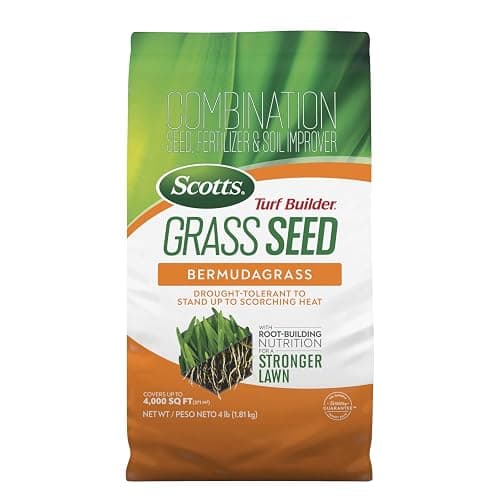
 Scotts Turf Builder Grass Seed Bermudagrass (4 lb)Check price on Amazon
 Scotts Turf Builder Southern Lawn FoodCheck price on Amazon
As an Amazon Associate we earn from qualifying purchases.
Free Lawn Care Tools
Bermudagrass, the best-adapted grass for full sun statewide. Tall fescue is the common pick for shade and the north, and buffalograss for low-water western Oklahoma.
Five main lawn grasses, plus two niche ones, because Oklahoma is a transition zone. The mainstays are warm-season bermuda, zoysia, and buffalograss and cool-season tall fescue and Kentucky bluegrass; perennial ryegrass is used for overseeding, and St. Augustine only in the far south. No single grass is ideal everywhere.
Tall fescue. Bermuda has poor shade tolerance, so OSU recommends tall fescue anywhere a lawn gets less than about six hours of sun. Pick a heat-tolerant cultivar for Oklahoma summers.
Buffalograss in the arid west, a native that survives on 12 to 25 inches of rain a year. Bermuda is the durable low-water choice for full-sun yards statewide once established.
Yes, statewide on shaded or irrigated sites, and it is the go-to cool-season lawn in the north. It stays green in winter but is stressed by hot, dry Oklahoma summers, so it needs a heat-tolerant cultivar and usually some water.
Sources (3)
- Oklahoma State University Extension, Selecting a Lawn Grass for Oklahoma (HLA-6418) and Establishing a Lawn in Oklahoma (HLA-6419).
- OSU Extension, Managing Turfgrass in the Shade in Oklahoma (HLA-6608).
- OSU Extension, Lawn Management in Oklahoma (HLA-6420).
Photos: Greghig Jirheg / iNaturalist · CC BY 4.0, Kevin Faccenda / iNaturalist · CC BY 4.0, Alan Prather / iNaturalist · CC BY 4.0, Jay Pruett / iNaturalist · CC BY 4.0

Beat weeds and brown spots from your phone
Snap a photo, get the fix, and follow a plan timed to your soil and weather. Free on iPhone.