

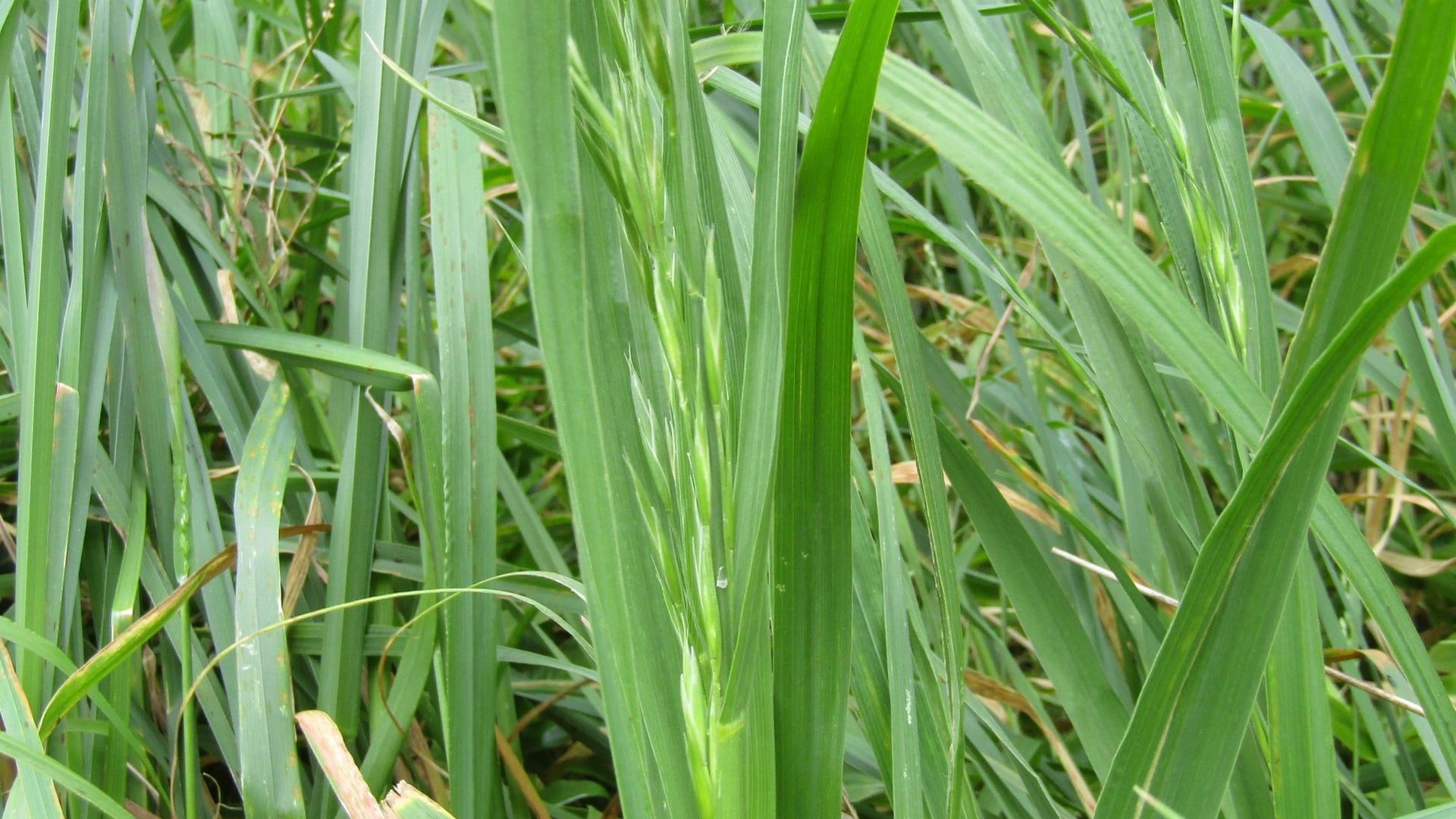
What Type of Grass Do I Have? Identification Chart with Pictures (2026)
 Sarah MitchellLawn Diagnostics Specialist | 12 Years
As an Amazon Associate we earn from qualifying purchases.
Knowing what kind of grass grows in your yard is the single most useful piece of information you can have as a homeowner. Every care decision flows from it. The right fertilizer rate, the right mow height, how often to water, what weed control is safe to use, when to overseed, and even whether a brown patch is a disease or just normal dormancy. Get the grass type wrong and you can spend a whole season working against your lawn instead of with it.
Most people inherit their lawn from a previous owner and never get a clear answer about what is actually growing. The seed bag is long gone. The landscaper who installed the sod has moved on. So you guess, or you copy what the neighbors do, and your lawn never quite looks the way you want it to.
The good news is that 90 percent of residential lawns in the United States are one of about 10 grasses, and you can narrow it down in under a minute with a simple 4-step visual test. This guide walks you through the test and shows you what to look for. You can also skip ahead and let the free photo identifier name your grass from one photo.
The fastest way to identify your grass: snap a close-up photo of a single blade and use our free AI grass identifier for an instant match. For a manual approach, narrow down by climate (North = cool-season, South = warm-season), then by blade width and growth pattern. Most lawns fall into 10 common species and a 4-step visual test gets you to the answer in under a minute.
The 30-Second Test
Before you go deep on each individual grass, run this quick mental checklist. Four questions get you 80 percent of the way to a confident ID, and most homeowners can answer all four by walking out to the yard and bending down for a closer look. Keep your phone handy for a photo of a single blade. You will use it later if you need a tiebreaker.
- Do you live in the South (zones 7-10) or North (zones 3-6)?
- Look at one blade: pointed tip or boat-shaped tip?
- How wide is the blade?
- Does it spread by runners or grow in clumps?
Run those four checks before you go any further. The rest of this guide breaks each step down with photos in your head and what each answer means.
Want to skip the checklist? Snap one photo of your grass and the free AI grass identifier names the species with a confidence score in about 15 seconds. No signup, and you can still use the manual steps below to double-check the result.
Step 1: Identify Your Climate Zone (Cool vs Warm Season)
Grasses fall into two big categories based on the climate they thrive in. Cool-season grasses do their best growing in spring and fall, go semi-dormant in summer heat, and stay green through cold winters. Warm-season grasses do the opposite. They love heat, grow most aggressively from late spring through summer, and turn brown and dormant once nighttime temperatures drop below 55 degrees.
Your USDA hardiness zone is the easiest filter. If you live in the upper half of the country, your lawn is almost certainly a cool-season grass. If you live in the lower third, it is almost certainly warm-season. The middle band is the transition zone where it could be either, and identification matters more there than anywhere else.
Cool-season range
Cool-season grasses dominate USDA zones 3 through 6, which covers New England, the Midwest, the Pacific Northwest, the northern Plains, and the higher elevations of the Mountain West. If you live in Minneapolis, Boston, Denver, Seattle, Buffalo, or Salt Lake City, look at the cool-season list first. Kentucky bluegrass, tall fescue, fine fescue, and perennial ryegrass are the four you will see most often.
Warm-season range
Warm-season grasses dominate USDA zones 7 through 10. Florida, Georgia, the Gulf Coast, Texas, Arizona, Southern California, and the Carolinas are warm-season country. Bermuda, St. Augustine, zoysia, centipede, bahia, and buffalograss are the common species. If you live in Houston, Atlanta, Phoenix, Orlando, or San Diego, start with the warm-season list.
Transition zone (zones 6-7)
The transition zone runs through the middle of the country: Kansas City, Nashville, Richmond, Louisville, Oklahoma City, and Northern Virginia. This is where identification gets interesting. Tall fescue is the most common transition-zone grass because it tolerates heat better than other cool-season options, but you will also find bermuda, zoysia, and even Kentucky bluegrass on some properties. If you live here, treat the climate filter as a tiebreaker rather than a definitive answer and rely more heavily on blade and growth-pattern clues.
Step 2: Look at the Blade
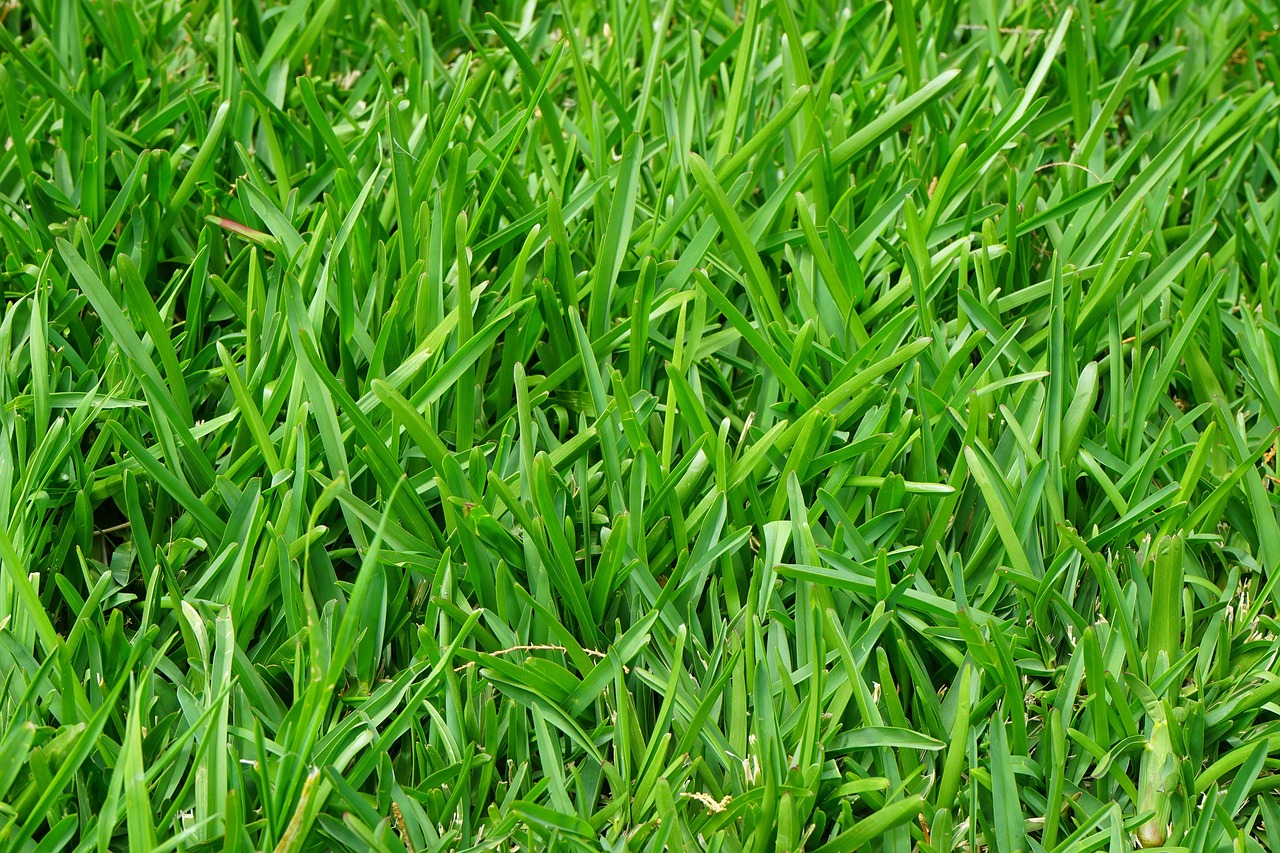
Pull a single blade off the lawn and look at it closely. The blade itself carries three pieces of information that narrow the field fast: how wide it is, what shape the tip is, and the color and feel of the surface.
Blade width
Blade width is the easiest measurement to take, and it splits the common grasses into three tidy groups. Narrow blades less than 2 millimeters across, about the width of a thin pencil line, point you toward fine fescue or bentgrass. Medium blades 2 to 4 millimeters wide, roughly the width of a standard paperclip wire, cover the broad middle: Kentucky bluegrass, bermuda, zoysia, perennial ryegrass, and tall fescue. Wide blades 5 millimeters or more, easily visible as a flat green strap, point to St. Augustine or bahia.
If you have to choose between a magnifying loupe and a ruler for this step, use the ruler. The width matters more than the surface detail at this stage.
Blade tip shape
Look at the very end of the blade. Most grasses come to a pointed tip, like a tapered green needle. Kentucky bluegrass is the famous exception. KBG has a distinctive boat-shaped tip, sometimes described as a canoe prow, where the blade narrows and then curves up at the very end. If you see boat tips, you almost certainly have Kentucky bluegrass or a KBG-heavy blend. Bermuda has a sharper, more V-shaped profile when you look at the blade in cross section, which gives it a slightly rough feel when you run your fingers along it.
Color and texture
Color is less reliable than shape because it changes with fertilizer, water, and season. Still, a few patterns hold up. Kentucky bluegrass leans toward a deep, slightly blue-green color in healthy lawns. Tall fescue is medium-dark green with a dull surface. Centipede is a pale, almost lime-green even when healthy, which leads to a common misdiagnosis. St. Augustine has a coarse, almost waxy surface that catches light differently from fescue. Bermuda tends toward gray-green and gets darker with nitrogen.
Step 3: Look at the Growth Pattern
Step away from the single blade and look at how the grass fills space. Grasses spread in three ways, and the spreading habit is one of the most reliable identification clues you can find.
Bunch-type
Bunch-type grasses grow in clumps. Each plant stays put and gets bigger by adding more shoots in place, called tillers, rather than sending out runners. If you look at a thin spot in the lawn and the grass on the edges is not creeping in, you probably have a bunch grass. Tall fescue and perennial ryegrass are the two big bunch grasses, and this is why a bare patch in fescue stays bare until you reseed it. The grass cannot fill it in on its own.
Spreading by rhizomes
Rhizomes are underground stems that send up new shoots away from the parent plant. Kentucky bluegrass is the classic rhizome spreader, which is why a KBG lawn slowly knits itself back together after damage. Bermuda also spreads aggressively by rhizomes in addition to above-ground runners. If you dig up a small piece of lawn and see white horizontal stems running through the soil with new shoots popping up along them, you are looking at rhizomes.
Spreading by stolons
Stolons are above-ground runners that creep along the soil surface and root at the nodes. St. Augustine is the most obvious stolon spreader. You can literally watch the runners crawl across a sidewalk over a few weeks. Centipede and bermuda also spread by stolons, and Bermuda is unique in spreading both ways at once. If you see green stems running across the surface of the soil, often with little tufts of leaves sticking up at intervals, you are looking at stolons.
How fast it spreads / fills in bare spots
Spreading speed is a tiebreaker. Bermuda fills a bare patch faster than any other common lawn grass and will jump a sidewalk crack within a season. St. Augustine is a strong second. Zoysia spreads slowly but steadily. Kentucky bluegrass takes its time, often a full season to close a small bare spot. Centipede is famously slow, which is part of its appeal in low-maintenance lawns. Fescue and ryegrass do not spread at all on their own. If your lawn closes its own gaps without your help, you are not looking at a bunch grass.
Step 4: Touch Test and Smell
The last step is the one most identification guides skip, but it is the one that often clinches an ID when the visual clues are ambiguous. Get down on your hands and knees and feel the lawn, then crush a small piece of leaf between your fingers and smell it.
Soft and fine
Run your palm across the lawn. If it feels soft, fine, and almost plush under your hand, you are probably looking at fine fescue or a healthy Kentucky bluegrass lawn. Both have thin enough blades and a dense enough canopy to feel like carpet. Tall fescue can feel similar when it is mowed short and well-maintained, but it usually has a slight coarseness compared to KBG.
Stiff and coarse
Wide-blade grasses feel stiff and coarse when you rub your hand across them. Bahia and St. Augustine both fall into this category. Bahia in particular has a noticeably scratchy texture that some people find uncomfortable to walk on barefoot. Centipede sits in the middle, coarser than fescue but softer than bahia. If your lawn feels like running your hand over a scrub brush, you are looking at a coarse warm-season grass.
The crushed-grass smell test
Pull a few blades, crush them between your fingers, and smell them. Most grasses smell like fresh-cut hay or generic green vegetation. Bermuda is the exception. It has a distinctive, slightly sharp, almost herbal smell when crushed that experienced lawn pros use to confirm bermuda in a mixed lawn. If you smell something more pungent than ordinary grass, that is one more vote for bermuda.
Common Types of Grass in US Lawns at a Glance
Before we walk through each species, here is the big picture. Nearly all the types of grass you will find in American lawns split into two groups. Cool-season grasses like Kentucky bluegrass, tall fescue, fine fescue, and perennial ryegrass dominate northern lawns. They green up early in spring, thrive in the 60 to 75 degree range, and often go a little dull in the heat of summer. Warm-season grasses like bermuda, St. Augustine, zoysia, centipede, bahia, and buffalograss rule the South. They love the heat, then turn brown and dormant once frost arrives.
That is really it. About 10 grass types cover roughly 90 percent of residential lawns in the United States, so identification is less about memorizing dozens of species and more about narrowing down within the right family. Figure out whether you are in cool-season or warm-season territory, then use blade width, growth pattern, and texture to separate the handful of candidates left. The sections below cover each of these common types of grass in detail, with photos and the tells that set each one apart.
Common Cool-Season Grasses

If you have run the four-step test and landed in the cool-season bucket, here are the four species that cover the vast majority of lawns in the North. Each one has a few visual signatures that distinguish it from the others.
Kentucky Bluegrass
Boat-shaped blade tips are the giveaway. Look for medium-width blades with a slight blue-green tint and that distinctive curved tip. Kentucky bluegrass spreads by rhizomes, so a healthy KBG lawn looks uniformly carpeted with no visible clumps. It needs more water than tall fescue and goes semi-dormant during summer heat waves. For a deeper look at care and seasonal timing, see the KBG guide.
Tall Fescue
The bunch growth pattern is the biggest clue. Tall fescue grows in clumps that get larger over time but never knit together the way KBG does. Blades are medium-wide, with pointed tips, prominent vein lines on the upper surface, and a medium-dark green color. Modern turf-type tall fescue is finer and softer than older K-31 pasture types, but you can still feel the slight coarseness compared to KBG. For full care details, see the tall fescue guide.
Fine Fescue
Fine fescue has the narrowest blades of any common lawn grass, often roughly 1 millimeter wide. The lawn looks almost wispy up close. There are several species in the fine fescue group (creeping red, chewings, hard fescue) and they often appear in shade-tolerant seed mixes. If you have a shady yard with very fine, soft grass that looks slightly different from the sunny parts, you probably have fine fescue mixed in. Check the fine fescue guide for shade and low-maintenance care.
Perennial Ryegrass
Perennial ryegrass has medium-width blades that are very shiny on the underside. Flip a blade over and look. A glossy, almost glass-like underside is a strong sign of ryegrass. It is a bunch grass like tall fescue, but the individual plants are smaller and tighter, and the lawn often looks more uniform. Perennial ryegrass is also commonly overseeded into warm-season lawns in the South for winter color. For full details, see the perennial ryegrass guide.
Common Warm-Season Grasses
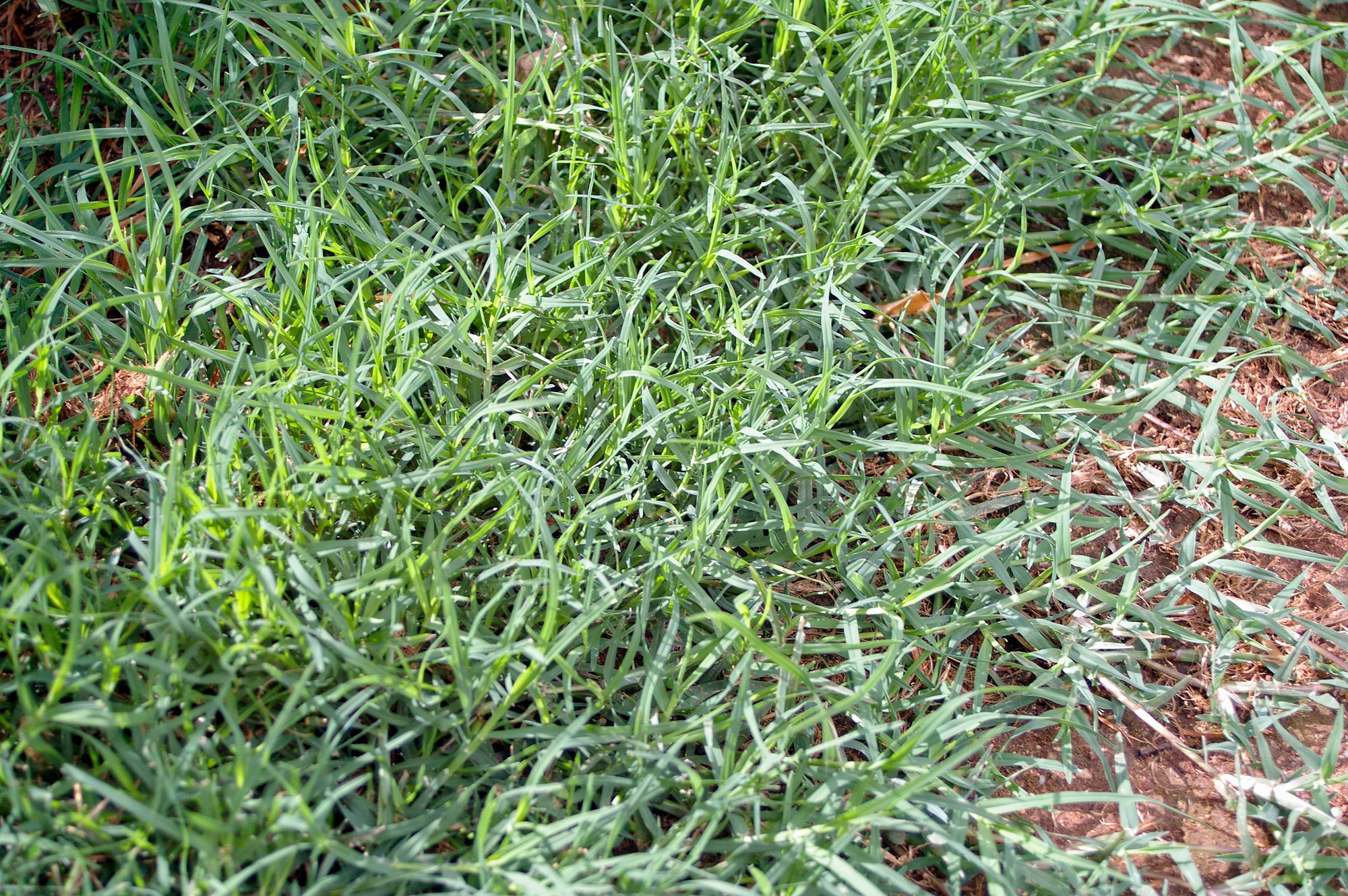
If you landed in the warm-season bucket, here are the six species you are most likely to encounter. They are more visually distinct from each other than the cool-season grasses are, so the ID gets easier once you know what to look for.
Bermuda Grass
Bermuda is the most aggressive spreader on this list. Look for medium-width blades with a slightly gray-green color, sharp V-shaped profile, and visible stolons creeping across the surface. Bermuda grows in dense, low mats and tolerates very low mowing heights, often half an inch or less on golf-course-style lawns. If your lawn spreads into sidewalks, flower beds, and across mulch lines, it is almost certainly bermuda. For care details, see the bermudagrass guide.
St. Augustine Grass
St. Augustine has the widest blades of any common warm-season grass, often 6 to 10 millimeters across, with a coarse, slightly waxy surface. The growth habit is unmistakable: thick above-ground stolons that crawl visibly across the soil and root at the nodes. Color is typically deep green. St. Augustine is the dominant lawn grass on the Gulf Coast and in Florida. For full care info, see the St. Augustine guide.
Zoysia Grass
Zoysia has medium-width blades, a dense growth pattern, and a stiff feel when you walk on it. The lawn often looks almost perfectly uniform because zoysia knits together so densely. It spreads slowly compared to bermuda and St. Augustine, so a zoysia lawn rarely escapes its boundaries. Color is a rich green during the growing season and goes straw-brown in winter dormancy. For care, see the zoysia guide.
Centipede Grass
Centipede has a distinctive pale, lime-green color even when perfectly healthy. People often mistake the natural color for a nitrogen deficiency and over-fertilize, which damages the lawn. Blades are medium-width with pointed tips, and the growth habit is short stolons that creep slowly. Centipede is the famously low-maintenance Southern lawn grass. For details, see the centipede guide.
Bahia Grass
Bahia is the toughest, coarsest, most utility-grade lawn grass on this list. Wide blades, a stiff, scratchy texture, and tall Y-shaped seed heads that pop up faster than you can mow them. Bahia is common in Florida and along the Gulf Coast on lower-maintenance properties. If your lawn feels like a scrub brush and grows seed heads constantly, you probably have bahia. See the bahia guide.
Buffalograss
Buffalograss is a true Great Plains native, common in Texas, Oklahoma, Kansas, and Nebraska where rainfall is limited. Blades are narrow, fine, and slightly curly, with a blue-green color. It spreads by stolons but slowly, and it tolerates drought better than any other lawn grass on this list. If you live on the Plains and your lawn survives on natural rainfall alone, look at buffalograss. See the buffalograss guide.
Use the Free Grass Identifier Tool
If the manual checklist gets you most of the way but you want a tiebreaker, our free AI grass identifier covers 30+ grass types and gives you a confident match from a single photo. Snap a close-up of a single blade, or a wider shot of the lawn surface, upload it, and you get a ranked list of likely matches with confidence scores.
The tool is especially useful in the transition zone, where a single yard often has more than one grass type fighting for dominance. Run it on a few different spots in the yard and you can map out which grass is winning where. No login required, no signup wall in the way, just upload and go.
If you would rather weigh your options first, our rundown of the best grass identification apps covers where Google Lens, general plant ID apps, and purpose-built turf tools each hold up on a mowed lawn.
Grass identification chart: the 60-second decision tree
If you would rather follow a path than scan a grid, this decision tree walks the same logic a turf pro uses in the field: start with your climate, then narrow by blade width, vernation (how the youngest leaf is folded or rolled in the bud), and how the grass spreads. Follow the branches to the most likely species, then confirm.
Text version of the path: if you are in the warm-season South (zones 7-10), a wide blade over 4 mm points to St. Augustine (folded, stolons, blunt tip, twisted collar) or centipede (folded, stolons, notched, yellow-green), while a medium 2 to 4 mm blade points to bermuda (folded, spreads by both rhizomes and stolons) or zoysia (rolled, hairy ligule and collar, stiff, slow). If you are in the cool-season North (zones 3-6), a folded vernation points to Kentucky bluegrass (boat tip, rhizomes) or perennial ryegrass (bunch, shiny leaf back), while a rolled vernation points to tall fescue (bunch, prominent veins, 4 to 8 mm) or fine fescue (bunch, very fine, about 1 mm).
Once the tree narrows it to one or two species, confirm with a photo: the free AI grass identifier matches your blade against 30+ types in about 15 seconds and settles any remaining doubt.
Grass Identification Chart: Compare the 10 Common Lawn Grasses
Use this chart as a quick visual reference once you have run the test above. Each row lists the features that separate one species from the next at a glance: blade width, tip shape, how the grass spreads, and color. If you want an instant answer instead of working the chart by hand, the free photo identifier matches your grass from a single photo, and the grass identification tool page walks you through it step by step.
| Grass type | Season | Blade width | Leaf tip | Vernation | Spreads by | Color |
|---|---|---|---|---|---|---|
| Kentucky bluegrass | Cool | 2 to 4 mm | Boat-shaped | Folded | Rhizomes | Deep blue-green |
| Tall fescue | Cool / transition | 4 to 8 mm | Pointed | Rolled | Bunch (clumps) | Medium-dark green, dull |
| Fine fescue | Cool | Under 2 mm | Pointed | Rolled | Bunch | Medium green, wispy |
| Perennial ryegrass | Cool | 2 to 4 mm | Pointed | Folded | Bunch | Medium green, glossy underside |
| Bermuda grass | Warm | 2 to 4 mm | Pointed | Folded | Rhizomes and stolons | Blue-green to gray-green |
| Zoysia grass | Warm / transition | 2 to 4 mm | Pointed, stiff | Rolled | Rhizomes and stolons | Rich green, straw in winter |
| St. Augustine | Warm | 6 to 10 mm | Rounded blunt | Folded | Stolons | Deep green, waxy |
| Centipede | Warm | 4 to 6 mm | Pointed blunt | Folded | Stolons | Pale lime-green |
| Bahia | Warm | 4 to 8 mm | Pointed | Rolled | Thick, stout rhizomes | Medium green, coarse |
| Buffalograss | Warm | 2 to 6 mm | Pointed | Rolled | Stolons | Blue-green, slightly curly |
Vernation for the cool-season grasses, bermudagrass, and zoysiagrass follows the University of Kentucky turfgrass identification guide (AGR-251). Vernation for St. Augustinegrass, centipedegrass, and bahiagrass follows UF/IFAS Florida Turfgrass Identification (ENH1382), and buffalograss follows the Ohio State turfgrass identification key. Leaf anatomy terms follow the University of Georgia turf program.
Fine details that settle ties
When two grasses look almost identical, the structures where the leaf meets the stem break the tie. Pull a blade back gently and look at the collar (the band on the back of the leaf where the blade meets the sheath), the ligule (the small membrane or fringe on the inside of that joint), and the auricles (any little claspers reaching around the stem at the collar's edge).
- St. Augustine: the collar is often twisted about 90 degrees, so the blade sits at an angle to the sheath, and the leaf tip is rounded and blunt. Nothing else common looks quite like it.
- Perennial ryegrass: small, soft auricles clasp the stem, and the back of the leaf is glossy enough to catch light. That shiny underside is the fastest tell.
- Tall fescue: prominent parallel veins ridge the upper surface, and any auricles are very short or hard to see at all. Coarser to the touch than ryegrass.
- Kentucky bluegrass: the boat-shaped tip plus two fine light lines pressed down the center of the blade is the classic tell, paired with a short membranous ligule.
Collar, ligule, and auricle traits follow the University of Kentucky turfgrass identification guide (AGR-251), Penn State Extension cool-season turfgrass identification, and the Ohio State turfgrass identification key.
Why Knowing Matters
The whole point of identifying your grass is making better care decisions. Here is how much the numbers change between species.
Fertilizer rate varies by a factor of two to four. Clemson puts centipede in South Carolina at 1 to 2 pounds of actual nitrogen per 1,000 square feet per year and warns that going past 2 pounds builds thatch and invites disease. Clemson puts bermuda at 2 to 4 pounds of actual nitrogen per 1,000 square feet per growing season. Apply a bermuda program to a centipede lawn and you will kill the centipede.
Mow height varies just as widely. Bermuda gets cut at 1 to 1.5 inches. Tall fescue wants 3.5 to 4 inches. Scalp a tall fescue lawn down to bermuda height and you will fry it in the first summer heat wave. Let a bermuda lawn grow to fescue height and it gets stemmy, weak, and weed-prone.
Water needs follow the same pattern. Cool-season grasses generally want about 1 inch of water per week during active growth. Warm-season grasses are more drought-tolerant on average, with bermuda and bahia near the bottom of the water-need scale and St. Augustine near the top.
Weed control is the most expensive thing to get wrong. Several common pre-emergent and post-emergent herbicides are safe on bermuda but kill St. Augustine. Atrazine is fine on St. Augustine and centipede but damages tall fescue. Always read the label and verify your grass type before you apply anything. For more on the touch-and-look identification approach, see how to identify your grass type by look and feel.
Commonly confused pairs
Two matchups trip people up more than any others, and getting them wrong changes how you should feed and treat the lawn. Here is how to tell each pair apart.
Bermuda vs Zoysia
Both are dense, medium-bladed warm-season grasses that spread by rhizomes and stolons, so at a glance they blur together. Bermuda is the finer, faster one: the blades feel softer, the color leans gray-green to blue-green, it spreads aggressively by both runners at once, and it throws up seed heads with several finger-like spikes radiating from the top of one stem. Zoysia is stiffer and slower: the blades feel wiry underfoot, you can often spot fine hairs near the base of the leaf, and it knits in so tightly that it rarely jumps a bed edge. When it matters: bermuda takes far more nitrogen and a much lower mowing height than zoysia, so feeding a zoysia lawn on a bermuda program just pushes thatch and disease.
St. Augustine vs Centipede
These two share the Deep South and both creep by surface stolons, which is where the confusion starts. St. Augustine has wide, flat, coarse blades with a rounded, blunt tip and thick, vigorous runners you can watch crawl across a sidewalk. Centipede is shorter and noticeably more yellow-green, with narrower blades, a small notch at the leaf tip, and a slower, lower-growing habit. When it matters: centipede is a true minimalist that Clemson puts at just 1 to 2 pounds of nitrogen per 1,000 square feet a year in South Carolina and yellows when you push iron and fertilizer at it, while St. Augustine tolerates and often wants more, so one feeding plan will damage one grass or starve the other.
Common Identification Mistakes
A few specific mistakes show up over and over in the homeowner questions we see. Here are the three biggest ones to watch for.
Confusing tall fescue clumps with crabgrass is the most common cool-season mistake. Tall fescue grows in clumps that are wider, taller, and a slightly different shade of green than the surrounding lawn, and people pull them out or spray them as weeds. They are not weeds. They are just an older variety of fescue mixed in with newer grass, or fescue surviving in a lawn that has mostly turned to something else. Check the blade. Tall fescue has a smooth blade with prominent vein lines, while crabgrass has a wider, paler blade with a more sprawling, low-to-the-ground growth pattern.
Mistaking centipede yellow for a nutrient deficiency is the most common warm-season mistake. Centipede is naturally a pale lime green even when perfectly healthy, and the standard homeowner response is to dump on iron and nitrogen, which damages the grass. If your Southern lawn looks light-green compared to the neighbors but the turf is dense and growing well, you probably do not have a deficiency. You have centipede.
Mistaking bermuda spread for an invasive weed is the third one. Bermuda is so aggressive that homeowners with mixed lawns often see green runners snaking through their fescue or St. Augustine and assume something invasive is taking over. It is bermuda, and it is winning the territory war. Identifying it correctly lets you decide whether to lean in (kill the other grass and let bermuda take over) or fight back (selective herbicides that target bermuda specifically). Either way, the first step is naming what you are looking at.
Conclusion
You can identify the grass in your yard in about 60 seconds with the four-step test: climate zone, blade shape, growth pattern, and texture. Most lawns are one of the 10 common species, and once you have a name, every care decision gets easier. The right fertilizer, the right mow height, the right watering schedule, the right weed control all follow from the species.
When the manual test is ambiguous, the free grass identifier tool is the fastest tiebreaker. Upload a photo, get a confident match, and read the matching /guides/ pillar page for the full care plan. The combination of a quick visual check and a confirmation photo is how lawn pros work in the field, and you can do it just as well from your back porch.
One last note: many lawns have more than one grass type, especially in the transition zone and on properties with shade-versus-sun differences. Run the test on a few different spots, and if the answers come back different, you have a mixed lawn. That is fine. Identify each section and treat it accordingly. Your future lawn-care self will thank you.
Top Picks
- Jonathan Green (10322) Black Beauty Ultra Grass Seed - Cool Season Lawn Seed (7 lb)Check price on Amazon
- Scotts Turf Builder Grass Seed Bermudagrass (4 lb)Check price on Amazon
- Outsidepride Maya (Blackjack II) Bermuda Grass Seed (5 lb)Check price on Amazon
As an Amazon Associate we earn from qualifying purchases.
Free Lawn Care Tools
The fastest way to identify your grass is to snap a close-up photo of a single blade and use the free AI grass identifier tool. For a manual identification, narrow it down by climate zone (North means cool-season, South means warm-season), then check blade width, blade tip shape, and growth pattern. Most lawns are one of 10 common species.
Use a 4-step visual test: 1) determine your climate zone, 2) measure blade width and look at the tip shape, 3) check whether the grass spreads by runners or grows in clumps, 4) feel the texture. Each step narrows the answer until you land on a specific species. The full diagnostic in this guide walks through each step.
Pull a single blade and examine it on a white surface in good light. Measure the width in millimeters, note whether the tip is pointed, V-shaped, or boat-shaped, and look at the base for runners (stolons) or rhizomes. Combined with your climate zone, those visual cues identify almost any common lawn grass in under a minute.
Kentucky Bluegrass has narrow blades (2 to 4 mm wide) with a distinctive boat-shaped (or canoe-shaped) tip and a slight blue-green color. It spreads aggressively by underground rhizomes, so a healthy KBG lawn fills in bare spots on its own. It is a cool-season grass best suited to zones 3 to 7 across the northern half of the US.
Bermuda has narrow, V-shaped blades (UF/IFAS gives 1 to 4 mm) with pointed tips and a fine texture that feels almost wiry. St. Augustine has much wider, blunt-ended blades with a coarse, leathery feel. Bermuda spreads by both rhizomes and stolons, St. Augustine by stolons only, and the blade width and texture make them easy to tell apart at a glance.
Climate zone is the easiest first cut. If you live in USDA zones 3 to 6 (most of the northern US), you almost certainly have a cool-season grass: Kentucky Bluegrass, fescue, or ryegrass. If you are in zones 8 to 10 (Gulf Coast, Florida, deep South), you have a warm-season grass: bermuda, St. Augustine, zoysia, centipede, or bahia. Zones 6 to 7 are the transition zone and can have either.
Take a photo of a single blade against a plain background and use the free AI grass identifier tool for an instant match. For a manual approach, the 4-step visual test (climate, blade, growth pattern, texture) gets you to the answer in under a minute without any tools beyond your eyes and a ruler.
Yes. The free grass identifier tool on this site accepts a smartphone photo and returns a species match, often with an accuracy rate that beats most homeowners trying to ID visually. For best results, photograph a single blade close-up on a plain background in daylight, and include a coin or ruler for scale if you can.
Most likely your lawn has more than one grass species, which is extremely common. Bermuda invading a fescue lawn (or vice versa) shows up as patches of different blade widths and colors. Sometimes the variation is from a single species under different conditions (more sun, more shade, more water), but usually mixed-grass lawns are the real cause.
Centipede has narrower blades (3 to 5 mm) than St. Augustine (5 to 10 mm), and the color is a brighter yellow-green compared to St. Augustine's darker blue-green. Centipede grows much slower and needs far less fertilizer. Clemson puts centipede in South Carolina at 1 to 2 pounds of nitrogen per 1,000 square feet per year, while Texas A&M AgriLife puts St. Augustine in Texas at 3 to 5 pounds. Both spread by stolons but centipede stays shorter and denser at the soil line.
Several common grasses spread by above-ground runners called stolons: bermuda, St. Augustine, centipede, zoysia, and buffalograss. Bermuda and zoysia also send out underground rhizomes, while St. Augustine and centipede have stolons only. Kentucky Bluegrass spreads by underground runners called rhizomes. Bunch-type grasses like tall fescue and perennial ryegrass do not spread at all and stay in clumps where they were seeded.
The most common types of grass in US lawns fall into two groups. Cool-season grass types, common in the North, include Kentucky bluegrass, tall fescue, fine fescue, and perennial ryegrass. Warm-season types, common in the South, include bermuda, St. Augustine, zoysia, centipede, bahia, and buffalograss. These roughly 10 grasses cover about 90 percent of residential lawns, so once you know your climate zone you only need to tell apart a handful of candidates.
Photos: wild_wind / iNaturalist · CC BY 4.0, Ethan Sahagun / Wikimedia Commons · CC BY-SA 4.0, Steven Cross / iNaturalist · CC0, Kristian Peters / Wikimedia Commons · CC BY-SA 3.0, Rasbak / Wikimedia Commons · CC BY-SA 3.0, Bidgee / Wikimedia Commons · CC BY-SA 3.0, Stickpen / Wikimedia Commons · Public domain, Krzysztof Ziarnek, Kenraiz / Wikimedia Commons · CC BY-SA 4.0, T.M.Jones / Wikimedia Commons · CC BY-SA 3.0, Harry Rose / Wikimedia Commons · CC BY 2.0, Patrick Alexander / Wikimedia Commons · CC0

Beat weeds and brown spots from your phone
Snap a photo, get the fix, and follow a plan timed to your soil and weather. Free on iPhone.
Related Articles
 Grass Types
Best Drought-Tolerant Grass Types (Ranked by Water Use)
Jun 17, 2026•11 min read Grass Types
Carpetgrass: How to Identify It and Decide What Your Lawn Needs
Sep 21, 2026•6 min read Grass Types
The State of the American Lawn 2026: What 7,618 Real Lawn Photos Reveal About America's Grass
Jul 19, 2026•8 min read

