Best Fertilizer for Zoysia Grass in Georgia (2026)
 Marcus GreenTurf Management Pro | 18 Years
As an Amazon Associate we earn from qualifying purchases.
Zoysia grass in Georgia performs best with moderate nitrogen, low phosphorus unless a soil test says otherwise, and summer-timed feeding after full green-up. The wrong fertilizer schedule can push thatch, large patch pressure, weed growth, winter injury, and wasted applications, especially in Georgia’s clay soils and humid summers.
This guide explains the best fertilizer for zoysia grass in Georgia in 2026, how to build a practical Georgia zoysia fertilizer schedule, and when to fertilize zoysia in Georgia by region. Georgia is different because zoysia grows through a long warm season, green-up varies from South Georgia to North Georgia, and soils range from nutrient-holding clay to faster-leaching sandy profiles.
The best fertilizer for zoysia grass in Georgia is a slow-release, low-phosphorus fertilizer with moderate potassium, applied only after the lawn is 80-100% green and actively growing. Confirm fertilizer needs with a soil test before changing N-P-K ratios.
For most Georgia lawns, start in May, apply 0.5-0.75 lb nitrogen per 1,000 sq ft per feeding, and stop heavy nitrogen by late summer. Do not fertilize dormant or drought-stressed zoysia.
- Zoysia in Georgia should usually receive 1-2.5 lbs of nitrogen per 1,000 sq ft per year, split during active growth.
- The first zoysia fertilizer application in Georgia should wait until 80-100% spring green-up, usually late April to May in South Georgia and mid-to-late May in North Georgia.
- A 16-0-8 fertilizer applied at 0.5 lb nitrogen per 1,000 sq ft requires 3.125 lbs of product per 1,000 sq ft.
- Our Grass Database recommends 2 lbs of nitrogen per 1,000 sq ft annually for zoysiagrass under moderate maintenance.
- Zoysia performs best at a mowing height of 1-2.5 inches, with 0.75 inches as the minimum mow height in our Grass Database.
This guide covers Georgia-specific timing, soil, and product notes. For the full national picture, NPK ratios, and the complete product comparison, see our main best fertilizer for zoysia grass guide.
Georgia's 65-Degree Rule: Feed Zoysia Late, or Feed the Large Patch
The number that separates a healthy Georgia zoysia lawn from a diseased one is 65 degrees. UGA says do not put down nitrogen until the soil at a 4-inch depth holds 65 degrees and rising, which in the Piedmont means early May, not the March or April a national calendar assumes. Feed too early and you are not feeding zoysia, which is still waking up, you are feeding Rhizoctonia large patch, Georgia's worst zoysia disease, which UGA links directly to high and untimely nitrogen. Feed only when the grass is actively growing.
Zoysia is a light eater: UGA puts it at just 1 to 2 pounds of nitrogen per 1,000 square feet a year, roughly a pound every six to eight weeks from green-up until mid-August, then stop. That is far less than bermuda, and pushing more just builds thatch and invites disease.
Most Georgia lawns sit on Piedmont red clay (metro Atlanta and across the state), where native pH often runs 5.0 to 5.5, below zoysia's 6.0 to 7.0 target, so lime by soil test is usually needed. South Georgia's sandy Coastal Plain leaches faster and greens up earlier, which favors lighter, split feedings. A UGA soil test through your county Extension office gives the exact lime and nutrient numbers.
Georgia Zoysia Fertilizer Calendar
| When | Feed? | Rate & product | Why here |
|---|---|---|---|
| Before 65°F soil (4-inch) | No | Wait | Early N feeds Rhizoctonia large patch |
| Green-up confirmed (~early May, Piedmont) | Start | 1 lb N per 1,000 sq ft | Only when actively growing |
| Every 6-8 weeks to mid-August | Yes | 1 lb N (e.g. 16-4-8) | Total 1-2 lb N/yr |
| After mid-August | STOP nitrogen | Nothing | Fall N fuels large patch |
| Fall | Potassium optional | Potash | Cold hardiness |
| If pH is low | Lime by soil test | Lime | Piedmont clay often sits at pH 5.0-5.5 |
What Zoysia Grass Needs from Fertilizer in Georgia
Zoysia grass in Georgia needs moderate nitrogen, enough potassium for stress tolerance, and phosphorus only when a soil test confirms a deficiency. It is a warm-season turf that grows actively from late spring through summer, then slows as nights cool in fall.
Recommended products
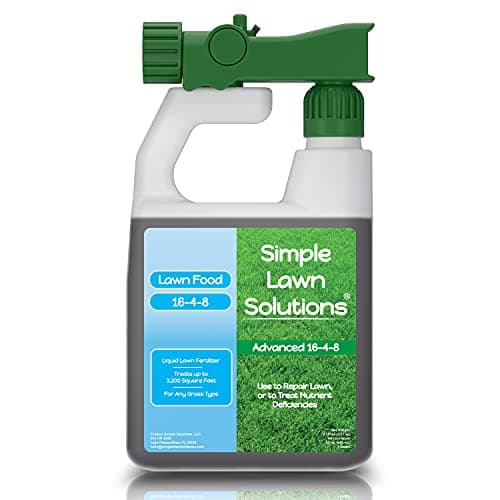
Simple Lawn Solutions Advanced 16-4-8 Liquid Fertilizer
Concentrated liquid fertilizer with balanced 16-4-8 NPK for quick green-up through any hose-end sprayer.
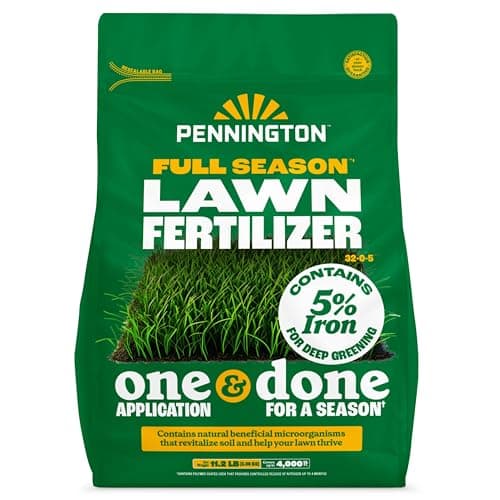
Pennington Full Season Lawn Fertilizer 32-0-5
High-nitrogen fertilizer with iron for fast green-up on warm-season lawns.
Our Grass Database shows zoysiagrass has peak growth from May through September and dormancy from November through March. That timing matters because fertilizer should support active growth, not force early spring color before roots are ready.
Why Zoysia Has Different Fertility Needs Than Other Georgia Lawns
Zoysia needs less nitrogen than bermudagrass and usually more careful timing than homeowners expect. Bermuda can handle aggressive feeding when managed tightly, but zoysia often responds to excess nitrogen by building thatch and becoming more disease-prone.
Compared with centipedegrass, zoysia tolerates somewhat more fertility, but it still does not need a high-input program. Compared with fescue, zoysia feeds in a different season because fescue is cool-season turf. If you also manage other lawns, topics like Bermuda Grass Fertilizer Schedule, Centipede Grass Fertilizer Schedule, and Fescue Lawn Care Calendar require separate timing.
Ideal Nutrient Priorities for Zoysia Grass
Nitrogen is the main nutrient for zoysia color, density, and recovery, but the correct yearly amount is usually modest. A practical annual range for Georgia zoysia is 1-2.5 lbs of nitrogen per 1,000 sq ft, depending on soil test results, cultivar, sun exposure, mowing, irrigation, and lawn goals.
Potassium supports drought tolerance, summer stress recovery, disease resilience, and winter hardiness. Phosphorus is usually not needed on established turf unless testing shows a deficiency. Iron is useful when the lawn needs deeper color without pushing extra growth, and micronutrients such as magnesium, manganese, and sulfur should be guided by soil testing.
- Purdue Turfgrass Science guidance: phosphorus is rarely needed on established lawns unless a soil test shows a deficiency.
- NC State TurfFiles guidance: slow-release nitrogen feeds turf more evenly and reduces surge growth compared with quick-release nitrogen sources.
Why Soil pH Matters Before Choosing the Best Fertilizer
Soil pH controls nutrient availability, so even the best fertilizer can underperform if Georgia soil is too acidic or out of balance. Zoysia generally prefers slightly acidic to neutral soil, and our Grass Database lists the zoysiagrass pH range at 6.0-7.0.
Georgia clay soils can hold nutrients well but may also have calcium, magnesium, potassium, compaction, or pH problems. Test soil every 2-3 years, before major fertilizer changes, and separately for front yard, backyard, compacted areas, and problem zones. How to Test Your Lawn's Soil and How to Improve Soil pH for Grass are especially relevant before buying fertilizer.
Best Fertilizer for Zoysia Grass in Georgia in 2026
The best fertilizer for zoysia grass in Georgia in 2026 is a slow-release or controlled-release nitrogen product with low phosphorus and enough potassium to support summer and winter stress tolerance. The exact bag matters less than matching the nutrient analysis to your soil test and applying the correct pounds of actual nitrogen.
For most established zoysia lawns, look for N-P-K patterns such as 16-0-8, 15-0-15, 24-0-11, 18-0-6, or 20-0-10. A product with 30-50% slow-release nitrogen, or more, is usually easier to manage than a fast-release fertilizer that creates a flush of mowing and soft growth.
Best Overall Fertilizer Type for Georgia Zoysia
Pick a slow-release lawn fertilizer if you want the safest, most reliable option for Georgia zoysia. Slow-release nitrogen gives steadier color, reduces growth surges, and fits zoysia’s moderate feeding habit.
For beginners who want an easy liquid option for light summer color, Simple Lawn Solutions Advanced 16-4-8 Liquid Fertilizer can fit small, actively growing lawns where a soil test allows phosphorus. For homeowners who want gradual feeding with lower burn risk, Milorganite Lawn and Garden Nitrogen Fertilizer 6-4-0 fits summer feeding where slow release is the priority, but still check phosphorus needs first.
Best Fertilizer Ratio for Established Zoysia
The best fertilizer ratio for established Georgia zoysia is usually high nitrogen, little or no phosphorus, and moderate potassium. In ratio terms, that often looks like 3-0-1, 2-0-1, or 1-0-1.
Read the label as N-P-K: first number nitrogen, second phosphorus, third potassium. A 16-0-8 fertilizer contains 16% nitrogen. To apply 1 lb nitrogen per 1,000 sq ft, divide 1 by 0.16, which equals 6.25 lbs of product per 1,000 sq ft. For zoysia, many individual applications should be closer to 0.5-0.75 lb nitrogen per 1,000 sq ft.
Best Fertilizer for Green Color Without Excess Growth
The best way to improve zoysia color without excessive growth is to use iron when nitrogen levels are already adequate. Iron can deepen green color during active growth without forcing the same mowing surge as nitrogen.
Use iron when zoysia is slightly pale in summer, the soil test does not point to a nitrogen shortage, and irrigation is adequate. Avoid overapplying liquid iron in extreme heat, and keep it off concrete, pavers, fences, and shoes because iron can stain hard surfaces.
Best Fertilizer for Sandy vs Clay Soils in Georgia
Clay soils and sandy soils need different zoysia fertilizer strategies because they hold nutrients differently. Clay-heavy Georgia soils usually hold nutrients longer, while sandy soils in parts of South Georgia can leach nitrogen and potassium faster.
On clay, slow-release nitrogen and soil-test-based potassium are the priority, along with aeration if compaction limits rooting. On sandier soils, smaller split applications often work better than one heavy dose. The advanced concept is cation exchange capacity, which describes how well soil holds nutrients, but homeowners can manage it practically with soil tests, split feeding, and organic matter improvement through practices like Composting for a Healthier Lawn.
Best Fertilizer for Newly Installed Zoysia Sod or Plugs
Newly installed zoysia needs rooting, soil contact, and irrigation before aggressive nitrogen feeding. New sod should be watered and rooted before it receives a normal established-lawn fertilizer rate.
Starter fertilizer is only appropriate when a soil test supports phosphorus. New plugs can benefit from light, repeated feeding after rooting begins because lateral spread is the goal. How to Water New Sod and Zoysia Sod Installation Guide are better starting points if the lawn is not yet established.
Georgia Zoysia Fertilizer Schedule for 2026
A Georgia zoysia fertilizer schedule should begin after full spring green-up, concentrate feeding from May through August, and avoid nitrogen during dormancy. The timing data we track puts zoysiagrass peak growth in May-September, which is why the main feeding window belongs in late spring and summer.
The schedule below gives practical timing for 2026, but visual growth should override the calendar. If zoysia is not mostly green and being mowed, it is not ready for nitrogen.
| Season | Georgia Timing | Fertilizer Action | Notes |
|---|---|---|---|
| Late winter | February-March | No nitrogen | Soil test, lime if recommended, plan products |
| Spring green-up | April-May | Wait until 80-100% green | South Georgia starts earlier than North Georgia |
| Early summer | May-June | First main feeding | Apply 0.5-1.0 lb nitrogen per 1,000 sq ft |
| Midsummer | June-July | Second feeding if healthy | Use 0.5-0.75 lb nitrogen per 1,000 sq ft |
| Late summer | August-September | Light feeding or potassium only | Avoid heavy late nitrogen |
| Dormant season | October-January | No nitrogen | Manage leaves, traffic, weeds, and testing |
Quick 2026 Schedule Overview
In February and March, do not apply nitrogen to zoysia in Georgia. Use that time for soil testing, lime if the test recommends it, pre-emergent planning, and spreader maintenance.
In April, watch green-up but avoid pushing the lawn too early. In May, make the first main fertilizer application once the lawn is actively growing. June or July can receive a second application if the turf is healthy. August is optional and should be light. September should avoid high nitrogen, while October through January should receive no nitrogen fertilizer.
When to Fertilize Zoysia in Georgia
The best time to fertilize zoysia in Georgia is after full spring green-up, usually late April to May in South Georgia, May in Middle Georgia, and mid-to-late May in North Georgia. The action trigger is 80-100% green turf plus active mowing, not a fixed date.
South Georgia warms earlier and has a longer growing season. North Georgia has more late frost risk, delayed green-up, and greater winter injury potential. Mountain sites, shaded yards, and compacted clay areas should be fed lighter because they grow more slowly.
Month-by-Month Fertilizer Timing for Georgia Zoysia
Month-by-month timing keeps zoysia fertilizer applications aligned with growth instead of weather swings. February is for soil testing and planning, while March is for avoiding nitrogen, applying pre-emergent if appropriate, and correcting pH if a soil test recommends lime.
April is observation month. May is the first main feeding, usually 0.5-1.0 lb nitrogen per 1,000 sq ft. June is for monitoring growth and color. July can receive 0.5-0.75 lb nitrogen per 1,000 sq ft if the lawn is not drought-stressed. August should be light, September should avoid high nitrogen, and October through January should focus on leaves, traffic control, and winter prep.
Fertilizer Schedule by Lawn Goal
A low-maintenance zoysia lawn should receive about 1-1.5 lbs nitrogen per 1,000 sq ft per year in 1-2 active-season applications. This fits homeowners who want acceptable color without frequent mowing or aggressive thatch growth.
A moderate-maintenance lawn should receive about 1.5-2 lbs nitrogen per 1,000 sq ft per year in 2-3 split applications. Our Grass Database recommends 2 lbs of nitrogen per 1,000 sq ft annually for zoysiagrass, which fits this middle lane well. High-performance zoysia can use 2-2.5 lbs per year, but only with proper mowing, irrigation, aeration, thatch monitoring, and disease scouting.
How to Apply Zoysia Fertilizer Correctly
Zoysia fertilizer should be measured, calculated, spread evenly on dry blades, removed from hard surfaces, and watered in according to the label. Professional crews approach this differently - they calculate actual nitrogen first, then adjust spreader settings to hit the target evenly.
The key most homeowners miss is that bag coverage is not the same thing as the right rate for your lawn. The same fertilizer can be correct or excessive depending on how many pounds of product you apply per 1,000 sq ft.
Step-by-Step Fertilizer Application Process
Use a repeatable process every time so rates stay accurate and stripes are avoided. Start by measuring the turf area and excluding driveways, beds, patios, tree islands, and non-turf surfaces.
- Choose fertilizer based on soil test results, season, and lawn goal.
- Calculate pounds of product using the nitrogen percentage on the label.
- Calibrate the spreader, starting lower than the bag setting if unsure.
- Apply in two perpendicular passes for more even coverage.
- Apply only when grass blades are dry.
- Blow or sweep granules off sidewalks, patios, driveways, and storm drains.
- Water in according to label directions, often with about 0.25 inch of irrigation.
- Record product, rate, date, weather, and lawn response.
Pro Tips for Even Coverage
A broadcast spreader is the best choice for medium and large Georgia lawns because it spreads more consistently than a handheld unit. Handheld spreaders are useful for small turf areas or touch-ups, but they are easier to overapply on turns.
Mow 1-2 days before fertilizing, not immediately after. Avoid fertilizing before heavy rain because runoff wastes fertilizer and can move nutrients into storm drains. Do not fertilize drought-stressed zoysia unless irrigation is available because stressed turf cannot use nutrients efficiently.
How Much Fertilizer to Apply to Zoysia
The correct zoysia fertilizer amount is based on pounds of actual nitrogen per 1,000 sq ft. A light application is 0.25-0.5 lb nitrogen per 1,000 sq ft, a standard application is 0.5-0.75 lb, and a heavy application is 1.0 lb used carefully.
For example, a 5,000 sq ft lawn using 16-0-8 at a target rate of 0.5 lb nitrogen per 1,000 sq ft needs 3.125 lbs of product per 1,000 sq ft. Multiply 3.125 by 5, and the total application is 15.6 lbs of product over the lawn.
If you need help estimating product amount, use the calculator below as a planning aid, then adjust for your actual fertilizer analysis and label directions.
Loading Fertilizer Calculator...
Watering After Fertilizing
Most granular zoysia fertilizers need watering in to move nutrients off the blades and into the soil surface. A light irrigation of about 0.25 inch is often enough for watering in, but the product label controls the final instruction.
During summer, zoysia generally performs best with deep, less frequent watering. Our Grass Database lists summer water needs for zoysiagrass at 1 inch per week, adjusted for rainfall, heat, soil type, and local restrictions. How Often to Water Zoysia Grass and Lawn Watering Schedule for Georgia are natural next topics if summer color fades between fertilizer applications.
Matching Fertilizer to Georgia Conditions
The best zoysia grass fertilizer 2026 plan for Georgia changes by region, soil texture, sunlight, traffic, and the actual problem showing in the lawn. A shaded North Georgia zoysia lawn and a sunny South Georgia lawn on sandy soil should not be fertilized the same way.
Fertilizer works best when it supports the lawn’s limiting factor. If the limiting factor is compaction, shade, drought, disease, or poor pH, more nitrogen will not solve the problem.
North Georgia vs Middle Georgia vs South Georgia
North Georgia zoysia should be fertilized later and more conservatively because green-up is delayed and winter injury risk is higher. Avoid late nitrogen, and use potassium only when soil testing shows it is needed.
Middle Georgia usually follows the standard warm-season schedule well, with May through August as the core feeding window. South Georgia greens up earlier and grows longer, but sandy soils may need smaller split applications. Humid southern areas also require more attention to pest and disease pressure.
Sun, Shade, and Traffic Considerations
Full-sun zoysia can handle moderate fertility and usually responds well to the standard Georgia schedule. Shaded zoysia needs less nitrogen because excess fertilizer in shade increases soft growth, disease pressure, and thinning.
High-traffic lawns need fertilizer plus aeration, irrigation, and proper mowing. Fertility alone will not fix compaction. If a screwdriver cannot push 6 inches into moist soil, compaction is likely restricting roots and should be corrected during active growth.
Fertilizer Adjustments for Common Georgia Lawn Problems
Pale green zoysia can indicate low nitrogen, high pH, iron deficiency, compaction, poor drainage, or early-season dormancy. Confirm with timing, soil test results, and growth rate before adding fertilizer.
Thin zoysia usually points to shade, low mowing, compaction, thatch, poor irrigation, insects, or disease rather than fertilizer alone. Brown summer patches require diagnosis for drought stress, chinch bugs, hunting billbugs, mower scalping, or large patch disease. How to Get Rid of Thatch in Zoysia, Why Is My Zoysia Grass Turning Brown, and Best Pre-Emergent for Georgia Lawns all connect to these symptoms.
Organic vs Synthetic Fertilizer for Zoysia Grass
Organic and synthetic fertilizers can both work for Georgia zoysia when the nutrient analysis, nitrogen rate, and timing match the lawn’s needs. The best choice depends on how quickly you want response, how precisely you want to calculate rates, and how much product you are willing to spread.
Best Fertilizers for Lawns and Organic vs Synthetic Fertilizers are useful broader topics, but zoysia has one rule that does not change: do not overfeed it just to chase color.
Synthetic Fertilizer: Pros and Cons
Synthetic fertilizer gives predictable nutrient analysis, easy rate calculation, fast response, and broad availability. It is the simplest way to apply a specific nitrogen and potassium target.
The tradeoff is higher burn risk if overapplied, more surge growth from quick-release nitrogen, and greater runoff risk if used before heavy rain. Use slow-release synthetic products when possible, and water in according to the label.
Organic Fertilizer: Pros and Cons
Organic fertilizer releases nutrients more gradually, supports soil biological activity, and usually has lower burn risk. It is often beginner-friendly for summer feeding when a homeowner wants steady color instead of a fast flush.
The drawbacks are lower nutrient concentration, more product to spread, slower visual response, and nutrient release that depends on microbial activity and temperature. In cool soil or dry soil, organic response can be slower than expected.
Which Is Best for Georgia Zoysia in 2026?
The best overall approach is soil-test-based fertilization using slow-release synthetic, organic, or hybrid products depending on the lawn goal. Avoid routine phosphorus unless the soil test supports it.
For advanced zoysia management, combine slow-release nitrogen with potassium management, iron for color, proper mowing, and aeration when compaction is confirmed. The best fertilizer for zoysia grass in Georgia in 2026 is not one universal bag; it is the correct nutrient analysis applied at the correct rate during active growth.
Common Mistakes to Avoid
The most common zoysia fertilizer mistakes in Georgia are fertilizing too early, skipping soil testing, overapplying nitrogen, and ignoring product labels. These are the gaps many generic guides miss because they recommend a bag without confirming timing, pH, region, or application rate.
Georgia zoysia responds best when fertilizer is treated as one part of the system. Mowing height, watering, compaction, sunlight, and disease pressure determine how well the lawn uses nutrients.
Fertilizing Too Early in Spring
Fertilizing zoysia in March or early April often feeds weeds more than turf. Warm air does not mean zoysia roots are fully active, especially in North Georgia or shaded sites.
The better trigger is 80-100% green-up and active mowing. If late frost is still possible or the lawn is patchy brown from dormancy, wait. Early nitrogen can create tender growth that does not hold up well.
Applying Fertilizer Without a Soil Test
Applying fertilizer without a soil test can add nutrients the lawn does not need while missing the real cause of poor color. Unneeded phosphorus buildup, unmanaged pH, overlooked potassium deficiency, and persistent yellowing are common outcomes.
Test every 2-3 years and use separate samples for different lawn zones when conditions differ. Front yards, backyards, compacted clay, and low wet areas often need different corrections.
- Contact your local extension office or a reputable soil testing lab to request a turf soil test, then follow the lime, phosphorus, potassium, and pH recommendations for each sampled lawn zone.
Source: Purdue Turfgrass Science
Overapplying Nitrogen for a Darker Green Lawn
Too much nitrogen on zoysia causes excessive thatch, more mowing, scalping risk, disease pressure, and weaker winter hardiness when applied late. Zoysia is naturally dense, so extra growth is not always better turf.
Use split nitrogen applications instead of heavy single doses. If the lawn has adequate nitrogen but lacks color, iron is often the better tool during active growth.
Ignoring Product Label and Safety Instructions
Product labels control watering, reentry, storage, spreader guidance, and safety directions. Keep pets and children off treated areas until the fertilizer is watered in and dry, or longer if the label specifies.
Wear gloves and closed-toe shoes, store fertilizer dry, and keep bags away from children and animals. Sweep granules off hard surfaces and keep fertilizer away from storm drains to reduce runoff.
Conclusion
The best fertilizer for zoysia grass in Georgia is usually a slow-release, low-phosphorus fertilizer with moderate potassium, chosen from a soil test and applied during active growth. For most lawns, the first feeding belongs after full green-up in May, followed by optional summer split applications based on region, lawn goal, and turf health.
Start your 2026 zoysia grass fertilizer plan by testing soil, measuring lawn square footage, choosing a slow-release product, and calculating actual nitrogen per 1,000 sq ft. Look for 30-50% slow-release nitrogen or more, low phosphorus unless testing says otherwise, and potassium that matches your soil report. Next, review How Often to Water Zoysia Grass, Best Pre-Emergent for Georgia Lawns, and How to Get Rid of Thatch in Zoysia to build the rest of the program.
Top Picks
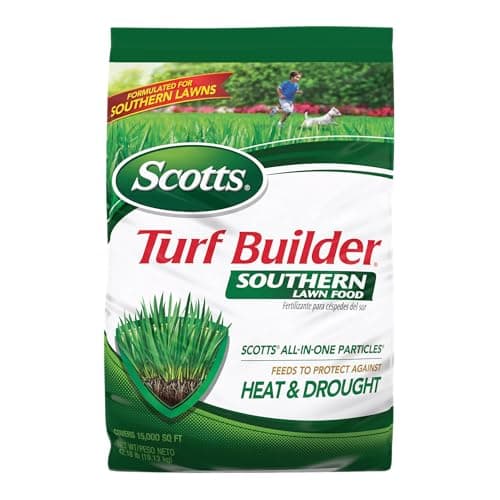
 Scotts Turf Builder Southern Lawn FoodCheck price on Amazon
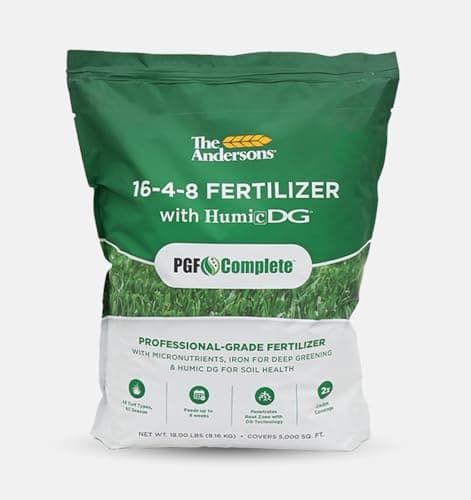
 The Andersons PGF Complete 16-4-8 (5,000 sq ft)Check price on Amazon
As an Amazon Associate we earn from qualifying purchases.
Free Lawn Care Tools
Fertilize zoysia in Georgia after full spring green-up, usually late April to May in South Georgia, May in Middle Georgia, and mid-to-late May in North Georgia. Wait until the lawn is 80-100% green and actively being mowed.
Established zoysia usually performs best with high nitrogen, low or zero phosphorus, and moderate potassium. Common useful patterns include 16-0-8, 15-0-15, 18-0-6, and 20-0-10, depending on soil test results.
Most Georgia zoysia lawns need about 1-2.5 lbs of nitrogen per 1,000 sq ft per year. Moderate-maintenance lawns commonly fit near 2 lbs per 1,000 sq ft annually, split across active summer growth.
Do not apply nitrogen to zoysia in March in most Georgia lawns. March is better for soil testing, lime if recommended, spreader preparation, and weed prevention because zoysia is usually not fully active yet.
Yellow zoysia after fertilizing can indicate high pH, iron deficiency, compaction, poor drainage, early dormancy, disease, or drought stress. Confirm with a soil test, check whether the lawn is actively growing, and inspect roots and soil moisture before adding more nitrogen.
Quick-release nitrogen may show color change within several days, while slow-release and organic products often take longer. In Georgia, response is strongest when zoysia is actively growing, watered properly, and soil temperatures support root activity.
Photos: thiago japyassu / Pexels, Rafael Rodrigues / Pexels, sspiehs3 / Pixabay

Beat weeds and brown spots from your phone
Snap a photo, get the fix, and follow a plan timed to your soil and weather. Free on iPhone.