Best Fertilizer for Bermuda Grass in South Carolina (2026)
 Marcus GreenTurf Management Pro | 18 Years
As an Amazon Associate we earn from qualifying purchases.
Bermuda grass performs extremely well in South Carolina heat, but the wrong fertilizer timing or nitrogen rate causes more problems than it solves. Apply nitrogen too early and you feed weeds. Apply too much in humid summer weather and you increase mowing, scalping, thatch, disease pressure, and runoff.
The best fertilizer for Bermuda grass in South Carolina in 2026 is not one single bag for every yard. Coastal lawns near Charleston, Beaufort, Myrtle Beach, and Hilton Head often need lighter, more frequent feeding because sandy soils leach nutrients quickly. Piedmont lawns around Greenville, Spartanburg, Anderson, and Rock Hill often need later spring timing, earlier fall cutoff, pH correction, and attention to compaction. Midlands lawns usually follow the cleanest version of a South Carolina Bermuda fertilizer schedule, with the strongest feeding window from May through August.
This guide covers how to choose the best fertilizer for Bermuda grass in South Carolina, when to fertilize Bermuda in SC, how much nitrogen to apply, how to adjust for coastal Bermuda fertilizer needs, and how to avoid the mistakes that waste money or weaken turf.
The best fertilizer for Bermuda grass in South Carolina is a soil-test-based, nitrogen-forward fertilizer with potassium and little or no phosphorus unless the soil test shows a need. Wait until Bermuda is actively growing, soil temperatures are near 65°F, and the lawn has been mowed 1-2 times before the first nitrogen application.
Use 0.5-1.0 lb of nitrogen per 1,000 sq ft per feeding from May through August, then stop nitrogen by late August to mid-September depending on region. Do not fertilize dormant Bermuda.
- Bermuda grass should receive its first South Carolina fertilizer application only after active green-up, usually when soil temperature reaches about 65°F.
- Our Grass Database recommends 3.5 lbs of nitrogen per 1,000 sq ft annually for Bermudagrass under standard high-maintenance conditions.
- Apply 0.5-1.0 lb of nitrogen per 1,000 sq ft per feeding during active growth, not during dormancy or drought stress.
- Coastal South Carolina Bermuda lawns usually perform better with lighter fertilizer applications every 4-6 weeks because sandy soils leach nutrients faster.
- Established Bermuda usually needs more nitrogen and potassium than phosphorus, and phosphorus should be applied only when a soil test supports it.
This guide covers South Carolina-specific timing, soil, and product notes. For the full national picture, NPK ratios, and the complete product comparison, see our main best fertilizer for Bermuda grass guide.
South Carolina's Two Fertilizer Cutoff Dates: Upstate vs Coast
The most useful South Carolina bermuda rule is when to stop, and Clemson gives two dates, not one: quit nitrogen by August 15 in the Upstate and by September 1 along the coast. That split matters because late nitrogen here does more than risk winterkill, it feeds spring dead spot, a bermuda fungal disease Clemson says extra fall nitrogen makes worse the next year. Pair the cutoff with a fall potassium feeding (about 1 pound of potash per 1,000 square feet, four to six weeks before frost) for cold hardiness.
Clemson's rates follow your soil: 2 to 4 pounds of nitrogen per 1,000 square feet a year, closer to 4 on the sandy Lowcountry and Sandhills soils that leach, and closer to 2 on Piedmont clay. Feed three times in summer (early May after full green-up, June or July, and before mid-August), never more than a pound of nitrogen per application, and lean on a high-potassium product like 15-0-15. Green-up runs about a month earlier on the coast (mid-February) than in the Upstate (mid-March).
South Carolina soils are naturally acidic, often pH 4.5 to 6.0, so most lawns need lime to reach bermuda's 6.0 to 6.5 range. A Clemson soil test is inexpensive and tells you exactly how much.
South Carolina Bermuda Fertilizer Calendar
| When | Feed? | Rate & product | Why here |
|---|---|---|---|
| Green-up + nights near 70°F | Not yet | Wait for full green-up | Coast ~mid-Feb, Upstate ~mid-Mar |
| Early May | Yes | 0.5-1 lb N per 1,000 sq ft | After full green-up |
| June or July | Yes | 0.5-1 lb N, high-K (15-0-15) | Potassium for stress tolerance |
| Before mid-August | Yes (last N) | 0.5-1 lb N, 15-0-15 | Total 2-4 lb N/yr (4 on sand, 2 on clay) |
| Aug 15 Upstate / Sep 1 Coast | STOP nitrogen | Nothing | Later N feeds spring dead spot the next year |
| 4-6 weeks before frost | Potassium only | 1 lb potash per 1,000 sq ft | Cold hardiness |
What Bermuda Grass Needs in South Carolina
Bermuda grass in South Carolina needs warm soil, full sun, regular mowing, nitrogen-driven growth, potassium for stress tolerance, and soil pH near the low-to-mid 6 range. It is a high-performance warm-season grass, which means it can build a dense, traffic-tolerant lawn during summer if fertility, mowing, and water are aligned.
Recommended products
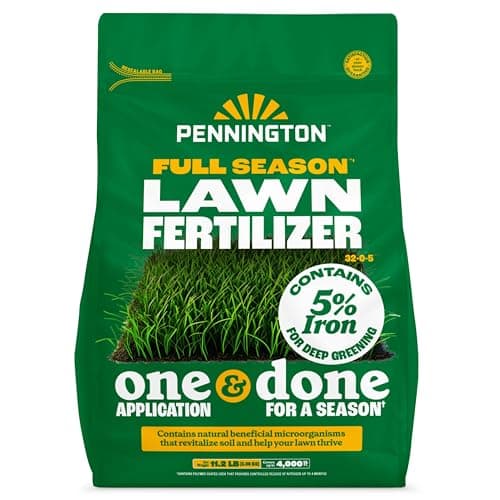
Pennington Full Season Lawn Fertilizer 32-0-5
High-nitrogen fertilizer with iron for fast green-up on warm-season lawns.
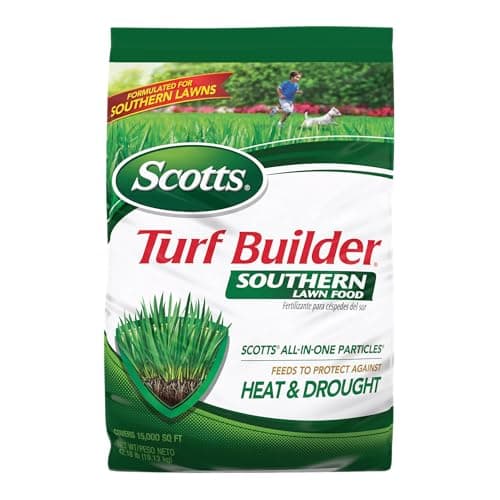
Scotts Turf Builder Southern Lawn Food
32-0-10 fertilizer with iron, formulated specifically for southern grasses like St. Augustine, Bermuda, Centipede, and Zoysia.

Outsidepride Maya (Blackjack II) Bermuda Grass Seed (5 lb)
Named, fine-textured improved bermuda cultivar for dense, carpet-like, dark-green full-sun turf; 5 lb full-lawn bag.
Our Grass Database shows Bermudagrass has high drought tolerance, very high traffic tolerance, low shade tolerance, and a recommended mowing height of 1-2 inches. That combination explains why Bermuda thrives in sunny South Carolina yards, sports fields, and golf-style lawns, but struggles under live oaks, beside tall fences, or in compacted clay where light and roots are limited.

Why Bermuda Grass Is a Heavy Nitrogen Feeder
Bermuda grass is a heavy nitrogen feeder because it spreads aggressively through stolons and rhizomes during warm weather. Nitrogen drives leaf color, shoot density, recovery from foot traffic, and the lateral growth that helps Bermuda fill thin areas.
The best fertilizer for Bermuda grass is usually nitrogen-forward, but that does not mean high nitrogen every month. Professional crews approach this differently - they feed Bermuda when it is actively growing, then back off when heat, drought, disease, or dormancy limits nutrient uptake. The key most homeowners miss is that nitrogen is useful only when the plant can convert it into growth.
The Ideal Fertilizer Ratio for Bermuda Grass
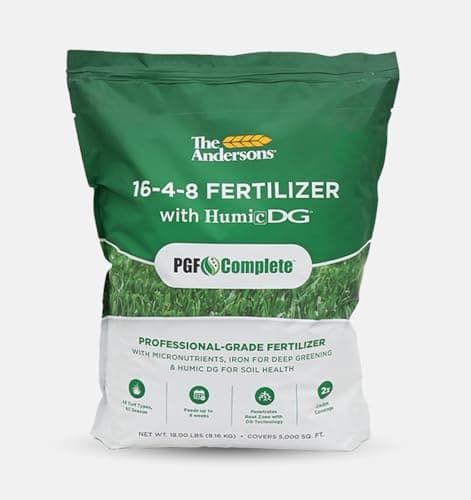
The ideal fertilizer ratio for established Bermuda grass in South Carolina is high in nitrogen, low or zero in phosphorus when soil phosphorus is adequate, and supported by potassium for summer stress. Good examples include 16-4-8, 21-0-0, 24-0-11, 15-0-15, and 30-0-10.
On a fertilizer label, N-P-K means nitrogen, phosphorus, and potassium. Nitrogen controls green leaf growth and density. Phosphorus supports root establishment but is often unnecessary on established lawns unless testing shows a deficiency. Potassium supports drought response, heat tolerance, and disease resistance, which matters in South Carolina’s humid summers and sandy coastal soils.
- Purdue Turfgrass Science guidance: phosphorus is rarely needed on established lawns unless a soil test shows a deficiency.
- NC State TurfFiles guidance: slow-release nitrogen feeds turf more evenly and reduces surge growth compared with quick-release nitrogen sources.
Soil pH Matters More Than Most Fertilizer Labels
Soil pH controls how efficiently Bermuda grass can use fertilizer, and South Carolina lawns often need pH correction before extra fertilizer will help. Bermuda generally performs best around pH 6.0-6.5, which lines up closely with our Grass Database pH range of 5.8-6.5 for Bermudagrass.
South Carolina soils can be naturally acidic, especially in high-rainfall regions. If Bermuda stays pale after proper nitrogen applications, the issue may be low pH, low potassium, compaction, or poor sunlight rather than lack of fertilizer. A Clemson soil test should come before major fertilizer changes. Related topics such as Soil Testing for Lawns and How to Improve Soil pH for Grass are worth reviewing before buying multiple bags.
Quick Buyer Criteria for 2026
The best Bermuda grass fertilizer 2026 choice should match your soil test, turf goals, and South Carolina region. A flashy “deep green” label is less important than the nutrient analysis and release pattern.
- Choose a soil-test-based formula whenever possible.
- Look for 30-50% slow-release nitrogen for steadier feeding.
- Use low-phosphorus or zero-phosphorus fertilizer unless testing shows a need.
- Include potassium for heat, drought, humidity, and coastal leaching stress.
- Confirm the product is labeled for warm-season grasses.
- Keep kids and pets off treated turf until watered in and dry.
- Match the product to your spreader type and lawn square footage.
- Adjust timing for coastal, Midlands, or Upstate South Carolina conditions.
Best Fertilizer Types for Bermuda Grass in South Carolina
The best fertilizer type for Bermuda grass in South Carolina is a warm-season lawn fertilizer that supplies nitrogen during active growth and enough potassium to handle summer stress. The right choice depends on whether the lawn is established, newly planted, sandy, low-input, or being pushed for golf-course-like density.
For most established South Carolina Bermuda lawns, a product with high nitrogen and meaningful potassium is the safest starting point. Our Grass Database recommends 3.5 lbs of nitrogen per 1,000 sq ft annually for Bermudagrass, with most feeding during summer rather than fall or winter.
Best Overall Fertilizer for Established Bermuda
The best overall fertilizer for established Bermuda is a balanced warm-season formula such as 16-4-8, 24-0-11, or 15-0-15. These ratios support color, density, and stress tolerance without overloading phosphorus.
This category fits homeowners who want reliable green color from May through August without excessive flush growth. Choose 30-50% slow-release nitrogen when available. For a synthetic option that fits nitrogen-forward Bermuda feeding, Scotts Turf Builder Southern Lawn Food is formulated for southern grasses, including Bermuda, and works best for actively growing warm-season lawns that need nitrogen plus potassium support.
Best High-Nitrogen Fertilizer for Fast Green-Up
The best high-nitrogen fertilizer for fast Bermuda green-up is a product such as 21-0-0, 30-0-10, or 29-0-5 applied only after full spring green-up. These products are useful when the lawn is actively growing and soil temperatures are consistently warm.
High-nitrogen products can produce quick color, but they also raise mowing demand. Too much quick-release nitrogen during humid weather can increase scalping, thatch, and disease pressure. Pennington Full Season Lawn Fertilizer 32-0-5 fits homeowners with established, sunny Bermuda who want strong summer color, but it should be measured by nitrogen rate, not applied by guesswork.
Best Fertilizer for Coastal Bermuda Grass in South Carolina
The best coastal Bermuda fertilizer strategy in South Carolina is lighter, more frequent feeding with potassium-supported formulas. The phrase “coastal Bermuda fertilizer” can mean fertilizer for residential Bermuda lawns in coastal counties or fertilizer for Coastal Bermuda forage grass used for hay and pasture.
For residential lawns near Charleston, Beaufort, Myrtle Beach, and Hilton Head, sandy soils and heavy rain increase nutrient leaching. Use formulas such as 15-0-15, 18-0-18, or 24-0-11, and split applications every 4-6 weeks at moderate rates during active growth. For Coastal Bermuda hay or pasture, fertilization should be based on forage yield goals and Clemson soil testing. Do not apply pasture nitrogen rates to a home lawn.
Best Organic or Low-Input Fertilizer Option
The best organic fertilizer option for Bermuda is a slow-feeding material that improves soil biology while supplying modest nitrogen. Biosolid-style fertilizers, poultry litter-based products, compost topdressing, soybean meal, and plant-based fertilizers can all fit low-input Bermuda programs.
Organic fertilizers have lower burn risk and can improve soil structure over time, especially when paired with composting for a healthier lawn. The tradeoff is slower green-up and lower nutrient concentration. High-performance Bermuda usually still needs precise nitrogen and potassium management, so homeowners comparing Organic vs Synthetic Fertilizers should focus on annual nitrogen totals, not just the source.
Best Starter Fertilizer for New Bermuda Sod or Seed
The best starter fertilizer for new Bermuda sod, seed, or sprigs is a soil-test-approved starter formula used at establishment, not a routine fertilizer for mature turf. Ratios such as 10-10-10, 12-12-12, or 18-24-12 may fit new plantings when phosphorus is allowed or needed.
Established Bermuda often does not need routine phosphorus, so do not keep applying starter fertilizer after the lawn is rooted and spreading. New Bermuda seed usually establishes in 14-21 days under suitable warmth and moisture, based on our Grass Database. Related topics such as How to Establish Bermuda Grass from Seed and New Sod Watering Schedule are especially useful before applying starter products.
South Carolina Bermuda Fertilizer Schedule for 2026
A South Carolina Bermuda fertilizer schedule for 2026 should begin after spring green-up, peak from May through August, and stop nitrogen before fall dormancy. The timing data we track puts Bermudagrass peak growth in May through September and dormancy in November through March, which matches the practical feeding window for most South Carolina lawns.
South Carolina’s regions do not green up at the same pace. Coastal lawns start earlier and finish later. Upstate and Piedmont lawns start later and need an earlier cutoff. The schedule below gives a statewide framework, then the regional section fine-tunes it.
March to April: Wait for Full Green-Up
The correct answer to when to fertilize Bermuda in SC is to wait until the lawn is actively growing, not merely showing scattered green blades. Do not fertilize while Bermuda is mostly dormant.
Use three confirmation steps before applying spring nitrogen: at least 50-75% green-up, soil temperatures consistently near or above 65°F, and one or two mowings completed. Coastal South Carolina may reach this point in late March or April. The Midlands usually reaches it in April. The Upstate and Piedmont often need mid-April to early May.
May to June: Main Growth Feeding Window
May and June are the first major fertilizer window for Bermuda grass in South Carolina. Apply 0.5-1.0 lb of nitrogen per 1,000 sq ft depending on density goals, irrigation, and mowing frequency.
Good fertilizer options include 16-4-8, 24-0-11, 30-0-10, and 15-0-15. If using quick-release nitrogen, use the lower end of the rate range and water it in immediately. From my time managing championship greens, the cleanest Bermuda response always came from matching nitrogen to growth rate, not from chasing color alone.
July to August: Maintain Color and Stress Tolerance
July and August fertilizer should maintain actively growing Bermuda without forcing weak growth during heat, humidity, drought, or disease pressure. Potassium-supported formulas such as 15-0-15, 18-0-18, and 24-0-11 are often better than straight nitrogen during this window.
Avoid heavy nitrogen if the lawn is drought-stressed, irrigation is limited, disease is active, or the turf is not growing. Coastal sandy lawns may benefit from split applications every 4-6 weeks at moderate rates because rainfall can move nutrients below the root zone.
September: Final Nitrogen Timing
September is the final nitrogen decision point for Bermuda grass in South Carolina. Stop nitrogen before nights cool enough to slow growth and push the lawn toward dormancy.
Coastal South Carolina may allow a final light nitrogen application in early to mid-September if Bermuda is still actively growing. Midlands lawns should usually finish by early September. Upstate lawns should stop in late August to very early September. If a soil test supports potassium, potassium can be emphasized without pushing excessive tender growth.
October to February: Dormancy and Soil Correction
October through February is a soil correction period for Bermuda, not a nitrogen feeding period. Do not apply nitrogen to dormant Bermuda grass.
Use winter for soil testing, lime applications when pH is low, equipment calibration, and planning your bermuda grass fertilizer 2026 purchases. This is also the time to review Winter Lawn Care for Bermuda Grass and Bermuda Grass Pre-Emergent Schedule, especially if weeds were heavy during the previous spring.
The table below summarizes the 2026 South Carolina Bermuda fertilizer calendar by growth stage.
| Month | Bermuda Growth Stage in SC | Fertilizer Action |
|---|---|---|
| March | Dormant to early green-up | Usually wait |
| April | Green-up varies by region | Light feeding only after active growth |
| May | Active growth | Main fertilizer application |
| June | Strong growth | Nitrogen-based feeding |
| July | Heat and humidity stress | Feed moderately, include potassium |
| August | Active but stressed | Last major feeding in many areas |
| September | Preparing for dormancy | Light or final feeding only if appropriate |
| October-February | Dormant | No nitrogen; test soil and lime if needed |
How Much Fertilizer to Apply Without Burning Bermuda
The safe fertilizer amount for Bermuda is based on pounds of actual nitrogen per 1,000 sq ft, not pounds of product from the bag. Fertilizer labels show nutrient percentages, so the product rate changes with every N-P-K analysis.
Measure the lawn before applying anything. A 5,000 sq ft lawn needs five times the fertilizer required for 1,000 sq ft. Guessing square footage is one of the fastest ways to overfeed Bermuda and create burn, stripes, or surge growth.
Calculate Nitrogen Per 1,000 Square Feet
The formula is: pounds of fertilizer needed per 1,000 sq ft = desired nitrogen rate ÷ nitrogen percentage as a decimal. For example, to apply 1 lb of nitrogen using 16-4-8, divide 1 by 0.16, which equals 6.25 lbs of fertilizer per 1,000 sq ft.
Use these annual targets as a practical guide: low-maintenance Bermuda needs 1-2 lbs of nitrogen per 1,000 sq ft per year, standard home lawns need 2-4 lbs, and high-performance Bermuda can use 4-5 lbs only with proper mowing and irrigation. Our Grass Database recommends 3.5 lbs of nitrogen per 1,000 sq ft annually for Bermudagrass, with a seasonal split of spring 20%, summer 80%, fall 0%, and winter 0%.
Slow-Release vs Quick-Release Nitrogen
Slow-release nitrogen feeds Bermuda more evenly, while quick-release nitrogen gives faster color with higher burn and surge-growth risk. A blend of quick and slow-release nitrogen is often ideal for South Carolina homeowners.
Quick-release fertilizer can be useful after full green-up when the lawn is irrigated and actively growing. Slow-release fertilizer is safer during hot, humid periods because it avoids a sudden flush of tender growth. Heavy quick-release nitrogen during humid weather can increase disease pressure, especially when mowing height, watering, or airflow is poor.
Step-by-Step Fertilizer Application Process
The correct fertilizer application process reduces burn risk, streaking, runoff, and wasted product. Treat fertilizer like a measured turf input, not a broadcast guess.
- Measure lawn square footage by section.
- Get a soil test or review recent soil results.
- Choose the correct N-P-K ratio for the soil report.
- Check the forecast and avoid heavy rain windows.
- Mow 1-2 days before applying fertilizer.
- Calibrate the spreader before treating the full lawn.
- Apply half the fertilizer north-south and half east-west.
- Blow granules off sidewalks, driveways, curbs, and patios.
- Water in with about 0.25 inches of irrigation unless the label says otherwise.
- Keep pets and kids off the lawn until the fertilizer is watered in and the grass is dry.
For a warm-season lawn that is being maintained aggressively, water demand matters too. Our Grass Database lists Bermudagrass summer water needs at 1 inch per week, which is a useful benchmark when fertilizer is being applied during peak growth.
Spreader Calibration Pro Tips
Spreader settings on fertilizer bags are only estimates because spreader age, walking speed, humidity, granule size, and gate wear change the actual output. Calibration prevents stripes, skips, and overapplication.
Start at a lower setting, apply in two passes, and test a measured area first. Weigh the product before and after the test pass to confirm the actual rate. Avoid applying near storm drains or waterways, and review How to Calibrate a Lawn Spreader before making full-lawn applications.
Regional Fertilizer Adjustments Across South Carolina
Regional fertilizer adjustments in South Carolina are necessary because coastal sand, Midlands heat, and Piedmont clay change how Bermuda uses nutrients. A single statewide schedule works as a framework, but the best results come from adjusting timing and rate by region.
The most important regional variables are soil texture, rainfall, green-up date, fall cooling, and drainage. These factors determine how often fertilizer should be split, whether potassium needs extra attention, and when nitrogen should stop.
Coastal South Carolina: Charleston, Beaufort, Myrtle Beach, Hilton Head
Coastal South Carolina Bermuda lawns need lighter, more frequent fertilizer applications because sandy soils leach nitrogen and potassium quickly. Salt exposure, heavy summer rainfall, and a longer growing season also shape the schedule.
Use potassium-supported ratios such as 15-0-15, 18-0-18, or 24-0-11. Avoid fertilizing before tropical storms or heavy rain, because nutrients can move into drainage systems instead of turf roots. Split applications are especially useful on slopes, sandy lots, and lawns near waterways.
Midlands: Columbia, Lexington, Sumter, Aiken
Midlands Bermuda lawns usually follow the standard South Carolina Bermuda fertilizer schedule well because the summer growth window is strong and predictable. The main feeding period is May through August.
Use formulas such as 16-4-8, 24-0-11, or 30-0-10 based on soil test results. During drought, reduce nitrogen until irrigation or rainfall supports active growth. Hot soil and dry turf cannot use fertilizer efficiently.
Upstate and Piedmont: Greenville, Spartanburg, Anderson, Rock Hill
Upstate and Piedmont Bermuda lawns need later spring starts and earlier fall stops because cooler temperatures shorten the active growing season. Clay soils also make compaction and pH more limiting than fertilizer in many yards.
Do not force early growth with March nitrogen. Wait for active green-up and completed mowing. If Bermuda is thin despite correct feeding, confirm sunlight, compaction, and pH before adding more fertilizer. Core Aeration for Bermuda Grass often belongs in the plan for heavy clay lawns.
Special Case: Bermuda Near Waterways, Slopes, and Drainage Areas
Bermuda near waterways, storm drains, slopes, or drainage swales should be fertilized with runoff prevention as the top priority. Slow-release nitrogen and split applications reduce nutrient loss and improve uptake.
Maintain untreated buffer zones near water, sweep hard surfaces after spreading, and avoid applications before storms. For sloped lawns, two lighter applications spaced several weeks apart are better than one heavy feeding.
Soil Testing, Lime, and Micronutrients for Better Results
Soil testing, lime, iron, and potassium often determine whether Bermuda responds well to fertilizer in South Carolina. The best fertilizer for Bermuda grass in South Carolina is usually the one that matches the soil report, not the brightest bag on the shelf.
A soil test identifies pH, phosphorus, potassium, calcium, magnesium, and lime needs. Without that information, homeowners often add nitrogen repeatedly while the real issue remains low pH, potassium deficiency, compaction, or shade.
Why a Clemson Soil Test Should Come Before Fertilizer
A Clemson soil test should come before fertilizer because it confirms what the lawn actually needs and what it already has. It is especially important before applying phosphorus, lime, or high-potassium fertilizer.
How to verify: collect soil from multiple spots in the lawn, mix a representative sample, submit it through Clemson Cooperative Extension, and follow the Bermuda lawn recommendations on the report. Use that report to choose between 16-4-8, 15-0-15, 24-0-11, or a nitrogen-only product.
Lime: When Fertilizer Is Not Enough
Lime is needed when soil pH is too low for Bermuda to use nutrients efficiently, but lime does not replace fertilizer. Low pH can show up as poor color despite feeding, thin turf, moss pressure, weed invasion, or weak nitrogen response.
Fall and winter are good lime windows because Bermuda is not being pushed with nitrogen and lime has time to react before summer growth. Do not guess with lime. Over-liming can cause micronutrient problems and reduce nutrient availability.
Iron for Dark Green Bermuda Without Excess Growth
Iron improves Bermuda color without pushing the same amount of leaf growth as nitrogen. It is useful when the lawn already has enough nitrogen but needs a darker green appearance.
Iron works best as a color supplement, not a replacement for a fertility program. It can stain concrete, stone, and pavers, so clean hard surfaces immediately. Foliar iron can burn turf if applied during high heat, so follow the label closely.
Potassium for Heat, Drought, and Disease Stress
Potassium helps Bermuda tolerate South Carolina heat, drought cycles, humidity, disease pressure, and sandy soil leaching. It is especially important in late summer and coastal regions.
Use soil-test-based potassium applications. Good formulas when potassium is needed include 15-0-15, 24-0-11, and carefully applied 0-0-50 if specifically recommended. Potassium should support stress tolerance, not replace proper watering or mowing.
Common Mistakes to Avoid
The most common Bermuda fertilizer mistakes in South Carolina are early spring nitrogen, skipped soil testing, overused phosphorus, storm-timed applications, and pasture-rate confusion. These are the details many broad fertilizer guides miss because they do not account for South Carolina’s regional soils and weather.
Fertilizing too early is the biggest timing mistake. Bermuda may look partly green in March, but that does not prove active growth. Confirm 50-75% green-up, soil near 65°F, and one or two mowings before applying nitrogen.
Skipping the soil test often leads to unnecessary phosphorus. Many established Bermuda lawns do not need phosphorus every year, and excess phosphorus can contribute to runoff concerns and nutrient imbalance. Confirm phosphorus, potassium, and lime needs before choosing a formula.
Applying fertilizer before heavy rain or during drought stress wastes product and weakens results. Watering-in with about 0.25 inches is good; storm runoff is not. Check the 24-48 hour forecast, especially during hurricane season or coastal thunderstorm patterns.
Ignoring pet and kid safety instructions creates avoidable exposure. Follow label directions, water granular fertilizer in as directed, and keep children and pets off treated areas until the lawn is dry. Store fertilizer in a sealed container away from moisture, pets, and kids.
Using Coastal Bermuda pasture rates on a home lawn is another major error. Hay fields are managed for forage yield, not residential turf density, mowing quality, or runoff control. Home lawns should use lawn-specific rates based on square footage and soil testing.
- Penn State Extension guidance: cool-season lawns generally need 2-4 lbs of nitrogen per 1,000 sq ft per year, with fall applications doing the most good. Bermuda is a warm-season grass, so South Carolina homeowners should shift the main nitrogen window to active summer growth instead.
Conclusion
The best fertilizer for Bermuda grass in South Carolina in 2026 is a soil-test-based, nitrogen-forward fertilizer with adequate potassium and limited phosphorus unless testing shows a need. Fertilize after full spring green-up, feed during active growth from late spring through summer, and stop nitrogen before fall dormancy.
Coastal lawns need lighter, more frequent applications. Upstate lawns need later starts and earlier stops. Soil pH and potassium are just as important as nitrogen, and slow-release nitrogen is usually safer and more consistent for homeowners.
Your next steps are simple: get a Clemson soil test, measure your lawn square footage, calculate nitrogen per 1,000 sq ft, and build a South Carolina Bermuda fertilizer schedule for 2026. Look for fertilizer with slow-release nitrogen, low phosphorus unless needed, and potassium support for summer stress.
Top Picks

As an Amazon Associate we earn from qualifying purchases.
Free Lawn Care Tools
Fertilize Bermuda grass in South Carolina after active spring green-up, usually when soil temperatures are around 65°F and the lawn has been mowed 1-2 times. Coastal areas may start in late March or April, while Upstate lawns often need to wait until mid-April or early May.
Established Bermuda usually performs best with a nitrogen-forward fertilizer that includes potassium and little or no phosphorus unless a soil test shows phosphorus is needed. Common useful ratios include 16-4-8, 24-0-11, 15-0-15, and 30-0-10.
A standard home Bermuda lawn usually needs about 2-4 lbs of nitrogen per 1,000 sq ft per year. Our Grass Database recommends 3.5 lbs of nitrogen per 1,000 sq ft annually for Bermudagrass under high-maintenance conditions.
March fertilization is usually too early unless the lawn is actively growing in a warm coastal location. Wait until the lawn is at least 50-75% green, soil temperatures are near 65°F, and you have mowed once or twice.
Potassium helps Bermuda handle heat, drought, humidity, and disease pressure. Coastal sandy soils leach potassium quickly, so lawns near Charleston, Beaufort, Myrtle Beach, and Hilton Head often benefit from potassium-supported formulas and split applications.
Divide the desired nitrogen rate by the nitrogen percentage as a decimal. For example, applying 1 lb of nitrogen with 16-4-8 requires 1 ÷ 0.16, or 6.25 lbs of fertilizer per 1,000 sq ft.
Photos: Michael_Pointner / Pixabay, Suki Lee / Pexels, Maksim Goncharenok / Pexels

Beat weeds and brown spots from your phone
Snap a photo, get the fix, and follow a plan timed to your soil and weather. Free on iPhone.