Best Fertilizer for Zoysia Grass in Texas (2026)
 Marcus GreenTurf Management Pro | 18 Years
As an Amazon Associate we earn from qualifying purchases.
Zoysia grass can be dense, drought-tolerant, and attractive in Texas, but it declines when fertilized like St. Augustine or Bermuda. Too much nitrogen pushes thatch, disease, scalping, shallow roots, and wasted fertilizer, especially in alkaline clay soils or under summer watering limits.
The best fertilizer for zoysia grass in Texas depends on soil test results, Zoysia variety, mowing height, irrigation, region, and whether the lawn is newly planted or established. North Texas clay, Central Texas limestone, East Texas rainfall, South Texas heat, and Gulf Coast humidity all change the right fertilizer choice and timing.
The best fertilizer for zoysia grass in Texas in 2026 is usually a slow-release, low-phosphorus lawn fertilizer with nitrogen and potassium, such as a 15-0-10, 24-0-11, or similar warm-season blend. Confirm phosphorus and potassium needs with a soil test before buying a high-phosphorus product.
Apply the first main feeding after Zoysia is 70% to 90% green, then feed lightly in summer only if the lawn is actively growing and can be watered. Do not apply nitrogen to dormant winter Zoysia.
- Established Texas Zoysia usually performs best with 1 to 3 lbs of nitrogen per 1,000 sq ft per year, adjusted by soil test, irrigation, and mowing intensity.
- The first main Zoysia fertilizer application should wait until the lawn is 70% to 90% green and actively growing in spring.
- A good Texas zoysia fertilizer schedule uses about 0.5 to 1.0 lb nitrogen per 1,000 sq ft in mid to late spring.
- Summer Zoysia feeding should drop to about 0.25 to 0.75 lb nitrogen per 1,000 sq ft during heat, drought, or irrigation restrictions.
- Our Grass Database shows Zoysiagrass needs 2 lbs of nitrogen per 1,000 sq ft annually, with 25% in spring and 75% in summer.
Not in Texas? Everything below is tuned to Texas soil and Texas watering rules. If your zoysia grows anywhere else, start with our national guide to the best fertilizer for zoysia grass, with the full product comparison and a month-by-month feeding calendar for the Deep South, Gulf Coast, and transition zone.
Texas Alkaline Soil: Why a Yellow Zoysia Lawn Usually Needs Iron, Not Nitrogen
Much of central and west Texas sits on alkaline, high-lime clay (the Blackland Prairie and Hill Country), and that one fact rewrites the fertilizer plan. When zoysia yellows there it is almost always iron chlorosis, iron locked up by high pH, not a nitrogen shortage, and Texas A&M's turf specialists are blunt that piling on more fertilizer makes it worse, because excess phosphorus suppresses iron uptake further. The fix is chelated iron (use the EDDHA form, the one that stays available above pH 7) or iron sulfate, and on these soils A&M says apply iron at two to three times the label rate, with the green-up lasting only three to four weeks. East Texas is the opposite corner, acidic sandy pineywoods soil where iron chlorosis is rare and lime is the usual need. The rough dividing line is I-35 and the Balcones Escarpment.
Zoysia is a low feeder in Texas: A&M puts it near 1 to 2 pounds of nitrogen per 1,000 square feet a year on the low end, and says to wait until after the second real mowing (about six weeks after the last frost), not first green-up. A&M's fall cutoff is city-specific: roughly October 1 for Dallas, October 15 for Austin, Houston, and San Antonio, and November 1 from College Station south.
And under a summer watering restriction, which most big Texas cities enforce, A&M says do not push nitrogen you cannot water in, because lush growth you cannot support just raises water demand. Confirm your city's current watering stage before you feed.
Texas Zoysia Fertilizer Calendar
| When | Feed? | Rate & product | Why here |
|---|---|---|---|
| Before the 2nd real mowing | No | Wait (~6 wks after last frost) | Not the first green-up |
| After the 2nd mowing | Start | 0.5-1 lb N per 1,000 sq ft | Grass is actively growing |
| Every 45-60 days | Yes | Up to 1 lb N | Total 1-2 lb N/yr (low feeder) |
| Fall cutoff (by city) | STOP nitrogen | Dallas ~Oct 1; Austin/Houston/SA ~Oct 15; College Station south ~Nov 1 | ~6 weeks before first frost |
| Yellowing in Central/West TX | Iron, not N | EDDHA chelated iron at 2-3x label rate | Alkaline-soil iron chlorosis |
| Under a watering restriction | Feed less | Cut N | Do not push growth you cannot water |
What Zoysia Grass Needs From Fertilizer in Texas
Zoysia grass in Texas needs moderate nitrogen, adequate potassium, and soil-test-based phosphorus to maintain dense turf without forcing weak top growth. It is a warm-season grass, so fertilizer works best when the plant is actively growing from late spring through summer, not during winter dormancy.
Recommended products
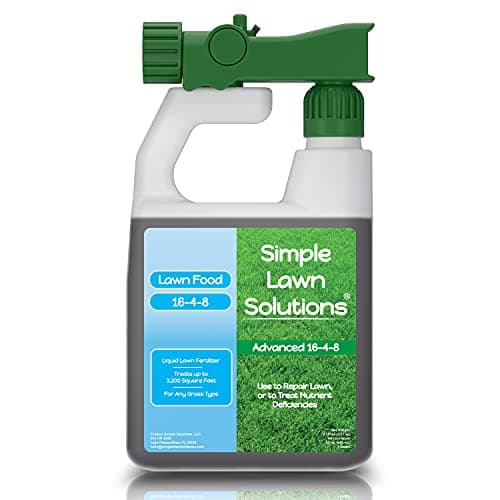
Simple Lawn Solutions Advanced 16-4-8 Liquid Fertilizer
Concentrated liquid fertilizer with balanced 16-4-8 NPK for quick green-up through any hose-end sprayer.
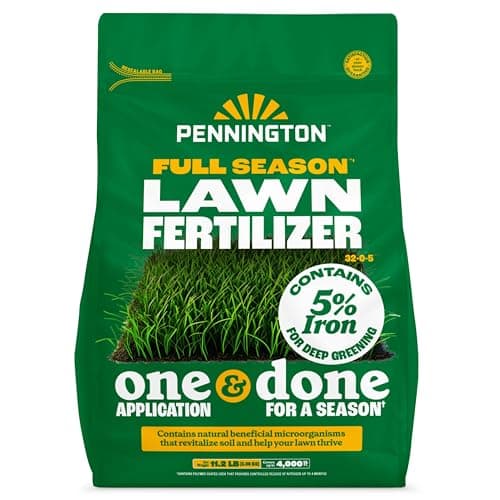
Pennington Full Season Lawn Fertilizer 32-0-5
High-nitrogen fertilizer with iron for fast green-up on warm-season lawns.
Our Grass Database recommends 2 lbs of nitrogen per 1,000 sq ft annually for Zoysiagrass, which fits most established Texas lawns better than high-input Bermuda programs. It also shows Zoysiagrass has high drought tolerance, high traffic tolerance, and a 36-inch root depth when managed correctly, so fertilizer should support root strength as much as color.
Why Zoysia Fertilizer Needs Are Different
Zoysia needs less aggressive fertilization than Bermuda because it grows more slowly and builds density through steady lateral spread. Bermuda often responds well to heavier nitrogen, while Zoysia can become puffy, thatchy, and disease-prone when pushed too hard.
Compared with St. Augustine, established Zoysia is usually more drought-tolerant and can maintain quality with more conservative feeding. The key most homeowners miss is that Zoysia looks best when growth is controlled, not forced.
The Ideal N-P-K Ratio for Texas Zoysia
The ideal N-P-K ratio for Texas Zoysia is high enough in nitrogen for color, low or zero in phosphorus unless a soil test shows need, and moderate in potassium for heat and drought stress. Nitrogen drives green color and shoot growth, phosphorus supports roots and establishment, and potassium improves stress tolerance.
For established Zoysia, look for ratios close to 15-0-10, 24-0-11, 25-0-10, or similar. A 16-4-8 can fit if phosphorus is needed or if soil testing supports it. A targeted nitrogen fertilizer such as 21-0-0 can work for specific corrections, but it requires careful rate calculation.
- Purdue Turfgrass Science guidance: phosphorus is rarely needed on established lawns unless a soil test shows a deficiency.
Slow-Release vs. Quick-Release Fertilizer
Slow-release nitrogen feeds Zoysia gradually, lowers burn risk, and reduces the flush of soft growth that causes mowing problems in Texas heat. This is why the best zoysia grass fertilizer 2026 choice for most homeowners should contain at least 30% to 50% slow-release nitrogen.
Quick-release nitrogen produces faster green-up, but it also raises burn risk and can cause surge growth. Use it only at conservative rates, when irrigation is available, and when the lawn is actively growing.
- NC State TurfFiles guidance: slow-release nitrogen sources feed turf more evenly and reduce surge growth compared with quick-release products.
Soil pH and Texas-Specific Nutrient Issues
Texas Zoysia fertilizer decisions are heavily influenced by soil pH because alkaline soils can limit iron availability even when nitrogen is adequate. This often shows up as yellow-green turf that does not respond well to more nitrogen.
Central Texas, North Texas, and Hill Country lawns often have alkaline clay or limestone-influenced soils. East Texas and Gulf Coast lawns may have sandier soils, more leaching, and different pH patterns. If yellowing persists after proper feeding, compare the symptoms with Why Is My Grass Turning Yellow and use How to Test Your Lawn's Soil before adding more nitrogen.
Best Fertilizer Types for Zoysia Grass in Texas in 2026
The best fertilizer type for Texas Zoysia in 2026 is a slow-release, low-phosphorus lawn fertilizer selected from a current soil test. Established lawns need steady nutrition, not repeated high-nitrogen pushes.
Use product labels carefully. The right fertilizer for a full-sun Palisades lawn in San Antonio may be too aggressive for a shaded Zeon lawn in Dallas or a humid Emerald lawn near Houston.
Best Overall Fertilizer Type for Established Zoysia
The best overall fertilizer for established Texas Zoysia is a warm-season lawn blend with slow-release nitrogen, potassium, and little to no phosphorus. Look for N-P-K ratios near 15-0-10, 24-0-11, or 25-0-10 with 30% or more slow-release nitrogen.
This type supports steady growth, improves heat tolerance, and reduces burn risk during long Texas summers. If high pH causes pale color, choose a product with iron or apply iron separately rather than raising nitrogen beyond the lawn’s needs.
Best Fertilizer for Spring Green-Up
The best spring green-up fertilizer for Zoysia is a controlled-release nitrogen product applied only after the lawn is mostly green and actively growing. Early warm weather in February or March is not enough reason to fertilize.
If the lawn is still partly dormant, wait. Fertilizing dormant Zoysia wastes nutrients, feeds weeds, and can increase disease pressure. For homeowners who want a liquid option after active green-up, Simple Lawn Solutions Advanced 16-4-8 Liquid Fertilizer can fit small to medium lawns where a balanced, hose-end application is easier to manage and phosphorus is acceptable based on soil needs.
Best Fertilizer for Summer Heat and Drought Stress
The best summer fertilizer for Texas Zoysia is a slow-release nitrogen source with potassium, applied lightly when the lawn is irrigated and growing. Potassium helps regulate water use, supports stronger cell walls, and improves stress tolerance.
During water restrictions, reduce the rate or delay feeding until rain or irrigation can move nutrients into the soil. A summer rate of 0.25 to 0.75 lb nitrogen per 1,000 sq ft is usually safer than a full spring rate during extreme heat.
Best Organic Fertilizer for Zoysia Grass in Texas
The best organic fertilizer approach for Texas Zoysia combines slow organic nitrogen with compost-based soil improvement. Organic products feed more slowly, improve soil biology, and lower burn risk, but they are not instant green-up tools.
Compost, biosolid fertilizers, poultry manure-based lawn fertilizers, alfalfa meal, and soybean meal can all fit organic programs. Milorganite Lawn and Garden Nitrogen Fertilizer 6-4-0 fits homeowners who want gradual feeding with lower burn risk, especially when paired with Composting for a Healthier Lawn and proper mowing.
Best Fertilizer for Newly Planted Zoysia Sod, Plugs, or Seed
Newly planted Zoysia needs establishment-focused fertilizer, not the same program used on a mature lawn. New roots need moisture, soil contact, and measured fertility more than heavy nitrogen.
For sod, avoid heavy nitrogen immediately before rooting and use starter fertilizer only if the soil test supports phosphorus. For plugs, feed lightly after rooting begins so gaps do not fill with weeds. For seed, keep the soil consistently moist through establishment, which our Grass Database lists as 21 to 28 days for Zoysiagrass under suitable conditions.
Texas Zoysia Fertilizer Schedule by Season
A Texas zoysia fertilizer schedule should begin after active spring green-up, continue with light summer feeding if water is available, and stop before dormancy. The timing data we track puts Zoysiagrass peak growth from May through September and dormancy from November through March.
Use this table as a regional planning guide, then adjust by weather and soil test. Texas is too large for one calendar date to work everywhere.
| Season | Typical Texas Timing | Best Fertilizer Move | Rate Guide |
|---|---|---|---|
| Late winter to early spring | February to April by region | Wait, soil test, manage weeds separately | No heavy nitrogen |
| Mid to late spring | 70% to 90% green-up | First main feeding | 0.5 to 1.0 lb N per 1,000 sq ft |
| Summer | 6 to 8 weeks after spring feeding | Light feeding if irrigated | 0.25 to 0.75 lb N per 1,000 sq ft |
| Early fall | August to early October | Final moderate feeding | Light to moderate nitrogen plus potassium |
| Winter | November to March | No nitrogen on dormant Zoysia | 0 lb N |
Late Winter to Early Spring: Wait for Active Growth
The first answer to when to fertilize Zoysia in Texas is simple: wait until active green-up, not the first warm week. South Texas may begin waking in February or March, Central and East Texas often follow in March or April, and North Texas may need until April depending on frost.
Use this period for soil testing, irrigation checks, pre-emergent weed control, and mower setup. Apply pre-emergent herbicide separately if needed, and do not combine aggressive nitrogen with a lawn that is still dormant.
Mid to Late Spring: First Main Fertilizer Application
The first main Zoysia fertilizer application should happen when the lawn is 70% to 90% green and actively growing. For most established Texas lawns, apply about 0.5 to 1.0 lb nitrogen per 1,000 sq ft based on density, soil test results, and mowing frequency.
- Mow the lawn 1 to 2 days before application.
- Measure the lawn square footage instead of guessing.
- Calibrate the spreader before applying product.
- Apply evenly, using two perpendicular half-rate passes when possible.
- Water in lightly according to the label.
- Keep pets and kids off the lawn until granules are watered in and the grass is dry.
Summer: Maintain Color Without Forcing Growth
Summer Zoysia fertilizer should maintain color and recovery without forcing excessive leaf growth. Apply 6 to 8 weeks after spring feeding only if the lawn is actively growing and can be watered.
Gulf Coast and East Texas lawns may benefit from lighter, more frequent applications because rainfall and sandy soils can increase nutrient leaching. Central and North Texas clay soils may hold nutrients longer, while South Texas lawns stay active later but face more intense heat stress.
Early Fall: Final Feeding Before Dormancy
The final Zoysia feeding should support recovery and root reserves without creating tender late growth before cold weather. In North Texas, this usually means August to early September; in Central and East Texas, September; and in South Texas, September to early October if warm growth continues.
Use moderate nitrogen plus potassium and avoid high-phosphorus products unless a soil test confirms need. High-nitrogen fertilizer too late in North Texas can increase winter injury risk and disease pressure.
Winter: No Nitrogen Fertilizer on Dormant Zoysia
Winter Zoysia should not receive nitrogen fertilizer because dormant grass cannot efficiently use it. Fertilizing during dormancy mainly feeds winter weeds or leaves nutrients vulnerable to loss.
Use winter for soil testing, drainage correction, spreader maintenance, irrigation service, and planning. Winter Lawn Care in Texas and When Does Zoysia Go Dormant are useful topics to review before spring decisions.
How to Apply Fertilizer to Zoysia Grass Correctly
Zoysia fertilizer works best when the product, rate, spreader, and watering step are all matched to the lawn’s square footage. Most fertilizer problems come from poor measurement, not from choosing a completely wrong N-P-K ratio.
Professional crews approach this differently - the application is calculated before the bag is opened. Homeowners can use the same process with a tape measure, product label, and a simple nitrogen formula.
Step 1: Get a Soil Test Before Choosing Fertilizer
A soil test is the best way to prevent unnecessary phosphorus, identify potassium needs, and confirm pH problems. Test every 2 to 3 years for stable lawns, and annually for new lawns, problem lawns, or high-use areas.
Use Texas A&M AgriLife Extension or a reputable local lab. Take separate samples for front yards, backyards, shaded areas, and problem spots if soil, irrigation, or turf performance differs.
Step 2: Calculate the Correct Fertilizer Amount
The correct fertilizer amount is calculated by dividing the desired pounds of nitrogen by the nitrogen percentage in the product. The formula is: pounds of product needed = desired pounds of nitrogen ÷ nitrogen percentage.
For example, to apply 1 lb nitrogen per 1,000 sq ft with a 20-0-10 fertilizer, calculate 1 ÷ 0.20 = 5 lbs of product per 1,000 sq ft. Bag rates do not always match Zoysia needs, especially because established Zoysia often performs best around 1 to 3 lbs nitrogen per 1,000 sq ft per year depending on site conditions.
Step 3: Calibrate Your Spreader
Spreader calibration prevents stripes, skips, edge burn, and overapplication near sidewalks. Broadcast spreaders cover wide areas quickly, rotary spreaders throw granules in a fan pattern, and drop spreaders place fertilizer more precisely but require careful overlap.
- Check the product label before selecting a spreader setting.
- Start at a lower setting if the exact model is not listed.
- Apply half the rate in one direction and half perpendicular.
- Watch overlap near edges, corners, and narrow side yards.
- Sweep granules off sidewalks, driveways, patios, and curbs.
Step 4: Water Fertilizer In Properly
Watering fertilizer in moves nutrients into the root zone and reduces burn risk from granules sitting on leaf blades. A common target is about 0.25 inches of irrigation after granular fertilizer unless the label gives different instructions.
Do not fertilize before heavy rain, on saturated soil, on windy days, or during drought restrictions if watering in is not allowed. Our Grass Database lists Zoysiagrass summer water needs at 1 inch per week, which is a useful baseline when planning fertilizer during heat.
Choosing Fertilizer Based on Texas Region and Lawn Conditions
The best fertilizer for Zoysia grass in Texas changes by region because soil texture, pH, rainfall, heat, and frost timing are different across the state. A Dallas lawn and a Houston lawn can need the same annual nitrogen target but different timing and application size.
Use regional patterns to refine the schedule after soil testing. If soil test results conflict with a generic fertilizer recommendation, follow the soil test.
North Texas Zoysia Fertilizer Considerations
North Texas Zoysia lawns often deal with clay soil, alkaline pH, cold snaps, summer heat, and watering restrictions. Dallas, Fort Worth, Denton, Frisco, Plano, and McKinney lawns should usually start later in spring than South Texas lawns.
Avoid late fall nitrogen because early cold fronts can stop growth quickly. If turf is yellow-green but growth is otherwise steady, iron deficiency from high pH is more likely than a need for repeated nitrogen.
Central Texas and Hill Country Considerations
Central Texas and Hill Country Zoysia programs should prioritize soil testing, slow-release nitrogen, potassium, and water management. Austin, San Antonio, Waco, New Braunfels, and Georgetown lawns often sit on rocky, alkaline, or shallow soils.
These lawns can dry quickly even when clay is present below the surface. Fertilizer works best when paired with deep watering, core aeration when compacted, and soil improvement where root depth is restricted.
East Texas and Gulf Coast Considerations
East Texas and Gulf Coast Zoysia lawns often need lighter applications because rainfall, sandy soils, humidity, and leaching change nutrient behavior. Houston, Beaumont, Tyler, Longview, Galveston, and Corpus Christi lawns also face more fungal pressure.
Heavy nitrogen in humid weather can increase large patch and brown patch-like symptoms. Soil test for pH and potassium before assuming pale color means nitrogen deficiency.
Shade, Irrigation, and Zoysia Variety Differences
Shaded Zoysia needs less nitrogen than full-sun Zoysia because it grows more slowly and dries more slowly. Overfeeding shaded turf usually creates disease risk before it creates density.
Common Texas Zoysia varieties include Palisades, Zeon, Emerald, Zorro, Meyer, and Jamur. Fine-bladed types can show scalping, thatch, and disease faster under high nitrogen, while coarser types like Palisades often tolerate a more forgiving maintenance program. Best Zoysia Grass Varieties for Texas and Zoysia Grass in Shade are useful companion topics.
Pro-Level Fertilizer Strategy for a Healthier Zoysia Lawn
A healthier Zoysia lawn comes from matching fertilizer to mowing height, watering consistency, soil structure, and stress level. Fertilizer cannot compensate for scalping, compacted clay, poor drainage, or irregular irrigation.
Based on our regional dataset, Zoysiagrass performs best at a mowing height of 1 to 2.5 inches, with a minimum mow height of 0.75 inches. Lower heights require sharper blades, more frequent mowing, and more precise fertility.
Match Fertilizer to Mowing Height and Growth Rate
Fertilizer rates should rise or fall with mowing height and growth rate. Low-cut Zoysia needs more frequent mowing, better irrigation consistency, and smaller, more precise fertilizer applications.
Higher mowing heights often improve drought tolerance and reduce stress, especially in residential lawns with irregular watering. Best Mowing Height for Zoysia Grass is worth reviewing before increasing nitrogen.
Use Iron for Color Without Excess Nitrogen
Iron is the best color tool when Zoysia is pale from alkaline soil but does not need more nitrogen. It can improve green color without creating a flush of soft growth.
Choose granular fertilizer with iron, liquid iron, or chelated iron for high-pH soils. Apply carefully because iron can stain concrete, stone, fences, shoes, and mower tires.
Prevent Thatch and Disease From Overfeeding
Overfeeding Zoysia increases thatch and disease risk because rapid shoot growth outpaces healthy decomposition and airflow. Large patch, brown patch-like symptoms, and fungal activity are more common when nitrogen is excessive during humid weather.
The fix is controlled nitrogen, better drainage, deep and infrequent watering, and dethatching or aeration when needed. How to Dethatch Zoysia Grass and Common Zoysia Grass Diseases are relevant if the lawn feels spongy or develops circular patches.
Combine Fertilizer With Aeration and Soil Improvement
Aeration improves fertilizer response when compacted soil limits water and nutrient movement into the root zone. It is especially useful for Texas clay soils, high-traffic yards, and lawns where water runs off instead of soaking in.
The best timing is late spring to early summer while Zoysia is actively growing. Compost topdressing can improve soil structure, microbial activity, and moisture retention when applied correctly. When to Aerate Lawn in Texas and Topdressing a Lawn With Compost are good planning topics.
Common Mistakes to Avoid
The most common Zoysia fertilizer mistakes in Texas are fertilizing too early, skipping soil tests, overusing phosphorus, and applying product carelessly around hard surfaces or waterways. These are the areas where many generic fertilizer guides miss Texas-specific details.
The issue is rarely that homeowners do not fertilize enough. More often, the timing, rate, or product chemistry does not match Zoysia growth or Texas soil conditions.
Fertilizing Before Zoysia Is Actively Growing
Fertilizing before Zoysia is actively growing wastes nitrogen and can feed weeds instead of turf. Warm February or March weather can be misleading, especially in North Texas and Central Texas.
Confirm green-up visually. If the lawn is not at least 70% green and has not resumed mowing growth, wait. Early fertilizer also increases disease risk when nights are still cool and the canopy stays wet.
Skipping a Soil Test and Using High-Phosphorus Fertilizer
Skipping a soil test often leads to high-phosphorus fertilizer on lawns that do not need phosphorus. Many generic “balanced” fertilizer recommendations ignore Texas soil variability.
Unneeded phosphorus does not improve turf if soil levels are already sufficient, and it can contribute to runoff. Confirm deficiencies before applying starter fertilizer or high-phosphorus blends.
Applying Fertilizer Incorrectly Around Pets, Kids, Concrete, and Waterways
Fertilizer should be applied exactly according to the label, then watered in as directed before normal lawn use resumes. Keep pets and children off treated areas until granules are watered in and the grass is dry.
- Sweep fertilizer off driveways, sidewalks, patios, and curbs.
- Avoid applications before storms or near storm drains, ponds, and creeks.
- Do not apply to wet grass unless the label specifically allows it.
- Correct heavy overlap, wrong spreader settings, and clogged spreader openings immediately.
Conclusion
The best fertilizer for Zoysia grass in Texas in 2026 is usually a slow-release, low-phosphorus fertilizer with adequate nitrogen and potassium, chosen from a soil test. It should support steady growth, drought tolerance, and dense turf without pushing excessive thatch or disease.
The right Texas zoysia fertilizer schedule starts after spring green-up, continues with light to moderate summer feeding only when the lawn is actively growing and can be watered, and ends with a final late-summer or early-fall application. Dormant winter Zoysia should receive no nitrogen.
Start by testing the soil, measuring the lawn, and choosing a fertilizer with slow-release nitrogen, low phosphorus unless needed, and potassium for stress tolerance. Check out our guide on Best Mowing Height for Zoysia Grass next, because fertilizer performance depends heavily on mowing height and growth rate.
Top Picks
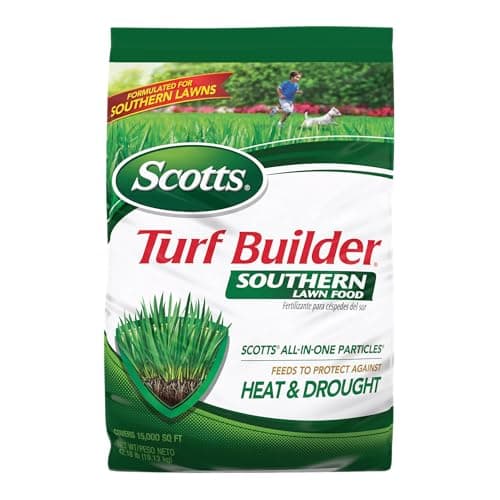
 Scotts Turf Builder Southern Lawn FoodCheck price on Amazon
 The Andersons PGF Complete 16-4-8 (5,000 sq ft)Check price on Amazon
As an Amazon Associate we earn from qualifying purchases.
Free Lawn Care Tools
Fertilize Zoysia after it is 70% to 90% green and actively growing in spring. In Texas, that may be March in South Texas, March to April in Central and East Texas, and April in North Texas depending on frost.
Established Texas Zoysia usually does best with high nitrogen, low or zero phosphorus, and moderate potassium. Ratios such as 15-0-10, 24-0-11, or 25-0-10 are good starting points when a soil test does not show a phosphorus need.
You can use 10-10-10 only if a soil test shows phosphorus and potassium are needed. Many established Texas lawns do not need extra phosphorus, so a low-phosphorus fertilizer is usually a better choice.
Most established Zoysia lawns need about 1 to 3 lbs of nitrogen per 1,000 sq ft per year depending on soil, irrigation, and mowing intensity. Our Grass Database recommends 2 lbs of nitrogen per 1,000 sq ft annually for Zoysiagrass.
Yellow Zoysia after fertilizing may indicate iron chlorosis, poor uptake from alkaline soil, drought stress, or disease rather than nitrogen shortage. Confirm with a soil test and check whether the lawn is actively growing before adding more nitrogen.
Wait about 6 to 8 weeks between spring and summer applications if the lawn is actively growing and has irrigation. During drought restrictions or extreme heat, reduce the rate or delay fertilizing until water is available.
Photos: fotoblend / Pixabay, Alexas_Fotos / Pixabay, PublicDomainPictures / Pixabay

Beat weeds and brown spots from your phone
Snap a photo, get the fix, and follow a plan timed to your soil and weather. Free on iPhone.