Best Fertilizer for Kentucky Bluegrass in Pennsylvania (2026)
 Sarah MitchellLawn Diagnostics Specialist | 12 Years
As an Amazon Associate we earn from qualifying purchases.
Kentucky bluegrass can look elite in Pennsylvania, but it becomes demanding when fertility timing is wrong. The best fertilizer for Kentucky bluegrass in Pennsylvania is usually a slow-release, nitrogen-forward cool season lawn fertilizer with potassium and little or no phosphorus unless a soil test shows a need.
The word “best” depends on soil pH, phosphorus and potassium levels, irrigation, mowing height, shade, traffic, and where the lawn sits in Pennsylvania. Eastern Pennsylvania lawns often battle more humidity and disease pressure, central Pennsylvania lawns vary sharply by elevation and soil, and western Pennsylvania lawns often deal with clay, rainfall, and drainage issues.
This guide covers the best fertilizer for Kentucky bluegrass in Pennsylvania (2026), a Pennsylvania Kentucky bluegrass fertilizer schedule, N-P-K recommendations, spring and fall timing, product types, application rates, and the mistakes that cause many bluegrass lawns to thin out by August.
For most Pennsylvania Kentucky bluegrass lawns, choose a slow-release fertilizer such as 24-0-10, 25-0-5, or 30-0-10, then confirm phosphorus and potassium needs with a soil test. Feed lightly in spring, avoid heavy summer nitrogen, and put most nitrogen into September through November.
Do not choose fertilizer by the front-of-bag promise alone. Apply about 2-4 lbs of nitrogen per 1,000 sq ft yearly for most cool-season lawns, with high-performance Kentucky bluegrass often near 4 lbs if mowing, irrigation, and disease monitoring are managed well.
- Kentucky bluegrass in Pennsylvania usually performs best when most nitrogen is applied in September, October, and sometimes November.
- Our Grass Database recommends 4 lbs of nitrogen per 1,000 sq ft annually for Kentucky Bluegrass under a high-maintenance program.
- Use phosphorus-free fertilizer on established Kentucky bluegrass unless a soil test shows phosphorus is deficient.
- Apply 0.25-0.5 lb nitrogen per 1,000 sq ft in early spring if the lawn was fertilized well the previous fall.
- Kentucky bluegrass should generally be fertilized after soil reaches about 55°F and the lawn is actively growing.
This guide covers Pennsylvania-specific timing, soil, and product notes. For the full national picture, NPK ratios, and the complete product comparison, see our main best fertilizer for Kentucky bluegrass guide.
What Pennsylvania's Fertilizer Law Actually Lets You Put Down
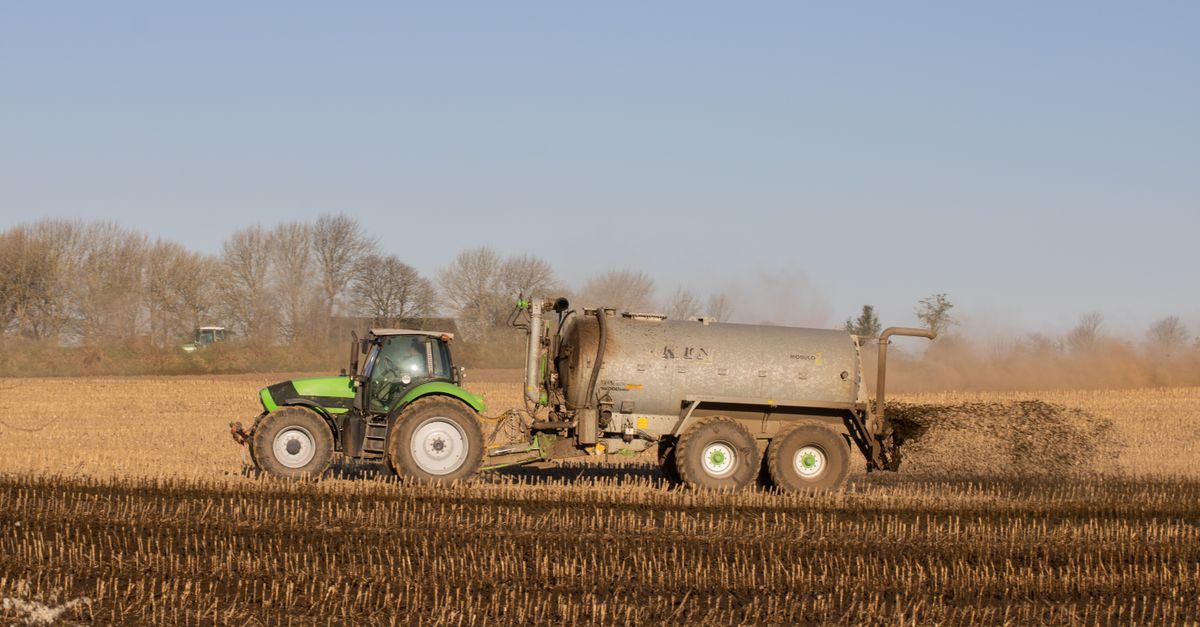
Pennsylvania is one of the few states where the wrong bag of fertilizer is illegal, so the bluegrass rules here start with the law. Under Act 83 of 2022, phosphorus is prohibited in lawn fertilizer unless a soil test shows you need it or you are establishing, repairing, or reseeding turf. That puts the classic all-purpose 10-10-10 a national guide recommends off the table for an established Pennsylvania lawn. The law also caps nitrogen at 0.7 pound of plant-available (0.9 pound total) per 1,000 square feet per application, bans fertilizer within 15 feet of any stream, pond, or creek, cuts the allowable nitrogen rate to 0.5 pound per application from December 15 to March 1, and prohibits any application on frozen or snow-covered ground. This is Chesapeake Bay policy: Pennsylvania is the largest nitrogen contributor to the Bay, and lawn fertilizer is a real slice of that load.
Working within the law, Penn State's bluegrass program is simple: 2 to 4 pounds of nitrogen per 1,000 square feet a year, no more than about a pound per feeding, split across spring (April or May), late summer (early to mid September), and an optional late-fall feeding, with at least a third of the nitrogen slow-release. Weight it to late summer and fall, because summer heat is Kentucky bluegrass's limiting factor and it goes dormant when July temperatures climb, so heavy spring nitrogen just invites disease and mowing.
Get a Penn State soil test before you ever reach for phosphorus. It is the only legal way to apply it on an established lawn, and Pennsylvania's naturally acidic soils usually need lime anyway, which the same test will tell you.
Pennsylvania Kentucky Bluegrass Fertilizer Calendar (Penn State + Act 83)
| When | Feed? | Rate & product | Why here |
|---|---|---|---|
| Before March 1 | No (illegal) | Nothing | Act 83 blackout: no N or P Dec 15-Mar 1 or on frozen ground |
| April to May | Yes (light) | ~0.7 lb N, slow-release, phosphorus-free | Heavy spring N invites disease; P is illegal without a soil test |
| Summer (Jun-Aug) | No | Iron only if pale | Bluegrass goes heat-dormant; summer N feeds disease |
| Early to mid September | Yes (main feed) | ~0.9 lb N | The highest-leverage feeding of the year |
| Late October to November | Optional | ~0.7 lb N while green | Late-fall boost |
| Within 15 ft of water | Never | Nothing | Act 83 setback from streams, ponds, creeks |
What Kentucky Bluegrass Needs in Pennsylvania
Kentucky bluegrass in Pennsylvania needs steady nitrogen during active growth, enough potassium for stress tolerance, correct soil pH, and phosphorus only when testing confirms a deficiency. It is a cool-season grass, so its strongest growth occurs in spring and fall, not during hot summer weather.
Recommended products
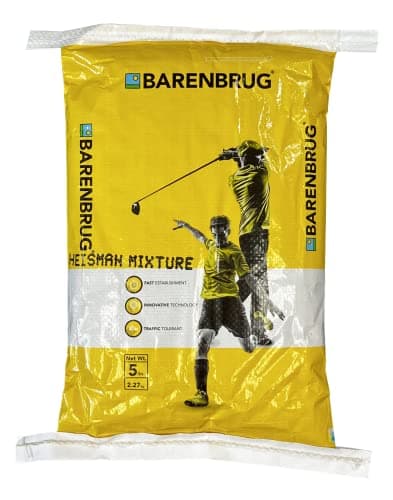
Jacklin Seed by Barenbrug Heisman Kentucky Bluegrass Blend (5 lb)
Certified 85% Kentucky bluegrass / 15% perennial ryegrass blend from a pro sod-grower brand, dense, self-repairing KBG turf; 5 lb full-lawn bag.
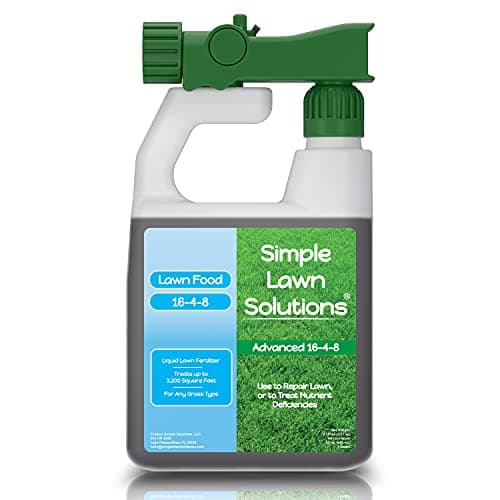
Simple Lawn Solutions Advanced 16-4-8 Liquid Fertilizer
Concentrated liquid fertilizer with balanced 16-4-8 NPK for quick green-up through any hose-end sprayer.
Our Grass Database shows Kentucky Bluegrass has a high maintenance level, medium drought tolerance, high traffic tolerance, and peak growth from March-May and September-November. That explains why the best fertilizer for Kentucky bluegrass in Pennsylvania is not a heavy summer feeding program. It is a fall-centered plan that supports roots, rhizomes, density, and recovery.
Why Kentucky Bluegrass Has Different Fertility Needs
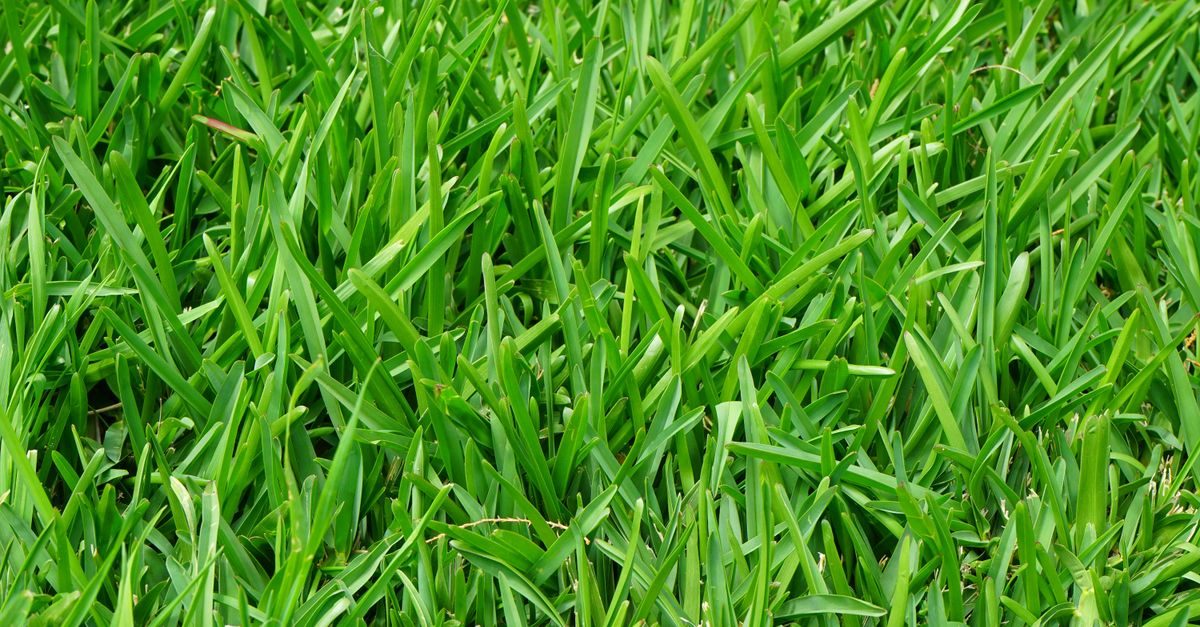
Kentucky bluegrass has different fertility needs because it spreads by rhizomes and builds dense turf when nutrients are available during cool growing weather. Those underground stems help it recover from wear, divots, and thinning, but that self-repairing habit requires more nitrogen than lower-input grasses.
The issue is balance. Too little nitrogen leaves Kentucky bluegrass pale, thin, and slow to fill in. Too much nitrogen, especially in warm humid weather, pushes soft leaf growth that can increase mowing frequency and disease pressure. A good Kentucky bluegrass fertilizer 2026 plan should aim for consistent growth, not sudden flushes.
Pennsylvania Climate Factors That Affect Fertilizer Choice
Pennsylvania’s climate affects fertilizer choice because Kentucky bluegrass grows hardest in cool spring and fall weather, then slows during summer heat and winter dormancy. The timing data we track puts Kentucky Bluegrass active growth in March-May and September-November, with winter dormancy from December-February and possible summer dormancy during prolonged heat or drought without irrigation.
Eastern Pennsylvania lawns usually need more caution with fast-release nitrogen because warmer, humid summers can raise disease pressure. Central Pennsylvania lawns may need site-specific adjustments because elevation and soil type change quickly. Western Pennsylvania lawns often need attention to clay compaction, drainage, and potassium availability before higher fertilizer rates make sense.
Soil Conditions Common in Pennsylvania Lawns
Many Pennsylvania lawns have acidic soil, clay-heavy texture, compaction, low-to-moderate potassium, and variable phosphorus levels. This is why a soil test should come before choosing any fertilizer product, especially if the lawn is established and you are considering a phosphorus-containing blend.
Based on our regional dataset, Kentucky Bluegrass performs best at pH 6.0-7.0. If soil pH is below that range, fertilizer response often looks weak even when nitrogen is applied correctly. Related topics such as How to Test Your Lawn’s Soil and How to Improve Soil pH for Grass become important if the lawn greens briefly after feeding but fades quickly.
- Penn State Extension guidance: cool-season lawns generally need 2-4 lbs of nitrogen per 1,000 sq ft per year, and fall applications provide the greatest benefit.
Best Fertilizer Types for Kentucky Bluegrass in Pennsylvania
The best fertilizer type for Kentucky bluegrass in Pennsylvania is a slow-release, nitrogen-forward lawn fertilizer with potassium and little or no phosphorus unless soil testing shows phosphorus is needed. This profile feeds growth without forcing excessive top growth during stressful weather.
Slow-release nitrogen is especially useful because Kentucky bluegrass responds strongly to nitrogen. If the lawn turns dark green for one week and then grows weak and uneven, the fertilizer may be releasing too quickly or the soil may have a pH, compaction, or potassium issue. Let’s diagnose this step by step before choosing the bag.
Best Overall Fertilizer Profile
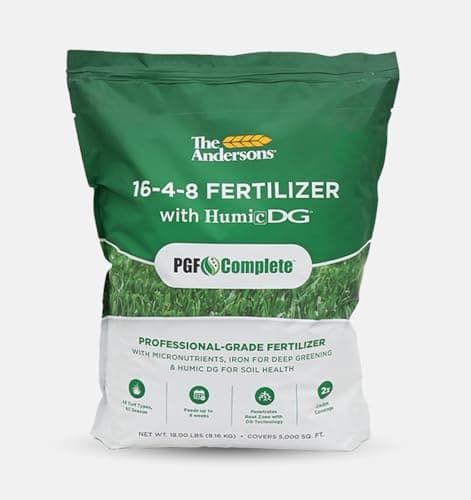
The best overall fertilizer profile for established Pennsylvania Kentucky bluegrass is usually 24-0-10, 25-0-5, 30-0-10, or a similar low-phosphorus cool season lawn fertilizer. If phosphorus is needed by soil test, a balanced option such as 16-4-8 can be appropriate.
Prioritize 30-50% slow-release nitrogen, potassium for heat and cold stress, and iron if deeper green color is the goal. The highest nitrogen number is not automatically best. A 30-0-10 product with controlled-release nitrogen may be safer and steadier than a lower-quality product that releases most nitrogen immediately.
For homeowners who want a liquid option for quick, moderate feeding, Simple Lawn Solutions Advanced 16-4-8 Liquid Fertilizer fits lawns that need some phosphorus and potassium along with nitrogen. It is best used as a supplemental feed, not as the entire annual program for high-input Kentucky bluegrass.
Best Spring Fertilizer for Kentucky Bluegrass
The best spring fertilizer for Kentucky bluegrass is a moderate-nitrogen, slow-release product that supports green-up without forcing excessive leaf growth. Useful spring analyses include 20-0-5, 24-0-6, and 18-0-8 when soil phosphorus is already adequate.
If the lawn was fed well in late fall, spring feeding can be light. A spring application of 0.25-0.5 lb nitrogen per 1,000 sq ft is often enough to support color without creating a mowing surge. Heavy early spring nitrogen can make the lawn look impressive for a short time, then leave it more vulnerable to summer stress.
Best Fall Fertilizer for Kentucky Bluegrass
The best fall fertilizer for Kentucky bluegrass is a nitrogen-forward fertilizer with potassium, applied during the strongest recovery period of the year. In Pennsylvania, fall feeding supports rhizome growth, root recovery, turf density, winter readiness, and better spring green-up.
Good fall analyses include 25-0-10, 30-0-10, and 24-0-11. The fall lawn fertilizer schedule matters more than the exact bag number, as long as the product supplies the right nitrogen rate and does not add unnecessary phosphorus. This is the season where Kentucky bluegrass usually pays back good fertility with visible thickening.
Best Starter Fertilizer for Overseeding or New Kentucky Bluegrass
The best starter fertilizer for new Kentucky bluegrass or overseeding is a phosphorus-containing fertilizer used only when seeding or when a soil test confirms phosphorus deficiency. Common starter analyses include 10-10-10, 12-12-12, and 18-24-12.
Phosphorus helps establishment, but it should not be used casually on established lawns. Pennsylvania homeowners should be especially careful near slopes, storm drains, streams, and compacted clay areas where runoff risk is higher. If you are overseeding Kentucky bluegrass, apply starter fertilizer according to the soil test and seed timing, not as a routine yearly feed.
Organic vs. Synthetic Fertilizer
Organic and synthetic fertilizers can both work on Kentucky bluegrass, but they behave differently in Pennsylvania’s cool-season climate. Synthetic fertilizer gives a faster response and makes nitrogen rates easier to calculate, while organic fertilizer feeds more slowly and supports soil biology over time.
Organic sources depend on microbial activity, so they release nutrients more slowly in cold early spring and late fall soil. That can be helpful in summer when burn risk is a concern, but it may not correct a nitrogen-deficient bluegrass lawn quickly in cool weather. For low-burn organic feeding, Milorganite Lawn and Garden Nitrogen Fertilizer 6-4-0 fits homeowners who prefer gradual feeding and are not trying to force rapid green-up. Because it contains phosphorus, use it only where a soil test or new seeding justifies phosphorus under Act 83.
- NC State TurfFiles guidance: slow-release nitrogen sources feed turf more evenly and reduce surge growth compared with quick-release products.
- Purdue Turfgrass Science guidance: phosphorus is rarely needed on established lawns unless a soil test shows a deficiency.
Pennsylvania Kentucky Bluegrass Fertilizer Schedule for 2026
A Pennsylvania Kentucky bluegrass fertilizer schedule should feed lightly in spring, minimize summer nitrogen, and concentrate most fertilizer in early and late fall. This matches the grass’s natural cool-season growth cycle and reduces stress during hot weather.
Our Grass Database recommends 4 lbs of nitrogen per 1,000 sq ft annually for Kentucky Bluegrass under high-maintenance care, with a seasonal split of 30% in spring, 0% in summer, and 70% in fall. That split is a strong planning model for Pennsylvania because it favors root recovery and density over short-lived spring growth.
Quick 2026 Fertilizer Calendar
The 2026 fertilizer calendar for Pennsylvania Kentucky bluegrass should follow active growth, not just the calendar date. Use this table as a planning guide, then adjust for your county, elevation, irrigation, and soil test.
| Season | 2026 Timing | Recommended Action | Nitrogen Rate |
|---|---|---|---|
| Early spring | March-April | Optional light feeding after active growth begins | 0.25-0.5 lb per 1,000 sq ft |
| Late spring | May | Moderate feeding if lawn is growing well | 0.5-0.75 lb per 1,000 sq ft |
| Summer | June-August | Avoid heavy nitrogen; use light slow-release only if irrigated | 0-0.5 lb per 1,000 sq ft |
| Early fall | September | Major feeding window for recovery and thickening | 0.75-0.9 lb per 1,000 sq ft |
| Mid fall | October | Second major feeding window | 0.75-0.9 lb per 1,000 sq ft |
| Late fall | October-November | Final feeding when top growth slows but roots remain active | 0.5-0.75 lb per 1,000 sq ft |
When to Fertilize Kentucky Bluegrass in Pennsylvania
The best time to fertilize Kentucky bluegrass in Pennsylvania is when the grass is actively growing in spring and fall, with fall receiving the most nitrogen. In spring, wait until the lawn is growing enough to need mowing and soil temperature is near 55°F or higher.
Main fall applications belong in September and October when cooler days and returning rainfall help the lawn recover. The final fall feeding can be applied in late October or November if the ground is not frozen and the lawn is still physiologically active. Avoid fertilizing during drought stress, before heavy rain, on frozen ground, or during peak summer heat.
Recommended Annual Nitrogen Rates
Recommended annual nitrogen for Kentucky bluegrass in Pennsylvania usually ranges from 1-4 lbs per 1,000 sq ft depending on maintenance level. Penn State puts low-to-medium maintenance lawns at 1-2 lbs and high-maintenance lawns at 2-4 lbs per year, split across two to four applications.
Higher nitrogen programs require correct mowing, irrigation, disease monitoring, and thatch management. Our Grass Database lists Kentucky Bluegrass fertilization as heavy, with 4 annual applications and 4 lbs nitrogen per 1,000 sq ft per year. If clippings are returned through mulch mowing, total fertilizer need may be lower than a bag-based program suggests.
Sample Advanced Fertilizer Program
A strong advanced fertilizer program for Pennsylvania Kentucky bluegrass uses small spring applications and larger fall applications. This prevents spring surge growth while reserving the heaviest nutrition for the period when bluegrass builds roots and rhizomes.
- March or April: 0.25-0.5 lb nitrogen per 1,000 sq ft after active growth begins.
- May: 0.5-0.75 lb nitrogen per 1,000 sq ft if color and density need support.
- September: 0.75-0.9 lb nitrogen per 1,000 sq ft for recovery and thickening.
- October: 0.75-0.9 lb nitrogen per 1,000 sq ft for root and rhizome growth.
- November: 0.5-0.75 lb nitrogen per 1,000 sq ft if conditions allow.
Adjust these rates based on soil test results, irrigation, clipping return, and turf density. If the lawn is thin because of compaction or shade, fertilizer alone will not solve it. Confirm the cause before increasing nitrogen.
How to Choose the Best Fertilizer Product
The best fertilizer product for Kentucky bluegrass is the one that matches your soil test, season, and lawn goal without adding nutrients the lawn does not need. A product that works well in September may be too aggressive in July.
The symptom you are seeing usually points to one of a few things. Pale turf may indicate nitrogen deficiency, high pH or low pH interference, drought stress, or root damage. Confirm with a soil test and irrigation check before assuming more fertilizer is the fix.
Read the Fertilizer Label Correctly
A fertilizer label shows N-P-K, which means nitrogen, phosphorus, and potassium in that order. Nitrogen drives color and shoot growth, phosphorus supports establishment and roots, and potassium helps stress tolerance, cold hardiness, drought response, and disease resistance.
Look for nitrogen source terms such as urea, polymer-coated urea, sulfur-coated urea, methylene urea, and biosolids. For most Pennsylvania Kentucky bluegrass applications, slow-release nitrogen is preferred because it lowers surge growth and provides steadier feeding.
Match Fertilizer to Lawn Goal
The right fertilizer changes depending on whether the goal is darker color, thicker turf, summer survival, new seed establishment, or low-maintenance care. For dark green color, nitrogen plus iron can improve appearance without always requiring a high nitrogen rate.
For thickening Kentucky bluegrass, focus on fall nitrogen, proper mowing, and overseeding if bare soil is visible. For summer survival, prioritize potassium, deep watering, and avoiding excessive nitrogen. For a lower-maintenance lawn, use fewer applications, more slow-release nitrogen, mulch mowing, and soil-building practices such as Composting for a Healthier Lawn.
Soil Test-Based Product Selection
Soil test-based product selection means choosing fertilizer only after checking pH, phosphorus, potassium, calcium, magnesium, and organic matter. Test every 2-3 years, or sooner if you are correcting pH or rebuilding a weak lawn.
- Collect soil from multiple spots in the lawn at a consistent depth.
- Review pH, phosphorus, potassium, and organic matter first.
- Choose a low-phosphorus fertilizer unless phosphorus is deficient.
- Apply lime only if the soil test shows pH is low.
- Retest after major pH or nutrient corrections.
Kentucky bluegrass usually performs best around pH 6.0-7.0, with 6.2-6.8 often ideal for nutrient availability. If fertilizer response is weak despite correct nitrogen rates, pH and compaction are the first two confirmation checks.
Granular vs. Liquid Fertilizer
Granular slow-release fertilizer is best for most Pennsylvania Kentucky bluegrass lawns because it is easier to spread evenly and lasts longer. It fits homeowners who want predictable feeding without weekly precision.
Liquid fertilizer gives a faster foliar response and can work well for spoon-feeding advanced lawns, but it requires more careful measuring and even application. Use liquids as supplemental treatments, especially for color correction, rather than relying on them as the entire fertility plan.
How to Apply Fertilizer Correctly
Correct fertilizer application means applying the right nitrogen rate evenly, keeping granules off hard surfaces, and watering only as the label requires. Most poor fertilizer results come from rate errors, uneven spreader patterns, or application during stress.
Before applying, confirm the lawn is not drought-stressed. Kentucky bluegrass under summer dormancy may look hungry, but feeding dormant turf without irrigation usually increases stress. Understanding why this happens helps you prevent it next time: roots cannot use nitrogen well when heat and dry soil have shut growth down.
Step-by-Step Application Process
The safest fertilizer application process starts with measuring the lawn and calculating product amount from the nitrogen percentage. Do not rely only on spreader settings, because spreaders vary by model, walking speed, and granule size.
- Mow the lawn 1-2 days before fertilizing.
- Measure the lawn’s square footage.
- Calculate product amount based on the target nitrogen rate.
- Calibrate the spreader on a test area if possible.
- Apply half the rate in one direction and half perpendicular to it.
- Blow or sweep fertilizer off sidewalks, driveways, streets, and patios.
- Water in if the label requires it.
- Keep pets and children off the lawn until watered in and dry.
How to Calculate Fertilizer Amount
Fertilizer amount is calculated by dividing the desired nitrogen rate by the nitrogen percentage on the bag. For example, to apply 1 lb nitrogen per 1,000 sq ft using 25-0-10, divide 1 by 0.25, which equals 4 lbs of product per 1,000 sq ft.
| Target Nitrogen Rate | Fertilizer Analysis | Calculation | Product Needed |
|---|---|---|---|
| 0.5 lb N per 1,000 sq ft | 25-0-10 | 0.5 ÷ 0.25 | 2 lbs product per 1,000 sq ft |
| 0.75 lb N per 1,000 sq ft | 25-0-10 | 0.75 ÷ 0.25 | 3 lbs product per 1,000 sq ft |
| 0.9 lb N per 1,000 sq ft | 25-0-10 | 0.9 ÷ 0.25 | 3.6 lbs product per 1,000 sq ft |
Watering After Fertilizing
Most granular fertilizers should be watered in with about 0.25 inches of irrigation unless the label says otherwise. This moves nutrients off the leaf blade and into the soil surface where roots can access them.
Avoid applying fertilizer before heavy rain because runoff wastes nutrients and increases environmental risk. Kentucky bluegrass needs about 1.5 inches of water per week in summer according to our Grass Database, but that should come from irrigation and rainfall combined, not from one heavy runoff-producing event. Related topics such as How Often to Water Kentucky Bluegrass are worth reviewing if fertilizer response is inconsistent.
Spreader Calibration Tips
Spreader calibration prevents stripes, skipped areas, and accidental overapplication. Start with the label’s setting, but verify output by applying a known product weight over a measured area.
Use half-rate applications in two directions for better uniformity. Overlap wheel tracks as the spreader instructions recommend, and close the hopper when turning. If dark green stripes appear 7-10 days later, the issue is usually uneven spreader overlap, not the fertilizer formula.
Advanced Fertility Strategy for a Darker, Thicker Kentucky Bluegrass Lawn
A darker, thicker Kentucky bluegrass lawn requires balanced fertilizer, correct mowing, deep watering, and disease-aware timing. Fertilizer alone cannot correct scalping, shallow irrigation, compacted soil, or too much shade.
Kentucky bluegrass is capable of excellent density in Pennsylvania because it spreads by rhizomes. The diagnostic question is whether the lawn has the conditions to use fertilizer well. If growth is weak after feeding, investigate soil pH, root depth, compaction, and irrigation before increasing nitrogen.
Balance Fertility With Mowing and Irrigation
Fertility must be balanced with mowing and irrigation because nitrogen increases growth demand. Our Grass Database lists Kentucky Bluegrass mowing height at 2.0-3.5 inches, with a minimum mow height of 1.5 inches. In Pennsylvania home lawns, staying near the upper end during heat usually improves stress tolerance.
Mulch mowing returns nutrients to the soil and may reduce total fertilizer need over time. Deep, less frequent watering supports better nitrogen uptake than shallow daily watering. If a screwdriver cannot push several inches into the soil after watering, compaction or dry soil may be limiting root function.
Use Iron for Color Without Excess Growth
Iron improves green color without pushing as much leaf growth as nitrogen. It is useful in spring and fall when the goal is color but not excessive mowing.
Iron is not a substitute for nitrogen if the lawn is truly deficient. It is a color tool, not a complete fertility program. Apply carefully around sidewalks, driveways, and light-colored stone because iron can stain hard surfaces.
Potassium for Stress Resistance
Potassium supports Kentucky bluegrass stress resistance by helping with summer heat tolerance, winter hardiness, drought response, and disease resilience. This makes potassium especially useful in Pennsylvania lawns that face humid summers and cold winters.
Soil testing should guide potassium applications because more is not always better. Nutrient balance matters, especially where calcium and magnesium levels influence soil structure and availability. A 25-0-10 or 30-0-10 fertilizer fits many established lawns because it supplies nitrogen and potassium without routine phosphorus.
Disease and Thatch Considerations
Disease and thatch issues become more likely when Kentucky bluegrass receives too much nitrogen at the wrong time. Leaf spot, dollar spot, brown patch in humid regions, and snow mold in some winters are all more likely when fertility, moisture, and weather line up poorly.
Excess nitrogen plus frequent shallow watering can also contribute to thatch development. If the lawn feels spongy, dries out quickly, or scalps easily, check thatch depth and soil compaction before adding more fertilizer. Kentucky Bluegrass disease identification is an important related topic if color loss appears in patches rather than evenly across the lawn.
Common Mistakes to Avoid
The most common fertilizer mistakes on Pennsylvania Kentucky bluegrass are skipping soil testing, applying too much spring or summer nitrogen, and ignoring regional timing and safety details. These are the gaps many quick fertilizer guides miss.
Fertilizing without a soil test can lead to unnecessary phosphorus, uncorrected pH problems, and nutrient imbalance. If the lawn greens up briefly after every application but fades within weeks, the issue may not be lack of fertilizer. Confirm soil pH, potassium, compaction, and irrigation before increasing the rate.
Fertilizing Without a Soil Test
Fertilizing without a soil test usually means guessing at phosphorus, potassium, and pH. Bag claims may help you choose a general product, but they cannot tell whether your specific Pennsylvania soil needs lime, potassium, or phosphorus avoidance.
The fix is simple: test soil every 2-3 years and use the results to choose N-P-K. If phosphorus is already sufficient, choose 24-0-10, 25-0-5, or 30-0-10 instead of a starter fertilizer. If pH is low, lime may improve fertilizer response more than extra nitrogen.
Applying Too Much Nitrogen in Spring or Summer
Too much spring or summer nitrogen causes fast top growth, shallow rooting, and higher stress during heat and humidity. This is especially important in eastern Pennsylvania, where summer disease pressure can be higher.
Use spring fertilizer as a support, not the main event. Summer fertilizer should be light, slow-release, and used only when irrigation is available and the lawn is not dormant. In Pennsylvania, the best fertilizer schedule is fall-centered.
Ignoring Regional and Safety Details
Ignoring runoff, storm drains, hard surfaces, and seeding restrictions reduces fertilizer effectiveness and increases risk. Do not apply fertilizer before heavy rain, and sweep granules off pavement immediately.
Follow label instructions around pets and children, especially for watering-in and reentry. Avoid weed-and-feed products when seeding because some herbicides can prevent grass seed germination. Check local Pennsylvania fertilizer and phosphorus rules where they apply, especially near waterways or regulated communities.
Conclusion
The best fertilizer for Kentucky bluegrass in Pennsylvania is usually a slow-release, nitrogen-forward cool season lawn fertilizer with potassium and little or no phosphorus unless a soil test says otherwise. A good 2026 plan feeds lightly in spring, protects the lawn in summer, and invests most fertilizer effort in September through November.
Start with a soil test, choose the right N-P-K, calculate nitrogen correctly, and apply during active growth. Look for a fertilizer with 30-50% slow-release nitrogen, potassium in the analysis, and zero phosphorus unless testing confirms a need. Feed less aggressively in spring, avoid forcing summer growth, and let fall fertility build the dense Kentucky bluegrass lawn Pennsylvania can support.
Top Picks

As an Amazon Associate we earn from qualifying purchases.
Free Lawn Care Tools
The best fertilizer is usually a slow-release, nitrogen-forward product such as 24-0-10, 25-0-5, or 30-0-10. Use phosphorus only if a soil test shows a deficiency or you are seeding.
Fertilize lightly in March or April after active growth begins, then make the main applications in September and October. A final late-fall feeding can be used in October or November if the ground is not frozen.
Most Pennsylvania Kentucky bluegrass lawns need about 2-4 lbs of nitrogen per 1,000 sq ft per year at high maintenance, while low-to-medium maintenance lawns do fine on 1-2 lbs. Our Grass Database recommends 4 lbs per 1,000 sq ft annually for Kentucky Bluegrass.
You can apply a very light slow-release fertilizer in summer only if the lawn is irrigated and actively growing. Avoid heavy nitrogen during drought, dormancy, or peak heat because it can increase stress.
Established lawns rarely need phosphorus unless a soil test shows a deficiency. Unneeded phosphorus does not improve color and can increase runoff concerns, especially near drains, slopes, and waterways.
Divide the desired nitrogen rate by the nitrogen percentage on the bag. For example, 0.9 lb of nitrogen using a 25-0-10 fertilizer requires 3.6 lbs of product per 1,000 sq ft.
Photos: Pixabay / Pexels, Ochir-Erdene Oyunmedeg / Unsplash, MonikaP / Pixabay

Beat weeds and brown spots from your phone
Snap a photo, get the fix, and follow a plan timed to your soil and weather. Free on iPhone.