Scotts Liquid Weed and Feed Instructions: Hose-End Sprayer Guide
 James ThorntonLawn Equipment & Maintenance Expert | 20 Years
As an Amazon Associate we earn from qualifying purchases.
You are standing on the lawn with a bottle of Scotts liquid weed and feed in one hand and the garden hose in the other, and the directions on the back feel like they assume you already know what you are doing. How fast do you walk? Do you water it in or keep it dry? What happens if it rains tonight? Those small questions are exactly where liquid weed and feed goes wrong, and they are the ones the label tends to gloss over. Let me walk you through it the way I would if I were standing there with you.
To apply Scotts liquid weed and feed with the ready-to-spray bottle, screw it onto your garden hose, turn the water on fully, then flip the sprayer switch to the on or spray position. Walk backward at a steady, unhurried pace and sweep the wand side to side so the whole lawn gets an even, light coating without pooling. Start at the far corner and work toward your exit so you never walk across wet, freshly sprayed grass.
After you finish, keep the lawn dry for about 24 hours so the weed killer can absorb through the leaves, and do not spray if rain is in the forecast that day. Wait until the lawn is completely dry before letting pets or kids back on it. The exact rates, coverage, and rain-free window are printed on your specific bottle, so treat those numbers as the final word over any general guidance here.
What Scotts liquid weed and feed actually is
Weed and feed is a two-in-one product: a fertilizer that greens up your grass plus a broadleaf herbicide that kills weeds like dandelion, clover, and chickweed. The liquid version delivers both through a spray that coats the leaf, which is the key difference from granular. Because the herbicide is absorbed through the weed's foliage, even coverage matters more than it does with granules that sit on the soil.
Scotts sells this concept in a few forms. The one most people mean by "liquid weed and feed" is a ready-to-spray hose-end bottle: you attach it to the hose and the sprayer meters the concentrate into the water stream for you. There are also concentrate bottles you mix into your own sprayer, though those are less common for casual users. Whichever you have, the front of the bottle tells you the coverage in square feet and the back tells you the application steps. Formulas and names shift over the years, so I am going to stay generic on exact numbers and point you to your label for the specifics.
One important note before you buy: not every weed and feed is safe on every grass. Some formulas will damage warm-season lawns like St. Augustine or centipede. The label spells out which grasses it is cleared for, so match it to your lawn first. If you do not know your grass type, that is a two-minute fix with a free photo diagnosis.
Step-by-step: applying with the hose-end sprayer
The ready-to-spray bottle is the whole appeal of going liquid, so let me break the process down clearly.
1. Prep the lawn and yourself
Mow a day or two before if the grass is tall, but do not mow right before or right after spraying; you want plenty of weed leaf surface for the herbicide to land on. Clear toys, furniture, and pet bowls off the lawn. Put on closed shoes and gloves. Check the forecast and confirm you have a dry, calm window with no rain expected that day and not much wind.
2. Connect the bottle
Screw the garden hose onto the threaded fitting on the sprayer bottle. Make sure the sprayer switch is in the off position before you turn the water on so you do not spray your own feet.
3. Turn the water on, then engage the sprayer
Open the hose bib fully. Good, steady water pressure is what pulls the right amount of concentrate into the stream, so do not run it at a trickle. Once water is flowing, flip the sprayer switch to on or spray.
4. Spray evenly, walking backward
Start at the corner farthest from your exit. Sweep the wand slowly side to side and walk backward at a steady pace so you lay down an even, light coating and never track through what you just sprayed. Aim for uniform wetness on the leaf, not puddles. Overlapping your passes slightly helps you avoid missed strips.
5. Finish and rinse
When the bottle empties or you have covered the lawn, switch the sprayer off, then shut the water. Disconnect and give the bottle and your hands a rinse. Do not save mixed concentrate in an unlabeled container.
- Exact application rate, coverage square footage, and the required rain-free window vary by formula. Read them off your specific bottle rather than trusting a general figure.
- Safe temperature and season windows for broadleaf herbicides differ by region and grass type. Your local cooperative extension office can give you the precise cutoffs for your area; most broadleaf products want to be applied while weeds are actively growing and not during extreme heat.
- If your lawn is a warm-season grass, confirm with the label and, if unsure, your extension office that the product is cleared for it before you spray.
Coverage and pace: why the bottle runs out early
Here is the thing nobody tells you: the coverage number on the bottle assumes a certain walking speed and water pressure. If you walk slowly or wave the wand back and forth over the same spot, you dump more product per square foot and run out well before you finish the lawn. Walk too fast and you get a thin, streaky application that underperforms on the weeds.
The fix is to know your square footage before you start so you can pace yourself. If you have never measured, run the numbers with our lawn size calculator and compare that to the coverage printed on the bottle. If your lawn is bigger than one bottle covers, buy two and plan to switch at the halfway line rather than stretching one bottle thin.
When to apply liquid weed and feed
Timing is where liquid and granular diverge in an interesting way. Broadleaf herbicides work best when weeds are actively growing and have plenty of leaf out to absorb the spray, which usually means spring and fall for cool-season lawns. Liquid has one quirk granular does not: many liquid formulas actually work better on slightly damp foliage, because a little moisture helps the product stick and spread on the leaf. Morning after the dew, or lightly misting the lawn first, can improve coverage. Granular products also like damp grass, but for a different reason: moisture helps the granules stick. That is a different product with different rules.
Avoid spraying in the heat of a scorching afternoon, during drought stress, or right before or after mowing. And do not spray if rain is coming that day. For a region-specific read on the best window to hit your weeds, our herbicide timing calculator can point you at the right stretch of the season. If you want the exact week to treat, dialed in for your zip code and grass type, a personalized care plan tells you precisely when to act instead of guessing off a generic calendar.
After you spray: watering, mowing, and pets
Do not water the lawn for about 24 hours after applying liquid weed and feed. The whole point of the liquid is that the herbicide sits on and absorbs into the weed leaf, and watering too soon rinses it off before it can work. This is the reverse of many granular routines, where you water the product in to activate it.
Hold off on mowing for a few days on either side of the application so the weeds keep enough leaf to take up the herbicide and move it down to the root. For pets and kids, the standard rule is to keep them off the lawn until the spray has dried completely; once dry, the risk drops sharply, but follow the exact re-entry time on your bottle. Store the container sealed and out of reach.
Do not expect overnight results. Broadleaf weeds usually curl, twist, and yellow over a week or two before they die back. If you want a realistic timeline for what "working" looks like day by day, we cover it in how long Scotts weed and feed takes to work.
Liquid vs granular: which should you reach for
Both have a place, and the right pick depends on your lawn and your problem.
Liquid shines when you have active broadleaf weed pressure you want to knock down fairly quickly, when you are treating a small or medium lawn, and when you want even leaf coverage without buying a spreader. The hose-end bottle is genuinely convenient. The trade-offs: coverage is sensitive to your pace and pressure, it is easy to apply unevenly, and you are limited by hose reach.
Granular shines on large lawns where a spreader lays product down evenly and fast, when you want the feeding portion to release over a longer stretch, and when you would rather not drag a hose around. The trade-offs: granules need to stick to damp grass and get watered in, and they blanket the whole lawn rather than targeting weeds.
Plenty of people run both across a season: granular for whole-lawn feeding, liquid for spot broadleaf flare-ups. If you are leaning granular, the spreader settings and step-by-step live in our full Scotts weed and feed application instructions. Southern lawns have their own product line and timing, covered in the Scotts Southern Bonus S guide. And if you are wondering how often you can safely reapply, see how often to apply Scotts weed and feed.
Recommended products
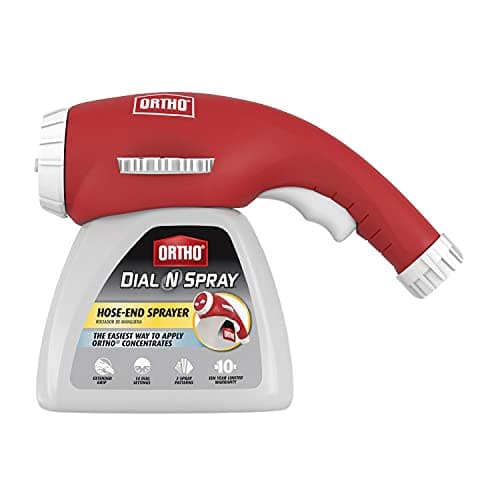
Ortho Dial N Spray Hose-End Sprayer
A hose-end sprayer with 14 dilution settings, so the rate stops depending on which bottle you bought.
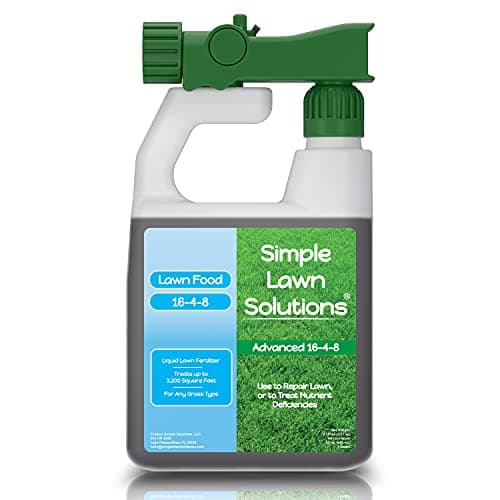
Simple Lawn Solutions Advanced 16-4-8 Liquid Fertilizer
A liquid 16-4-8 for the feeding half of the job, applied at a rate you control.
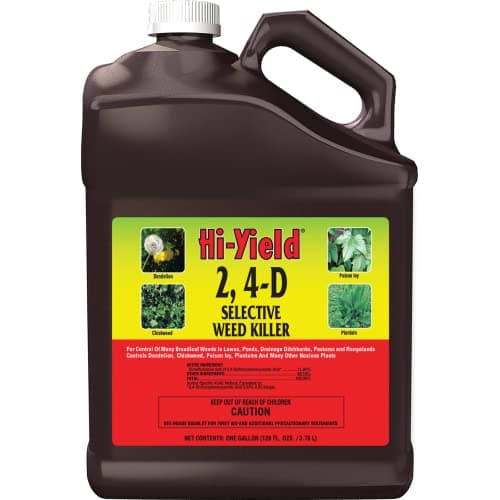
Hi-Yield 2,4-D Amine Selective Herbicide
A selective broadleaf concentrate for treating only the areas that actually have weeds.
Troubleshooting the common problems
Streaky results or green stripes
If your lawn ends up with darker green or dead-weed stripes, that is uneven application. Usually it is inconsistent walking pace or overlapping some passes while missing others. Next time, keep a steadier rhythm and slightly overlap each pass.
Weeds are not dying
Give it two weeks before you judge. If nothing happens after that, the likely culprits are: you sprayed grassy weeds like crabgrass that broadleaf products do not touch, rain washed it off too soon, or the weeds were not actively growing. Confirm you are dealing with broadleaf weeds in the first place with a free photo diagnosis before you reapply.
Sprayer clogs or sputters
Low water pressure is the usual cause of a hose-end sprayer that sputters or fails to draw concentrate. Open the hose bib fully and check for kinks. Rinse the sprayer nozzle after each use so dried product does not clog the intake.
What other guides miss
Most instructions treat coverage as a fixed number: the bottle says it covers X square feet, so you assume you will get X square feet. In practice, liquid weed and feed coverage is a moving target that depends on two variables the label cannot control: your walking speed and your home's water pressure. A hose-end sprayer meters concentrate based on flow, so a house with strong pressure and a fast walker gets a lighter, wider application, while low pressure and a slow, careful walker gets a heavier, narrower one. That single variance is why two neighbors with identical bottles get completely different results, and why liquid tends to streak more than granular.
The practical takeaway: do a dry run. Before you flip the sprayer on, walk your intended pattern once at the pace you plan to use and time how long it takes. Match that against the bottle's coverage so you know whether one bottle will actually reach the end of the lawn. It sounds fussy, but it is the difference between an even kill and a striped lawn you have to fix later.
Your action plan
- Confirm your weeds are broadleaf, not grassy, with a free photo diagnosis, and identify your grass type so you know the product is safe for it.
- Measure your lawn with the lawn size calculator and buy enough bottles for that square footage.
- Pick a dry, calm day when weeds are actively growing; check the herbicide timing calculator for your window.
- Connect the bottle, turn water on fully, flip the sprayer on, and spray evenly walking backward from the far corner.
- Keep the lawn dry for about 24 hours, keep pets off until dry, and hold off mowing a few days.
- Wait two weeks for the weeds to die back before judging or reapplying.
Want the exact week to treat and a feeding schedule matched to your zip code and grass type instead of a generic calendar? A personalized care plan maps it out for you so you are not eyeballing the season.
Top Picks
- Scotts Turf Builder Weed and Feed 3 (5,000 sq. ft.)Check price on Amazon
- Scotts Turf Builder EdgeGuard Mini Broadcast SpreaderCheck price on Amazon
- Scotts Turf Builder Lawn FoodCheck price on Amazon
As an Amazon Associate we earn from qualifying purchases.
Free Lawn Care Tools
Connect the ready-to-spray bottle to your garden hose, turn the water on fully, then flip the sprayer switch to the on or spray position. Walk backward at a steady pace and sweep the wand side to side so the whole lawn gets an even, light coating. Keep the lawn dry for about 24 hours afterward and do not spray right before rain. Always defer to the exact directions printed on the bottle you bought, since formulas change.
As a general rule you want the product to dry on the leaf and stay dry for roughly 24 hours so the weed-killing portion can absorb through the foliage. Rain or irrigation too soon can wash it off before it works. Check the forecast and pick a window with no rain expected that day. The bottle label is the final word on the exact rain-free window.
Neither is universally better; they suit different situations. Liquid coats the weed leaf evenly and tends to act fast on actively growing broadleaf weeds, which is handy for spot problems and quick knockdown. Granular spreads more evenly across large areas, feeds a bit longer, and is easier to apply to a big lawn without a hose. Many people use liquid for targeted weed pressure and granular for whole-lawn feeding.
Keep pets and children off the treated lawn until the product has fully dried, which is the standard guidance on most lawn weed-and-feed labels. Once dry, the risk drops considerably, but the safest move is to follow the exact re-entry time printed on your bottle. Store the container sealed and out of reach. If you have specific health concerns, your local extension office or vet can advise.
Ready-to-spray hose-end bottles are sized to treat a set square footage, and that number is printed right on the front of the bottle. Your real-world coverage depends on walking pace and water pressure, so a bottle can run out early if you spray slowly or heavily. Measure your lawn first so you buy the right number of bottles. Use the coverage figure on the label rather than any general estimate.
Not always. Some weed-and-feed formulas can damage certain grasses, especially warm-season types like St. Augustine or centipede, so the label lists which lawns it is safe for. Read the front and back of the bottle and match it to your grass before spraying. If you are unsure what grass you have, a photo diagnosis can identify it in seconds.

Beat weeds and brown spots from your phone
Snap a photo, get the fix, and follow a plan timed to your soil and weather. Free on iPhone.