Best Fertilizer for Bermuda Grass in Tennessee (2026)
 Marcus GreenTurf Management Pro | 18 Years
As an Amazon Associate we earn from qualifying purchases.
Bermuda grass thrives in Tennessee when fertilizer is timed for the transition zone, not copied from a Deep South calendar. The best fertilizer for Bermuda grass in Tennessee is usually a high-nitrogen, low-phosphorus product with enough potassium, applied only after spring green-up and stopped before fall cold stress.
Tennessee Bermuda grows hard in summer, but it also faces cold injury, delayed spring green-up, acidic soils, compacted clay, and heavy rainfall that can move nutrients below the root zone. This guide covers the best fertilizer ratios, soil-test decisions, a Tennessee Bermuda fertilizer schedule for 2026, organic versus synthetic options, application rates, and mistakes that cause weeds, burn, disease, or winter damage.
For established Bermuda in Tennessee, use a high-nitrogen, low-phosphorus fertilizer such as 16-0-8, 21-0-10, or 24-0-11 after the lawn is 50% to 75% green and actively growing. Confirm with soil temperature near 65°F and at least 1 to 2 mowings before the first nitrogen application.
Apply 0.5 to 1.0 lb of actual nitrogen per 1,000 sq ft per feeding from May through August, then reduce or stop nitrogen 6 to 8 weeks before dormancy. Do not fertilize dormant Bermuda or apply heavy nitrogen before late cold snaps.
- Bermuda grass in Tennessee should usually receive its first main fertilizer application in May after 50% to 75% spring green-up.
- Established Tennessee Bermuda typically performs best with 0.5 to 1.0 lb of actual nitrogen per 1,000 sq ft per application.
- Soil temperatures near 65°F, 1 to 2 recent mowings, and active lateral growth are better fertilizer triggers than the calendar alone.
- Stop heavy nitrogen 6 to 8 weeks before expected dormancy to reduce cold-stress and winter injury risk.
- Bermuda grass grows best near pH 6.0 to 6.5, so acidic Tennessee soils should be tested before fertilizer is chosen.
This guide covers Tennessee-specific timing, soil, and product notes. For the full national picture, NPK ratios, and the complete product comparison, see our main best fertilizer for Bermuda grass guide.
The Transition-Zone Rule: Why Tennessee Bermuda Stops Eating in September
Tennessee sits squarely in the transition zone, and that changes the whole fertilizer calendar compared to the Deep South. Bermuda can winterkill here, especially in East Tennessee, so the most important local rule is not when you start feeding but when you stop. UT Extension anchors its warm-season schedule to a monthly rhythm: feedings in May and July for every program, late June added on irrigated high-maintenance lawns, and a final winterizer in mid-to-late September that is deliberately the last nitrogen of the year. The late-fall "winterizer" nitrogen that national guides push for Georgia or Texas is a mistake in Tennessee: it forces tender growth right as our earlier frost arrives, the turf cannot harden off, and you get winterkill and a slow spring. Lean on potassium, not nitrogen, for winter hardiness.
Rates are modest here too. UT's medium-maintenance program lands around 3 pounds of nitrogen per 1,000 square feet across three feedings, and it steps phosphorus and potassium down as your soil test rises, so on high-phosphorus soils you move to nitrogen-forward products like 16-4-8 rather than a balanced 10-10-10. Soil test first.
Your region also decides the bag. Per UT, Middle Tennessee sits on limestone, so soils run neutral to alkaline and the common complaint is iron chlorosis (yellowing despite feeding) that a foliar iron spray fixes, not more nitrogen, and lime is usually unnecessary. East Tennessee's acidic clay typically needs lime to reach bermuda's 6.0 to 6.5 sweet spot, while West Tennessee's loess soils are the most forgiving. A national "just add 10-10-10" article misses all of this.
Tennessee Bermuda Fertilizer Calendar (UT)
| When | Feed? | Rate & product | Why here |
|---|---|---|---|
| Early to mid-May | Yes | Balanced, soil-test-driven | UT schedule starts after full spring green-up |
| Late June | Irrigated lawns only | ~1 lb N per 1,000 sq ft | Peak growth |
| Late July | Yes | ~1 lb N | All programs; peak growth |
| Mid-to-late September | Yes (last feed) | 0.5-0.75 lb N winterizer (1-2-1 or 1-2-2 ratio) | Total ~3 lb N/yr on the medium program; STOP nitrogen here |
| After late September | No nitrogen | Potassium for hardiness | Late N causes transition-zone winterkill |
| Middle-TN yellowing | Iron, not N | Foliar iron | Alkaline limestone soils lock up iron |
What Makes Fertilizing Bermuda Grass in Tennessee Different?
Fertilizing Bermuda grass in Tennessee is different because the state sits in the transition zone, where warm-season turf grows aggressively in summer but must survive cold winters and unstable spring temperatures. A fertilizer plan that works in southern Georgia or coastal Alabama can push Tennessee Bermuda too early, too late, or too hard.
Recommended products
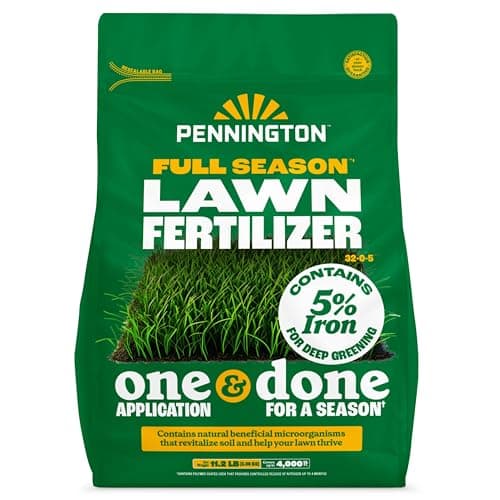
Pennington Full Season Lawn Fertilizer 32-0-5
High-nitrogen fertilizer with iron for fast green-up on warm-season lawns.

Outsidepride Maya (Blackjack II) Bermuda Grass Seed (5 lb)
Named, fine-textured improved bermuda cultivar for dense, carpet-like, dark-green full-sun turf; 5 lb full-lawn bag.
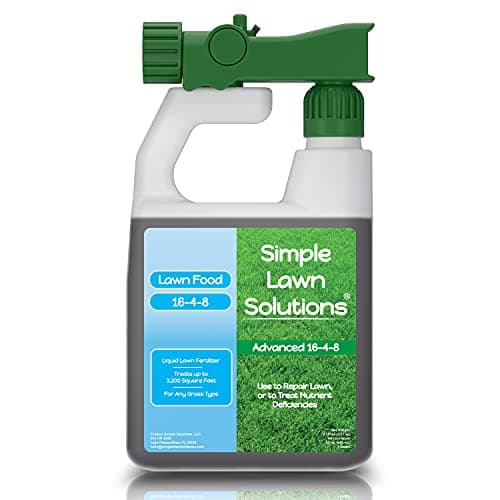
Simple Lawn Solutions Advanced 16-4-8 Liquid Fertilizer
Concentrated liquid fertilizer with balanced 16-4-8 NPK for quick green-up through any hose-end sprayer.
The issue is timing. Bermuda needs nitrogen when it is actively growing, spreading, and being mowed regularly. In Tennessee, that active window is shorter than in the Deep South, and the lawn may stay partially dormant well into April after a cold spring.

Tennessee Is a Transition Zone State
Transition zone Bermuda fertilizer programs must feed growth during the hot months without encouraging tender growth during cold-prone periods. West Tennessee usually has the longest Bermuda feeding window, Middle Tennessee follows a standard transition-zone schedule, and East Tennessee often needs the most conservative nitrogen timing.
West Tennessee lawns may green up earlier, but heavy clay and spring rain can still create nutrient movement and compaction problems. Middle Tennessee lawns often deal with variable soils and late cold snaps. East Tennessee lawns have cooler nights, more slopes, more rainfall, and higher cold-stress potential, so pushing nitrogen late in the season is a poor tradeoff.
Bermuda Grass Nutrient Priorities
Bermuda grass needs nitrogen for color, density, and lateral spread, potassium for stress tolerance, and phosphorus only when a soil test confirms the need. Nitrogen is the growth driver, but potassium is the stabilizer that helps Bermuda handle heat, drought, traffic, and winter transition.
Our Grass Database recommends 3.5 lbs of nitrogen per 1,000 sq ft annually for Bermudagrass, with 20% in spring and 80% in summer. That split fits Tennessee better than early spring feeding because it places most nitrogen during peak growth, not during green-up uncertainty.
- Purdue Turfgrass Science guidance: phosphorus is rarely needed on established lawns unless a soil test shows a deficiency.
Why Soil pH Matters in Tennessee
Soil pH matters because acidic Tennessee soils can reduce fertilizer efficiency even when the fertilizer ratio is correct. Bermuda performs best when nutrients are available, and low pH can limit that availability.
Our Grass Database shows Bermudagrass has a pH range of 5.8 to 6.5, while most Tennessee Bermuda lawns should target about 6.0 to 6.5 for strong performance. Before choosing the best fertilizer for Bermuda grass in Tennessee, run a soil test and check pH, phosphorus, potassium, calcium, magnesium, and organic matter. Related topics such as How to Test Your Lawn's Soil, How to Improve Soil pH for Grass, and lawn lime application schedule all matter before the first bag of fertilizer is opened.
Best Fertilizer for Bermuda Grass in Tennessee in 2026
The best fertilizer for Bermuda grass in Tennessee in 2026 is a soil-test-guided, high-nitrogen, low-phosphorus fertilizer with enough potassium to support summer and winter stress tolerance. For most established Bermuda lawns, the right product is not a starter fertilizer and not an all-purpose 10-10-10 unless a soil test supports those nutrients.
Look for ratios that give Bermuda the nitrogen it needs without adding unnecessary phosphorus. If potassium is low or the lawn has a history of drought stress, winter damage, or weak recovery, choose a fertilizer with stronger potassium support.
Best Overall Fertilizer Type for Tennessee Bermuda
The best overall fertilizer type for Tennessee Bermuda is a high-nitrogen product with little or no phosphorus, such as 16-0-8, 21-0-10, 24-0-11, or 15-0-15. These ratios feed active Bermuda growth while avoiding unnecessary phosphorus on established lawns.
For homeowners who want a high-nitrogen option suited to warm-season turf, Pennington Full Season Lawn Fertilizer 32-0-5 fits established Bermuda lawns that need strong summer nitrogen and added color support. It is best for actively growing Bermuda, not dormant turf or early spring lawns that have not greened up.
Best Fertilizer for Spring Green-Up
The best spring green-up fertilizer for Tennessee Bermuda is a moderate nitrogen product applied only after the lawn is 50% to 75% green and actively growing. The key most homeowners miss is that early color is not the same as active growth.
When to fertilize Bermuda in Tennessee in spring depends on region and weather, but late April to May is the usual window. Wait until soil temperatures are consistently near 65°F and the lawn has been mowed at least once or twice. If the grass is still patchy brown, weeds are growing faster than Bermuda, or a frost is forecast, delay nitrogen.
Best Fertilizer for Summer Growth and Color
The best summer fertilizer for Bermuda grass in Tennessee is a slow-release nitrogen fertilizer applied at 0.5 to 1.0 lb of actual nitrogen per 1,000 sq ft. Slow-release nitrogen gives steadier color and growth with less surge than quick-release nitrogen alone.
A blended granular fertilizer with controlled-release nitrogen is the best fit for most homeowners. NC State TurfFiles notes that slow-release nitrogen sources feed turf more evenly and reduce surge growth compared with quick-release products, which matches the needs of humid Tennessee summers.
- NC State TurfFiles guidance: slow-release nitrogen feeds turf more evenly and helps reduce flush growth compared with quick-release nitrogen sources.
If the lawn has adequate nitrogen but lacks color, iron can improve green color without pushing excessive top growth. A liquid option such as Simple Lawn Solutions Advanced 16-4-8 Liquid Fertilizer fits homeowners who want a hose-end liquid feeding during active growth and prefer a balanced NPK approach.
Best Fertilizer for Late Summer and Fall Prep
The best late-summer fertilizer for Tennessee Bermuda shifts from aggressive nitrogen growth toward stress recovery and potassium support. Ratios such as 15-0-15, 10-0-20, or 12-0-24 can make sense when soil tests show potassium is low.
Do not push lush growth late in the season. Heavy nitrogen in September or October can produce tender tissue that handles cold poorly, especially in East Tennessee and exposed Middle Tennessee lawns. Fall lawn care schedule and winterizing Bermuda grass planning should focus on recovery, mowing discipline, potassium if needed, and avoiding late growth surges.
Organic vs Synthetic Bermuda Fertilizer
Organic and synthetic Bermuda fertilizers both work, but synthetic fertilizers deliver faster, more predictable nitrogen while organic fertilizers improve long-term soil function with slower nutrient release. The best fertilizer program often uses synthetic fertilizer during peak Bermuda growth and organic amendments where soil improvement is the goal.
Organic fertilizers have lower burn risk and support soil biology, but their release depends on microbial activity and warm soil. Synthetic fertilizers are easier to calculate and produce faster green-up, but they can burn turf or move with runoff when misapplied. For deeper comparison, Organic vs Synthetic Fertilizers, Composting for a Healthier Lawn, and Best Fertilizers for Lawns are the related decision points.
Tennessee Bermuda Fertilizer Schedule for 2026
A Tennessee Bermuda fertilizer schedule for 2026 should start with soil testing in March, begin nitrogen around late April or May after active green-up, feed through summer, and stop heavy nitrogen by late summer or early fall. The schedule should follow growth, soil temperature, and regional weather rather than fixed holidays.
Our Grass Database shows Bermudagrass peak growth occurs May through September, with dormancy from November through March. That makes May through August the main fertilizer window for most Tennessee lawns, with September used cautiously only where Bermuda remains active.

| Month | 2026 Fertilizer Action | Best Trigger | Rate Guidance |
|---|---|---|---|
| March | No high-nitrogen fertilizer | Soil test, pH check, pre-emergent planning | Lime only if soil test calls for it |
| April | Wait or apply light feeding in warmer areas | Active green-up and soil near 65°F | Light rate only if actively growing |
| May | First main feeding for most lawns | 50% to 75% green, 1 to 2 mowings | 0.5 to 1.0 lb N per 1,000 sq ft |
| June | Second feeding | Strong growth and adequate moisture | 0.5 to 1.0 lb N per 1,000 sq ft |
| July | Feed only if not drought-stressed | Irrigation or reliable rainfall | Use slow-release nitrogen |
| August | Last major nitrogen for many lawns | Active growth, no severe drought | Consider potassium support |
| September | Light feeding only in warmer areas | Bermuda still growing and being mowed | Avoid heavy nitrogen |
| October to February | No nitrogen on dormant Bermuda | Dormancy or frost risk | Plan soil testing and equipment setup |
Month-by-Month Fertilizer Timing
March is for soil testing, pH correction planning, and weed prevention, not high-nitrogen fertilizer. Our Regional Climate Data puts the Southeast pre-emergent window at February 15 to March 15, with a 55°F soil temperature target, which is useful for warmer Tennessee edges and weed planning even though Tennessee varies by region.
April is a transition month. In West Tennessee, light feeding may begin late April if Bermuda is actively growing. In Middle and East Tennessee, May is usually safer for the first full application. June and July are peak feeding months if moisture is adequate. August is often the last major nitrogen month, while September should be conservative.
Regional Timing Adjustments
Regional timing adjustments matter because West Tennessee, Middle Tennessee, and East Tennessee do not green up or go dormant at the same pace. West Tennessee can often start a little earlier and end slightly later, but heavy rainfall still requires attention to leaching and runoff.
Middle Tennessee should follow the standard schedule and avoid fertilizing ahead of late cold snaps. East Tennessee should use a shorter, more conservative nitrogen program, especially on slopes, shaded sites, and lawns with previous winter injury. In colder sites, potassium and proper mowing often matter more than one extra nitrogen application.
Soil Temperature and Growth-Based Timing
Soil temperature and visible growth are the best confirmation tools for fertilizer timing because Bermuda responds to warm soil, not calendar dates. Fertilize when the lawn is actively growing, has been mowed once or twice, and soil temperatures are consistently near 65°F or higher.
Avoid fertilizer when Bermuda is dormant, drought-stressed, wet from dew if burn-prone products are used, or likely to receive heavy rain within 24 hours. Our Grass Database lists Bermudagrass first fertilizer timing as when soil temperature reaches 65°F, which is the cleanest trigger for deciding when to fertilize Bermuda in Tennessee.
Quick Tennessee Bermuda Fertilizer Schedule Checklist
A reliable Tennessee Bermuda fertilizer schedule starts with testing, waits for true green-up, feeds during active growth, and shuts nitrogen down before cold stress. Use this checklist to keep the 2026 plan simple.
- Soil test in late winter or early spring.
- Apply lime only if pH is low.
- Wait for 50% to 75% green-up before spring nitrogen.
- Feed every 4 to 8 weeks during active summer growth.
- Apply 2 to 4 lbs total nitrogen per 1,000 sq ft per season, adjusted for lawn goals.
- Stop heavy nitrogen 6 to 8 weeks before expected dormancy.
How to Choose the Right Bermuda Grass Fertilizer
Choosing the right Bermuda grass fertilizer means matching the NPK ratio, nitrogen release type, and application rate to the lawn’s soil test, growth stage, and stress level. The bag with the biggest first number is not always the best choice.
Professional crews approach this differently - here is how to adapt it for your lawn: decide the nutrient target first, then choose the product. That prevents overbuying phosphorus, underapplying potassium, or using quick-release nitrogen during stressful weather.
Read the Fertilizer Label Correctly
The fertilizer label lists N-P-K, where nitrogen drives growth and color, phosphorus supports rooting when deficient, and potassium supports stress tolerance. A 20-0-10 fertilizer contains 20% nitrogen, 0% phosphate, and 10% potash by weight.
To calculate actual nitrogen, multiply bag weight by the nitrogen percentage. For example, 10 lbs of 20-0-10 contains 2 lbs of nitrogen. To apply 1 lb of nitrogen per 1,000 sq ft, use 5 lbs of 20-0-10 per 1,000 sq ft.
Match Fertilizer to Lawn Condition
The right fertilizer changes when Bermuda is thin, yellow, weedy, newly established, or dark green but weak. Thin Bermuda during active growth usually needs nitrogen, proper mowing, sunlight, and irrigation working together.
Yellow Bermuda could indicate nitrogen deficiency, iron deficiency, cold stress, low pH, poor drainage, or overwatering. Confirm with a soil test, recent weather, and growth pattern before adding more nitrogen. A dark green but weak lawn often points to compaction, potassium imbalance, or mowing issues rather than lack of nitrogen.
Slow-Release vs Quick-Release Nitrogen
Slow-release nitrogen is the best default for most Tennessee Bermuda lawns because it feeds more evenly and lowers burn risk. Quick-release nitrogen can produce fast color, but it also creates surge growth and requires tighter watering and spreader accuracy.
Blended fertilizers with both quick-release and slow-release nitrogen often work well in Tennessee. They give a visible response while maintaining a steadier feeding window, especially during June and July when Bermuda is growing aggressively.
Iron, Potassium, and Micronutrient Add-Ons
Iron, potassium, and micronutrients should be used to solve specific turf problems, not as automatic add-ons. Iron improves color without forcing extra top growth, which is useful when nitrogen is already adequate.
Potassium is important before heat, drought, traffic, and winter stress, but soil testing should guide the rate. Magnesium, sulfur, and micronutrients are only useful when test results or consistent symptoms support them. Related topics such as why grass turns yellow, how to make Bermuda grass darker green, and lawn nutrient deficiencies help narrow the diagnosis.
How to Apply Fertilizer to Bermuda Grass Correctly
Applying fertilizer correctly means measuring the lawn, calculating actual nitrogen, spreading evenly, watering properly, and keeping granules off hard surfaces. Most fertilizer failures come from uneven application, wrong timing, or applying the right product at the wrong rate.
Bermuda can handle aggressive fertility during active growth, but Tennessee humidity and clay soils make precision important. Treat fertilizer like a measured input, not a color shortcut.
Step-by-Step Application Process
The correct application process reduces striping, burn, runoff, and wasted product. Follow this sequence every time you fertilize Bermuda grass in Tennessee.
- Measure the lawn area in square feet.
- Choose the fertilizer ratio based on soil test results and season.
- Calculate product needed per 1,000 sq ft.
- Calibrate the spreader before applying.
- Apply fertilizer to dry grass unless the label says otherwise.
- Use a two-pass pattern, applying half the rate each direction.
- Blow granules off driveways, sidewalks, patios, and streets.
- Water in fertilizer according to the product label.
- Keep pets and children off the lawn until watered and dry, or as directed by the label.
Spreader Calibration Tips
Spreader calibration matters because bag settings are starting points, not guaranteed rates. Different walking speeds, granule sizes, and spreader models can change how much fertilizer reaches the turf.
Start lower than the bag setting, apply half the planned rate in one direction, then apply the other half perpendicular. Watch the lawn 5 to 10 days later for stripes, missed bands, or overlap burn. Keep notes for each 2026 application, including product, setting, rate, weather, and response.
Watering After Fertilizer
Watering after fertilizer moves nutrients off leaf blades and into the soil where Bermuda roots can use them. Most granular fertilizers need light irrigation after application, but the product label controls the final instruction.
Avoid applying fertilizer before heavy storms, especially on slopes or compacted clay. Our Grass Database shows Bermudagrass needs about 1 inch of water per week in summer, and that water should come from rainfall plus irrigation, not daily shallow watering.
Mowing and Fertilizer Timing
Mowing and fertilizer timing should work together because Bermuda responds best when growth, height, and nutrients are balanced. Mow before fertilizing if the lawn is tall, then avoid mowing immediately after granular fertilizer until it has been watered in.
Our mowing data shows Bermudagrass performs at 1 to 2 inches, with a minimum mow height of 1.0 inch. Common Bermuda lawns often look best around 1 to 2 inches, while hybrid Bermuda can be maintained lower with reel mowing and tighter management. Bermuda grass mowing height and how often to mow Bermuda grass are central to getting value from fertilizer.
Advanced Fertilizer Strategy for a Thicker Bermuda Lawn
A thicker Bermuda lawn comes from matching fertilizer intensity to mowing, irrigation, sunlight, weed control, and soil health. More nitrogen alone does not create a better lawn if the site cannot support the growth it stimulates.
From my time managing championship greens, the best turf programs were built around consistency rather than one heavy application. Home lawns follow the same rule: steady inputs during active growth beat panic feeding after the lawn thins out.
Build a Fertility Program Around Lawn Goals
A Bermuda fertilizer program should match the performance level you want and the maintenance you can support. Low-maintenance Bermuda can run on about 1.5 to 2.5 lbs of nitrogen per 1,000 sq ft per year, while a standard home lawn usually fits 2 to 4 lbs.
High-performance Bermuda can exceed 4 lbs of nitrogen per 1,000 sq ft per year, but only with proper mowing frequency, irrigation, aeration, and disease monitoring. In humid Tennessee, high nitrogen without management increases problems rather than solving them.
Coordinate Fertilizer With Weed Control
Fertilizer and weed control should be coordinated because dense Bermuda is one of the best long-term weed suppression tools. Feeding dormant Bermuda usually helps weeds more than turf, especially in early spring.
Do not combine fertilizer and herbicide unless the product label allows it. Pre-emergent timing, post-emergent safety, and Bermuda recovery all need to line up. Bermuda grass weed control and pre-emergent schedule for Tennessee lawns are worth planning before the first nitrogen application.
Avoid Disease and Thatch Problems
Disease and thatch problems increase when nitrogen outpaces mowing, water management, and soil oxygen. Humid Tennessee summers make excessive surge growth a real management issue.
Balance fertilizer with proper mowing, core aeration, dethatching when needed, and deep, infrequent watering. If the lawn feels spongy, scalps easily, or stays wet, the issue may be thatch, compaction, or irrigation, not a fertilizer shortage. Bermuda grass thatch, lawn aeration schedule, and brown patch vs drought stress are useful diagnostic topics when color and density decline.
Use Soil Tests to Fine-Tune Year After Year
Soil testing every 1 to 3 years is the best way to fine-tune a Bermuda grass fertilizer 2026 plan and improve it in future seasons. Test pH, phosphorus, potassium, calcium, magnesium, and organic matter.
Keep application records with date, product, rate, weather, and lawn response. If a 0.75 lb nitrogen application produces strong color for 6 weeks, repeat that rhythm. If the lawn surges for 10 days then fades, shift toward slower-release nitrogen or smaller applications.
Common Mistakes to Avoid
The most common Bermuda fertilizer mistakes in Tennessee are fertilizing too early, skipping the soil test, using too much late nitrogen, and ignoring application conditions. These are also the details many fertilizer guides miss because they focus on product names instead of transition-zone timing.
Fertilizing before active growth feeds winter weeds, wastes nitrogen, and can stress turf during cold snaps. Confirm spring readiness with 50% to 75% green-up, soil near 65°F, and at least 1 to 2 mowings. If those triggers are missing, wait.
Skipping the Soil Test
Skipping the soil test makes fertilizer selection a guess, especially in Tennessee where pH and soil texture vary widely. Low pH can make premium fertilizer perform poorly, and phosphorus may be unnecessary on established turf.
The fix is simple: test before the main feeding season, then choose the fertilizer ratio. If pH is low, correct it with lime according to the test recommendation rather than guessing. This is where How to Test Your Lawn's Soil and How to Improve Soil pH for Grass become part of the fertilizer plan.
Applying Too Much Nitrogen Before Dormancy
Applying too much nitrogen before dormancy increases tender growth when Bermuda should be preparing for cold weather. This is most important in East Tennessee, elevated sites, and lawns with past winterkill.
Shift late-season decisions toward potassium if testing supports it, mowing consistency, and stress recovery. Stop heavy nitrogen 6 to 8 weeks before expected dormancy. If Bermuda is barely growing, nitrogen is no longer the right tool.
Ignoring Label Safety and Application Conditions
Ignoring fertilizer label directions causes avoidable burn, runoff, pet safety concerns, and uneven results. Apply to the right turf condition, at the right rate, and under the right weather window.
Sweep granules off hard surfaces, keep fertilizer away from storm drains and waterways, and follow pet and child re-entry instructions. Do not fertilize before heavy rain, during drought stress, or on wet foliage when the product label warns about burn risk.
Conclusion
The best fertilizer for Bermuda grass in Tennessee is usually a high-nitrogen, low-phosphorus product with enough potassium, selected from a soil test and applied only while Bermuda is actively growing. In 2026, the winning plan is not one generic product, it is the right ratio, rate, and timing for your part of Tennessee.
Soil test in late winter or early spring, begin feeding around late April or May after green-up, fertilize through summer based on growth and rainfall, and reduce or stop nitrogen by late summer to early fall. Look for fertilizer features that match Tennessee Bermuda: low or zero phosphorus unless testing says otherwise, slow-release nitrogen for summer, potassium support when needed, and clear label directions for your spreader and lawn size.
Top Picks

As an Amazon Associate we earn from qualifying purchases.
Free Lawn Care Tools
Fertilize Bermuda grass in Tennessee after it is 50% to 75% green, actively growing, and has been mowed at least once or twice. For most lawns, that means late April to May for the first feeding, then summer applications through August.
Established Bermuda usually performs best with high nitrogen, low phosphorus, and moderate potassium. Good ratios include 16-0-8, 21-0-10, 24-0-11, or 15-0-15 when potassium support is needed.
Most Tennessee Bermuda lawns need 2 to 4 lbs of total nitrogen per 1,000 sq ft per growing season. Apply 0.5 to 1.0 lb of actual nitrogen per 1,000 sq ft per application during active growth.
High-nitrogen fertilizer is usually too early in March for Tennessee Bermuda because the grass is often dormant or only partially green. Use March for soil testing, pH correction planning, and pre-emergent weed control instead.
Yellow Bermuda after fertilizing can be caused by low pH, iron deficiency, overwatering, cold stress, fertilizer burn, or uneven application. Confirm with a soil test, check whether the lawn was actively growing, and look for streaking that indicates spreader overlap.
Mow before fertilizing if the grass is tall, then wait until granular fertilizer has been watered in and the lawn has dried before mowing again. This helps keep fertilizer in the turf canopy from being removed or unevenly redistributed.
Photos: Alexander Grey / Unsplash, Lisa from Pexels / Pexels, thiago japyassu / Pexels

Beat weeds and brown spots from your phone
Snap a photo, get the fix, and follow a plan timed to your soil and weather. Free on iPhone.