Best Fertilizer for Zoysia Grass in North Carolina (2026)
 Marcus GreenTurf Management Pro | 18 Years
As an Amazon Associate we earn from qualifying purchases.
Zoysia grass is one of the best warm-season lawn choices for North Carolina, but it declines fast when fertilized like tall fescue, Bermuda, or a generic “Southern lawn.” Too much nitrogen, poor timing, or the wrong fertilizer analysis can cause thatch buildup, scalping, large patch disease, winter injury, and weak color even when the lawn looks green for a few weeks.
The best fertilizer for zoysia grass in North Carolina in 2026 is not one single bag for every yard. It is a soil-test-based, moderate-nitrogen fertilizer applied after spring green-up and stopped early enough before fall dormancy. This guide covers when to fertilize zoysia in NC, how much nitrogen to apply, what fertilizer ratio to choose, and how to build a practical north carolina zoysia fertilizer schedule for mountains, piedmont, coastal plain, and coastal lawns.
The best fertilizer for zoysia grass in North Carolina is usually a slow-release, low- or zero-phosphorus product such as 16-0-8, 15-0-15, 20-0-10, or 10-0-10, chosen after a soil test. Apply the first nitrogen only after 50-75% green-up, at least 1-2 mowings, and soil temperatures near 65°F.
Do not fertilize dormant or semi-dormant zoysia in March just because cool-season lawns are greening. Most NC zoysia lawns perform best with 1-3 lbs of nitrogen per 1,000 sq ft per year, with the main feeding window from late spring through midsummer.
- Zoysia should receive its first spring nitrogen after 50-75% green-up and 1-2 mowings, not while it is still mostly brown.
- Most North Carolina zoysia lawns need 1-3 lbs of nitrogen per 1,000 sq ft per year, depending on maintenance level, irrigation, and soil type.
- A 0.75 lb nitrogen application using 16-0-8 requires 4.7 lbs of fertilizer per 1,000 sq ft.
- Western NC zoysia should usually stop nitrogen by early to mid-August, while eastern and coastal NC may continue light feeding into late August, right at the edge of the no-nitrogen-after-August rule.
- Established zoysia usually does not need phosphorus unless a soil test shows a deficiency.
This guide covers North Carolina-specific timing, soil, and product notes. For the full national picture, NPK ratios, and the complete product comparison, see our main best fertilizer for zoysia grass guide.
Feed on Green-Up, Not the Calendar, or You Will Feed the Large Patch
Zoysia is the slowest lawn grass in North Carolina to wake up, and that one trait breaks every national "fertilize in early spring" calendar. NC State's rule is even more conservative than the 50-75% field benchmark: wait until about three weeks after full green-up to put down your first nitrogen, because green-up follows soil temperature (roughly 50 to 65 degrees), not the date. Feed too early and you are not feeding zoysia, you are feeding weeds and priming large patch, the signature spring zoysia disease in North Carolina's humid clay.
NC State's schedule is about half a pound of nitrogen per 1,000 square feet three weeks after green-up, half to one pound in late June or early July, and again in mid-August, with a hard 4-pound annual cap and no nitrogen after August. Instead, apply about a pound of potassium from September through November for cold hardiness heading into dormancy.
North Carolina is really three states for lawns. Coastal Plain sand greens up first and leaches nitrogen fast, so split feedings lighter. Piedmont clay, where most NC lawns live, greens up later and holds nutrients longer. In the mountains, stick to cold-tolerant cultivars and lean on that fall potassium. And take the free lunch: NCDA&CS soil tests are free to residents April through late November (a small per-sample fee applies December through March), and NC's naturally acidic soils usually need lime dosed by that test.
North Carolina Zoysia Fertilizer Calendar (NC State)
| When | Feed? | Rate & product | Why here |
|---|---|---|---|
| Before green-up (soil 50-65°F) | No | Wait | Feed 3 weeks AFTER green-up, not before |
| ~3 weeks after full green-up | Start | 0.5 lb N per 1,000 sq ft | Early N triggers large patch |
| Late June / early July | Yes | 0.5-1 lb N | Active growth |
| Mid-August | Yes (last N) | 0.5-1 lb N | Total 4 lb N/yr maximum |
| September - November | Potassium, no N | 1 lb potash per 1,000 sq ft | Cold hardiness into dormancy |
| Soil test | Free Apr-Nov | NCDA&CS | Small fee Dec-Mar; sets lime + P |
How Zoysia Grows in North Carolina’s Transition Zone
Zoysia grows as a warm-season grass in North Carolina, which means it greens up after spring soil warming, grows hardest from late spring through summer, and slows before frost. That growth pattern is the reason zoysia fertilizer timing is different from tall fescue, Kentucky bluegrass, and perennial ryegrass.
Recommended products
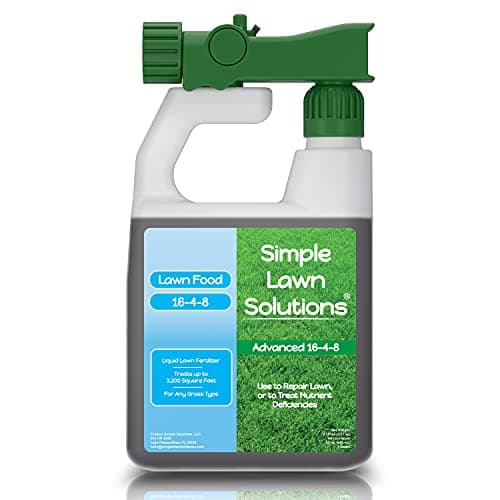
Simple Lawn Solutions Advanced 16-4-8 Liquid Fertilizer
Concentrated liquid fertilizer with balanced 16-4-8 NPK for quick green-up through any hose-end sprayer.
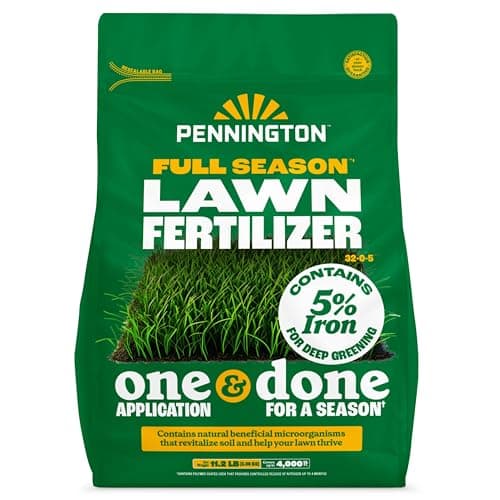
Pennington Full Season Lawn Fertilizer 32-0-5
High-nitrogen fertilizer with iron for fast green-up on warm-season lawns.
North Carolina is tricky because the state sits in the transition zone. A zoysia lawn in Asheville may still be waking up while a coastal Wilmington lawn is already mowing regularly. The best schedule follows active growth, not the calendar alone.
Why zoysia needs a different fertilizer strategy than fescue or Bermuda
Zoysia needs less nitrogen than Bermuda and different seasonal timing than cool-season grasses. Tall fescue benefits most from fall fertility, while zoysia uses fertilizer best during warm-season growth.
Our Grass Database shows zoysiagrass has peak growth from May through September, a dormant period from November through March, and a recommended mowing height of 1-2.5 inches. That lines up with a fertilizer program that starts after green-up, feeds moderately in summer, and avoids nitrogen as dormancy approaches.
Over-fertilized zoysia becomes puffy, thatchy, and harder to mow cleanly. The problem is not just appearance. Heavy nitrogen can increase scalping risk, raise irrigation demand, encourage large patch disease, and reduce winter hardiness.
North Carolina climate zones that affect fertilizer timing
North Carolina zoysia fertilizer timing changes by region because spring green-up, summer humidity, soil type, and first frost dates vary sharply across the state. The mountains have a shorter season, while eastern and coastal lawns have a longer but more disease-prone growing window.
| NC Region | Typical Zoysia Timing | Fertilizer Strategy | Main Risk |
|---|---|---|---|
| Western NC and mountains | Later green-up, shorter summer | Start later and stop earlier | Winter injury from late nitrogen |
| Piedmont, Triangle, Triad, Charlotte | Classic transition-zone timing | Feed late spring through mid-August | Overfeeding during humid weather |
| Coastal plain and eastern NC | Earlier green-up, longer season | Use split applications and monitor disease | Humidity, leaching, large patch |
| Coastal areas | Long season with sandy soils | Use lighter, more frequent slow-release feeding | Nutrient leaching and salt stress |
Based on our regional dataset, the Southeast has a longer warm-season window than cool-season regions, with last frost commonly from February 15 to March 15 and first frost from November 15 to December 15. North Carolina’s western and piedmont areas can run cooler than that, so use soil temperature and green-up as the final decision point.
Best timing principle for 2026
The safest 2026 timing rule is to fertilize zoysia after it is mostly green and actively growing, not while it is waking up. A good field benchmark is 50-75% green-up, soil temperatures consistently near 65°F, and at least one or two mowings.
When to fertilize zoysia in NC depends on region, spring weather, and dormancy timing, but the safest window is usually late spring through mid-summer. Avoid heavy nitrogen within 6-8 weeks of expected first frost, especially in western and piedmont lawns.
Best Fertilizer for Zoysia Grass in North Carolina in 2026
The best fertilizer for zoysia grass in North Carolina in 2026 is a moderate-nitrogen, soil-test-matched product that avoids unnecessary phosphorus and uses slow-release nitrogen when summer stress is likely. The right fertilizer supports color and density without forcing weak, disease-prone growth.
Think of zoysia fertility as controlled feeding, not pushing. From my time managing championship greens, the best turf programs were rarely the highest-nitrogen programs. They were the most consistent, measured, and timed to growth.
What makes a fertilizer “best” for zoysia
A good zoysia fertilizer matches the soil test, supplies moderate nitrogen, includes potassium only when needed, and fits the transition-zone growing season. Nitrogen drives color and leaf growth. Phosphorus supports roots and establishment, but established lawns rarely need more unless testing confirms a deficiency. Potassium supports heat, drought, traffic, and cold tolerance.
- Purdue Turfgrass Science guidance: phosphorus is rarely needed on established lawns unless a soil test shows a deficiency.
This is why many mature zoysia lawns in North Carolina should use low- or zero-phosphorus fertilizer. Starter fertilizer is for new sod, plugs, seed, or confirmed phosphorus deficiency, not for routine summer feeding.
Recommended fertilizer ratios for established zoysia
Established zoysia in North Carolina usually responds well to fertilizer ratios such as 16-0-8, 15-0-15, 24-0-11, 20-0-10, or 10-0-10 when those ratios match the soil test. The zero in the middle matters because phosphorus often builds up in established lawns.
A 16-0-8 is a balanced practical choice when nitrogen and some potassium are needed. A 15-0-15 fits lawns that need equal nitrogen and potassium support. A 10-0-10 gives lighter, controlled feeding for homeowners who want color without aggressive growth.
Slow-release vs quick-release nitrogen
Slow-release nitrogen is usually the safer choice for transition zone zoysia fertilizer programs because it feeds more evenly and reduces surge growth. Quick-release nitrogen can green zoysia fast, but it also raises burn risk, leaching risk, mowing pressure, and disease pressure during hot humid weather.
- NC State TurfFiles guidance: slow-release nitrogen sources feed turf more evenly and reduce surge growth compared with quick-release products.
Look for labels that mention sulfur-coated urea, polymer-coated urea, methylene urea, stabilized nitrogen, or a stated percentage of slow-release nitrogen. For summer use, 30-50% or more slow-release nitrogen is a strong label feature.
Granular vs liquid fertilizer for zoysia
Granular fertilizer is best for most homeowners because it is easier to apply evenly and usually feeds longer than liquid fertilizer. It works well for standard zoysia lawns where the goal is steady growth and simple scheduling.
Liquid fertilizer is useful for spoon-feeding, especially on high-end irrigated lawns. A product such as Simple Lawn Solutions Advanced 16-4-8 Liquid Fertilizer can fit homeowners who want a quick, hose-end liquid feeding during active growth. Because it contains phosphorus, it should be used only when that analysis fits the soil test or when a small phosphorus input is acceptable for the lawn goal.
Best fertilizer choice by lawn condition
The best zoysia fertilizer changes when the lawn’s symptoms change. Dark green but slow-growing zoysia often needs mowing, sunlight, or temperature, not more nitrogen. Pale green zoysia during active growth may indicate low nitrogen, low iron, poor watering, compacted soil, or low pH.
Thin or patchy zoysia should be diagnosed before fertilizing harder. If the turf is shaded, compacted, diseased, grub-damaged, or poorly irrigated, more nitrogen often makes the problem worse. Sandy coastal soil benefits from lighter, split applications. Clay piedmont soil benefits from soil testing, potassium balance, and avoiding heavy nitrogen flushes.
North Carolina Zoysia Fertilizer Schedule for 2026
A good north carolina zoysia fertilizer schedule for 2026 starts with no nitrogen in dormancy, begins feeding after spring green-up, concentrates nutrients in summer, and stops nitrogen before fall slowdown. This schedule should be adjusted by region, soil test, irrigation, and lawn expectations.
Our Grass Database recommends 2 lbs of nitrogen per 1,000 sq ft annually for zoysiagrass, with a seasonal split of 25% in spring, 75% in summer, and 0% in fall and winter. That is a strong baseline for standard NC zoysia lawns.

Late winter to early spring: February-April
The main goal from February through April is to avoid pushing zoysia too early. Dormant or semi-dormant zoysia cannot use nitrogen efficiently, and early top growth can be more vulnerable to cold snaps.
Use this period for soil testing, lime only if recommended, equipment prep, and separate weed-control planning. The timing data we track puts the Southeast pre-emergent window at February 15 to March 15, with a 55°F soil temperature target, but fertilizer timing is later than pre-emergent timing for zoysia. Pre-Emergent Weed Control for Warm-Season Lawns is a separate decision from fertilizing.
Late spring: April-May in eastern NC, May-June in piedmont and western NC
Late spring is the first real fertilizer window for zoysia once the lawn is mostly green and actively growing. In eastern NC this may happen in April or May, while piedmont and western lawns often wait until May or June.
- Confirm 50-75% green-up and active growth.
- Mow the lawn 1-2 times before fertilizing.
- Review the soil test for pH, phosphorus, and potassium.
- Choose a nitrogen rate, usually 0.5-1.0 lb per 1,000 sq ft.
- Apply with a calibrated spreader.
- Water in according to label directions.
This is often the most important answer to when to fertilize zoysia in NC. The first application should support growth already underway, not try to force the lawn out of dormancy.
Summer: June-August
Summer is the main feeding period for zoysia because warm soil, long days, and active stolon and rhizome growth allow the grass to use nutrients efficiently. Apply 0.5 lb nitrogen per 1,000 sq ft every 4-8 weeks only if the lawn needs it, or apply 1 lb nitrogen in early summer and a lighter midsummer feeding.
Adjust the program based on irrigation, mowing frequency, heat stress, disease pressure, and soil type. Our Grass Database shows zoysiagrass needs about 1 inch of water per week in summer and has a 36-inch root depth under good conditions. How to Water Zoysia Grass in Summer matters because fertilizer without consistent moisture creates uneven response.
For homeowners who want a lower-burn, gradual option during summer heat, Milorganite Lawn and Garden Nitrogen Fertilizer 6-4-0 can fit low-to-moderate feeding programs where slow release is preferred. It is not a complete potassium correction product, so follow the soil test if potassium is low.
Late summer to early fall: August-September
Late summer fertilizer should harden zoysia for dormancy rather than push lush top growth. The last nitrogen application is often early to mid-August in western NC, mid to late August in the piedmont, and late August to early September in eastern or coastal NC depending on weather.
Potassium can support stress tolerance and winter readiness when a soil test recommends it. Avoid using potassium blindly, because excess nutrients can create imbalance. Heavy September or October nitrogen is one of the most common causes of weak fall transition and increased large patch risk.
Fall and winter: October-January
Fall and winter zoysia care should protect dormant turf rather than feed it with nitrogen. Once zoysia has slowed and frost is near, nitrogen applications should stop.
Focus on leaf removal, reducing traffic on dormant turf, soil testing, lime planning, and equipment maintenance. Winter Lawn Care Tips for Zoysia Grass becomes more important than fertilizer during this period because dormant zoysia recovers slowly from wear.
How Much Fertilizer to Apply: Rates, Calculations, and Application Steps
Zoysia fertilizer rates should be calculated from pounds of nitrogen per 1,000 sq ft, not from how many bags look reasonable. This prevents overapplication and lets you compare products with different N-P-K analyses.
For most North Carolina lawns, moderate nitrogen produces better long-term zoysia than maximum nitrogen. The key most homeowners miss is that zoysia density comes from steady growth, correct mowing, sunlight, and irrigation, not just darker color.
Annual nitrogen target for zoysia in North Carolina
Low-maintenance zoysia lawns often need 1-2 lbs of nitrogen per 1,000 sq ft per year. Standard home lawns usually fit 2-3 lbs per 1,000 sq ft per year. High-maintenance irrigated lawns may use up to 3-4 lbs, but that level requires careful mowing, watering, and disease monitoring.
These rates should be adjusted down in shade, drought, poor drainage, or disease-prone sites. Shade-stressed zoysia needs less fertilizer, not more, because nitrogen cannot replace sunlight.
How to calculate fertilizer amount
The fertilizer calculation is: pounds of fertilizer needed per 1,000 sq ft = desired nitrogen rate divided by nitrogen percentage as a decimal. This formula works for granular and liquid products when label rates are converted properly.
For example, to apply 0.75 lb nitrogen using 16-0-8 fertilizer, calculate 0.75 ÷ 0.16 = 4.7 lbs of fertilizer per 1,000 sq ft. Always check the product label, local rules, and spreader recommendations before applying.
Step-by-step spreader application checklist
Accurate spreading is as important as choosing the right fertilizer. Uneven application causes stripes, burn marks, weak areas, and runoff onto hard surfaces.
- Measure the lawn square footage before buying fertilizer.
- Calibrate the spreader before the first 2026 application.
- Check the forecast and avoid applying before heavy rain.
- Mow first if the lawn is tall, and apply to dry grass unless the label says otherwise.
- Use a border pass, then apply half rate north-south and half rate east-west.
- Blow granules off driveways, sidewalks, storm drains, and patios.
- Water in lightly if the label requires it.
- Keep pets and children off the lawn until the fertilizer is watered in and the grass is dry.
How to Calibrate a Lawn Spreader is worth reviewing before applying any zoysia grass fertilizer 2026 program, especially if the spreader has been stored all winter.
Soil testing and pH management
Soil testing is essential in North Carolina because sandy coastal soils, piedmont clay, and mountain soils hold nutrients differently. pH also controls nutrient availability, so fertilizer may underperform when soil is too acidic.
Zoysia often performs well around pH 6.0-6.5, and our Grass Database lists a zoysiagrass pH range of 6.0-7.0. Lime should be applied based on test results, not guesswork. How to Test Your Lawn’s Soil and How to Improve Soil pH for Grass are foundational steps before changing fertilizer ratios.
Choosing Fertilizer by Zoysia Type, Soil, and Lawn Goal
The right zoysia fertilizer depends on cultivar, soil texture, shade level, irrigation, and whether the goal is low maintenance, deep color, recovery, or establishment. A product that works on a sunny irrigated Empire zoysia lawn may be too aggressive for shaded Emerald zoysia.
Professional crews approach this differently - here’s how to adapt it for your lawn: start with the site limitation, then choose the fertilizer. If the limitation is shade, compaction, or poor drainage, fertilizer is a secondary tool.
Fertilizer considerations by zoysia cultivar
Common zoysia types in North Carolina include Meyer, Emerald, Zeon, Zenith, Empire, and JaMur. Fine-bladed types such as Emerald and Zeon can show excess thatch when overfed. Coarser types may tolerate slightly more feeding, but they still perform best with moderation.
Shade-stressed zoysia of any cultivar should receive lighter nitrogen. If zoysia is thinning under trees, confirm the site receives enough direct sun before increasing fertilizer. More nitrogen in shade often creates soft growth and disease without improving density.
Clay soil vs sandy soil fertilizer strategy
Piedmont clay generally holds nutrients better than coastal sand, but it is more prone to compaction and surface runoff. On clay soils, avoid overwatering after fertilization and make sure potassium decisions come from a soil test.
Coastal sandy soils leach nutrients faster, so slow-release nitrogen and smaller split applications work better. Mountain soils have the shortest warm-season window, so rates should be conservative and feeding should stop earlier.
Fertilizer strategy by goal
A low-maintenance zoysia lawn may need only 1-2 fertilizer applications per year using slow-release nitrogen. A deep green showcase lawn needs soil-test-based nitrogen and potassium, iron when appropriate, consistent mowing, and reliable irrigation.
Stress recovery requires diagnosis first. Do not heavily fertilize drought-stressed, diseased, or heat-stressed zoysia. New sod, plugs, or seeded zoysia may need starter fertilizer only if the soil test supports phosphorus, followed by light nitrogen after rooting and establishment.
Product Selection Checklist: What to Look for on the Fertilizer Label
A good zoysia fertilizer label should show moderate nitrogen, low or zero phosphorus unless needed, potassium when the soil test supports it, and a meaningful slow-release nitrogen percentage. Clear spreader settings and turf-safe application instructions also matter.
Best Fertilizers for Lawns and Organic vs Synthetic Fertilizers are useful broader topics, but zoysia in North Carolina needs a narrower filter: moderate feeding during active warm-season growth.
Best label features for zoysia grass fertilizer 2026
Look for 30-50% or more slow-release nitrogen for summer applications, especially in humid transition-zone conditions. A label with 16-0-8, 15-0-15, 20-0-10, or 10-0-10 is often a better fit than a high-phosphorus starter fertilizer for mature turf.
Avoid high-nitrogen quick-release products during heat stress, weed-and-feed products applied at the wrong seasonal timing, and products not labeled for turfgrass. The bag’s marketing claim matters less than the N-P-K analysis, release type, and label directions.
Fertilizer plus iron: when it helps
Iron helps improve zoysia color without pushing as much leaf growth as nitrogen. It is useful when zoysia is actively growing and already has enough nitrogen, but the lawn still lacks deep green color.
Iron does not fix poor pH, compaction, drought, shade, or disease. It can also stain concrete, pavers, stone, and clothing, so keep it off hard surfaces and rinse spills immediately.
Weed-and-feed products: use carefully
Weed-and-feed products are often mistimed because fertilizer timing and herbicide timing do not always match. Zoysia may need fertilizer after green-up, while crabgrass prevention happens earlier and broadleaf weed control may require a different temperature window.
Separate fertilizer and weed control when precision matters. Best Weed Killer for Zoysia Grass is a separate decision because herbicide tolerance depends on weed type, zoysia health, temperature, and label restrictions.
Common Mistakes to Avoid
The biggest mistakes in zoysia fertilization are early spring nitrogen, guessed fertilizer ratios, late-season overfeeding, and sloppy application practices. These are the details many generic guides miss because they do not account for North Carolina’s transition-zone timing.
If a zoysia lawn looks off-color, confirm the cause before feeding. Yellowing can come from low nitrogen, low iron, drought, compacted soil, disease, or low pH. A soil test, screwdriver compaction test, irrigation check, and disease inspection narrow the fix before fertilizer is applied.
Fertilizing before zoysia is fully awake
Applying nitrogen in March or early April because other lawns are greening is a common timing error. Zoysia may still be semi-dormant, and late cold weather can damage tender growth.
The better approach is to wait for active growth, soil warmth, and at least one or two mowings. If the lawn is mostly brown, nitrogen is too early.
Skipping soil tests and guessing the fertilizer ratio
Buying the “best” fertilizer based only on bag claims ignores North Carolina’s soil variation. Sandy coastal soil, acidic piedmont clay, and mountain soils can need different pH and nutrient corrections.
Test soil every 2-3 years and build the north carolina zoysia fertilizer schedule around the results. Composting for a Healthier Lawn can support soil structure over time, but it does not replace nutrient testing.
Applying too much nitrogen late in the year
Heavy September or October nitrogen pushes tender growth before dormancy. That growth is more vulnerable to disease and cold injury, especially in the transition zone.
Finish nitrogen before the fall slowdown. Use fall for soil testing, leaf cleanup, traffic reduction, and dormancy preparation instead of chasing late-season color.
Ignoring safety and application details
Fertilizer left on hard surfaces can wash into storm drains, stain surfaces, or concentrate in spots along pavement edges. Overapplication near water features also creates unnecessary risk.
Follow label directions, water in when required, and keep pets and children off treated turf until it is watered in and dry. Sweep or blow fertilizer back into the grass after every application.
Conclusion
The best fertilizer for zoysia grass in North Carolina in 2026 is usually a soil-test-based, moderate-nitrogen, low- or zero-phosphorus fertilizer with slow-release nitrogen and potassium only when needed. The best results come from matching fertilizer type, rate, and timing to North Carolina’s transition zone instead of chasing the darkest possible green.
Do not fertilize too early in spring. Feed during active warm-season growth, use 0.5-1.0 lb nitrogen per 1,000 sq ft per application, and stop nitrogen early enough before dormancy. For most NC lawns, a simple 2-3 application schedule beats aggressive monthly feeding.
Your next steps are straightforward: get a soil test, measure your lawn, choose a slow-release zoysia fertilizer, and build a 2026 schedule for your region. Look for moderate nitrogen, low or zero phosphorus, potassium only when supported by the soil test, and clear turfgrass label directions.
For a complete program, pair this fertilizer plan with How to Water Zoysia Grass in Summer, How to Calibrate a Lawn Spreader, Best Weed Killer for Zoysia Grass, and Winter Lawn Care Tips for Zoysia Grass.
Top Picks
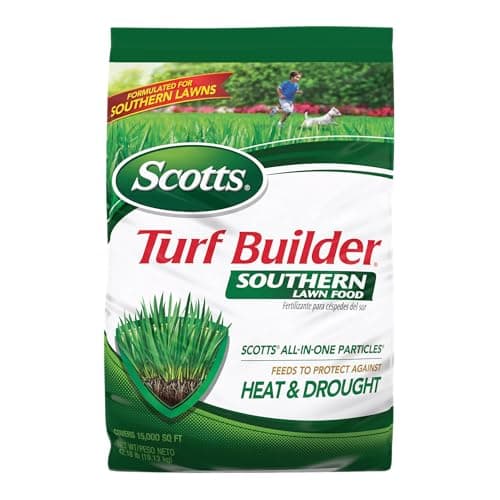
 Scotts Turf Builder Southern Lawn FoodCheck price on Amazon
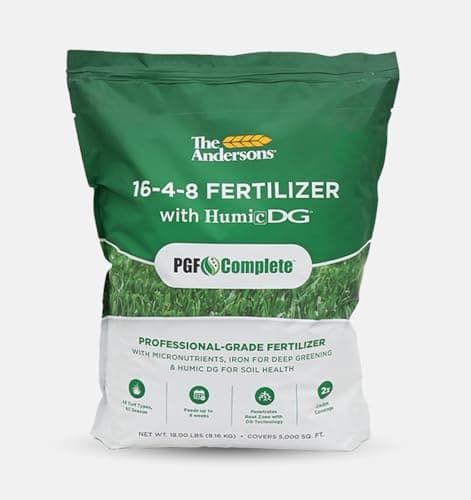
 The Andersons PGF Complete 16-4-8 (5,000 sq ft)Check price on Amazon
As an Amazon Associate we earn from qualifying purchases.
Free Lawn Care Tools
Fertilize zoysia after it is 50-75% green and has been mowed 1-2 times. In eastern NC this may be April or May, while piedmont and western lawns often wait until May or June.
Established zoysia usually does well with low- or zero-phosphorus ratios such as 16-0-8, 15-0-15, 20-0-10, or 10-0-10. Use a soil test to decide whether potassium or phosphorus is needed.
Most North Carolina zoysia lawns need 1-3 lbs of nitrogen per 1,000 sq ft per year. Low-maintenance lawns stay near the low end, while irrigated showcase lawns may use more with careful management.
March is usually too early for zoysia fertilizer in most NC lawns because the grass is still dormant or semi-dormant. Use March for soil testing and weed prevention, then wait for active green-up before applying nitrogen.
Established lawns rarely need phosphorus unless a soil test shows a deficiency. Extra phosphorus can be wasteful and may contribute to nutrient runoff or soil imbalance.
Follow the product label, but a practical rule is to keep pets and children off the lawn until the fertilizer has been watered in and the grass is dry. Also remove granules from sidewalks, driveways, and patios.
Photos: fotoblend / Pixabay, Chang Qing / Unsplash, Paskvi / Pixabay

Beat weeds and brown spots from your phone
Snap a photo, get the fix, and follow a plan timed to your soil and weather. Free on iPhone.