Best Fertilizer for Zoysia Grass (2026 Guide)
 Marcus GreenTurf Management Pro | 18 Years
As an Amazon Associate we earn from qualifying purchases.
Zoysia is the grass people brag about until it starts to look thin and pale in patches. You picked it for the dense, carpet-like turf and the lower upkeep, and most of the year it delivers. Then a section goes washed-out, growth slows, and the easy assumption is that it needs a big dose of fertilizer to snap back. With zoysia, that assumption is exactly how lawns get into trouble. This grass is hungry, but not as hungry as it looks, and the wrong feed at the wrong time causes more problems than it fixes. For the full care picture across the year, start with our Zoysia pillar guide. Still weighing your warm-season options? See Bermuda vs Zoysia.
Choosing the best fertilizer for zoysia grass is not the same as feeding bermuda or St. Augustine. Zoysia sits in its own lane: a warm-season grass that does its real growing in the heat of summer, sips nitrogen at a moderate rate, and punishes over-feeding with thatch and disease. This guide walks through what zoysia actually needs, which products fit, how to time the feedings month by month, and the single biggest mistake other guides skip over. The recommendations come from years of managing warm-season turf under real-world pressure, not from a fertilizer bag's marketing copy.
If you are not even sure the problem is a nutrient issue, that matters too. A pale patch can be hunger, but it can just as easily be disease, drought, or a pest. Not sure which? You can get a free AI photo diagnosis before you spend a dollar on fertilizer.
The best fertilizer for zoysia grass is a slow-release, high-nitrogen blend in the 3-1-2 ratio family, such as 16-4-8, or a phosphorus-free option like 32-0-10 where a soil test shows phosphorus is already high. Aim to deliver roughly 2 to 4 pounds of nitrogen per 1,000 square feet per year, split into three or four light feedings spread across the active summer growing season. Zoysia needs less nitrogen than bermuda, so resist the urge to over-feed.
Time it to growth, not the calendar. Wait until the lawn has fully greened up in late spring, feed through summer, and stop nitrogen 6 to 8 weeks before your first frost so the grass can harden off before dormancy. Never feed dormant zoysia. If the lawn looks yellow despite feeding, the cause is usually iron chlorosis from high soil pH, so reach for a chelated iron supplement before adding more nitrogen.
Understanding Zoysia Grass Nutrition in 2026
Before we get into the why, here is the short version for anyone who just wants a proven pick. Zoysia is a warm-season grass that does best on a slow-release, nitrogen-forward feed applied through its summer growing window, so these are the blends that fit it without pushing the excess growth that invites thatch and disease. The sections below explain how to match one to your lawn, your soil, and your schedule.
Recommended products
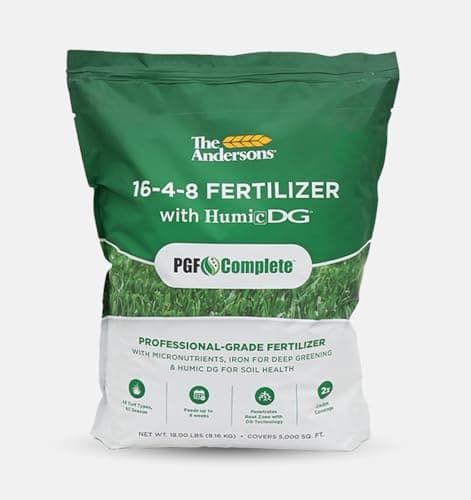
The Andersons Professional PGF Complete 16-4-8
Slow-release granular with humic acid, sitting right in zoysia's 3-1-2 sweet spot.
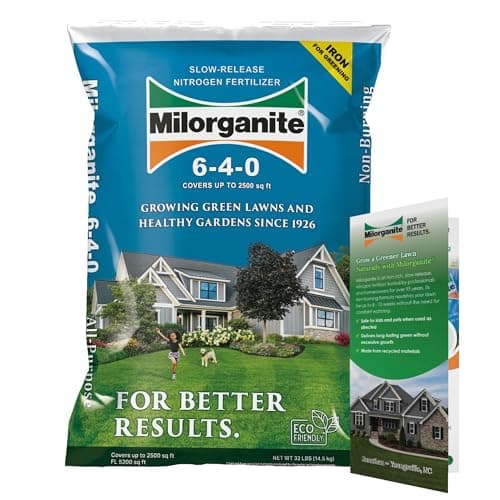
Milorganite 6-4-0 Nitrogen Fertilizer
Organic slow-release that will not burn even on a humid July afternoon.
Southern Ag Chelated Liquid Iron
The fast fix when zoysia yellows from high soil pH rather than hunger.
What Makes Zoysia Grass Unique
Zoysia (Zoysia japonica, matrella, and tenuifolia, plus modern hybrids like Emerald, Meyer, Zeon, and Zenith) is a warm-season grass prized for its dense, fine-to-medium texture and its ability to choke out weeds once established. It grows by both stolons and rhizomes, which is what gives it that thick, knit-together carpet, but it is also a slower spreader than bermuda, so it takes patience to fill in.
The defining trait for fertilization is its growth pattern. Zoysia is a true heat lover: it greens up later in spring than many lawns, does the bulk of its growing through the warm months of summer, and goes dormant and straw-colored after the first hard frosts. That dormancy is normal, not a sign of death. It also means there is a clear feeding window (active summer growth) and a clear no-feed window (dormancy from fall through winter).
Compared to the other warm-season grasses, zoysia sits in the middle on appetite. Centipede is the minimalist, needing barely a pound of nitrogen a year. Bermuda is the glutton, demanding four to six pounds and constant mowing to keep up. Zoysia lands between them, closer to the modest end, which is the single most important fact to internalize before you buy a bag of anything.
Essential Nutrients for Zoysia Health
Zoysia's needs revolve around the same three macronutrients as every lawn, but the balance is specific:
- Nitrogen (N): The headline nutrient, responsible for color and the steady summer growth that lets zoysia stay dense and weed-resistant. Zoysia wants a moderate supply, in the range of 2 to 4 pounds per 1,000 square feet per year, delivered in small doses rather than one big hit.
- Phosphorus (P): Supports root development, but most established southern soils already test high in phosphorus. Only add meaningful phosphorus if a soil test shows a deficiency, which is why low-P and zero-P blends are often the smarter pick.
- Potassium (K): The stress-tolerance nutrient. It strengthens cell walls and improves drought, heat, and cold hardiness, which matters for a grass that has to survive winter dormancy. The 2-to-1 nitrogen-to-potassium ratio in a 16-4-8 blend is built for this.
Iron is the quiet fourth nutrient that makes the visual difference between a pale lime lawn and a deep blue-green one. In alkaline soils, iron locks up in forms the grass cannot absorb even when the soil technically contains it, which is why a chelated iron supplement so often outperforms more nitrogen for color. Common deficiency signs to watch for:
- Nitrogen deficiency: Uniform pale green fading to yellow, with noticeably slow growth across the whole lawn.
- Iron deficiency: Bright yellow blades with greener veins, usually worse in high-pH soil or right after liming.
- Potassium deficiency: Thin, weak turf that struggles with drought and bounces back slowly from foot traffic.
How Soil pH Affects Fertilizer Effectiveness
Zoysia performs best in slightly acidic to neutral soil, generally in the 6.0 to 6.5 range, though it tolerates a wider band than centipede does. The problem shows up when pH drifts above 7.0 into alkaline territory, common in coastal sand and parts of the arid Southwest, where iron and a few other micronutrients become unavailable. The lawn yellows, and the instinctive response is to add nitrogen, which is the wrong move.
Test your soil before you guess. If pH is above 7.0 and the lawn is pale, the fix is iron, not nitrogen. If pH is well below 6.0, a light application of lime can help, but only when a test confirms it. Fertilizer simply works less efficiently outside the right pH range, so it pays to get the soil chemistry sorted first and feed second. If you want help telling a pH-driven color problem apart from a disease or pest, a quick free AI photo diagnosis can point you in the right direction before you treat the wrong thing.
Types of Fertilizer for Zoysia Grass: Pros, Cons & 2026 Product Picks
Granular vs. Liquid Fertilizers
Granular fertilizers are the workhorse for most zoysia lawns. They spread evenly with a broadcast spreader across a large yard, they handle slow-release formulations well, and they cost less per pound of nitrogen. For a typical 5,000 to 10,000 square foot lawn, a granular like The Andersons PGF Complete or Milorganite is the easy default.
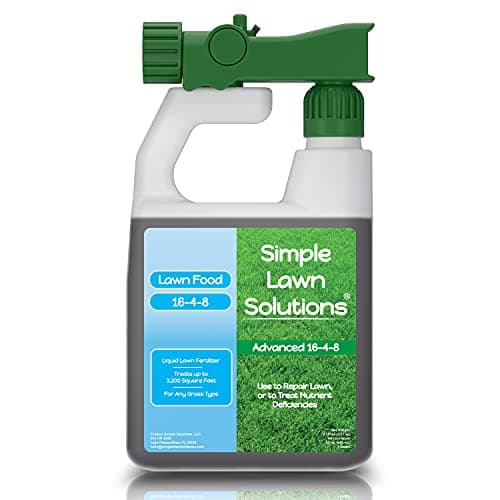
Liquid fertilizers earn their place in two situations: small lawns where a sprayer beats hauling out a spreader, and corrective feeds where you want nutrients absorbed through the leaf within hours. A product like Simple Lawn Solutions 16-4-8 Liquid is a popular pick for both. The trade-off is frequency, since liquids need reapplying every two to three weeks instead of every six to eight. My crews lean on granular for the baseline program and keep liquid on hand for spot corrections and quick green-ups.
Organic vs. Synthetic Fertilizers
Organic fertilizers like Milorganite and Espoma release nitrogen slowly as soil microbes break down the organic matter. The payoff is near-zero burn risk, a longer-lasting feed, and a side benefit of feeding the soil biology that keeps turf healthy. The downsides are a higher cost per pound of nitrogen and a slower visible response, so organics are great for steady maintenance but slow to rescue a struggling lawn.
Synthetic fertilizers deliver precise, predictable nutrition and faster green-up at a lower cost. Modern polymer-coated and sulfur-coated formulas have largely tamed the burn risk that older synthetics were known for. The honest answer for most zoysia lawns is a blend: a synthetic granular as the backbone, with an organic feeding or two each year to keep the soil biology happy. You do not have to choose a side.
Slow-Release vs. Fast-Release Formulations
Slow-release nitrogen is the single most important spec on a zoysia fertilizer bag. It meters out availability over six to eight weeks, which matches how zoysia grows and dramatically lowers the chance of pushing the excess top growth that becomes thatch. Look for a product with at least 30 percent slow-release nitrogen, with 50 percent or higher being ideal. The label may call it SRN, WIN (water-insoluble nitrogen), or SCU (sulfur-coated urea).
Fast-release nitrogen still has a narrow use: a quick corrective green-up before a holiday or event. It is not a baseline strategy for zoysia, because the spike of growth means more mowing, more thatch, and more disease pressure with no lasting benefit.
Why a 3-1-2 Ratio (Like 16-4-8) Fits Zoysia
The 3-1-2 ratio family, which includes 16-4-8 and 15-5-10, is the standard recommendation for warm-season lawns for a reason. The roughly 4-to-1 nitrogen-to-phosphorus balance reflects how much more nitrogen turfgrass actually draws over a season, and the 2-to-1 nitrogen-to-potassium balance supplies the stress tolerance zoysia needs to push through summer heat and survive winter dormancy.
Other ratios work when the situation calls for it. A phosphorus-free blend like 32-0-10 is the right pick where a soil test shows phosphorus is already high, which describes most established southern lawns. The pattern to look for is the same across all of them: high first number, low or zero middle number, moderate third number, ideally with some iron included. Whatever ratio you choose, the goal is to land inside the 2 to 4 pound annual nitrogen window, not to chase the highest number on the bag.
Top Fertilizer Products for Zoysia Grass (2026 Updated List)
The table below covers the products that perform best on zoysia across the warm-season range, chosen for nutrient ratio, release type, and real-world results. Match the product to your soil test and your cultivar rather than buying on price alone.
| Product | N-P-K | Release Type | Organic/Synthetic | Pet Safety | Best For | Buy |
|---|---|---|---|---|---|---|
| The Andersons Professional PGF Complete 16-4-8 | 16-4-8 | Slow-release granular | Synthetic | Safe once watered in | Editor's pick, balanced summer feeding | Check on Amazon |
| Milorganite 6-4-0 Nitrogen Fertilizer | 6-4-0 | Slow-release organic | Organic | Pet and kid safe immediately | Pet-safe lawns, soil biology, included iron | Check on Amazon |
| Scotts Turf Builder Southern Lawn Food 32-0-10 | 32-0-10 | Slow-release granular | Synthetic | Safe once watered in | High-phosphorus soils, no-P formula (apply at reduced rate for zoysia) | Check on Amazon |
| Simple Lawn Solutions 16-4-8 Liquid | 16-4-8 | Fast-release liquid | Synthetic | Safe once dried | Small lawns, corrective feeding | Check on Amazon |
| Ironite II Pennington Mineral Lawn Supplement | 6-0-1 + Iron | Slow-release granular | Synthetic with iron | Safe once watered in | Iron chlorosis, deep green-up | Check on Amazon |
| Southern Ag Chelated Liquid Iron | Iron only | Liquid foliar | Synthetic chelated | Safe once dried | Fast color rescue, alkaline soil correction | Check on Amazon |
Four products cover almost every zoysia lawn: The Andersons PGF Complete 16-4-8 for the baseline summer feeding, Milorganite for a pet-safe organic option, Scotts Southern 32-0-10 (at a reduced rate) where phosphorus is restricted or already high, and Southern Ag Liquid Iron as the rescue when chlorosis hits. A commercial-only brand like Lesco also makes a fine slow-release option if you have access to a SiteOne or pro supplier, though it is not sold through major online retailers.
How to Choose the Best Fertilizer for Your Zoysia Lawn
Step 1: Soil Testing - The Non-Negotiable First Step
Do not guess at zoysia nutrition. A soil test from your county extension office runs $10 to $20 and tells you exactly what your soil has and what it lacks: pH, phosphorus, potassium, organic matter, and often iron. Skip the cheap home kits, which are notoriously inaccurate on sandy southern soils, and order a basic lab test with a recommendation report.
When the results come back, look at pH first, then phosphorus. If phosphorus reads high (typical for established southern lawns), choose a zero-P product like 32-0-10 and avoid weed-and-feed blends that sneak phosphorus in. With pH in range and adequate P and K, almost any 3-1-2 zoysia fertilizer will perform.
Step 2: Matching Fertilizer to Your Soil and Lawn Needs
With the test in hand, match the product to the gaps. High phosphorus points to a 32-0-10. Low iron or high pH means planning on one or two iron applications a season alongside your nitrogen program. Sandy soil leaches nitrogen fast, so you sit at the higher end of the annual range with tighter intervals, while clay holds nutrients longer and lets you feed less often.
To hit the right rate you need to know your square footage. A 16-4-8 blend is 16 percent nitrogen, so delivering 1 pound of nitrogen per 1,000 square feet takes about 6.25 pounds of product per 1,000 square feet. Measure your lawn first, then run the numbers through the fertilizer calculator so you are applying the amount zoysia wants, not a guess off the back of the bag.
Once you have a target nitrogen rate, this table converts it into pounds of product for the granular blends recommended above. It assumes a per-feeding target of either 0.5 or 1 pound of nitrogen per 1,000 square feet.
| Product | N-P-K | lb product per 1,000 sq ft for 0.5 lb N | lb product per 1,000 sq ft for 1 lb N |
|---|---|---|---|
| The Andersons PGF Complete | 16-4-8 | 3.1 lb | 6.25 lb |
| Milorganite | 6-4-0 | 8.3 lb | 16.7 lb |
| Scotts Turf Builder Southern | 32-0-10 | 1.6 lb | 3.1 lb |
To find the product weight for any target, divide the pounds of nitrogen you want by the first N-P-K number written as a decimal (for example, 0.5 lb N divided by 0.16 is about 3.1 lb of a 16-4-8). The Simple Lawn Solutions 16-4-8 liquid is dosed by volume per its label, and the Southern Ag and Ironite products are iron or micronutrient supplements applied at label rate, so they are not on this weight-based nitrogen conversion.
Step 3: Regional and Seasonal Considerations
Climate shifts the timing more than the product. Zoysia greens up later than cool-season lawns and even a bit later than bermuda, so the first feeding lands in late spring once growth is clearly active. In the Deep South and coastal Gulf, that window opens earlier and the season runs longer; in the transition zone (the Carolinas, Tennessee, the mid-Atlantic, and into the lower Midwest), it opens later and closes sooner because of the shorter warm season.
Rainfall matters too. Heavy summer storms leach nitrogen through sandy soil, which is an argument for slow-release products and lighter, more frequent feedings. In drought, ease off nitrogen entirely, since pushing growth on a water-stressed lawn invites trouble. Some regions, especially parts of Florida, enforce summer fertilizer blackout periods to protect waterways, so always check local rules before a mid-summer application.
- University extension programs generally recommend roughly 2 to 4 pounds of nitrogen per 1,000 square feet per year for zoysia, applied in light increments through the active growing season, but your exact rate depends on cultivar, soil type, and region. Confirm with your local office.
- Soil pH targets, lime or sulfur needs, and the precise spring start and fall stop dates vary by location. A soil test plus a quick call to your county extension agent will give numbers tailored to your lawn rather than a national average.
- Some states and counties restrict phosphorus or impose summer fertilizer blackout windows. Verify current local regulations before applying, since they change from year to year.
Step 4: Reading Fertilizer Labels Like a Pro
Three things matter on a zoysia fertilizer label. First, the N-P-K ratio, which should be high-first-number, low-middle-number, moderate-third-number. Second, the slow-release nitrogen percentage, which should be 30 percent at a minimum and ideally 50 percent or higher. Third, the listed grass types, which ideally include zoysia or at least southern lawns generally.
Watch for red flags. A product screaming about quick green-up is usually heavy on fast-release nitrogen, which is the opposite of what zoysia wants. Avoid weed-and-feed combinations unless you have a confirmed weed problem and the label is specifically safe for zoysia at the listed rate. And look for potassium sulfate rather than potassium chloride, which is gentler on turf over time.
When and How to Fertilize Zoysia Grass - Month-by-Month (2026 Schedule)
Annual Fertilizer Calendar
Zoysia feeding follows its growth, which means a warm-season rhythm. The exact dates shift north to south, but the shape holds everywhere:
- Spring (late April to May, after full green-up): Wait for the lawn to be fully green and actively growing, with warm soil, before the first feeding. Feeding dormant or half-awake zoysia wastes nitrogen and can feed spring weeds instead of the grass.
- Early to mid summer (June to July): The heart of the growing season and the main feeding window. Apply light doses of your 3-1-2 product, spacing applications six to eight weeks apart, and supplement with iron if color fades in the heat.
- Late summer (August to early September): The final nitrogen feeding of the year in most regions. Stop nitrogen here so the grass can harden off, because late feeding pushes tender growth into the first frosts and raises winter-kill risk.
- Fall and winter (mid fall through March): Do not fertilize. Zoysia is heading into or already in dormancy and cannot use nitrogen. Any you apply simply leaches away or feeds cool-season weeds. Use this time to rake debris and plan a spring soil test instead.
The general split that works well for zoysia is to spread the annual nitrogen total across three or four roughly equal feedings from late spring through late summer, then nothing the rest of the year. Lighter and more frequent beats heavy and occasional every time with this grass.
Because zoysia feeds to its growth curve, the calendar slides north to south. This regional grid shows a typical feeding month by month; every nitrogen feeding below is a light 0.5 to 1 pound of nitrogen per 1,000 square feet, and the exact dates still bend to your own green-up and first-frost timing.
| Region | Apr | May | Jun | Jul | Aug | Sep | Oct |
|---|---|---|---|---|---|---|---|
| Deep South | First feed after full green-up | Feed | Feed | Feed (mind local blackout rules) | Feed | Final N feed if 6-8 weeks from frost, else iron only | No nitrogen; hardening off |
| Gulf Coast | Green-up feed | Feed | Feed (check FL summer blackout) | Blackout in some FL counties; iron only | Resume, final N feed | Iron only for color | No nitrogen |
| Transition Zone | Too early; wait for full green-up | First feed after full green-up | Feed | Feed | Final N feed by mid-August | No nitrogen; hardening off | No nitrogen; dormancy nearing |
End-of-season rule: apply no nitrogen within 6 to 8 weeks of your first expected frost so the grass can harden off before dormancy, per the Clemson HGIC zoysiagrass maintenance calendar. Some Florida counties also enforce summer fertilizer blackout windows, so confirm local rules before a mid-summer feeding.
Application Techniques for Best Results
Precision separates a healthy zoysia lawn from a streaky, thatch-prone one:
- Spreader calibration: Set your broadcast spreader to the bag rate, weigh out the right amount for your square footage, and test on a driveway or tarp before going across the lawn.
- Overlap technique: Apply half the rate walking one direction, then the other half walking perpendicular, with slightly overlapping passes to avoid stripes and missed strips.
- Liquid applications: For iron or corrective feeds, use a hose-end or backpack sprayer in the cool of early morning at a steady walking pace and consistent pressure.
- Watering in: Water granular fertilizer in with about a quarter to a half inch of irrigation right after applying, unless rain is on the way, to move the granules off the blade and into the soil.
Pro Tips for Problem Lawns
Yellowing in patches is most often iron chlorosis in alkaline soil, and the fix is a chelated iron product like Southern Ag Liquid Iron or Pennington Ironite II every four to six weeks during the season, not more nitrogen. A quick soil test settles which it is: zoysia wants a pH of 6.0 to 6.5, and once pH climbs past about 7.0 the soil can hold plenty of iron the grass simply cannot pull up, which is exactly when a chelated iron supplement earns its place. Thin or struggling spots from traffic or shade respond better to lighter, consistent feeding than to a heavy corrective dose. And if a patch looks off and you are not sure whether it is hunger, disease, or a pest, that is exactly the moment to run a free AI photo diagnosis rather than guess and treat the wrong problem.
What Other Guides Miss: Zoysia's Lower Nitrogen Appetite
Here is the part most fertilizer guides gloss over, and it is the single biggest reason zoysia lawns underperform: zoysia needs less nitrogen than bermuda, and over-feeding it does real damage. Because zoysia and bermuda are both dense, sun-loving warm-season grasses that share shelf space at the store, people assume they eat the same. They do not. Bermuda runs on four to six pounds of nitrogen per 1,000 square feet a year. Zoysia wants roughly half to two-thirds of that. Soil type nudges where you land in that 2 to 4 pound range: sandy soils that leach nitrogen fast lean toward the high end, up to about 4 pounds per 1,000 square feet a year, while heavier clay soils that hold nutrients longer sit near the low end, closer to 2 pounds, per Clemson Extension.
When you feed zoysia like bermuda, the grass does not just shrug it off. The extra nitrogen forces top growth faster than the lawn can break down the old material below, and that surplus piles up as thatch, the spongy layer of dead stems and roots between the green blades and the soil. A thick thatch layer holds moisture against the crowns, blocks airflow, and creates the warm, damp conditions that large patch and other fungal diseases love. So the over-feeding that was supposed to make the lawn lusher instead makes it thatchy and disease-prone, and then the homeowner reaches for more product to fix a lawn that is sick precisely because it was overfed.
The discipline that actually works is counterintuitive: when zoysia looks tired, the answer is usually less nitrogen and more of something else. More iron for color without growth. More potassium for stress tolerance. Better mowing height and watering. A soil test to find the real gap. Resisting the urge to dump nitrogen on a struggling zoysia lawn is the difference between a thick, healthy stand and a thatch problem you will be dethatching out for the next two seasons.
How Fertilizing Fits the Rest of Your Zoysia Care
Fertilizer is one lever, not the whole machine. It performs best alongside the rest of a sound program, and the same warm-season logic applies across the board. Mow zoysia at the right height for your cultivar and never remove more than a third of the blade in a single cut, which keeps the lawn dense and helps it use the nitrogen you apply. Water deeply and infrequently to push roots down rather than shallow daily sprinkles. Aerate and, if thatch has built up, dethatch in late spring as the grass enters active growth so it recovers quickly.
Weed control is part of the picture too, since a well-fed, dense zoysia lawn crowds out most weeds on its own. For the chemistry and timing of handling the ones that slip through, see our companion guide on the best weed control for zoysia grass. And if you came here from another warm-season grass, the same fertilizer logic plays out differently for each: compare with the best fertilizer for centipede grass (the minimalist), the best fertilizer for bermuda grass (the heavy feeder), and the best fertilizer for St. Augustine grass (the middle ground).
Want the Exact Week to Feed Your Zoysia?
Everything above is the general playbook, but your lawn is not general. The precise week zoysia greens up, the right spring start and fall stop dates, and the feeding intervals all shift with your zip code, your soil, and your specific cultivar. A personalized 12-month care plan tells you the exact week to feed your zoysia for your location and grass type, along with mowing, watering, and weed-control timing, so you stop guessing off a national-average calendar. If you would rather not assemble the schedule yourself, that plan does it for you. And any time a patch has you wondering whether it is a nutrient issue or something worse, a free AI photo diagnosis is the fastest way to find out before you treat it.
Your Zoysia Fertilizer Action Plan
Pull it all together into a sequence you can actually follow:
- Test your soil first. Send a sample to your county extension office and read pH and phosphorus before buying anything. This one step prevents the most expensive mistakes.
- Pick a 3-1-2 slow-release blend. A 16-4-8 like The Andersons PGF Complete for most lawns, or a zero-P 32-0-10 at a reduced rate where phosphorus is already high.
- Measure and calculate. Use the lawn size calculator and fertilizer calculator to hit 2 to 4 pounds of nitrogen per 1,000 square feet for the year, not a number off the bag.
- Feed to growth, in light doses. Start after full green-up in late spring, feed every six to eight weeks through summer, and stop nitrogen 6 to 8 weeks before your first frost.
- Reach for iron, not more nitrogen, when it yellows. A chelated iron supplement fixes high-pH color problems without the thatch that over-feeding causes.
- Never feed dormant zoysia. From mid fall through winter, put the spreader away and let the lawn rest.
- Diagnose before you treat. If a patch looks like more than hunger, get a free AI photo diagnosis so you fix the actual problem.
Get those seven steps right and zoysia rewards you with the thick, even, weed-resistant turf that made you choose it in the first place. For the complete year-round picture, including watering, mowing, and renovation, head back to the Zoysia pillar guide.
Free Lawn Care Tools
The best fertilizer for zoysia grass is a slow-release blend in the 3-1-2 ratio family, such as 16-4-8 or a phosphorus-free 32-0-10 where soil tests show phosphorus is already high. Apply it across the active summer growing season to deliver roughly 2 to 4 pounds of nitrogen per 1,000 square feet per year. Split that total into three or four light feedings rather than one heavy dose to avoid pushing thatch.
Most zoysia lawns do well on about 2 to 4 pounds of nitrogen per 1,000 square feet per year, which is less than bermuda demands. Newer, denser cultivars and lawns on sandy soil sit at the higher end, while established lawns on richer soil sit at the lower end. Your local extension office can give a precise rate for your soil and cultivar.
Fertilize zoysia after it has fully greened up in late spring, then continue with light feedings through summer. Stop nitrogen in early fall so the grass can harden off before dormancy. Never fertilize dormant zoysia in late fall or winter, because the grass cannot use the nitrogen and it simply leaches away or feeds winter weeds.
Yes. Zoysia has a lower nitrogen appetite than bermuda, typically 2 to 4 pounds of nitrogen per 1,000 square feet per year versus bermuda's 4 to 6. Over-fertilizing zoysia is a common mistake that produces excess thatch and raises the risk of large patch and other diseases. When in doubt, feed zoysia less, not more.
Yellowing despite feeding is usually iron chlorosis from high soil pH, not a nitrogen shortage. Adding more nitrogen to an iron-deficient lawn pushes weak growth and makes the problem worse. The better fix is a chelated iron supplement, which deepens color without forcing growth. Test your soil pH to confirm before adding anything.
You can use the same product, but you should apply less of it. Bermuda fertilizers are formulated for a higher annual nitrogen total, so following the bag rate meant for bermuda will over-feed zoysia. Use the same 16-4-8 style blend at a reduced rate that keeps you inside the 2 to 4 pound annual nitrogen window for zoysia.
Only in the Deep South, and only if you are still at least 6 to 8 weeks out from your first expected frost. In that narrow case a light final feeding is fine. Across the transition zone and most of the country, October is too late: the grass is hardening off for dormancy and cannot use the nitrogen, so any you apply just leaches away or feeds cool-season weeds.
A 16-4-8 blend is 16 percent nitrogen, so it takes about 3.1 pounds of product per 1,000 square feet to deliver a light 0.5 pound of nitrogen, and about 6.25 pounds to deliver a full 1 pound of nitrogen. Most zoysia programs use the lighter rate several times across the summer rather than one heavy application.
Milorganite can carry a low-and-slow zoysia program on its own, since its slow-release organic nitrogen and included iron give steady color without burn. The gap is potassium: Milorganite is a 6-4-0, so it supplies none, and zoysia leans on potassium for heat, drought, and winter-dormancy stress tolerance. Most lawns do better pairing Milorganite with a potassium source or rotating in a 3-1-2 blend like 16-4-8.

Your lawn plan, in your pocket all season
Grass ID, a season plan, soil-timed reminders, and a lawn journal that remembers what you did. Free on iPhone.