

Best Sod for Shade in Knoxville: Tall Fescue or Zoysia by Sun Hours

For most shaded yards, the best sod for shade in Knoxville is turf-type tall fescue. Clemson Extension says tall fescue grows well with as little as five hours of sun a day. Choose zoysia sod only where the lawn still gets about six hours of direct sun. If a spot gets less than four hours, lay mulch or a groundcover there, because no sod will hold.
Lay tall fescue sod where the lawn gets about five to six hours of direct sun, and lay it in fall. Clemson says cool-season sod under trees should go down early enough in fall to mature before leaves cover the ground. In November you can still lay it while the ground is not frozen, per NC State, but clear the leaves off it every few days, or wait until the trees are bare. Keep zoysia sod for spots with about six hours of sun or more, and lay it in late spring or early summer. Bermudagrass does not belong in shade.
The kind of tree matters as much as the hour count. Bare deciduous trees let in much more winter light than the same trees in full leaf, and tall fescue does most of its growing in the cool months. Under evergreens the shade stays all year, so fescue gets no winter light bonus there. NC State adds that warm-season grass often suffers more winter injury in shade, so a zoysia lawn near a pine or cedar carries that risk too.
Count the Sun Hours First
The rule is to match the grass to the light before you talk price. The University of Arkansas puts the numbers on it: bermudagrass needs at least eight hours of full sun a day to survive, and zoysiagrass needs at least six. Clemson says tall fescue grows well with five hours, and that a spot with less than four hours is too shady for grass to grow well.
Count your hours in June or July, when the trees are in full leaf. NC State Extension notes that deciduous hardwoods in full leaf can block nearly 95 percent of summer sunlight. A count you make in March will flatter the yard. Go out once an hour on a clear summer day and note when direct sun reaches each shaded patch.
Knoxville Shade Sod Decision Table
The Knoxville ZIP codes I checked all fall in USDA hardiness zone 7b on the 2023 USDA map. That puts the city where both grass families grow. UT Extension calls tall fescue the most common cool-season grass for home lawns in Tennessee, and it lists many zoysia varieties sold in the state.
| Direct sun per day (summer) | Sod to lay | What changes the call |
|---|---|---|
| 8 hours or more | Bermuda, zoysia or tall fescue | The University of Arkansas sets eight hours as the floor for bermudagrass. |
| 6 to 8 hours | Zoysia or tall fescue | The University of Arkansas sets six hours as the floor for zoysia. Pick a cultivar with more shade tolerance than Meyer. |
| 5 to 6 hours | Tall fescue | Clemson says tall fescue grows well with five hours. Zoysia is below the Arkansas six-hour floor here. |
| 4 to 5 hours | Tall fescue, with a plan to overseed fine fescue in September | Marginal. Clemson's tall fescue number is five hours, and its Tall Fescue factsheet puts the floor for any turfgrass at four. NC State rates a tall fescue, bluegrass and fine fescue mix excellent in shade. The University of Arkansas says cool-season grass does well with morning sun and afternoon shade. Expect some thinning. |
| Less than 4 hours | No sod | NC State and Clemson both put this below what grass needs. Use mulch or a shade groundcover. |
Tall Fescue Sod Fits Most Shaded Knoxville Yards
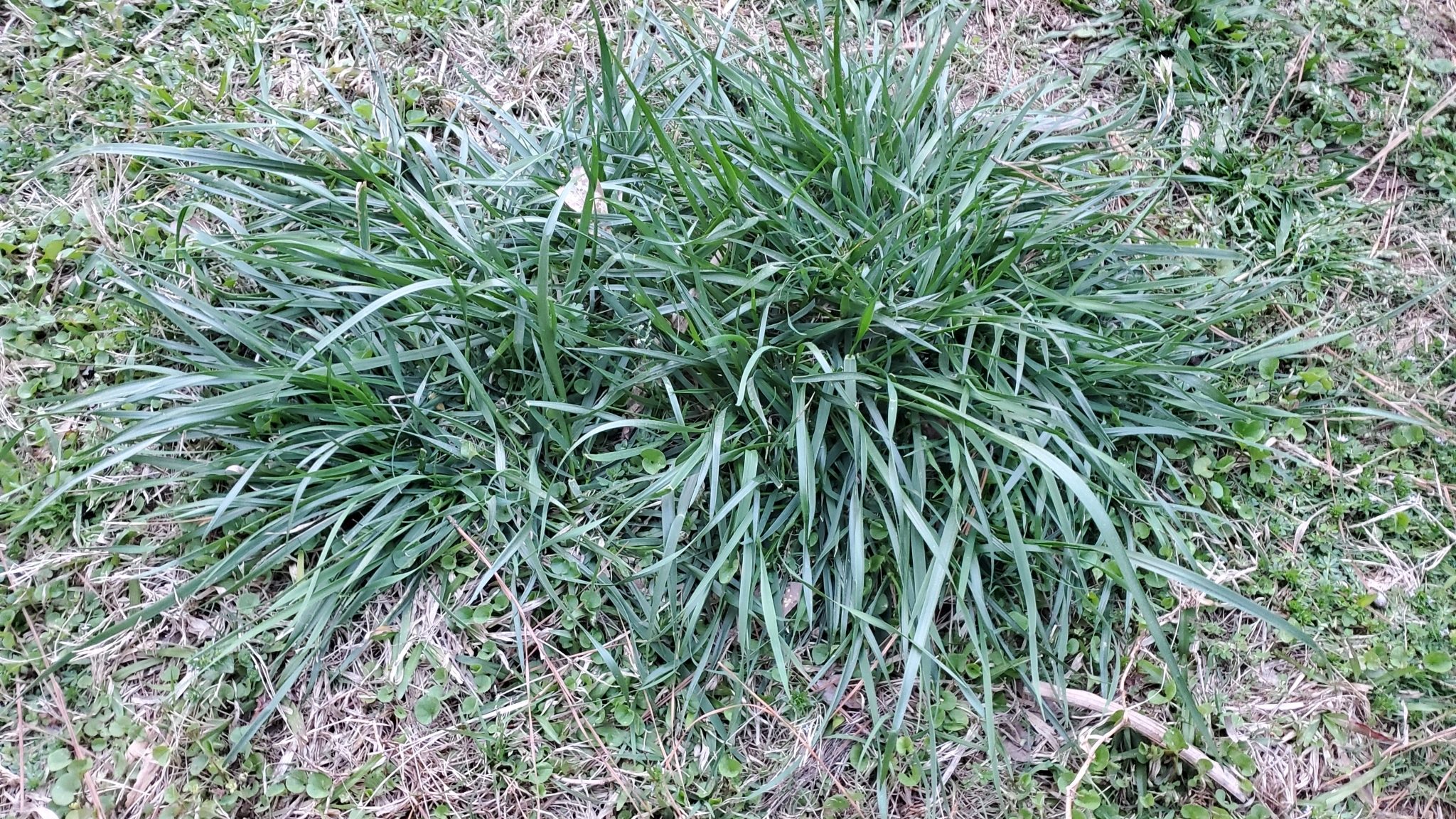
Tall fescue is a cool-season bunch grass, which means it spreads by tillers and very short rhizomes (underground stems) instead of long runners, according to UT Extension. NC State says tall fescue thrives in sun or medium shade. The improved turf-type cultivars are more shade tolerant, denser, and finer than the old Kentucky 31. Order turf-type fescue sod, and ask the farm which cultivars are in it.
UT's sodding publication describes slabs of tall fescue alone and slabs of tall fescue plus Kentucky bluegrass. NC State's shade guide names a mix of about 80 percent tall fescue and 20 percent shade-tolerant Kentucky bluegrass as the best cool-season choice in most locations.
Fine fescues, such as creeping red, chewings, and hard fescue, take shade better still. Clemson says fine fescues tolerate more shade than tall fescue. UT Extension describes them as parts of seed mixtures for shaded lawns in north central and upper East Tennessee. I found no Extension source on fine fescue sod for this area, so plan to bring fine fescue in by overseeding the shadiest edge in September. Ask the farm before you assume a pallet has it.
Zoysia Sod Works Only in Bright Shade
UT Extension says zoysiagrass grows best in full sun, and that it often loses density in medium to heavy shade. Some varieties handle shade much better than bermudagrass, so the cultivar matters.
- Zeon and Geo: UF/IFAS rates fine-textured cultivars such as Zeon, Geo, Stadium, and Lobo as having excellent shade tolerance. Clemson rates Geo excellent and Zeon good. For Knoxville, note that UF groups Zeon with the fine-textured Zoysia matrella types, and Clemson says Z. matrella is less cold tolerant than Z. japonica. No Extension source I found rates Zeon's own cold hardiness in Tennessee.
- Palisades: UT notes its good winter hardiness and improved shade tolerance. UF ranks Palisades with Brazos as the best of the coarse-textured cultivars in shade.
- Meyer: The University of Arkansas calls Meyer the least shade-tolerant zoysia. UT says Zeon, El Toro, and Emerald all have more shade tolerance than Meyer.
NC State adds that warm-season grasses often suffer more winter injury in shade than in open sun. So in Knoxville a fine zoysia in shade carries two risks at once. I found no Extension cold-hardiness rating for Geo in Tennessee. Ask the farm how its zoysia came through the last cold winter. For a shaded Knoxville yard with six good hours, Palisades is the safer bet on paper.
St. Augustine, the classic Southern shade sod, is not a Knoxville option. UT Extension says its poor cold hardiness limits its use in Tennessee, and that even the more cold-tolerant varieties are not usually recommended north of Birmingham, Alabama or Augusta, Georgia. Knoxville is well north of both.
Your Trees Keep a Calendar
Walk under a big white oak in January and the ground is bright. Walk under it in July and it is dim at noon. NC State says leafless deciduous hardwoods block nearly 50 percent of winter sunlight, and the same trees in full leaf block nearly 95 percent of summer sunlight. Tall fescue does its growing in spring and fall, while zoysia grows in summer, according to NC State's Carolina Lawns guide. Under deciduous trees, fescue grows when the light is open, and zoysia has to grow under a full canopy.
That is why the University of Arkansas says tall fescue seeded in September gets the longest exposure to direct light before the trees leaf out again. Evergreens give no such break. NC State says firs and spruces cast very dense shade over a small area, while pines cast a more open shade than maples and oaks. Read the tree before you read the sod list.
When to Lay Each Sod in Knoxville
NC State says you can install cool-season sod any time in the cooler part of the season when the ground is not frozen. It can also go down in the warm months with careful watering. Under trees, Clemson says to seed or sod cool-season grass early enough in fall that it can mature before leaves cover the ground. That makes September to early October the better window. In November, you have two choices: lay now and rake, blow, or bag the leaves every few days, or wait until the trees are bare and lay it while the ground is still not frozen. UT says leaves on new sod block light and hold warm, humid air that favors patch and leaf spot diseases.
Zoysia sod waits for warm soil. NC State says warm-season sod goes down best from about April until July 1, and that sod will not root until the soil stays above 55°F for several weeks. Check the soil temperature tool before you book the truck. Zoysia sod laid in November will not root before winter.
Whichever sod you choose, measure the area with the lawn size calculator first. UT says one pallet of slab sod usually holds about 50 square yards (450 square feet). Water new sod lightly every day for several weeks, in the early morning between 5 and 10 a.m., per UT.
Care for Sod in Shade
Shaded turf has less light to work with, so it needs gentler care. Each of these comes from the Extension sources below.
- Mow higher. Clemson and the University of Arkansas both say to mow shaded grass half an inch to one inch higher than grass in sun. NC State lists 3 to 4 inches for tall fescue in shade. UT's zoysia guidance assumes home lawns cut at 1.5 inches or higher.
- Feed less. Clemson says heavily shaded grass needs one-half to two-thirds as much nitrogen as grass in full sun. The University of Arkansas says to cut fertilizer by half. UF says too much nitrogen leaves shaded turf weaker.
- Water deep and seldom, in the morning. Clemson says to water shaded grass infrequently but deeply, and only when it needs it. The University of Arkansas says to water during the morning hours.
- Raise the limbs. NC State says to remove limbs to at least 6 feet. The University of Arkansas suggests limbs within 8 feet of the ground, or the lower third of the tree, so sun reaches the turf in the morning and evening.
- Manage the leaves. NC State says you can mulch a light leaf layer into an established lawn with the mower, and remove a heavy one.
- Keep traffic off. UF says shaded grass is injured more easily and recovers slowly.
A Lawn I'd Walk You Through: Fescue Under Two Oaks
This yard is made up to show the method. Picture a 2,000-square-foot backyard in West Knoxville with two mature oaks and thin bermuda that the owner wants to replace with sod. My first stop is the sun count. Say the July count shows five hours, most of it before noon. That fits tall fescue on Clemson's five-hour number, and the morning sun is the kind the University of Arkansas says cool-season grass likes.
Second stop is the canopy. Oaks are on NC State's list of dense-canopy trees, so I would raise the lowest limbs to at least 6 feet before any sod arrives. Third stop is the feeding plan. Shaded turf grows more slowly, so I would plan on half the nitrogen of the sunny front yard, per the University of Arkansas. Then lay turf-type tall fescue sod after the leaves drop, or lay it now and rake leaves off it every few days until the trees are bare, and set the mower at the top of the range next spring.
When to Give Up on Grass
NC State says turfgrass will not grow in very heavy shade, and it calls under four hours of sun much too shady for turfgrass to grow well. UF says that under a large oak, turfgrass may not be the best groundcover at all. NC State suggests ajuga, liriope, or pachysandra, or a cover of pine bark, pine needles, or wood chips, and says they look better than a thin, dead lawn. Draw the line at four hours and hold to it.
For the wider picture, read our guide to grass types in Tennessee and best grass types for shade, or go to the tall fescue guide and the zoysiagrass guide.
This guide combines the Extension sources linked above. It reports no field trial or test results.
Free Lawn Care Tools
Turf-type tall fescue suits most shaded Knoxville yards. Clemson Extension says tall fescue grows well with as little as five hours of sun a day. Choose zoysia only where the lawn gets about six hours of direct sun, which the University of Arkansas sets as zoysia's minimum.
Yes, while the ground is not frozen, per NC State Extension. Under trees, Clemson says cool-season sod does best when it goes down early enough in fall to mature before leaves cover the ground. In November, either lay it now and clear the leaves every few days, or wait until the trees are bare. UT Extension says leaves on new sod block light and favor disease.
UF/IFAS rates fine-textured cultivars such as Zeon, Geo, Stadium, and Lobo as having excellent shade tolerance, and ranks Palisades among the best coarse types. Clemson says the fine-textured Zoysia matrella types are less cold tolerant than Zoysia japonica. Palisades pairs improved shade tolerance with good winter hardiness, per UT, so it is the safer choice for a shaded Knoxville yard with about six hours of sun.
No. NC State Extension calls bermudagrass the least shade-tolerant turfgrass and says not to use it in shady areas. The University of Arkansas says bermudagrass needs at least eight hours of full sun a day.
Less than four hours of direct sun a day. NC State and Clemson both say that is too shady for grass to grow well. Use mulch, pine needles, or a shade groundcover such as liriope, ajuga, or pachysandra there instead.
Sources (12)
- Clemson HGIC, Tall Fescue: turfgrasses need at least four hours of direct sun.
- UT Extension W159-G, Turfgrass Selection: St. Augustinegrass: poor cold hardiness in Tennessee, not usually recommended north of Birmingham or Augusta.
- Clemson HGIC, Growing Grass in Shade: tall fescue with five hours of sun, under four hours too shady, higher mowing, one-half to two-thirds nitrogen, leaf removal on cool-season turf in fall.
- Clemson HGIC, Zoysiagrass: shade ratings for Geo (excellent) and Zeon (good).
- University of Arkansas FSA6140, Growing Turfgrass in Shade: eight hours for bermudagrass, six for zoysia, morning sun for cool-season grass, Meyer least shade tolerant, limb pruning, half fertilizer, September timing under deciduous trees.
- NC State Extension, Selecting and Managing Lawn Grasses for Shade: 50 and 95 percent canopy light figures, tree canopy types, four-hour floor, groundcovers, limb height, turf-free ring, tall fescue mixes and mowing height, winter injury of warm-season grass in shade, leaf management.
- NC State Extension, Carolina Lawns: sodding windows for cool-season and warm-season grass, 55°F soil rooting threshold, tall fescue in sun or medium shade, growing seasons.
- UT Extension W159-H, Turfgrass Selection: Zoysia: zoysia shade and density, cultivar shade notes, species cold hardiness table, mowing height.
- UT Extension W159-E, Turfgrass Selection: Fescues: tall fescue as Tennessee's most common cool-season lawn grass, fine fescues in East Tennessee shade mixtures.
- UT Extension W160-C, Turfgrass Establishment: Sodding and Plugging: pallet size, morning irrigation, leaves on new sod, fescue and bluegrass slabs.
- UF/IFAS EP072, Growing Turfgrass in the Shade: zoysia cultivar shade rankings, nitrogen in shade, traffic, alternatives under large oaks.
- USDA Plant Hardiness Zone Map (2023): zone 7b for Knoxville ZIP codes.
Photos: Russell P. Rai / iNaturalist · CC BY 4.0
Related Articles
 Climate & Regional Tips
6 Types of Grass in West Virginia and How to Tell Which You Have
Sep 2, 2026•7 min read Climate & Regional Tips
4 Types of Grass in Connecticut and How to Tell Which You Have
Sep 2, 2026•7 min read Climate & Regional Tips
8 Types of Grass in Nevada and How to Tell Which You Have
Sep 2, 2026•9 min read
