Types of Grass in Tennessee: The Common Lawn Grasses
 Marcus GreenTurf Management Pro | 18 Years
As an Amazon Associate we earn from qualifying purchases.
Tennessee sits in the transition zone, so it grows both cool- and warm-season lawns. Tall fescue is the backbone statewide, with Kentucky bluegrass and fine fescue blended in for shade, and Bermuda, zoysia, and centipede in the hot west and middle. The quick tell: cool-season grasses stay green through winter, warm-season ones brown after frost.
UT Extension calls late August to mid-October an excellent window to seed cool-season grass, and puts Bermuda, zoysia, and centipede in between May 1 and June 30. In the East Tennessee mountains warm-season grasses risk winter kill, so cool-season wins.
Tennessee sits where North meets South, warm enough for southern grasses in the west and cool enough for northern grasses in the east. University of Tennessee Extension names tall fescue, fineleaf fescues, and Kentucky bluegrass as the primary cool-season species and Bermudagrass and zoysiagrass as the primary warm-season lawn grasses. This guide covers each common type and how to tell which is in your yard.
The types of grass that grow in Tennessee
Tall Fescue
Tall Fescue is the backbone of Tennessee lawns, the deep-green, coarse grass in most yards statewide. UT Extension lists it first among Tennessee's primary perennial cool-season species and notes that, with a bunch-type growth habit, tall fescue is moderately drought and shade tolerant, and it is adapted to a wide range of soil conditions. It stays green through the year but grows in clumps rather than knitting together, so thin stands get overseeded each fall.
Kentucky Bluegrass
Kentucky Bluegrass is the cool-season blend partner, one of UT's primary perennial cool-season species for Tennessee. It spreads by rhizomes into a dense, self-repairing sod, which is exactly what bunch-type tall fescue lacks, so the two are commonly mixed: the bluegrass knits the lawn together while the fescue carries the heat and drought tolerance. It is strongest in the cooler East Tennessee uplands.
Fine Fescue
Fine Fescue is Tennessee's shade grass. UT Extension singles out the fineleaf fescues that have a high level of shade tolerance, noting that most other Tennessee turfgrasses perform best in open sun. Their needle-fine blades tolerate shade and low fertility where tall fescue and bluegrass thin, so they earn their place under trees, usually blended into a cool-season seed mix rather than grown alone.
Bermudagrass
Bermudagrass is the warm-season workhorse for full-sun, high-traffic yards in the warmer west and middle of the state. UT Extension names it a primary Tennessee warm-season lawn grass, and notes it can be overseeded with perennial ryegrass to provide green color while bermudagrass is dormant. It is fast, tough, and drought-hardy in full sun, but it needs sun, creeps into beds, and browns out for a long winter dormancy, and it risks winter kill in the cold East Tennessee mountains.
Zoysiagrass
Zoysiagrass is the dense, cold-hardiest warm-season option, which is why it reaches further into Tennessee than most southern grasses. UT Extension names it a primary warm-season lawn grass alongside Bermuda, and improved low-temperature varieties push its range into Middle Tennessee. It forms a tight, weed-resisting carpet and takes light shade better than Bermuda, but it is slow to establish and goes tan through the winter.
Centipedegrass
Centipedegrass is the newcomer in the warm western corner of the state. UT Extension notes that centipedegrass is also gaining in popularity in western Tennessee, where the climate runs closest to the Deep South. It is a slow-growing, low-input grass that asks for little fertilizer and less mowing, but it is the least cold-hardy of Tennessee's grasses, so it stays a West Tennessee pick rather than a statewide one.
Perennial ryegrass rounds out the list in a supporting role: UT notes Bermuda can be overseeded with perennial ryegrass for winter color, and it serves as a fast-establishing nurse grass in cool-season mixes rather than a stand-alone lawn. One grass that is not recommended for Tennessee lawns is St. Augustinegrass: UT mentions it only as an example of high shade tolerance, not as an adapted Tennessee turf.
Tennessee grass types compared at a glance
| Grass | Season | Best role | Sun / shade | Water need | Maintenance |
|---|---|---|---|---|---|
| Tall Fescue | Cool | Statewide default lawn | Sun to part shade | Moderate | Medium |
| Kentucky Bluegrass | Cool | Self-repairing blend partner | Sun to light shade | Moderate to high | Medium-high |
| Fine Fescue | Cool | Shade component in blends | Best shade tolerance | Low | Low |
| Bermudagrass | Warm | Full-sun, high-traffic turf | Full sun, poor shade | Low once established | High |
| Zoysiagrass | Warm | Dense, cold-hardy carpet | Sun to light shade | Moderate | Low-medium |
| Centipedegrass | Warm | Low-input, West TN only | Full sun to light shade | Low to moderate | Low |
How to tell which type you already have
Start with the season: cool-season grasses (tall fescue, bluegrass, fine fescue) stay green through winter and green up first; warm-season grasses (Bermuda, zoysia, centipede) go brown in winter and green up late. From there, does it clump or run? Tall and fine fescue clump; bluegrass runs by rhizomes; Bermuda, zoysia, and centipede spread by surface runners.
| Grass | Blade | Growth habit | Standout tell |
|---|---|---|---|
| Tall Fescue | Wide, coarse, rough edges | Bunching, no runners | Grows in clumps; stays green in winter |
| Kentucky Bluegrass | Fine, soft | Spreads by rhizomes, dense sod | Boat-shaped blade tip; open seed-head panicle |
| Fine Fescue | Very fine, needle-like | Bunching, some creeping | Wispy, thread-thin blades in shade |
| Bermudagrass | Fine, wiry | Runners above and below ground | Bird's-foot seed head, even in mowed lawns |
| Zoysiagrass | Fine to medium, stiff | Slow, very dense | Springy carpet feel; crunches when dry |
| Centipedegrass | Medium, apple-green | Creeps slowly by stolons | Light "apple green" color; short seed stalks |
Still not certain? Our free AI grass identifier reads a close-up photo, names the grass, and builds a 12-month care plan tuned to your ZIP.
Which types grow in your part of Tennessee
Tennessee's three grand divisions line up with its grass zones, running warmer from east to west. UT Extension frames it by region, with warm-season grasses strongest in the west and cool-season grasses preferred in the cooler, higher east.
- West Tennessee (Memphis, the Gulf Coastal Plain): The warmest. UT notes Bermudagrass, centipedegrass, and zoysiagrass varieties are usually very well adapted to well-drained, full-sun sites within this region, though tall fescue still holds shady yards.
- Middle Tennessee (Nashville, the Highland Rim and Central Basin): The transition within the transition. Both work: cool-season tall fescue and bluegrass, plus low-temperature-tolerant Bermuda and zoysia varieties in full sun.
- East Tennessee (Knoxville, the mountains and valleys): The coolest and highest. UT says cool-season grasses are generally preferred here, and warns warm-season grasses are prone to winter kill during severely cold months in the Blue Ridge.
Tennessee grass timing that matters
The key Tennessee timing rule is that cool- and warm-season grasses go in at opposite ends of the year. Soil temperature drives the rest:
- Cool-season seeding (tall fescue, bluegrass, fine fescue), the key window: UT says late August to mid-October is an excellent time to plant seed, and no later than mid-October so roots set before winter.
- Warm-season planting (Bermuda, zoysia, centipede): UT puts seed, plugs, or sprigs between May 1 and June 30, once the soil is warm.
- Spring pre-emergent: put crabgrass pre-emergent down in spring before the soil warms through about 55F and crabgrass germinates.
- Peak growth: cool-season grasses surge in spring and fall; warm-season grasses run through the summer heat and go dormant after frost.
Our herbicide timing tool pins the exact pre-emergent date for your ZIP.
Next steps
Once you know your grass type, the care gets specific. Dig into the full guides for Tall Fescue, Kentucky Bluegrass, Bermudagrass, or Zoysiagrass, or line any two up in our grass comparison tool. For the wider picture, see how every state compares.
And if you are not sure what is growing out there, start with a quick photo on our free grass identifier.
Top Picks
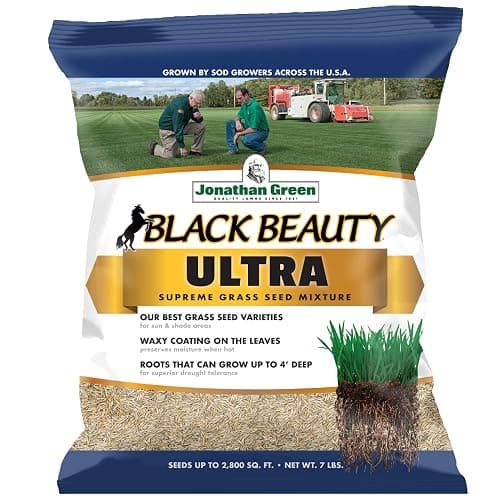
 Jonathan Green Black Beauty Ultra Grass SeedCheck price on Amazon
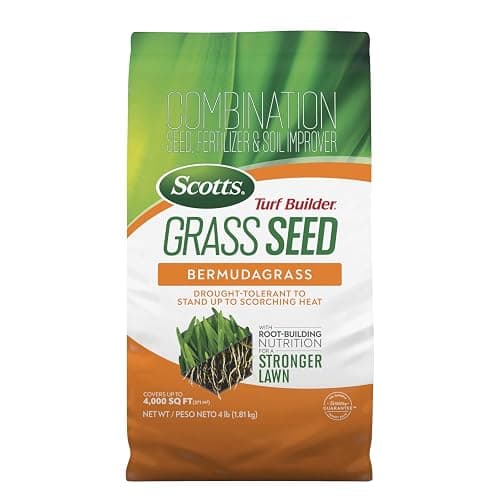
 Scotts Turf Builder Grass Seed Bermudagrass (4 lb)Check price on Amazon
As an Amazon Associate we earn from qualifying purchases.
Free Lawn Care Tools
Tall fescue. UT Extension names it a primary cool-season species, and it is the backbone of Tennessee lawns statewide, usually blended with a little Kentucky bluegrass. Bermuda and zoysia are the common warm-season picks in the sunny west and middle.
Six show up in Tennessee lawns: cool-season tall fescue, Kentucky bluegrass, and fine fescue, plus warm-season Bermuda, zoysia, and centipede in the west. That mix exists because Tennessee sits in the transition zone between North and South.
Cool-season grasses, led by tall fescue with Kentucky bluegrass and fine fescue for shade. UT Extension prefers cool-season turf in the cooler, higher East Tennessee and warns warm-season grasses can winter-kill in the Blue Ridge mountains.
Yes, in the warmer west and middle of the state, in full sun. UT Extension names Bermuda a primary warm-season lawn grass, but it browns out over winter and risks winter kill in the cold East Tennessee mountains, where cool-season grasses are the safer pick.
For cool-season grasses like tall fescue, late August to mid-October per UT Extension. Warm-season grasses like Bermuda and zoysia go in between May 1 and June 30 instead, once the soil is warm.
Sources (2)
- University of Tennessee Extension, Turfgrass Management in Tennessee (Master Gardener Handbook, Chapter 10).
- UT Extension, PB1935: Turfgrass Selection for Tennessee Landscapes.
Photos: Gabbie Byers / iNaturalist · CC BY 4.0, ubuntu / iNaturalist · CC BY 4.0, Jonathan Curley / iNaturalist · CC BY 4.0, Eric Schmidt / iNaturalist · CC BY 4.0, Kevin Faccenda / iNaturalist · CC BY 4.0, mark-groeneveld / iNaturalist · CC BY 4.0

Beat weeds and brown spots from your phone
Snap a photo, get the fix, and follow a plan timed to your soil and weather. Free on iPhone.