How to Get Rid of Thistle in Your Lawn (Why It Keeps Coming Back)
 Sarah MitchellLawn Diagnostics Specialist | 12 Years
As an Amazon Associate we earn from qualifying purchases.
The first summer I fought thistle in my own back lawn, I pulled the same patch three times. Gloves on, twist, lift, feel the root give, toss it in the bucket. By August there were five plants where one had been, and they were bigger than the original. I had not been removing that weed. I had been propagating it.
Figure out which thistle you have first, because the two common lawn thistles call for opposite tactics. Bull thistle grows from a single taproot: dig below the crown and it is finished. Canada thistle spreads through an underground root system, and pulling it leaves fragments behind that each send up a new shoot, which is why it multiplies.
For bull thistle, dig in the first year while it is still a flat rosette and you are done in an afternoon. For Canada thistle, plan a season rather than a weekend: cut the shoots every two to three weeks so they never bank energy underground, thicken the turf so seedlings have nowhere to land, and save any systemic herbicide for the fall window, when perennial weeds move reserves down into their roots. Wear thick gloves for all of it.
Which Thistle Do You Have?
This question decides everything else, and most people skip it because a thistle looks like a thistle when it is stabbing you. But you are choosing between two plants with two survival strategies, and the plan that beats one feeds the other.
Bull thistle: big, spiny, and alone
Bull thistle is the dramatic one. It is a biennial, so it lives two years and then dies on its own. In year one it makes a flat rosette pressed against the ground, a circle of deeply lobed leaves prickly on top as well as along the edges. In year two it bolts into a coarse, branching plant that can stand taller than your knee, topped with fat purple flower heads on a spiny base.
The giveaway is the stem. Bull thistle stems have spiny wings running down them, so the stalk feels armored rather than smooth. The second giveaway is arrangement: scattered individuals or small clumps, usually in a thin spot or along a fence line the mower misses.
Canada thistle: small flowers, big colony
Canada thistle looks less impressive and is far more of a problem. It is a creeping perennial that runs a horizontal root system sideways through your soil, sending up new shoots along the way, which is why it appears as a patch rather than as individuals. A spreading blotch of thistle with a fairly even front edge is the tell.
Its flowers are noticeably smaller, often clustered several to a stem, in the soft lilac to purple color people describe when they search for purple thistle weed. The stems are relatively smooth, without the spiny wings, though the leaf margins still carry prickles. A colony looks like a crowd of similar sized shoots rather than one big architectural plant.
The two minute field check
Kneel down, gloves on, and ask three questions. One plant, or a patch of many similar shoots? Spiny wings running down the stem, or fairly smooth? Flower heads large and solitary, or smaller and clustered? Winged stems, large solitary flowers, and scattered individuals point to bull thistle. Smooth stems, small clustered flowers, and a spreading colony point to Canada thistle.
If you are staring at a first year rosette with no stem and no flower to judge, that is exactly where guessing costs you a season. Take a photo and run it through the free diagnosis before you decide whether to dig or to start a cutting schedule. The purple bloom also puts thistle in company, so if you are working from the flower alone, compare it against the other weeds with purple flowers first.
Why Pulling Canada Thistle Backfires
Here is the mechanism behind my five-plants-where-one-was summer. Canada thistle stores energy in a spreading underground root system and can generate new shoots from pieces of it. When you grab the top and pull, the stem breaks off, the shallow root snaps, and the deeper network stays put, now with fragments scattered through loosened soil. Each viable fragment is a new shoot waiting to happen.
So the visible result of pulling is that the plant disappears for a couple of weeks. The actual result is that you pruned a plant that responds to pruning by branching, and loosened the soil in a way that helps it. Tilling a patch is the same mistake with a bigger machine. If you have fought nutsedge and its underground tubers, the pattern is familiar: what you can see is the smallest part of the problem, and yanking it keeps the rest in business.
This is the honest answer to why thistle keeps coming back for so many people. They are not failing at removal. They are performing removal on a plant that has no removable center.
Getting Rid of Bull Thistle
Bull thistle is the good news chapter. Because it grows from a single taproot and dies after flowering, you win by taking out the crown, the compressed growing point where the leaves meet the root at soil level. Cut or dig below that point and the plant has nothing left to regrow from.
Use a spade, a hori hori knife, or a long dandelion weeder, and go in at an angle a couple of inches below the surface to sever the taproot beneath the crown. You do not need to excavate the whole root, just get under the growing point. Lift the rosette out and drop it in a bag rather than leaving it on the lawn, because a cut plant with flower heads can still finish maturing seed on the ground.
Timing matters more than technique. First year rosettes are easy: small, low, sitting on a young root. Second year plants that have bolted are tougher to dig and are racing to set seed, so if you find one in flower, cut the heads off and bag them before they go fluffy. Moist soil after rain makes digging far easier.
Then fill the hole. A bare divot is an invitation, and thistle seed travels on the wind looking for exactly that. Drop in soil, press it flat, and seed it while the ground is open. For more than a spot or two, run the numbers with the overseeding calculator rather than guessing.
The Canada Thistle Campaign: Cut, Starve, Treat
Canada thistle is not a task. It is a campaign, and the goal is to drain the root reserves faster than the plant rebuilds them. Three things work together, and none works alone.
Cut on a schedule, not when you notice
Every time a shoot pushes up and unfurls leaves, the plant spends stored energy to build it. Cut that shoot down before it photosynthesizes enough to repay the loan and the plant runs a deficit. Do it once and nothing happens. Do it every two to three weeks all season and the underground reserves draw down.
In turf, your mower already does most of this, which is why Canada thistle in a mowed lawn behaves differently from Canada thistle in a neglected fence line. For patches in beds or along edges the mower misses, put it on the calendar. The schedule is the active ingredient, and cutting whenever the patch looks bad again is too late.
Starve it with turf density
Thistle seedlings need light and open ground, and established turf gives them neither. Mowing at the high end of the range for your grass type shades the soil and keeps more leaf area in play to compete. If you are unsure of the right height, the mowing height calculator gives you the range instead of folk wisdom.
Pair that with overseeding thin areas, because the patches where thistle got a foothold are almost always where the turf gave up first. Density is slow, unglamorous, and the only part of this that keeps working after you stop paying attention.
Treat in the window when it actually lands
Cutting and density hold Canada thistle back. For an established colony, most people eventually reach for a systemic herbicide, and one principle governs whether it works: the product only helps if the plant carries it down to the roots. Perennials generally move stored reserves downward in fall as they prepare for winter, so a fall application rides the plant's own transport in the direction you want. Spraying a stressed mid summer plant that is pushing everything upward is how people conclude nothing works on thistle.
You also need enough green tissue to absorb the product, so do not mow the patch to the ground right before you treat, and check the label for your grass type, because what is fine on one turf species can thin another. To see how the window lines up with your own season, the herbicide timing tool is a faster read than a calendar written for somebody else's climate.
- Which active ingredients are labeled for thistle in home lawns varies by state and turf species, so ask your state extension service for their current recommendation rather than working from a general article.
- Rates, the number of repeat applications allowed per year, and the interval between them are set by the product label, which is the legally binding instruction. Extension bulletins will point you to the lawn rate rather than the pasture rate.
- Fall timing is a principle, not a date. Your extension office can tell you the actual window for your county, which depends on your first frost and on whether your lawn is cool season or warm season.
- Ask how long to wait before overseeding a treated area, since some actives restrict reseeding.
- Say so if your thistle is near a vegetable garden, a pasture, or a compost pile. Several actives used on perennial broadleaf weeds persist in clippings and manure, which changes what is appropriate.
Recommended products
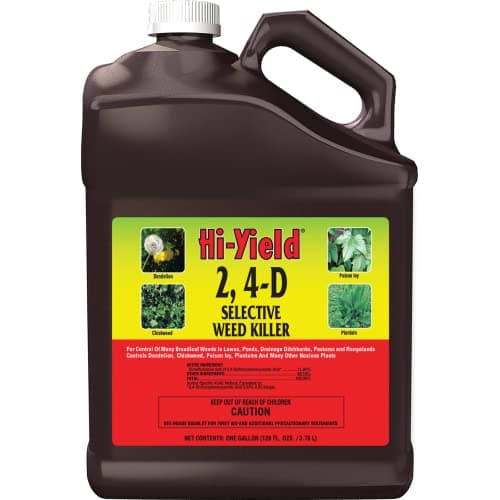
Hi-Yield 2,4-D Amine Selective Herbicide
A selective broadleaf concentrate that moves into thistle roots instead of only burning the top growth.

PBI/Gordon Trimec Classic Herbicide
A three-way broadleaf herbicide for thistle that shrugs off a single active ingredient.
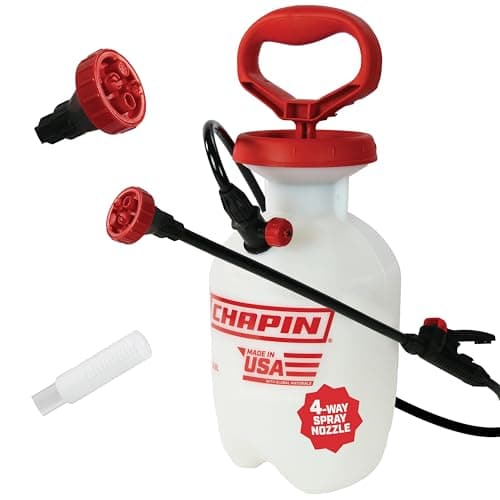
Chapin 1-Gallon Pump Sprayer
A one gallon sprayer for treating individual thistle clumps rather than the whole lawn.
Why Your Lawn Invited Thistle In
Thistle does not choose a dense, healthy, well fed lawn. It chooses openings. When I walk a property with a thistle problem, I am not looking at the thistle. I am looking for what made room for it.
Thin turf is the first thing, because anywhere the canopy has gaps, seed reaches soil and light. Disturbed soil is the second: new construction, a sprinkler trench, a spot where you pulled out a shrub, the strip along a new fence. Thistle is an early colonizer, and freshly turned earth is the habitat it evolved for. Compacted ground counts too, because the grass struggles there while a deep rooted weed does not mind.
Fertility and soil chemistry play a role too, though be careful with the confident claims online. Thistle gets called an indicator of low fertility or of particular pH conditions, and stressed, underfed turf does lose ground to deep rooted perennials. But an indicator plant only tells you the turf is struggling. Test for your pH and nutrient status rather than diagnosing it from a weed.
The same conditions open the door to a roster of opportunists, not just thistle. In the thin strip along a driveway you will often find ragweed moving into the same disturbed ground, and treating them as separate problems misses that they are symptoms of the same bare soil.
Preventing Thistle From Coming Back
Mow high and mow regularly, because a taller canopy shades the soil and shaded soil does not germinate thistle seed well. Overseed thin areas on a schedule instead of waiting until they are bare, and seed any spot you disturb the same day. Water deeply and less often so roots go down and outlast the dry stretches when weeds gain ground.
Then walk your edges. Thistle seed is wind carried, and the reservoir is rarely in the middle of your lawn. It is the unmowed fence line or the back corner behind the shed. Cutting flower heads there before they mature costs ten minutes and removes next year's seed supply.
If you would rather not track all of this by hand, that is what the paid care plan is for. It builds a personalized schedule for your address and grass type, and puts the fall window for systemic control of perennial weeds on your calendar for your zip code. That is the step most people miss by a month and then blame the product for.
What Other Guides Miss
Most thistle articles open with a control method. That is the wrong first move, because the identity question decides everything downstream. A guide that tells you to dig thistle out is giving perfect advice for bull thistle and actively harmful advice for Canada thistle, and it usually does not say which one it means.
Second, the phrase people use is "it keeps coming back," and that phrase is the diagnosis. A plant that returns after thorough removal is telling you it was never removed, because the part that regenerates was never in your hand. Treating a creeping perennial with taprooted weed tactics produces exactly that endless recurrence, and doing it harder changes nothing. The fix is a different mechanism, not more effort.
Third, nobody does the patience math out loud. A Canada thistle colony has been storing energy underground for as long as it has been there, and you are spending that account down. One cutting is a small withdrawal. A season of cuttings every two to three weeks, plus turf that denies seedlings a start and one well timed fall treatment, is what empties it. Expecting surrender in three weeks is what makes people quit at week four, right when the plant starts to lose.
Your Thistle Action Plan
- Put on thick gloves and long sleeves before you touch anything. The spines are the reason most thistle jobs end unfinished.
- Identify what you have. Winged spiny stems with large solitary flowers on scattered plants means bull thistle. Smoother stems with smaller clustered flowers spreading as a colony means Canada thistle. If you are unsure, especially with a first year rosette, run a photo through the free diagnosis before picking a strategy.
- If it is bull thistle, dig it out below the crown, ideally while it is still a first year rosette and the soil is moist. Bag any plant that has flowered.
- If it is Canada thistle, stop pulling and switch to a cutting schedule. Cut or mow every two to three weeks all season so shoots never repay the energy the roots spent making them.
- Fill and seed every hole and bare spot the same day you create it.
- Raise your mowing height to the top of the range for your grass type and overseed thin areas.
- Plan the systemic treatment for the fall window, and confirm the product, the rate, and the local timing with your state extension service first.
- Cut the flower heads along fence lines and back corners before they mature. That is next year's seed supply.
- Reassess next spring. Fewer, weaker shoots over a smaller area is success even if the patch is still there. That is what a draining root system looks like.
Top Picks
- Ortho WeedClear Lawn Weed Killer Ready-to-SprayCheck price on Amazon
- Outsidepride Maya (Blackjack II) Bermuda Grass Seed (5 lb)Check price on Amazon
- Outsidepride Legacy Fine Fescue Blend (10 lb)Check price on Amazon
As an Amazon Associate we earn from qualifying purchases.
Free Lawn Care Tools
Almost always because you have Canada thistle and you have been pulling it. Canada thistle is a creeping perennial that stores energy in a spreading underground root system, and it can send up new shoots from pieces of that system. Pulling the top removes the part you can see while leaving the part that regenerates, and the soil disturbance helps the remaining fragments sprout. Bull thistle does not behave this way, which is why identifying which one you have is the first step.
Look at the stem, the flowers, and the pattern. Bull thistle has spiny wings running down the stem, large solitary purple flower heads, and shows up as scattered individual plants. Canada thistle has relatively smooth stems, smaller flowers clustered several to a stem, and spreads as a colony or patch with a fairly even front edge. If you only have a first year rosette to work from, a photo diagnosis is faster than guessing.
Only if it is bull thistle. Bull thistle grows from a single taproot, so digging below the crown removes the entire growing point and the plant is finished. Pulling Canada thistle breaks the roots and scatters fragments that each regrow, so it multiplies the problem instead of solving it. Get the identification right before you reach for a weeder.
Fall is generally the window for systemic control of perennial weeds like Canada thistle. Perennials move stored reserves downward into their roots as they prepare for winter, so a fall application travels with the plant's own transport instead of against it. Spraying a mature, stressed plant in midsummer is why many people conclude that nothing works. Confirm the actual dates for your county with your state extension service, since the window depends on your first frost and your grass type.
Plan on a full season at minimum, and often longer for an established colony. The goal is to drain root reserves faster than the plant rebuilds them, which takes repeated cutting every two to three weeks through the growing season, thicker turf that denies new seedlings a start, and a well timed fall treatment. Fewer and weaker shoots over a smaller area is what progress looks like, even when the patch is still visible.
Openings. Thistle is an early colonizer that needs light and bare or disturbed soil to establish, so thin turf, construction areas, sprinkler trenches, and compacted or heavily trafficked ground are where it starts. Underfed, stressed turf loses ground to deep rooted perennials in general. Mowing high, overseeding thin areas, and seeding any spot you disturb the same day closes the openings it depends on.

Your lawn plan, in your pocket all season
Grass ID, a season plan, soil-timed reminders, and a lawn journal that remembers what you did. Free on iPhone.