Drought Tolerant Lawn Guide: Grasses, Watering, and Rebates
 James ThorntonLawn Equipment & Maintenance Expert | 20 Years
As an Amazon Associate we earn from qualifying purchases.
A drought tolerant lawn is not a patch of gravel and cactus. It is real, usable turf that stays green through dry spells on a fraction of the water a traditional Kentucky bluegrass lawn demands. With water rates climbing and more cities writing summer watering rules into law, the drought tolerant lawn has gone from a niche idea to the smartest default for most of the country.
After maintaining thousands of lawns across two decades, I can tell you the difference between a lawn that shrugs off a dry August and one that goes to straw usually comes down to two things: the grass you planted, and how deep you trained its roots. Get those right and you can cut irrigation by 30 to 60 percent without giving up a lawn the kids can actually play on.
The most drought tolerant lawn grasses are buffalograss, bermuda, and zoysia in warm climates, and turf-type tall fescue in cooler regions. They survive on less water because they root deep (tall fescue reaches 2 to 4 feet) and many go dormant instead of dying when it gets dry. To make any lawn more drought tolerant, water deeply but infrequently to train roots down, mow high, aerate compacted soil, and top-dress with compost.
Drought tolerant does not mean zero watering. It means the lawn stays healthy on roughly 0.5 to 1 inch of water per week in summer instead of daily sprinkling, and it can ride out a dry stretch by going tan and dormant, then greening back up when rain returns. Dial in your schedule with our watering schedule tool.
What Actually Makes a Lawn Drought Tolerant
Four things decide how well a lawn handles drought, and only one of them is the grass itself.
- Root depth. This is the big one. A lawn with roots 6 inches deep pulls from a tiny reservoir and wilts within days. A lawn rooted 12 inches or more taps a soil volume several times larger and coasts through dry weeks. Root depth is mostly something you build through watering habits, not something you buy.
- Grass genetics. Species and cultivar set the ceiling. Buffalograss and bermuda are built for heat and drought; older Kentucky bluegrass is not. Within a species, modern cultivars often beat older ones by a wide margin.
- Soil. Loam and compost-amended soil hold moisture in the root zone and release it slowly. Compacted clay sheds water before it soaks in, and pure sand drains too fast. Fixing soil often matters more than swapping grass.
- Mowing height. Taller grass shades its own soil, keeps it cooler, and grows deeper roots. Scalping a lawn short in summer is one of the fastest ways to make it thirsty.
Notice that three of those four are within your control on the lawn you already own. You do not always need to rip everything out and start over.
The Drought Tolerant Lawn Ladder: Best Grasses by Region
The right grass depends on your climate more than anything else. A grass that thrives in Phoenix will rot on the Gulf Coast, and a fescue that laughs off an Ohio drought will fry in Texas. Think of it as a ladder: buffalograss at the top for pure water thrift, then bermuda and zoysia, then the fescues for cooler country. Here is how the workhorse drought tolerant grasses stack up.
| Grass | Summer water need | Dormancy behavior | Best region / zone | Mow height |
|---|---|---|---|---|
| Buffalograss | Very low (0.25 to 0.5 in every 10 to 14 days) | Goes tan in extended drought, greens up fast after rain | Great Plains, semi-arid West, zones 4 to 8, full sun | 2 to 3 in, or leave unmowed |
| Bermuda | Low (about 1 in/week, tolerates far less) | Dormancy champion; survives weeks brown, recovers from rhizomes | South, Southwest, zones 7 to 10, full sun | 1 to 2 in |
| Zoysia | Low to moderate (1 to 1.25 in/week) | Slow into dormancy, slow out; dense turf holds color longer | South and transition zone, zones 6 to 9 | 1 to 2 in |
| Bahia | Low (about 0.75 in/week) | Semi-dormant through dry spells without dying out | Deep South, sandy soil, zones 8 to 10 | 3 to 4 in |
| Tall fescue (turf-type) | Moderate (about 1.25 in/week) | Avoids drought with 2 to 4 ft roots; browns late, recovers if crowns stay alive | Transition zone and North, zones 4 to 7 | 3 to 4 in |
| Fine fescue / no-mow blends | Low to moderate (about 1 in/week) | Summer dormancy is normal and safe; wakes with fall rain | North, shade, sandy sites, zones 3 to 7 | 3 to 4 in, or no-mow |
Two warm-season grasses deserve a caveat. St. Augustine is popular on the Gulf Coast because it handles shade and heat, but it is not a low-water grass; it needs about 1.5 inches a week to look its best. Centipede is genuinely low-input and thrives in acidic sandy soil across the Southeast, but it is shallow-rooted and browns fast in a hard drought, so treat it as low-maintenance rather than deeply drought tough.
Buffalograss earns a special mention because it is the only true native on the list, and it behaves differently from the others: it wants less of everything, including fertilizer and mowing. Our full buffalograss guide covers cultivars, seeding rates, and the honest downsides. And if you want to go further down the native path, regional bunchgrasses and prairie blends can carry the low-traffic parts of a yard on rainfall alone; see our rundown of native grass types for your region.
How to Train Any Lawn to Be More Drought Tolerant
You do not have to re-sod to gain real drought resistance. Most lawns are thirsty because of how they have been managed, not because of their genetics. Here is the sequence I walk homeowners through, in priority order.
- Water deep and infrequent to train roots down. This is the single highest-leverage change. Instead of 10 minutes every morning, run a full 0.5 to 1 inch soak, then wait until the lawn just starts to show stress before watering again. Shallow daily watering keeps roots parked at the surface; deep infrequent watering forces them to chase moisture downward.
- Raise your mowing height. Move up a notch or two. Taller blades shade the soil, slow evaporation, and support deeper roots. For cool-season grass that means 3 to 4 inches; for bermuda and zoysia, the top of their range. Keep the blade sharp; a ragged cut loses more water than a clean one.
- Aerate compacted soil. Core aeration once a year opens tight soil so water soaks in instead of running off, and gives roots room to expand. Do it during your grass's active growing season.
- Top-dress with compost. A quarter-inch layer of compost after aeration builds the organic matter that holds water in the root zone. Over a couple of seasons this noticeably stretches the time between waterings.
- Feed for roots, not top growth. Ease off heavy spring nitrogen, which pushes lush, thirsty blades. Modest feeding, timed to soil temperature, favors root development over leaf production.
And reset your expectations about summer color. In much of the country, a healthy lawn going tan in late July is not failure. Dormancy is a survival feature these grasses evolved on purpose, and fighting it with daily water is the most expensive way to own a lawn. Homeowners who commit to just the first two steps, deeper watering and higher mowing, usually see their lawn hold color noticeably longer between rains within a single season. If your bermuda has already crisped this summer, it is almost certainly not dead; here is how to revive bermuda grass after summer heat stress.
Extension guidance: Colorado State University Extension's lawn care fact sheet backs the deep-and-infrequent rule: irrigating to the full root zone depth and letting the surface dry between waterings produces deeper roots and better drought performance than frequent light sprinkling.
Irrigation Efficiency: More Lawn per Gallon
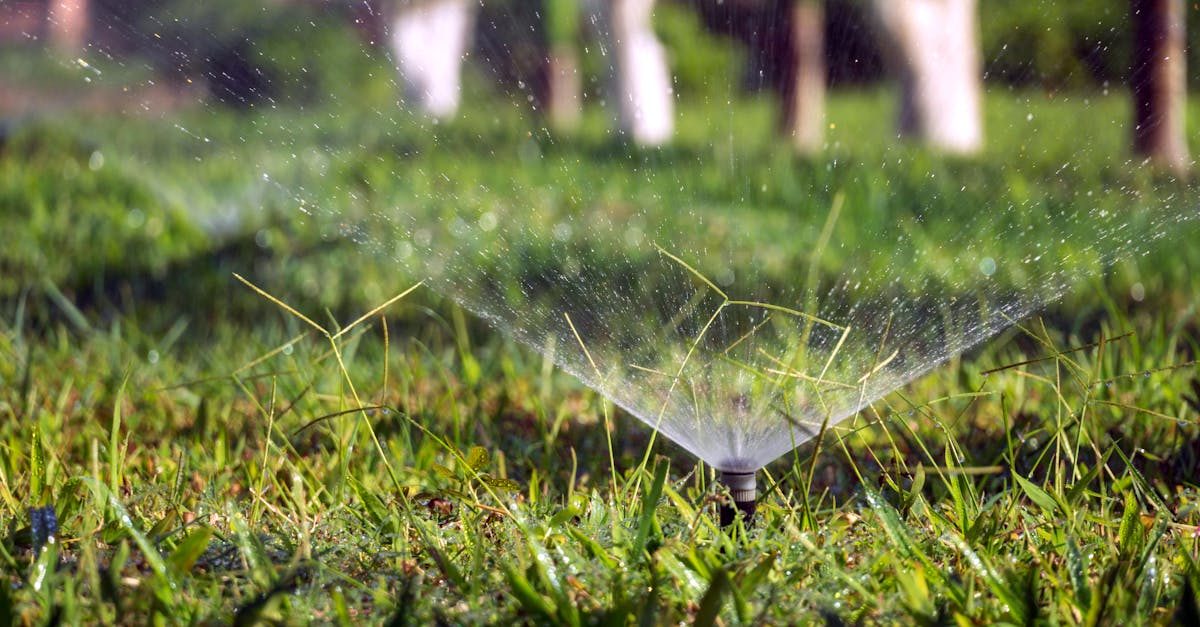
Even the toughest grass performs better with smart irrigation, and most sprinkler systems I audit waste a quarter of what they spray. Four fixes cover almost everything.
- The one-inch rule. Most established drought tolerant lawns want about 1 inch of water per week in summer, including rainfall, delivered in one or two deep soakings rather than daily sprinkles. Set out a tuna can to measure how long your sprinkler takes to put down an inch.
- Cycle and soak. On clay or slopes where water runs off before it sinks in, split each watering into two or three shorter cycles with a break between them. The pause lets the first pass soak in so the next one does not just run down the driveway.
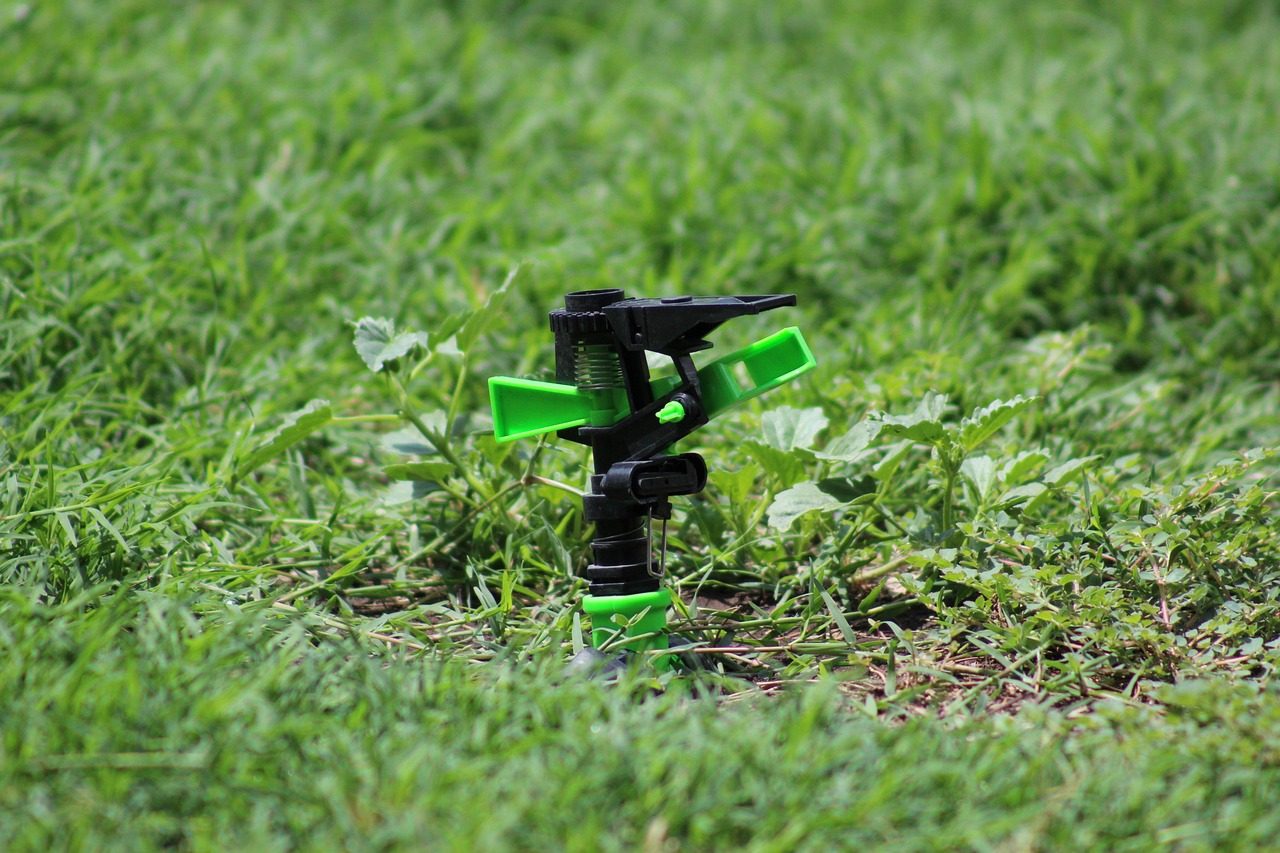
- Match your heads. A zone mixing full-circle and half-circle heads with different output rates waters unevenly, so you overwater the whole zone to save the driest corner. Matched-precipitation nozzles fix the most common hidden waste in home systems.
- Upgrade the controller. A weather-based smart controller skips watering after rain and trims run times in cool weather automatically. The EPA's WaterSense program estimates that replacing a standard clock timer with a labeled controller can save an average home up to 15,000 gallons of water a year.
Water early, ideally between 2 a.m. and 8 a.m., to cut evaporation losses by 10 to 30 percent compared to midday watering. And learn to read the lawn: a gray-blue cast or footprints that linger for a minute mean it is time for a deep soak. Our watering schedule tool builds a run-time plan around your grass type and soil.
Recommended products

Rachio 3 Smart Sprinkler Controller (8-Zone)
An eight zone smart controller that adjusts run times to local weather.
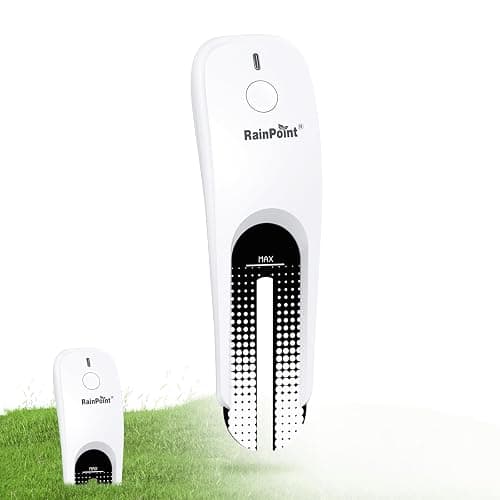
RAINPOINT 3-in-1 WiFi Soil Moisture Sensor
A wireless probe that reports soil moisture at root depth.
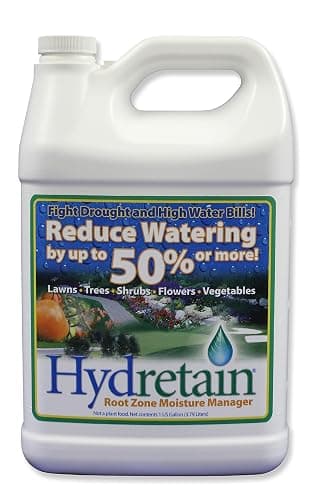
Hydretain Root Zone Moisture Manager
A humectant that holds soil moisture in the root zone between irrigations.
Shrink the Lawn, Keep the Lawn
The other half of a low-water yard is honest math about square footage. Most families use maybe 60 percent of their turf: the play area, the dog run, the patch you actually see from the patio. The rest gets mowed and watered out of habit. The move is not to eliminate the lawn; it is to shrink it to the zones that earn their water, then fill the remainder with plantings that live on rainfall.
- Keep turf where turf works. Play areas, paths kids and dogs actually run, and the visual green anchor near the house. Put your best drought tolerant grass there and maintain it well.
- Clover and microclover. Clover stays green with little water, fixes its own nitrogen so it needs no fertilizer, and blends into turf for a lawn-like look with a fraction of the inputs.
- Native and no-mow borders. No-mow fine fescue blends and regional natives give a soft, meadowy edge that survives on rainfall in many climates once established.
- Beds, mulch, and hardscape for the dead zones. Narrow side yards, steep slopes, and strips along driveways are where sprinklers waste the most. Convert those to mulched beds, drought-adapted shrubs, or permeable paving and let the lawn be the centerpiece, not the wall-to-wall carpet.
Rebates: Your Water District May Pay for This
Turf-replacement rebates are real money and most homeowners have never checked. Many water districts in the West and Southwest pay $1 to $3 per square foot to convert irrigated turf to low-water landscaping, and some metro programs have paid more during drought emergencies. Districts also commonly rebate smart controllers, high-efficiency nozzles, and rain sensors outright.
Two practical notes from people who have been through it. First, apply before you touch the yard; nearly every program requires pre-approval and photos of the existing lawn. Second, read the plant-coverage rules, because most rebates require living plants over a set share of the converted area, not bare gravel. Search your water utility's name plus "turf rebate" and read the current terms, since funding comes and goes by year.
What Not to Do
Skip the marketing claims; two popular "water-saving" moves cost more than they save.
- Do not gravel the whole yard. Wall-to-wall rock over plastic sheeting turns a yard into a heat island. Rock mulch can run 20 to 40 degrees hotter than turf on a summer afternoon, radiates that heat into your house through the evening, sheds rain instead of absorbing it, and still grows weeds in the dust that settles between stones. Living groundcover in the beds and real turf in the functional zones beats a moonscape on temperature, runoff, and resale.
- Be honest about artificial turf. Synthetic grass removes irrigation, but it gets too hot to walk a dog on in full summer sun, needs rinsing and infill maintenance, kills the soil life under it, and costs $10 to $20 per square foot installed with a 10 to 15 year life. It has a place in deep shade, tiny courtyards, and some dog runs. As a whole-yard water strategy, a dormancy-tolerant living lawn on a quarter of the water is usually cheaper over a decade and far cooler underfoot.
Conclusion
A drought tolerant lawn comes from matching the right grass to your climate and then training it to root deep. Pick a species built for your region, water deep and infrequent, mow high, fix your soil, and shrink the turf to the zones you actually use. Do that and you end up with a lawn that stays green on half the water, rides out dry spells as tan dormant turf instead of dead turf, and may even get partly paid for by your water district. Start with the grass table above, make the two watering and mowing changes this week, and let the roots do the rest.
Free Lawn Care Tools
Buffalograss is the most drought tolerant lawn grass in North America, surviving on as little as 0.25 to 0.5 inches of water every 10 to 14 days once established. Among common turf grasses, bermuda and zoysia are the toughest warm-season options, and turf-type tall fescue is the best cool-season choice thanks to roots that reach 2 to 4 feet deep.
Water deeply and infrequently to train roots downward, raise your mowing height so taller blades shade the soil, aerate compacted soil once a year, and top-dress with a quarter inch of compost to help the soil hold moisture. Deeper watering and higher mowing alone usually make a noticeable difference within one season, without replacing any grass.
Usually, yes. Dormancy is a survival feature, not damage. A uniform tan lawn with firm crowns is alive and resting, and it greens back up when rain returns. Give a fully dormant lawn about 0.5 inches of water every 2 to 3 weeks to keep the crowns alive, stay off it as much as possible, and skip fertilizer until it wakes up. Fighting dormancy with daily watering is the most expensive way to keep a lawn.
No. Drought tolerant means the lawn stays healthy on much less water, roughly 0.5 to 1 inch per week in summer instead of daily sprinkling, and can survive a dry stretch by going dormant. It is not a zero-water lawn. The grass browns and rests during severe drought, then greens back up when rain or irrigation returns.
In hot, dry regions choose a warm-season grass: bermuda for full sun and heavy traffic, zoysia for a dense weed-resistant lawn, or buffalograss for the lowest water use in the Great Plains and semi-arid West. St. Augustine handles heat but needs more water, so it is not a true low-water pick.
Yes. Turf-type tall fescue is the most drought tolerant common cool-season grass because it roots 2 to 4 feet deep and can hold color on 20 to 40 percent less water than older Kentucky bluegrass lawns. Keep it mowed at 3 to 4 inches to shade the soil and support those deep roots.

Your lawn plan, in your pocket all season
Grass ID, a season plan, soil-timed reminders, and a lawn journal that remembers what you did. Free on iPhone.