Grass Gnats in Your Lawn: Identify the Swarm Before Treatment

Do tiny insects rise from the grass when you walk, or hover above one spot? Start with that difference. “Grass gnats” is a loose name, and the next step depends on which insect you have.
Fast Answer: A lawn swarm can contain nonbiting midges, while insects that scatter ahead of your feet may be leafhoppers. Fungus gnats are another possibility near damp organic material. A cloud of insects alone does not identify a pest or prove lawn damage. Colorado State, NC State and UC IPM describe different insects behind these signs.
Watch how the insects move, photograph one at rest, and check the grass separately for injury. If insects bite or the identification remains unclear, send the evidence to your local Extension office before choosing a treatment.
Do they hover, scatter, or stay near damp material?
Watch from the edge of the lawn first. Then walk through the affected area and record what changes. These clues narrow the possibilities; a clear insect photo or specimen is needed to confirm the group.
| What you observe | What to check next | What the evidence supports |
|---|---|---|
| A cloud hovers above a spot, even before you approach. | Record a short video. Look for nearby water and photograph an insect at rest. | Nonbiting midges form mating swarms, according to Colorado State Extension. Swarming alone does not establish that identity. |
| Insects jump or fly ahead of footsteps or a mower. | Look for a small, wedge-shaped body. Check leaf blades for tiny pale spots. | NC State Extension describes this behavior in leafhoppers. It says noticeable adult activity is more common than damage. |
| Small dark flies remain close to pots, compost or wet mulch. | Inspect the nearby growing material for persistent moisture and flies resting on its surface. | UC IPM describes fungus gnats in these settings. An airborne lawn swarm alone cannot confirm them. |
| You notice bites but cannot identify the insect. | Record the location and time. Obtain a clear photo or ask Extension how to collect a specimen. | NC State describes biting midges as a separate group. Do not assume that a nearby visible swarm caused the bites. |
What should you photograph for an identification?
Can you see an insect at rest? Photograph it without moving closer to a biting swarm. If the photo is too blurred to show its shape, keep the identification open.
- Take a wide photo showing the lawn and the place where insects gather.
- Record a short video before and after you walk near them. Note whether they hover or scatter.
- Photograph an insect from above and from the side if you can do so safely. Add a ruler beside it when practical.
- Photograph any damaged grass separately. Include a close view of the leaf blades and a wider view of the patch.
- Write down your county and state, the date, time, recent rain or irrigation, and whether bites occurred.
Send this record to your county Extension office. Ask which insect group fits and whether a physical specimen is needed. University of Maryland Extension advises identifying the insect and checking its abundance before taking action on suspected lawn damage.
Are the insects damaging the grass?
Are the blades healthy, or do they show injury? Inspect them before linking a brown patch to the flying insects. Maryland Extension notes that most insects in yards are beneficial or harmless.
If wedge-shaped insects scatter as you approach, look for stippling, which means tiny pale spots on the blades. NC State says heavy leafhopper infestations can cause this injury or yellowing, but leafhoppers rarely damage turf enough to need chemical treatment. Ask Extension to confirm both the insect and the injury before acting.
For flies around damp material, UC IPM distinguishes harmless adult fungus gnats from larvae that can feed on roots. It says serious damage is more common in greenhouses, nurseries and sod farms; outdoor feeding usually causes little serious damage. Seeing adults does not establish a root problem in your lawn.
If the grass itself needs diagnosis, use the lawn pest guide or upload a photo of the affected turf. Keep the insect identification with Extension; a grass photo cannot confirm a tiny fly.
Which changes can you make without a spray?
Is there an irrigation leak, a water-filled container or a persistently wet pile of clippings? Check those places first. UC IPM recommends correcting excess moisture, leaks and decaying debris for fungus gnat management.
Empty unused containers that collect water and repair irrigation leaks. Keep necessary lawn watering matched to your grass and conditions; use the watering calculator to review the schedule. Do not dry out newly seeded turf to treat an unidentified fly.
If the insects gather near doors and lights, University of Kentucky Extension recommends screens and reducing the time outdoor lights remain on. It notes that adult sprays can give only temporary relief because more midges can arrive. You may need help from a local pest professional when the breeding site lies beyond your property.
Use local identification and management advice for your state. A product suitable for one insect or site may be unsuitable for another. If a pesticide is recommended, its current label must permit the exact pest and application site. Do not apply a lawn insecticide to a pond, stream or wetland.
Which assumptions should you rule out?
Does the word “gnat” settle the treatment? It leaves several possible insect groups unresolved. Kentucky Extension distinguishes nonbiting midges from biting midges and fungus gnats. Their breeding sites and management needs differ.
Keep two questions separate: which insect is present, and what caused any grass injury? A swarm over healthy turf may need observation or nuisance control. A damaged patch needs its own evidence. Buying a grub treatment because flies are visible skips both checks.
Your grass gnats diagnosis checklist
- Record whether the insects hover, scatter when disturbed, or remain near damp material.
- Collect clear photos, a short video and the location details.
- Check grass blades for injury independently of the swarm.
- Correct leaks and removable water sources without changing the lawn's essential watering needs.
- Ask Extension to identify an unresolved insect before selecting treatment.
For a separate grass health problem, start with a turf photo. A personalized lawn care plan can help organize routine care after the grass problem is identified. Insect identification and any pesticide decision still need the checks above.
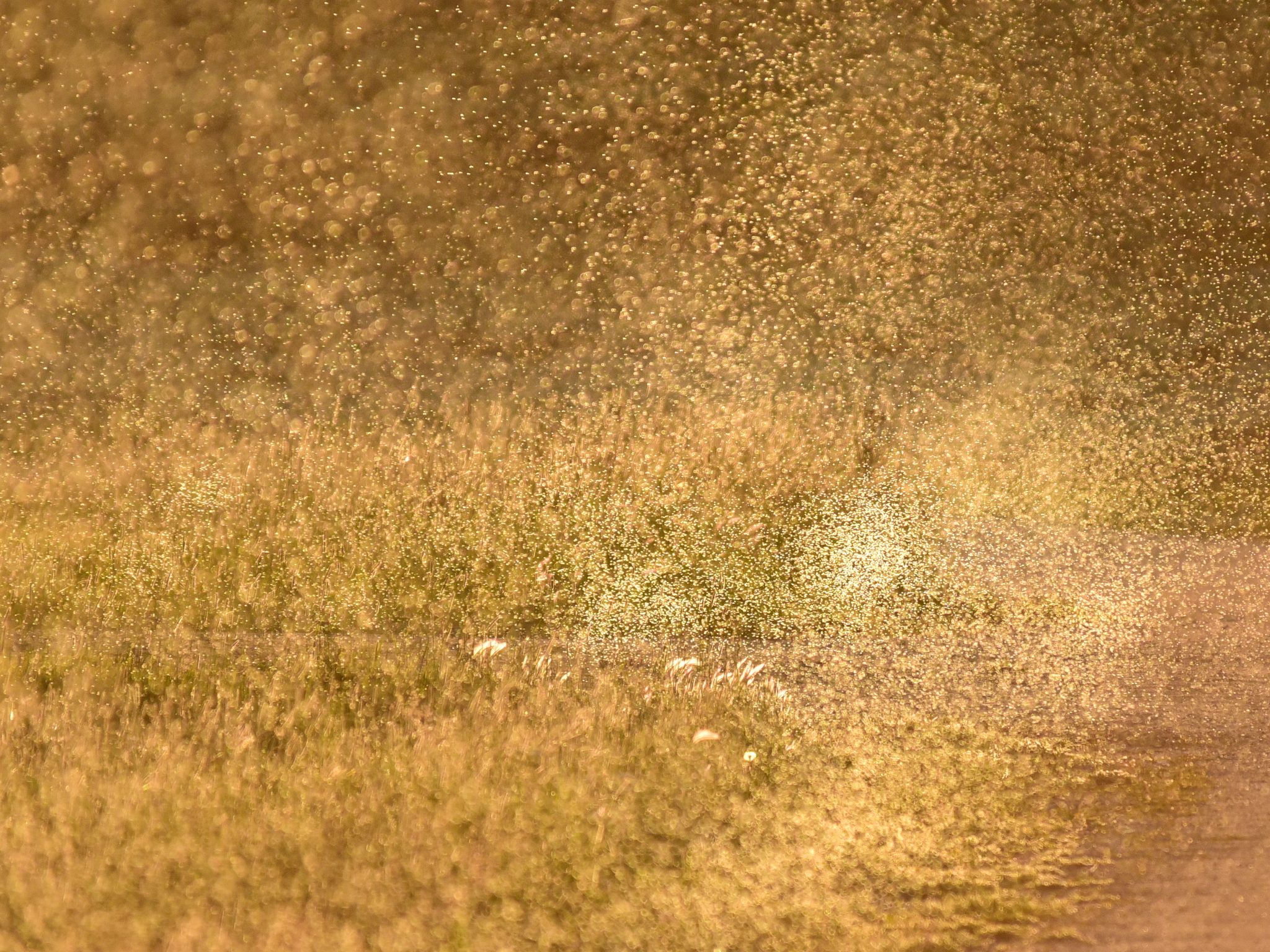
This checklist draws on Extension publications. No lawn inspection, insect collection or treatment trial was performed for it. The hero shows a midge swarm at a wildlife refuge; it does not identify insects in your yard.
Display crops vary by screen.
Free Lawn Care Tools
A hovering swarm can be consistent with nonbiting midges, while insects scattered by footsteps may be leafhoppers. Colorado State and NC State describe these different behaviors. Photograph an insect at rest and ask Extension to confirm it.
The name covers different insects. NC State describes biting midges, while Colorado State describes nonbiting midge swarms. Record bites separately and obtain an insect identification instead of assuming the visible swarm caused them.
Flying adults alone do not establish lawn damage. Maryland Extension advises identifying the insect before treatment. Photograph the damaged blades and patch separately so the cause can be checked.
Check for leaks, excess moisture and nearby water-filled containers first. UC IPM recommends correcting these conditions for fungus gnats. Keep essential watering for your grass, especially newly seeded turf, while the insect is identified.
Identify the insect and its breeding site before choosing a product. Kentucky Extension notes that adult midge sprays can provide only temporary relief. Ask local Extension for management advice, and use a pesticide only where its current label permits that exact use.
Sources (6)
- Colorado State Extension: West Nile Virus and Mosquito Management (nonbiting midge comparison).
- NC State Extension: Leafhoppers (June 2026).
- NC State Extension: Biting Midges and Their Control (revised December 2022; identification and management limits).
- University of Maryland Extension: Insects and Mites in Home Lawns (March 2026).
- UC IPM: Fungus Gnats (August 2013; identification and cultural management).
- University of Kentucky Extension: Non-Biting Midges and Gnats (May 2026).
Photos: Tom Koerner / USFWS / Wikimedia Commons · Public domain

Beat weeds and brown spots from your phone
Snap a photo, get the fix, and follow a plan timed to your soil and weather. Free on iPhone.