Chinch Bug Treatment: How to Get Rid of Chinch Bugs Fast (2026)
 Sarah MitchellLawn Diagnostics Specialist | 12 Years
As an Amazon Associate we earn from qualifying purchases.
You noticed it a couple weeks ago. A patch of grass in the sunniest part of your yard started looking a little thirsty, so you cranked up the sprinklers. But the patch did not green back up. It got bigger. Now there is an irregular blotch of yellow-to-brown turf creeping outward right where the lawn gets the most sun and the least shade, and no amount of water is bringing it back. In my years diagnosing turf problems, that exact story is one of the most common ones I hear, and the culprit usually is not your watering at all. It is chinch bugs.
Confirm first with the float test: push a bottomless can two to three inches into the turf right at the green-to-brown margin, fill it with water, and count the small black-and-white bugs that float up. More than three in the sample and treatment is justified.
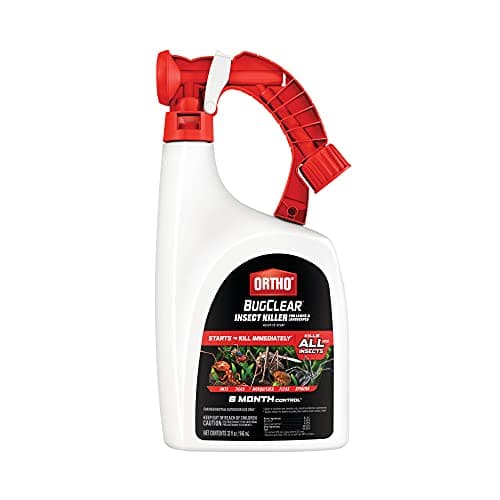
Then treat with bifenthrin. Ortho Bug B Gon Insect Killer for Lawns is the granular version, spread with your broadcast spreader at the label's chinch bug rate and watered in right after. Ortho BugClear Insect Killer for Lawns and Landscapes Ready-to-Spray is the same active ingredient in a hose-end bottle, which is easier on a small lawn or a single patch. Either way, treat the damaged area plus about a five foot buffer of healthy grass, re-run the float test in seven to ten days, and stop repeating bifenthrin if live bugs are still there.
Which Product to Buy: Granule, Ready-to-Spray, or Combo
Chinch bug control on a home lawn comes down to three practical choices, and the difference between them is format and residual, not magic. All three are labeled for lawn insects including chinch bugs. Pick based on the size of your lawn and whether this is a first outbreak or an annual event.
| Product | Active ingredient | Format | How it goes down | Best for |
|---|---|---|---|---|
| Ortho Bug B Gon Insect Killer for Lawns | Bifenthrin (0.20 percent) | Granule, 20 lb bag | Broadcast spreader at the label's chinch bug setting, then water in immediately | Whole-lawn treatment, larger St. Augustine lawns, and anyone who already owns a spreader |
| Ortho BugClear Insect Killer for Lawns & Landscapes Ready-to-Spray, 32 oz. | Bifenthrin plus zeta-cypermethrin | Hose-end ready-to-spray, treats up to about 5,300 sq ft of lawn per bottle | Clip to the hose, spray the patch plus a buffer, no mixing or spreader calibration | A single spreading patch, small lawns, and people who do not want to buy a 20 lb bag for one problem |
| BioAdvanced Complete Brand Insect Killer Granules | Imidacloprid plus beta-cyfluthrin | Granule, 10 lb bag | Broadcast spreader, then water in per the label | Lawns hit every single summer. Two modes of attack at once rather than a class rotation, since beta-cyfluthrin is a pyrethroid like bifenthrin |
A note on the names. Ortho has been migrating its lawn insect line from the Bug B Gon branding to BugClear, so you will see both on the shelf and sometimes on the same website. The lawn granule still carries the Bug B Gon name and the ready-to-spray is sold as BugClear. Both are bifenthrin based and both list chinch bugs, so buy on format rather than on which word is printed larger.
Confirm With the Float Test Before You Spread Anything
I tell homeowners this constantly: do not buy a single thing until you have confirmed what you are dealing with. Chinch bug damage is the great impersonator of the lawn world. It mimics drought, dormancy, fungal disease, and fertilizer burn so well that people throw money at the wrong solution for an entire season before they figure it out.
Run the float test. Take a metal can with both ends removed, or a wide piece of PVC pipe, and push it two to three inches into the turf right at the green-to-brown margin, not in the dead center. Fill it with water and keep it topped off for several minutes. Chinch bugs cannot stay submerged, so they float up where you can count them. University of Georgia Extension puts the treatment threshold plainly: an insecticide application is warranted if more than three chinch bugs are found in the flotation sample. Fewer than that, and you are probably looking at a different problem.
Or just part the grass. Get down at the boundary where healthy green grass meets the dying patch. Adult chinch bugs are small, roughly a sixth to a fifth of an inch long, with black bodies and white wings folded into an X across the back. Nymphs are smaller and range from bright red-orange with a pale band to nearly black as they mature. They scatter fast, so give it thirty seconds of patient looking.
The location is the other giveaway. These patches almost always start in the hottest, sunniest, driest part of the yard: the strip along a south-facing sidewalk, the ground next to a driveway or brick wall that radiates heat, the open center that bakes all afternoon. If your dead patch is in the shade, chinch bugs are probably not your problem.
How to Apply Ortho Bug B Gon for Chinch Bugs, Step by Step
The application details are where most chinch bug treatments fail. This is the order that works.
- Measure the area you are treating. Get the square footage of the damaged patch plus the buffer, or of the whole lawn if you are going wall to wall. Every rate on every label is per 1,000 square feet, so a guess here is a wrong dose everywhere else.
- Mow first, not after. Mowing the day before or the morning of gets the canopy down so the product reaches the thatch where the bugs live. Mowing right after an application removes treated material.
- Water lightly before you treat. A quarter inch a few hours ahead softens dry thatch and brings the bugs up toward the surface. Do not soak it.
- Treat the patch plus about five feet of healthy grass around it. This is the step people skip and it is the reason patches keep expanding after treatment. Chinch bugs migrate outward into the green turf at the margin, so the untreated ring around your dead spot is exactly where the surviving population is.
- Set the spreader to the label's chinch bug setting and apply in a crisscross pattern, north-south then east-west, so you do not leave stripes. Load and unload the spreader on a hard surface away from storm drains. For the ready-to-spray, clip it to the hose and walk at a steady pace with slight overlap on each pass.
- Water the granules in immediately. Granular bifenthrin sits on top of the thatch until water moves it down to where chinch bugs feed. A light irrigation right after spreading, per your label, is what activates the application. For the hose-end spray the water is already part of the application, so no separate watering-in step is needed.
- Keep kids and pets off until the lawn is dry, or as long as your label's reentry interval specifies.
- Treatment thresholds and the specific chemistries recommended for chinch bugs vary by region and grass type, and labels are revised periodically. Your local cooperative extension office can tell you the threshold and the product that is working locally. Texas A and M AgriLife Extension publishes a homeowner guide specific to chinch bugs in St. Augustine lawns.
- Always use the rate printed on the bag or bottle you actually bought, not a rate from an article. Rates differ between pests on the same label, and legal rates differ by state.
- Many extension offices will identify an insect from a clear photo or a physical sample. That is worth doing before you spend money on any product.
What to Expect After You Treat
Setting expectations here saves a lot of unnecessary second applications.
Within a day or two: live bug counts drop sharply. Bifenthrin is a contact insecticide and it works fast once it is in the thatch. If you run a float test 48 hours after a correct application and still pull up a dozen live bugs, check the application first, since that is the more common explanation. On this particular pest, though, a resistant local population is the other real possibility, and the next section covers what to do about it.
Within a week: the damaged patch stops expanding. This is the real success metric, not green color. Watch the margin. If the boundary between green and brown has stopped moving outward, you won.
Within three to six weeks: partial green-up. Here is the honest part that most product pages skip. Grass that is already dead does not come back. Chinch bugs inject a toxin as they feed, and turf that has gone fully straw brown at the center of an old patch is usually gone. St. Augustine will creep back in from the edges with stolons if the patch is small and you keep it watered, but a large dead area is a re-sodding job. Killing the bugs stops the loss, it does not reverse it.
Re-run the float test seven to ten days after treatment. That is the check that tells you what to do next.
When to Re-Treat, and When to Switch Chemistry
If the follow-up float test is clean, you are done. Move to the cultural fixes below and scout weekly for the rest of the hot season.
If live bugs are still there in numbers, do not simply reapply the same bag. Most homeowner labels list a reapplication interval in the range of two to three weeks, but the more important question is why the first application did not work, and on this pest there is a well documented answer. UGA Extension reports that southern chinch bug populations have shown resistance to several insecticides including bifenthrin, imidacloprid, lambda-cyhalothrin, and deltamethrin, and recommends rotating chemical treatments and avoiding repeat applications of the same insecticide to slow resistance from developing.
So the practical rule is this. First failure, check your application: did you water the granules in, did you treat the buffer, did you use the chinch bug rate rather than the general lawn insect rate. Second failure with a correct application means it is time to stop buying bifenthrin.
Be careful about what counts as a real switch, because product marketing will not tell you. Beta-cyfluthrin is a pyrethroid, the same insecticide class as bifenthrin, so a beta-cyfluthrin product is not a rotation away from bifenthrin. What the combination product in the table actually gives you is two modes of attack at once, a surface pyrethroid paired with a systemic neonicotinoid, and UGA Extension reports that pairing a pyrethroid with a neonicotinoid has produced successful management. That is a reasonable next move, but it is not a class rotation, and both of its active ingredients appear on the resistance list above. A genuine rotation on this pest needs a current local recommendation, so this is the point to call your extension office and ask what is working in your county this year.
If you would rather not use synthetic pyrethroids at all, insecticidal soap sprayed directly on the bugs plus the cultural fixes below will suppress a light infestation. Set expectations honestly though: natural, pet-safe and kid-safe approaches suppress populations rather than eliminate heavy ones, so if the damage keeps spreading you will likely need a labeled insecticide.
The Cultural Fixes That Keep Them From Coming Back
Insecticide handles this outbreak. These handle next summer.
Water deeply and correctly. Chinch bugs feast on drought-stressed turf, so a properly hydrated lawn is both more resistant and better able to outgrow some feeding damage. Most people get this backwards, watering a little every day, which keeps the surface conditions the bugs like. Our watering schedule calculator will give you a deep-watering plan for your grass and climate, which doubles as the best way to rule out plain drought stress as the cause.
Reduce thatch. If you can squeeze your fingers into a spongy half inch or more of brown material above the soil, that thatch is a chinch bug nursery. It also holds granular insecticide up off the soil, which is a quiet reason treatments fail. Dethatching or core aeration breaks up that layer and lets water and product reach the soil.
Ease up on fast nitrogen. Heavy spring and summer feeding with quick-release nitrogen pushes the lush, thatchy growth chinch bugs prefer. A moderate slow-release program makes the lawn less attractive without starving it.
Mow tall. Keeping grass at the taller end of its range shades the soil and makes the environment less hospitable to a pest that loves hot, exposed surfaces.
If you are choosing or overseeding a lawn and chinch bugs have burned you before, it is worth weighing how grass types compare on pest resistance and heat tolerance. Our grass comparison tool puts candidates side by side so pest pressure factors into the decision instead of teaching you the hard way. St. Augustine is the southern chinch bug's favorite host by a wide margin. Zoysia and bermuda get hit too, especially when stressed, but they tolerate and recover better.
What Other Guides Miss: It Looks Exactly Like Drought
Most chinch bug articles jump straight to products and skip the single most important thing about this pest, which is the reason it does so much damage in the first place: it hides behind a look-alike. Chinch bug damage and drought stress are visually almost identical. Both produce yellowing that fades to brown, both show up worst in the hottest and sunniest parts of the lawn, and both happen during the same hot, dry weather.
Here is the trap in motion. A homeowner sees browning in July, assumes the lawn is thirsty, and waters more. The extra water does nothing for the chinch bugs but it does encourage the lush surface growth they like, so the patch keeps expanding. By the time the homeowner realizes water is not fixing it, the bugs have spread several feet and killed turf that will have to be resodded. The drought assumption did not just waste time, it actively fed the problem.
The fix is to refuse to assume. Anytime you see browning in the sunny part of a warm-season lawn in summer, run the float test before you change your watering. And rule out the other look-alike, summer dormancy, because some grasses go tan and stop growing in heat without anything being wrong. Our guide on telling whether your grass is dead or just dormant is the companion piece: between that and the float test you can sort drought, dormancy, and chinch bugs apart in about ten minutes.
The other thing guides rarely mention is the edge effect. Because chinch bugs march outward from a hot, exposed starting point, damage tends to cluster along sunny borders, sidewalks, driveways, and south walls, then creep inward. That is a diagnostic clue most people walk right past, and it is also why the five foot treatment buffer matters so much.
Still not sure which one you are looking at? That is exactly the situation the free photo diagnosis is built for. It compares your lawn's symptoms against the pests and problems actually active in your region and season, so instead of a coin flip between drought and bugs you get a ranked answer and a direction to move in.
When to Escalate
Most chinch bug situations are manageable by a homeowner who catches them reasonably early. A few signs say bring in help. If you have treated correctly twice with two different chemistries and the population bounces right back, a professional can source products homeowners cannot buy. If the infestation covers a large area or recurs every year despite good cultural practices, an entomologist or lawn-care professional can confirm the species and tailor a program. And if you cannot confirm what is killing the lawn after running the tests, stop spending and get a positive ID.
Chinch bugs are tightly linked to a few other summer problems, so if your scouting turns up something that does not match the black-and-white adult or the float-test behavior, you may be looking at a different soil-level pest. Our companion guides on sod webworm damage and control, on armyworm control, and on identifying and controlling mole crickets cover the most common confusions, all of which call for a different response than chinch bugs do. The broader guide to identifying common lawn bugs and getting rid of them fast puts them all in context.
Your Chinch Bug Treatment Plan
- Confirm before you spend. Float test at the green-to-brown margin. More than three bugs in the sample justifies treatment. No confirmed bugs, no insecticide.
- Pick on format. Granular bifenthrin for a whole lawn with a spreader, hose-end ready-to-spray for a single patch or a small yard.
- Mow, water lightly, then treat the damaged area plus a five foot buffer of healthy grass.
- Water granules in immediately. This is the step that decides whether the application works at all.
- Re-run the float test in seven to ten days. Clean means done. Live bugs mean check your application first, then stop repeating bifenthrin and ask extension what is working locally.
- Fix the conditions. Dethatch, water deeply and infrequently, ease off fast nitrogen, and mow tall so next summer is quieter.
- Scout weekly through the hot months, sunny edges first, and use a free photo diagnosis anytime a patch has you guessing. A personalized care plan tells you the weeks chinch bug pressure peaks for your grass type and zip so you are scouting before the damage spreads, not after.
Free Lawn Care Tools
Adult chinch bugs are small, only about an eighth of an inch long, with black bodies and white wings that fold into an X or hourglass pattern across the back. The young nymphs are even tinier and range from a bright red-orange with a pale band to nearly black as they mature. They cluster and feed at the green-to-brown margin of a damaged patch, so that is where you should look for them.
The two look almost identical, which is exactly why chinch bug damage spreads unnoticed. The tell is that chinch bug patches keep expanding even when you water, while true drought stress greens back up after deep watering. The fastest way to be sure is the float test: push a bottomless can into the turf at the edge of the dying patch, fill it with water, and watch for chinch bugs floating to the surface. If you want a second opinion fast, a free photo diagnosis can compare your symptoms against what is active in your region and season.
The float test, sometimes called the coffee-can flotation test, is the most reliable home confirmation. You remove both ends of a metal can, push it a couple inches into the turf right where green grass meets the dying patch, then fill it with water and keep it topped off for several minutes. Chinch bugs cannot stay submerged, so they float up where you can count them. A handful per can is meaningful and dozens signals a heavy infestation.
St. Augustine is by far the most vulnerable, especially in warm, humid southern climates where the southern chinch bug can build enormous populations during hot weather. Zoysia and bermuda can also be damaged, particularly when they are already stressed, though they tend to tolerate and recover better than St. Augustine. In cooler northern regions a different species, the hairy chinch bug, targets fescues and ryegrasses instead.
Start with cultural control, which addresses the conditions that let chinch bugs thrive. Water deeply and infrequently so the lawn is not drought-stressed, dethatch or aerate to remove their hiding spots, ease off fast-release nitrogen, and mow tall to shade the soil. These steps alone can knock back a moderate population. For gentler treatment options beyond that, look into pet-safe and kid-safe approaches, and confirm any specific product choice with your local cooperative extension office.
Generally no, not before they do real damage. Chinch bugs thrive during exactly the hot, dry conditions when your lawn is least able to defend itself, so an active infestation tends to keep expanding outward until the population crashes naturally in cooler weather, often after killing a sizable patch. The smart move is to confirm them early with the float test and address the conditions before the damage spreads, rather than waiting it out.
The best chinch bug treatment pairs cultural fixes (deep, infrequent watering, dethatching, easing off fast nitrogen, mowing tall) with a targeted insecticide when the infestation is confirmed and spreading. For most home lawns, a bifenthrin granule (like Ortho Bug B Gon Insect Killer for Lawns) is the easiest broadcast treatment, and an imidacloprid plus beta-cyfluthrin combination product (like BioAdvanced Complete Brand Insect Killer) gives faster knockdown with longer soil residual. Whichever you pick, water the area lightly first, treat the infested patch plus about a 5 foot buffer, and always follow the product label. Southern chinch bugs have developed resistance in some regions, so check with your local extension if a treatment underperforms.
Confirm them first with the float test at the green-to-brown margin. Then water the area lightly so the bugs move up toward the surface, apply a bifenthrin granule or an imidacloprid plus beta-cyfluthrin combination product over the infested patch plus about a 5 foot buffer of healthy grass, and water it in per the label. Pair that with the cultural fixes, dethatching, deep infrequent watering, and mowing tall, and retreat if a follow-up float test still shows live bugs, following your product label's reapplication interval (many list roughly 2 to 3 week intervals).
A contact insecticide such as bifenthrin, or the beta-cyfluthrin in a combination product, usually knocks down surface chinch bugs within a day or two. Run a follow-up float test about a week later to check your work. If you still see live bugs, or the damage keeps spreading, retreat at your product label's listed interval (many run roughly 2 to 3 weeks) and make sure you watered the area lightly before applying so the bugs moved up to where the product could reach them.
Retreat only when a follow-up float test shows live bugs, generally 2 to 3 weeks after the first application for contact granules and sprays. Combination products with imidacloprid can hold a residual for up to about three months, so they often need fewer repeat applications. Always follow the reapplication interval on your product label rather than spraying on a fixed calendar.

Your lawn plan, in your pocket all season
Grass ID, a season plan, soil-timed reminders, and a lawn journal that remembers what you did. Free on iPhone.